CARS funding veto ‘breaks promises’ made to investors
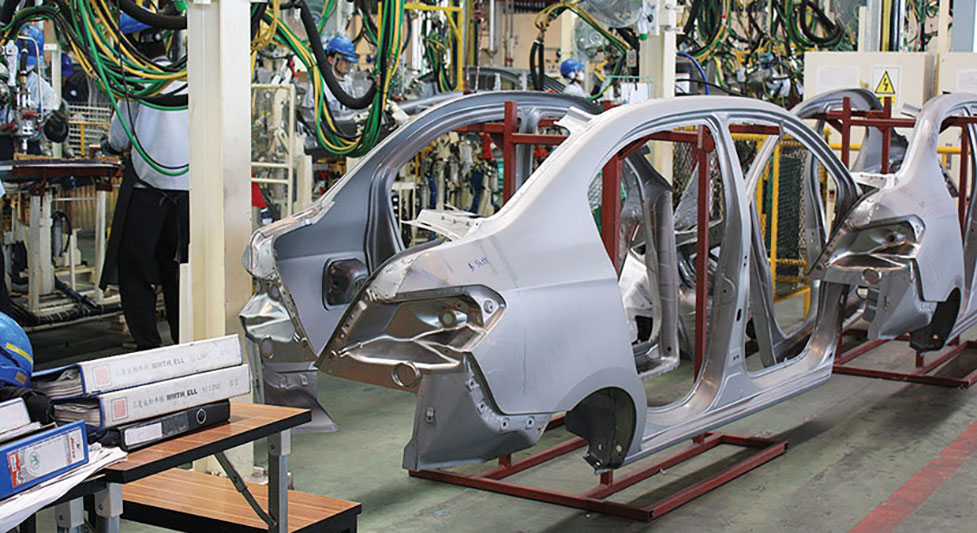
THE removal of budget funds to incentivize domestic auto manufacturing could undermine foreign investor confidence, Sen. Sherwin T. Gatchalian said.
“(This potentially affects) our reputation with foreign investors. I’m just worried that the whole world might think that we are making promises, but we are not fulfilling it,” he said at a briefing.
On Monday, President Ferdinand R. Marcos, Jr. vetoed P4.32 billion in unprogrammed appropriations meant for the Comprehensive Automotive Resurgence Strategy (CARS) program, which provides incentives to automakers to produce 200,000 units of mass-market car models over six years in the Philippines.
Toyota Motor Philippines (TMP) Corp., a participant in the CARS program, called on the government to continue supporting incentives to maintain trust and confidence among investors.
In a statement on Tuesday, TMP President Masando Hashimoto noted that government support for CARS is critical in keeping the Philippines competitive as an investment destination.
“After six years into the CARS program, we believe it has been a win-win concept between government and private sector in attracting foreign direct investment and at the same time provided benefits to manufacturers and consumers,” he said.
“We would like to underscore how sustained government support through industry development programs such as CARS is critically important for competitiveness as observed in the region,” he added.
The incentives come in the form of tax payment certificates (TPCs), which can be applied to offset participants’ tax and duty liabilities. The other company enrolled in CARS is Mitsubishi Motors Philippines Corp.
Mr. Gatchalian added: “We’re trying to attract foreign investors to come to the Philippines. We have a lot of things to fix. Let’s as much as possible avoid reputational damage,” he said at a briefing.
“It is embarrassing to foreign investors that are here (that we made promises to), and we did not pay,” he said.
Mr. Gatchalian said that the Board of Investments (BoI) had earlier requested the Senate to provide funding to fulfill its CARS obligations.
“We have a debt to Mitsubishi and Toyota; they came here to invest. We said we would give them tax incentives,” Mr. Gatchalian added.
Business groups had called on the government to fulfill its commitments to car manufacturers, stressing that doing so would be vital to sustaining competitiveness as an investment destination.
British Chamber of Commerce Philippines Executive Chair Chris Nelson said the government should be looking for ways to improve investor confidence after the flood control corruption scandal.
“What we’re looking for as a chamber is the passage of key legislation which says that the government… recognizes it needs to keep moving and continue to liberalize the economy,” he added.
The BoI has said that it is seeking to fulfill its remaining P3.99-billion obligation to CARS participants. It has already granted P1.44 billion worth of incentives.
According to Mr. Gatchalian, the government should use its contingency fund, or order the Bureau of Internal Revenue (BIR) to record a book entry indicating that the companies have received their incentives.
He added that the CARS program’s classification as an unprogrammed item would facilitate a book-entry approach.
“That’s why we placed it in unprogrammed appropriations because it is (effectively a) book entry, from one pocket to another. It means that (CARS participants) will not pay tax… but the government will,” he said. “Nevertheless, it is still government debt.” — Adrian H. Halili and Justine Irish D. Tabile