Southeast Asia’s fishermen are being pushed to the brink by fuel costs
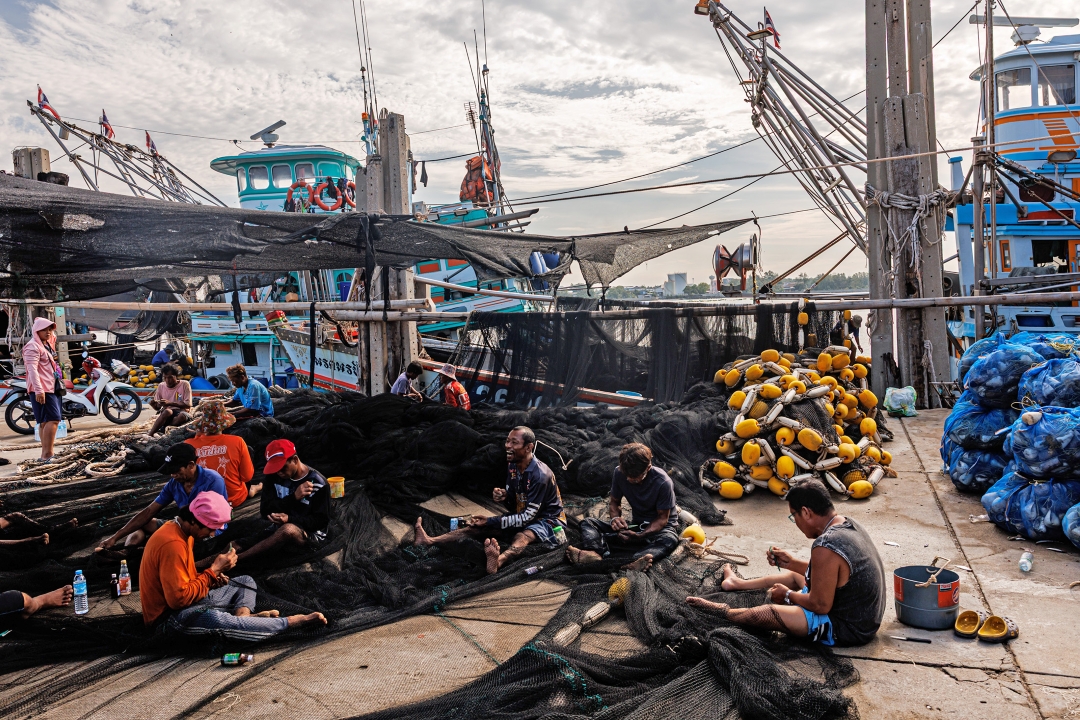
For two months, Thai fisherman Bunyut Chaosamut kept his boat at anchor at a port an hour’s drive south of Bangkok. The war in the Middle East had driven up fuel costs, making it too expensive to go out. Now, it’s become too expensive not to.
With a crew of 10 — six from Myanmar and four Thais — to feed, house and pay, plus maintenance and utility fees to dock at a commercial jetty, Bunyut is headed back to sea. His boat leaves just as the sun is setting and returns at dawn laden with herring, sardines and mackerel from the Gulf of Thailand. His fuel bill is well over half the cost of each trip, yet Bunyut says he’s unable to raise the price of his catch.
“I couldn’t keep my boat docked any longer, my hands are tied,” Bunyut said. He stands on the pier in Samut Sakhon in the late morning sun, watching as his crew untangle and stow nets. “I’ve been doing this for 40 years and it just keeps getting worse,” he said. “We are sea people; we can’t just quit and start growing rice or planting rubber trees.”
Bunyut is not alone. Across Southeast Asia, fishermen are struggling as a protracted blockade in the Strait of Hormuz leaves the region desperately short of fuel and pushes up costs for everything from transport to refrigeration. One wholesaler in Thailand said it’s the worst he’s seen since Covid. Spiraling feed costs for farmed seafood are rippling through the supply chain, raising prices for supermarkets and restaurants worldwide.
“The war is affecting seafood through higher energy, freight and supply chain costs,” Novel Sharma, a seafood analyst at Rabobank in Utrecht in the Netherlands, said. Wild capture fisheries are particularly vulnerable because even in normal times fuel makes up around 15% to 30% of fishing costs, he said. “Aquaculture is also at risk, particularly Southeast Asia’s shrimp sector, where intensive farming depends on diesel-powered aeration systems,” he added.
Fishermen in Southeast Asia were already under pressure from US President Donald Trump’s tariff regimes. Now, shifting weather patterns, including warmer seas and erratic rainfall, are cutting into catches, while decades of overfishing have drained stocks. At the same time, fishing fleets are being pulled ever deeper into their countries’ territorial disputes in the energy-rich South China Sea.
Governments have stepped in, reducing import taxes, providing handouts and, in some cases, capping fuel prices. But in a region that heavily subsidizes energy, there are limits to how much fiscal pain governments can absorb. And it’s not hitting only seafood. Farmers are also reliant on energy, so official aid is stretched thin.
China, with far greater financial firepower to subsidize its seafood industry, can give its fleets a competitive edge — deepening what some analysts say is already an uneven playing field.
Brian Eyler, director of the Southeast Asia Program at the Stimson Center in Washington, DC, says he doesn’t see a lot of respect for wild-catch fishers and their livelihoods from some governments in the region. “These countries want to move forward with forms of industrialization,” he said. Many fishermen “have no choice” but to keep going back to the sea.
While fishing makes up quite a small proportion of national GDP across Southeast Asia — about 1% in the Philippines and 2.5% in Indonesia — it remains the lifeblood of many, binding entire communities to the ocean. According to Elyssa Kaur Ludher, a visiting fellow at the ISEAS-Yusof Ishak Institute in Singapore, between seven and 10 million people fish across its seas and rivers; add in those involved in processing or boat building, and it’s in the tens of millions.
Outside of its importance to the Southeast Asian diet, seafood also underpins national identity and geopolitical narratives. Governments lean on centuries of seafaring folklore to argue for access to fishing grounds far from their own shores, staking territorial claims to reefs and shoals deep into contested seas.
The energy crisis playing out now among fishermen risks amplifying concerns around living costs and job prospects. Indonesia saw violent protests in 2025 over economic worries, and in recent weeks fishing crews have rallied alongside truck drivers.
“Governments have already had to pass on some price increases for different fuels and will likely have to do more,” Roland Rajah, lead economist and director at the Lowy Institute’s Indo-Pacific Development Center, said. It’s a balancing act to contain “fiscal costs, keep economies functioning and manage the social and political fallout.”
The seafood ecosystem runs the gamut from fishermen and seafood farmers to wholesalers, truckers, retailers, fish-food providers, large integrated seafood companies, exporters, restaurants, supermarkets and tourism operators. Who gets squeezed the most and where costs can be passed on are the perennial questions.
Samut Sakhon province, where a river empties into the Gulf of Thailand, captures both the industry’s vast reach and the pressures now bearing down on it. When Bloomberg News visited earlier this month, many fishing boats were in a state of neglect, sitting dangerously low or listing in the water. Repair shops with jetties line the waterways, though one owner said business has faded in recent months.
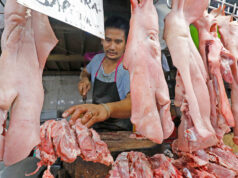
Much of what is caught goes to a nearby wholesale market, the largest in Thailand. In the early hours, trucks come and go, unloading and loading fish, clams, squid and prawns in big tubs of ice. The floor is slick with water and seafood detritus. It looks busy to the untrained eye, but workers say things have slowed considerably.
The market’s business association estimates that 60% to 70% of the boats that typically supply seafood have been docked. Supplies are thinner, buyers more selective, and unsold seafood is often repacked into tubs of ice to be sold another day.
Wholesaler Chutchawan Wonglimsamut has worked at the market for 20 years in a business started by his grandmother. He sells seafood mostly to factories to make fish balls, popular in soups and other Asian cooking. He says his trucking costs have risen, with a daily round trip fuel bill per truck that used to be 10,000 baht ($305) now costing 14,000. Any assistance from the government tends to be brief and tied to election campaigns, the 37-year-old says. “After a short period, it’s back to the same.”
A few stalls down, Pariphon Niranrit, 35, reckons the situation is worse than during the pandemic. “Back then we were still able to sell,” he said. “Now people won’t even buy because everything is more expensive.”
Even though diesel prices have retreated from the peaks reached a month or so ago, they remain sharply elevated. Governments across Southeast Asia have responded with a patchwork of relief measures. The Philippines has rolled out cash and fuel subsidies, while Indonesia has raised prices for non-subsidized diesel, prompting complaints from fishermen that subsidized allocations are too limited. Vietnam has extended a tax freeze on some fuel products through June 30. In Malaysia, the government was expected to spend about 7 billion ringgit ($1.8 billion) on fuel subsidies last month — roughly 10 times pre-Iran conflict levels.
Leaders of the Association of Southeast Asian Nations have agreed to fast-track a long-stalled fuel-sharing pact, while also floating the idea of a regional stockpile to guard against future supply shocks. The fuel-sharing agreement dates back to 2009 but was never ratified, and major questions remain over how — or even whether — a shared reserve could realistically function.
The crisis is hitting local and migrant workers alike. There’s a vicious vulnerability circle where fishermen during a downturn would normally look for jobs in construction, farming or transport, but those sectors are also suffering. Farmers who would usually turn to fishing in difficult moments don’t have that option now.
Roisai Wongsuban, an adviser to the Migrant Working Group in Thailand, estimates there are some 300,000 migrant workers in the nation’s fishing sector, many from Myanmar. They often come as families — husband and wife both working and debts incurred during their recruitment. When boats are unable to afford fuel to go out, young men don’t want to return to Myanmar and face the risk of military conscription, she says. In Thailand, migrant workers must also stick to the fishing industry if that’s what they’re registered for.
“We can’t just say ‘Oh, if this boat is not nice to you, why not switch boats or change to some other job?’ Whole families depend on the same industry,” she said.
Fifty-year-old Filipino fisherman Lino Salentes stopped going out in Manila Bay in March. It’s the first time in decades he’s benched his boat. But the father of six says it’s hard for him to find other work — he only finished elementary school. As a result, one of his adult children who works in a factory is supporting the entire family.
In the Philippines, most of the big fishing companies have scaled back operations, including those in the southern Mindanao region, which is known for its tuna, the nation’s top seafood export.
“Tuna are highly migratory and they’re caught from 15 kilometers to thousands of kilometers away from shore so boats need a lot of fuel,” Kenrick Teng, head of Socsksargen Federation of Fishing & Allied Industries Inc. in Mindanao, said. That can be as far as Papua New Guinea, where Philippine fishing boats have access. “Small boats usually take half a day and larger boats up to a week, and with high fuel prices, it’s all too risky to do that now,” Teng said.
Fernando Hicap, chairman of Philippine fishers’ group Pamalakaya, said some fishermen have managed to pivot to garbage collection or driving tricycles. Others are even finding those options scarce. Alvin Zamora, a fisherman who has returned to spear fishing because it lets him target higher-value catch, said many in his community are struggling to find other jobs.
In Vietnam, Huynh Van Dam, a member of the fisheries society in Dong Son commune in central Quang Ngai province, fears younger generations may abandon livelihoods tied to the sea altogether. Some boats, like in Thailand, have begun venturing out again as fuel prices ease modestly. Even so, Dam said the cost of a 30-day voyage has surged to about 300 million dong ($11,400), up from 200 million dong before the war.
Even if tensions in the Middle East ease and tankers resume crossing the Strait of Hormuz, other threats loom. The World Meteorological Organization warns an El Nino could emerge by mid-2026, bringing hotter, drier weather across parts of Southeast Asia, raising energy demand and straining rural livelihoods, including for fishermen.
Those on the region’s rivers aren’t spared either.
Inland fishing accounts for the smallest share of Southeast Asia’s seafood industry, dwarfed by aquaculture and marine capture fisheries. Still, the 3,000-mile (4,830-kilometer) Mekong River holds an outsized place in the region’s history, politics and identity. Brian Eyler of the Stimson Center calls it the world’s most productive river for fisheries, with most of the catch consumed locally.
There’s less river or ocean fishing in Singapore, but even fish farmers in the rich island-state are feeling the impact.
The effect goes along the supply chain, says Daniel Tay, owner of Straits Seafood Co. and president of the Fish Farmers Association of Singapore. Feed mills put their prices up because their packaging and transport costs have risen and there are also energy costs associated with keeping feed in air-conditioning. A bag of feed that once cost S$50 ($39) now costs at least S$60, he said. Raising one kilogram of fish takes about a year and requires roughly 1.8 kilograms of feed.
“If we need to grow 10 tons, which is 10,000 kilograms, multiply that number and it’ll just go crazy,” Tay said. “That’s the scale of the problem.”
Larger seafood companies ostensibly are better insulated, able to absorb higher insurance costs, fuel volatility and freight surcharges. But they’re not totally immune. Le Van Quang, chief executive officer of Minh Phu Seafood Corp. — Vietnam’s so-called “shrimp king” — said ocean freight rates have climbed sharply across most of the company’s export markets. Some shipping lines have also imposed Middle East surcharges, he said.
Thai Union Group Pcl, the world’s largest canned tuna producer, said tuna prices surged in March and are likely to remain elevated for some time, though the firm has secured enough inventory to cushion supplies for several months.
Some smaller retailers say sales have slowed as customers switch to cheaper, smaller fish.
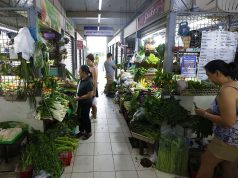
Kit Chanthavong, originally from Laos, has worked at Mahachai retail market in Samut Sakhon for 20 years. He’s now selling grouper for 380 baht per kilogram, up from 280 baht before the war. Barracuda has risen to 170 baht from 140 baht. By late morning, he was packing up due to a lack of demand. In better times, he and others would stay open until around 3pm.
At another stall, Wilai Somkerd was purchasing two catfish to make curry to sell. “There’s no choice to buy even if it means absorbing the cost,” she said, as the vendor cleaned and gutted her fish. “I still have to make a living.”
Fishmonger Joy Aguilon, who operates out of a market on the fringes of Manila’s Makati financial district, says some people are switching to chicken. For Tay at Straits Seafood in Singapore, the bigger fear now is outright demand destruction.
“Families that used to eat out every Sunday, now they’ll say, ‘No, let’s eat out less often’,” he said. “Once households cut back, restaurants close. That’ll be the beginning of us reducing our production.”
Back at Samut Sakhon, Myin Toe is also looking to head out to sea for the first time in around a month. Originally from Myanmar, the assistant boat captain will spend 15 days catching seafood and storing it in ice boxes in the hold. Fuel prices have come down to 40 baht a liter from 50 baht, but that’s still versus about 30 baht before the war.
Despite the financial pressures, everyone is eager to be back at sea, he says, as his crew of 12 prep the boat. “We heard from others the catch is good,” he said, “so we’re taking that chance.” — Bloomberg