Peso sinks further as market eyes Iran deal
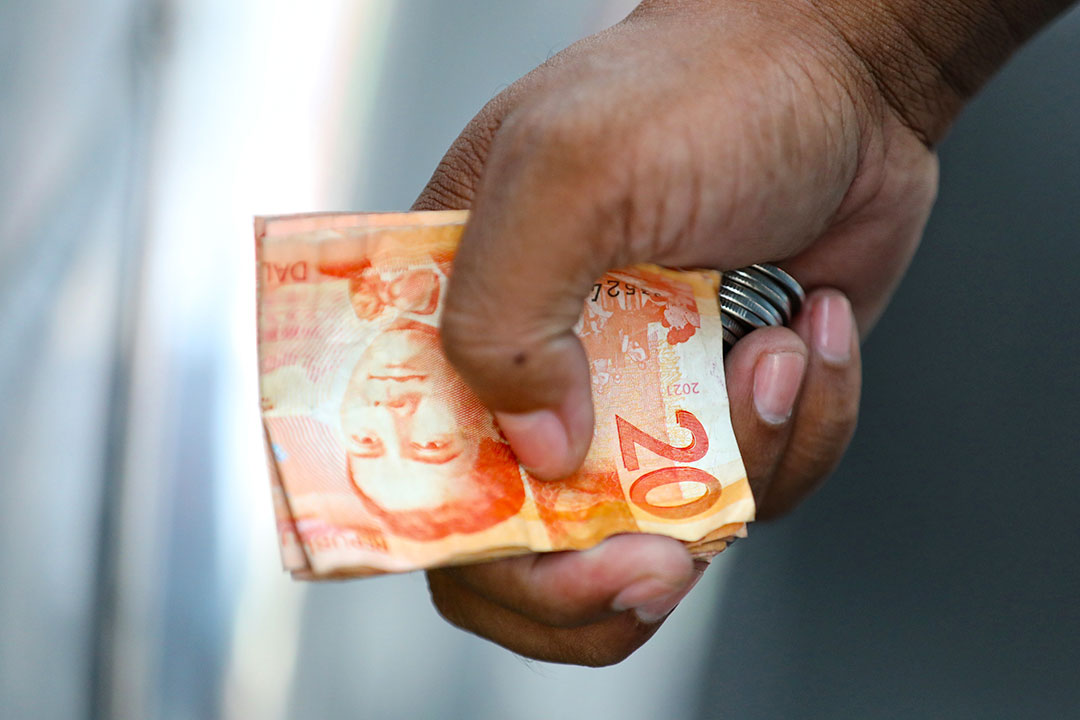
THE PESO slid further against the dollar on Thursday due to lingering uncertainty over the war in the Middle East as markets awaited clearer signs of a potential de-escalation or ceasefire.
The local unit declined by 13 centavos to close at P60.23 against the greenback from its P60.10 finish on Wednesday, data from the Bankers Association of the Philippines showed.
The peso opened Thursday’s trading session sharply weaker at P60.20 per dollar. It traded lower than Wednesday’s close the entire day, with its intraday best at just P60.15 and its weakest showing at P60.275 against the greenback.
Dollars traded went down to $1.17 billion from $1.71 billion on Wednesday.
“The dollar-peso closed higher, still due to uncertainties between the US and Iran and a lack of clear terms for the resolution of the war,” a trader said in a phone interview.
The trader added that the Bangko Sentral ng Pilipinas (BSP) off-cycle meeting did not materially affect trading on Thursday, although its impact could be felt on Friday once the market digests signals from officials.
“The market also expected an off-cycle meeting, mainly just signaling assurance that they are monitoring,” the trader said.
The Monetary Board was scheduled to have its next policy review on April 23, but BSP Governor Eli M. Remolona, Jr. said they decided to hold a meeting on Thursday as the economic situation has shifted drastically since they last met on Feb. 19.
At its review, the BSP kept the policy rate at 4.25%, with Mr. Remolona saying that adjusting their monetary settings would have limited effectiveness as current inflation risks due to the war in the Middle East are largely supply-driven.
The central bank now expects headline inflation to average 5.1% this year — well above its 2%-4% tolerance band. Annual inflation last breached its target in 2023.
“At the same time, the BSP sees continued weak economic growth in 2026. To raise the policy rate at this time would delay the recovery,” the central bank said in a statement.
“Looking ahead, mounting risks to inflation will require sustained vigilance. Monetary policy will focus on addressing likely second-round effects that may arise.”
For Thursday, the trader sees the peso moving between P60 and P60.40 per dollar.
Meanwhile, MUFG Global Markets Research Senior Currency Analyst Lloyd Chan said in a report that the peso is among the weakest performing currencies in Asia, “reflecting sensitivity to oil prices and risk sentiment.”
For Mr. Chan, oil prices must go down or the US-Israel war on Iran has to ease for the peso to recover.
Mr. Remolona said on Thursday that the peso, at its current level, has not warranted heavy intervention from the central bank.
The BSP chief added that they have internal thresholds showing at what level they expect the peso’s weakness to become inflationary, which help guide their inflation forecasts, policy decisions, and the extent of their activity in the foreign exchange market.
“So far, we don’t intervene to maintain a level for the peso. We intervene largely to dampen the swings in the peso that are inflationary,” Mr. Remolona said. — Aaron Michael C. Sy with a report from Katherine K. Chan