Peso may decline further on escalating US-Iran tensions
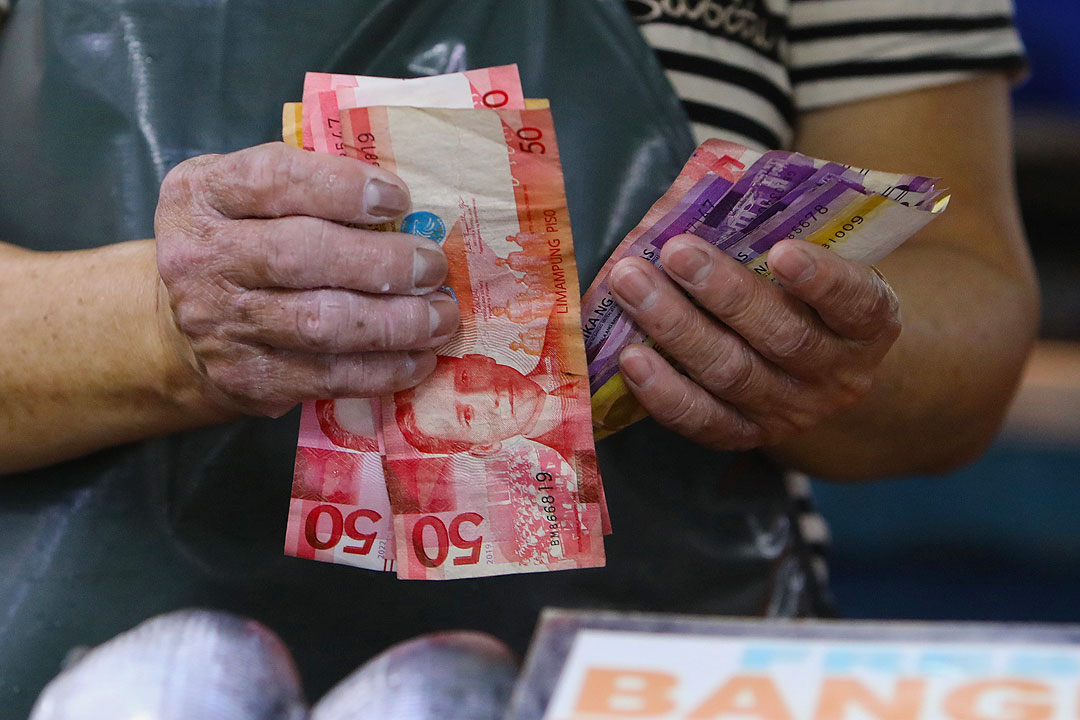
THE PESO could weaken further against the dollar this week due to growing tensions between the United States and Iran.
On Friday, the local unit closed at P58.15 per dollar, falling by 15.4 centavos from its P57.996 finish on Thursday, data from the Bankers Association of the Philippines showed.
Week on week, the peso fell by 13 centavos from its P58.02 close on Feb. 13.
The local currency ended weaker on Friday after the Bangko Sentral ng Pilipinas (BSP) signaled that they still have room to ease rates and as escalating tensions between the US and Iran led to a spike in oil prices, a trader said by phone.
The peso declined against the dollar following “less hawkish” signals from the BSP, Rizal Commercial Banking Corp. Chief Economist Michael L. Ricafort said in a Viber message.
He said the central bank’s previous statements about nearing the end of its easing cycle had partly driven the peso’s recent rebound.
On Thursday, the Monetary Board cut the target reverse repurchase rate by 25 basis points (bps) for the sixth consecutive meeting to 4.25%. Rates on the overnight deposit and lending facilities were likewise trimmed to 3.75% and 4.75%, respectively.
It has now reduced borrowing costs by a total of 225 bps since it began its easing cycle in August 2024.
BSP Governor Eli M. Remolona, Jr. said future easing will depend on how soon confidence will recover, as weak sentiment has affected demand, making the output gap bigger.
“We support growth, and we do want growth. But at the same time, our main mandate is still inflation. So, to the extent we can support growth without causing inflation, we will support growth.”
On Friday, he said that with inflation under control, they have room to help stimulate domestic demand, although they face a “large element of uncertainty.”
For this week, the trader said escalating tensions between the US and Iran could continue to put pressure on the peso.
The market could also react to the US gross domestic product (GDP) and personal consumption expenditures (PCE) price index data released late on Friday.
The trader sees the peso moving between P57.90 and P58.30 per dollar this week, while Mr. Ricafort expects it to range from P57.90 to P58.30.
Iran’s foreign minister said on Friday he expected to have a draft counterproposal ready within days following nuclear talks with the United States last week, while US President Donald J. Trump said he was considering limited military strikes, Reuters reported.
Two US officials told Reuters that US military planning on Iran had reached an advanced stage, with options including targeting individuals as part of an attack and even pursuing leadership change in Tehran, if ordered by Mr. Trump.
Mr. Trump on Thursday gave Tehran a deadline of 10 to 15 days to make a deal to resolve their longstanding nuclear dispute or face “really bad things” amid a US military buildup in the Middle East that has fueled fears of a wider war.
Meanwhile, US GDP increased at a 1.4% annualized rate in the fourth quarter, the Commerce department’s Bureau of Economic Analysis said in its advance estimate. Economists polled by Reuters had forecast GDP would rise at a 3% pace. The economy grew at a 4.4% pace in the third quarter. It grew 2.2% last year, the slowest pace in five years, after expanding 2.8% in 2024.
A separate report showed the PCE price index, excluding the volatile food and energy components, increased 0.4% in December after gaining 0.2% in November. In the 12 months through December, the so-called core PCE inflation advanced 3% after increasing 2.8% in November. It is one of the measures tracked by the US central bank for its 2% inflation target. — A.M.C. Sy with Reuters