Palm oil expansion raises concerns over environment, coconut industry impact
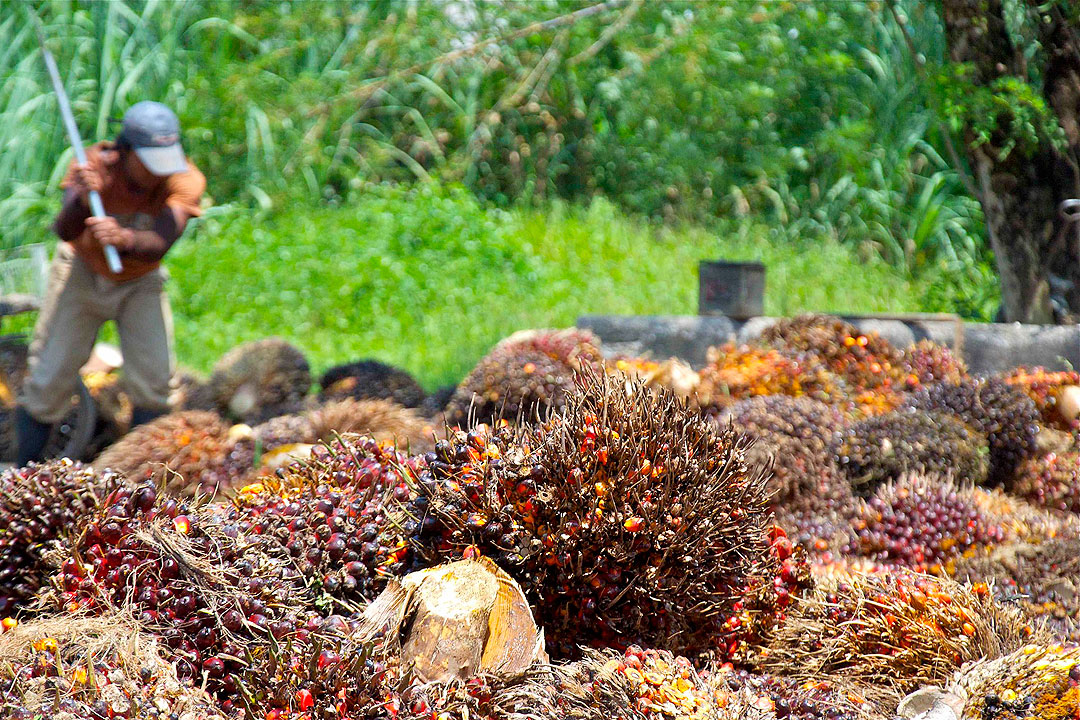
THE government’s plan to expand palm oil production in Mindanao must not come at the expense of the coconut industry or the environment, industry leaders said.
Danilo V. Fausto, president of the Philippine Chamber of Agriculture and Food, Inc., said the government should prioritize the development of the coconut industry.
“We should first accelerate the development of our coconut industry, where the Philippines has a dominant and competitive edge in the world,” he told BusinessWorld via Viber.
Mr. Fausto said the government should invest in post-harvest facilities, logistics, and technology to increase coconut farmer incomes.
In a statement on Friday, the Department of Agriculture (DA) said it is ramping up efforts to expand oil palm plantations in Mindanao to curb imports and bolster the supply of edible oils.
Oil palm yields average about 3.8 metric tons per hectare, compared with less than one metric ton per hectare for coconut. Because of higher yield, oil palm farmers earn at least double the roughly P90,000 that coconut farmers earn annually, the DA said.
Philippine Coconut Authority (PCA) Administrator Dexter R. Buted said it is working on establishing nurseries in Mindanao and cultivating planting materials on a local basis.
Former Agriculture Undersecretary Fermin D. Adriano said Mindanao is suitable for palm production because it is rarely visited by strong typhoons, but cited land consolidation as a major constraint.
“The main problem is acquiring contiguous lands for palm oil production. You need thousands of hectares. The Malaysians and the Japanese tried in the past but failed to consolidate land for palm oil production,” he told BusinessWorld via Viber.
Former Agriculture Secretary William D. Dar said the DA’s palm oil expansion plans must not disturb forested areas.
“We need to protect our environment while pushing for the expansion of palm oil production in the country,” he told BusinessWorld via Viber.
Mr. Dar said joint ventures between agribusiness companies and clusters of farmers should be encouraged to develop the industry.
“In effect, a public-private-producer partnership will be the best business model anchored on regenerative and resilient agriculture,” he said.
Charles R. Avila, chairman of the Confederation of Coconut Farmers’ Organizations of the Philippines, expressed his opposition to expanding oil palm, citing risks to biodiversity and the potential for exploitative labor practices.
“The conversion of natural vegetation to monoculture plantations, as in oil palm, definitely reduces biodiversity… the industry is associated with exploitative practices, low wages, disappearance of land rights, and precarious working conditions for farm workers,” he told BusinessWorld via Viber.
Mr. Avila also said it was a mistake to task the PCA with overseeing oil palm expansion.
“It is the same PCA that was made to assure the nation that they have the formula to double the income of coconut farmers through its various productivity and social service programs,” he said.
“Does not the government believe its own PCA? Why, then, use (the coconut industry’s) low productivity as an argument to shift to oil palm?” Mr. Avila added. — Vonn Andrei E. Villamiel