Stocks may drop further on bearish sentiment
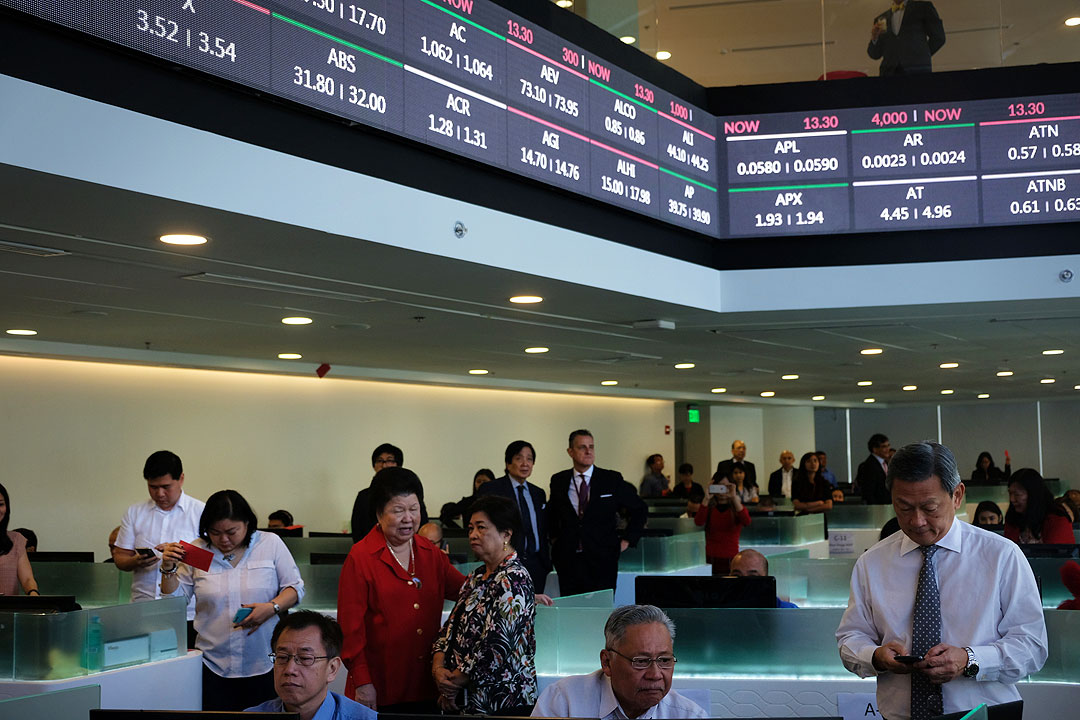
PHILIPPINE STOCKS may continue to move lower this week as the market stays defensive amid the deadlock between the United States and Iran and heightened inflation concerns that have turned the Bangko Sentral ng Pilipinas (BSP) more hawkish.
On Friday, the Philippine Stock Exchange index (PSEi) fell by 0.67% or 40.32 points to close at 5,943.49, while the broader all shares index went down by 0.51% or 17.50 points to end at 3,352.22.
This was the PSEi’s worst finish in over three weeks or since it closed at 5,869.49 on March 30.
Week on week, the bellwether index dropped by 55.64 points from April 17’s 5,999.13.
“The local bourse capped a volatile week on a sour note, with the PSEi breaking below the 6,000 psychological support zone to close at 5,943. This downward pressure followed BSP’s hawkish 25 basis points (bps) rate hike to 4.5%, a move aimed at tempering inflation fueled by surging oil prices,” online brokerage 2TradeAsia.com said in a note.
“The local market exhibited another bearish week as investors dealt with the uncertainties stemming from the Middle East conflict and the interest rate hike by the BSP. The local market is already on a two-week losing streak and is now trading below the crucial 6,000 line,” Philstocks Financial, Inc. Research Manager Japhet Louis O. Tantiangco said in a Viber message.
On Thursday, the BSP raised benchmark interest rates by 25 bps in a preemptive move to mitigate second-round inflation effects from the Middle East war, bringing the policy rate to 4.5%. This was its first hike since October 2023 and was predicted by 11 of 19 analysts in a BusinessWorld poll.
BSP Governor Eli M. Remolona, Jr. also signaled further tightening ahead as they now see inflation breaching their 2%-4% tolerance band until next year.
For this week, Mr. Tantiangco said the market may stay bearish despite low valuations as uncertainties over the Middle East conflict and concerns about rising domestic inflation and interest rates weigh on sentiment.
He added that a sustained weakness in the peso could also drag down the local market. The peso closed at a new three-week low of P60.70 a dollar on Friday.
“Still, the market’s bearish default could be negated if we see positive developments in the geopolitical tensions in the Middle East,” he said.
“Currently, the market’s technicals are also giving a bearish bias. In last week’s trading, the market has already given up its ground at 6,000. With this, its new support is already seen at 5,800.”
2TradeAsia.com placed the PSEi’s immediate support at 5,800, resistance at 6,050, and secondary resistance at 6,300.
“The heightened uncertainty generated by war and its consequences has played its way out not just in oil prices and Treasury rates, but in the higher premiums that investors now charge for risk,” it said. “We expect the market to remain in a consolidatory phase as it digests these pain points.” — Alexandria Grace C. Magno