When the world fractures, ASEAN must think strategically

Recent tensions between the United States and Iran are a reminder that geopolitics never truly disappears. It simply fades into the background during periods of stability. When conflicts erupt again, they quickly reshape markets, trade routes, and investment decisions. What happens thousands of miles away can suddenly affect energy prices, shipping lanes, and investor confidence across Asia.
For many business leaders, geopolitical risk has long been treated as something distant, something for diplomats and policymakers to worry about. But that assumption is increasingly outdated. From the war in Ukraine to ongoing tensions between the United States and China, global business is now operating in an environment where politics and economics are tightly intertwined. The latest crisis in the Middle East reinforces this reality.
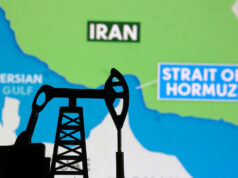
For ASEAN economies, the immediate concern is energy. A large portion of the world’s oil shipments pass through the Strait of Hormuz. Any disruption in that corridor has the potential to drive oil prices sharply higher, pushing up transportation costs, inflation, and the cost of doing business across the region. Countries that rely heavily on imported fuel, including the Philippines, are particularly sensitive to such shocks.
Higher oil prices ripple quickly across the economy. Manufacturing becomes more expensive as production costs rise. Logistics companies face higher fuel expenses. Airlines, shipping firms, and public transport operators must adjust fares or absorb losses. Food prices eventually follow because agriculture and distribution are energy intensive. For businesses operating on thin margins, these pressures accumulate quickly.
In the short term, therefore, the Middle East tensions present clear economic risks.
But global crises rarely stop at creating risk. They also rearrange the economic landscape.
History shows that major geopolitical disruptions often trigger shifts in investment flows and supply chains. The trade tensions between the United States and China several years ago pushed manufacturers to diversify production locations. Vietnam, Thailand, and Indonesia benefited as companies looked for alternative bases in Southeast Asia. The war in Ukraine accelerated Europe’s search for new energy partners and new supply routes.
In each case, instability in one region created opportunity in another.
This is where the ASEAN’s strategic position becomes important. Despite differences in political systems and economic structures, the region has largely maintained a posture of neutrality in global conflicts. ASEAN countries continue to engage with major powers across the spectrum while avoiding alignment with any single geopolitical bloc.
For global companies navigating uncertainty, that neutrality is valuable. Investors tend to look for locations that offer stability, predictable regulation, and access to growing markets. The ASEAN offers all three.
The region is home to more than 680 million people and one of the fastest growing digital economies in the world. Intra-regional trade continues to expand, supported by economic integration initiatives and growing connectivity among member states. Demographically, the ASEAN remains one of the youngest and most dynamic regions globally.
This combination makes Southeast Asia an attractive destination for capital seeking stability amid global turbulence.
However, opportunity does not automatically translate into advantage. It requires strategic thinking from both governments and businesses. In moments like this, leadership means looking beyond the immediate headlines and asking what structural shifts may follow.
For Filipino CEOs and business leaders, the more useful question is not whether geopolitical tensions will affect the global economy. They will. The more important question is how companies can position themselves before those changes fully unfold.
One area where businesses can act immediately is supply chain diversification and regional partnerships. Many companies still rely heavily on a single country for key components or manufacturing inputs. That approach worked in an era when globalization was predictable and trade flows were stable. But geopolitical tensions, trade restrictions, and logistical disruptions have shown how fragile concentrated supply chains can be.
Filipino companies can begin strengthening partnerships across the ASEAN, building supplier networks that span Vietnam, Indonesia, Thailand, and other regional markets. Even partial diversification can significantly reduce vulnerability. Companies can also explore joint ventures or regional production hubs that allow them to serve multiple markets within Southeast Asia. In the long run, firms that build regional supply ecosystems will be better positioned not only to withstand shocks but also to participate in the region’s expanding intra-ASEAN trade.
Energy resilience is another strategic priority that deserves more attention in boardrooms. The volatility created by global conflicts often shows up first in energy prices, and these shocks can persist longer than expected. Businesses that reduce their exposure to energy fluctuations gain a powerful competitive advantage during periods of instability.
Some companies are already exploring long-term power purchase agreements with renewable energy providers. Others are investing in energy-efficient technologies, modernizing equipment, or integrating solar generation into their operations. These steps may appear operational at first glance, but they increasingly shape long-term cost competitiveness. In an environment where oil prices can swing sharply due to geopolitical developments, companies with more stable energy costs are better able to plan, invest, and expand.
A third area where businesses should focus is productivity and digital capability. As labor markets tighten and competition intensifies, companies that harness emerging technologies to improve decision-making and efficiency will gain an edge. Artificial intelligence (AI) is beginning to play a role here, not as a futuristic concept but as a practical tool for forecasting demand, optimizing logistics routes, analyzing customer behavior, and improving operational planning.
Filipino companies do not need massive investments to begin exploring these capabilities. Even modest applications of data analytics and AI tools can improve forecasting accuracy, reduce waste, and strengthen operational agility. Organizations that start building these capabilities today will be far more resilient when economic conditions become unpredictable.
None of these moves are dramatic on their own. But together they reflect an important shift in mindset.
For many years, business leadership focused primarily on operational efficiency. Companies optimized supply chains for cost, expanded into new markets, and embraced globalization as a relatively predictable system. That world is changing.
Today’s business leaders must think more broadly about geopolitical developments, energy security, supply chain resilience, and technological capability. Strategic awareness is becoming as important as operational expertise.
This shift does not mean retreating from globalization. Rather, it means adapting to a more complex global landscape where resilience and flexibility matter as much as scale.
Periods of instability often reveal which economies and institutions are capable of responding with foresight. The ASEAN has the potential to demonstrate that capability. If the region strengthens cooperation, invests in resilient infrastructure, and deepens economic integration, it can emerge stronger from global disruptions rather than weakened by them.
Leadership, after all, is not defined only by how we perform in times of stability. It is defined by how we respond when the environment becomes uncertain.
For the ASEAN and for the Philippines, the current geopolitical tensions are a reminder that the global economy is constantly evolving. Risks will always exist. But within those risks also lie opportunities.
The challenge for leaders is to recognize them early and act with clarity. When the world becomes more uncertain, regions that offer stability, openness, and strategic vision become even more valuable.
In that environment, the ASEAN has every reason to step forward and think not just defensively, but strategically.
Dr. Donald Patrick Lim is the founding president of the Global AI Council Philippines and the Blockchain Council of the Philippines, and the founding chair of the Cybersecurity Council, whose mission is to advocate the right use of emerging technologies to propel business organizations forward. He is currently the president and COO of DITO CME Holdings Corp.