Philippines seen to be more affected by oil shock than Asia-Pacific peers
By Katherine K. Chan, Reporter
THE PHILIPPINES may bear the brunt of the global oil crisis amid the widening conflict in the Middle East compared with its peers in the Asia-Pacific region, a think tank said.
ING Think Regional Head of Research for Asia-Pacific Deepali Bhargava said the country might be worse off than its neighboring economies due to its vulnerability to oil price movements and limited subsidies.
“Several economies like Indonesia, Thailand and India are still partially shielded by fuel subsidies or regulated pricing, which dampens the direct pass through from global oil markets,” she said in a commentary released late on Monday. “On the other hand, the Philippines — also the worst impacted by higher oil prices — tends to see a stronger inflation hit because retail fuel prices are more market-driven and subsidies are limited.”
The Philippines, which imports at least 90% of its oil supply from the Middle East, could see its inflation climb up to 0.4 percentage point (ppt) for every 10% increase in oil prices, according to Ms. Bhargava.
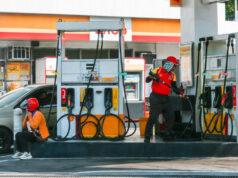
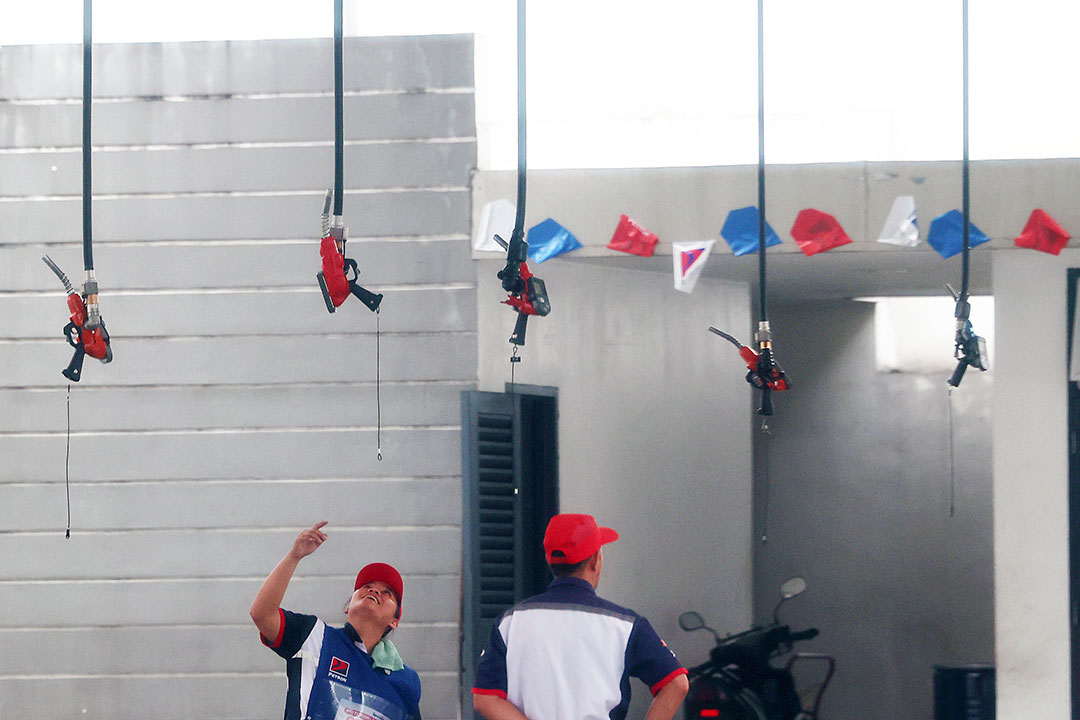
On Tuesday, local fuel retailers imposed over P1-per-liter price increases, marking the 10th straight week of hikes for diesel and kerosene and eighth consecutive week for gasoline.
The Department of Energy has warned that pump prices in the country will continue to spike amid escalating tensions in the Middle East, which is expected to last weeks.
Meanwhile, Pantheon Macroeconomics said the global oil shock has so far brought a “marginal” impact on inflation, though noted that they could raise their full-year Philippine inflation forecast to 2.8% from 2.6%.
“It’s certainly a concern considering that the Philippines is a net oil importer,” Miguel Chanco, chief Emerging Asia economist at Pantheon Macroeconomics, told BusinessWorld in an e-mail. “But, as things stand, which is an important caveat, the futures market suggests that the current spike in oil prices will eventually recede in the second half of this year.”
In 2025, headline inflation settled at 1.7% after a 1.8% uptick in December. The full-year print eased from 3.2% in 2024 and was the slowest rate in nine years or since the 1.3% clip in 2016.
However, inflation may pick up for a third straight month as costlier oil, electricity and rice could bring the headline print to 2.4% in February, according to the median estimate of a BusinessWorld poll of 17 analysts.
Most economic managers, if not all, have been expecting inflation to be on an uptrend starting this year, with some seeing it potentially hitting the upper end of the central bank’s 2%-4% target.
For Emilio S. Neri, Jr., lead economist at Bank of the Philippine Islands (BPI), rising energy prices amid ongoing geopolitical tensions could drive inflation toward 4% in the coming months.
“The escalation introduces a renewed geopolitical risk premium into global markets, primarily via oil,” he said in a commentary. “For the Philippines, higher energy prices compound already elevated rice-driven inflation risks, potentially pushing headline inflation toward 4% in the coming months.”
“A renewed leg higher in global oil prices would amplify second-round effects through transport, electricity, and logistics costs, potentially broadening inflationary pressures beyond food and fuel,” Mr. Neri added.
ING’s Ms. Bhargava shared the same sentiment, noting that prolonged price shocks and foreign exchange volatility could bring Philippine inflation closer to 4%.
“Our base case had inflation across Asia rising but still staying within most central bank targets,” she said. “But a price shock of this magnitude — if it lasts — coupled with currency depreciation could push inflation, for example, in the Philippines to the upper end of Bangko Sentral ng Pilipinas’ (BSP) 2-4% inflation target, increasing the pressure on the central bank to hold rates instead of cutting further.”
Mr. Neri also noted that the BSP’s easing room may narrow if West Texas Intermediate oil price would reach $80 per barrel through June or if rice inflation keeps accelerating on a monthly basis.
The Monetary Board has been on an easing path since August 2024, having slashed the key policy rate by a total of 225 basis points to an over three-year low of 4.25%.
Following their first policy meeting this year, BSP Governor Eli M. Remolona, Jr. said they are now less certain about their policy outlook as they see tentative signs of economic recovery, even as their inflation expectations remain anchored.
FURTHER EASING
On the other hand, Capital Economics Chief Asia Economist Mark Williams and Asia Economist Gareth Leather still expect the BSP to keep cutting rates as they see a 0.5 ppt uptick in Philippine inflation, considering an $80-per-barrel Brent crude oil price, as “not a major concern.”
“Given the starting point — inflation in most countries is at or below target — this would not be a major concern,” they said in a commentary. “We would continue to expect further policy easing in several economies, most notably the Philippines and Thailand.”
However, they noted that the central bank may pause once oil prices hit $100 per barrel as it could push inflation up by over one percentage point.
Meanwhile, BPI’s Mr. Neri said they see the peso depreciating to P59.70 by yearend amid the ongoing conflict.
On Monday, the peso slid back to the P58-per-dollar level, breaking its five-day streak of closing at the P57-a-dollar mark, as uncertainty arises from the Middle East.
It weakened further to close at P58.435 against the greenback on Tuesday, down 23.5 centavos from its P58.20 finish on Monday, based on Bankers’ Association of the Philippines data.
Mr. Neri also noted that the conflict may disrupt remittance flows, especially with over 2.4 million Filipino migrants and laborers based in the Middle East.
“The conflict also poses downside risks to remittance flows,” he said. “Nearly 40% of overseas Filipino workers (OFWs) are based in the Middle East. However, cash remittances from the region accounted for approximately 18% ($6.5 billion) of total inflows ($35.6 billion) in 2025, suggesting that while risks are elevated, the overall impact may be contained than imagined unless the conflict significantly escalates.”
Last year, OFW remittances grew by 3.3% year on year to hit a record-high of $35.634 billion, with 18.19% or $6.481 billion sent home from the Middle East.