

Are xEVs really the transformative force to reshape the mobility landscape?
ELECTRIFIED MOBILITY is not the wave of the future. Arguably, it is the rage of today.
Sales of xEVs (electrified vehicles) in the Philippines have soared significantly. At the start of the current decade, recorded sales of xEVs were practically nil at 358 units, up from 195 in 2019. Granted that sales in 2020 were seriously disrupted by the COVID-19 pandemic, one could argue that there really was not much of an appetite for electrified models in the market. The technology was not fully understood, the car designs did not excite, prices were at a significant premium over their internal combustion engine (ICE) counterparts, and offerings were limited.
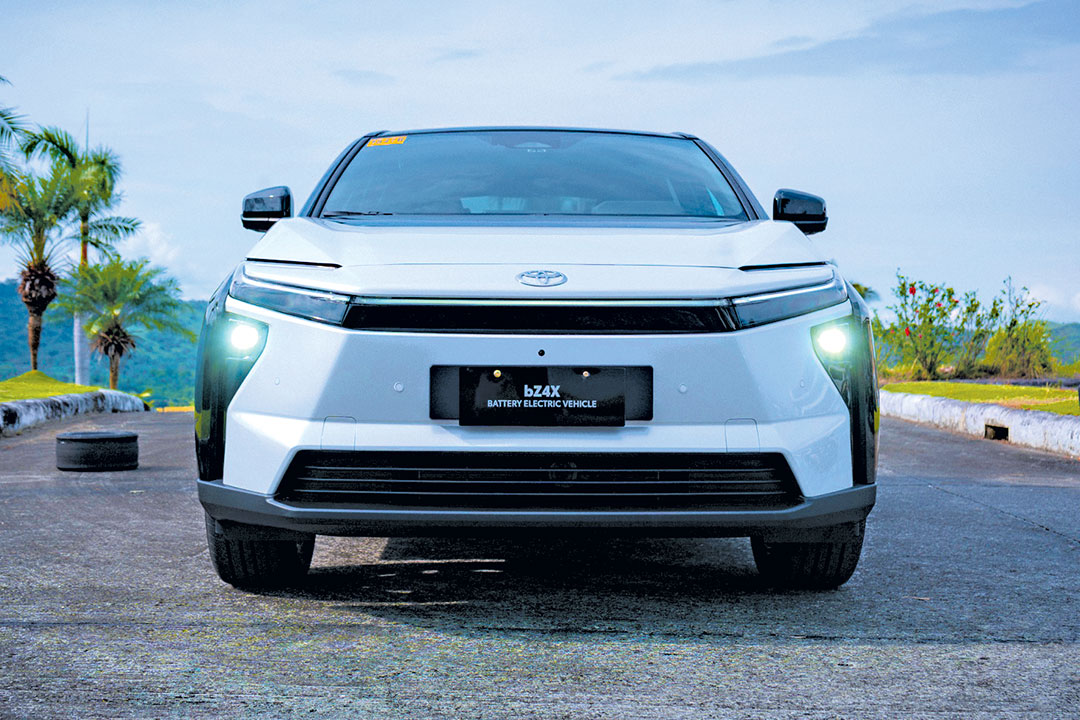
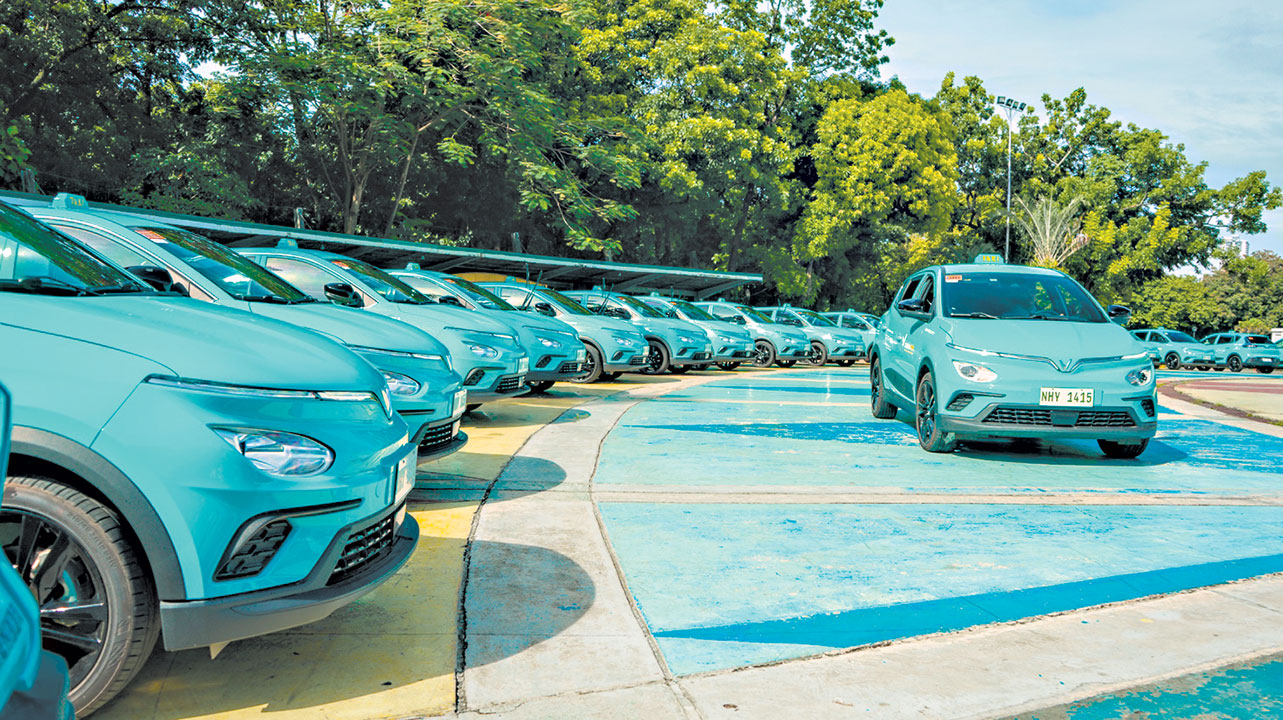
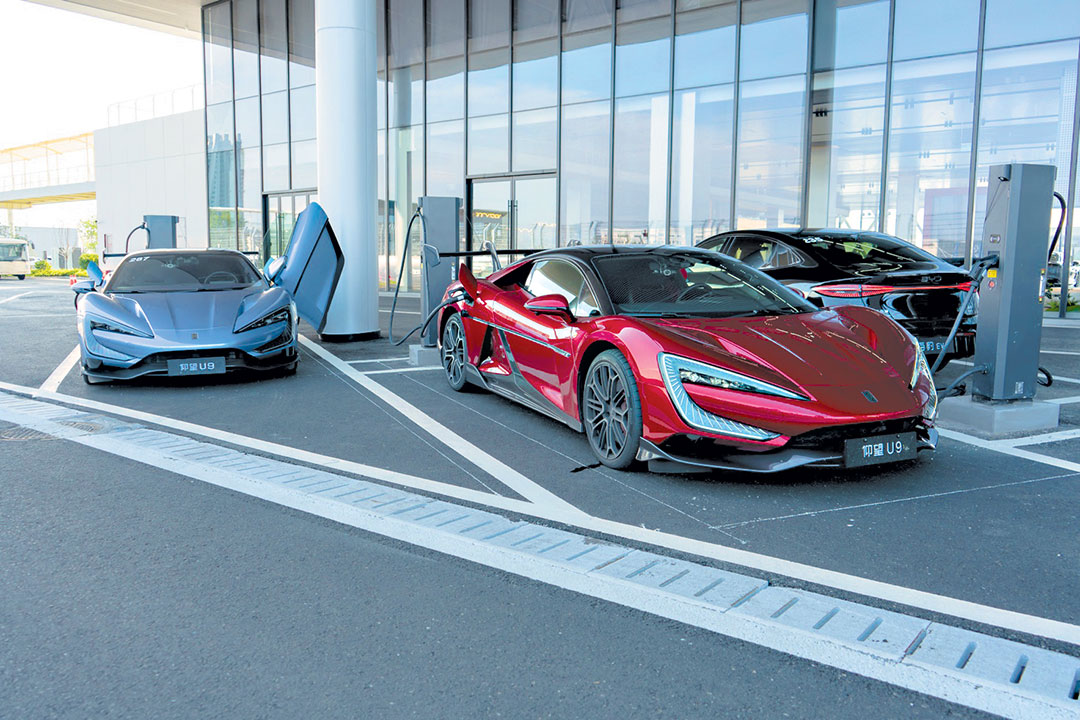
Post-pandemic, however, a new awareness of electrified mobility surfaced. Let’s give credit where credit is due; much of this was an offtake from the succession of entries of Chinese auto brands into the country. The Sino OEs that trooped into the local market were Geely, MG, and GAC, among others. And while they brought in a slew of their traditional ICE models, they also started poking the market with their xEV products. It was inevitable.
NEW ENERGY VEHICLES
After all, much of their production and sales in their own domestic market were comprised of so-called new energy vehicles (NEV) that the Chinese government promoted aggressively in the push for a more vibrant automotive industry. Japanese OEMs, on the other hand, were slow to introduce xEVs to the Philippines.
As the number and variety of xEV models increased, so did sales. One of the economic theories that stuck with me from school was that supply creates its own demand; it certainly proved itself right in this case. Sales of xEV models rose to around 1,200 units in 2021 and then 3,600 in 2022. These were not spectacular numbers in terms of absolute volume, but they were reflective of significant growth percentages. When the economy — and auto market — fired up after COVID, xEV sales surged to about 11,500 units in 2023 and then even more dramatically to 24,300 units in 2024.
Last year, another electrified segment was “unlocked” here: the plug-in hybrid electric vehicle (PHEV). This unleashed a new wave of demand — pushing sales to almost 59,000 units last year, accounting for 12% of the whole four-wheel market compared to only 5% the prior year. Comparably, the penetration of xEVs in the Philippine market still drags versus Thailand and Indonesia which saw 45% and 22% adoption ratios, respectively, in 2025.
The numbers tell the tale. Electrified mobility has made a mark in the local auto market. Are they here to stay, though? As late as 2019, it was reported that xEVs only accounted for 3% of the global auto market. In the short span of five years, that share has expanded to 20% with a disproportionately massive 60% adoption in China.
Integral to projecting the sustainability of xEV adoption is understanding the “why” of electrified mobility. Indeed, why have electrified cars become more pervasive in today’s auto markets worldwide? Are they really the transformative force that will reshape the mobility landscape?
Why buy an xEV? Is it cheaper or more affordable than ICE models? I think not. It is hard to make a direct comparison, but if we compare an ICE Yaris Cross with its sister hybrid electric vehicle (HEV) variant, the electrified version carries a higher price tag. The conventional wisdom is that electrified vehicles are more expensive to produce due to the prohibitive costs of the battery packs. To be sure, these costs have come down significantly, but they are still on the high side — not to mention that supply chains for xEVs are not yet as developed as those for ICE models. Material costs can be higher for the former than the latter as well, and production scale for xEVs is significantly lower than for their ICE counterparts relative to manufacturing investments, resulting to higher fixed costs. In China, though, the costs and scale of production are more mature than elsewhere. Admittedly, the Sino automakers are ahead of the curve in cracking the code for lower costs of xEVs.
But why are some xEV models priced tightly against comparable ICE models? Some producers are even so bold to claim that they have debunked the “myth” that xEVs are more costly than ICE cars. The answer lies in subsidies. Many governments extend fiscal subsidies to xEV makers to realize more affordable prices and, thus, spur adoption. These subsidies are extended with the aim of achieving environmental sustainability goals and enhancing energy security.
In China, incentives were extended to producers as well as to users of xEVs as part of their blueprint to develop the domestic auto industry. I would argue that, indeed, these subsidies triggered the meteoric rise of xEV adoption in China. It was a truly well-engineered and bold plan. The United States, EU countries, Australia, and other developed countries also went down the same path — not only extending subsidies but also instituting disincentives towards production and ownership of ICE models. Many ASEAN countries did likewise. In the Philippines, xEVs enjoy tax and tariff advantages over gas-powered equivalents. They also enjoy exemption from the Unified Vehicular Volume Reduction Program (number coding) regulations.
Without subsidies, the most likely reality is that xEVs would carry a cost and price disadvantage versus ICE vehicles. The question then becomes: How long governments can continue extending subsidies? In fact, China has reversed course on the extension of subsidies to xEV buyers. The USA has also similarly retracted incentives. Closer to home, Thailand, Indonesia, and Malaysia have also ended some of the incentives granted to xEVs. In line with these reversals, sales expansion has or is expected to plateau, if not stall altogether.
Over time, production costs of xEV’s are expected to continue dropping as demand grows. For now, though, electrified models may see a rise in retail prices once subsidies are withdrawn. But because costs of production in China are lower, their car makers enjoy significantly better margins. This might allow them to absorb the cost of subsidies while still keeping reasonable profit margins.
CLIMATE CHANGE
In sum, price might be a short-term, much-needed jump-start for xEVs, but it may not be a sustainable demand driver in the midterm. So, why else would one buy an xEV then — a growing social conscience for environmental responsibility, perhaps? Climate change has increasingly become top-of-mind for peoples around the world.
Undoubtedly, climate change is a clear and present danger. It requires urgent action. A report by the United States Environmental Protection Agency showed that 15% of global greenhouse gas (GHG) emissions in 2019 came from the transport sector, primarily road transport. In the Philippines, a report by Climate Tracker Asia showed the contribution of the transport sector to GHG in 2020 was 22.8%, 88% of which came from road transport.
Reducing tailpipe emissions from vehicles must be a part of any lasting solution to reducing GHG. This is true. However, in and of itself, this can potentially worsen emission levels. The goal, after all, is to achieve carbon neutrality. This cannot be achieved only by adopting zero emission vehicles. We need to grasp, too, the attendant rise or fall in the entire carbon footprint of xEVs — including, for example, the emissions from the production of the car, the operation of the car or the generation of electricity to charge and run them.
Over their full life, xEVs have a lower carbon footprint than ICE equivalents. What varies, though, is how soon you will break even. The production of an xEV is more carbon-intensive due to the time and amount of rare earths it uses. An article by Dave Rouse, CEO of CarbonClick, claims that battery electric vehicles (BEVs) have a larger carbon footprint to produce up front. He says it generally takes about three tons more, citing 13 tons for a BEV in China versus 10.5 tons for an equivalent ICE vehicle. In other countries, he claims, it is about 10 tons versus seven tons for BEVs and ICEs, respectively.
How you charge your vehicle also impacts your carbon footprint. If you have the advantage of solar panels at home, you can really reduce your charging emissions to zero. However, if you need to get on the grid to charge your vehicle, then how electricity is generated in your locality can result to higher emissions.
BREAKEVEN
Mr. Rouse cites the case of Australia, for example, where renewable energy accounts for 40% of its electricity generation. In his estimate, it will take running your BEV around 103,500km before it becomes more CO2-friendly than its equivalent gas-powered vehicle. In Poland, where 70% of electricity is generated by coal, the breakeven — according to Mr. Rouse — is 165,000km. In the Philippines, we only use about 20% of renewable energy for our electricity so our breakeven could likely be closer to 200,000km, in my estimation.
In countries where renewable energy is primarily used to generate power, the breakeven is much shorter. In New Zealand — where 75% to 80% of their electricity comes from renewable sources — the breakeven is reported by Mr. Rouse at only 23,600km. In Norway, 99% of energy is renewable so the breakeven must be even much shorter.
Since charging stations are also farther apart than petrol kiosks, there is an added footprint resulting from longer travel distances to your charging point. Then, there is also the matter of being able to reuse or recycle your battery when it hits its end-of-life. This is still in its early stages but, surely, the network for recycling centers is growing.
Yes, a shift to electrified vehicles can reduce your carbon footprint. But in some instances, it will not be immediate and, in the interim, may result to a larger carbon footprint for you.
VIABILITY OF ELECTRIFIED
There are many other points to consider — and argue — about why we would buy an xEV. Is it more fun to drive? Arguable, depending on how you define fun. Is it cheaper to maintain? Yes, because an xEV has significantly less parts and is less complex than an ICE. Is it cheaper to run? Yes, because electricity is cheaper than gasoline. But you will need to manage your range anxiety until such time as the charging spine in your area is more developed.
We have no choice but to work towards carbon neutrality to address compelling climate concerns. Sustainable mobility is a big part of the solution and electrified mobility is a key driver. But we need as many options as possible — HEV, PHEV, BEV, FCV and, yes, even more fuel-efficient ICE vehicles. There are multiple pathways to achieve carbon neutrality. As well, the pace at which motorists will adopt new energy vehicles will vary depending on many factors — price, the charging infrastructure, energy generation and the regulatory framework.
Sustainable mobility is a function of the partnership among governments, car makers and, ultimately, car users. At the onset, governments jump-start the process by instituting emission regulations and providing subsidies. Over time, though, subsidies may be withdrawn, thus affecting affordability. Automakers aggressively invested in the development and production of xEVs. The number of models in the market have increased by a lot. While takeup was steep in the early years, demand has plateaued. This undermines the necessary scale to recover investments and reduce production costs. Consequently, some OEs have backtracked on their aggressive xEV product plans, particularly BEVs.
Car users, though, get to cast the final ballot through their pocketbooks. This requires a high degree of comfort in the operability and value of xEVs. The development of the charging infrastructure is crucial in this respect. But the dilemma is which comes first: investments by the private sector in charging points or the volume of xEVs on the road to make the investments viable? Right now, it seems like a tug-of-war.
Is electrified mobility here to stay? I might argue that it is yet to come in a truly sustainable way.