EDSA protesters demand end to dynasties, corruption 40 years on
By Erika Mae P. Sinaking
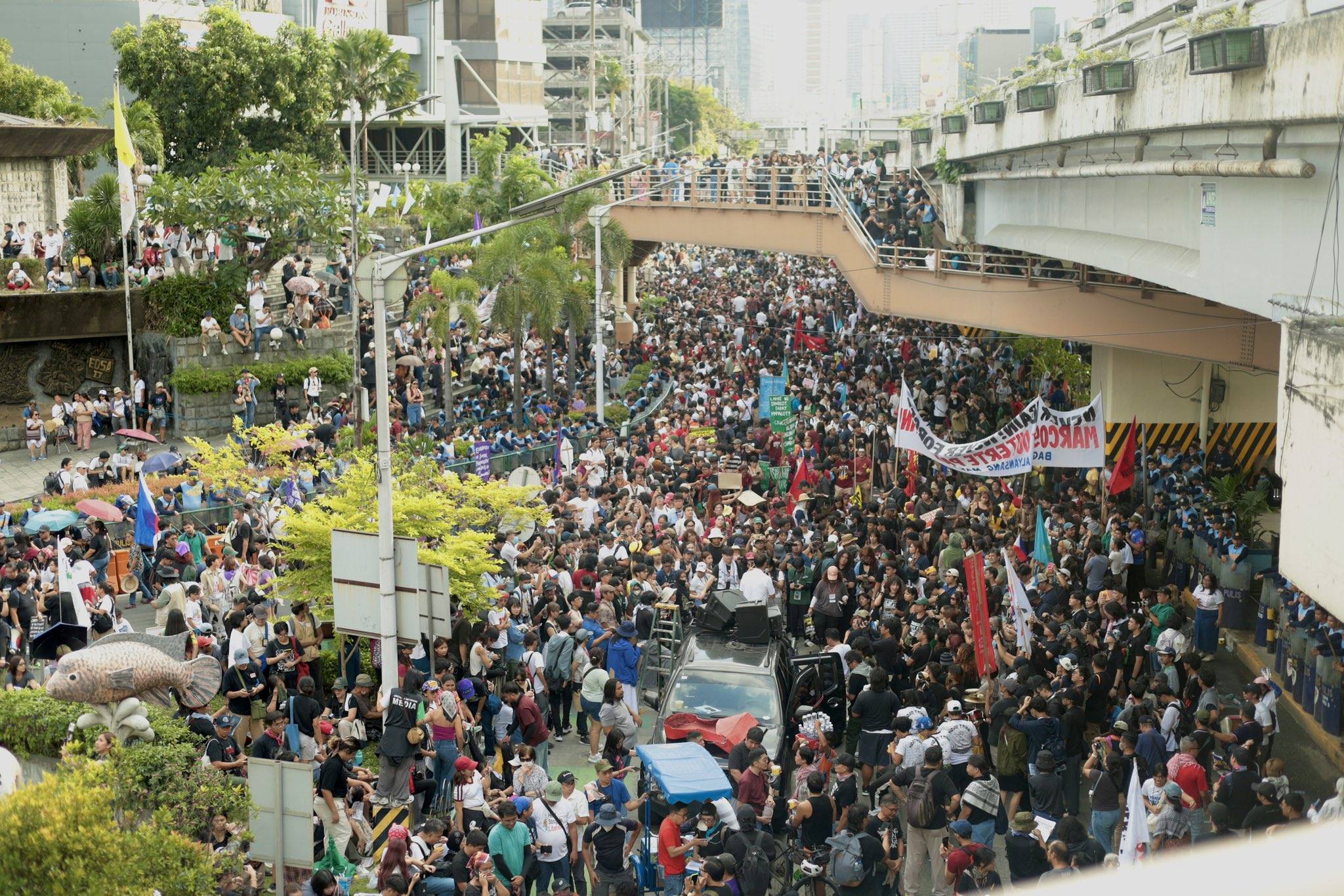
FORTY YEARS after a million Filipinos rose against tanks to end a dictatorship, the spirit of EDSA returned on Wednesday as protesters laid siege to the capital’s main thoroughfare, demanding an end to political dynasties amid a multibillion-peso infrastructure scandal that has worsened poverty across the nation.
The irony of the Philippine political landscape is stark: the bloodless revolt that toppled the late President Ferdinand E. Marcos, Sr., now contrasts with his son, President Ferdinand R. Marcos, Jr., occupying Malacañang. Yet the administration remains largely noncommittal on the significance of the date that forced the Marcos family into exile.
This year’s 40th anniversary events took place despite Mr. Marcos’ declaration of Feb. 25 as a “special working day,” deviating from the nonworking holiday status observed under previous administrations.
“Declaring this an official working holiday doesn’t make sense,” Daniel Franklin Pilario, president of Adamson University, told BusinessWorld during the protest at the EDSA People Power Monument. “If it’s a holiday, it’s for people to celebrate. So in protest, we say, no, it’s an official nonworking holiday so that our staff and our students can come.”
Mr. Pilario said the rally was a response to persistent poverty fueled by the misuse of public funds. “The main cause of poverty is that the money which is supposed to be for the services of the people goes to the hands of the politicians,” he added.
The Philippine National Police estimated the crowd at about 6,000 at the EDSA Shrine and People Power Monument, according to Director of Operations General Ponce Rogelio I. Peñones, Jr.
The protesters included veteran activists, students and religious leaders, unified under the banner: We are the People Power vs. Corruption and Dynasties Then, Now, Tomorrow.
Akbayan Party President Rafaela David called for an “electoral revolution” to break the hold of the country’s most powerful families. “We can no longer tolerate power and politics being concentrated in the hands of few families, like the Marcoses and the Dutertes,” she said in a statement. “Malacañang should no longer serve as a home for dynastic nepo-babies.”
Party-list Rep. Percival V. Cendaña said a genuine anti-political dynasty law would strengthen democracy and fulfill one of EDSA’s long-unrealized promises.
“The abolition of political dynasties is a long-delayed task of EDSA,” he said. “Forty years since the February People Power Revolution, it is time to end their control over our democracy and economy.”
The administration’s stance remained cautious. “It’s part of history,” Palace Press Officer Clarissa A. Castro told a news briefing. “What happened then cannot be erased. The courage of the Filipinos and the acceptance of the event will not be erased from history.”
She added that the President would “study the bills” to restore Feb. 25 as a regular holiday once they reach his desk.
The Catholic Bishops’ Conference of the Philippines (CBCP) in a pastoral letter called for a moral reckoning. Gilbert A. Garcera, CBCP president, noted that corruption, poverty, criminality, lies and treachery continue to plague the nation.
“The enemies are no longer colonial rulers, but corruption, lies, injustice and indifference,” according to the CBCP letter. It urged Filipinos to go beyond the walls of the Catholic Church and demand accountability from those in power.