Palace confident 2026 national budget will withstand SC scrutiny
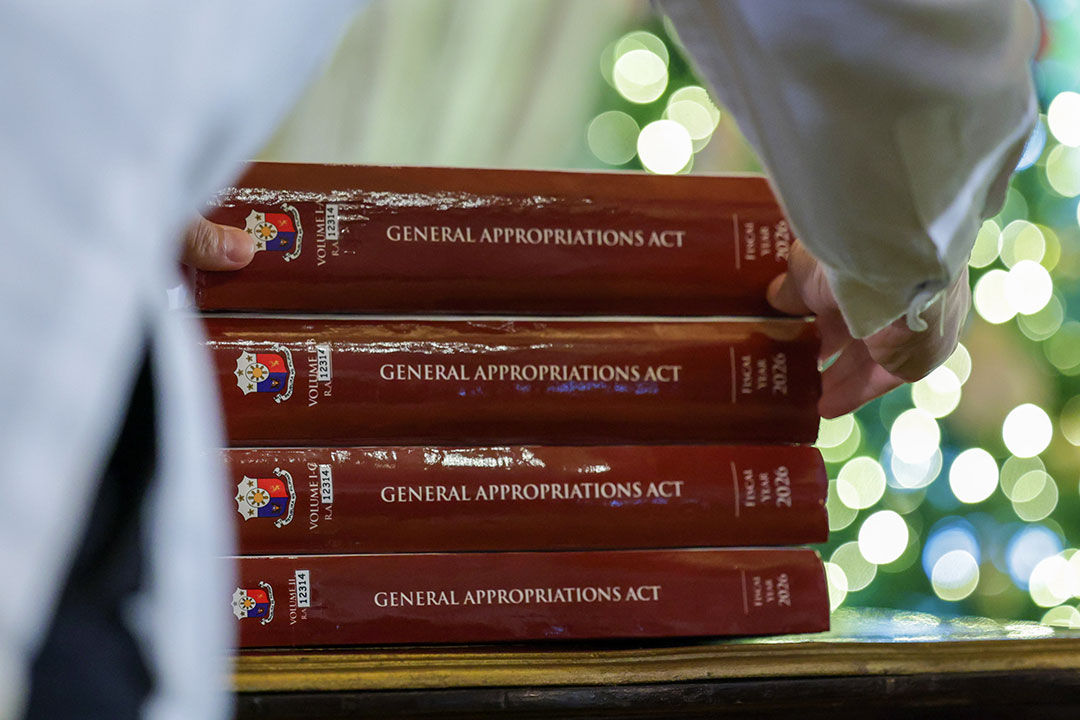
MALACAÑANG said it is confident the proposed 2026 national budget will withstand legal scrutiny, after opposition lawmakers signaled plans to challenge its constitutionality before the Supreme Court (SC).
Palace Press Officer Clarissa A. Castro said the administration respects the right of lawmakers, including Caloocan Rep. Edgar R. Erice and Mamamayang Liberal Party-list Rep. Leila M. de Lima, to question the constitutionality of certain provisions — particularly unprogrammed appropriations — even after Congress moved to reduce the allocations.
“They have the right to go to the Supreme Court and ask whether this portion of the 2026 national budget is unconstitutional,” she told a briefing on Tuesday in Filipino. “If they file a petition, the administration will respond, and we will wait for the Court’s decision.”
President Ferdinand R. Marcos, Jr. on Monday signed the 2026 national budget worth P6.793 trillion, but vetoed about P92.5 billion in unprogrammed appropriations, bringing the reserve funds to about P150.9 billion, the lowest since 2019.
He called the amount the “absolute bare minimum.”
Such funds are contentious because, although intended to give the government flexibility for emergencies or unexpected needs, their excessive or opaque use can weaken transparency and accountability.
Mr. Erice said his legal team is preparing to challenge the 2026 national budget before the Supreme Court, citing the continued presence of unprogrammed appropriations despite the veto.
Asked whether Malacañang is confident the budget can withstand constitutional challenges, Ms. Castro said the President believes the proposal has been carefully reviewed and crafted.
“The President is confident that the current budget is the cleanest and most orderly and that it is for the people,” she said, adding that the administration stands by the legality of the spending plan.
Lawmakers critical of the budget have argued that unprogrammed appropriations — funds that can be released only under certain revenue conditions — violate constitutional safeguards on public spending, an issue that has drawn repeated scrutiny in recent years.
Ms. De Lima on Monday said unprogrammed funds have no place in the budget, citing a Supreme Court ruling on the Philippine Health Insurance Corp. fund transfer case in which Associate Justice Ramon Paul L. Hernando said all forms of unprogrammed appropriations are unconstitutional.
While lawmakers from the Makabayan bloc — ACT Teachers Party-list Rep. Antonio L. Tinio, Gabriela Party-list Rep. Sarah Jane I. Elago, and Kabataan Party-list Rep. Renee M. Co — said the veto of the P92.5 billion in unprogrammed appropriations was merely a “token gesture” meant to divert attention from more pressing concerns.
They added that the 2026 budget signed by Mr. Marcos still retains so-called “allocables” in the Department of Public Works and Highways, which they warned could open the door to corruption.
Senator Panfilo M. Lacson, Sr. earlier flagged at least five Marcos Cabinet members had billions of pesos in allocable funds in the 2025 budget amid the continuing probe of a multibillion-peso flood control scandal. — Chloe Mari A. Hufana