Home Blog Page 9387

ABS-CBN says it has no unpaid bank obligations nor tax liability

AMID criticisms and the latest move from the government to revoke its franchise, embattled media network ABS-CBN Corp. on Wednesday clarified that it has no unpaid taxes to the Bureau of Internal Revenue (BIR) nor unpaid obligations to any bank.

In a statement, ABS-CBN said it had secured last year a tax clearance certificate from the Tax bureau, and that it has “no outstanding tax liability.”

ABS-CBN also said that it has been cited as one of the top 200 non-individual taxpayers in the country.

“We have no unpaid obligations to any bank or financial institution,” it added.

On Monday, Solicitor General Jose C. Calida filed a lawsuit accusing ABS-CBN of violating several laws, including one against foreign ownership in media.

The media network called the lawsuit “an effort to shut down ABS-CBN to the serious prejudice of millions of Filipinos who rely on the network for news, entertainment and public service.”

It said it complies with “all pertinent laws governing its franchise and has secured all necessary government and regulatory approvals for its business operations.” — Arjay L. Balinbin

Boeing says Southeast Asia needs 4,500 new planes over 20 years

BOEING CO. said airlines in Southeast Asia will need 4,500 new aircraft over the next two decades to meet demand from the region’s growing middle class.

The expected new orders in the region are worth $710 billion at list prices, the company said Wednesday in its market outlook briefing at the Singapore Airshow.

Regional growth will be driven by carriers from Vietnam, Thailand and Indonesia, which have made the top 10 list of countries that added the most airline seat capacity since 2010, according to Randy Tinseth, Boeing’s vice president of commercial marketing.

“With an expanding middle class, in a market that continues to liberalize, coupled with a strong domestic, regional and international tourism sector, Southeast Asia has become one of the world’s largest aviation markets,” Mr. Tinseth said.

The Chicago-based planemaker maintained a bullish outlook amid a decade of supercharged aerospace growth, even after failing to sell any commercial planes in January, extending a slump that has strained the company’s finances since two deadly crashes grounded the best-selling 737 Max.

The jet has been grounded worldwide since March, after a pair of crashes within five months killed 346 people. Global trade tensions, centered on the dispute between the US and China, have also cast a shadow on the company.

The company’s projection underscores the importance of getting the Max — Boeing’s most popular model and the workhorse for many airlines across the world — back in service. It also has to convince customers the jetliner will be safe. — Bloomberg

Low-alcohol wines that taste great

By Elin McCoy, Bloomberg

MAYBE you tried out dry January and it wasn’t for you, or your list of New Year’s resolutions still includes cutting back on alcohol — at least a bit — but you don’t want to swear off wine entirely. Believe me, you’re not alone.

The “no-and-low” wellness trend is well under way in the wine world, with the market for low- and no-alcohol drinks expected to grow 32% by 2022 from its 2018 status, according to John Gillespie of US market-research firm Wine Opinions. The first trade show devoted to such products premieres in London in June.

“Drinking a bottle of 15%-alcohol wine is the equivalent of drinking a bottle of 12.5% wine — then downing three strong vodka tonics,” says importer Bartholomew Broadbent of Broadbent Selections. The difference between high and low is much bigger than you might think.

In truth, wine doesn’t need to have a lot of alcohol to taste good. Table wines today range from about 7% to 16% ABV, and at the lower end — definitely less than 12.5%, with anything below 10% considered very low — you can get plenty of flavor without getting bombed.

Fifteen years ago, at his eponymous New Zealand winery, low-alcohol pioneer John Forrest first tried creating a 9% “typical Marlborough savvy” (slang for sauvignon blanc), which usually clocks in at 12% to 14%. Sauvignon blanc is a good low-alcohol candidate because its punchy, intense flavors and aromas always show up, though experiments removing alcohol through technology such as reverse osmosis and spinning cones sucked out aroma and flavor as well as texture. In taste terms, higher alcohol generally translates into weight and density, so with less, wines feel lighter in your mouth.

Instead, Forrest turned to nature: During fermentation, yeast gobbles up sugar in the grape juice and turns it into alcohol, so less sugar in the grapes means less alcohol in the wine. To slow down the accumulation of sugar, he pruned differently and allowed a canopy of leaves to shade the grapes from sun and heat.

By 2012 his 9.5% ABV Doctors’ sauvignon blanc was winning competitions. “It had gold medal flavors, but not gold medal textures,” he wrote in an e-mail. “But now we’re succeeding.”

Six years ago, Forrest joined 18 other top wineries in the government-funded NZ Lighter Wines initiative to extend his idea and help make New Zealand the world’s No. 1 producer of naturally low-alcohol wines (less than 10% ABV) that are just as delicious as those at full strength. Already the category amounts to NZ$35 million ($22.3 million) in sales.

I’ve tasted some of them in New Zealand and in London. While only a handful are in the US (see below), more are arriving this spring, including Forrest’s excellent Doctors’ rosé and sauvignon blanc.

Winemakers in other regions around the world have also been making lighter wines for decades, albeit without government initiatives. Health-conscious entrepreneur, biohacker, and wine lover Todd White started tracking them down five years ago at natural wine fairs and ended up founding Dry Farm Wines, a club that promises “a healthier way to enjoy wine.”

“Let’s face it,” he told me, “alcohol is a neurotoxin.” He now sells 2 million bottles of low-alcohol wine a year.

The natural wines in White’s subscription service are lab-tested to ensure that not only is the listed alcohol content accurate, but also that they’re sugar-free, low in sulfites, and contain no chemical additives. He says they’re also keto- and paleo-friendly. The grapes must come from certified-organic or biodynamic dry-farmed (unirrigated) vineyards. The ones I’ve tried are absolutely delicious.

One strategy for finding low-alcohol wines at your local shop is to look for bottles from cool-climate regions, where grapes ripen more slowly and thus end up with less alcohol. That means muscadet in the Loire Valley; Spain’s green, rainy Basque Country; Germany; Portugal’s Vinho Verde region; and Val d’Aosta and other parts of northern Italy.

Grape variety and winemaking styles also have a huge impact on alcohol. It’s easier to make a low-alcohol riesling than a zinfandel, for instance. Sparkling wine usually has less; ditto some sweet wines. Check the label for alcohol content, though you’ll probably have to hunt hard — the number is usually in micro type. Or use this list below as your guide.

LOWER-ALCOHOL WINE BUYING GUIDE

NV Broadbent Vinho Verde ($8) — With fresh floral aromas and green plant and lime flavors, this zippy white from cool and rainy northwest Portugal is ideal with shrimp or scallops. It’s 9% alcohol.

2018 Aphros Ten ($11) — This is the lightest white from Vinho Verde winemaker Vasco Croft, one of Portugal’s organic and biodynamic pioneers. With tart acidity, tangerine, and mineral flavors, it’s intense and refreshing at 10% ABV.

2018 Brancott Estate Flight Song Pinot Grigio ($13) — This huge New Zealand winery promotes its low-alcohol (9%) Flight Song range as “low-calorie.” The pinot grigio, with its creamy texture and pear and honeysuckle aromas, is better than the sauvignon blanc.

2018 Giesen Pure Light Sauvignon Blanc ($15) — Available in the US later this month, this bright white has a delicious sweet/sour character similar to Giesen’s regular sauvignon blanc but is slightly lighter in body. A zero-alcohol version debuts in late spring.

2018 G.D. Vajra Moscato d’Asti ($17) — With soft white peach and orange blossom aromas and semisweet, luscious ripe fruit flavors, Vajra’s lightly sparkling moscato is always one of Piedmont’s best, with a mere 5.5% alcohol.

2016 Avinyo Brut Cava Reserva ($20) — Spanish cavas — like this one, with soft bubbles and apple-y flavors — are made the way Champagne is but with different grapes. The wine is 11% alcohol.

NV Jean-Paul Brun Domaine des Terres Dorees FRV 100 ($20) — Star Beaujolais winemaker Jean-Paul Brun makes this vibrant, fruity-with-a-hint-of-sweetness pét-nat rosé from gamay grapes. It’s 7.5% alcohol and ideal with a tangy cheese.

2018 Ameztoi Txakolina Rubentis Rosado ($26) — Txakoli wines from Spain’s Basque Country are all lightly fizzy and low in alcohol. This shimmering pink one is bright and crisp, with intense notes of red berries and 11% alcohol.

2015 Keep Wines Albarino ($28) — Yes, California can produce lower-alcohol wines. This delicious, salty, mineral white from a single vineyard in the Sacramento River Delta is 11% alcohol.

2018 Maximin Grunhaus Riesling Kabinett Abtsberg ($38) — Grown on steep slopes above the Moselle River in Germany, this lively riesling has complex aromas and flavors of green herbs, minerals, fresh limes, and smoke. It’s only 8.5% alcohol.

2018 Rote Biene Hollenburg (in six-bottle monthly selection, $159) — This Austrian red blend of zweigelt and blauer portugieser grapes in the Dry Farm Wines portfolio clocks in at 10.26% alcohol. Its fresh, grapey, lip-smacking flavors will make you crave another glass.

2018 Riberach Peroraison (in six-bottle monthly selection, $159) — Soft, lushly fruity, and sophisticated, this mouth-filling red from the foothills of the Pyrenees has a rich, succulent texture despite being only 11% alcohol.


MetroPac Movers building logistics center in Laguna

METROPAC Movers, Inc. (MMI) is building a logistics center on a 52,000-square meter land in Sta. Rosa City, Laguna, which will have facilities for dry goods and refrigerated goods.

The logistics unit of Metro Pacific Investments Corp. (MPIC) said in a statement Wednesday it is about to begin construction on the project, which it claims is the “most modern logistics center in the Philippines.”

The facility will be composed of a dry goods warehouse with 41,000 pallet positions and a refrigerated warehouse with 17,500 pallet positions.

“The Sta. Rosa logistics center will integrate with the operating systems of our key customers and drive supply chain efficiencies… We know the pain points of the logistics industry…and these facilities and operating systems are being designed specifically to address these issues,” MMI President and Chief Executive Officer Jose Ma. K. Lim said in the statement.

He said the logistics center will focus on “critical metrics” such as the truck turn-around times, inventory accuracy, product security and service quality. This means putting topnotch product security systems, radio frequency inventory control systems and fire and safety systems in the facility.

The refrigerated warehouse, for one, will offer storage temperatures between +20 to -25 degrees celsius — setting a new bar for food safety in the country. “We are very excited to get these facilities built and operational,” Mr. Lim said.

The project is slated for completion by the second quarter of 2021.

After this, MMI is looking to open more logistics centers over the next few years, which Mr. Lim said will be located in major transport arteries to reduce supply chain costs for its customers. MMI will be leasing the Laguna property from Markeenlo Realty, Inc.

Markeenlo President Mark Belo said the company is happy to host MMI for the project.

“Their tenancy also allows us to diversify the risks in our realty portfolio as we pursue other developmental projects,” Mr. Belo was quoted as saying.

MPIC is one of the three key Philippine units of Hong Kong-based First Pacific Co. Ltd., the others being Philex Mining Corp. and PLDT, Inc. Hastings Holdings, Inc., a unit of PLDT Beneficial Trust Fund subsidiary MediaQuest Holdings, Inc., has a majority stake in BusinessWorld through the Philippine Star Group, which it controls. — Denise A. Valdez

Going back to the classics

CASA BUENAS’ elegant interiors.

ENTERING Resorts World Manila’s (RWM) newly opened signature dining outlet is like visiting a refurbished heritage home where you can enjoy familiar home cooked meals.

Headed by RWM Executive Chef Godfrey Laforteza, Casa Buenas offers Filipino-Spanish dishes.

“As soon as you come in, you will already feel the experience. You are already submerging yourself into a different world of cuisine,” Mr. Laforteza told members of the press at last week’s launch.

The new restaurant’s menu includes appetizers such as the Asian-inspired Kumot, a unique take on fresh spring rolls, which Mr. Laforteza described as a love dish. “What’s inside are all the ingredients I love, that’s why kinukumutan ko siya (that’s why I put a blanket on them),” he said.

Mr. Laforteza also paid tribute to his mother-in-law and wife’s recipes by having them on the menu. The Callos De Monserrat is an original recipe by his mother-in-law, while he gives his own tweak on the Garlic Noodle with Crab Meat (a recipe by his wife, theater actress Carla Guevara-Laforteza).

“My wife taught me how to cook and my mother-in-law pushed me to explore the culinary world,” he said.

Other signature dishes include Tuna tartare kilawin with coconut cream pinakurat, premium Grilled Kurobuta pork chop, Cebu lechon-inspired Sinulog roasted lechon manok, high quality Grilled US Angus rib eye steak, and brandy-infused Emperador Strudel.

“I created some of the dishes together with the head chefs of Resorts World. [We had] a lot of tasting with our colleagues. When you see all of them smile on the first bite, that means that [dish] goes on the menu,” Mr. Laforteza said.

The restaurant, which seats 135 guests, has traditional bahay na bato-inspired interiors including capiz shell details, intricate wood marquetry and wood inlays, hand-crafted lattice work, and hand-carved hardwood floors. The restaurant is divided into various areas — the Tapas Bar; Aguador; Sala, Comedor; and La Cupula which is a private dining area which has access to an outdoor walkway; and the Pamilya, a long dining table.

“As soon as you come in, we will make you relaxed and forget everything,” he said.

For the Valentines weekend, Casa Buenas is offering a special dinner menu from Feb. 13 to 15, 6 to 10 p.m. called La Serenata. The six-course menu features an amuse bouchée of Tuna tartare kilawin and Kumot, Gambas and Grilled Octopus for hot appetizers, Salmon yazu dashi soup, Grilled beef tenderloin and Iberico pork jowl as the main courses, homemade pralines for mignardise, and Emperador Strudel for dessert. Dinner for two is priced at P6,000, while an exclusive date at La Cupula is priced at P10,000. The restaurant also offers a group date option at the La Cupula (P15,000 for four people, and P21,000 for six people) and Pamilya (P21,000 for six to eight people, and P30,000 for nine to 12 people).

Casa Buenas is located at the ground floor of the Grand Wing, Resorts World Manila, Pasay City. It is open daily from 11 a.m. to 1 a.m. For reservations, contact 0917-878-8312 and 7908-8988 or e-mail casa.buenas@rwmanila.com. Visit www.rwmanila.com for more information. — Michelle Anne P. Soliman

Alcantara firm lists P694-million debt

ALSONS Consolidated Resources, Inc. (ACR) has re-issued P694 million from its P1.5 billion first tranche of commercial paper issuance with the Philippine Dealing and Exchange Corp.

The Alcantara-led firm said the funding would provide interim capital in its expansion into the renewable energy (RE) sphere.

“We are happy to once again tap the short-term capital market for our working capital needs,” said Robert F. Yenko, ACR chief financial officer, in a statement on Wednesday.

As its initial foray into renewables, the company is building a P4.5-billion 14.5-megawatt (MW) run-of-river hydroelectric power plant at the Siguil River basin in Maasim, Sarangani province. The facility is targeted to start commercial operations in 2022. It will power Sarangani, General Santos City and municipalities of South Cotabato.

“These are exciting times ahead for ACR as we begin to focus on building up our RE portfolio and this facility will greatly help us in these efforts,” Mr. Yenko said.

ACR, which claims to be Mindanao’s first private sector power generating group, has a portfolio of four power plants in the southern island with a total capacity of 468 MW serving more than 8 million consumers in 11 provinces and 14 cities, including Cagayan de Oro, General Santos, Iligan, and Zamboanga.

The firm said the Siguil power plant is the first of eight run-of-river hydroelectric power plants that it plans to build in Mindanao, Negros Occidental and Western Visayas.

It said the next two hydro-power projects in its pipeline are the 38-MW Sindangan facility in Zamboanga del Norte and the 42-MW Bago hydro plant in Negros Occidental.

“Once completed and operational these eight hydro power plants will constitute the bulk of the company’s power facilities,” it said.

Term deposit yields decline on BSP rate decision, Fitch move

THE CENTRAL BANK’S term deposits fetched lower yields. — BW FILE PHOTO

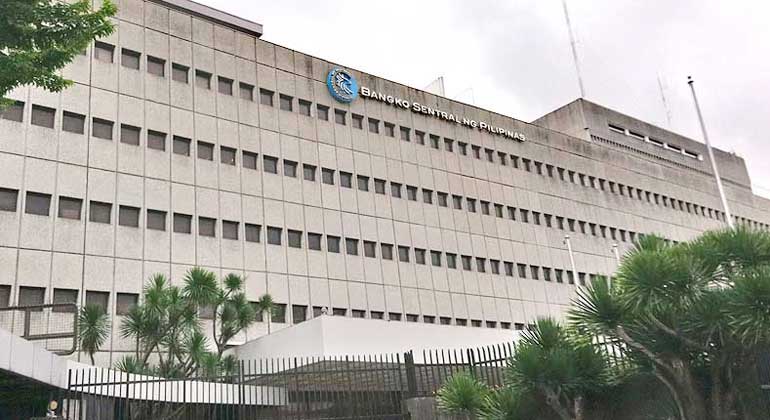
TERM DEPOSIT yields slipped on Wednesday despite lower bids following the recent rate cut from the central bank and Fitch Ratings’ upgrade of its outlook on its assessment of the Philippines.

Total bids for the term deposit facility (TDF) of the Bangko Sentral ng Pilipinas (BSP) amounted to P170.025 billion on Wednesday, slightly higher than the P170 billion on offer. However, tenders this week slipped from the P207.804 billion seen a week ago versus the P200 billion up for grabs.

Broken down, bids for the one-week papers totaled P49.66 billion, lower than the P60 billion on offer and also down from the P66.749 billion in tenders logged a week ago for the P80-billion offering.

Yields for the seven-day deposits ranged from 3.75% to 4.3%, a wider margin compared to the 3.95-4.4% range seen last week. This resulted in an average rate of 3.8943%, down by 12.97 basis points (bps) from last week’s 4.024%.

For the two-week papers, tenders amounted to P63.545 billion, going beyond the P60 billion auctioned off by the BSP but failing to beat the P64.814 billion in bids last week.

Lenders asked for yields ranging from 3.625% to 4%, a wider band compared to the 3.98-4.05% margin logged the previous week. This caused the average rate for the 14-day papers to settle at 3.8772%, slipping by 14.25 bps from the 4.0197% seen last week.

Meanwhile, the 28-day papers lured bids worth P56.82 billion, surpassing the P50 billion up for grabs but failing to beat P76.241 billion in bids last week, which was against a P60-billion offer.

Banks sought returns ranging from 3.6875% to 4%, a wider margin compared to the 4-4.0625% margin logged on Feb. 5. With this, average rate for the 28-day term deposits clocked in at 3.9054%, down by 13.65 bps from the 4.0419% seen a week ago.

BSP Deputy Governor Francisco G. Dakila, Jr. attributed the lower rates to the central bank’s decision to cut policy rates.

“Average interest rates fell, due primarily to the 25-bp reduction in the RRP (reverse repurchase) rate on Feb. 6,” Mr. Dakila said in a statement on Wednesday.

Last week, the Monetary Board (MB) slashed policy rates by 25 bps, a “preemptive reduction” as the MB priced in the possible effects of the virus outbreak and the prospects of a global economic slowdown.

This has reduced rates for the RRP as well as the overnight lending and deposit facilities to 3.75%, 4.25%, and 3.25%.

Meanwhile, UnionBank of the Philippines, Inc. Chief Economist Ruben Carlo O. Asuncion noted that the lower yields came after Fitch’s upgrade of its outlook on the Philippines’ sovereign rating to “positive.”

“After market hours yesterday (Wednesday), there were buying interests after the said revision by Fitch Ratings was publicly released. Indeed, yields were expected to trade lower mirroring the TDF auction,” Mr. Asuncion said in an e-mail.

Fitch upgraded its outlook for the Philippines’ credit rating to positive from stable, which indicates that the rating could stay at its present level or be upgraded within the next two years.

It also affirmed its credit rating for the Philippines at “BBB,” a notch above the minimum investment grade.

In its report, Fitch said the country will likely be among the region’s fastest-growing economies for 2020 and 2021, with its expansion well above the current “BBB” median. — Luz Wendy T. Noble

Virus outbreak pushes robots to the frontlines of hospitals

THE deadly coronavirus outbreak, which has pushed the Chinese medical community into overdrive, has also prompted the country’s hospitals to more quickly adopt robots as medical assistants.

Telepresence bots that allow remote video communication, patient health monitoring and safe delivery of medical goods are growing in number on hospital floors in urban China. They’re now acting as a safe go-between that helps curb the spread of the coronavirus.

Keenon Robotics Co., a Shanghai-based company, deployed 16 robots of a model nicknamed “little peanut” to a hospital in Hangzhou after a group of Wuhan travelers to Singapore were held in quarantine. Siasun Robot and Automation Co. donated seven medical robots and 14 catering service robots to the Shenyang Red Cross to help hospitals combat the virus on Wednesday, according to a media release on the company’s website. Keenon and Siasun didn’t reply immediately to requests for comment. JD.com Inc. is testing the use of autonomous delivery robots in Wuhan, the company said in a statement. Local media has also reported robots being used in hospitals in the city as well as in Guangzhou, Jiangxi, Chengdu, Beijing, Shanghai, and Tianjin.

The rapid spread of the coronavirus has left provincial hospitals straining to cope and helped accelerate the embrace of robots as one solution, turning the gadgets into medical assistants. These bots join China’s tech-heavy response to the coronavirus outbreak, which also includes airborne drones and work-from-home apps. The jury remains out on how effective these coping tactics will be.

China’s rapid buildout of fifth-generation wireless networking in areas around urban hospitals has also seen a rise in 5G-powered medical robots — equipped with cameras that allow remote video communication and patient monitoring. These are in contrast to robots like little peanut, whose primary function is to make indoor deliveries.

“The technology of robots used in Chinese hospitals isn’t high, but what this virus is also highlighting — and it could be the next stage of Chinese robots — is the use of medical robot deployment,” said Bloomberg Intelligence analyst Nikkie Lu.

China Mobile Ltd. donated one 5G robot each to both Wuhan Union Hospital and Tongji Tianyou Hospital this week, according to a report by ThePaper.cn. Riding the 5G network, these assistant bots carry a disinfectant tank on board and will be used to safely clean hospital areas along a predetermined route, reducing the risk to medical personnel.

Zhejiang People’s Hospital used a 5G robot to diagnose its first coronavirus patient on Sunday, according to a report by the Hangzhou news center run by the State Council Information Office. Beijing Jishuitan Hospital performed remote surgery on a patient in Shandong province via China Telecom Corp.’s 5G network last June.

While it may take patients a moment or two to get over the shock of being helped by a robot rather than a medical professional, bots have already permeated a growing number of sectors in Chinese society including nursing homes, restaurants, warehouses, banks and over 200 kindergartens.

Financial services company Huachuang Securities Co. believes even more robots are in China’s immediate future. Pointing to National Bureau of Statistics data suggesting that domestic production of industrial robots increased by 15.3% in the month of December, they predict similarly fast growth in the current quarter, according to a report published by Finance Sina.

The increased quantity of robots deployed to combat the coronavirus has helped accelerate China’s path to the goal it had already set for itself. The country wants to become one of the world’s top 10 most intensively automated nations by the end of this year. — Bloomberg

Highballs: Matching mixers with whiskey

TIPPLING is even easier with a handful of new drink recipes from Johnnie Walker.

Johnnie Walker gave guests a taste of its Highball collection during the launch of the Johnnie Walker arcade on Feb. 5. While the arcade, featuring wholesome games like air hockey, closed its run in Poblacion’s Kondwi on Feb. 8, the fun continues while the arcade makes its rounds within the metro (the brand’s Facebook page will keep you up to speed).

As for the drinks: Rian Asiddao, Diageo Reserve Brand Ambassador, told us that the ratio for making a whisky highball was 3:1 (mixer to spirit, respectively). With that, Mr. Asiddao mixed the Johnnie and Lime Highball (with the brand’s Black Label and lemon-lime soda), Johnnie and Ginger (Double Black and ginger ale), and Johnnie and Apple (Gold Reserve and apple juice). Mr. Asiddaso said that the pairing were determined by their bases’ flavors: the zestiness of soda pairs with the fruity-smokiness of the Black Label, the intense smokiness of the Double Black goes with the spice and sweetness of ginger ale, and the Gold Reserve pairs with the acidity of the apple juice. “It complements the notes of the whisky,” said Mr. Asiddao.

The recipes are supposed to target those intimidated by the tradition and taste of whisky. “This is a good introduction for them,” he said. “We want to make it vibrant, we want to make it fun, we want to make it accessible to everyone.”

Whisky snobs might frown at the idea (imagine all that blending, just to be splashed down with juice!), but Mr. Asiddao reassures us: “When we talk about taste — food, whisky, gin, whatever — it’s subjective. You can enjoy whatever and however you want. In whisky, there are no rules. You can have it neat, on the rocks, or in a cocktail. So long as you enjoy it; it’s your preference.” — Joseph L. Garcia

New ECB appointee defends easy policy

ISABEL SCHNABLE defended the central bank’s easy policy. — WIKIPEDIA.ORG

FRANKFURT — Germany’s new appointee to the European Central Bank’s (ECB) board, Isabel Schnabel, defended the ECB’s easy-money policy on Tuesday, saying that the euro zone would have been worse off without it and it was up to others to counter the side effects.

Her words marked a departure from German central bankers’ long-held scepticism toward the ECB’s ultra-aggressive stimulus policy of sub-zero rates and massive bond purchases, which has caused two of her predecessors to resign in recent years.

“In the absence of these monetary policy measures, the euro area’s development would have been much weaker,” Ms. Schnabel told an audience in Karlsruhe, Germany. “A fundamental departure from (current ECB) policy does not seem appropriate.”

Ms. Schnabel has pledged to fight anti-ECB sentiment in her home country since she joined its Executive Board on Jan. 1, replacing Sabine Lautenschlaeger, who had resigned after disagreeing with the latest ECB rate cut and bond purchases.

Jens Weidmann, the head of Germany’s Bundesbank, once testified against one ECB bond-buying scheme before Germany’s top court.

Schnabel stigmatized “claims and accusations that have no basis” and sought to pick apart the argument that the central bank is expropriating German savers while fueling bubbles in stocks and property.

One of her arguments was that property prices in Europe’s largest economy were at around the same level that they had been in 1990, once they were adjusted for inflation.

What’s more, she argued, it was “primarily up to other policy makers,” from governments to financial watchdogs, to tackle the side effects of the ECB’s policy on the distribution of wealth and on financial stability.

“Distributional issues lie in the remit of fiscal and social welfare policy,” she said. “And containing risks in the financial system is a task for financial market regulators and supervisors.”

She conceded, however, that rate-setters should also weigh the pros and cons of their actions, and said the ECB would tackle the topic as part of a review of its strategy this year. — Reuters

Tax dispute with Makati City remains pending, says Smart

SMART Communication, Inc. said the decision by the Court of Tax Appeals (CTA) allowing the Makati City government to inspect its documents over its alleged P3.25-billion tax deficiencies from 2012 to 2015 has nothing to do with tax evasion.

“At the outset, we wish to clarify the issue: this case stems from a dispute over the correct assessment of local franchise taxes by the Makati City government. Contrary to some published reports. It does not involve tax evasion,” Smart said in a statement on Wednesday.

Smart said it received an “erroneous” assessment for local franchise taxes (LFT) from Makati City in March 2018, covering the periods of 2012 to 2015. It filed a petition in July 2018 with the Regional Trial Court (RTC) seeking to nullify the assessment. The RTC granted in June last year the local government’s motion for production or inspection of Smart’s documents. Smart appealed the ruling to the CTA and asked for a temporary restraining order and preliminary injunction, which the court denied, upholding the RTC’s decision.

“It is important to note that the CTA has not decided on the LFT liability of Smart to the City of Makati,” Smart said. — Arjay L. Balinbin

Video game makers ride to riches on arc of Keanu Reeves’ career

SONIC the Hedgehog 3 had just been released and Keanu Reeves was about to hit the big screen in Speed when Marcin Iwinski and high school pal Michal Kicinski launched their video-game company.

It was May 1994 and the CD-ROM was still in vogue, so they called their venture CD Projekt and set out to distribute games for the Polish market. They struck deals with developers including Activision and Acclaim Entertainment, translating dialog, instructions and packaging into their native language.

A quarter-century later, at Microsoft Corp.’s 2019 Xbox conference in Los Angeles, Reeves shocked the video-game world, appearing onstage to present a demo of CD Projekt’s Cyberpunk 2077 — a futuristic, role-playing game in which he’ll appear.

Shares of Warsaw-based CD Projekt have surged 43% since the Xbox event in June and more than 1,800% in the past five years, the best performance by far in Poland’s WIG20 Index, putting Iwinski, the 45-year-old co-chief executive officer, on the cusp of becoming a billionaire. He owns 12.6% of the outstanding stock, giving him a net worth of $992 million. Kicinski, who left the company several years ago, has a 10.9% stake worth $847 million.

Both could soon join the rapidly growing ranks of video-game billionaires including Sea Ltd. co-founder Gang Ye, who crossed the threshold in November after the Singapore-based company reported that quarterly revenue tripled, as well as Epic Games Inc. founder Tim Sweeney, who brought “Fortnite” to the masses.

In its infancy, CD Projekt struggled to make money distributing legal copies of games because Poles preferred to buy cheaper pirated versions on the black market. So Iwinski and Kicinski expanded into e-commerce sales and programming and established the CD Projekt RED gaming studio.

In 2007, it introduced Witcher — based on Andrzej Sapkowski’s fantasy novels — and turned it into a series of games that draws from Slavic mythology and features a lone medieval warrior, surrounded by strong female characters, battling supernatural beasts. The most recent version, Witcher 3, sold tens of millions of copies and brought the studio global acclaim. Netflix recently launched The Witcher TV series, and its popularity could further boost game sales.

Since the launch of ‘Witcher 3’ in 2015, the developer hasn’t released any major game that could drive new sales apart from add-ons or spinoffs from the existing franchise. In contrast with the industry’s giants which have diversified portfolios and a steady stream of new releases, CD Projekt is betting big on a single title.

Cyberpunk’s highly anticipated April debut was pushed back to September for its 400 programmers and designers to “test, bug-fix and polish” the company’s next flagship product, according to a Jan. 16 regulatory filing that caused a fleeting drop in CD Projekt’s stock.

Cyberpunk is intended to be one of the most technologically advanced productions for current gaming consoles.

Ken Rumph, an analyst at Jefferies Financial Group Inc., has said the delay probably won’t inflict lasting damage on the company’s fortunes.

“I don’t think it stops Cyberpunk from being the hit of the year,” he told Bloomberg last month. — Bloomberg