

Home Blog Page 9385

Thai massage loses its charm behind masks, social distancing
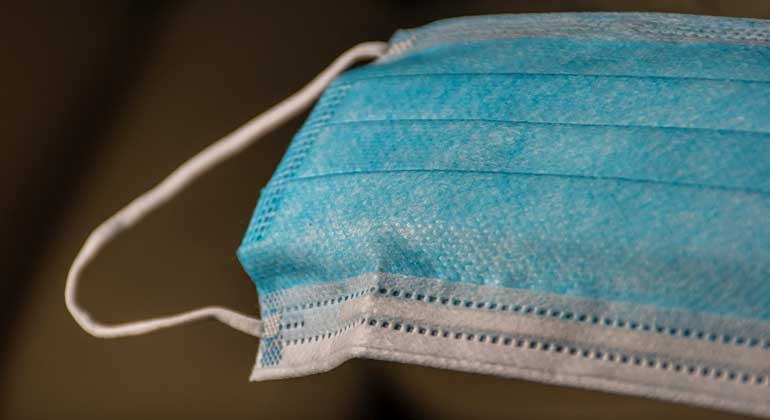
Thai traditional massage is being forced to reinvent itself in the COVID-19 era, in which the human touch has barriers and masks hide the faces of therapists in a country known as the Land of Smiles.

Walk into a massage parlor in Thailand and a familiar clasped-hands “wai” greeting will welcome you as a hint of jasmine lingers in the air. Less appealing is the smell of disinfectant and the squeaky sound of latex gloves.

Thai traditional massage is being forced to reinvent itself in the COVID-19 era, in which the human touch has barriers and masks hide the faces of therapists in a country known as the Land of Smiles. That has implications for both its appeal to customers, and its role as employer of last resort when other industries falter in Southeast Asia’s second-biggest economy.

“This isn’t like any crisis we’ve ever seen,” said Wiboon Utsahajit, president of Siam Wellness Group Pcl, which owns about 70 massage shops and spas across Thailand. “We’ve had to change the way we operate. We’ve installed ultraviolet disinfection equipment in every room, and loaded up on health and cleaning supplies. The costs are higher and customers far fewer.”

The survival of this industry matters in Thailand, where wellness tourism generated expenditures of $12 billion in 2017, more than the combined amounts in Indonesia and Malaysia, according a report by the Global Wellness Institute. About 530,000 Thais are directly employed in the sector, according to the Miami-based group. Those totals equate to 1.4% of Thailand’s workforce and 2.6% of annual GDP.

Massage, spa therapy and medical treatments are integral to the wellness-tourism industry, with Thailand’s 2,800 luxury spas alone accounting for $1.3 billion. Nationwide, the Ministry of Public Health estimates there are about 10,000 massage outlets.

“Massage is a very labor-intensive service, with a skill-set for masseuses that is difficult to transfer to another job,” said Somprawin Manprasert, chief economist at Bank of Ayudhya Pcl. “The competition was already quite high because of so many shops across the country, so it will be challenging for many to survive.”

The Thai government turned to massage during the Asian financial crisis in the late 1990s by expanding vocational training to provide jobless people, regardless of education level, with an employable skill. Siam Wellness’s first outlet came out of this push in 1998.

Massage was also crucial amid the Great Recession a decade later, when Thailand stepped up campaigns to promote luxury spas, medical tourism and wellness a “national export business.”

That push helped Siam Wellness turn into an exchange-listed company with $44 million of revenue last year, with Greater China accounting for about 55% of clients. Now, Wiboon said he plans more outlets in China because of a drop in Thai tourism.

Massage shops were allowed to reopen last month under revised hygiene and social-distancing guidelines after Thailand’s lockdown curbed coronavirus transmission. But many locals are wary and the country’s borders were just opened on July 1 to selective categories of foreign tourists.

“Most of our masseuses went back to their hometowns after we were ordered shut,” said Natthawipa Sangkakit, whose family runs Phikul Massage and Spa in suburban Bangkok. “All staff are welcome back, but with fewer customers, some may prefer to stay on their farms or try other

‘FEWER CUSTOMERS’
To make things worse, Thailand plans to turn away from mass tourism and focus on wooing rich tourists for luxury travel in a post-pandemic world. That won’t help save many jobs in the massage industry.

“Travel restrictions will limit the number of foreigners, while the domestic market will be squeezed by reduced incomes and more conservative spending,” according to Somprawin.

The vast majority of massage parlors in Thailand are modest street-side shops, where fees can range from $3 to $10 per hour—and where many of the clients are locals. Revenue is typically split between store owner and therapist, with the latter often paying for oils and supplies—which now include masks.

From this category of shop, more than 140,000 therapists applied for unemployment assistance under the “informal worker” label, according to the government. That tally excludes those who applied under a different job category for privacy reasons, foreign masseuses and the aforementioned salaried staff at luxury spas in hotels and resorts.

Although massage shops have been given the green light to reopen provided they keep least 1.5 meters of space between customers and use separate rooms for some treatments, many remain locked amid the health and tourism obstacles that didn’t exist in previous recessions.

Some foreign visitors will be coming soon under “travel-bubble agreements” Thailand is setting with other countries and territories. But it’s unclear how wary tourists will be of a traditional therapy that UNESCO recognized as a “heritage of humanity” in December 2019, just as the Covid-era was about to start.

“Massage is supposed to be good for health,” said Gao Ze Hui, a human-resources specialist in Beijing who visited several spa and clinics during her two trips to Thailand. “Now we have to be careful about even this.” — Bloomberg

Fast fashion proves slow in eliminating UK labor concerns

In 2015, university professor Nik Hammer studied working conditions in the local garment industry of Leicester, England, finding it rife with verbal abuse, harassment, and safety violations.

He cataloged what he called severe and widespread labor-law infringements in a 57-page report, detailing how most workers were paid about 3 pounds ($3.80) an hour in cash and had no formal employment contracts.

Five years later, the stock meltdown of online clothing retailer Boohoo Group Plc focused new attention on labor abuses in one of the last bastions of the textile industry in high-wage Europe. Newspapers alleged some suppliers underpaid workers and forced them to toil in closed factories and without hand sanitizer as Leicester reentered a local lockdown amid a surge in COVID-19 infections. At one point this week, Boohoo shares had lost more than half of their value.

While the maker of Nasty Gal and PrettyLittleThing clothing has recovered some of that loss, it could take a lot longer to put to rest concerns about whether its fast-fashion model churning out made-in-England miniskirts and playsuits for less than $10 is sustainable.

“Conditions in Leicester remind me of tiny workshops I used to see in South Asia 10 to 15 years ago,” said Henrietta Lake of Lake Advisory, which consults companies on creating ethical and sustainable global supply chains. “We’re talking Dickensian.”

Leicester has been a hub for manufacturing in Britain since the sixteenth century, built on a reputation for hosiery, shirts, socks and gloves. However, the emergence of low-cost manufacturing in Asia and entry of China into the World Trade Organization nearly decimated the industry in a city whose motto once was “Leicester clothes the world.”

Fast-fashion and online-only retailers like Boohoo filled the gap, fueling a revival in Leicester’s manufacturing during the past decade. Such companies took a business model perfected by Zara owner Inditex SA and put it on steroids. Cranking out hundreds of new designs each week, Boohoo needs close-to-home sourcing to meet millennials’ whims. That has protected one of Europe’s few remaining textile hubs from disappearing, while even Italy and Spain struggle to keep their garment industries intact.

NEW INDUSTRY
Eager to work with local clients and stay in business, the Leicester factories helped create what Hammer said is an entirely new and different industry. Instead of large, unionized firms churning out thousands of clothing lines, Leicester now is full of hundreds of tiny workshops and subcontractors, sometimes employing fewer than 10 people, servicing much smaller orders for market traders and wholesalers.

For many years, Boohoo’s growth was stratospheric. In the first 10 minutes after the company’s shares began trading in a 2014 initial public offering, investors pushed them up 70%. Last week the company’s market value had exceeded 5 billion pounds, towering above Marks & Spencer Group Plc.

Many attribute Boohoo’s success to its ability to harness a network of at least 150 factories in Leicester to quickly produce items inspired from catwalks or social media within a few weeks. Nearly 40% of its clothing is sourced from the UK, mostly in Leicester, using what Boohoo calls a “test and repeat” model where it trials designs on its website and then ramps up the orders of items that prove popular. Boohoo says it’s helping support UK manufacturing.

The local garment industry’s Wild West reputation has led many bigger retailers to abandon it in search of cheaper countries, which also face challenges in protecting employee rights and working conditions. The collapse of an eight-story garment factory in Bangladesh that killed more than a thousand people in 2013 sparked worldwide criticism. That spurred Inditex and H&M owner Hennes & Mauritz AB to sign a five-year accord to improve cramped and often unsafe working conditions in Bangladesh’s factories.

WORLDWIDE SOURCING
Buying from manufacturing hubs around the world means placing orders months in advance and having less flexibility. Still, many rivals have chosen that route. New Look Ltd. works with 12 factories in Leicester, down from 109 a decade ago. Asos Plc deals with seven factories there, accounting for 2% of its clothing. Associated British Foods Plc’s Primark hasn’t sourced clothes from the city in years. Next Plc, one of the largest clothing chains in Britain, doesn’t source any garments from Leicester even though its head office is there.

Many retailers have significantly reduced their UK sourcing because of “systemic non-compliance to legal standards” in Britain’s textile industry, said David Camp, chief executive officer of the Association of Labour Providers Ltd.

Missguided, a smaller rival to Boohoo that plans to continue sourcing from Leicester, has reduced the number of factories it buys from to 12 from 80, in an attempt to monitor working conditions more closely.

CONSISTENT BUSINESS
“You simply can’t get your arms around 80 suppliers,” said Paul Smith, Missguided’s head of sourcing. “You can’t visit them regularly and the level of business you give each one is relatively insignificant. So we took a decision to be more important to fewer factories and give them consistent levels of business.”

Boohoo says it has found no evidence of workers receiving less than the minimum wage but has pledged to carry out an independent review led by Alison Levitt, a lawyer and former UK public prosecutor. It has also promised to work with any official investigations that may result from reports this week. Home Secretary Priti Patel said the allegations were “appalling” and called for investigations, which are being carried out by seven UK authorities.

Industry experts say it is possible for Leicester garment firms to operate legally and still be an attractive manufacturing base, even if the cost of producing garments increases. One advantage fast-fashion retailers have is that by sourcing locally, they can respond to quick changes in demand, and thereby usually avoid the need to sell unsold inventory in big clearance sales. Thus, they have some room to absorb higher costs.

Though Boohoo has denied the allegations of labor exploitation, the pressure to overhaul Leicester’s operations as #boycottboohoo trends on social media could become too great to make cheap dresses there. On Friday, Standard Life Aberdeen Plc, one of the biggest shareholders in Boohoo, sold most of its shares, criticizing the retailer’s response so far “as inadequate in scope, timeliness and gravity.” — Bloomberg

LinkedIn sued for spying on users with Apple device apps

LinkedIn
“LinkedIn has not only been spying on its users, it has been spying on their nearby computers and other devices, and it has been circumventing” Apple’s clipboard timeout, which removes the information after 120 seconds, according to the suit. Image via Reuters.

Microsoft Corp.’s LinkedIn programmed its iPhone and iPad applications to divert sensitive information without users’ knowledge, according to a class-action lawsuit.

The apps use Apple’s Universal Clipboard to read and siphon the data, and can draw information from other Apple devices, according to the complaint filed Friday in San Francisco federal court. The privacy violations were exposed by Apple and independent program developers, according to the suit.

Developers and testers of Apple’s most recent mobile operating system, iOS 14, found LinkedIn’s application was secretly reading users’ clipboards “a lot,” according to the complaint. “Constantly, even.” Apple’s clipboard often contains sensitive information users cut or copy to paste, including photos, texts, e-mails, or medical records.

“LinkedIn has not only been spying on its users, it has been spying on their nearby computers and other devices, and it has been circumventing” Apple’s clipboard timeout, which removes the information after 120 seconds, according to the suit.

LinkedIn spokesman Greg Snapper said the company is reviewing the lawsuit. Erran Berger, head of engineering at LinkedIn, said in a July 2 tweet that the company had traced the problem to a code path that performs an “equality check” between contents on the clipboard and typed text. “We don’t store or transmit the clipboard contents,” he added.

The lawsuit was filed on behalf of Adam Bauer of New York City, who says he routinely used the LinkedIn App on his iPhone and iPad.

The suit seeks to represent a class of users based on alleged violations of federal and California privacy laws and a breach of contract claim.

LinkedIn’s information collecting was reported earlier this month by outlets including the Verge and Forbes.

The case is Bauer v. LinkedIn Corp., 20-cv-04599, US District Court, Northern District of California (San Francisco). — Bloomberg

The world is drinking less coffee while office workers stay home

Global coffee consumption is set to fall this year for the first time since 2011, the US Department of Agriculture predicts. And the disappearance of cafe culture is happening in every major region.

In a work-from-home world, hitting the local cafe for a daily caffeine fix has become a ritual of the now-forgotten past. And no matter how much kitchen brewing consumers take up, that just can’t seem to make up for the demand blow.

Global coffee consumption is set to fall this year for the first time since 2011, the US Department of Agriculture predicts. That’s even with a huge surge in bean buying at the grocery store amid pantry loading. Shutdowns for cafes and restaurants—which typically account for about 25% of demand—were overwhelming, and it could be a while before things pick up again.

The disappearance of cafe culture is happening in every major region. Researcher Marex Spectron estimates globally more than 95% of the out-of-home market was shuttered at some point during the pandemic. It’s the latest cruel twist of the coronavirus, which has ripped so much away from people that not even the simple pleasure of lingering over a latte is safe.

For Notes, a coffee-shop chain in London, restrictions are easing in the city, but most of its 10 cafes that cater to office workers remain closed.

“It will be a slow and staggered comeback for us as a lot of the offices in London are not coming back on until after summer, and some may even open only next year,” said co-founder Robert Robinson.

Consumers have shown they’re hesitant to dine out in droves again as economies reopen. Coffee shops, which often depend on morning commuters and afternoon breakers, have been especially hard hit. Dunkin’ Brands Group Inc. has lost much of its breakfast crowd during the coronavirus pandemic, while Starbucks Corp. is retooling its model, rolling out a “pickup” store format that doesn’t have any of the tables and chairs that traditionally made its cafes a popular hang-out spot.

“If you feel like having a cappuccino, ordering it online doesn’t really work as coffee is all about the social aspect,” said Mr. Robinson.

A hobbled recovery for coffee demand could be devastating for the roughly 125 million globally that depend on the crop for their livelihood. Growers were already struggling through financial crisis after years of bumper harvests sparked a prolonged bear market. Citigroup Inc. predicts that futures for arabica beans could drop roughly 10% in the second half of the year to about 90 cents a pound, hovering near break-even costs. Meanwhile, the International Coffee Organization has warned of the dangers of child labor in producing regions as poverty increases for farmers.

Brazil’s Suplicy Cafes Especiais, one of the country’s largest cafe chains, was forced to postpone payments to farmers for cargoes that had already been delivered. Meanwhile, orders for new supplies will resume only gradually, Chief Executive Officer Felipe Braga said in a telephone interview.

Suplicy operates 25 stores, the vast majority of which have been closed by COVID-19 restrictions since mid-March. A handful reopened recently amid easing lockdown restrictions, but then they were shuttered once again because not enough customers were coming through.

“Some of our franchising partners already warned us that they will close” permanently, Mr. Braga said.

Still, some shop operators are taking steps to change their business model, which could help spark some rebound.

Max Crowley’s two Bandit coffee shops in New York’s Midtown and Chelsea neighborhoods remain “on pause,” hobbled by the closure of local offices. Meanwhile, he’s just opened up a new Hamptons location in the Town of Southampton, an enclave where many New York City dwellers fled to at the peak of the pandemic and where well-to-do residents spend summers.

“Manhattan traffic is still very light. The Hamptons is very busy. It makes sense for us. It’s where many of our customers go,” Mr. Crowley said.

There’s also some optimism the worst is over.

In Asia, the fastest-growing market for coffee, consumption at restaurants and cafes is expected to recover in the second half of the year as many countries emerge from lockdowns, according to Tan Heng Hong, APAC food and drink analyst at market research company Mintel. And the USDA also predicts a rebound in global demand next year.

Still, a global second wave of infections could halt reopening plans. McDonald’s Corp. has said its pausing the resumption of all dine-in services in its U.S. restaurants as the virus flares up in areas across the country. And even if stores open, fears of contagion could continue to keep customers away. Starbucks is operating about 95% of the company’s US stores, but comparable sales were down 43% in May.

Plus there’s the economic downturn, which generally spurs consumers to trim their dining out expenses.

The Dalgona coffee sensation—a fluffy, whipped beverage made from instant coffee that was popularized on social media—shows that consumers are trying to recreate the fun cafe experience at home instead. That could end up helping to rescue prices of robusta beans, used in instant varieties, to the determinate of pricier arabica.

“We believe that consumers will move down price points, and turn more to cheaper, instant coffee, as they tighten their belts amidst the gloomy economic outlook,” Taohai Lin, a consumer and retail analyst at Fitch Solutions. “Consumers will continue to embrace home brew and instant coffee, both because they will still avoid heading out to cafes, and also because it is generally a cheaper alternative.” — Bloomberg

Virus-free UK pilot, symbol of Vietnam’s pandemic success, to return home

HANOI — Vietnam’s most seriously ill COVID-19 patient, a British pilot who at one point seemed close to death, left the hospital on Saturday on his way home after a dramatic recovery that attracted national attention.

The case of Stephen Cameron, a pilot for national carrier Vietnam Airlines, became a sensation in Vietnam, where a combination of targeted testing and an aggressive quarantine program has kept its coronavirus tally to an impressively low 370 cases, and zero deaths.

“The odds say that I shouldn’t be here, so I can only thank everybody here for what they’ve done,” Mr. Cameron said, leaving the hospital in a wheelchair and flanked by doctors holding flowers.

The 43-year-old Scot, who arrived in the Southeast Asian country from Britain in early March, was hospitalized three days after his first flight for Vietnam Airlines, following a visit to a bar in Ho Chi Minh City that became linked to a cluster of coronavirus cases.

Mr. Cameron’s illness and the highly publicized efforts of Vietnam’s doctors to save him became a symbol in Vietnam of the country’s successful fight against the virus.

At one point, medical officials said Mr. Cameron, initially identified only as “Patient 91,” had just 10% of his lung capacity and was in critical condition.

With the vast majority of Vietnam’s COVID-19 patients already recovered, the news of a potential first death prompted a national outpouring of support, with dozens of people coming forward as potential lung donors.

State doctors turned the volunteers down, saying donated lungs should come from brain-dead donors.

But under round-the clock care, Mr. Cameron improved. By June he no longer required a lung transplant and was taken off life support.

Vietnam spent over $200,000 treating him. Vietnamese doctors will accompany Mr. Cameron on the special flight back to Britain, state media said.

“As soon as I get fit, I’m coming back,” said Mr. Cameron. “I’m still a pilot—my license has lapsed, that’s all.” — Reuters

House rejects ABS-CBN plea to extend franchise

Philippine lawmakers on Friday rejected the franchise application of ABS-CBN Corp. — a broadcast network critical of President Rodrigo R. Duterte — in what critics see as a grievous assault on press freedom.

Voting 70 to 11, the House of Representatives committee on legislative franchises denied the 25-year extension plea, saying the media giant was “undeserving” of the privilege.

“Not since the dictator Ferdinand Marcos shut down ABS-CBN and other media outlets in 1972 has a single government act caused so much damage to media freedom,” Phil Robertson, deputy Asia director at Human Rights Watch, said in an e-mailed statement.

“This move solidifies the tyranny of President Rodrigo Duterte who accused ABS-CBN of slights against him and politically targeted it for refusing to toe the government’s line and criticizing his so-called ‘war on drugs,’” he added.

Mr. Robertson said the House vote was “an astounding display of obsequious behavior by congressional representatives, kowtowing to Duterte by agreeing to seriously limit media freedom in the Philippines.”
“This is a black day for media freedom in a country previously regarded as a bastion of press freedom and democracy in the region,” he added.

The tough-talking Mr. Duterte had on numerous occasions unleashed a stream of profanity against dissenting journalists whom he accused of bias and unfair reporting. Journalists have also been targeted by Mr. Duterte’s Facebook supporters — known bloggers with huge followings and who have fiercely defended him and his policies.

Mr. Duterte has slammed media outlets such as the Philippine Daily Inquirer, ABS-CBN and Rappler for criticizing his government, particularly his war on drugs that has killed thousands of suspected pushers.

‘DEEPLY HURT’

ABS-CBN President and Chief Executive Officer Carlo Katigbak said they were “deeply hurt” by the House decision.”We have been rendering service that is meaningful and valuable to the Filipino public,” he said in an e-mailed statement. “We remain committed to public service, and we hope to find other ways to achieve our mission.”

The House vote puts in jeopardy the jobs of more than 11,000 workers of the media network, which claims to reach more than 80 million Filipinos here and overseas.

“I am deeply saddened by this episode in the history of our nation,” Senate Minority Leader Franklin M. Drilon said in a statement. “It is reminiscent of the dark pages in the history of Philippine press in 1972.

Presidential spokesman Harry Roque said the palace was neutral about the franchise issue.”Much as we want to work with the aforesaid media network, we have to abide by the resolution of the House committee,” he said in a statement.

Speaker Alan Peter S. Cayetano urged the public to “understand why the decision had to be so.”

A technical working group composed of Cebu Rep. Pablo John F. Garcia, Camiguin Rep. Xavier Jesus D. Romualdo and Marikina Stella Luz A. Quimbo endorsed the rejection of the franchise application in a report. Ms. Quimbo dissented.

Quezon City Rep. Franz E. Alvarez, who heads the committee, said ABS-CBN Corp. had 24 hours to appeal the House decision.

Critics have said the issue of ABS-CBN’s franchise has become both personal and political. Mr. Duterte had openly harbored a grudge against the broadcaster.

In 2017, he accused ABS-CBN of swindling after it refused to run political ads he had paid for during the 2016 presidential campaign.

Mr. Duterte had also criticized the broadcaster for airing news stories about his alleged secret bank accounts. He said he would block the renewal of the company’s franchise if he had his way.

“I will not let it pass,” he said in 2018. “Your franchise will end. You know why? Because you are thieves.”
The Center for Media Freedom and Responsibility on Feb. 11 called the case against the network a “dangerous attempt to control and silence free press.”

RAPPLER

A Philippine trial court last month convicted Maria Ressa, chief executive officer of news website Rappler, Inc. and former researcher Reynaldo Santos, Jr. guilty for violating a law against cyber-libel.

Critics also viewed the verdict as a major setback for democratic rights in the country. Judge Rainelda H. Estacio-Montesa sentenced the two to six months to six years in prison.

The Justice department in February last year indicted Ms. Ressa, a former CNN investigative reporter, for cyber-libel based on a complaint by a businessman over an article published in 2012, months before the cyber-crime law was passed. The journalist has said the allegations were unfounded.

A month later, she got arrested again for allegedly violating the ban on foreign ownership in media.

Local and international media watchdogs and human rights groups have condemned her arrest. New York-based Committee to Protect Journalists has called on Mr. Duterte’s government “to cease and desist this campaign of intimidation aimed at silencing Rappler.”

Rappler, which Mr. Duterte has called a “fake news outlet,” is also appealing last year’s order by the Securities and Exchange Commission to close its operations for violating foreign-equity restrictions in mass media. Ms. Ressa is also facing tax evasion cases.

The presidential palace said Mr. Duterte did not have a hand in the court ruling. — Patricia S. Gajitos

Philippine May external trade plummets

The country’s exports and imports continued to plunge in May amid a global coronavirus pandemic, the Philippine Statistics Authority (PSA) said on Friday.

Merchandise exports shrank by 35.6% from a year earlier to $3.99 billion last month after a 49.9% yearly decline in April, preliminary trade data showed.

Merchandise imports also plummeted by 40.6% to $5.85 billion last month after a 65.3% drop in April.

“The slower decline in trade performance is a welcome indication that economic activity has started to pick up with the relaxation of quarantine measures in certain areas, the gradual reopening of business, and the restarting of production in both the country and its trading partners,” Acting Socioeconomic Planning Secretary Karl Kendrick T. Chua said in a statement.

The May figures marked the 13th and third straight month of decline for imports and exports, respectively.

This brought five-month exports to $22.56 billion, a fifth lower than a year earlier and worse than the 4% contraction expected by the Development Budget Coordination Committee (DBCC) this year.

Imports from January to May also dropped by 29.9% to $32.4 billion, against the DBCC’s target of a 5.5% contraction for the year.

The trade deficit was $1.87 billion, narrower than the $3.65-billion shortfall a year ago. The year-to-date trade deficit was $9.84 billion, smaller than the $17.79-billion gap a year earlier.

The slower decline in May showed the “shock effects of the lockdown were less,” George N. Manzano, an economist at University of Asia and the Pacific and a former tariff commissioner, said in an e-mail.

“It could also mean that the inventory of needed materials has been depleted, necessitating the need to import,” he added.

Among the major types of goods, import of raw materials and intermediate goods shrank by 31.3% year on year to $2.54 billion in May.

Imports of capital and consumer goods also shrank by 37.7% ($2.01 billion) and 37.6% ($1.02 billion), respectively. Mineral fuels, lubricants and related materials also posted an 80% decline to $242.45 million.

Meanwhile, manufactured goods declined by 37.2% to $3.18 billion in May. Electronic products, which made up more than half of overseas sales, fell by a third to $2.29 billion. Semiconductors, which accounted for four-fifths of electronic products, declined by 27.2% to $1.83 billion.

“I think as the global economy gradually opens from the lockdown in the past few months, we would see trade — both exports and imports — improving,” Mr Manzano said. “The global supply chains that have been in disrepair are being restructured. So, barring another lockdown from a second wave, the prospects for trade are certainly better in the second half.”

“Electronic exports might still be weak, as shown by anemic imports of electronics (used as inputs for exported products), but better than the period under lockdown,” he added.

Export of manufactured goods, which account for almost 80% of the total, is expected to recover as the latest results of the purchasing managers’ index rose from 40.1 in May to 49.7 in June, Mr. Chua said.

“The Semiconductors and Electronics Industries in the Philippines, Inc. also indicated a gradual pick-up in semiconductor exports in the coming months and projected a flat growth in 2020, notwithstanding the ongoing lockdown in Cebu where some of the electronics firms are located,” he added. — Marissa Mae M. Ramos

Electricity rates to fall further in July

Power rates in Metro Manila will drop further to the lowest since 2017 this month, with typical households likely to see a P6-cut in their bills, according to Manila Electric Co. (Meralco).

The utility on Friday announced a P0.0286 a kilowatt-hour (kWh) decrease in electricity charges to P8.6966/kWh from P8.7252/kWh in June.

The rate cut comes from relaxed supply contracts that brought down generation charges this month, the company said.

Households consuming 300 kWh, 400 kWh, and 500 kWh could expect a decrease in their power bills by P8.58, P11.44, and P14.3, respectively.

The generation component, which accounts for a chunk of the utility’s monthly charge, has fallen for four straight months by P0.0069/kWh to P4.3344/kWh, as Meralco invoked another force majeure provision in its power supply agreements with generators.

The power distributor avoided P265 million worth of generation charges this month after the Energy Regulatory Commission (ERC) cut fixed costs from baseload supply contracts and suspended Meralco’s mid-merit supply contracts
Low electricity demand — peak demand was just 7,051 megawatts in June — allowed the listed utility to invoke the provision.

Total savings from relaxed contracts since April have reached P1.85 billion.

Charges from the wholesale electricity spot market, which provides 15.9% of Meralco’s supply needs, fell by P1.7803/kWh due to a cut in the line rental cost on the its contracts.

Generation cost from independent power producers (IPPs) supplying 33.2% of the distributor’s power needs rose by P0.4354/kWh.

Its purchases from power supply agreements, which deliver half of Meralco’s supply needs, also went up by P0.0455/kWh, resulting from the lower force majeure claim this July.

Transmission charges, which are remitted to the National Grid Corp. of the Philippines (NGCP), fell by P0.0426/kWh due to lower ancillary service charges.

The decrease offset the higher tax and other charges component at P0.0209/kWh, which normalized after the utility completed its ERC-granted adjustment of the system loss charge last month.

Meralco’s controlling stakeholder, Beacon Electric Asset Holdings, Inc., is partly owned by PLDT, Inc. Hastings Holdings, Inc., a unit of PLDT Beneficial Trust Fund subsidiary MediaQuest Holdings, Inc., has a stake in BusinessWorld through the Philippine Star Group, which it controls. — Adam J. Ang

Coronavirus infections near 53,000

The Department of Health (DoH) reported 1,233 new coronavirus infections on Friday, bringing the total to 52,914.

The death toll rose to 1,360 after 42 more patients died, while recoveries rose by 286 to 13,230, it said in a bulletin.

Of the new cases, 848 were reported in the past three days, while 385 were reported late.

DoH Director Beverly Lorraine Ho told an online news briefing 57% of the deaths were aged 60 years old and above.

She said they expect more patients to recover from the virus as local governments submit their data by Monday.

Health Undersecretary Maria Rosario S. Vergeire traced the spike of cases to increased testing and community transmissions due to lax health standards.

She said there were about 50,000 contact tracers, half of the government’s 100,000 requirement.

Meanwhile, seven more employees of the National Irrigation Administration (NIA) have been infected with the novel coronavirus, the agency said in a statement on Friday.

As of July 8, 640 workers have been tested, with 629 of them testing negative for the virus, it said.

The agency said three of its workers had recovered and no one had died.

Irrigation Administrator Ricardo R. Visaya urged all employees to practice precautions to lessen the spread of the virus.

The agency was locked down on July 1 so it could disinfect facilities and install office protective coverings.

All workers excluding essential personnel were placed under a 14-day quarantine while adopting a work from home scheme.

Employees had been given face shields, face masks, hygiene kits and multivitamins, while every office was given a germicidal UV light.

Also on Friday, the palace said the government would strengthen screening and surveillance activities in ports.

Presidential Spokesperson Harry L. Roque told a separate news briefing the state would employ more civilians for contact tracing and swabbing.

Subic Freeport and other ports will be designated as hubs for international crew change, provided that strict health protocols and guidelines were observed.

A one-stop-shop will be created under the Department of Transportation for the processing of arrivals at all gateways. — Vann Marlo M. Villegas, Charmaine A. Tadalan and Revin Mikhael D. Ochave

UP COVID-19 test kits approved for use

The Research Institute for Tropical Medicine has validated local test kits for the novel coronavirus, which were now ready for use at selected laboratories, the Department of Health (DoH) said on Friday.

The test kits developed by scientists from the University of the Philippines were recalled after a defect was found.

DoH was coordinating with the university so the kits could be used locally, Health Undersecretary Maria Rosario S. Vergeire told an online news briefing.

“We will issue a final advisory to our laboratories advising them that the UP test kits may now be used,” she said in Filipino. — Vann Marlo M. Villegas

32 dead OFWs from Saudi arrive

The Department of Labor and Employment (DoLE) on Friday started facilitating the return of dead overseas Filipino workers (OFW) in Saudi Arabia, the agency said in a statement on Friday.

The first batch included 32 Filipinos from Damman and 17 from Riyadh who arrived at 10:30 am. Twenty of them died of the coronavirus, the agency said.

“We have brought back the first 49 remains of our deceased OFWs from the Kingdom of Saudi Arabia,” Labor Secretary Silvestre H. Bello III said in the statement.

The next repatriation will bring back the remains of Filipinos in Jeddah, he said.

Meanwhile, the Department of Foreign Affairs (DFA) said it had been working with governments across the Americas, Asia and the Pacific and Europe through its foreign posts for the development of a COVID-19 vaccine.

In a statement, the agency said it had endorsed information on vaccine developments and potential international partners to the Department of Science and Technology.

The Philippine Council for Health Research and Development this week said the Philippines would join solidarity trials for the vaccine led by the World Health Organization. — Charmaine A. Tadalan

Seventh lawsuit vs anti-terror law filed

Labor groups filed the seventh lawsuit against the country’s expanded law against terror.

In a 60-page petition, the Center for Trade Union and Human Rights and Pro-Labor Legal Assistance Center asked the Supreme Court to stop the government from enforcing the Anti-Terrorism Act. They also asked the tribunal to nullify the law.

“Safeguards for the protection of those arrested and detained for terrorism no longer existed under the bill,” according to a copy of the lawsuit.

“The bill also criminalized acts that have traditionally been considered legitimate exercises of free speech, freedom of expression, the right of peaceful assembly and freedom of association,” they added. — Vann Marlo M. Villegas

ADVERTISEMENT
ADVERTISEMENT