Home Blog Page 9087

Coach Thibs

It’s easy to understand why Tom Thibodeau wants to coach again. He’s a hoops lifer — always has been, and always will be. It doesn’t matter that he was a relative flop in his last stop; he had dual roles with the Timberwolves, and he couldn’t even sniff mediocrity in both. He drafted poorly and made questionable deals as president of basketball operations, including that which had him shipping Zach LaVine, Lauri Markkanen, and Kris Dunn to the Bulls for what turned out to be a short rental of erstwhile favorite Jimmy Butler. More tellingly, he couldn’t coax any semblance of consistency on either end of the court from resident stars Karl-Anthony Towns and Andrew Wiggins and the rest of his roster as their head coach; his offensive and defensive predilections were anachronous to the prevailing pace-and-pace style of play.

All things considered, that he proved unable to live up to expectations with the Timberwolves may well be why he’s itching to get back to the hot seat. He certainly beats just about everybody else when it comes to the effort he puts into honing his craft. Even after he was unceremoniously dumped early last year, he remained in circulation; he kept in touch with peers and attended practices of other teams, and even went to the MIT Sloan Analytics Conference — seemingly not quite his cup of tea given his old-school habits — as a panelist last March. He just can’t stay away from the sport, and, at first glance, appears to want to change with the times.

That said, Thibodeau’s previous successes are why he continues to be at or near the top of lists of candidates to fill vacancies for bench tacticians. He’s said to be on the radar of the Rockets, Nets, and even Hawks and Bulls. Above all else, though, the Knicks seem most interested in hiring him, and not just because he has a close relationship with newly installed president Leon Rose. The latter, apart from formerly being with the Creative Artists Agency, which handles his affairs, figures he will bring a winning culture to the dysfunctional franchise. At the very least, he’ll certainly try to instill a nose-to-the-grindstone work ethic.

At this point, the choice seems to be Thibodeau’s to make, although the Knicks present the best risk-reward ratio on paper. Expectations won’t be as high as those of, say, the Rockets and Nets, who have established stars and can’t help but cast moist eyes on the hardware. Moreover, the fit is better; it’s a stretch to believe he won’t encounter difficulties integrating such mercurial figures as James Harden, Russell Westbrook, Kevin Durant, and Kyrie Irving into his my-way-or-the-highway system. In any case, he will need assistants more attuned to fostering smooth interpersonal ties and esprit de corps.

Thusly, conventional wisdom is on Thibodeau landing with the Knicks. Regardless of his decision, however, he needs to truly show a willingness to adjust to the times. Else, his wearing out his welcome sooner rather than later is an equally safe bet.


Anthony L. Cuaycong has been writing Courtside since BusinessWorld introduced a Sports section in 1994.

alcuaycong@bworldonline.com

Five ways to keep employees engaged during the lockdown

Social distancing has become the norm for the general public these days– and unfortunately, it’s creating more than just physical distance. The lack of physical interaction among employees may create a strain in their relationships, thereby challenging the dynamics and productivity of organizations.

Fortunately, there are ways to compensate for this lack of contact. Angeli Recella, startup incubation manager for non-profit organization Makesense Philippines, shares five kinds of activities that your team can try.

1. Weekly alignment

To help set goals and track past results, set a weekly alignment with your team. Before you start, put up a public Objective and Key Results (OKR) board for everyone’s awareness and appoint at least one OKR “shepherd” for the meetings. They will be accountable for making the meetings more efficient every time you hold them.

Your team can try holding quick meeting—composed of all updates without explanation—based on the Scrum method, especially if you’re already applying it. “They will just say, ‘This is what I’ve done, this is what has not moved, and this is what I need help in,’” said Recella.

She also suggests using EOS Worldwide’s GWC form, when delegating tasks. GWC stands for “Do they get it, do they want it, and do they have the capacity to do it.” 

“This is a good time to nurture people and make sure that they grow within your culture and capacity,” Recella said. “And how I translate that is that if operations are on a halt, or if it’s slowing down right now, this is a good opportunity to upscale or rescale your employees.”

2. Online game nights

As they say, work hard, play hard—and that definitely doesn’t stop just because there isn’t any outside nightlife to enjoy after work with colleagues. Following this tradition, online game nights will help your team relax from work and get to know each other better.

Before every session, assign a game master who will pick a game—such as these which work well on video-calling apps—and organize the logistics. This includes setting the time, which Recella suggests to be around two hours sandwiched between operational work hours.

“Now more than ever, you cannot separate the individual from their work, because they’re literally working from their homes,” she said. “If you want to get to know each other, this is a really good time because it mixes the work and the personal life, and you see them in a very different context.”

3. Virtual coffee chats

In lieu of the “water cooler conversations” in a physical office, holding virtual coffee chats can help your team forge new work relationships. Choose two random employees who could be from different teams or departments, provide them with some discussion points, and leave them to chat for 45 minutes up to an hour. These sessions can be held twice a week or just every other week, depending on your team’s time and capacity.

As a manager, it’s also a good time to conduct a stay interview among your employees, which will help you find out why they’re still with your company. Recella suggests using EOS Worldwide’s Delegate and Elevate form. “This usually gives you a good gage on how well [your employees] align with not only their jobs but also the overall mission and vision of the company.”

4. Pre-meeting icebreakers

In case you can’t afford to hold virtual coffee chats, pre-meeting icebreakers are a great alternative to stay updated with the team. Before getting down to literal business, each team member will be given a minute to answer a question, which can be taken from websites such as this one.

“When you do this before you start the meeting, it reconnects you to the people that are actually behind that decision-making process,” said Recella.

It also helps iron out any conflicts between teammates. “I always remind people this: Conflicts are not bad. There are healthy conflicts, and most of the time, you really have to get through conflicts so that you can breed creativity and increase employee buy-in.”

5. Disconnect hours

These uncertain times have bred adverse effects on mental health and productivity, “[These are] usually because of information overload and something that is now being called ‘moral fatigue’: The usually relatively smaller decisions that we used to make before… now more of big decisions to make because of the context,” said Recella.

Because of these factors, it’s more important than ever before to set boundaries for work and personal life. She suggests mandating employees to disconnect from the internet for a few hours a day. “You can just watch TV, cook your own food, read, or bake… This is really just for you to have a clearer mind before you restart for work.”

Singaporean AI predicts ‘end’ of pandemic

By Argie C. Aguja
Senior Features Writer, The Philippine STAR

A prediction paper released by a Singaporean university projects how long until COVID-19 reaches the last expected case in a particular country, including the Philippines

As the world struggles with the challenges posed by the coronavirus disease 2019 (COVID-19), a forecast released by the Singapore University of Technology and Design (SUTD) last April 29 aims to shed light on when the pandemic might end in some countries, even in the Philippines.

DATA-DRIVEN PREDICTIONS

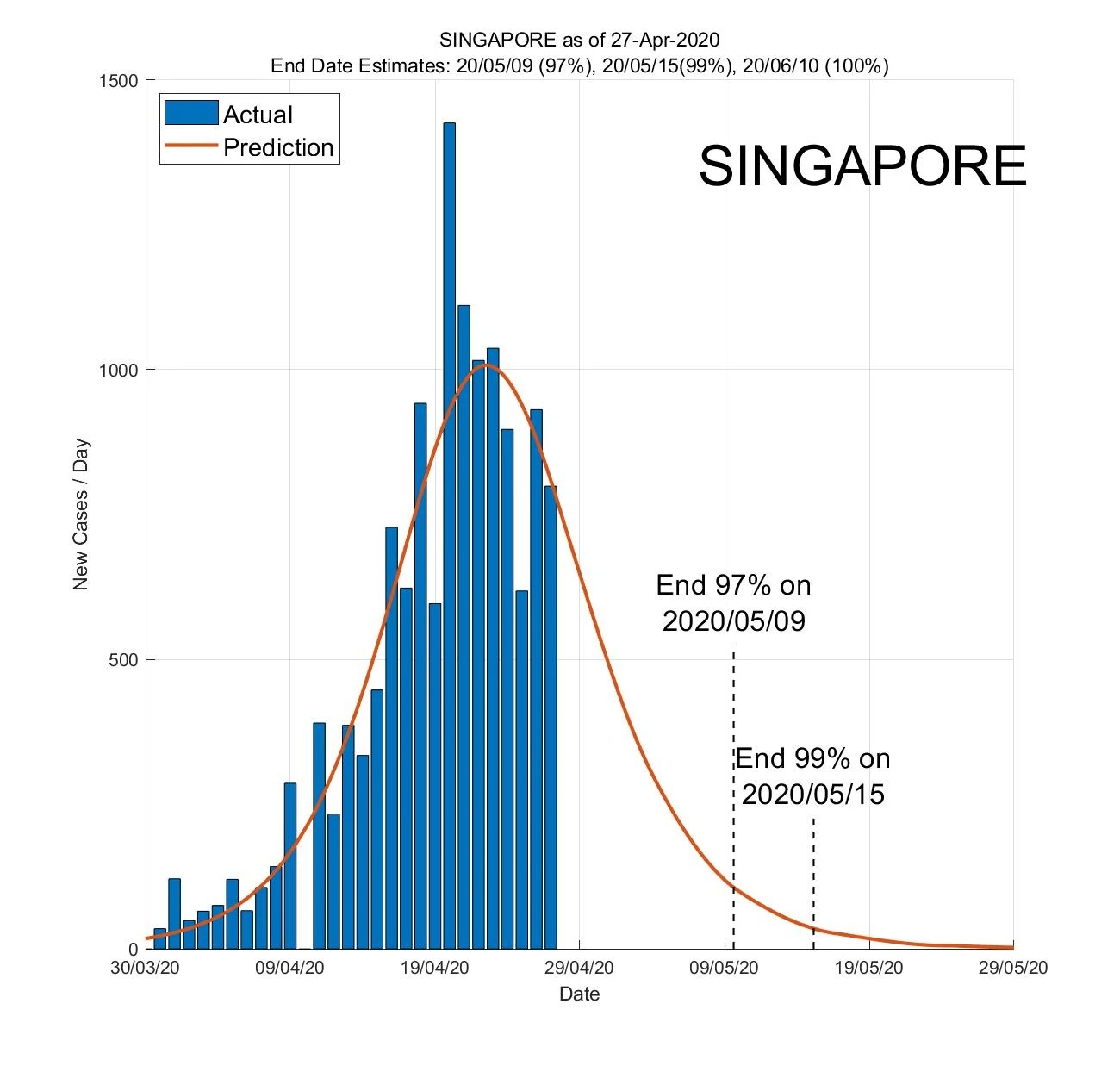
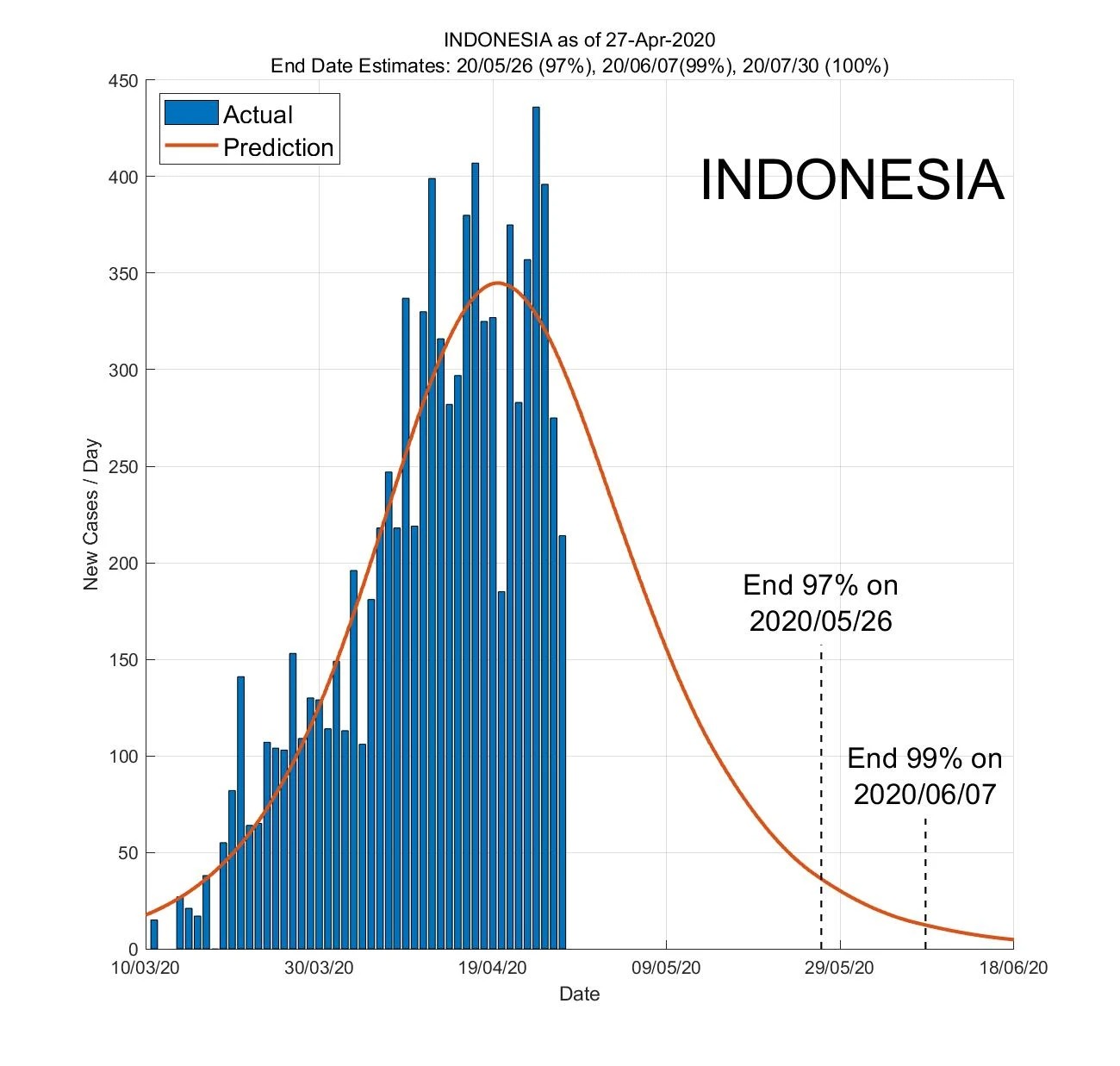
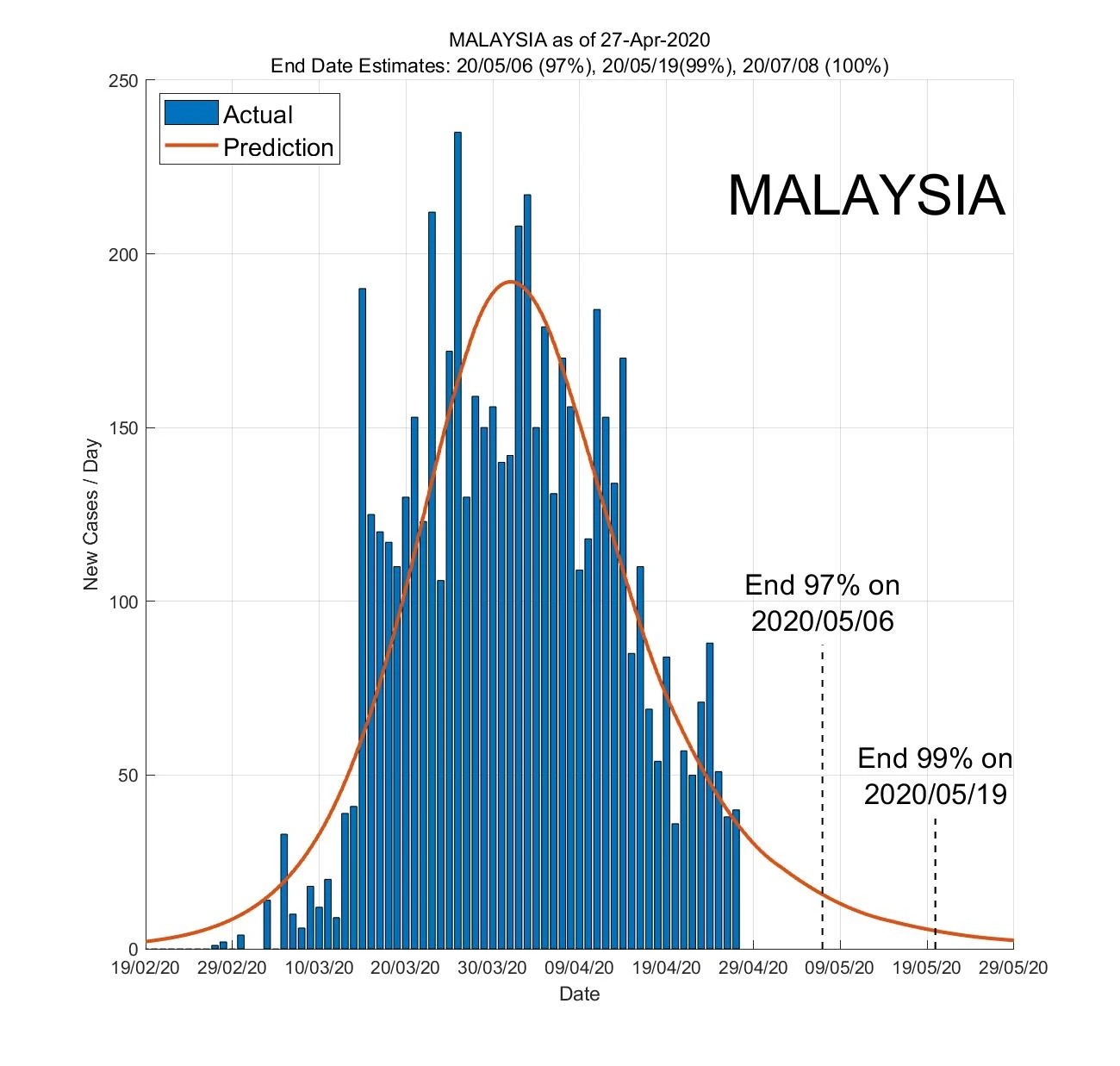
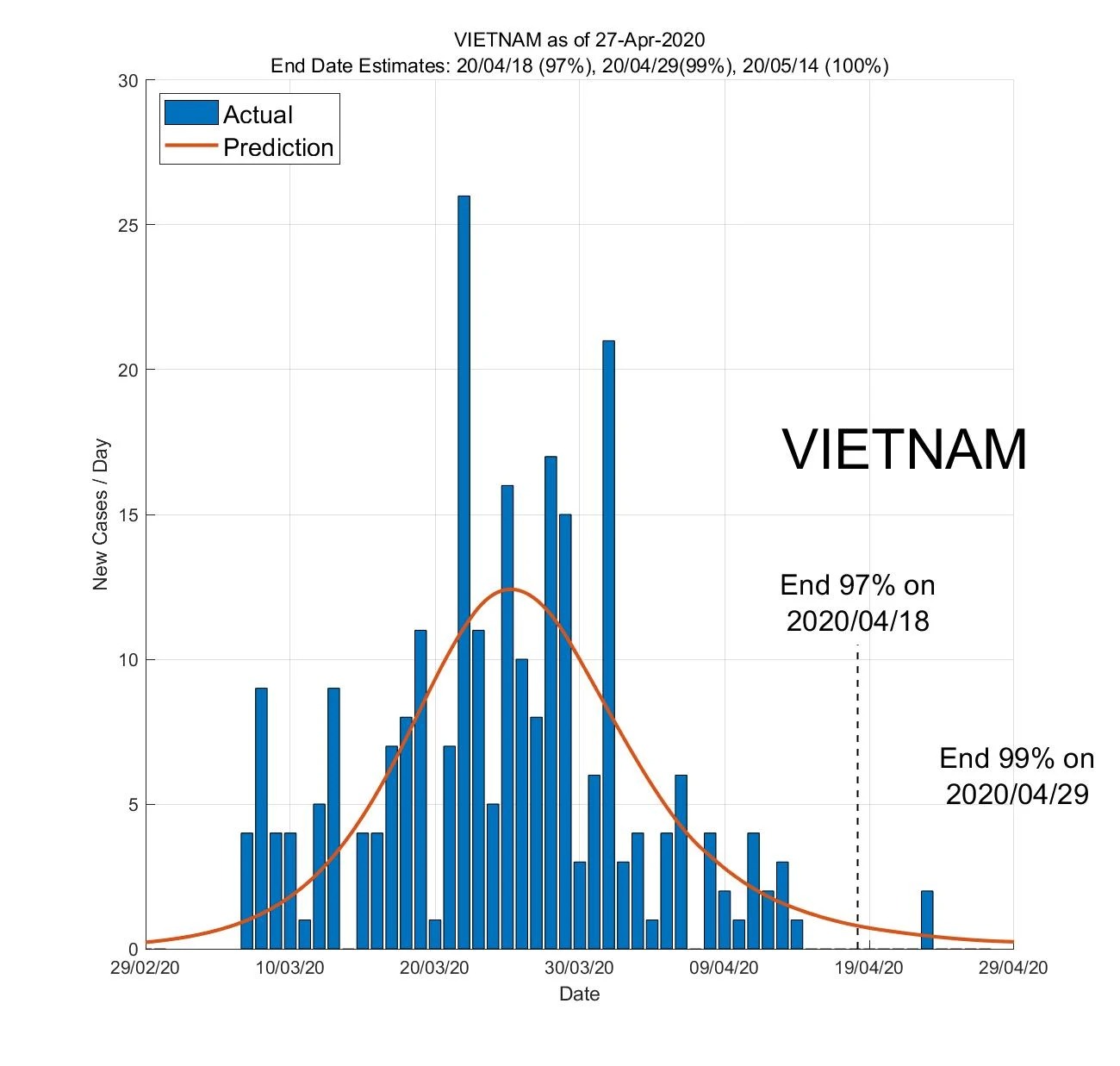
Using an artificial intelligence (A.I.) algorithm to study and analyze the most recent available data on total confirmed cases, total deaths, new confirmed cases, new deaths and population figures, the SUTD has been able to project the infection curve and generate a best guess of probable dates on when it believes the coronavirus disease will “end” or reach the last expected case in a particular country.

The predictions provide three alternative estimates of end dates in the order of conservativeness:

– the date to reach 97% of total expected cases

– the date to reach 99% of total expected cases, and

– the date to reach the last expected case.

Here are the projections on some countries in Southeast Asia.

Singapore – The city state of Singapore has a 97% chance of seeing the virus end by May 9, 99% on May 15, and 100% by June 10.

Philippines – According to the AI algorithm, the Philippines is 97% likely to see the virus end by May 12, 99% by May 23, and might be 100% virus-free by July 8.

Indonesia – Indonesia is seen to have a 97% probability of the virus ending by May 26, 99% by June 7, and 100% by July 30.

Malaysia – According to data, the algorithm estimates that Malaysia has a 97% chance to see an end to the virus by May 6, 99%  on May 19, and 100% on July 8.

Vietnam – Vietnam has a 97% chance of seeing the pandemic end in their country by April 18, 99% on April 29, and 100% by May 14.

Overall, the global projection believes that most of the world will be free from the pandemic on December 1. However optimistic as the predictions may seem, the forecast is still subject to change depending on a variety of factors like virus mutation, population movement, and government response to the crisis.

OTHER COVID-19 FORECASTING EFFORTS

The SUTD’s prediction is just one of the studies conducted to shed light on the ever-changing trends of the ongoing pandemic. Other more systemic COVID-19 forecasting efforts are spearheaded by academic institutions around the world, including the University of Washington (https://covid19.healthdata.org/projections), University of Texas at Austin (https://covid-19.tacc.utexas.edu/projections/), Imperial College London (https://www.imperial.ac.uk/mrc-global-infectious-disease-analysis/covid-19/) and the Massachusetts Institute of Technology (https://idss.mit.edu/research/idss-covid-19-collaboration-isolat/).

The Singaporean study is refreshed with updated data from different countries to estimate the pandemic life cycle curves and provide theoretical ending dates, with codes provided by Milan Batista and data from Our World in Data. Because of the input of updated data, predictions are also expected to change as a result of variations in real-world scenarios over time. The whole projection can be viewed at https://ddi.sutd.edu.sg.


Disclaimer: Due to data limitations, not all countries are included in the analysis. It is strongly suggested to drop the earlier predictions for the countries no longer included due to the rapid changes in real-world scenarios. The list of countries reported will also vary daily depending on data.

PhilCare posts 21% income increase as company banks on smarter healthcare to drive growth

MANILA – Philhealthcare, Inc. (PhilCare), one of the Philippines’ most preferred health maintenance organizations (HMOs), posted a net income of P130.6 million for the 12-month period that ended on December 31, 2019.

The amount is 20.9 percent or P22.6 million higher than the P108 million it earned in the same period in 2018.

Based on the company’s annual financial statement, the HMO’s revenues went up to P2.68 billion, 15.8% or P367 million higher than the previous year. Benefits, claims, and expenses also increased to P2.5 billion, 15.3% or P332 million year-on-year.

“We are really happy that our efforts in 2019 bore fruit, from the aggressive sales of our innovative products like our prepaid healthcards to the new partnerships we formed and the new sales channels that we have opened. All these have contributed significantly to the increase of our bottom line,” said PhilCare president and CEO Jaeger L. Tanco.

“I’m particularly proud that PhilCare has pioneered prepaid healthcards in the market. This was the result of our 1st Wellness Index done back in 2014. We learned back then a lot of Filipinos did not have access to healthcare coverage because they didn’t have corporate health benefits. We, then, decided to develop sachet-type products that are more accessible and affordable, and it truly made a difference,” he added.

Apart from prepaid cards, PhilCare is taking on new innovations by banking on technology that improve the way healthcare is delivered.

Among these is the DigiMed service, which is a form of medical teleconsult, which should make a more pronounced impact as the nation embraces the new normal.

The DigiMed service on the HeyPhil app has so far received around 1,500 digital consultations a month. It has also recently launched DigiMed PLUS, a web-based telemedicine application that allows members access to numerous specialists through video call.

“It is with great confidence that we assure our members, partners, and stakeholders that regardless of the present economic condition, PhilCare has remained resilient and we continue to be steadfast in our commitment to provide the quality of healthcare and service that we have been known to deliver,” Tanco said.

“PhilCare has always been a company that takes pride in being at the helm of innovation. As the nation gradually prepares itself for the new normal, we continue to gain momentum, seeking for opportune possibilities to leverage change to our advantage, as we dedicate ourselves in fulfilling our mission of making quality healthcare services available to every Filipino,” he added.


PhilhealthCare, Inc. (PhilCare) is among the top two most preferred HMOs in the country today. It distinguishes itself from other health maintenance organizations (HMO) in the Philippines by advocating wellness as a more holistic approach to health.

 This is achieved through PhilCare’s sustainable health plans, PhilCare 360, and its technology-enabled customer experience. PhilCare offers a wide range of health care plans to serve the different requirements of individuals, group, and enterprise accounts.

 PhilCare pioneered the country’s first Wellness Index in 2014.  Based on the findings of that study, PhilCare introduced the very first prepaid health plans in the country.  From prepaid to comprehensive coverage, PhilCare’s extensive line of products covers hospitalization, out-patient and emergency healthcare needs across a nationwide network of hospitals, clinics, and physicians.

 PhilCare 360, on the other hand, provides members with updates about health information, preventive measures against diseases and illnesses, and lifestyle trends that promote health and wellness. Meanwhile, PhilCare’s tech-enabled customer service efforts involve their accessible website and e-commerce, their call center that’s available 24/7, and its HeyPhil App where members can ask queries and request for a Letter of Authorization (LOA).

PhilCare’s commitment to promote wellness among Filipinos makes it an essential pillar of Maestro Holdings, a grand concord of four of the biggest and respected financial companies in the Philippines. Under the Maestro’s baton, PhilCare joins four of the most recognizable names in their respective industries: PhilsFirst, the first domestic non-life insurance company in the country; PhilLife, one of the most trusted insurance providers in the Philippines; PhilPlans, one of the leading financial solutions companies providing pension, education, and memorial programs.

PHL economy declines for first time since 1998

Following 84 quarters of uninterrupted growth, the Philippine economy shrank for the first time since 1998 in the first quarter of 2020, the Philippine Statistics Authority reported earlier this morning.

Using the new base year of 2018, the country’s gross domestic product (GDP) declined by 0.2%, a reversal from the expansions of 6.7% and 5.7% in the previous quarter and in the first quarter of 2019.

This marked the first time the economy declined since the three-percent contraction in the fourth quarter of 1998.

The first-quarter result was lower than the 2.9% median estimate in a BusinessWorld poll of 11 economists conducted last week as well as the government’s 6.5%-7.5% target range, albeit this was based on the previous base year of 2000. Economic managers earlier said they are assessing the impact of the coronavirus disease 2019 pandemic and the stringent measures imposed to contain it before revising official targets.

Among major economic sectors, agriculture and industry posted declines of 0.4% and three percent in the first quarter, a turnaround from their respective growth rates of 0.5% and 4.9% in the same quarter last year.

Bucking the trend was services, which grew 1.4% in the first quarter. This was, however, slower than last year’s 7.1%.

On the expenditure side, household spending recorded a flat 0.2% growth, slower than 6.2% in the first quarter of 2019.

Government spending grew by 7.1%, slower than the 17% growth in the previous quarter, but faster than 6.4% in the first quarter of 2019.

Private investment, which is represented in the data as capital formation, posted an 18.3% decline compared to a 9.8% expansion in the same three months last year.

Exports and imports of goods and services also contracted to three percent and nine percent, reversing from their respective growth rates of 4.2% and 8.9% last year.

Gross national income – the sum of the nation’s GDP and net income received from overseas – posted a 0.6% decline in the first quarter compared to growth rates of 5.8% in the previous quarter and five percent in 2019’s comparable three months. – Lourdes O. Pilar

How to get better at video conferencing

The world is on lockdown. But while stay-at-home directives are in place, work must continue, bringing rise to the necessity of conference calls. Overnight, video calling went from infrequent, emergency measure, to the daily driver of corporate communications.

Successful video conferencing is a combination of etiquette, discipline, and good will. Here are tips on how you can transition smoothly from face-to-face to virtual calls:

Choose a software

The most popular video conferencing solution today is Zoom, but there are a lot of other mainstream choices as well: like Cisco Webex, Skype, and Google Hangouts. Each has their pros and cons, with a combination of free and premium options. So download the apps or desktop clients and find the one that fits your firm’s needs best.

Test the software

Check if your equipment is working. Get a feel of the software even before your meeting. Don’t be the person who disrupts a presentation because your dog starts barking and you don’t know how to mute your microphone. Utilize Zoom’s test feature. WebEx has a Personal Room that can also be used for testing. In Skype, click your profile picture and then select Settings > Audio & Video Settings. There should be a camera preview under the Video section. You can also look for Sound Test Service in your Skype contacts to test audio quality.

Minimize bandwidth use of others

Poor bandwidth equals pixelated screens and choppy audio. If you’re expecting a video call, make sure the smart devices in your home aren’t hogging the connection. If you have a family member bingeing on Netflix, you might want to invite them to take a break.

Mind your surroundings

Avoid harsh, direct light and make sure that the light source is in front of and not behind you to avoid plunging your face into a shadow.

PCMag’s lead camera analyst Jim Fisher stresses that “Soft fill on your face is all that matters.” Choose a neutral backdrop or at least avoid one that is too distracting.

Ensure your face is zoomed in close enough so everyone can read your facial expressions. Keep the web camera within your line of sight.

If you’re the organizer, be clear from the start that videos will be on during the meeting so participants have ample time to prepare.

Avoid audio feedback

Close the door if you’re near a noisy street. Inform your family about your scheduled calls so they know when to turn the volume of the TV down. Use equipment such as a bluetooth headset or gaming headphones if available. And avoid rooms with high ceilings or other features that create too much echo.

Inform everyone of the agenda

Video conferences with at least a loose agenda and schedule are better because they keep things more efficient. People come in prepared with their insights, questions, and suggestions. Plus, it allows for more regimented turn-taking and thus reduces the possibility of people talking over each other.

Engage your audience

If you’re set to make a presentation during the call, create audience engagement by changing the pace and tone of your voice. Emphasize key words and use pauses for effect, advises Adrian Dearnell, a Forbes.com contributor and former business and finance TV anchorman.

He also advises using simple and easy-to-read visuals, as well as showing your face as often as possible and your PowerPoint as little as needed. Keep an eye out too on the live chat feed and answer relevant questions.

Focus on the conversation

It’s obvious when someone mentally checks out of the conversation to check their email – even if they try to be subtle about it, so don’t do it. Besides, studies show that trying to do multiple things at once cuts into performance. Researchers at Stanford found that people who multitask can’t remember things as well as their more singularly focused peers. Close any tabs that might distract you and stay present.

Mute your microphone

As much as possible, mute your microphone when you’re not the one speaking. This is important because most tools for group video conferencing prioritize the visual feed of the person speaking. When using platforms that automatically switch videos to whomever’s talking, your face will be popping up every time you make a noise, even if it’s just you munching down on your afternoon snack.

Break up a large group

Moderators will struggle in video calls with more than five active participants. Virtual conferences are challenging enough as it is, and things can get unmanageable when people start interrupting each other, especially if there’s a lag in the connection. Consider breaking up a large group by assigning participants into smaller breakout rooms for a portion of the meeting. This promotes more creativity, engagement, and inclusion. Zoom and Webex both have this feature.

Have a backup plan

No matter what program you use, have a backup plan in case something goes awry. You and your team can choose to use an alternative app, for instance, or just switch to an audio-only call. Remember too that not each and every collaboration requires a video conference.

Even beyond COVID-19, it seems that video calls are here to stay. Make it work for you and your team by mastering the basics of virtual meetings.

External trade plummets in March

By Mark T. Amoguis
Assistant Research Head

THE COUNTRY’S international trade performance fell significantly in March as the restrictions imposed to arrest the spread of the coronavirus disease 2019 (COVID-19) outbreak in the middle of the month led to exports and imports shrinking to multi-year lows, the government reported on Wednesday.

Preliminary trade data from the Philippine Statistics Authority showed merchandise exports in March contracting by 24.9% to $4.53 billion compared to a 2.8% growth in February and a 0.1% uptick recorded in March 2019.

Philippine trade year-on-year performance (March 2020)

Likewise, merchandise imports fell 26.2% to $6.91 billion in March, deteriorating from an 11.6% decline in February and a 12% growth observed in the same month last year.

The March export fall broke three consecutive months of growth and was the lowest in nearly a decade, or since the 27% contraction logged in September 2011.

For merchandise imports, March marked its 11th straight month of contraction and the steepest since the 28.3% fall posted in August 2009.

Trade deficit in March was recorded at $2.38 billion, lower than the $3.34-billion gap in the same month last year.

The country’s total external trade in goods — the sum of export and import goods — was $11.44 billion in March, 25.7% less than the $15.40-billion haul in the same month last year. So far, total trade reached $38.98 billion, 10.4% less than $43.50 billion in January-March 2019.

For the three months to March, exports were down 5.2% to $15.72 billion, well below the 4% growth target for 2020 by the Development Budget Coordination Committee (DBCC), an interagency body that sets macroeconomic and fiscal assumptions of the government.

Meanwhile, the merchandise import bill dropped 13.6% to $23.26 billion on a cumulative basis against the DBCC’s eight-percent growth target for the year.

That brought the year-to-date trade balance to a $7.54-billion deficit, smaller than the $10.34-billion shortfall in 2019’s comparable three months.

Exports of manufactured goods, which account for nearly 80% of the total exports that month, slumped 27% year on year to $3.57 billion from $4.90 billion last year. Total agro-based products sales were also down 4.6% to $448.32 million in March.

Electronic products, which made up more than half of the total March export sales, decreased 24% to $2.44 billion. Semiconductors, which account for almost three-fourths of electronic products, went down 22.7% to $1.81 billion.

Exports of forest, mineral, and petroleum products likewise fell by 45.6%, 15.5%, and 16.7%, respectively to $17.56 million, $405.38 million, and $14.27 million.

On the import side, raw materials and intermediate goods, which contributed 38.4% to the goods imports bill in March, sank 25.6% to $2.65 billion year on year.

Capital and consumer goods also went down to 26.5% ($2.24 billion) and 21.9% ($1.19 billion) in March, respectively. Imports of mineral fuels, lubricant and related materials contracted by 32.2% to $783.09 million.

TRADE DECLINE ‘UNDERSTANDABLE’
In a statement, the National Economic and Development Authority (NEDA) said the COVID-19 pandemic and the resulting restrictions in production supply chains and global trade flow led to the country’s trade decline in March.

In a phone interview, Philippine Exporters Confederation, Inc. (Philexport) President and Chief Executive Officer Sergio R. Ortiz-Luis, Jr. said the slump in external trade was “clearly” attributed to the lockdown.

“Export-oriented companies were closed including our suppliers… Even [for] those who remained open, operations are only maintained at 30%. Obviously, [the decline] is understandable,” he said.

Ruben Carlo O. Asuncion, chief economist at UnionBank of the Philippines, Inc. (UnionBank), said the COVID-19 outbreak “paved the way” for the softening of global trade, particularly for those with huge trading partnerships with China, where the outbreak originated.

“It was a gradual decline of merchandise trade for January and February culminating to a sharp decline in mid-March as the larger part of the Philippine economy was virtually shut down, halting almost all economic activities initially,” he said in an e-mail.

The government’s trade growth targets will likely be missed this year, according to analysts.

“There’s no way [to achieve those targets]. We’re lucky to break even by the end of the year,” Philexport’s Mr. Ortiz-Luis said.

For UnionBank’s Mr. Asuncion: “It will definitely be difficult to meet these government-set growth targets.”

“Unless a vaccine is eventually discovered and successfully administered to the sickened population this year, trade going back to pre-COVID-19 levels or better remains to be a challenge,” he added.

For ING Bank N.V. Manila Branch Senior Economist Nicholas Antonio T. Mapa: “We expect months of sustained contraction in the immediate term as lockdown stymies manufacturing and business activity. Subdued global demand should ensure trade in 2020 will be disappointing,” he said in a note to reporters.

In a statement, acting Socioeconomic Planning Secretary Karl Kendrick T. Chua said trade in goods may recover next year, “but this will depend on how fast we can contain the spread of COVID-19 and mitigate its economic impact through government policies to support affected industries and workers.”

IMPACT TO GDP
The slump in external trade will “definitely be a big hole” in the country’s gross domestic product (GDP), Mr. Asuncion said.

“Although trade is not zero between January and February this year, merchandise trade has obviously declined dramatically due to COVID-19. Overall, 2020 Q1 GDP growth may decline a third of what was originally expected before the COVID-19 pandemic,” he said.

Philexport’s Mr. Ortiz-Luis said that in the past, an increase in exports by three to four percent tends to increase GDP by one percent.

“Under this exceptional situation, I don’t know if that’s true,” he said.

A BusinessWorld poll of 11 economists yielded a 2.9% median growth estimate for the first quarter, cooling from the 6.7% growth in the last three months of 2019 and 5.7% in the first quarter of 2019.

Should this materialize, this would be the slowest expansion in a decade or since the 1.8% pace recorded in the final three months of 2009.

The PSA will report the first-quarter GDP data today.

Philippine trade year-on-year performance (March 2020)

THE COUNTRY’S international trade performance fell significantly in March as the restrictions imposed to arrest the spread of the coronavirus disease 2019 (COVID-19) outbreak in the middle of the month led to exports and imports shrinking to multi-year lows, the government reported on Wednesday. Read the full story.

Philippine trade year-on-year performance (March 2020)

Agricultural output contracts in 1st quarter

By Revin Mikhael D. Ochave

THE country’s agricultural output contracted in the first quarter, as production of crops and fisheries dropped, the Philippine Statistics Authority (PSA) reported on Wednesday.

The PSA said that the value of production of the farm sector — which contributes about a 10th to GDP and a fourth of jobs in the country — fell 1.2% annually compared to the 0.4% growth a year ago and -0.1% in the last three months of 2019.

The first-quarter figure was lower than the Department of Agriculture’s (DA) full-year target of around 2% growth.

“This was attributed to the contraction in crops and fisheries production. On the other hand, livestock and poultry posted production increases during the period. At current prices, the value of agricultural production amounted to P441.2 billion. This was higher by 3.4% from the previous year’s level,” it said.

Rolando T. Dy, executive director of Center for Food and Agri-Business of University of Asia and the Pacific (UA&P) said he expected the negative agricultural output due to supply and demand disruptions.

“The COVID-19 pandemic affected some agricultural industries such as the hampered logistics of commodities. Another affected part is food demand because urban folks have limited access to markets due to the lockdown,” Mr. Dy said in a mobile phone message.

Pampanga State Agricultural University professor Roy S. Kempis said the COVID-19 pandemic took its toll on the agriculture sector.

“The outcome for agriculture production is possible to change if the COVID-19 pandemic did not happen,” Mr. Kempis said in a mobile phone message.

Agriculture Secretary William D. Dar said the contraction in agricultural output was “expected” after disruptions caused by the Taal Volcano eruption in January and implementation of the closed fishing season in major fishing grounds around Panay Island, Sulu and Palawan.

“We are hopeful of a rebound for the second quarter, despite the impact of the coronavirus disease 2019 (COVID-19) crisis, as strategic interventions under the Rice Competitiveness Enhancement Fund are expected to bear fruit and closed fishing season is lifted on these rich fishing grounds,” Mr. Dar said in a statement.

Among sub-sectors, fisheries production, which accounted for 12.8% of the total, saw the sharpest decline at 5.2%. The PSA said that lower output was noted in species such as tilapia, yellowfin tuna, seaweed, frigate tuna, and mackerel, among others.

“Fish ports and public markets possibly faced constraints in physical distancing that many of these open and close from time-to-time for disinfection or lockdowns to impose discipline,” Mr. Kempis said.

RICE HARVEST
Crops output, which accounted for 54.9% of the sector’s total production, slid 2.1% in the first quarter. This was led by paddy rice harvest and corn which contracted by 3.6% and 3.4%, respectively.

“The first quarter is normally a low peak. I expected palay production to go up. Perhaps the delayed harvest will be gained in the second quarter,” Mr. Dy said.

UnionBank of the Philippines, Inc. Chief Economist Ruben Carlo O. Asuncion said in a mobile phone message that the Taal Volcano eruption and lower rainfall may have contributed to the decline in output.

Last April, the PSA adjusted its production estimates for palay to 4.25 million metric tons (MT), 0.8% lower than the initial projection and a 3.8% decline year on year from the first quarter of 2019 which stood at 4.42 million MT.

The PSA also estimated that corn production will be 0.9% lower year on year to 2.40 million MT.

OTHER SECTORS
The PSA also reported livestock production, which accounted for 17.9% of total production, rose by 0.5% in the first quarter.

“Livestock growth could be just a base effect. The African Swine Fever (ASF) virus outbreak has already took a toll in 2019,” Mr. Dy said.

Hog production rose by 0.7% while goat and dairy production went up by 1.1% and 9.3%, respectively.

In contrast, carabao and cattle production showed 1.9% and 0.5% declines respectively.

Meanwhile, poultry production, which contributed 14.3% of total agricultural output, jumped 3.9%. Chicken production rose by 3.3% while duck production edged up 0.8%.

“The increase in livestock production could be due to the presence of own adequate means and assets by raisers to bring goods from farms to slaughter houses to dressing plants to public and supermarkets and the adequate ability to organize adjustments in making their own means or assets to bring goods from farms to the markets despite many areas closed because of the quarantine,” Mr. Kempis said.

Forced closure of ABS-CBN may hurt investor confidence

By Arjay L. Balinbin
Reporter

THE forced shutdown of media giant ABS-CBN Corp.’s broadcast operations may hurt investor confidence in the Philippines at a time when investments are anticipated to drop amid the coronavirus crisis.

The Makati Business Club (MBC), Bishops-Businessmen’s Conference for Human Development, Management Association of the Philippines (MAP), and Shareholders’ Association of the Philippines, Inc. issued a joint statement expressing concern over the forced shutdown of ABS-CBN’s television and radio stations, saying it is “a blow to press freedom, which is a pillar of democratic societies such as ours.”

“It is also a setback at a time when the country needs to be united against the pandemic. Now more than ever, everyone should be working together on the singular goal of helping each other through this crisis,” the business groups said.

The MAP said it was a “sad day for media freedom and the thousands of people and their families who will be adversely affected.”

“We…had fervently hoped that this day would never come as we, together with other business organizations, strongly urged Congress to consider in a timely and judicious manner the renewal of ABS-CBN’s broadcasting franchise,” MAP said.

MBC and MAP both called on Congress to act on the pending bills seeking to renew the network’s franchise, which expired on May 4.

On Tuesday evening, ABS-CBN stopped operations of Channel 2, DZMM, MOR and other regional television and radio stations, in compliance with a National Telecommunications Commission (NTC) order.

A source from a foreign business group, who did not want to be identified, said on Wednesday the government-ordered ABS-CBN shutdown is “unhealthy for press freedom and will affect the confidence of investors.”

Comparing the plight of ABS-CBN with online media company Rappler.com, which is now facing various tax evasion cases filed by the government, the source said: “If we look at what they were trying to do with Rappler, what investors were interested in was press freedom, and any step that the government takes against press freedom is seen as a threat to the business environment.”

Philippine Exporters Confederation, Inc. (Philexport) President Sergio R. Ortiz-Luis, Jr. does not see the ABS-CBN issue as having an impact on investor confidence.

“There are hundreds and thousands of companies that are closed, there are millions of workers who are not working. How can that affect investors’ confidence now? So it doesn’t really matter unless the media will blow it up. It’s a political and legal issue,” he said in a phone interview.

“It depends on how it is treated by the media, because it’s an issue of franchise.”

Research and advocacy group Action for Economic Reforms (AER) said it is a “supreme and most tragic irony” that ABS-CBN, which has been doing public service amid the pandemic is being singled out for closure, while Philippine Offshore Gaming Operators (POGOs) are being allowed to reopen.

“This action of closing down ABS-CBN sends a signal that the administration does not care about national unity and is more concerned about political vendetta. This sets back our long fight against COVID-19,” AER said.

For University of the Philippines (UP) political science professor Maria Ela L. Atienza, the ABS-CBN case is “not just a freedom of expression and press freedom issue,” but how the government deals with big companies and oligarchs.

“President Rodrigo Duterte takes a very personal approach with big business and tends to favor some oligarchs more than others. He has previously attacked the Ayalas and (Manuel) Pangilinan but recently apologized as he needs their help currently in this pandemic environment and may get into some compromises with them in view of future political plans. He and his allies may want to extract concessions from the Lopezes. We have yet to see how these will unfold,” she said in an e-mailed reply to questions sent by BusinessWorld.

While most foreign investors look primarily at a market’s profitability, Ms. Atienza said some firms still consider political stability before making investment decisions.

“Some companies do look at the political stability and human rights issues of a certain market if they adhere to certain corporate social responsibilities and operations are affected/governed by certain principles of governments of their mother companies, common markets and regional blocs like the EU,” she said.

DUTERTE TO OVERTURN ORDER?
Justice Secretary Menardo I. Guevarra said President Rodrigo R. Duterte can overturn the order of the NTC, since he has control over any office under the Executive branch.

“He may modify, amend, recall, revoke any order or any decision that might have been rendered by his subordinates in the Executive department, he has total control of the Executive department as chief executive,” Mr. Guevarra said in an interview with CNN Philippines’ The Source.

Senator Ralph G. Recto urged the NTC to revoke its order and the House of Representatives to act on the bill seeking the renewal of ABS-CBN’s franchise.

“The way forward is for NTC to allow ABS-CBN to resume operations, for the House to immediately pass the bill, and for the Senate to ratify the bill once it receives it from the House,” Mr. Recto said in a separate statement.

Senator Franklin M. Drilon asserted that the NTC’s cease-and-desist order against ABS-CBN violates the equal protection clause under the 1987 Constitution.

“The cease-and-desist order against ABS-CBN is not only a grave abuse of discretion on the part of the NTC, it also infringes on the constitutional guarantee of equal protection,” he said in a separate statement.

Mr. Drilon cited the cases of Philippine Telegraph & Telephone Corp., Smart Communications Inc., Catholic Bishops’ Conference of the Philippines, and TV5 Network, Inc., as among those allowed to operate pending franchise approval.

Meanwhile, Solicitor General Jose C. Calida said critics are “barking up the wrong tree” when they blame the NTC for directing the shutdown of ABS-CBN.

“Why blame NTC when they are only following the law. Without a valid and subsisting franchise from Congress, the NTC cannot allow any broadcasting entity from operating in the country,” Mr. Calida said in a statement.

“The bill renewing ABS-CBN’s franchise has been pending in Congress since 2016. The question we should be asking is, why hasn’t Congress acted on it? Who is at fault here?” he added.

NEW FRANCHISE BILL
Meanwhile, Cagayan de Oro Rep. Rufus B. Rodriguez filed a House Joint Resolution 30 that seeks to grant a provisional franchise to ABS-CBN to be able to operate until June 30, 2022.

“I am hoping we can expedite the hearings on this measure amid the COVID-19 (coronavirus disease 2019) pandemic even if we have to hear all stakeholders through the new normal video conferencing platform,” he said in a statement.

Since ABS-CBN’s previous franchise expired on May 4, Mr. Rodriguez also filed House Bill No. 6694 to grant the media giant a new franchise for 25 years.

“It has to be a new grant and no longer a renewal, since the radio-TV station’s franchise already expired midnight of May 4. Now the remedy is for the House to speed up its hearings on my proposals for a temporary franchise and for the grant of a new 25-year broadcasting service privilege,” he said.

There are 12 pending House bills on ABS-CBN’s franchise renewal, but none have hurdled the committee level.

Trading of ABS-CBN and ABS-CBN Holdings Corp shares at the Philippine Stock Exchange were suspended on Wednesday, but will resume today (May 7). — with inputs from Vann Marlo Villegas, Genshen L. Espedido and Charmaine A. Tadalan


MPIC income down for first time in history

By Denise A. Valdez, Reporter

METRO Pacific Investments Corp. (MPIC) posted a lower core net income in the first quarter, the first time it happened in its history, as its profits were halved as an effect of the enhanced community quarantine (ECQ) in mid-March to contain the coronavirus disease 2019 (COVID-19).

The conglomerate reported a 47% drop in attributable net income to P1.9 billion during the January-to-March period. Core net income slipped 6% to P3.4 billion.

System-wide revenues including Manila Electric Co. slid 6% to P87.8 billion, traced to the reduced traffic in toll roads, suspension of rail operations and lower commercial and industrial demand for water and power.

By business segment, MPIC’s power business contributed P2.87 billion (+7% year-on-year), toll roads added P918 million (-18% y-o-y) and water pitched in P859 million (-5% y-o-y). The hospitals, logistics and other business segments accounted for a net loss of P19 million.

In a virtual press briefing on Wednesday, MPIC Chief Finance Officer David J. Nicol said the company was projecting a 50% decline in capital expenditures this year to P80 billion. MPIC intends to scale down spending for discretionary projects such as those in hospitality, logistics and some water projects to conserve cash.

“On a group-wide basis, at this stage, I think it looks like we may be closer to sort of P80 billion funding as opposed to P160 billion,” he said.

Mr. Nicol noted the company intends to cut spending on overhead items and all things discretionary, as MPIC’s focus is “to keep everybody on the payroll” and “cut down in every other way that (it) can” in trying to survive the pandemic.

MPIC also said it is temporarily setting aside plans for regional expansion to focus on keeping its existing businesses afloat.

“I think at least for this second quarter, it is best to be financially prudent… There’s no energy looking at new projects or investing in new projects, especially abroad,” MPIC Chairman Manuel V. Pangilinan said in the briefing.

“We have to keep the businesses running and producing the relevant cash flows required by the business to move on beyond the quarantine and continue to be strong,” he added.

For the second quarter, Mr. Nicol said MPIC is “inevitably going to be very hard hit,” as the period would account for at least six weeks of ECQ as opposed to two weeks in the first quarter. “Hopefully we are going to be profitable, but it’s going to be much, much reduced from the first quarter,” he said.

Despite the expected surge in demand for health care services due to the COVID-19 pandemic, MPIC’s healthcare unit Metro Pacific Hospital Holdings, Inc. (MPHHI) said its profitability has been a challenge in current times.

“I think during the first two weeks of lockdown, revenues dropped as much as 50%. So it’s quite a big impact to the hospital business,” MPHHI President and Chief Executive Officer Augusto P. Palisoc, Jr. said.

He noted because of fear of the virus, most patients are opting to delay visits to the hospital, resulting in a decline in both the in-patient and out-patient business of MPHHI.

Mr. Palisoc said what the company intends to do is reconfigure its business and prepare for different scenarios by adopting new technologies and continuing to develop its laboratory capacity.

He also noted MPHHI is ready for any possible “second surge” of COVID-19 cases once the ECQ is lifted. He said the utilization of COVID-19 designated beds in MPHHI’s 16-hospital network is at about 36% at present. “In a way it is good because that mean…we would have a lot of capacity to be able to help,” Mr. Palisoc said.

MAYNILAD
Meanwhile, Mr. Pangilinan said he was amenable to an out-of-court settlement with the government over MPIC’s water concession, after President Rodrigo R. Duterte apologized to him earlier this week for their previous rift.

“We welcome that. I think it’s better to have a negotiated, bilateral kind of dialogue between (Maynilad Water Services, Inc.) and the government,” he said. However, he noted as of yesterday there is no course of action yet on the talks.

For Maynilad Chief Executive Officer Ramoncito S. Fernandez, what would be favorable for Maynilad is a “revised agreement that will be bankable at the end of the day.”

MPIC is one of three Philippine units of Hong Kong-based First Pacific Co. Ltd., the others being PLDT, Inc. and Philex Mining Corp. Hastings Holdings, Inc., a unit of PLDT Beneficial Trust Fund subsidiary MediaQuest Holdings, Inc., maintains interest in BusinessWorld through the Philippine Star Group, which it controls.

Shares in MPIC at the stock exchange slid seven centavos or 2.46% to P2.78 each on Wednesday.

Five more illegal groups in SEC’s new warning to investors

THE Securities and Exchange Commission (SEC) continued to flag groups that are soliciting investments from the public without authorization from the government.

The corporate regulator issued new advisories on Wednesday to warn the public against Captcha Philippines, Inc.; Xtreme House of Beauty Trading Corp.; Crypto Invest With Us (CIW.U); Won Project/Won Network/Won Foundation; and Fil-Invest.

Anyone representing these groups, it said, are operating illegally as they have not obtained licenses from the SEC to offer investment opportunities to the public.

“The public is advised not to invest or stop investing in any investment scheme being offered by any individual or group of persons allegedly for and in behalf of (the identified companies),” it said.

Captcha Philippines invites members to buy an account for P2,500 in exchange of a 20% daily return of 600% monthly return on investment. Members may earn more if they get to recruit members and solve Captcha tests.

Xtreme offers different packages for marketing plans that are designed to get more members through referrals. The packages are sold for as low as P1,888 for students, senior citizens and special cases, and as high as P28,888, with the promise of a maximum income of P300,000, depending on a member’s availed package.

CIW.U was found by the SEC as the same group that operated Mag Invest Ka Online (MIKO), which has been flagged by the SEC in early April. Similar to MIKO, CIW.U runs its business by promising a 1% return after six days and possibly 5%, 8%, 10%, or up to 20% weekly return depending on trading.

Won Project, which the SEC said is the developer of Woncoin, claims to be a Singapore-based company that engages in cryptocurrency. It said its main projects are its mobile application and multi-level marketing that “tokenize” remittances of overseas Filipino workers, online payments, digital-loading, air ticketing and travel and tours. But the SEC found it sells the Woncoins to offer investment packages in exchange for a daily profit of 1.5% on weekdays.

The SEC noted that Fil-Invest is not affiliated with Filinvest Development Corp. or any of its subsidiaries. It solicits investments from the public to be used in gambling activities, particularly in playing Baccarat, in exchange of a 5% to 20% monthly return.

“CIW.U, Won Project, Captcha Philippines, Fil-Invest and Xtreme have neither registered securities such as investment contracts nor secured secondary licenses to solicit and take investments from the public, as required under Republic Act No. 8799, or the Securities Regulation Code,” the SEC said in a statement.

It also noted that it had issued warnings against at least 43 individuals and groups for operating unauthorized investment activities since the country was put in a state of public health emergency in March.

People behind these operations may be fined up to P5 million, imprisoned for up to 21 years, or both, for violation of the Securities Regulation Code. — Denise A. Valdez