Home Blog Page 8759

Tough loss

To argue that Rick Carlisle was disappointed in the aftermath of the Mavericks’ setback to the Rockets the other day would be an understatement. It wasn’t simply that his charges snatched defeat from the throes of victory. It was that they did so in a manner all too familiar to him: with an offense — otherwise the most efficient by far in league history — cratering to alarming proportions and therefore unable to prop up a middling defense. For some reason, they keep tightening up late in close contests, leading to them being outscored by a whopping 16 points per 100 possessions in the crunch. And they did so anew in their first seeding game; they were up by 11 to start the fourth quarter, by as much as 13 at one point, and by seven with 45.2 ticks left — and they still lost.

To be fair, Carlisle was all too ready to own up to his missteps following the debacle. Even as he admitted that “this is a tough loss, as tough as it gets,” he saw fit to “take full responsibility … I want to keep the pressure off the players.” And, in some ways, he’s right. For instance, he kept Trey Burke — who hitherto torched the Rockets for 31 markers (on 11-of-16 shooting from the field, eight of 10 from deep) and six dimes — glued to the bench in the last 10 minutes of regulation despite their inability to puncture the hoop and evident need of his scoring.

Bottom line, the Mavericks have no one to blame but themselves for their poor execution in the payoff period. And it goes beyond their botching free throws and putting up only 20 after previously posting 43, 43, and 34. Rather, it’s in their capacity to stick to fundamentals while in the midst of pressure and threatened by fatigue. Heck, they couldn’t even box out properly in the last free throw attempt of the final canto. Up by two with 3.9 ticks left, all they had to do was claim the rebound off a possible miss and thereby ensure the triumph. Instead, they allowed the Rockets’ Robert Covington to tip in a James Harden miss, tying the game and, after a Luka Doncic airball, sending it to overtime.

Under the circumstances, Carlisle would have had ample cause to lash out. Instead, he preached patience and understanding, no doubt in acceptance of the relative youth and inexperience of his roster. As top dog Doncic noted, “We’re a young team. We’ve got a lot to learn.” Considering that they’re battling for playoff position, however, they need to do so quickly. Bowing to the Rockets, whom they were trying to overtake for the sixth seed in the West, was particularly damaging to the cause; staying seventh would consign them to a first-round matchup with the superior Clippers.

What’s done is done, though, and the Mavericks have no choice but to plod on. Doncic was defiant in claiming that “I know we’re going to get together when it matters most.” And, all evidence to the contrary notwithstanding, perhaps he’s on the mark in his assessment. After all, they do have the tools to succeed — with top-shelf mentoring and complementary personnel around him. Meanwhile, all and sundry are hoping he’ll make good on his promise sooner rather than later. The talk may be good, but the walk is what matters.


Anthony L. Cuaycong has been writing Courtside since BusinessWorld introduced a Sports section in 1994. He is a consultant on strategic planning, operations and Human Resources management, corporate communications, and business development.
Philippines to update COVID-19 strategy as healthcare workers seek ‘timeout’

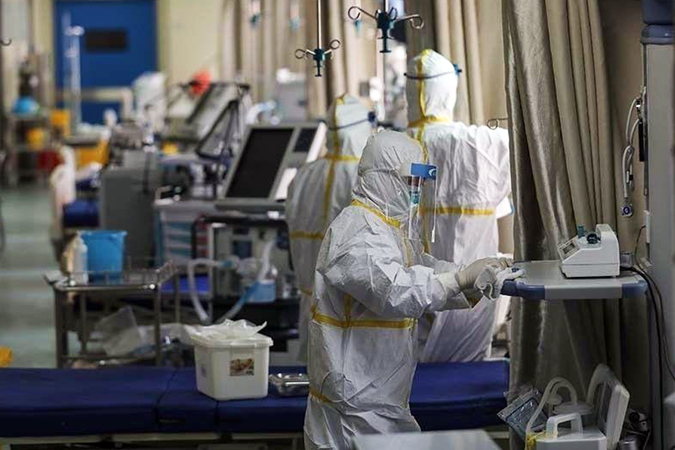
In the largest call yet from medical experts to contain the virus, 80 groups representing 80,000 doctors and a million nurses, on Saturday said the Philippines was losing the fight against the disease and warned of a collapse of the healthcare system from soaring infections without tighter controls. — PHILSTAR

The Department of Health (DoH) vowed on Sunday to update its game plan against COVID-19 within a week and sought to beef up the healthcare workforce in the capital Manila, where medical frontliners are calling for reviving strict lockdowns.

The Philippines on Saturday reported 4,963 additional coronavirus infections, the largest single-day jump on record, bringing its total confirmed cases to 98,232, while its death toll had climbed to 2,039.

It has the second-highest number of coronavirus infections and COVID-19 deaths in the region, behind Indonesia.

In the largest call yet from medical experts to contain the virus, 80 groups representing 80,000 doctors and a million nurses, on Saturday said the Philippines was losing the fight against the disease and warned of a collapse of the healthcare system from soaring infections without tighter controls.

In a statement issued following an unscheduled meeting late on Saturday of the government’s coronavirus task force to address the concerns of doctors and nurses, the DoH said it would come up with an updated COVID-19 strategy within seven days.

It appealed to healthcare workers in the provinces and those returning from abroad to help beef up the frontline workforce in the capital, and sought help from universities and medical groups in hiring more doctors, nurses and other medical staff.

The government appears reluctant to revive strict curbs on movement in the capital, saying there are other ways to control the spread of the disease.

Still, the health department said it supports the healthcare workers’ call for a “timeout” and would “proactively lead the implementation of effective localized lockdowns”.

“The battle is not over, and it will not be for a long time yet,” the department said in a statement. But “we will marshal all our efforts to turn the tide.” — Reuters

Virus threatens property’s dominance of Philippine stock market

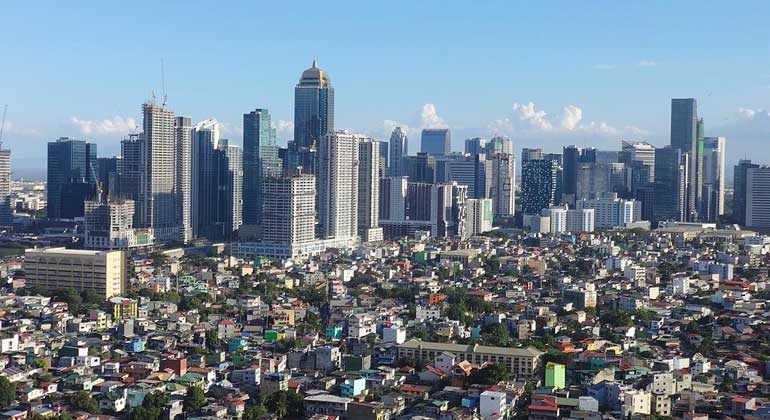
A more-than doubling of coronavirus cases in the Philippines in July risks sapping demand and inflicting more pain on real estate stocks. Image via Patrick Roque / CC BY-SA

Having suffered the worst first-half performance in any year since 2008, a gauge of Philippine property stocks is faring worse than the nation’s benchmark index in 2020 after six years of outperformance.

The losses have also erased the valuation premium real estate shares typically command over the broader market—an occurrence that’s seen them stage a sharp rebound on more than one occasion in the past. But keeping history aside, things don’t look too promising for the sector that houses some of the country’s most-valued companies.

A more-than doubling of coronavirus cases in the Philippines in July risks sapping demand and inflicting more pain on real estate stocks. At the same time, a plunge in remittances by overseas Filipino workers and the departure of some Philippine offshore gaming operators—a key source of demand in recent years—are also clouding the industry’s outlook.

“The pandemic is a sword of Damocles hanging over all our heads,” said Gerard Abad, chief investment officer at AB Capital & Investment Corp., which manages the equivalent of $509 million in assets. “The risk is greater now and consumer demand is really weak.”

The PSE Property Index tumbled almost 27% in the first six months of the year—the most in such a period since 2008—as residential and commercial demand sank once the virus outbreak forced people to stay at home and shift spending to essential goods.

The measure, which has a market cap of almost $36 billion, is down 30% year-to-date. That’s versus a 24% loss for the benchmark Philippines Stock Exchange Index. The MSCI AC Asia ex-Japan Real Estate Index is down about 19% this year.

“I’d prefer the consumer sector at this time, particularly manufacturers and retailers of essentials,” said Robert Ramos, who helps manage 100 billion pesos ($2 billion) as head of the trust and investments group at Rizal Commercial Banking Corp. “The property sector will surely outperform once COVID disappears, but for now people are avoiding malls and they aren’t buying properties.”

‘LIKE AN EARTHQUAKE’
Still, cheap valuations, an accommodative central bank policy, and the government’s infrastructure push may prompt certain brave and long-term investors to start buying property stocks, some analysts say. Further, real estate companies are among those carrying the highest weightings in the benchmark, which makes any broad bet on Philippine equities also a bet on the sector.

Four core property firms carry a combined weighting of almost 22% in the 30-member PSEi gauge. The sector accounts for over 50% of the benchmark when taking into account diversified companies with real estate ventures.

“It’s like an earthquake hit the sector,” said Cristina Ulang, head of research at First Metro Investment Corp. in Manila. “But for the long term, it should be a top choice. One can’t ignore property to ride a market rebound—it’s big part of the index.” — Bloomberg

Meralco powers LSI shelters

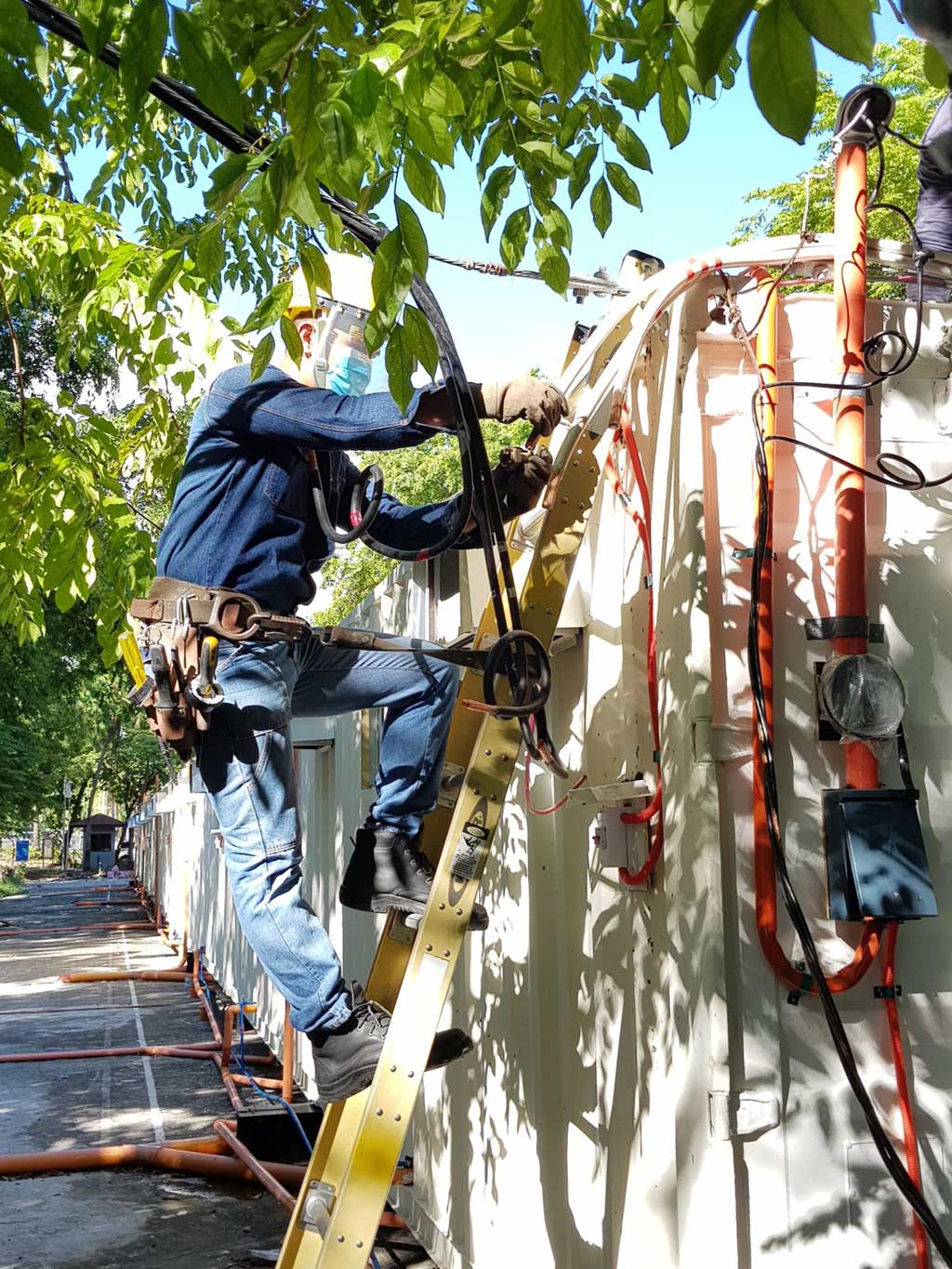
Seen are Meralco crews conducting energization works at the CCP Complex, Pasay City, as the power firm continues to provide reliable electricity to container vans serving as temporary shelters for Locally Stranded Individuals or LSIs. These operations include the installation of six concrete poles and 350-meters of bundled wires. This LSI facility is one of the many vital establishments in the Meralco franchise area given high priority when it comes to providing safe, adequate, and reliable supply of electricity, especially during this time of pandemic.

Government’s foreign loans reach $8 billion at end-June

THE GOVERNMENT received $8.203 billion in foreign currency (FX) loans in the first half of the year meant for its coronavirus disease 2019 (COVID-19) response, disaster risk management and Marawi’s reconstruction, among others, Bangko Sentral ng Pilipinas (BSP) Governor Benjamin E. Diokno said on Friday.

The $8.203 billion was made up of $3.672 billion in commercial borrowings and $4.531 billion in program and project loans disbursed by multilateral lenders, Mr. Diokno said in a Viber message to reporters on Friday.

“We’re providing you this update in the spirit of transparency,” Mr. Diokno, a former Budget secretary, said.

Broken down, the government’s commercial borrowings were made up of $2.348 billion in global bonds and $1.324 billion in euro global bonds.

Meanwhile, for the program loans worth $4.277 billion, $1.512 billion went to the government’s COVID-19 active response and $498.8 million was allocated for emergency coronavirus response and development policy.

The rest of the program loans went to other initiatives such as disaster risk management ($498.8 million); youth-to-school transition ($400 million); promotion of competitiveness ($399 million); local governance reform ($300 million); social welfare development ($299.3 million); emergency assistance for Marawi’s reconstruction ($206.8 million); social protection ($100 million); and social protection support ($60 million).

Mr. Diokno also broke down the $254 million in government project loans which came from the Japan International Cooperation Agency ($98.069 million), International Bank for Reconstruction and Development ($30.84 million), International Fund For Agricultural Development ($11.146 million), the Asian Development Bank ($1.576 million) and other agencies ($113.073 million).

“For the same period, the national government’s FX disbursements amounted to $6.275 billion,” the central bank chief said.

Broken down, $3.305 billion went to debt servicing or principal and interest payments on the government’s commercial borrowings, and program and project loans. Meanwhile, $2.916 billion went to foreign exchange conversion.

Other net disbursements amounted to $54 million, which includes charges and disbursements of grants to other government agencies and net of interest income on the national government’s deposits.

“In sum, net national government receipts amounted to $1.928 billion for the same period ended 30 June 2020,” Mr. Diokno said.

BANKS’ FCDU LOANS

Meanwhile, foreign currency loans of local banks rose in the first quarter amid lower interest rates and an increase in working capital requirements, BSP data released separately on Friday showed.

Outstanding loans by foreign currency deposits units (FCDUs) of banks inched up 1.3% to $18.3 billion as of March from the $18 billion seen at end-2019.

Credit disbursed by FCDUs rose 8.7% year-on-year from the $16.1 billion seen at end-March 2019.

“The growth in loans may be attributed to borrowing firms’ higher working capital requirements, lower interest rates as well as increased investment in plant or equipment,” the central bank said.

FCDUs are central bank-approved bank units that perform transactions involving foreign currencies, mainly by accepting deposits and handing out loans.

The BSP said 79.5% of FCDU loans in the period were medium- to long-term debt, meaning they are payable over a term of more than a year. This is higher than the 75.8% level logged as of March 2019.

Central bank data showed loans to residents, which made up 64.8% of the outstanding loans, went to power generation companies (18%); merchandise and service exporters (13.9%); public utility firms (7.8%); towing, tanker, trucking, forwarding, personal and other industries (6.9%); and producers/manufacturers, including oil companies (5.2%).

Gross disbursements hit $14.3 billion in the first quarter, higher by 7.8% from a year ago, on the back of higher funding requirements of an affiliate of a branch of a foreign bank, the BSP said.

Loan repayments also rose 7.2% which resulted in overall net disbursements.

Meanwhile, FCDU deposit liabilities stood at $43.1 billion as of March, up 4.9% from the end-December 2019 level of $41.1 billion and by 7.8% from the end-March 2019 level of $40 billion.

The BSP said 98% of these deposits continue to be owned by residents, “essentially constituting an additional buffer to the country’s gross international reserves.”

The FCDU loans-to-deposit ratio was at 42.4% as of end-March, lower than the 43.9% as of end-December but slightly higher than the year-ago ratio of 42%. — LWTN

P20B budget eyed for free COVID-19 vaccination program

By Gillian M. Cortez, Reporter

The government is planning to allocate P20 billion to buy vaccines against the coronavirus disease 2019 (COVID-19), once it is available.

In a televised address aired on Friday morning, President Rodrigo R. Duterte said he received an assurance from China that it will give priority to the Philippines once it successfully develops a vaccine.

He noted China is currently ahead in the race to develop the vaccine, with three Chinese pharmaceutical companies in the more advanced stages of development compared to those in other countries.

Mr. Duterte said he projects a vaccine will be available by December.

The President said he will prioritize poor Filipinos, who are currently receiving subsidy and assistance from the government during the lockdown, for the free vaccination program.

Ang una talaga ang mga tao sa listahan na tumanggap ng assistance sa gobyerno. Pangalawa, yung middle income. Libre ito, hindi ko ito pinagbili (The first priority will be the people who receive assistance from the government. Second to that, are those in the middle income. This is free, this is not for sale),” he said.

Mr. Duterte added the military and police, along with government employees, will also be prioritized for the vaccination program.

Finance Secretary Carlos G. Dominguez III said the government is looking to to at least 40 million doses to benefit 20 million Filipinos for the free vaccination program.

“We will need to vaccinate for free a minimum of 20 million people. I don’t know if it’s one vaccine or two shots so we need 40 million doses times, roughly $10 per dose is $400 million or roughly P20 billion,” Mr. Dominguez said.

He said the Philippine International Trading Corp. will be in charge of purchasing the vaccines, which will be distributed by the Health department.

Once a vaccine is available, Mr. Dominguez said the economy can fully reopen and go back to “normal,” not the “new normal.”

The economy was expected to have slumped to its lowest point in the second quarter, as lockdown ran from mid-March to May. The statistics authority will release second quarter gross domestic product (GDP) data on Aug. 6.

“The economy is beginning to recover. We hit the lowest part in April and May. As we can see it is already picking up now,” Mr. Dominguez said, adding there are no liquidity problems, inflation remains benign and the peso is the “strongest currency in Asia.”

Mr. Duterte, who is known for his aggressive campaign against illegal drugs, said drug addicts and pushers will not get free vaccines.

Sasabihin ko, sorry wala kang bakuna. Mamatay ka na (I will say to them, sorry you don’t have a vaccine. You should die),” the President said.

Despite tensions with the communist rebels, Mr. Duterte said they will be given vaccines for free since he can see the kind of poverty they experience. The President has assigned for the military to distribute the free vaccines.

“If you stop fighting for the period,…pwede kayo sumali, pumila dun (you can join and line up for it),” he said.

The Philippines has seen a steady rise in COVID-19 infections in the last two weeks. On Thursday, the Health department reported 3,954 COVID-19 cases – the biggest single-day rise in confirmed infections – bringing the total to 89,374. The death toll is now at 1,983, while recoveries stood at 65,064.

No ‘zero risk’ in international travel, WHO says

Countries should gradually lift international travel measures based on a thorough risk assessment and must prioritize essential travel for emergencies, the World Health Organization (WHO) said on Thursday.

The WHO recommended that priority should be given to essential travel for emergencies, humanitarian actions, travel of essential personnel, and repatriation.

A surge of new infections in many parts of the world has forced many countries to reimpose some travel restrictions.

The WHO has now urged each country to conduct a risk-benefit analysis of its own and decide on its priorities, before resuming international travel.

In its latest travel advisory, the WHO said countries must take into account the local epidemiology and transmission patterns, the national health and social measures already in place.

Should countries choose to quarantine all travelers on arrival, they must do so after assessing such risks and consider local circumstances, WHO said. There is no “zero risk” when considering the potential importation or exportation of cases in international travel.

Earlier this week, the WHO said that bans on international travel cannot stay in place indefinitely, and countries are going to have to do more to reduce the spread of the novel coronavirus within their borders.

It said last month that it would update its travel guidelines ahead of the northern hemisphere summer holidays.

Earlier in July, it urged travelers to wear masks on planes and keep themselves informed as COVID-19 cases surge again in some countries.

The WHO’s previous guidance for travelers has included common-sense advice applicable to other settings such as social distancing, washing your hands and avoiding touching your eyes, nose or mouth. — Reuters

Metro Manila remains under GCQ

Metro Manila will continue to be under a general community quarantine (GCQ) until mid-August, despite the steady rise in coronavirus infections in the country.

“My plea is to endure some more. Many have been infected,” President Rodrigo R. Duterte said in a taped address aired on Friday.

Other areas that will continue to be under GCQ are: Bulacan, Batangas, Cavite, Laguna, Rizal, Lapu-Lapu City, Mandaue City, Talisay City, Minglanilla, Consolacion, and Zamboanga City.

Cebu City, which experienced a strict lockdown due to the surge in coronavirus cases, will be placed under a more relaxed GCQ starting Aug. 1.

The rest of the Philippines will be under a modified GCQ.

“For NCR and Region IV-A to maintain their GCQ classification, the National Task Force, the Department of Interior and Local Government, the Coordinated Operations to Defeat Epidemic Teams will implement in areas with high community transmission a strictly localized lockdown/ ECQ in barangays where 80% of cases are located and the publication of these barangays,” the Palace said in a statement.

The Philippines this month has recorded Southeast Asia’s biggest daily jump in coronavirus deaths and biggest single-day increase in confirmed infections.

On Thursday, the Health department reported 3,954 new infections, bringing the total to 89,374. Some of the biggest public and private hospitals are reporting full capacity and can no longer accommodate new coronavirus patients.

Malacañang also directed government hospitals in the Philippine capital and Region 1V-A to increase the number of hospital beds dedicated to COVID-19 up to 30-50%. It also asked private hospitals to raise the number of hospital beds dedicated to COVID-19 up to 20-30%. — Gillian M. Cortez with Reuters

Children carry COVID-19 virus, small study finds

Children younger than five carried major amounts of coronavirus in their upper respiratory tract, a small study published on Thursday showed, raising new questions about whether kids can infect others.

Data on children as sources of coronavirus spread are sparse, and early reports did not find strong evidence of children as major contributors to the deadly virus that has killed 669,632 people globally. Understanding the transmission potential in children will be key to developing public health guidelines, said the researchers who published the study in the journal JAMA Pediatrics.

Between March 23 and April 27, 2020, a research team from Ann & Robert H. Lurie Children’s Hospital and Northwestern University tested swab collections from inpatient, outpatient, emergency department, and drive-through testing sites in Chicago, Illinois.

The study included 145 individuals aged between one month and 65 years with mild to moderate COVID-19 who were studied in three groups—children younger than five years, children 5 to 17 years, and adults 18 to 65 years.

Their analysis suggests the young children had a viral load 10-fold to 100-fold greater than adults in their upper respiratory tracts.

Viral loads in older children with COVID-19 are similar to levels in adults. This study found greater amounts of viral nucleic acid—the genetic codes for proteins to produce new viruses—in children younger than 5 years.

The study only looked at viral nucleic acid and not infectious virus, meaning it is not clear if the children would spread the virus.

Still, the prevalence in young children raises concerns about their behavioral habits, and their proximity in schools and daycare centers as public health restrictions are eased, researchers said.

In addition to public health implications, the researchers said the results could help put the focus on this population while targeting immunization efforts when COVID-19 vaccines become available. — Reuters

As pandemic rages on, world economic recovery looks ever more shaky

BENGALURU — The world economic outlook has dimmed again, with still-rising coronavirus infections and the risk of renewed lockdowns increasing the chances that any rebound will reverse course, according to Reuters polls of over 500 economists globally.

Over 17 million people have been infected worldwide by the coronavirus and more than two-thirds of a million people have died. That has forced governments to impose strict lockdown measures to curb the spread of the virus, keeping citizens at home and businesses closed and spurring recessions that aren’t over yet.

Surging cases in the United States, where related deaths have surpassed 150,000, have led several states to reimpose restrictions. Most economists, long-term investors and even Fed Chair Jerome Powell have clearly said the economic outlook depends significantly on the course of the virus.

The Fed has pledged endless stimulus to support the world’s No. 1 economy, which was a major growth engine for the global economy before the pandemic and now risks being the biggest drag, sending the dollar to a two-year low.

With infections also on the rise elsewhere, including in Australia, India, Spain, and Brazil, economists again cut this year’s economic prospects in the July 3–29 polls which show the worst contraction on record for the world economy in 2020.

“We expect the economic reality of the virus to start catching up with businesses across the globe soon,” said Jan Lambregts, global head financial markets research at Rabobank.

“What we need is a vaccine or significant breakthroughs in medicines to decisively reopen our economies and restore business and consumer confidence—but there is no magic wand for the time being.”

Reuters polls since the start of the pandemic follow a pattern: repeated downgrades to the near-term outlook, with economists shifting an expected recovery in the second half of the year to 2021, flattening out an initial V-shaped assumption.

The global economy was expected to shrink 4.0% this year, or by about $3.4 trillion, roughly equivalent to wiping out the economies of Canada and Australia entirely. That is down from -3.7% predicted in June, the sixth consecutive downgrade to forecasts from 3.1% growth forecast in January.

The world economy is expected to grow 5.3% next year, slightly less than the 5.4% predicted last month. But those expectations are based on the disease being contained, with widespread hopes of a vaccine sometime soon.

But under a worst-case scenario, it will contract 6.5% this year, much worse than the International Monetary Fund’s -4.9% projection, then grow just 2.0% next year.

“Over six months into the crisis, evidence is mounting that the global economy is likely to look lastingly different due to the pandemic,” noted Christian Keller, head of economics research at Barclays.

“Changes have been obvious in the attitude towards monetary and fiscal policy, but they also extend to global trade, supply chains, international travel, and geopolitics.”

The economic outlook for the US, Canada, Britain, Japan, and Australia was downgraded and expectations for 2021 growth are modest given the historic downturn expected this year.

Of all of the major economies, the proportion of forecasters who said the US outlook had improved in the last month was, by far, the smallest.

For the euro zone, the outlook for next year onward got a slight boost after the European Union leaders agreed on a stimulus package of 750 billion euros.

Latin America are mostly still struggling, suffering historic recessions and either facing resurgent infections or still not getting the first round under control.

China, where the virus is thought to have originated, was expected to recover faster economically than others, even though it still relies heavily on exporting to the rest of the world.

Asked how the recovery outlook had changed over the past month, three-quarters of economists, or 183 of 244, said it had either stayed the same or worsened.

Just over half, 75 of 149, who responded to another question said it would take two or more years for GDP in the economies they cover to reach pre-COVID-19 levels. Sixty expected it would take at least a year or two and the remaining 14 said less than a year.

“Our forecasts point to a world which, by end-2021, has a level of activity that is not just well below its pre-pandemic growth trajectory but, in many cases, still below its end-2019 level,” noted HSBC’s global chief economist Janet Henry. — Reuters

BoP swings to $80-M surplus in June

The Philippines’ overall balance of payments (BOP) position posted a surplus of$80 million in June. — PAUL YEUNG/BLOOMBERG

By Luz Wendy T. Noble, Reporter

THE balance of payments (BoP) registered an $80-million surplus in June — the slimmest in five months, reflecting the proceeds from foreign loans obtained by the government to fund its coronavirus response, the Bangko Sentral ng Pilipinas (BSP) said on Thursday.

Latest available central bank data showed that BoP — a summary of the Philippines’ economic transactions with the rest of the world for a given period — swung to a $80-million surplus in June, a reversal from the $404-million deficit during the same month a year ago.

June’s BoP surplus was also much slimmer than the $2.431-billion surplus logged in May.

“The BOP surplus in June 2020 reflected mainly the inflows from the National Government’s (NG) foreign loan proceeds that were deposited with the BSP as well as the BSP’s income from its investments abroad. These inflows were offset, however, by the foreign currency withdrawals made by the NG to pay its foreign currency debt obligations during the month in review,” the BSP said in a statement.

For the first semester, the cumulative BoP surplus stood at $4.11 billion, lower than the $4.79-billion surplus logged a year ago.

The BSP attributed the BoP surplus to the higher foreign borrowings made by the national government, the majority of which were drawn in the second quarter, as well as the lower merchandise trade deficit.

“These positive outcomes negated fully the impact of higher net outflows of foreign portfolio investments, and lower net inflows from trade in services, personal remittances, and foreign direct investments,” the central bank said.

The BSP expects the overall BoP position to post a surplus of $600 million by end-2020, representing 0.2% of the country’s gross domestic product.

Economists said the June BoP position reflects the impact of the pandemic.

“It is intuitive to surmise that the BoP surplus in June reflected not only the foreign investments of government and BSP but also significant inflows of funds from foreign borrowings by the government to contain COVID-19 (coronavirus disease 2019),” John Paolo R. Rivera, an economist at the Asian Institute of Management, said in a text message.

The country’s ample reserves will be its buffer against weaker inflows from trade, according to Ateneo de Manila University economist Alvin P. Ang.

“A large positive BoP at this time is showing a weak economy due to weak trade but it does help to have more than enough foreign exchange buffer for short-term payables,” Mr. Ang said in a text message.

The current BoP position shows a record-high final gross international reserves level of $93.47 billion as of end-June. This is higher by a tenth from its level a year ago and by $18 million from the May level.

“It is about 7.3 times the country’s short-term external debt based on original maturity and 4.8 times based on residual maturity,” the BSP said.

The dollar reserves as of end-June is also equivalent to 8.5 months’ worth of imports of goods and payments of services and primary income.

‘Hot money’ outflows continue amid uncertainty

‘HOT MONEY’ continued to exit the Philippine financial markets in June. — PAUL YEUNG/BLOOMBERG

FOREIGN PORTFOLIO investments fled the country’s financial markets for a fourth straight month in June, as the uncertainty over the pandemic continued to weigh on investor sentiment.

“Hot money” — called as such due to the ease by which these funds enter and exit an economy — yielded a net outflow of $235.38 million in June, data from the Bangko Sentral ng Pilipinas (BSP) on Thursday showed.

The net outflow in June is significantly higher than the $36.03 million a year ago but 76% lower than the $1.006 billion outflow in May. This was also the smallest net outflow since the $320 million that exited in December 2019.

In the first six months of 2020, hot money yielded a net outflow of $3.3 billion, much wider than the $721-million net outflow logged a year ago.

The BSP forecasts a net inflow of $2.4 billion in hot money this year. It revised its earlier $8.2- billion net inflow estimate, which was given in November 2019, to reflect the impact of the ongoing crisis

The coronavirus disease 2019 (COVID-19) pandemic’s impact on the global economy affected foreign portfolio investments in the first half of 2020, the central bank said. Other factors that contributed to the bigger hot money outflows include the geopolitical tensions between US and Iran, trade talks between Washington and Beijing, and the renegotiation of the water concessionaires’ contracts.

In June, hot money inflows hit $1.019 billion, lower by 27.78% than the $1.411 billion logged a year ago and more than double the $486.26 million in May.

On the other hand, outflows declined 13.37% to $1.254 billion last month from the $1.447 billion in June 2019 and by 15.95% from the $1.492 billion in the previous month.

“The United Kingdom, Singapore, the US, Norway and the Bahamas were the top five investor countries for the month, with combined share to total at 71.7%,” the BSP said in a statement.

The bulk (92.3%) of the investments went into the stock market, specifically in shares of holding firms, property companies, banks, telecommunication firms, and retailers. The remaining 7.7% of the funds were invested in government securities.

The continued exit of foreign funds is no surprise given the “fragile sentiment” caused by the crisis and its impact on overall economic activity, according to ING Bank N.V. Manila Senior Economist Nicholas Antonio T. Mapa.

“We may expect this theme to continue as the country continues to grapple with the virus and the economy remains on low gear due to social distancing and fears of the virus,” he said in an e-mail.

While foreign portfolio investments could continue to yield net outflow in the near term, slight improvements may be seen depending on the progress of a coronavirus vaccine, Robert Dan J. Roces, chief economist at Security Bank Corp. said.

“For the longer term, flows could see a partial reversal but this is largely hinged on the promise of developments of a vaccine and policy directions,” Mr. Roces said in an e-mail. — Luz Wendy T. Noble