Home Blog Page 799

Bill modernizing TESDA filed

A SENATOR on Monday said that she has filed a bill seeking to modernize the Technical Education and Skills Development Authority (TESDA), citing the need to strengthen and restructure the agency.

“Our people must be equipped with the right skills to thrive in a rapidly changing world of work,” Senator Lorna Regina “Loren” B. Legarda said in a statement. “This bill will ensure that TESDA delivers high-quality and relevant training that helps Filipinos build better futures for themselves and their families.”

Senate Bill No. 1413, the TESDA Modernization bill, seeks to establish a Board of Advisers as a policy and oversight body. It would be composed of the Director General, Cabinet secretaries, the Chairperson of the Commission on Higher Education, and private sector representatives.

The bill grants the Director General the authority to upgrade, merge, or phase out programs that no longer meet industry needs, under the Technical-Vocational Education and Training (TVET) system. It also grants the power to devolve community-based training to local government units.

“TESDA must evolve with industry standards. We have one of the most skilled and hardworking work forces in the world, and it is our responsibility to ensure that they remain employable, adaptable, and ready for the future,” she added.

The bill also seeks to reorganize the agency into specialized offices for planning, standards-setting, accreditation, enterprise-based education, and local skills development.

The proposed measure also seeks to implement alternative systems that would recognize prior learning, micro-credentials, and digital badges to validate informal or non-traditional training and promote lifelong learning.

Ms. Legarda said that her bill also seeks to strengthen the agency’s development fund and implement institutionalization of scholarship grants and systematic funding schemes such as levy-grant systems. — Adrian H. Halili


Palace studying calls for GSIS leadership change

PRESIDENT FERDINAND R. MARCOS, JR. — PHILIPPINE STAR/KRIZ JOHN ROSALES

THE Palace on Monday said President Ferdinand R. Marcos, Jr. is studying and taking a “measured” approach toward calls for the resignation of Government Service Insurance System (GSIS) President and General Manager Jose Arnulfo “Wick” A. Veloso over alleged gross mismanagement and policy violations.

Palace Press Officer Clarissa A. Castro said the President wants agency leaders to demonstrate accountability and proper leadership.

“The President wants officials who fulfill their obligations and exercise sound leadership,” she told a press briefing in Filipino.

“For now, the matter is being carefully reviewed. If there is a basis for the allegations, the President will decide accordingly.”

Mr. Veloso is facing accusations of authorizing high-risk, non-compliant investments that allegedly caused P8.8 billion in cumulative losses for the state pension fund.

The GSIS chief has already responded to the claims, denying wrongdoing. He had also publicly rejected the resignation calls, asserting that the GSIS pension fund remains solvent and has a fund life extending up to 2058. — Chloe Mari A. Hufana

Ancestral lands eyed as new prison

PHILIPPINE STAR/EDD GUMBAN

THE Bureau of Corrections (BuCor) and the National Commission on Indigenous Peoples (NCIP) have entered into an agreement to explore the use and development of ancestral domain lands for regional prison and penal farms aimed at easing congestion and promoting community development.

The memorandum of understanding (MoU), signed on Monday by BuCor Director General Gregorio Pio P. Catapang, Jr. and NCIP Chairperson Marie Grace T. Pascua in Muntinlupa City, sets a framework for identifying and developing about 1,000 hectares of ancestral domain land in each region under NCIP jurisdiction.

A technical working group will also be created to evaluate the proposal’s feasibility, ensure compliance with relevant laws, and outline the terms for implementation.

In a statement on Monday, Mr. Catapang said the plan is in line with the Bureau of Corrections Act of 2013 and its implementing rules, which authorize BuCor to establish additional penal farms aside from its seven existing facilities. He said new regional sites would help decongest prisons while allowing persons deprived of liberty to remain closer to their families and communities.

“The goal is to make detention and rehabilitation more humane while fostering economic activity in host communities,” he said.

For her part, Ms. Pascua said the initiative aligns with NCIP’s mandate to ensure indigenous participation in development projects affecting their lands and “a step toward both justice and inclusion.” — Erika Mae P. Sinaking

Singson faces plunder, graft complaints over land deals

OFFICE OF THE OMBUDSMAN PHILIPPINES FACEBOOK PAGE

FORMER Narvacan Ilocos Sur Mayor Luis “Chavit” C. Singson is facing separate plunder and graft complaints filed on Monday at the Office of the Ombudsman over alleged irregular land transactions and illegal privatization of government property.

The complaints, filed by an Ilocos Sur civic group alliance through lawyer Estelita D. Cordero, accused Mr. Singson of orchestrating overpriced land deals and the unauthorized conversion of public areas into private resorts, allegedly resulting in multimillion-peso losses to the local government.

The plunder complaint accused Mr. Singson and several municipal officials of approving a P149.96-million land purchase — P100 million above its assessed value — and seeks the recovery of P99.97 million, charges, and a lifestyle check on those involved.

A separate graft case alleged Mr. Singson and other private co-conspirators of illegally occupying and privatizing coastal land in Sulvec town in Narvacan, and seeks to void the sale and demolish the resort structures built without permits.

Meanwhile, Davao City 1st District Rep. Paolo Z. Duterte, in a Facebook post, criticized the filing of the cases and defended Mr. Singson, saying it was “getting ridiculous” that anyone who speaks against the administration now faces charges. He also claimed that “the CIA is the one running this government.”

In a Monday video statement shared by News5, Mr. Singson dismissed the plunder and graft complaints as “nonsense” and a “diversionary tactic,” accusing the complainants of being “attack dogs” for a rival’s relative. He said he suffered losses from the deal and would file countercharges. — Erika Mae P. Sinaking

Eastern Visayas boosts adolescent health budgets under UN-backed program

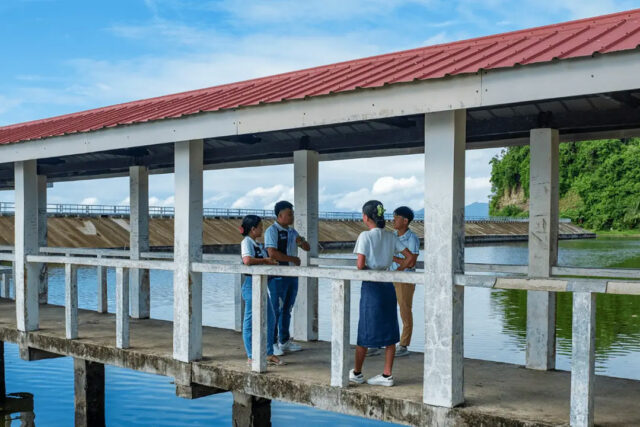
SANGGUNIANG KABATAAN (Youth Council) leaders gathered to discuss youth initiatives and related concerns. — UNFPA PHILIPPINES/ SHIRIN BHANDARI.

EASTERN VISAYAS Region is expected to ramp up budget for adolescent sexual and reproductive health, backed by the joint program of United Nations (UN) and World Health Organization (WHO).

In a statement on Monday, the United Nations Population Fund (UNFPA) said the municipalities and cities in Samar and Southern Leyte are projected to increase their budgets for adolescent sexual and reproductive health (ASRHR).

“Budgets for adolescent sexual and reproductive health in Southern Leyte have also increased significantly, from P3.8 million in 2022 to P6.6 million in 2024, with P48.6 million projected as the total for 2025,” it said.

The flagship initiative is under the Joint Programme on Accelerating the Reduction of Adolescent Pregnancy (JPARAP) implemented by UNFPA, the UN sexual and reproductive health agency, UNICEF, the UN Children’s Fund, and the WHO with support from the Korea International Cooperation Agency.

The JPARAP has been piloted in the provinces of Samar and Southern Leyte since 2022.

Meanwhile, participating cities and municipalities in Samar expanded their ASRHR budgets more than sixfold to P45.7 million in 2025 from P6 million in 2022, with allocations expected to continue increasing in the coming years. — Aubrey Rose A. Inosante

Business chamber says ICI needs subpoena powers in infra probe

PHILIPPINE STAR/JESSE BUSTOS

THE PHILIPPINE Chamber of Commerce and Industry (PCCI) said the body investigating public works corruption lacks the subpoena powers to compel persons of interest to appear before it.

It also called for decisive action against corruption in infrastructure, warning that any cover-ups could damage business confidence.

“We feel that we need more, and we need decisive action and decisions. We don’t want cover-ups and railroading,” PCCI President Enunina V. Mangio said on the sidelines of the 51st Philippine Business Conference and Expo on Monday.

“Our recommendation is that President Ferdinand R. Marcos, Jr. gives legal authority to ICI to really prosecute or to really find those that are really guilty,” she said.

“We really want those responsible to be punished and to be identified,” she added. “It was really very surprising to us that the corruption in flood control is of this magnitude.”

According to a joint statement released Sunday by 34 business groups, including the PCCI, the Independent Commission for Infrastructure (ICI) needs to be granted full powers to investigate those responsible for the flood control corruption scandal.

In the joint statement, the groups called for prosecution of all those responsible, impartially and without regard to rank, position, political affiliation, or personal relationships. — Justine Irish D. Tabile

House resolution seeks US talks to discuss call center reshoring

PHILSTAR FILE PHOTO

A CEBU legislator filed a resolution on Monday urging the government to initiate talks with the US over plans to bring the call-center industry back from overseas.

The Trade and Foreign Affairs departments should “immediately initiate dialogue” with their US counterparts to seek exemptions for US business process outsourcing (BPO) firms operating in the Philippines, according to Cebu Rep. Vincent Franco D. Frasco, who filed House Resolution No. 386.

“The urgency of the situation demands proactive and high-level diplomatic action and trade engagement to ensure that the interests of Filipino workers and US-affiliated firms operating in the Philippines are protected from the US bill’s unintended economic consequences,” he said, referring to US legislation known as the proposed Keep Call Centers in America Act

The US bill could penalize US companies for outsourcing call center operations by ruling them out for federal grants and loan guarantees.

The Philippines call center industry employs about 1.7 million, according to the House resolution.

Mr. Frasco described the US measure as posing a “direct threat” to the stability of the BPO industry and may discourage American firms from setting up shop in the country, leading to job losses and loss of investor confidence.

Trade Secretary Ma. Cristina A. Roque last week said her department will meet with industry representatives to map out responses to the US legislation.

The Information Technology and Business Process Association of the Philippines has said that 70% of its members are US-based. — Kenneth Christiane L. Basilio

PHL mangoes pitched to Italian market

PHILSTAR FILE PHOTO

THE Department of Agriculture (DA) said it promoted Philippine mangoes to Italian importers, hoping to establish an initial niche with the Filipino community in Italy and expanding to other exotic Philippine fruit.

Agriculture Secretary Francisco P. Tiu Laurel, Jr. visited mango sellers at the “Serbisyo Caravan” in Rome, noting the potential for Philippine goods to “make a grand entrance on the global stage.”

Rome-based Agriculture Attache Josyline C. Javelosa was quoted in the statement as saying that strategic government support at international events helps sustain Philippine products’ commercial presence.

Ms. Javelosa said the plan for mango is to establish a foothold with the Filipino community in Rome, which “craves the authentic flavor, texture, aroma, and quality that only Philippine mangoes can deliver, something that cheaper alternatives just can’t match.”

Philippine Trade and Investment Center Chairman Dennis Carrascoso said the mangoes sold out “within a few hours” aided only by word-of-mouth.

Italian importers are currently planning to expand to other Philippine commodities like lanzones (lansium domesticum) and pili nuts. — Andre Christopher H. Alampay

Text, market access components of CEPA talks with Chile targeted for completion within the year

STOCK PHOTO | Image by Wirestock from Freepik

THE PHILIPPINES and Chile are hoping to conclude text-based and market access negotiations for a free trade agreement (FTA) within the year, the Department of Trade and Industry (DTI) said.

“For the third round, we achieved substantial progress in the text-based negotiations, and we are hoping to conclude the same within the year,” Trade Undersecretary Allan B. Gepty said via Viber.

“We also started negotiations on market access, and we target to finish the same also this year,” he added.

The third round of negotiations for the Philippines-Chile Comprehensive Economic Partnership Agreement (CEPA) took place on Oct. 6 to 10.

The third round covered goods, services, transparency, digital trade, intellectual property, and technical cooperation, among others.

“We are considering another negotiation round in December. In the meantime, we will optimize virtual intersessional meetings to fast-track the negotiations,” Mr. Gepty said.

According to the DTI’s Bureau of International Trade Relations, both sides have committed to finalize the trade deal as soon as possible.

“Basically, we will negotiate to maximize market access for goods in Chile, especially for our top exports like storage units, personal care products, fishing nets, carrageenan, coconut products (desiccated), aero parts, and medicaments, among others,” he said.

Mr. Gepty said a CEPA will also open up doors for services and investment.

“The CEPA will provide opportunities for our professionals, service providers, and companies who want to explore and seize business opportunities in Chile,” he said.

“We will also establish a platform for collaboration and partnership on innovation, education, research and development, among others, so that we can entrench our presence in Latin America,” he added.

Last month, the DTI said the CEPA will create up to $9 million in trade gains, including trade creation of $3.9 million, mostly in electronics, and then trade diversion of $4.68 million.

If realized, the agreement will be the Philippines’ first FTA in Latin America. — Justine Irish D. Tabile

State-owned Planters Products imports 120,000 bags of fertilizer

DA.GOV.PH

THE Department of Agriculture (DA) said Planters Products, Inc. (PPI), its trading and marketing arm, imported 120,000 bags of inorganic fertilizer from Vietnam.

The shipment marks the first time PPI, formerly the dominant fertilizer supplier in the Philippines with 70% of the market in the 1970s, has imported fertilizer in 43 years.

PPI Chief Operating Officer Roberto V. Antonio said the shipment will help it continue its mission of “providing affordable, high-quality fertilizer and farm inputs that help ensure food security and agricultural growth.”

Agriculture Secretary Francisco P. Tiu Laurel, Jr. said the shipment will help farmers save on production costs “At six bags per hectare, this initial volume can support about 20,000 hectares of rice fields,” he added.

The fertilizer consists of a blend of nitrogen, phosphorus, and potassium, helping with robust leaf growth, root development, grain formation, and resistance to pests and diseases. — Andre Christopher H. Alampay

Economic dev’t committee reviewing recommendations to adjust rice tariff

REUTERS

THE Economic Development Committee (EDCom) said it is seeking to strike a balance between protecting farmers and limiting the inflationary impact on consumers in adjusting rice import tariffs.

In a statement on Monday, the Department of Economy, Planning, and Development (DEPDev) said Secretary Arsenio M. Balisacan, who co-chaired the 5th EDCom meeting, said the EDCom focused on the Tariff and Related Matters Committee’s recommendation to revise the rice import tariff rate, currently at 15%.

“The meeting convened key economic managers to discuss important economic matters and policy recommendations to further strengthen the country’s development agenda,” it said.

Among the participants were Secretary Frederick D. Go, the EDCom Chairman and head of the Office of the Special Assistant to the President for Investment and Economic Affairs (OSAPIEA), as well as Finance  Secretary Ralph G. Recto.

Agriculture Secretary Francisco P. Tiu Laurel, Jr. has said that the government will extend the rice import suspension until the end of the year but keep tariffs at 15%. The 15% rate had been set by Executive Order No. 62, lowering it from the original 35% as an inflation-containment measure. 

The Bureau of Customs has said the extension of the rice import ban from the original 60 days will result in up to P12 billion in foregone revenue.

Separately, DEPDev, which serves as the Secretariat of the National Innovation Council (NIC), said the Philippines is making “significant strides” toward becoming a smart and innovation-driven economy.

Citing the 2024 Progress Report on the Implementation of the Philippine Innovation Act., Mr. Balisacan said: “The Progress Report shows how our reforms are translating into stronger innovation governance, more responsive programs, and a growing culture of creativity and collaboration.” — Aubrey Rose A. Inosante

Work starts on NSCR’s underground FTI station

FACEBOOK.COM/FTIGOVPH

CONSTRUCTION has commenced on an underground station of the North-South Commuter Railway (NSCR) in Bicutan, Taguig City, a member of the contracting joint venture for the station said.

According to First Balfour, Inc., the engineering and construction arm of First Philippine Holdings Corp. (FPH), work started on the Food Terminal, Inc. (FTI) train station’s reinforced concrete diaphragm wall, which will ensure the foundational stability of the station.

The underground FTI station will also serve as an intermodal transfer hub linking the ground-level and elevated sections of the NSCR with the Metro Manila Subway Project (MMSP).

First Balfour, Inc.’s joint venture partner for the project is Leighton Asia. The partnership is known as the Leighton-First Balfour Joint Venture (LFBJV). The FTI station is covered by the NSCR 03-B contract, awarded to LFBJV in 2023.

The project covers civil engineering, tunnel construction, and building works for a 6.1-kilometer railway segment consisting  of 4.7-kilometer twin tube tunnels with cross passage and ground-level structures.

The 147-kilometer NSCR will connect Malolos, Bulacan with Clark International Airport, and Tutuban, Manila with Calamba, Laguna. The P873-billion project is co-financed by the Japan International Cooperation Agency and the ADB. It will have 35 stations and three depots.

According to the Department of Transportation (DoTr), the NSCR could start partial operations at the Valenzuela to Malolos segment by 2027, with the Malolos to Clark segment possibly operational by 2028. — Ashley Erika O. Jose