Home Blog Page 7987

APEC ministers pledge to expedite transit of COVID-19 vaccines, related goods

REUTERS

MELBOURNE/WASHINGTON – Ministers from the Asia-Pacific trade group APEC on Saturday agreed to review trade barriers and expedite the cross-border transit of COVID-19 vaccines and related goods, but stopped short of a broad commitment to remove tariffs.

A meeting of trade ministers from the 21-economy group, which includes the United States, China and Japan, also produced pledges to support World Trade Organization negotiations for an intellectual property waiver on COVID-19 vaccines.

In three statements issued after the meeting, the ministers said they would “expedite the flow and transit of all COVID-19 vaccines and related goods through their air, sea and land ports.”

“We will consider voluntary actions to reduce the cost of these products for our people, particularly by encouraging each economy to review its own charges levied at the border on COVID-19 vaccines and related goods,” one statement said.

The ministers also said they were committed to work to facilitate the movement of essential goods and minimize disruptions to networks critical to keeping supply chains operating smoothly.

“APEC economies should prioritise identifying unnecessary barriers to trade in any relevant services that may hinder expediting and facilitating the movement of essential goods, and should ensure consistency of any such barriers with their World Trade Organization” obligations, the statement said.

BEST PRACTICES
Vaccine-related trade barriers, including export restrictions, tariffs and other import barriers, have been viewed as contributing to a relative lack of vaccine access in developing countries.

Average APEC tariffs on vaccines are low at around 0.8%, but other goods important in the vaccine supply chain face higher tariffs. Alcohol solutions, freezing equipment, packaging and storage materials, vials and rubber stoppers face average tariffs above 5%, and tariffs can be as high as 30% in some APEC economies.

Prior to the start of the virtual meeting, host New Zealand had wanted APEC members to agree on “best practices guidelines” on the movement of vaccines and related medical products across borders, a person familiar with the talks told Reuters.

APEC gatherings in recent years have struggled to reach agreements due to former U.S. President Donald Trump’s trade war with China. The new Biden administration has promised a more multilateral approach.

New Zealand viewed an agreement as important to show that APEC is responsive and relevant to the crisis facing the world.

VACCINE IP WAIVER
The ministers said they will work proactively and urgently in WTO negotiations aimed at agreeing on a temporary waiver of intellectual property rights on vaccines “as soon as possible” and no later than the WTO’s ministerial conference scheduled for the end of November.

U.S. Trade Representative Katherine Tai, who last month announced her support for a waiver, told a news conference before the meeting that she was encouraged by progress of those talks.

“What I’ve heard from these few days of interaction with my fellow ministers from the APEC region is broadly an agreement that we need to increase access to vaccines, increase supply of vaccines,” Tai said.

New Zealand’s trade minister, Damien O’Connor, said there are a range of challenges around production and distribution of vaccines that can be addressed to improve supply around the world, but gaining patent waivers could still be an obstacle.

“Having looked at all those challenges, if it is IP that is holding us back, I think that there will be consensus reached at the WTO. And I think as APEC economies, we certainly are going to ask for that to be considered seriously,” he said.

The APEC trade ministers also said the WTO needed to strengthen its credibility by concluding decades-long negotiations to curb harmful fisheries subsidies, with a “comprehensive and meaningful agreement” by July 31.

The group called on its member officials to explore options to undertake a “potential voluntary standstill on inefficient fossil fuel subsidies,” with a progress report expected in November.  — Reuters

Experience the premium performance of the new portrait master, the vivo V21 series

The vivo V21 Series

The feature-rich, selfie-focused vivo V21 Series are now available in all vivo stores nationwide and official e-commerce sites. Be amazed at the photography capacities and impressive specs beneath the elegance of these new smartphones.

A seamless experience is possible with V21 5G’s MediaTek Dimensity 800U 5G Processor. Boosting its core up to 2.4GHz, it makes the launching of apps and top games done in a split second. With the processor also engineered for balance and efficiency, enjoy an excellent 5G experience and a prolonged battery life.

The processor also serves the phone’s large cameras, along with built-in imaging accelerators and noise reduction technology, to jointly work during photography and filming sessions. Moreover, the CPU’s integrated AI processing unit runs in the background to facilitate AI-camera enhancements that improve details and add effects.

Meanwhile, the V21e utilizes Qualcomm® Snapdragon™ 720G which accelerates the gaming and entertainment experience, supports advanced camera and graphics processing, and provides fast-charging and power-efficient performance.

Furthermore, with both V21 5G and V21e using 8GB + 3GB Extended RAM technology, users can readily tap on their internal storage for additional memory amounting to 3GB for RAM. This allows them to run more apps while maintaining a fast speed.

The two smartphones also boast of top-notch AMOLED displays with HDR10+ certification. The V21 5G has a 90Hz refresh rate (with a contrast ratio of 6000000:1), while the V21e has a 60Hz refresh rate (with a contrast ratio of 2000000:1).

Both also operate on a huge 4000mAh battery with 33W FlashCharge, letting users enjoy a high-functioning and smooth performance and cut the concern about draining the battery on a regular-use day. 

The V21 5G and V21e also comprise user-friendly, expert-grade camera features to create professional-looking portraits.

Substantiating “the new portrait master” recognition, the V21 5G presents notable photography features including Dual Selfie Spotlight, Dual-View Video, and Ultra-Stable Selfie Video, all anchored on vivo’s reliable 44MP OIS Self Portrait front camera, and its 64MP OIS Night Camera.

On the other hand, the much-more affordable V21e brings a photo-taking enjoyment to the users with its Super Night Selfie, Dual-View Videos, and Motion Autofocus, backed by its 44MP Eye Autofocus Self Portrait camera, and 64MP Night Camera.

Matching its outstanding features, the V21 5G exhibits a width of only 7.29mm that makes it the thinnest 5G-capable smartphone in the market today. The V21 5G is available in Sunset Dazzle and Dusk Blue (AG Matte Glass).

Also styled with fine quality, the V21e has a width of 7.38mm and comes in Roman Black and Diamond Flare (Ultra-thin AG glass).

Be a selfie master by getting the new V21 5G priced at P23,999 or the V21e 4G at P17,999. Those who purchase the V21e now until June 15 can get a very special treat — as much as P1,000 off, bringing the price to only P16,999.

For more details on the vivo V21 series, visit https://www.vivoglobal.ph/phone/vivo-V21-5g and https://www.vivoglobal.ph/phone/vivo-V21e/ or visit vivo Philippines on Facebook, Twitter, and Instagram. The new phones are also available for purchase at vivo’s official Lazada and Shopee stores.

7,450 more Filipinos get coronavirus

PHILIPPINE STAR/ MICHAEL VARCAS

The Department of Health (DoH) reported 7,450 coronavirus infections on Friday, bringing the total to 1.26 million. 

The death toll rose by 181 to 21,537, while recoveries increased by 2,382 to 1.17 million, it said in a bulletin. 

There were 60,794 active cases, 1.3% of which were critical, 93.9% were mild, 2% did not show symptoms, 1.6% were severe and 1.15% were moderate. 

The agency said 12 duplicates had been removed from the tally, nine of which were tagged as recoveries and one as a death. A total of 119 recoveries were reclassified as deaths. Five laboratories failed to submit data on June 2. 

About 12.7 million Filipinos have been tested for the coronavirus as of June 2, according to DoH’s tracker website. 

The coronavirus has sickened about 172.9 million and killed 3.7 million people worldwide, according to the Worldometers website, citing various sources including data from the World Health Organization. 

About 155.6 million people have recovered, it said. 

Meanwhile, Health Undersecretary Maria Rosario S. Vergeire said the government should carefully study proposals to ease restrictions for fully vaccinated people. 

She said countries that gave “liberal incentives” to fully vaccinated people had many of their population vaccinated. About 40% of Americans have been inoculated, while the United Kingdom had a vaccination rate of about 30%, she said. 

“We have not reached that threshold yet and we are just starting to speed up our vaccination,” she told an online news briefing in mixed English and Filipino. 

Quarantine for vaccinated foreigners eased

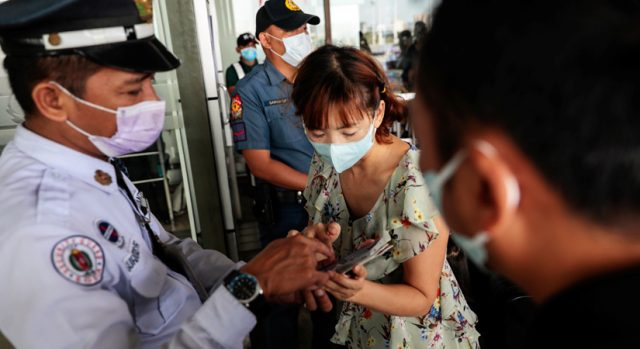
Passengers wearing protective masks, following confirmed cases of coronavirus in the country, arrive at the departure area of the Ninoy Aquino International Airport. -- REUTERS

The government on Thursday approved the rules cutting the quarantine requirements for fully vaccinated foreign travelers to seven days. 

In a statement on Friday, spokesman Herminio L. Roque, Jr. said the relaxed rules apply to people who got vaccinated in the Philippines. 

Returning Filipinos who got vaccinated overseas must still undergo a 10-day quarantine at a facility and four days at home. 

A person is considered fully vaccinated two or more weeks after completing his dose, Mr. Roque said. 

A fully vaccinated traveler must carry his vaccination card, which must be verified before departure and presented to a Bureau of Quarantine representative for verification at the airport upon arrival in the Philippines. 

They will only be subjected to a swab test if they show symptoms within seven days.  

Mr. Roque also said an inter-agency task force had exempted non-Philippine government repatriation efforts to the travel ban on India, Pakistan, Nepal, Sri Lanka, Bangladesh, Oman and the United Arab Emirates. 

Returning Filipinos from these countries must be quarantined for 14 days upon arrival. 

The government on Monday extended the travel ban on travelers coming these countries until June 15 to prevent the spread of a more contagious coronavirus variant first detected in India. 

Mr. Roque also said the task forced agreed to heighten the lockdown restrictions in Davao City and General Santos City amid a fresh surge in infections. 

Davao City will be under a modified enhanced community quarantine from June 5 to 20, while General Santos City will be under a general community quarantine until the end of the month, he said. — Vann Marlo M. Villegas 

Duterte to decide on US pact soon

PCOO.GOV.PH

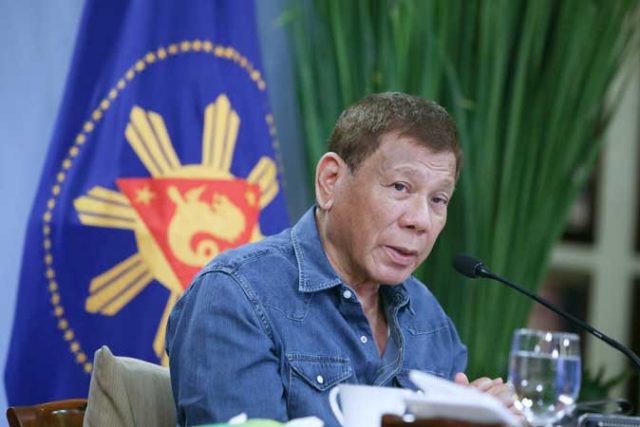
President Rodrigo R. Duterte is expected to decide soon whether to end a visiting forces agreement (VFA) with the United States, the Philippine ambassador to the US said on Friday. 

Philippine Ambassador to the US Jose Manuel G. Romualdez said the two countries had spent a lot of time discussing how to improve the military pact on the deployment of troops for war games. 

He said an improved version of the pact had been finished, but declined to provide details. 

“It’s now in the Office of the President and I expect it to come out anytime now,” he told an online news briefing. “We’re very hopeful that the VFA will continue because it’s an important piece of agreement. It is kind of a bigger picture of our relationship, especially in our Mutual Defense Treaty.” 

US Embassy in the Philippines Chargé d’Affaires John Law said there had been “very productive, very good conversations” between the two governments. 

He added that there were specific proposals to “clarify and strengthen” the implementation of the pact that is awaiting Mr. Duterte’s approval. 

“We think the VFA has been a fundamental part of helping make the Mutual Defense Treaty successful,” he said. “We are committed to the success of our alliance with the Philippines and that commitment is going to remain strong.” 

Mr. Duterte in February last year said he was ending the VFA after the US Embassy canceled the visa of Senator Ronald M. dela Rosa, his former police chief who led his deadly war on drugs. 

He suspended the termination for six months in June, citing heightened tensions in the region and saying it was a distraction to countries’ anti-coronavirus efforts. It was suspended again for six more months. 

NBI files complaint in Wirecard scam

@DOJPHILIPPINES

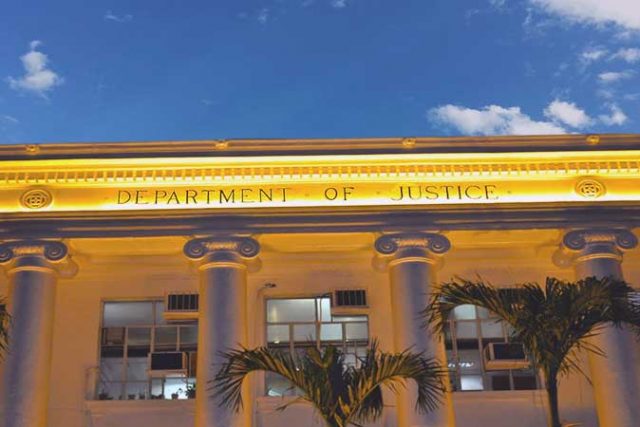
The National Bureau of Investigation (NBI) and Bank of the Philippine Islands (BPI) have filed  a criminal complaint against four people and other unknown suspects allegedly involved in the collapse of German payment company Wirecard AG last year. 

Government prosecutors will conduct a preliminary investigation on the case, for falsification and violations of the General Banking Act, Electronic Commerce Act and Cybercrime Prevention Act, the Department of Justice said in a statement on Friday. 

State agents earlier submitted three reports on Wirecard, whose missing 1.9 billion euros ($2.1 billion) was supposedly placed in two Philippine banks. The Philippine central bank had said the money had not entered the country’s financial system. 

The respondents were accused of issuing fake bank certifications and account summaries, making false entries in bank statements and fraudulent transactions, hacking into a computer system or server and accessing confidential data. 

Also facing the complaint are two Immigration officers accused of tampering with the travel records of Jan Marsalek, a dismissed board member and former chief operating officer at Wirecard. 

They allegedly made it appear that Mr. Marslek arrived in the Philippines on June 23 last year and left for China the following day. 

The officers were charged with violating the Cybercrime Prevention Act and Anti-Graft and Corrupt Practices Act. — Bianca Angelica D. Añago 

Bayer starts project on farmer safety

Bayer Crop Science will start a pilot project in some towns that seeks to encourage farmers to wear personal protective equipment when applying crop protection products. 

The agricultural company said the project would give farmers a safety kit consisting of two filter face masks, a pair of nitrile gloves and goggles. 

The initiative will be implemented in vegetable-producing areas of Buguias and La Trinidad in Benguet and rice areas in Bayambang in Pangasinan and Concepcion in Tarlac.  

“While Filipino farmers seeking good yields ensure that their crops are protected from insect pests and diseases, most farmers do not use the complete recommended PPE at the time when spraying is necessary,” Bayer said in a statement on Friday.   

The company said it would sell the safety kit through selected distributors in the four municipalities. 

Six of 10 farmers use a face mask when preparing and using crop protection products Bayer said, adding that they use surgical masks that are not recommended since they don’t provide enough protection. — Revin Mikhael D. Ochave 

Council views impairment of debt repayment capacity as main risk to financial stability

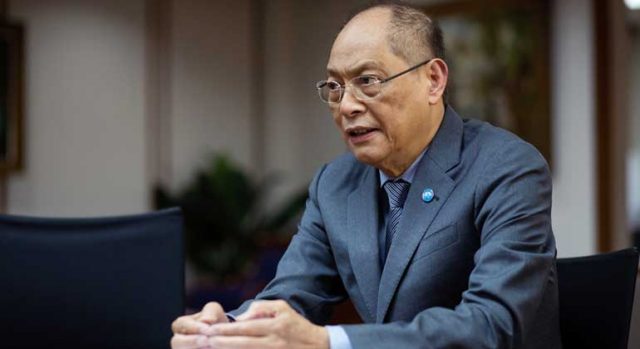
Benjamin E. Diokno, Bangko Sentral ng Pilipinas Governor — BLOOMBERG

MOST risks to the financial markets are expected to be” under control” over the near term, the Financial Stability Coordination Council (FSCC) said, warning though that it considers high levels of leverage to be the main source of unaddressed risk.

In its first “State of Financial Stability” statement Friday, the FSCC said six of the 11 potential risks to the financial sector are classified as “under control” in 2021 – monetary policy, risks to fiscal policy, contagion risk, concentration risk, liquidity risk and geo-political risk.

The council noted that risks to the macro economy and to valuations are elevated because of the spillover effects from other

sectors, while the risks related to cybersecurity and climate change are ongoing.

Leverage was named the top source of risk due to the impairment of borrowers’ ability to service their debt, and will require further action, according council.

“COVID-19 has curtailed expected incomes and this loss is permanent. This is the primary risk which feeds other risk. This has left borrowers vulnerable because their capacity to service their debts has been put at risk,” Benjamin E. Diokno, governor of the Bangko Sentral ng Pilipinas (BSP) and chairman of the FSCC, said at a briefing Friday.

Mr. Diokno said leverage risk is pronounced in sectors that have been hit hard by the pandemic, such as retail, events, leisure , and the informal sector.

The FSCC said the adverse impact of the coronavirus pandemic could lead to increasing pressure to service existing debt, leaving borrowers who want to expand vulnerable.

“With incomes already impaired, raising the cost of repayment adds an unnecessary burden to debt servicing. For these reasons, leverage represents the key risk today. Borrowers, lenders, and financial authorities must collaborate to address an unexpected external shock that materially affects the credit standing of borrowers for reasons that are not of their doing,” the FSCC said.

Overseas spillover risks from the unequal economic recovery is also viewed as disruptive and could add another layer of risk to emerging markets like the Philippines, Mr. Diokno said.

The pace of the domestic economy’s recovery will also have an impact on the financial sector but the availability of vaccines, which could drive confidence and growth, remains limited in the Philippines.

The FSCC noted that access has been uneven between rich and poorer countries, with the Philippines compelled to pay the price dictated by manufacturers.

The council noted rising bond rates in the international secondary market, which th domestic market is likely to follow, adding pressure on borrowers who are obliged to reprice their holdings periodically.

“At the current nascent stage of recovery, higher market yields pose a risk that compounds eroded incomes and impaired debt servicing capacities,” it said.

“From a market valuation standpoint, the

higher yields also mean that holders of tradable securities face mark-to-market losses. Shifting tradable assets into held-to-maturity may address valuation risk but it does come at the price of locking in liquidity,” it added.

It said the BSP has injected P2 trillion worth of liquidity to address emerging risks, but the increasing risk aversion in financial markets and reduced loan volumes should be closely monitored.

Elevated inflation rates pose a major risk to monetary policy, but the rising prices of goods and services is still viewed as temporary.

Meanwhile, the government’s prudent fiscal stance has permitted a degree of unplanned spending. However, the growing deficit could strain the government’s fiscal standing in case it is forced to spend more

while tax collection remains subdued.

Geopolitical risks are under control with tensions between the US and China – major Philippine trading partners – have eased recently. The FSCC said the pressures emerging from military and democracy-related issues in Asia should be monitored closely.

The council also acknowledged the cybersecurity risk to the financial market and the damage from natural disasters. It said these two factors are being evaluated in the Systemic Risk Crisis Management (SRCM) framework which the council is completing. — Beatrice M. Laforga

BSP outlines credit-checking powers of non-stock S&L personnel

BW FILE PHOTO

The Bangko Sentral ng Pilipinas (BSP) said it issued new rules Friday governing the credit-checking powers of non-stock savings and loan association (NSSLA) personnel.

In circular no. 1118, the BSP said individual agents and sales representatives of NSSLAs can accept applications; conduct credit and background checks on applicants; appraise loan collateral except for loans to be restructured; and accept applications for deposit accounts.

They can also promote the associations and introduce their products and services to potential members; offer financial literacy training; assist with applications; and help new and existing members with their concerns.

The BSP barred agents and sales representatives of NSSLAs from conducting know-your-customer checks and from participating in policy-making, board management oversight activities and risk governance.

They also cannot approve new loans or loan renewals and process the opening and closing of deposit and capital contribution accounts, nor can they approve transactions related to deposit and capital contribution accounts and applications for membership.

“General administrative services and other incidental services sought to be performed by a third party which are neither considered as acts of agency directly related to the functions and operations of an NSSLA nor covered by the guidelines on outsourcing, do not require prior BSP approval,” according to the circular. — Beatrice M. Laforga

Peso strengthens after steady May inflation reading

BW FILE PHOTO

THE PESO strengthened against the dollar on Friday after May inflation steadied at 4.5%.

The peso closed at P47.75 against the dollar Friday after finishing Thursday at P47.825, according to the Bankers Association of the Philippines.

Week-on-week, the peso strengthened from its P47.80 close on May 28.

Since the start of 2021, the peso has appreciated by 0.6%. It closed at P48.023 on the final trading day of 2020.

The peso opened the Friday session at P47.83 and hit a low of P47.83. The intraday high was P47.73.

Dollar trading volume fell to $718.10 million Friday from the $820.06 million Thursday.

Rizal Commercial Banking Corp. (RCBC) Chief Economist Michael L. Ricafort said the steady inflation reading was positive for the peso.

The May reading was the third month in which consumer price growth remained steady, the Philippine Statistics Authority (PSA) said Friday.

The 4.5% outcome for May is still elevated from the year-earlier reading of 2.1%.

A trader who asked not to be identified said May inflation remained within market expectations. The 4.5% reading is in line with the median estimate from a BusinessWorld poll of analysts conducted late last week.

Mr. Ricafort added that peso was also supported by continued net foreign buying on the stock market, running for six trading days. Foreign positions came in at a net buy of $22.3 million Friday after Thursday’s net buying level of $39.7 million.

On Monday, RCBC’s Mr. Ricafort forecast range the peso’s range at between P47.70 and P47.85. Next week, he expects a range of P47.60 to P47.90. — Isabel B. Celis

ADB backs more subsidies to avert long-term damage to PHL labor market

BW FILE PHOTO

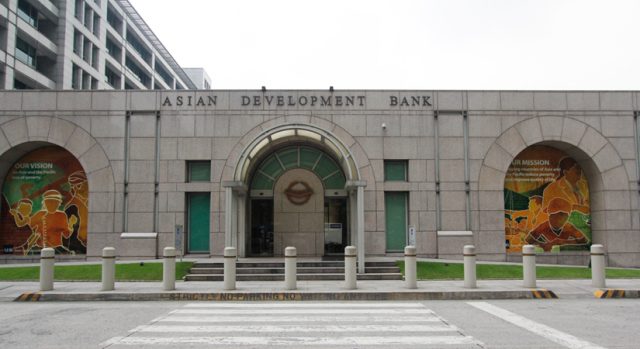
The Philippines needs to support its labor market by incentivizing hiring and introducing unemployment insurance to prevent long-term damage to the work force, Asian Development Bank (ADB) officials said in a blog post.

“The pandemic could create long-lasting effects on employment. Put simply, this temporary large shock to the economy might produce a persistently lower employment rate even after the economy has started to grow again. This phenomenon is known as hysteresis in employment,” ADB country director Kelly Bird, country specialist Maria Cristina Lozano-Astray, and senior economist Teresa Mendoza said in a blog post Friday.

They said 1.7 million jobs were lost in the formal sector between January 2020 and January 2021, while employment in the informal sector increased by 435,000.

“The early evidence from other countries suggests that policies should support workers’ labor market transitions as well as enterprises,” they added.

They said granting wage subsidies is the most effective measure for saving jobs after the pandemic and lockdowns forced businesses to shut and lay off workers.

Last year, the government implemented a P46-billion wage subsidy program designed to support employers in keeping workers at their jobs. It is estimated to have benefited 3.1 million workers. It will be followed by another round this year worth P24 billion.

“As the economic recovery takes hold, governments will phase out wage subsidies and some are considering replacing them with hiring subsidies to help facilitate the reallocation of displaced workers into new jobs,” the ADB blog read.

Another program that the government can consider is unemployment insurance.

“The Philippines’ unemployment insurance scheme offers limited coverage. Adequate unemployment insurance provides workers with income stability and helps them transition to new job,” they noted, citing examples from Malaysia  and Chile.

Malaysia has a national pooled insurance fund to which employers and workers make monthly contributions, with the government stepping in if funding is insufficient or if the job loss was involuntary.

In Chile, both employers and employees also make monthly payments to the worker’s account. This complements the Solidarity Unemployment Fund, which workers can tap if they have exhausted their savings. The ADB said such a system does not create contingent fiscal liability.

Mr. Bird, Ms. Lozano and Ms. Mendoza said one of the major impacts of the pandemic on the labor market is loss of skills and declining employability for the long-term jobless.

The labor market could also see more skills mismatches over the medium to long term after tjobs were re-allocated across sectors which were affected differently by the pandemic.

“Workers in the Philippines will be facing a challenging next few years as the country rebounds from the pandemic. Further strengthening of active labor market programs will be critical for helping workers and enterprises to make this transition. — Beatrice M. Laforga

GSIS loans hit P208-B, including P108-B for financial assistance

The Government Service Insurance System headquarters in Pasay, Philippines. May 28, 2012. -- BW FILE PHOTO

THE Government Service Insurance System (GSIS) said its loan disbursements have amounted to P208 billion since 2019, including P108 billion for loans to assist members who have run into difficulty during the public health crisis.

In a statement Friday, the GSIS, the pension fund for current and retired civil servants, said the P108 billion was disbursed via the GSIS Financial Assistance Loan (GFAL) program to 292,000 members.

It handed out P17 billion in emergency loans to 902,696 members and P16 billion worth of Multipurpose Loans (MPL) to 256,537 members.

Loans to GSIS pensioners availing of the Enhanced Pension Loan and Pensioners’ Emergency Loan amounted to P3.21 billion and P980.22 million, respectively.

The pension fund removed age caps for pensioners in February and increased the maximum loanable amount to six times the monthly pension, up to P500,000.

“(The) multiplier effect of the loans in the communities has effectively pump-primed the economy in far-flung areas as banks and other financial institutions have tightened (their credit policy) and were hesitant to grant credit,” GSIS President and General Manager Rolando L. Macasaet was quoted as saying. — Isabel B. Celis

ADVERTISEMENT
ADVERTISEMENT