Home Blog Page 7690

Expat say thanks to their bank heroes

Lives would be more stressful, difficult, inconvenient, and less secure if not for Filipino frontliners’ commitment to their duties as we all struggle with the pandemic. These include bank employees who help clients access cash for their basic needs.

From Korea with Love

Sangsik Shim of Daelim Philippines

Sangsik Shim of Daelim Philippines is happy that even during the strictest periods of the Enhanced Community Quarantine his bank, BDO, was able to fulfill his company’s needs.

Mr. Shim appreciates that his bank has a dedicated Korean Desk staffed by Filipinos who are knowledgeable about Korean culture and even speak the language. “BDO knows how Koreans handle businesses, and for that, we’re lucky. Since then, Daelim has had short-term loans with BDO to fund our business operations. It also has been very easy to get credit lines from them because they know and support our company’s plan,” said Mr. Shim.

“We always want our partners to respond quickly, so thankfully, that’s how BDO has been so far. My company and also my own experience with BDO strengthened my trust in the bank. They continue to prove that even in good times when our business needed funding, and in the bad times when there are unexpected events, we can rely on them.”

Mr. Shim was impressed at how quickly BDO responded to his needs during the pandemic. When he received a call that his credit card was about to expire, ECQ was declared. He was expecting that it would take a long time to transact for renewal due to the lockdown but BDO processed fast and had his new card delivered.

Human solution

Stefan Schmitz, Antrak Logistics CEO

2020 was also a challenging year for Stefan Schmitz, CEO of Antrak Logistics. Fortunately, Mr. Schmitz’ line of business is considered an essential one: it was subject to lesser restrictions in terms of mobility. Nevertheless, with quarantine affecting services along the supply chain, there was still the risk of disruption in its operations.

According to Mr. Schmitz, he is lucky to have a bank that makes sure transactions went as smoothly as possible. “I applaud BDO because they are always reachable for every transaction even with the lockdown restrictions. Also, we were able to push our clients to transact online so they can pay their employees even with the work-from-home set-up. Other than that, BDO assisted us in our business expansion through their loans even during the pandemic. We looked for efficiency, and we found it in BDO,” he said.

While many problems required a technological solution, Mr. Schmitz said that BDO provides the best solution of all: the human factor that assures him that everything will be all right.

“Nowadays, with so much reliance on technology, it’s very hard to keep the personal connection but BDO always has that human touch that I admire. I think BDO has done a great job there especially in my business because there is always somebody you can rely on. All I have to do is make a phone call and I am able to reach a person who can assist me. It enables us to make better decisions with less stress and difficulty.”

Keeping “business as usual”

As a global management consultancy, Roedl Philippines, Inc. is mainly concerned with helping international clients set up and run their businesses in the Philippines. It also extends the same service to Philippine companies based overseas, particularly in Germany. Roedl& Partner has 109 offices in 49 countries. With a tight-knit grid of intentional offices and global connected clients, the company needs to operate as efficiently and as effectively as possible locally and cross-boarder.

When the quarantine and lockdown were declared in Manila, Roedl Philippinesneeded a banking partner that could assist the company and its clients to complete particularly their international transactions—since despite the local lockdown and travel restrictions the global business never stopped.

“We have a set of requirements for any business partner we work with. First of all, we look for entrepreneurial spirit. This means seeing challenges as opportunities. It goes without saying that we expect from our staff and business partners to bring in an alert mind, commitment, and professionalism,” said Dr. Marian Norbert Majer, Executive Director and Consultant of Roedl Philippines, Inc.

“What is also of utmost importance to us, is business integrity.  I would define integrity as the ability to gain trust and respect. Both trust and respect can only be gained through time, through consistent and reliable performance.  I can attest that BDO fulfills all of these requirements. It was proven over a longer period of time but particularly during the pandemic.”

For those reasons, Roedl continues a strong business relationship with BDO all these years. According to Dr. Majer, BDO was able to consistently provide service and assistance throughout the ECQ  period. “We highly appreciate that despite limitations due to the ECQ, we always had someone from BDO who was directly and constantly available to take care of our requirements. This means not only our requirements but particularly the requirements of our clients.”

The pandemic underscored the importance of reliability and trust during times of crisis. For these expats, they chose BDO because the bank continues to find ways amid difficult challenges.


Nature funding must triple by 2030 to protect land, wildlife, and climate 

Global annual spending to protect and restore nature needs to triple this decade to about $350 billion by 2030 and rise to $536 billion by 2050, a United Nations (UN) report said on Thursday, urging a shift in mindset among financiers, businesses and governments. 

The inaugural State of Finance for Nature report looked at how to tackle the planet’s climate, biodiversity and land degradation crises, estimating about $8 trillion in investment would be needed by mid-century to safeguard natural systems. 

Inger Andersen, executive director of the United Nations Environment Programme (UNEP), said the amounts required may sound large but “it’s peanuts when we are frankly talking about securing the planet and our very own future.” 

“Our health, the quality of our lives, our jobs, temperature regulation, the housing we build and of course the food we eat, the water we drink” all depend on well-functioning natural systems, she said. 

Report co-author Ivo Mulder, who heads UNEP’s climate finance unit, said financial flows should work with nature rather than against it. 

“It is more an opportunity to see how can you continue to do business, how can governments continue to grow economically  but do so in a way that is more equitable and sustainable. It is not impossible,” he told the Thomson Reuters Foundation. 

Annual investment in nature, excluding money pledged but not yet delivered, totaled $133 billion in 2020, said the report, with public funds making up 86% and private finance the rest. 

Government spending was mainly for biodiversity protection, forest and peatland restoration, regenerative agriculture and water conservation, added the report by UNEP, the World Economic Forum, and the Economics of Land Degradation Initiative. 

A failure to ramp up investments in nature would threaten the goals of the Paris Agreement on climate change, Mr. Mulder warned, while more animal and plant species would be lost. 

Better conservation and management of natural areas, such as parks, forests and wildernesses, is seen as a key tool for nations to protect ecosystems and meet emissions reduction targets. 

Cutting down forests has major implications for global goals to curb climate change, as trees absorb about a third of the planet-warming carbon emissions produced worldwide. 

Forests also provide food and livelihoods, are habitat for wildlife and support tropical rainfall. 

Ms. Andersen said protecting natural stores of carbon like forests, peatland and the ocean “is not a substitute for decarbonization” of the global economy but rather “part of a long-term solution” to safeguard the Earth and its climate. 

BUILD BACK GREENER 

The report called on governments to include biodiversity and climate measures in their pandemic stimulus packages, noting that nature accounts for just 2.5% of projected coronavirus disease 2019 (COVID-19) economic recovery spending worldwide. 

Governments must also ensure development aid contains conditions and targets to help cut climate-heating emissions, protect forests and limit land degradation, Mr. Mulder said. 

The report recommended reforming taxes and redirecting subsidies for fossil fuels and agricultural chemicals, which amount to hundreds of billions of dollars per year, to encourage greener farming and other activities that nurture nature. 

Businesses should invest more in making their supply chains sustainable, while new revenue streams created by forest carbon markets and nature-based projects could help companies meet their net-zero emissions goals, it added. 

Banks will also need to take into account the negative impacts of their lending on nature and the climate, Mr. Mulder said. 

Firms linked to destruction of nature risk their reputations, and more extreme weather including droughts and floods  often worse in degraded ecosystems  can increase business costs, he added. 

Ms. Andersen said there was a business case for investing in nature but “we need to make it stronger and clearer.” 

A separate report released last year estimated $722 billion$967 billion would be needed annually to halt the global decline in biodiversity by 2030. 

Mr. Mulder said the estimate in the new UN report was lower as it analyzed only land-related funding and did not include oceans. He called it a “starting point” for tracking nature-based investments. 

It comes as a coalition of about 60 countries pushes to protect at least 30% of land and oceans by 2030, ahead of a key UN biodiversity summit in Kunming, China, set for October.  Michael Taylor/Thomson Reuters Foundation 

Qantas ponders customer incentives to boost COVID-19 vaccination rates

Image via Qantas

SYDNEY  Qantas Airways Ltd. said on Friday it was considering a plan to reward customers who have received both doses of a coronavirus disease 2019 (COVID-19) vaccine with incentives like frequent flyer points or flight vouchers to help boost vaccination rates in Australia. 

The airline has said it will require all passengers to be vaccinated when it restarts international flights beyond New Zealand, in a policy that has been criticized by the World Travel and Tourism Council as discriminatory. 

Qantas is currently selling tickets to destinations like the United States, Britain, and Japan from late December though that could be further postponed as the Australian government has said borders may remain closed until mid-2022. 

“As a large company that relies on travel to put our people and planes back to work, we’re obviously motivated to help with the national vaccine effort,” Qantas Chief Customer Officer Stephanie Tully said in a statement. 

“We’re still thinking through how this would work, but the incentive could be Qantas points, Qantas or Jetstar flight vouchers, or status credits for frequent flyers.” 

United Airlines Holdings Inc. said on Monday it would offer vaccinated loyalty program members the chance to win free flights for a year’s worth of travel to anywhere in the world it flies in support of the Biden administration’s efforts to encourage more people to get their COVID-19 vaccination. 

While a fresh outbreak in Melbourne has led to a week-long lockdown in Australia’s second most populous state, overall, swift contact tracing, snap lockdowns and strict social distancing rules have helped Australia keep its COVID-19 numbers relatively low, with just over 30,000 cases and 910 deaths. 

Recent surveys, however, have shown that Australia’s success in keeping a lid on community transmission of the virus has reduced the sense of urgency for people to make sure they are vaccinated as soon as they are eligible. — Reuters 

Megaworld Corporation announces schedule of virtual stockholders’ meeting

Click image to enlarge

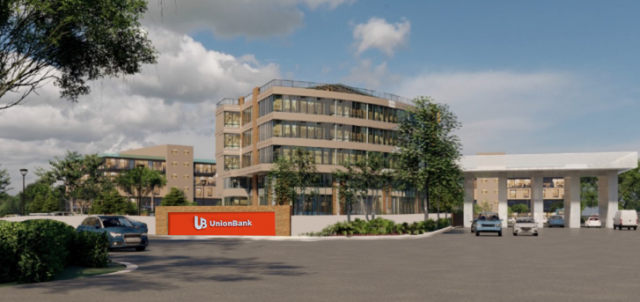
UnionBank builds first-in-industry Innovation Campus

Union Bank of the Philippines (UnionBank) successfully held the virtual groundbreaking ceremony last May 26, for its Innovation Campus, a real property development that will support its innovation initiatives. The event marked a very important milestone in UnionBank’s digital transformation journey, which began half a decade ago.

The first-in-industry facility, which is being built on a one-hectare property in San Pedro, Laguna, will act as a hub for research and development that will further boost the Bank’s digital capabilities. In addition, the campus will house various centers of innovation within UnionBank, including its institutes on Data Science and Artificial Intelligence, Blockchain, its digital bank EON, as well as the recently-launched Asian Institute of Digital Transformation (AIDT), which is in partnership with Global Learning Solutions Singapore.

In a special message during the event, UnionBank President and CEO Edwin Baustista called the Campus “a dream come true and a testament to the commitment of Management and the Board to innovation as a major strategic thrust” of the Bank and its parent conglomerate, the Aboitiz Group.

“This is a major step for us and it is also an affirmation that even during this crisis times, there are companies who continue to invest in the future of the Philippines. The Philippine government, or one of the Secretaries, said that the Philippines can be a major hub for AI, maybe in Asia. We can certainly make this little corner in San Pedro, Laguna, the epicenter of AI, Blockchain and all those wonderful technologies that this Bank is harnessing in order to create the future of banking,” Bautista said.

Yngen Holdings President Eugenio Ynion was also among the key figures who joined the event. A long-time collaborator of UnionBank, Yngen Holdings has helped co-create many solutions that utilize the Bank’s expertise in digital banking. During his message, Ynion said that the Campus is proof of UnionBank’s digital leadership and unwavering commitment to supporting Filipino talent.

“We celebrate another milestone because the UnionBank Innovation Campus is also the first out of many more establishments that will be part of The San Antonio Digital Hub. Soon to rise is a structure that will not only be a testament to UnionBank’s great leadership but likewise to its commitment in making a difference to the Filipino community,” Ynion said.

Bangko Sentral ng Pilipinas (BSP) Governor Benjamin Diokno and Finance Secretary Carlos Dominguez congratulated UnionBank and expressed their confidence in the Bank’s capability to nurture new talent and create solutions amid the pandemic through the Campus.

“Indeed, this initiative is both timely and remarkable; timely because we need to harness our talents and skills to build back better and rise from adversity, and remarkable because of the challenges brought about by the COVID-19 pandemic,” said Gov. Diokno.

“This facility will be a breeding ground for cultivating new talent, evolving new products, and developing new ways to be competitive in the new economy. It is a landmark for the Philippines’ relentless push towards comprehensive digitization,” Sec. Dominguez said. “UnionBank has earned a well-deserved reputation for cutting edge innovation. The Bank has also been a reliable partner of the Social Security System and the Bureau of Treasury that enabled Filipinos all over the world to participate in the government’s bond offerings despite the pandemic. The Bank has been instrumental in helping us achieve President Duterte’s goal of financial inclusion and a comfortable life for all Filipinos,” he added.

Set as the peak of its digital transformation, the Campus provides a digital native environment that will allow research and discovery of digital initiatives.

In his closing speech on behalf of the Board of Directors, UnionBank Vice Chairman Dr. Justo A. Ortiz expressed his gratitude to all those who birthed the UnionBank Innovation Campus, “a project we can all be proud of as one more step towards attaining UnionBank’s greater purpose of co-creating, with partners, customers, and communities, a better Philippines through innovation.” He thanked Jun Ynion whose vision provides a space where the best Filipino talents can congregate in a fully-supported ecosystem for innovation. “Special thanks as well to Gov. Ben Diokno and Sec. Sonny Dominguez for creating the enabling environment, the impetus, and the drive to make innovation a centerpiece for inclusive prosperity.  Together, let us Tech Up Pilipinas! Maraming Salamat,” Ortiz ended.

“THANK YOU to our partners. Together, let us Tech Up Pilipinas!”


Century Pacific Food announces annual stockholders’ meeting

Notice of Annual Stockholders’ Meeting

Notice is hereby given that the Annual Stockholders’ Meeting will be held on Wednesday, June 30, 2021 at 8:30 in the morning.

The agenda for the said meeting shall be as follows:
1. Call to Order
2. Secretary’s Proof of Due Notice of the Meeting and Determination of Quorum
3. Approval of the Minutes of the Stockholders’ Meeting held on June 30, 2020
4. Management’s Report
5. Ratification of Acts of the Board of Directors and Management During the Previous Year
6. Election of Directors (including Independent Directors)
7. Appointment of External Auditor
8. Other Matters
9. Adjournment

A brief explanation of the agenda item which requires stockholders’ approval is provided in the Definitive Information Statement. The Definitive Information Statement, Management Report, and Annual Report for 2020 will be uploaded to the Company’s Website at https://www.centurypacific.com.ph/ and at PSE EDGE under Century Pacific Food, Inc. Company Disclosures.

In light of current conditions and in support of the efforts to contain the outbreak of COVID-19, stockholders may attend the meeting and vote via remote communication only.

Stockholders should pre-register at this link: https://www.centurypacific.com.ph/investor-relations/ASM2021, from June 1, 2021 to June 6, 2021.

Upon registration, Stockholders shall be asked to provide the information and upload the documents listed below (the file size should be no larger than 5MB):

A. For individual Stockholders:

1. Email address
2. First and Last Name
3. Birthdate
4. Address
5. Mobile Number
6. Phone Number
7. Stock Certificate Number and number of stocks held
8. Current photograph of the Stockholder, with the face fully visible
9. Valid government-issued ID
10.For Stockholders with joint accounts: A scanned copy of an authorization letter signed by all Stockholders, identifying who among them is authorized to cast the vote for the account, as well as valid government-issued ID of the authorizing stockholders

B. For corporate/organizational Stockholders:

1. Email address
2. First and Last Name of stockholder
3. Address
4. Mobile Number
5. Phone Number
6. Current photograph of the individual authorized to cast the vote for the account (the “Authorized Voter”)
7. Valid government-issued ID of the Authorized Voter
8. A scanned copy of the Secretary’s Certificate or other valid authorization in favor of the Authorized Voter

Stockholders who will join by proxy shall download, fill out and sign the proxy form found in https://www.centurypacific.com.ph/investor-relations/ASM2021. Deadline to submit proxy forms is on June 6, 2021.

All registrations shall be validated by the Corporate Secretary in coordination with the Stock Agent. Successful registrants will receive an electronic invitation via email with a complete guide on how to join the meeting and how to cast votes.

Only stockholders of record as of the close of business on May 17, 2021 are entitled to notice and to vote at the meeting.

MANUEL GONZALEZ (signed)
Corporate Secretary

S&P affirms Philippines’ BBB+ rating

PHILIPPINE STAR/ MICHAEL VARCAS

S&P GLOBAL RATINGS on Thursday kept its “BBB+” rating on the Philippines and assigned a “stable” outlook on expectations of a “healthy” economic recovery, which will help improve the country’s fiscal standing that has weakened because of the coronavirus crisis.

“We affirmed the ratings because we believe the Philippines will continue to have good economic recovery prospects once the COVID-19 pandemic is contained, and that the government’s fiscal performance will strengthen accordingly,” S&P said in a statement on Thursday.

The current “BBB+” sovereign rating is a notch away from the “A”-level grade targeted by the government, while a “stable” outlook means the rating is likely to be maintained in the next six months to two years.

S&P also maintained its A-2 short-term credit rating for the Philippines, while the outlook on long-term rating is still stable.

The debt watcher last affirmed its credit rating for the country in May 2020 with the same “stable” outlook.

S&P said the economy has shown signs of recovery and is expected to rebound as the government continues its vaccine rollout and as the virus’ spread is contained, backed by its strong external position as well as ongoing fiscal and infrastructure reforms.

The debt watcher sees the Philippine economy expanding by 7.9% this year versus last year’s 9.6% contraction and the government’s 6-7% gross domestic product (GDP) growth target. For next year, S&P expects GDP to grow by 7.2%.

“The Philippines has been one of the worst affected economies in Asia-Pacific by the COVID-19 pandemic… The economic recovery is off to a slow start in 2021, partially owing to a severe COVID-19 wave centered in Luzon, but we expect real GDP growth to rebound strongly to 7.9% in 2021. This will be largely due to base effects, but will also be driven by wider deployment of vaccines, a recovery in the global economy, and the government’s expansionary fiscal measures,” S&P said.

“Wider vaccine deployment will allow economic activities to normalize more quickly toward the end of the year.”

The debt watcher noted that the Philippines remains among the fastest growing in the world, and its rating reflects the country’s “above-average economic growth potential.”

“The country has a relatively diversified economy with a strong track record of high and stable growth — a reflection of its supportive policy dynamics and improving investment climate,” the credit rater said. “The Philippine economy’s constructive medium-term trajectory is underpinned by solid household and company balance sheets, sizable inward remittance flows, and an adequately performing financial system.”

S&P said the government’s fiscal prudence and reforms in recent years also served as a buffer to temper the impact of the pandemic on its debt profile.

“The Philippines government has generally enacted effective fiscal policies over the past decade, marked by improvements to the quality of expenditure, manageable fiscal deficits, and low levels of general government indebtedness. This track record of sustainable public finances helped the government accumulate fiscal space to respond to the pandemic,” the debt watcher said.

“Ongoing efforts to close infrastructure gaps and further improve the business climate through regulatory and tax reforms should also support the Philippines’ economic productivity.”

S&P sees the country’s current account surplus to slowly narrow in the coming years on the back of higher capital imports and the expected economic recovery.

It added that the country may see inflows of foreign direct investments recovering this year as the sustained vaccine rollout eases concerns over the crisis and help economic activities to normalize.

“We regard the BSP’s (Bangko Sentral ng Pilipinas) ability to support sustainable growth while attenuating economic or financial shocks to be broadly neutral to our rating. This reflects the central bank’s sound record in keeping inflation low and its history of independence,” it added.

Meanwhile, S&P said the country’s institutional capacity has been challenged by the pandemic, with the government still recalibrating its policies to lessen the impact of COVID-19 restrictions on the economy.

The upcoming presidential election in 2022 is also a source of uncertainty, but the credit rater said it expects policy continuity.

“Nevertheless, it will be challenging to restore the fiscal and debt settings to pre-COVID-19 levels over the next 12-24 months. Additional downside economic risks stem from uncertainties surrounding the course of the pandemic and the emergence of new coronavirus variants around the world,” it added.

S&P said it may upgrade the Philippines’ credit rating over the next two years if the economy expands faster than expected and the government achieves fiscal consolidation immediately.

“We may also raise the rating if the institutional settings, which have contributed to a significant enhancement in the Philippines’ pre-pandemic credit metrics over the past decade, further improve,” it said.

However, S&P warned that a downgrade is possible if the country’s recovery falters, which could cause the government’s fiscal position to deteriorate.

Economic managers said S&P’s rating action shows continued confidence in the Philippines’ recovery prospects.

“The move of S&P to keep the country’s BBB+ credit rating echoes our view that the impact of the COVID-19 crisis on the economy will be transitory and that the Philippines continues to enjoy bright medium-term growth prospects,” BSP Governor Benjamin E. Diokno said in a statement.

Finance Secretary Carlos G. Dominguez III meanwhile said the government will continue implementing structural reforms to support the economy and further open up sectors to foreign investments.

“Even as we significantly increase public spending to contain the spread of the virus, we have managed to keep our debt metrics within manageable levels. S&P’s affirmation of its ‘BBB+’ rating supports our optimism that once this health emergency is contained, we will be able to bring back our deficit and debt ratios as well as our growth momentum to pre-pandemic levels,” Mr. Dominguez said. — Beatrice M. Laforga

Dominguez sees economy picking up in 2nd quarter

PHILIPPINE STAR/ MICHAEL VARCAS

FINANCE SECRETARY Carlos G. Dominguez III said he expects the country’s gross domestic product (GDP) to grow faster in the second quarter, as the number of coronavirus infections have dropped from April’s peak and more vaccines have arrived.

“There is good news on the horizon, however. In the second quarter of this year, we expect to begin growing our economy again. We see that the second wave of infections that started at the end of March has subsided dramatically. We hope that this will be the last surge,” Mr. Dominguez told a forum on Thursday.

If the upcoming batches of vaccines will arrive as scheduled, the Finance chief said the Philippines could see a “significant containment” of the outbreak next semester.

“We should have enough doses to vaccinate not only the 70 million adults in the country, but also some of the 15 million teenagers once the vaccine is approved by the Food and Drug Administration for them,” Mr. Dominguez said.

“We are also in the process of negotiating for the booster shots next year. The COVID-19 pandemic should soon be contained.”

The Health department reported 6,483 new COVID-19 cases as of May 27. This brought the number of active cases to 48,109, up from 46,037 reported on Wednesday.

UK-based think tank Capital Economics said the second quarter GDP could contract by 3% against the first quarter, as tighter lockdown restrictions remained in place in April.

If realized, this will reverse the 0.3% quarter-on-quarter increase in the first-quarter GDP.

“This quarter, tight containment measures have been introduced across much of the country in response to a surge in infections. While new cases have fallen back in recent weeks, they remain elevated and our mobility tracker is still around 35% lower than pre-pandemic levels,” Capital Economics said in a separate note on Thursday.

Capital Economics said they expect a 6% growth this year, which means the overall economic output will still be 1% lower than its pre-crisis level this year.

The estimate is at the lower-end of the government’s 6-7% growth target for the year.

The think tank said inflation will start easing in the second half on lower food prices and due to base effects.

“This should allow the central bank to cut interest rates by a further 50 bps (basis points) in the second half of the year,” it said.

Meanwhile, the prolonged lockdowns and delays in the delivery of vaccines will continue to dampen the Philippines’ economic recovery, according to a joint report by First Metro Investment Corp. (FMIC) and University of Asia and the Pacific (UA&P).

“The strong job numbers should help boost consumer spending, although the extended quarantine restrictions in Metro Manila plus could dampen it, and fractured supply chain may constrain stronger production gains,” FMIC and UA&P said in its May issue of “The Market Call.”

However, they said gains in job creation, increased state spending on infrastructure and rebound in exports will help boost the economy’s growth prospects.

Around 2.2 million more jobs have been created in March based on the official estimates by the Philippine Statistics Authority (PSA), after the unemployment rate went down to 7.1% from 8.9% a month earlier.

State spending on infrastructure grew 26.7% in the first quarter, providing “some confidence that this form of government recovery-employment-boosting spending has gained traction and should continue at a fast pace for the rest of the year,” FMIC and UA&P said.

Goods exports likewise jumped by 31.6% year on year in March, turning around from the 2.3% slump the month before. — Beatrice M. Laforga

Hybrid work is here to stay, says experts 

By Arjay L. Balinbin, Senior Reporter

THE post-pandemic workplace will be both hybrid and flexible, with corporate offices functioning as places of collaboration and socialization, industry experts said.

Christophe Vicic, JLL Philippines, Inc. country head, said the hybrid work model, whose widespread adoption was accelerated during the pandemic, is here to stay.

“I think it’s going to stay. The principal reason is it’s about the people. It’s about the… employees who have clearly tasted a different way of working,” he said at the second day of the BusinessWorld Virtual Economic Forum 2021 on Thursday.

“Some of the organizations [that] were caught by surprise by the pandemic [saw the] potential benefits of the hybrid model. And I think, before pandemic, we all talked about the millennials. They want more flexibility, freedom, and project-based type of work — [all] these accelerated during the pandemic,” he added.

With the hybrid work strategy, employees are given the flexibility to engage in both office-based and remote work during the week.


Mr. Vicic noted that the “tipping point of hybrid work is three days in the office and two days at home.”

“Efforts in hybrid work will be successful if it is supported through technology and building up a digital system,” he added.

Elizabeth Fuller, head of growth at WeWork Southeast Asia, said at the same forum that the hybrid work is a trend that “existed before the pandemic, and it just accelerated during the pandemic.”

Citing WeWork’s recent global survey, she said the office remains essential to companies.

“But safety matters more than ever,” with 76% of global business leaders said office setting is important for collaboration, while 74% said they want their workplace thoroughly and regularly cleaned and disinfected, and more than half or 61% said they want to maintain social distancing when they return to workplace, according to the survey.

In 2019, or before the pandemic, 80% of the businesses were looking at headquarters as an investment, Ms. Fuller noted. “In 2020, the pandemic forced many companies to adopt a work-from-home workplace strategy,” she also said, noting that in the future, “workplace strategies will need greater flexibility.”

Interestingly, WeWork survey also found that 90% of millennials prioritize their freedom to work over salary.

FUTURE OF WORK
Michael T. McCullough, managing director at KMC Savills, Inc., noted remote work posed some challenges for employees such as difficult working conditions, managing routine, and finding motivation.

The hybrid workplace, which he described as the “office of the future,” is all about employee experience.

The accelerated demand for hybrid working is driven by two major reasons: it is a great way to save money and it is more environment-friendly because it means less office space, Mr. McCullough noted.

Aside from focusing on employee experience, companies adopting hybrid work should also offer flexibility and provide spaces for collaboration, he added.

A JLL study showed the future of work also means being responsible and sustainable, and that the office will serve as a hub for collaboration, problem solving, and career development.

Carol T. Mills, president of Ayala Land Offices, Inc. and AREIT, Inc., said hybrid work is the best balance of productivity, efficiency, and safety “for now.”

“But people work best with other people. It’s hard to imagine a future where that does not happen,” she added.

“Eventually, depending on how effective hybrid systems work for companies, I suppose, slowly it will build towards more use of office because working in the office has a lot of intrinsic benefits.”

Companies around the world are still looking for the best way to structure office life after the pandemic.

“Managing the complexities of the future of work lies in promoting greater flexibility and choice, where the main principle is to work where one is most effective for the job at hand,”Fernando Zobel de Ayala, president and chief executive officer of Ayala Corp., said in his keynote address at the BusinessWorld Virtual Economic Forum on Wednesday.

“At Ayala, we continue to be intrigued at the prospect of a workplace centered on flexibility, choice, and greater support for associates. We are exploring several options for our companies as we move towards a post-COVID world,” he added.

Bernadette Nacario, Google Philippines country director, said in her keynote speech on Thursday that many barriers still exist amid the accelerated shift to digitalization during the pandemic.

These are “challenges around talent, which remains a key blocker that all sectors need to keep working on.”

Companies should also be able to recognize behaviors and patterns to achieve more for the future, she added.

“Economic recovery is a critical moment for the Philippines, and Google Philippines is committed to supporting the country in several communities through…its technologies and programs,” Ms. Nacario noted.

BIR keeps close eye on Airbnb’s tax compliance

REUTERS
The Airbnb logo is displayed in this illustration taken March 19, 2020. — REUTERS/DADO RUVIC

By Beatrice M. Laforga, Reporter

THE BUREAU of Internal Revenue (BIR) has started to monitor the tax compliance of online leasing platforms such as Airbnb, top officials said.

“We are checking and validating Airbnb tax payments and compliance,” BIR Deputy Commissioner Arnel SD. Guballa told BusinessWorld in a Viber message on Thursday, without disclosing further details.

House Ways and Means Chair and Albay Rep. Jose Maria Clemente S. Salceda said the BIR is already imposing taxes on online leasing platforms but “had difficulties with enforcing the regulations.”

“Airbnb itself said in 2019 that they want to contribute revenues. I’ll keep working with the BIR to find a satisfactory way to enforce the law on them,” Mr. Salceda, who also authored a bill on digital taxes, said on Thursday.

The government is still pushing for the taxation on the sector, Finance Secretary Carlos G. Dominguez III said, as the government scrambles to find more funds amid the coronavirus pandemic.

“Yes, Airbnb engages in taxable transactions,” Mr. Dominguez confirmed on Thursday when asked if the proposal to slap taxes on online leasing services is still on the table.

Without citing details on the target timetable for the plan, Mr. Dominguez reminded businesses to register with the BIR for tax purposes as well as with local government units (LGUs).

“All those owners ng property (located in the Philippines) listed sa Airbnb (and similar platforms) are part of the call of BIR to properly comply with registration requirement, because they are lessors of real property,” BIR Deputy Commissioner Marissa O. Cabreros said in a separate Viber message.

The bureau issued Revenue Memorandum Circular No. 60-2020 in June last year to remind online sellers to register with the BIR. Some 7,262 businesses have registered so far.

The government and lawmakers are looking at imposing the 12% value-added tax (VAT) on goods and services sold online after the coronavirus pandemic propped up online transactions.

House Bill 7425 or the Value-Added Tax on Digital Transactions Act seeks to impose a 12% VAT on online transactions, including online leasing services such as Airbnb. It is still pending at the House of Representatives.

Mr. Salceda said they refer to Airbnbs as “network orchestrators” because they provide the service of connecting customers with service providers, and take a cut out of the revenue.

“That is clearly a ‘value-added’ service that can be taxed,” he said.

“The bill defines them and the economic and regulatory space they occupy. However, it was the BIR’s recommendation that we focus primarily on the selling of goods and digital services. But in its current form, there are provisions that we can still apply to leasing platforms”

However, Mr. Salceda said it is difficult to estimate the revenue impact of taxing the sector because they are yet to determine the value chain and which taxpayer is responsible for which taxes.

“For now, using the VAT registration system for non-residents under the Digital VAT proposal, and the proposal to make them withholding agents for VAT is probably the most efficient first step,” he said.

The DoF estimates up to P17 billion in potential VAT collections from the digital economy.

PHL banks most exposed to climate risk in APAC — Moody’s

PHILSTAR

PHILIPPINE BANKS are the most exposed to physical climate risk in the Asia-Pacific region, according to Moody’s Investors Service, which noted the impact could affect asset quality.

In a note on Thursday, the ratings agency said climate change and related government policies are posing some risks for Asia-Pacific banks.

“Asia-Pacific economies with weak infrastructure are particularly vulnerable to physical climate risks, which can hurt banks’ asset quality because a natural disaster can damage borrowers’ assets or disrupt their cash flow. Many banks in the region also face asset risks from large exposures to sectors susceptible to carbon transitional risks,” it said.

The Philippines faces the highest physical climate risk, followed by Bangladesh, Vietnam, India, and Indonesia. These countries experience natural disasters every year such as typhoons, floods, volcanic eruptions, and drought, which cause disruptions to the economy.

The Philippines was also the fifth most exposed to environmental risk arising from “natural capital.” Bangladesh was the most exposed to natural capital, followed by Sri Lanka, Pakistan and India.

Aside from these weather-related disruptions, Asia-Pacific banks also face carbon transition risks that stem from sudden changes in asset values as economic priorities shift.

The debt watcher estimated 22% of the Philippine banks’ overall gross loan portfolio were exposed to credit risks linked to environmental factors.

Local banks were most exposed to energy utilities, and oil and gas (11% of gross loans); surface transportation/logistics/shipping (6%); building materials/construction (4%); and mining (coal and other metals) (0.4%). Banks had no risk exposure in steel and chemicals sectors.

“Asset risks from the transition to carbon neutrality are limited in the near term for banks in developing countries in Asia because economic growth is a greater priority for their governments, and they inevitably need to rely on fossil fuels to achieve that,” Moody’s said.

Compared with banks studied across 12 Asia-Pacific economies, the exposure of Philippine banks to sectors with high environment-related risks was the second highest at 22% behind China’s 24%. The Philippines was followed by Bangladesh (17% exposure), Indonesia (16%), Vietnam (15%), India (14%), and Thailand (10%).

“Asia-Pacific countries’ pledged commitment to the goals of the Paris Agreement for 2030 and their net zero emissions targets will create opportunities for banks to boost lending because the new government policies will require enormous amounts of investment in clean energy and efficient infrastructure, with bank lending to be the largest source of funding for such projects,” Moody’s said.

Bangko Sentral ng Pilipinas (BSP) Governor Benjamin E. Diokno said earlier this month that they will issue a second-phase regulation for sustainable financing. Through this, the central bank will gauge climate change risk in the assessment of credit and operational risk management of the banking industry.

In April 2020, the BSP unveiled the sustainable finance framework and gave banks a three-year transition to adopt its provisions. — BML

Robinsons Land unit eyes nearly P27 billion in REIT market listing

BW FILE PHOTO

THE Securities and Exchange Commission (SEC) released on Thursday the preliminary prospectus filed by a subsidiary of Robinsons Land Corp. for its P26.67-billion real estate investment trust (REIT) initial public offering (IPO), which is now subject to regulatory approval.

Robinsons Land is sponsoring the REIT listing of Robinsons Realty and Management Corp., which is also amending its name to RL Commercial REIT, Inc. (RLC REIT). The name change is pending approval from the SEC.

RLC REIT has filed a registration statement with the SEC for the public offering of 3,342,864,000 common shares priced at P7.31 apiece, with an overallotment option of 305,103,000 common shares.

Should the overallotment option be exercised, at least P26.67 billion will be raised through the offering.

“The selling shareholder will receive all of the proceeds from the sale of the offer shares,” RLC REIT said, referring to Robinsons Land.

Its REIT portfolio includes 14 commercial real estate assets spanning 425,315 square meters, with an aggregate appraised value of P73.34 billion as of September last year.

Included in the portfolio are commercial spaces leased for office purposes in key central business districts in Metro Manila, Naga, Cebu, and Davao.

The company is eyeing the REIT offer period to run from August 31 to September 6. It is, however, still subject to the approval of corporate regulators.

Shares of Robinsons Land at the exchange went up by 2.74% on Thursday to close at P16.50 apiece from P16.06. — Keren Concepcion G. Valmonte