Home Blog Page 7670

PSC expresses readiness to support athletes in their Olympic push

“WE are ready to support our athletes.”

This was the clear message of Philippine Sports Commission (PSC) Chairman William Ramirez as Filipino athletes step up their push in the next couple of months in qualifying for the Tokyo Olympics.

Speaking at an online media briefing on Monday, Mr. Ramirez expressed their agency’s readiness to support athletes in their pursuit of their Olympic dreams despite limitations being presented by the pandemic.

The PSC, Mr. Ramirez said, is making sure that ample budget is allotted for upcoming international competitions, including the rescheduled quadrennial Summer Games, while also facilitating in the training of national athletes in accordance with prevailing health and safety protocols.

“As far as budget for international competitions, there is no problem with that. The DBM (Department of Budget and Management) has allotted a budget for their campaign,” said Mr. Ramirez.

The sports official said some P350 million have already been released for the athletes’ international campaign from a total DBM budget of “more or less P700 million.”

To date, seven athletes have already qualified for the Tokyo Olympics, happening from July 23 to Aug. 8.

They are pole vaulter EJ Obiena, gymnast Caloy Yulo, boxers Eumir Felix Marcial, Irish Magno, Nesthy Petecio and Carlo Paalam, and weightlifter Hidilyn Diaz.

The number of qualified Filipino athletes is seen to rise with the different qualifiers set in the coming months for sports like skateboarding, taekwondo, karate, golf, weightlifting, judo, archery, athletics, aquatics, and triathlon.

PSC national training director Marc Velasco, meanwhile, shared that given that face-to-face training for athletes in the country is limited right now because of the pandemic, they are making sure that they give ample support to the athletes, including for their mental health.

He was happy to report that the athletes are responding well and showing focus and hard work as they prepare for upcoming tournaments.

Mr. Velasco cited the national taekwondo team, which is the last team to leave the training bubble at the INSPIRE Sports Academy in Calamba, Laguna, as one example.

“The taekwondo team will be flying to its competition abroad in the next few days and so far, we have not heard or seen difficulties with their athletes. And it is good to see that our athletes are resilient given the limitations. They are steadfast in trying to qualify for the Olympics,” the official said.

Despite the challenges, the PSC is still confident that Filipino athletes will perform at their best come the Olympics.

“Predicting the outcome of the Olympics for our athletes is hard. But those who have already qualified are performing well,” said Mr. Ramirez.

“They have been preparing for this. Their preparation actually had been extended for a year because of the pandemic. And that will play into our hands,” Mr. Velasco, for his part, said.

Adding, “We are giving everything to our Olympic athletes. And, yes, like what Chairman Ramirez said, we are ready to support them.” — Michael Angelo S. Murillo

Swab testing for national volleyball team tryouts ongoing

PILIPINAS BEACH VOLLEYBALL
AS part of health and safety protocols for the national volleyball team tryouts this week in Subic, beach volleyball players like Sisi Rondina (left) and Bernadeth Pons are undergoing swab testing for the coronavirus. — PILIPINAS BEACH VOLLEYBALL

THOSE invited for the national volleyball team tryouts in Subic later this week are now being swab-tested for the coronavirus as part of health and safety protocols.

All the athletes, coaches, officials, and staff participating in the tryouts from April 28 to 30 are undergoing RT-PCR tests for the next three days at the Mall of Asia Arena before being allowed to proceed to the tryouts.

Testing started on Monday with the invitees for women’s volleyball and the staff of the Philippine National Volleyball Federation (PNVF) who will oversee the tryout bubble.

The men’s volleyball tryout participants will have their turn on Tuesday, while the invitees for women’s and men’s beach volleyball will undergo testing on Wednesday.

Tryouts for the men’s and women’s volleyball teams are set on Wednesday and Thursday at the Subic Gym, while those for the men’s and women’s beach volleyball squads are scheduled on Friday at the Subic Tennis Courts.

“These RT-PCR tests are first and foremost on the PNVF’s list of priorities for these tryouts. The health and safety of everyone in the Subic bubble is paramount to the federation,” said PNVF President Ramon Suzara in a statement.

For the tryouts, invited were 40 women and 40 men for indoor volleyball while 20 women and 20 men were invited for beach volleyball.

Local volleyball officials are looking to assemble formidable squads that will see action in the 31st Southeast Asian Games in Vietnam from Nov. 21 to Dec. 2.

National coaches Odjie Mamon (volleyball women) Dante Alinsunurin (volleyball men), Paul Jan Doloiras (beach volleyball women), and Rhovyl Verayo (beach volleyball men) will supervise the tryouts.

The PNVF assured that the tryouts are to be conducted in coordination with Subic Bay Metropolitan Authority officials and Philippine Red Cross officers to ensure that safety and health of all participants are guarded. — Michael Angelo S. Murillo

Nadal outlasts Stefanos Tsitsipas to claim 12th Barcelona Open title

FACEBOOK.COM/BARCELONAOPENBANCSABADELL
RAFA Nadal claimed a record-extending 12th Barcelona Open title on Sunday with a 6-4, 6-7(6), 7-5 victory over Stefanos Tsitsipas.— FACEBOOK.COM/BARCELONAOPENBANCSABADELL

BENGALURU — Rafa Nadal saved a match point before defeating Stefanos Tsitsipas (6-4, 6-7(6), 7-5) to claim a record-extending 12th Barcelona Open title on Sunday, ending his Greek opponent’s nine-game unbeaten start to the European clay court swing.

Having collected his first title of the 2021 season, Nadal, 34, will leapfrog Russian Daniil Medvedev to take back the world number two spot in the updated ATP rankings on Monday.

Nadal was on the brink of defeat in the 10th game of the final set, but recovered to win three straight games to overcome Monte Carlo champion Tsitsipas after three hours and 38 minutes — making it the longest Association of Tennis Professionals (ATP) Tour match of the year.

Tsitsipas, who won his previous meeting with the Spaniard in the Australian Open quarterfinals in February, fought hard to stay in the match and saved two match points before winning the second-set tiebreak to force the decider.

Nadal improved his unbeaten record to 12-0 in finals at one of his favorite ATP events where the main showcourt carries his name.

The 20-time Grand Slam winner will be back in action at next month’s ATP Masters 1000 tournaments in Madrid and Rome and will look to carry the momentum into the French Open, where he will be seeking a record-extending 14th Roland Garros title. — Reuters

Buntan out to solidify standing as a contender in ONE Championship

ONE CHAMPIONSHIP
FILIPINO-AMERICAN Jackie Buntan returns to ONE Championship action this week where she looks to solidify her standing in the promotion as a contender in the muay thai strawweight division. — ONE CHAMPIONSHIP

FILIPINO-AMERICAN muay thai fighter Jackie Buntan makes her ONE Championship return this week where she looks to solidify her standing in the promotion as a contender in the strawweight division.

Off an impressive victory in her last fight in the ONE Super Series in February, California-based Buntan tries to raise her stock further in her battle with Belarusian Ekaterina Vandaryeva on Thursday, April 29, at “ONE on TNT IV” in Singapore.

The event is the final installment of the “ONE on TNT” series where ONE Championship’s fights are shown in the United States, apart from the promotion’s usual audience, on prime time.

It is an opportunity that Ms. Buntan is looking to take full advantage of in pushing for her burgeoning career.

“My family is beyond proud and excited for me to compete on ONE’s TNT show. Being signed to martial arts’ biggest stage is one thing, but adding the factor of competing on a live TNT show, they are ecstatic and almost in shock that my dreams are coming to fruition,” said Ms. Buntan.

“I feel completely honored and grateful for the opportunity to be on ONE’s fourth show that will be aired on TNT!” she added.

Ms. Buntan, 23, loudly introduced herself in the Super Series field with a unanimous decision victory over Wondergirl Fairtex of Thailand where she dominated right from the start. She now looks to be building on it.

While representing the United States, the Filipino-American nak muay still recognizes her Filipino roots and appreciates the support that she has been getting here.

“The Philippines [has] shown nothing but love and support. It definitely adds to my confidence, not only as a fighter, but as a person. Having the nation of the Philippines rocking with me and supporting me just proves to me that I can make people excited and proud just by doing what I love to do,” she said.

Adding, “Being able to represent my bloodline and heritage means the world to me. Being a Filipino-American competing in ONE Super Series is a great opportunity for me to not only chase after my dreams as a fighter, but also to open doors for the younger generation and prove that through hard work and resilience, you can make the life you want for yourself.”

Headlining “ONE on TNT IV” is the ONE Light Heavyweight World Championship clash between reigning champion “The Burmese Python” Aung La N Sang and replacement opponent and middleweight champ Reinier De Ridder of the Netherlands.

Also fighting in the event is Filipino lightweight Eduard Folayang against Japanese veteran Shinya Aoki. — Michael Angelo S. Murillo

Fans return to watch Manchester City-Tottenham final at Wembley

A CROWD of 8,000 watched Manchester City beat Tottenham Hotspur in the League Cup final at Wembley on Sunday. — MANCHESTER CITY FB PAGE

LONDON — It almost felt like old times at Wembley on Sunday as a crowd of 8,000 watched Manchester City beat Tottenham Hotspur in the League Cup final — the biggest attendance at a UK sporting event since the COVID-19 pandemic struck.

As part of the British government’s Events Research Program (ERP), the final was being used as a pilot event to test the safe return of supporters.

And while the 2,000 fans permitted from each club, plus 4,000 local residents, looked a little lost in the vast expanses of the 90,000-seater stadium, the sound of them making their voices heard was an uplifting one.

For more than a year, England’s stadiums have fallen silent, apart from a brief window late last year when small crowds were allowed before a deadly resurgence of the coronavirus.

It has been a dispiriting time for the game, with fans forced to watch at home from their sofas with artificial crowd effects pumped in to create a sense of normality.

But the sound of fans singing their songs at Wembley offered hope of better times ahead as Britain’s vaccine rollout continues to drive down deaths and infections from the virus.

City’s fans were wedged into one corner while Tottenham’s were at the other end. There were also 4,000 local residents and NHS workers in attendance with all those present having had to present proof of a negative coronavirus test.

Outside the stadium before kickoff, the atmosphere was good-natured with some rival fans joining together to protest the now-doomed European Super League. Mounted police ensured social distancing was adhered to.

Once inside the old rituals began after a poignant rendition of the national anthem from 92 NHS workers played out on Wembley’s giant video screens.

As has been repeated regularly in this seismic week for the sport following the Super League fiasco, the game is nothing without fans.

Both sets were quickly back in the old groove.

The announcement of the respective starting lineups was booed by the opposing fans, while there was plenty of industrial language hurled towards opposing players and match officials once the showpiece game kicked off.

Aymeric Laporte’s header sealed victory for City and their fans serenaded the players in the corner after the trophy was presented to captain Fernandinho — an outpouring of pent-up joy after the dark months of the past year.

It was clear what the support meant to City’s players as they joined in singing the club’s anthem Blue Moon.

City midfielder Riyad Mahrez summed up the mood.

“They made a massive difference, 8,000 was amazing and we look forward to having more of them back,” he said.

For Tottenham’s contingent, however, the day was a case of the same old story as it trooped before its team had even received its runner-up medals — reflecting on another disappointment and the continuation of a trophy drought stretching back to 2008.

Next month’s FA Cup final is expected to have 21,000 fans present while Wembley hopes to have at least 22,500 at the eight Euro 2020 games it will stage this year. — Reuters

Career-coaching platform to help people find jobs amid pandemic 

Image via Sociov


Sociov, an on-demand career-coaching platform, connects students who need help identifying their professional goals with suitable mentors. It also acts as a hub for coaches (who may be looking for higher-level coaches themselves) and training companies. 

The startup, short for Social Innovation, aims to capitalize on the Philippines’s untapped market. Similar coaching platforms abroad include San Francisco’s Better Up, Berlin’s CoachHub, and Vancouver’s Noomii.

The 2020 ICF (International Coaching Federation) Global Coaching Study, the largest coaching industry research study in history, reported that in 2019, the estimated revenue from coaching was $2.849 billion — a 21% increase over the 2015 estimate. The numbers of leaders using coaching skills is estimated to have risen by almost half (+46%). In Asia, the estimated number of such leaders more than doubled (+124%). 

“Coaching is a saturated market in western countries like Canada, USA, and England, but [the industry] is a very open space in Asia,” said Danille Fritzgerald O. Soria, Sociov’s chief executive officer. “If you were to ask me five years ago, which was the time I received my first coaching session, no one would have ever predicted this kind of growth.”

Sociov automates the client-to-coach matching process and provides information that helps clients decide on the right coach for them, while considering quality, accessibility, and affordability, said Mr. Soria.

Sociov is raising another round of investments this June, with a group of Filipino executives and an Indonesian angel investor indicating their interest. The funds will be used to launch resume and job interview coaching for job seekers and graduating students. The career coaching niche, said Mr. Soria, makes sense because a lot of people lost their jobs in this pandemic. 

Its private beta will launch this July. “We are initially targeting graduating students from big universities with 615 months left before graduation. We also plan to cater to other private colleges and institutions anytime soon,” he said. “Our partner-coaches love to work with fresh graduates and students coming from business, finance, economics, psychology, or communication courses.”

Last year, Sociov raised capital from several angel investors, an Australia-based professor, and a Filipino management consultant. 

There are currently 18 partner coaches earning with Sociov, 94 coaching hours served by these coaches, and 14 clients matched to date through Sociov’s concierge model. There are also 19 learners in its Coaching Academy.

In the web platform, the suggested ceiling price for resume coaching is P500 for a bronze coach, P1,500 for a silver coach, and P4,500 for a gold coach. For job interview coaching, the suggested ceiling price is P800, P1,800, P5,000, and 6,000 for bronze, silver, gold, and platinum coaches, respectively. The startup gets a 2030% commission for each match. — Patricia B. Mirasol

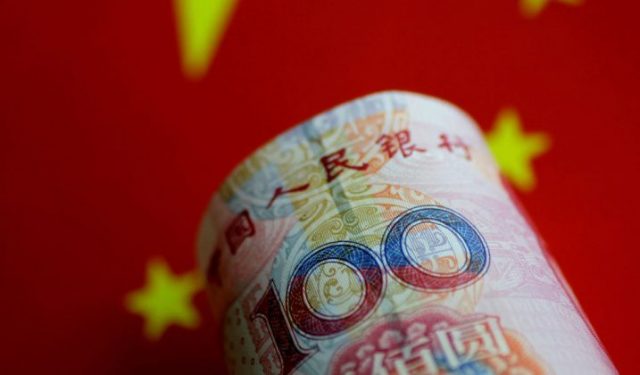
China digital currency trials show threat to Alipay, WeChat duopoly

REUTERS

SHANGHAI — In China’s commercial hub Shanghai, six big state banks are quietly promoting digital yuan ahead of a May 5 shopping festival, carrying out a political mandate to provide consumers with a payment alternative to Alipay and WeChat Pay.

The banks are persuading merchant and retail clients to download digital wallets so that transactions during the pilot program can be made directly in digital yuan, bypassing the ubiquitous payment plumbing laid by tech giants Ant Group, an affiliate of Alibaba, and Tencent.

“People will realize that digital yuan payment is so convenient that I don’t have to rely on Alipay or WeChat Pay anymore,” said a bank official involved in the rollout of e-CNY for the Shanghai trial, under the guidance of China’s central bank. The official is not authorized to speak with media and declined to be identified.

China’s development of a sovereign digital currency, which is far ahead of similar initiatives in other major economies, looks increasingly poised to erode the dominance of Ant Group’s Alipay and Tencent’s WeChat Pay in online payments.

That turf encroachment coincides with Beijing’s expanding effort to clamp down on anticompetitive behavior in the internet sector, part of a wider reining in of the clout of sector heavyweights.

Regulators scuppered Ant’s record $37 billion IPO in November and earlier this month imposed a sweeping restructuring on the fintech conglomerate controlled by Jack Ma. Mr. Ma’s Alibaba Group Holdings was recently hit with a record $2.8 billion antitrust penalty.

In public, the People’s Bank of China (PBoC) says e-CNY won’t compete with AliPay or WeChat Pay, and serves only as a “backup” or “redundancy.”

But in private, state banks marketing the digital fiat currency for the central bank bluntly describe Beijing’s intention to undercut the duo’s dominance.

“Big data is wealth. Whoever owns data thrives,” said another banking official tasked with promoting the e-CNY.

“WeChat Pay and Alipay own an ocean of data,” so the e-CNY rollout facilitates China’s anti-trust campaign and helps the government control big data, he added.

The PBOC and Tencent declined to respond to requests for comment.

Ant declined to comment on the relationship between Alipay and e-CNY. Ant-backed MYbank said it is “one of the parties participating in the research and development” of the e-CNY, and “will steadily advance the trial pursuant to the overall arrangement of the People’s Bank of China.”

DIGITAL CASH
The e-CNY digitalizes a portion of China’s physical notes and coins, or currency in circulation (M0), and was launched last year in small pilot schemes in four cities.

Under a two-tier distribution system, the PBOC issues the digital currency to banks, which pass the money to individuals and companies.

The six banks in the e-CNY pilot schemes include China’s biggest lenders such Industrial and Commercial Bank of China, Agricultural Bank of China, Bank of China, and China Construction Bank.

“The e-CNY’s ease of use will likely be comparable to Alipay and WeChat Pay, while its security function will likely be higher, and as sophisticated as Bitcoin,” HSBC wrote in a recent report, adding that it expects the digital currency to “proliferate” within China.

Among a slew of likely motivations cited by HSBC behind the push is the central bank’s desire to gain control of payment channels and consumption data from Alipay and WeChat Pay.

CONSPICUOUSLY ABSENT
Digital wallets, which are still being beta tested, can be bundled with a dozen popular apps including Meituan, JD.com, Didi and Bilibili, but conspicuously can not be linked to WeChat or Alipay. That means none of the participating banks can transfer e-CNY between their digital wallets and the two established payment platforms.

“PBOC doesn’t want to see the money being routed through third-party payment systems,” a banker said, citing the need for “information segregation.”

The e-CNY will digitize “the last mile” of consumption, enabling banks and merchants to capture data and gain insights into spending patterns, said Wilson Chow, Global TMT Leader, PwC China.

That data is now dominated by Alipay and WeChat Pay, which control a combined 94% of China’s online payment market.

Mass adoption of the e-CNY won’t happen overnight.

Chow predicts that e-CNY will account for roughly 10% of China’s electronic payments market in a few years, co-existing with Alipay and WeChat Pay.

To entice users, bankers said the PBOC will likely give “red envelopes” of free digital cash or discounts to Shanghai citizens around the upcoming shopping festival, an event aimed at promoting spending to fuel economic recovery from COVID-19.

PBOC deputy governor Li Bo told a forum last week that domestic adoption will precede cross-border payments with e-CNY, which many analysts believe will bolster the yuan’s global status as China seeks ultimately to break the dominance of the dollar settlement system.

“The priority of the yuan’s digitalization is currently to promote its domestic use,” Mr. Li said. — Reuters

Moderna applies for emergency COVID-19 vaccine use in the Philippines

MANILA – U.S. drugmaker Moderna Inc on Monday filed an application for emergency use authorization of its COVID-19 vaccine in the Philippines, Food and Drug Administration chief Rolando Enrique Domingo told reporters.

The Philippines expects the delivery of 194,000 doses of Moderna’s vaccine in May, and another one million shots in July.

The Philippines, which is battling one of the worst COVID-19 outbreaks in Asia, has so far approved the emergency use of six vaccines in the country. — Reuters

Globe encourages Pinoys to access its lifelines: Hopeline, HealthNow, Bantay Bata #163

To ensure that Filipinos are able to cope with mental and physical health concerns brought about by the pandemic, Globe encourages the public to access its “lifelines” such as Hopeline to receive free 24/7 mental health support, HealthNow to access health services, and Bantay Bata #163 to report domestic and child abuse.

Hopeline is a round-the-clock suicide prevention and crisis support desk of Natasha Goulbourn Foundation (NGF) created in 2012 with Globe providing the necessary technology for its operations. Since then, the hotline has received over 43,000 calls mostly related to depression, suicidal thoughts, and relationship problems in the last 2 years

Those who are in emotional crisis and in need of immediate assistance, may contact the hotline through 2919 (toll-free for all Globe and TM subscribers), (02) 804-HOPE (4673) or 0917-558-HOPE (4673).

“The uncertainties that surround us are a cause for anxiety and concern for many which could take its toll on our mental well-being. We intend for Hopeline to serve as a lifeline to those in need of support, and eventually help ease their burden,” said Yoly Crisanto, Globe chief sustainability officer and SVP for Corporate Communications.

The Department of Health (DoH) reported almost 600 suicide-related calls during the months of January and February 2021 alone. The National Center For Mental Health (NCMH) hotline also receives an average of 1,002 monthly calls, with suicide calls accounting for 289 each month.

These staggering figures have given rise to the importance of mental health support platforms that people can easily access. Thus, NGF also partnered with telehealth service integrator HealthNow to give the public more ways to reach the hotline. With the partnership, Hopeline can now be accessed in the HealthNow app’s Urgent Help button which can be found on the app’s welcome page.

“Hopeline Philippines is here to help those with depression and those going through emotional crises especially now during these trying times. It just takes one call to save a life to suicide. One line, one call, one life. Be one with us,” said Jean Goulbourn, president and founder of Natasha Goulbourn Foundation.

HealthNow is a joint undertaking of 917Ventures and AC Health. It is a mobile app that helps patients conveniently consult with a doctor, buy medicine for delivery, and schedule clinic appointments without leaving their homes. The app may be downloaded from Play Store for Android and App Store for iOS.

Globe likewise continues to support the ABS-CBN Foundation, Inc.’s Bantay Bata #163 Helpline, which is free for all Globe and TM mobile phone users. It allows anyone to report child abuse especially during this period when children are at home most of the time. To call, simply dial #163.



Globe strongly supports the United Nations Sustainable Development Goals (UN SDG), particularly UN SDG No. 9 which highlights the roles of infrastructure and innovation as crucial drivers of economic growth and development. Globe is committed to upholding the 10 United Nations Global Compact principles and 10 UN SDGs.

To know more about Globe’s sustainability efforts, visit https://www.globe.com.ph/about-us/sustainability.html#gref.

European Union will let vaccinated Americans visit this summer — official

WASHINGTON — A top European Union official said Sunday that Americans who have been vaccinated against coronavirus disease 2019 (COVID-19) should be able to travel to Europe by summer, easing existing travel restrictions.

European Commission President Ursula von der Leyen told The New York Times that the union’s 27 members would accept, unconditionally, all those who are vaccinated with vaccines that are approved” by the European Medicines Agency. The agency has approved the three vaccines used in the United States (Pfizer-BioNTech, Moderna, and Johnson & Johnson).

“The Americans, as far as I can see, use European Medicines Agency-approved vaccines,” Ms. von der Leyen said. “This will enable free movement and travel to the European Union.”

She did not say when travel could resume. The EU largely shut down nonessential travel more than a year ago.

European Union countries agreed this month to launch COVID-19 travel passes that would permit people who have been vaccinated against the disease, recovered from an infection or have tested negative to travel more easily.  — Reuters

UK lawmakers call for PM Johnson to publish big pharma lobbying messages

Image via Freepik.com

LONDON — British lawmakers on Monday called on the government to publish all communications with pharmaceutical companies to understand if private lobbying influenced its opposition to a waiver of intellectual property rules for coronavirus disease 2019 (COVID-19) vaccines.

The United States and a handful of other big countries, including the United Kingdom, have blocked negotiations at the World Trade Organization (WTO) involving a proposal spearheaded by India and South Africa that now has the support of 100 WTO members.

The proposal would temporarily waive the intellectual property (IP) rights of pharmaceutical companies to allow developing countries to produce vaccines.

The waiver is opposed by the US Chamber of Commerce and big pharmaceutical companies such as Pfizer, BioNTech, Moderna, and Johnson & Johnson.

A cross-party group of UK lawmakers has signed a statement calling for Prime Minister Boris Johnson, ministers, and senior civil servants to publish all email, text, and WhatsApp messages exchanged with pharmaceutical companies and their lobbyists.

Patient advocacy and vaccine equity organizations have also signed the statement, including Global Justice Now, Just Treatment, StopAIDS, Frontline AIDS, Universities Allied for Essential Medicines UK, Students for Global Health, and Nurses United UK.

“The UK’s opposition to an intellectual property waiver on COVID-19 vaccines is utterly indefensible,” said Heidi Chow, senior policy and campaigns manager at Global Justice Now, which organized the joint statement.

A spokesperson for the UK government said it prioritized transparency but stakeholders had a right to expect a reasonable degree of confidentiality in their communications.

The UK was one of the biggest donors to Covax to ensure global access to vaccines and continued to encourage manufacturers to provide their vaccines on a not-for-profit, transparent basis.

“We are committed to exploring ways in which we can improve equitable access further and believe this should be done through the existing Intellectual Property framework,” added the spokesperson.

Last week US lawmakers and nonprofit groups heaped pressure on the Biden administration to back the patent waiver ahead of the next formal WTO meeting on the issue on May 5. — Reuters


For China’s property developers, Hong Kong is becoming Shenzhen’s backyard

Charlie Fong / CC BY-SA 4.0 / Wikimedia Commons

HONG KONG — Chinese property developers have turned their sights to Hong Kong’s border districts as mainlanders from neighboring boomtown Shenzhen consider parts of the former British colony as a more affordable long-term housing prospect.

The development plans are seen by some as a turning point, with buyers from what was once considered Hong Kong’s cheaper industrial hinterland increasingly viewing of the global finance hub as Shenzhen’s “backyard.”

While Hong Kong’s property market remains red-hot, the city’s international economic prestige has come under pressure after prolonged pro-democracy protests in 2019 and sweeping new national security laws last year.

Shenzhen’s stature, in contrast, keeps growing. During a visit last October, President Xi Jinping touted it as “a model city,” flagging plans to increase foreign investment.

In just a few decades, the sleepy backwater on China’s southern border has morphed into a tech hub of about 13 million, people towering over the fishponds and farmland in Hong Kong’s less-developed north. Hundreds of thousands move there every year.

In Shenzhen’s prime districts, such as Nanshan where tech giant Tencent is based, some house prices have already surpassed those in northern Hong Kong, which is one hour or more away from the expensive central business district.

“Our long-term view is Shenzhen will be the center and Hong Kong the periphery,” said an executive at a Chinese developer which bought land in the once less-appealing north, asking not to be named because he was not authorized to speak to media.

“People who work in Shenzhen may choose to commute from Hong Kong where home prices will be cheaper.”

Hong Kong Land Department records show that of the six northern residential plots auctioned off since 2019, three were bought by Chinese developers.

In a separate private deal last year, China Evergrande Group bought 250,000 square feet in the border town of Yuen Long, from Hong Kong’s Henderson Land for $600 million.

Property agents told Reuters the major Chinese developer plans around 200 units in the area and expects most buyers to be mainlanders. It bought at HK$10,000 per square foot and is looking to sell at HK$20,000, which it hopes will attract mainlanders from Shenzhen, an agent in contact with Evergrande said.

In the part of Shenzhen immediately across the border, prices are closer to HK$30,000 per square foot.

Evergrande is also selling 2,000 flats in the Tuen Mun neighbourhood — a 15-minute drive from Nanshan and close to a beach — after finishing a project on a plot bought from Henderson Land for $833 million in 2018.

Shenzhen-based Kaisa Group won a parcel there for $451 million last year, while major developer China Vanke has already built over 1,100 units.

Kaisa said the location, close to the Hong Kong-Zhuhai-Macau bridge, could benefit from closer integration between cities in the Greater Bay Area. Vanke’s Hong Kong unit said it was convenient for travel to Shenzhen and Macau, but added northern Hong Kong is not its sole focus.

Evergrande declined to comment.

‘ABNORMAL’ PRICES
According to realtor Midland, mainland Chinese bought 40% more residential properties in Hong Kong in the first two months of 2021 than a year ago, boosted by optimism that the border will reopen as the coronavirus disease 2019 (COVID-19) crisis eases.

The percentage of mainland buyers of new Hong Kong homes bottomed in the second quarter last year at 8.7% of transaction volumes, and rose to 11% in the first quarter this year.

More than 80% of their 2021 purchases were valued above HK$50 million ($6.4 million), Midland said.

“Chinese developers are upbeat about the Hong Kong property market,” said Midland HK residential CEO Sammy Po. “Northern districts are one of the areas Chinese investors are buying in.”

Tuen Mun and Yuen Long saw many anti-government and anti-China demonstrations in 2019. The protests are unlikely to resume, but tensions remain as some long-time residents feel the wealthy newcomers are disrupting their lifestyle.

“Tuen Mun has higher consumer goods prices than the city centre, that’s abnormal,” said 50-year-old Ms. Wong, who only gave her last name due to the sensitivity. — Clare Jim/Reuters