Home Blog Page 7615

WTO vaccine waiver could take months to negotiate, faces opposition — experts

REUTERS

WASHINGTON — World Trade Organization (WTO) negotiations on a waiver of  intellectual property rights for coronavirus disease 2019 (COVID-19) vaccines could take months — provided they can overcome significant opposition from some member countries, trade experts say.

The talks also are likely to focus on a waiver that is significantly narrower in scope and shorter in duration than the one initially proposed by India and South Africa last October.

Prior to US President Joseph R. Biden, Jr.’s decision on Wednesday to back talks for a vaccine waiver, the two countries confirmed their intention to draft a new proposal after seven months of opposition.

WTO Director General Ngozi Okonjo-Iweala welcomed Mr. Biden’s move on Thursday and urged talks on the new plan to start as soon as possible. “The world is watching and people are dying,” she added.

“At a minimum, it’s going to be a month or two,” Clete Willems, a former Trump White House trade official who previously worked at the US trade mission to the WTO in Geneva, said of any possible agreement.

“Right now, there is no proposal on the table that would waive the TRIPS agreement simply for vaccines,” he said, referring to the WTO’s agreement on Trade-Related Aspects of Intellectual Property Rights that governs the transfer of property like movie rights or vaccine-manufacturing specifics.

A more realistic goal may be completion of the agreement in time for the WTO’s next ministerial conference, scheduled for Nov. 30 through Dec. 3, said Mr. Willems, now a trade partner at the Akin Gump law firm in Washington.

That would give vaccine producers more time to boost global supplies which could help contain the virus and ease pressure for the waiver.

The initial IP waiver proposal by India and South Africa last October included vaccines, treatments, diagnostic kits, ventilators, protective gear and other products needed to battle the COVID-19 pandemic.

HAGGLING OVER WORDS

US Trade Representative (USTR) Katherine Tai said on Wednesday that she will pursue “text-based negotiations” on the WTO waiver, the standard but tedious process for trade deal talks. Negotiators trade texts with their preferred wording, then try to find common ground, sometimes leaving blank spaces for thorny differences to be settled by politicians.

All 164 WTO member countries must reach consent on such decisions, with any one member able to block them.

“Those negotiations will take time given the consensus-based nature of the institution and the complexity of the issues involved,” Ms. Tai said in a statement that tamped down expectations for a quick deal.

While Mr. Biden’s backing adds political impetus to get a deal done, Germany, home to Pfizer’s vaccine partner BioNTech SE, on Thursday rejected the waiver proposal.

A German government spokeswoman said that manufacturing capacity was the main constraint on supplies, not intellectual property.

European Commission president Ursula von der Leyen said only that she was willing to discuss Biden’s plans.

US companies, which strive to influence the USTR’s trade negotiations, are already mobilizing to try to ensure the WTO talks lead to a waiver that is as narrowly targeted as possible.

“This is a mitigation effort. We’re aiming to make it less bad than it otherwise would be,” one industry source said.

Some Republican lawmakers are pushing the argument that the decision will hand American technology to China.

“What this decision will do, if it goes forward, is benefit countries like China that are aggressively trying to obtain US technology to bolster their own domestic champions,” Republican Senator Mike Crapo said in a statement.

On the plus side, a successful waiver negotiation would “improve the atmospherics” at the WTO, which has been marked by failure to reach agreement on substantive new trade policy since its inception in 1995, said Harry Broadman, a former Clinton administration trade official who helped negotiate the trade body’s creation.

“It’s good that the WTO hopefully can actually think about a consensus,” Mr. Broadman said, adding that he sees slim prospects that a vaccine deal could revive prospects for broader WTO negotiations. — David Lawder/Reuters
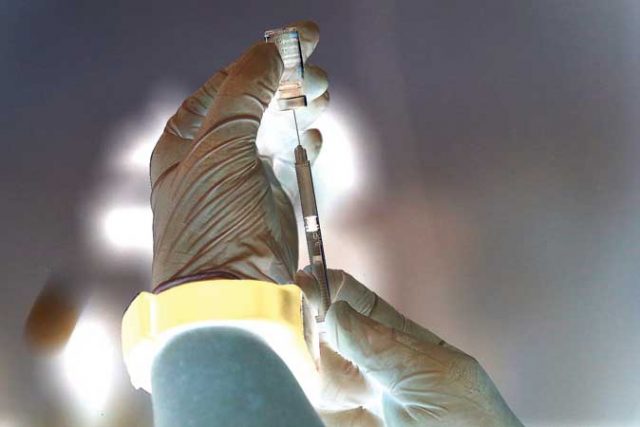

On vaccinating the globe, Blinken warns: ‘We have to speed this up’

PHILIPPINE STAR/ MICHAEL VARCAS

NEW YORK — Vaccinating the globe against coronavirus disease 2019 (COVID-19) needs to be sped up to beat mutations of the virus, and the United States is looking at how it can do more to help, US Secretary of State Antony Blinken said on Thursday.

“If the entire world doesn’t do more, the world won’t be vaccinated until 2024. We can speed this up and get that done, I think, in much shorter time,” Mr. Blinken said in an interview with MSNBC during a visit to Ukraine.

The United States has pledged to start sharing up to 60 million doses of AstraZeneca Plc’s vaccine with other countries, and President Joseph R. Biden, Jr., on Wednesday threw US support behind waiving intellectual property rights for COVID-19 vaccines.

“We’re looking at other things too, but the main thing is we have to speed this up,” Mr. Blinken said. “None of us are going to be fully safe until … we get as many people vaccinated as possible.”

Mr. Blinken described a patent waiver as “one possible means of increasing manufacture, and access to vaccines.” The US decision paved the way for what could be months of negotiations at the World Trade Organization (WTO) to hammer out a specific plan.

UN spokesman Stephane Dujarric said on Thursday that, if agreed by the WTO, the patent waiver would be an important move, “but we also need to work simultaneously on the scaling up of manufacturing … ensuring that everyone has access to all the basic elements that are needed to manufacture the vaccine.”

Mr. Dujarric said financial support was also needed to ensure that vaccines are produced “in as many places as possible and as close as possible to those who will be consuming them.”

The US waiver support comes amid a devastating outbreak in India, which accounted for 46% of the new COVID-19 cases recorded worldwide last week, and signs that the outbreak is spreading to Nepal, Sri Lanka and other neighbors.

“If it’s mutating with a new variant, it could come back here and bite us even after people have been vaccinated, so we have to get ahead of that and we have to get ahead of it around the world,” Mr. Blinken said. — Reuters

Australia says international borders might not fully reopen until mid-to-late 2022

SYDNEY — Australia’s international borders might not fully reopen until the middle or second half of 2022, Trade Minister Dan Tehan said on Friday, in a blow to airlines and the tourism sector.

Asked in a Sky News interview when borders might open, Tehan said “the best guess would be in the middle to the second half of next year, but as we’ve seen throughout this pandemic things can change.”

Mr. Tehan said he hoped more travel bubbles could be opened similar to the one between Australia and New Zealand. — Reuters

March export growth fastest in more than 10 years

THE COUNTRY’S trade-in-goods deficit narrowed in March as exports grew at its fastest pace in a decade, the Philippine Statistics Authority reported this morning.

Merchandise exports grew 31.6% to $6.68 billion following an annual decline of 1.5% in February, preliminary data by the PSA showed.

The export tally for March was bigger than $5.35 billion and $5.08 billion in February 2021 and March 2020, respectively.

Meanwhile, merchandise imports expanded by 16.6% to $9.10 billion in March, higher than the 8.9% growth in the previous month.

For exports, the March result was the fastest in more than 10 years, or since the 46.8% growth in September 2010. Meanwhile, import growth was fastest in 29 months or since the 26.2% print in October 2018.

This brought trade deficit to $2.41 billion in March, smaller than the $2.71-billion gap in February, as well as the $2.73-billion shortfall posted in March 2020.

Year to date, exports increased by 7.6% to $17.56 billion compared with the Development Budget Coordination Committee’s (DBCC) projection of a 5% growth for the year.

Likewise, imports were up 3.2% to $25.56 billion on a cumulative basis compared with $24.76 billion the previous year. This was still below DBCC’s 8% target this year.

That brought the year-to-date trade balance to an $8-billion deficit, narrower than last year’s deficit of $8.45 billion. — L.O. Pilar

TikTok launches media solutions in the Philippines to help local companies grow their business

TikTok For Business levels the playing field and empowers businesses of all sizes to reach their ideal customers

TikTok, the leading short-form video platform for creating, sharing, and discovering short-form video content, is now open to advertisers of all sizes in the Philippines. To complement TikTok’s rapid user adoption in the country, local SME advertisers will now be able to join their enterprise counterparts in reaching their audience on the app through TikTok’s authorized agencies and partners in the market.

TikTok has been the #1 downloaded app in Southeast Asia since February 2020 (Source: App Annie, February 2021), creating a large user base, highly engaged community, and diverse content and audiences. The app has experienced tremendous growth in users in SEA, with 2 out of every 5 users in the Philippines being parents, and 1 out of every 2 users being purchase decision-makers (Source: Global Web Index). Users have also driven rapid growth across a variety of content topics, the fastest-growing being finance and money, and education.

Through TikTok For Business, advertisers in the Philippines can now reach and engage with these diverse audiences to drive their business success. Advertisers will now have access to all of TikTok’s present and future marketing solutions designed for brands. TikTok aims to give marketers the tools they need to tap into unique opportunities that can only be found on the app.

Through TikTok Ads Manager, TikTok For Business empowers small and mid-size enterprises (SMEs) to be discovered and connect with the community of users on the app, build their brands, and achieve their business goals. These tools are designed to support advertisers through each step of the campaign creation process. Marketers can now make the most out of the creativity of the TikTok community, reach new audiences, and optimize their marketing campaigns, all within an easy-to-use platform.

While the launch of TikTok Ads Manager is designed to empower small and medium enterprises, TikTok will continue to strengthen existing relationships with enterprise customers across CPG, Food & Beverage, BFSI, Telco, eCommerce, Pharma, and Healthcare in the Philippines. Now, SMEs will also be able to enhance their advertising campaigns on the app through TikTok Ads Manager.

Grow business with TikTok Ads Manager

With TikTok Ads Manager, small and mid-size businesses will get to reach potential customers, and share their online journey in a fun and creative way. A business can advertise by creating and posting video ads with a flexible budget, including repurposing their existing creative assets to easily run ad campaigns on TikTok. Advertisers can also track the progress and success of every campaign using TikTok’s vast array of measurement and analytics tools, including third-party mobile measurement partners for app developers, and TikTok’s own pixel for website tracking. This helps businesses make sure that they are running effective and efficient campaigns on the platform.

A variety of creative tools are also available for advertisers to use on TikTok Ads Manager. These are:

  • Quick Optimisation – Adds TikTok style visual effects or opening frames to your video with a single click.
  • Smart Video – Leverages innovative technology to analyze uploaded videos and images, automatically selecting clips and music to create beautifully edited videos.
  • Smart Video Soundtrack – Incorporates music, which is a vital part of every TikTok video ad. Select from up to 4,000+ copyright free sounds
  • Video Templates – Turns image assets into TikTok ready videos with over 60 customizable video templates for various aspect ratios
  • TikTok Video Editor – Edits video creatives down to individual frames, add transitions, and precisely place elements within a video with TikTok’s free web-based video editor

TikTok’s Lead Generation, the first-party solution that helps businesses reach prospects in order to convert them into potential customers with ease, is also available to businesses in the Philippines. With Lead Generation, businesses can share details of their products and services that are related, appealing, and interesting to their customers with a few simple taps.

Digital solutions for boosting business growth

2​020 was a challenging year for businesses all over the Philippines, with a crippling months-long lockdown as one of its greatest hurdles. According to the 2020 Asia Pacific Small and Medium Business Digital Maturity study conducted by International Data Corp. (IDC), 70.6% of micro, small, and medium enterprises in the country were forced to temporarily cease operations due to the COVID-19 outbreak. The same survey also shows that 58.8% of businesses reported zero income, while 28% had revenues drop by over 30%.

As they recuperate over the coming months, investing in digital transformation could actually help companies, particularly SMEs, to meet their business goals. It has been found that digitally mature SMEs are generally more productive, and are able to report higher revenues, versus those that are slow to adapt to digitalization. In the present scenario, digital tools have also become necessary and effective means for businesses to reach consumers. These are some of the primary reasons for the development of TikTok Ads Manager, at a time when consumers are found to opt for online transactions and interactions in light of the ongoing pandemic.

The global agency, We Are Social, reports in its Digital 2021 study that Filipinos spend an average of 4 hours and 15 minutes each day on social media, a 22-minute increase from the country’s Digital 2020 average. The Philippines also led the world in social media use in 2019 and 2020. Now, through TikTok Ads Manager, SMEs gain access to this large, highly engaged local community that exists online.

“We want to give brands and businesses the ability to reach millions of potential customers online in a unique way, with every single short-form video they share on TikTok. Through the platform’s easy to use advertising solutions, we hope to help businesses find their authentic voice, and enable them to maximize their creative potential in order to grow and thrive, while also being able to save on advertising expenses,” said Esme Lean, Head of Small and Medium Businesses, Southeast Asia – TikTok.

Start advertising in 3 easy steps

Businesses that are interested to start advertising on TikTok may do so by following 3 simple steps:

1. To sign up for a TikTok Ads Manager account, please visit https://ads.tiktok.com/i18n/signup/

2. You can start advertising by creating a campaign together with your video assets or design an eye-catching ad or videos using TikTok Ads Manager’s creative tools.

3. Once you set your targeting, budget, and creative, submit your ad for review and go live.

To learn more about TikTok Ads Manager, please visit our Help Center: https://ads.tiktok.com/help/?refer=from_advertising_platform.

Download TikTok on your iOS and Android devices today.


Timeless investments with M Lhuillier Jewellers

With the economic effects caused by the pandemic, it’s more important than ever to make smarter decisions about finances and be prepared for what comes next. As investments, fine jewelry continues to stand the test of time. While currencies often fluctuate, the value of precious metals and gems are stable and even increase over time, making jewelry a less risky investment than money.

M Lhuillier Financial Services, Inc. understands the worth of jewelry and has since made them more accessible and attainable through M Lhuillier Jewellers. A trusted name in the industry, M Lhuillier Jewellers offers a wide range of exquisitely handcrafted jewelry from necklaces to bracelets, and earrings. They have also been a preferred option for wedding rings for many Filipino couples. All these come in a variety of styles from simple to bold, so there is something for everyone.

The jewelry from M Lhuillier Jewellers are made of authentic precious metals, gemstones, and pearls coming from the best sources all over the world. Gold is obtained locally and from Italy, Spain, and Japan; diamonds are mined from India, Israel, Belgium, and Hong Kong; gems are acquired from Thailand and South America; and freshwater and saltwater pearls are harvested from Tahiti, Australia, China, Japan, and the Philippines. The jewelry is produced in-house with the exception of those made with Italian gold.

M Lhuillier Jewellers has outlets in key cities all over Luzon, Visayas, and Mindanao. They accept trade-ins and PRENDA-PALIT anytime, which ensure they are easily obtainable by Filipinos so they can start investing in fine jewelry.

M Lhuillier, the Philippines’ largest and most respected non-bank financial institution, continues to uphold its promise of being the Bridge and Tulay ng PaMLyang Pilipino with more than 3,000 serviceable locations nationwide. It continuously seeks better and innovative ways to serve its community by providing fast, easy, and reliable financial services such as Kwarta Padala, Quick Cash Loan, Bills Payment, Insurance Plan, Money Exchange, Jewelry, ML Wallet, ML Express, ML Logistics, and Telco and online TV Loading.

Follow M Lhuillier Financial Services, Inc. on Facebook, or visit mlhuillier.com for more information. For inquiries, contact Customer Care through its toll-free number 1-800-1-0572-3252 or email customercare@mlhuillier.com.


Unemployment rate eases in March

PHILIPPINE STAR/ MICHAEL VARCAS
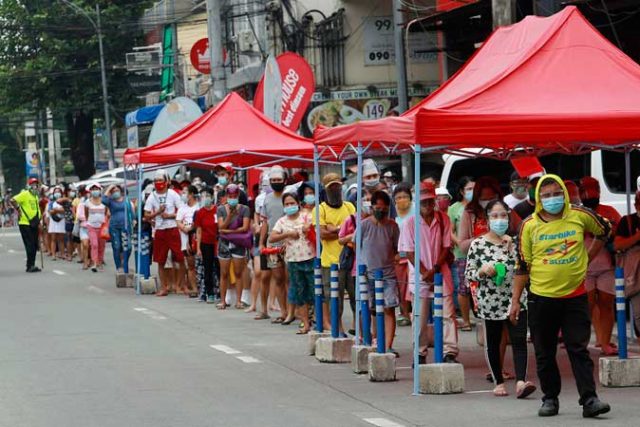
PEOPLE line up to get free food supplies from a community pantry in Quezon City, April 26. — PHILIPPINE STAR/ MICHAEL VARCAS

THE COUNTRY’S jobless rate in March fell to its lowest level since the start of the coronavirus pandemic, the Philippine Statistics Authority (PSA) reported on Thursday.

Preliminary results of the PSA’s March 2021 round of the Labor Force Survey (LFS) showed around 3.441 million unemployed Filipinos, down from 4.187 million and 3.953 million in the February and January LFS rounds, respectively.

This puts the March unemployment rate at 7.1%, the lowest since the 5.3% in January 2020, as well as the record-high 17.6% posted in April 2020.

Philippine Labor Force Situation (March 2021)

The underemployment rate — the proportion of those already working but still looking for more work or longer working hours — improved to 16.2% in March from 18.2% in February.

This translates to 7.355 million underemployed Filipinos, less than the 7.850 million in February. However, this was higher than the 6.589 million recorded in the January LFS round.

The size of the labor force was approximately 48.772 million in March, up from 47.341 million in February and 45.201 million in January. This brought the labor force participation rate (LFPR) to 65% in March, the highest since the 65.2% posted in April 2014.

The employment rate — the proportion of the employed to the total labor force — was recorded at 92.9% in March. This was higher than the 91.2% rate in February. In absolute terms, this was equivalent to 45.332 million in March versus 43.153 million in February — or a net job creation of 2.178 million during the period.

The employment rate in the service sector declined to 56% in March from 58.4% in February. On the other hand, those in agriculture and industry, increased to 24.6% (from 23.9%) and 19.4% (from 17.7%), respectively.

Among subsectors, construction posted the largest increase in employment on a month-on-month basis with 845,543, followed by wholesale and retail trade with 672,144 and agriculture and forestry with 623,481.

Meanwhile, education saw the largest drop (247,879), followed by transportation and storage (194,321) and “other service activities” (149,241).

Comparing March performance with February, there were 1.155 million jobs restored in the industry sector during that period, followed by 826,698 jobs in agriculture, and 196,740 in services. 

Working hours averaged 39.7 a week, higher the average of 38.9 in February.

Full-time workers, or those who worked for at least 40 hours a week, made up 62.2% of the total employed in March. This was higher than 59.9% in the previous month.

Meanwhile, part-time workers made up 36.7% of the employed, down from 38.5% previously.

LOCKDOWN EFFECT
“With the recovery of the economy after the ECQ was relaxed in mid-2020, 11.5 million jobs have been generated as of March 2021, more than offsetting the 8.7 million jobs that were lost in the period March to May 2020. This translates to a net job creation of 2.8 million jobs,” Socioeconomic Planning Secretary Karl Kendrick T. Chua, Finance Secretary Carlos G. Dominguez III, and Budget and Management Secretary Wendel E. Avisado said in a joint statement.

The PSA noted the LFS was conducted between March 8 to 27, days before the government put Metro Manila, Bulacan, Rizal, Laguna, and Cavite on the enhanced community quarantine (ECQ) — the strictest form of lockdown — in reaction to a renewed surge in coronavirus cases.

The government has imposed lockdown restrictions since March last year to curb the spread of COVID-19 (coronavirus disease 2019). From March 29 to April 11 this year, Metro Manila and the provinces of Bulacan, Cavite, Laguna, and Rizal were placed under ECQ. The areas are currently under a less restrictive modified enhanced community quarantine (MECQ) until May 14.

The economic managers expect to see a “temporary reversal” of employment gains in the LFS round for April given the imposition of ECQ and MECQ in Metro Manila and nearby provinces. They, however, said the impact is expected to be “less severe” compared with that of April 2020 given the government’s “more risk-managed approach to present quarantines.”

“Unlike last year’s ECQ and MECQ where around three-fourths of the economy was shut down, most sectors of the economy, including public transport, this time around are allowed to operate subject to guidelines from the Inter-Agency Task Force on the Management of Emerging Infectious Diseases,” they said.

In a separate statement, Labor Secretary Silvestre H. Bello III said the results are “encouraging.”

“Our economy is gradually getting back on track as more people are actively participating in the labor force and are becoming employed,” he said.

In a Viber message, Security Bank Corp. Chief Economist Robert Dan J. Roces said the gradual reopening of the economy played “some part” in the March LFS results. However, he noted the results show an “uneven recovery and deep scarring effects” with other sectors continuing to decline despite the reopening.

In an e-mail, University of the Philippines Professor Emeritus Rene E. Ofreneo said while more Filipinos are entering the labor force, the jobless rate of 7% is still “relatively high.”

“Job creation is not reducible to a question of ‘opening up the market,’ or going back to the ‘old normal.’ The world has changed and we have to adjust to it,” he said.

Asked for his outlook on the jobs situation, Mr. Ofreneo said “only a miracle” can ease unemployment further in April given the implementation of stricter lockdowns. He also cited April as the month where most senior high students and college graduates join the labor force, thus increasing the demand to find jobs. — Ana Olivia A. Tirona with inputs from Gillian M. Cortez and Beatrice M. Laforga

IIF slashes 2021 growth forecast for Philippines

PHILIPPINE STAR/ MICHAEL VARCAS

By Beatrice M. Laforga, Reporter

THE INSTITUTE of International Finance (IIF) slashed its growth forecast for the Philippines this year to 6.5% due to renewed lockdown measures imposed to curb a fresh wave of coronavirus cases and a slow mass vaccination program.

In its latest Macro Notes report, the IIF, a trade group representing financial institutions, cut its gross domestic product (GDP) projection for 2021 to 6.5% from 7.2% previously. If realized, this will hit the low-end of the Philippine government’s 6.5-7.5% target this year.

“I downgraded the Philippines for several reasons, as pandemic control is still a problem and lacking of vaccine supply sources,” Yuanliu Hu, associate economist at the IIF, said in an e-mail on Thursday.

“A new round of 1.5-month-long lockdowns in Q2 will (put a) damper (on) recovery hard,” he added.

The government reimposed strict lockdowns in Metro Manila and its nearby provinces from late-March until mid-May as a sudden spike in coronavirus disease 2019 (COVID-19) cases pushed the healthcare system to its limits.

On Thursday, the Health department reported 6,637 new COVID-19 cases in the country, bringing the number of active cases to 63,170.

Across ASEAN-5, the Philippines’ gross domestic product (GDP) growth is expected to be the second-fastest rate, along with Malaysia, and just behind Vietnam’s 6.7% projected growth. Indonesia’s GDP is estimated to grow by 4.7% while Thailand is expected to expand by 3%.

Despite the relatively high growth forecast, the IIF said the Philippines and Thailand will see slower recovery compared with the rest of the region, as both countries are likely to reach their pre-pandemic output levels by next year.

IIF said Indonesia, Malaysia, and Vietnam will see a return to their pre-crisis levels this year.

“The pandemic is still not under control in parts of the region, in particular Indonesia and the Philippines where infection levels remain elevated,” it said.

High infection rates meant lockdowns will likely be extended, economic activities will remain sluggish, and the tourism sector will not be able to bounce back, the IIF said.

The expected rebound in exports as the global economy recovers may not give the much-needed boost to the Philippine economy, since it is “relatively less integrated into the region’s supply chains compared to its peers,” according to the IIF.

The high inflation environment in the country also poses a risk to the recovery, as it limits the options of the central bank to bring down policy rates. The high prices of goods and services could continue to dampen household spending — a major growth driver.

“Finally, the elevated inflation will give no policy room for support and the central bank will have to think about normalizing or even tightening in the near future. The high inflation will also hurt the domestic consumption, which contributes to a large part of growth,” Mr. Hu said.

The IIF said inflation will likely start easing by the second half but the Bangko Sentral ng Pilipinas may no longer bring down benchmark interest rates further this year.

For next year, the IIF projected the Philippine economy will expand slower by 6%, which is far from the government’s 8-10% growth target.

Philippines likely remained in recession in Q1

PHILIPPINE STAR/ MICHAEL VARCAS

THE PHILIPPINE economy likely remained in a recession in the first quarter, as domestic consumption continued to be sluggish amid the prolonged health crisis.

ING Bank N.V. Manila Senior Economist Nicholas Antonio T. Mapa said in a note on Thursday that first-quarter gross domestic product (GDP) may have contracted by 3.5%, much faster than the 0.7% slump recorded in the same period last year.

“Domestic consumption remains one of the key sectors of the economy (roughly 70% of total GDP) and we expect this sector to have been challenged at the start of the year. High levels of both unemployment and underemployment translate to depressed consumption all the more compounded as inflation rose to 4.5% in the period,” Mr. Mapa said.

For the second quarter, Mr. Mapa said a year-on-year growth is highly likely because of low base effect, when the economy shrank by 16.9% in the same period last year when the capital region was placed under the strictest form of lockdown.

In a report, ANZ Research said the Philippines’ GDP likely shrank by 3.7% in the January to March period.

“With exports not recovering sufficiently and fiscal support volatile, overall GDP growth in the first quarter is likely to have disappointed yet again at -3.7% — this will mark a fifth consecutive quarter of contraction,” ANZ Research Chief Economist for Southeast Asia and India Sanjay Mathur and economist Rini Sen said.

Latest data from the Philippine Statistics Authority showed exports slid 3.6% to $10.83 billion in the January to February period.

ANZ Research said consumer and business sentiment were expectedly weighed down by rising coronavirus infections and the strict lockdown measures in Metro Manila and adjacent provinces.

On Thursday, the Health department reported 6,637 new COVID-19 cases in the country, bringing the number of active cases to 63,170. The numbers have fallen compared with previous weeks when new infections exceeded 10,000 a day, and  active cases reached a peak of 203,710 on April 17.

“While cases have decreased and restrictions lifted, the fundamentals point to a fragile recovery at best, in 2021. Together with the fact that policy support will primarily come from the fiscal side for now, we are downgrading our full-year GDP growth forecast to 4.8% in 2021,” ANZ said.

ANZ’s latest outlook is significantly lower than the 7.1% forecast it previously gave. It is also below the government’s 6.5% to 7.5% target for 2021 following the record 9.6% contraction last year.

Mr. Mathur and Ms. Sen warned that the Philippines may be a laggard in terms of recovery in the region, as consumption remains lackluster.

“Elevated ‘unemployment’ and ‘underemployment,’ combined with tight credit standards of banks, are having a detrimental impact on consumption,” ANZ Research said.

First-quarter GDP data will be released on May 11. — Luz Wendy T. Noble and Beatrice M. Laforga

BSP flags systemic implications of major cyberattacks

RAWPIXEL.COM-FREEPIK
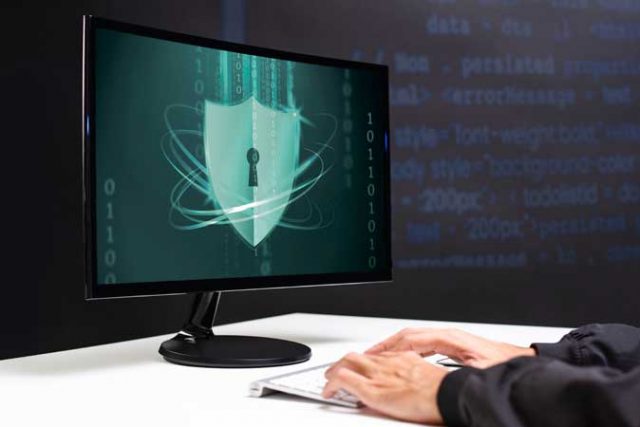
THE CENTRAL BANK received about 20,000 complaints, mostly related to fraud and unauthorized transactions, from financial consumers in 2020. — RAWPIXEL.COM-FREEPIK

THE central bank warned that a major cyberattack could affect the stability of the financial system, but vowed to remain vigilant against new cyberthreats.

“The possibility of a major cyberattack may have possible contagion effects or systemic implications in the Philippine financial system,” Bangko Sentral ng Pilipinas (BSP) Governor Benjamin E. Diokno said at an online briefing.

“At this moment, a BSP-supervised financial institution may assess its cybersecurity defense as robust, but they may instantly change due to the highly evolving cyberthreat landscape,” he added, noting cybersecurity is a continuing battle.

The central governor said financial institutions should reassess their spending on cybersecurity as more users shift to digital transactions.

“We continue to keep up with the digitalization move all over so naturally we have to allocate enough money to do that, to be up-to-date,” Mr. Diokno said.

Mr. Diokno earlier said the BSP received about 20,000 complaints from financial consumers in 2020, with the majority of the complaints related to fraud and unauthorized transactions.

A study by the Anti-Money Laundering Council on financial crime trend from March 16 to Aug. 31, 2020 showed cases such as skimming, phishing, and unauthorized transactions made up 49% of suspicious transaction reports in the first few months of the pandemic.

“The BSP and its supervised financial institutions will remain vigilant in ensuring the cyber resilience of our payment and financial system,” Mr. Diokno said.

The BSP has been working with both local and international regulators and agencies to monitor the emergence of systemic risks during the crisis. These risks refer to the possibility of company-level events that could cause instability or collapse to the industry or the economy as a whole. — Luz Wendy T. Noble

ARTA calls for review of WB’s Doing Business report

PHILIPPINE STAR/ MICHAEL VARCAS

THE Philippines’ red tape watchdog is urging the World Bank (WB) to review the methodology of its flagship Doing Business report, raising concerns about the data collection method.

The World Bank’s annual Doing Business report assesses countries’ competitiveness by measuring regulations that enhance and constrain business activity. This means, countries with fewer regulations will have a higher ranking on the Doing Business index, and boost their attractiveness to foreign investors.

Last year, the World Bank paused the release of the latest edition after reported irregularities regarding data changes in the 2018 and 2020 versions. It noted corrections would be incorporated in the 2021 report.

Anti-Red Tape Authority (ARTA) Director-General Jeremiah B. Belgica on Thursday expressed concern over parts of the methodology used in conducting the Doing Business survey in the country.

At a forum, he said survey respondents in the Philippines are not necessarily familiar with some government transactions assessed in the report.

“It may be that the respondents to the survey of WB are officials of the law or accounting firms while persons transacting with the agencies or LGUs (local government units) could be the liaison officers or processors or clerks or sometimes messengers of the law or accounting firms,” Mr. Belgica said.

The Doing Business survey team, he said, should select respondents that are familiar with the processes or regulations being assessed.

The ARTA chief also said that the World Bank should clarify to respondents that in counting processing timelines, respondents should make a distinction between the independent preparation time done by applicants and the processing time of the government agencies.

“There is also a need to brief the respondents very well to ensure that they have the right appreciation of the survey,” Mr. Belgica said. “Some respondents found it very tedious, detailed, and for some, very technical.”

Assessments on trade regulations should be done in Manila because not many exporters and importers are based in Quezon City, the city the report used as a benchmark, he said.

In the Doing Business 2020 index, the Philippines rose to 95th place from 124th place among 190 economies after improving its overall score to 62.8 points from 60.9 points, although it was seventh among 10 Southeast Asian Nations.

Starting a business became easier after the country abolished the minimum capital requirement for domestic companies and made dealing with construction permits easier, according to the report. But the country still needed to improve enforcing contracts, trading across borders, and registering property.

Mr. Belgica in a press briefing said that the government has been automating international trade processes and expects to add 500 local government units to an online central business portal. — Jenina P. Ibañez

Higher expenses drag PLDT’s first-quarter income

President-CEO Pangilinan passing baton to Panlilio

By Arjay L. Balinbin, Senior Reporter

PLDT, Inc. reported on Thursday an attributable net income of P5.80 billion for the first three months of 2021, down 1.84% from  P5.91 billion in the same period a year ago, mainly due to higher expenses.

“The first-quarter results look pretty good. We are on target in terms of our telco core income for the year of P29 billion to P30 billion,” PLDT Chairman, President and Chief Executive Officer Manuel V. Pangilinan said at an online press briefing.

In a statement to the stock exchange, PLDT said its first-quarter telco core income, which excludes the impact of asset sales and Voyager Innovations, Inc., increased 9.02% to P7.50 billion from P6.89 billion in the same period in 2020.

The company saw its total revenues climb 9.80% to P47.92 billion from the P43.65 billion reported in the same period a year earlier. Service revenues rose 9.28% to P45.68 billion from P41.80 billion previously, with data/broadband services accounting for around 76% of the total.

PLDT’s expenses increased 16.05% in the first quarter to P37.75 billion from P32.53 billion in the same period last year. Expenses cover selling, general and administrative expenses; depreciation and amortization; cost of sales and services; asset impairment; and interconnection costs.

PLDT Chief Finance Officer Anabelle L. Chua said the recently signed Republic Act No. 11534 or the Corporate Recovery and Tax Incentives (CREATE) law that lowered the income tax rates from 30% to 25% also aided the company’s performance.

“With respect to the current year, the impact of the 25% versus 30% tax rate was close to P400 million for the quarter,” she noted.

The company’s consolidated EBITDA  (earnings before interest, taxes, depreciation and amortization) increased 7% year on year to P23.3 billion, excluding MRP (manpower reduction program) expenses, “driven by higher service revenues.”

“EBITDA margin was at 51% in the first quarter of 2021,” the company noted.

Out of the capital expenditure (capex) commitment of up to P92 billion for 2021, PLDT spent over P20 billion in the first quarter, Mr. Pangilinan said.

Network upgrades, the company said, made up bulk of the capex spend. “The unrelenting rollout of fiber, 5G and 4G/LTE networks to support business demand underpin the 2021 capex commitment.”

As for the second quarter, Mr. Pangilinan said: “Revenues for April and the first week of May are looking good, so revenues for the second quarter are likely to be similar to, if not higher than, the first quarter growth.”

Mr. Pangilinan still expects Voyager Innovations to turn a profit by 2024.

“The strategy is concentrated on the local markets. Profitability is possible by 2024,” he said.

“If they accomplish P1 trillion or more than a trillion of gross transaction value [this year] on both sides, merchants and consumers, then they are closer to positive EBITDA by 2023 or even earlier. It depends on the volume,” Mr. Pangilinan explained.

Voyager’s portfolio includes digital payments firm PayMaya Philippines, Inc.

PANGILINAN’S SUCCESSOR
Also on Thursday, Mr. Pangilinan said he will soon retire as president and chief executive officer of PLDT.

He said the matter will be discussed at PLDT’s annual shareholders’ meeting “scheduled next month.”

“I will retire as president and CEO of PLDT and pass the baton over to Al so I will stay as chairman,” Mr. Pangilinan said, referring to Smart President and Chief Executive Officer and PLDT Chief Revenue Officer Alfredo S. Panlilio.

“Of course, that’s subject to shareholders’ consent,” he noted.

PLDT shares closed 1.12% higher at P1,264 apiece on Thursday.

Hastings Holdings, Inc., a unit of PLDT Beneficial Trust Fund subsidiary MediaQuest Holdings, Inc., has a stake in BusinessWorld through the Philippine Star Group, which it controls.