VIENNA— The coronavirus pandemic has shaken up the Economist Intelligence Unit’s (EIU) annual ranking of most livable cities, propelling Auckland to first place, replacing Vienna, which crashed out of the top 10 as the island nations of New Zealand, Australia, and Japan fared best.
The Austrian capital had led the list since 2018 and for years ran neck and neck with Melbourne at the top of the survey of 140 urban centers. New Zealand’s elimination of coronavirus disease 2019 (COVID-19)within its borders through lockdown measures helped by its geographic isolation, however, gave its cities a big boost.
“New Zealand’s tough lockdown allowed their society to reopen and enabled citizens of cities like Auckland and Wellington to enjoy a lifestyle that looked similar to pre-pandemic life,” the EIU said in a statement.
The EIU generally does not make the full ranking public. The last time Auckland was in the top 10 was in 2017, when it came eighth, a position Melbourne shared with Geneva this year. Vienna fell to 12th.
Illustrating New Zealand’s advantage this year, Wellington also entered the top 10. It came fourth behind Osaka, which rose two spots to second place, and Adelaide, which leapfrogged its compatriots Sydney and Melbourne to third place from 10th.
The latest ranking is from 2019 as last year’s was canceled.
“The COVID-19 pandemic has taken a heavy toll on global livability,” the EIU said.
“Cities across the world are now much less livable than they were before the pandemic began, and we’ve seen that regions such as Europe have been hit particularly hard.”
The European Union struggled to get its vaccination campaign off the ground and many member states including Austria imposed more lockdowns than they had hoped to, hurting their cities’ scores in the measure of “culture and environment.” The four other categories assessed are stability, healthcare, education and infrastructure. — Reuters
WASHINGTON — President Joseph R. Biden, Jr.’s Indo-Pacific policy chief said on Tuesday he was “relatively confident” a target for the production of a billion vaccine doses for the region by the end of 2022 would be met, despite the coronavirus disease 2019 (COVID-19) crisis in India, where they are due to be made.
Asked at an event hosted by the Center for a New American Security think tank if he expected a delay in the four-nation plan, which was announced at the White House in March with great fanfare, Kurt Campbell said Washington had been in close consultation with India and others involved in the project.
“Obviously, this is an extremely difficult period for Indian friends. The United States has tried to stand with Delhi and to bring others, both in the private and public sector, to support them,” he said.
“Our discussions with both our partners in the private sector, and also in government, suggest that we are — knock on wood — still on track for 2022.”
“I think we’re feeling relatively confident as we head in to 2022,” he added, while stressing that across Asia and the world even countries that did well in handling the virus were facing outbreaks due to new strains.
“I think we understand, the only way to be effective, to counter this, is through vaccine diplomacy. We’re trying to step that up more generally,” he said.
The so-called Quad grouping of the United States, India, Japan, and Australia agreed at a March summit that Indian drugmaker Biological E. Ltd would produce at least a billion vaccine doses by the end of 2022 that would go to Southeast Asian countries, elsewhere in the Indo-Pacific, and beyond.
US officials said that under the plan the United States and Japan would help Indian manufacturing of vaccines for US drugmakers Novavax Inc and Johnson & Johnson.
India, the world’s largest vaccine producer, was subsequently hit by a catastrophic wave of infections and halted vaccine exports amid intense criticism of Prime Minister Narendra Modi for a domestic vaccine rollout that covered less than 5% of an estimated adult population of 950 million.
Indian government sources told Reuters in May India was unlikely to resume major exports of vaccines until at least October. On Tuesday, Indian officials and health experts welcomed a government plan to give free shots to all adults, but cautioned that vaccinations must be accelerated to prevent new surges in infections. — Reuters
Image via US Secretary of Defense/CC BY 2.0/Wikimedia Commons
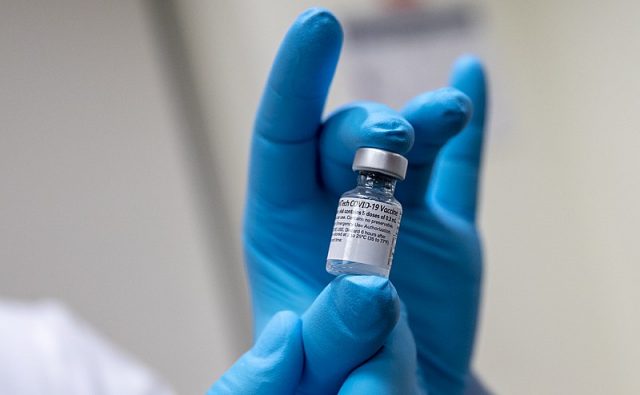
Pfizer Inc. said on Tuesday it will begin testing its coronavirus disease 2019 (COVID-19)vaccine in a larger group of children under age 12 after selecting a lower dose of the shot in an earlier stage of the trial.
The study will enroll up to 4,500 children at more than 90 clinical sites in the United States, Finland, Poland and Spain, the company said.
Based on safety, tolerability and the immune response generated by 144 children in a phase I study of the two-dose shot, Pfizer said it will test a dose of 10 micrograms in children between 5 and 11 years of age, and 3 micrograms for the age group of 6 months to 5.
A Pfizer spokesperson said the company expects data from 5- to 11-year-olds in September and would likely ask regulators for emergency use authorization later that month. Data for children 2 to 5 years old could arrive soon after that, he said.
Pfizer expects to have data from the 6-month to 2-year-old age group sometime in October or November.
The vaccine — made by Pfizer and German partner BioNTech SA — has been authorized for use in children as young as 12 in Europe, the United States and Canada. They receive the same dose as adults: 30 micrograms.
Nearly 7 million teens have received at least one dose of the vaccine in the United States, according to the US Centers for Disease Control and Prevention.
Inoculating children and young people is considered a critical step toward reaching “herd immunity” and taming the COVID-19 pandemic.
Still, scientists in the United States and elsewhere are studying the possibility of a link between heart inflammation and mRNA vaccines, particularly in young men. Both Pfizer and Moderna Inc.’s vaccines are mRNA shots.
Israel’s Health Ministry said last week it had found the small number of myocarditis cases observed mainly in young men who received the Pfizer vaccine there were probably linked to their vaccination. The cases were generally mild and did not last long.
Pfizer has said it is aware of the Israeli observations of myocarditis and that no causal link to its vaccine has been established. — Michael Erman and Ankur Banerjee/Reuters
WASHINGTON — The US Centers for Disease Control and Prevention (CDC) has eased travel recommendations for more than 110 countries and territories, including Japan just ahead of the Olympics.
The CDC’s new ratings, first reported by Reuters and posted on a CDC website on Monday, include 61 nations that were lowered from its highest “Level 4” rating that discouraged all travel to recommending travel for fully vaccinated individuals, the agency confirmed on Tuesday.
An additional 50 countries and territories have been lowered to “Level 2” or “Level 1,” a CDC spokeswoman said. Countries ranked lowest for coronavirus disease 2019 (COVID-19) risks now include Singapore, Israel, South Korea, Iceland, Belize and Albania.
Among those now listed at “Level 3,” are France, Ecuador, the Philippines, South Africa, Canada, Mexico, Russia, Spain, Switzerland, Turkey, Ukraine, Honduras, Hungary, and Italy.
The US State Department said it had updated its recommendations to reflect the recent methodology update, but noted not all ratings were revised because of other factors including “commercial flight availability, restrictions on US citizen entry, and impediments to obtaining COVID test results within three calendar days.”
The State Department eased its ratings on 85 countries and territories, including Japan.
On May 24, the State Department had urged against travel to Japan, citing a new wave of coronavirus cases before the Tokyo Olympics are set to begin on July 23.
The State Department warning raised concerns and prompted the White House to reaffirm its support for Tokyo’s plan to hold the Games this summer and for US athletes competing there despite a new wave of infections and a low vaccination rate in the host country.
Foreign spectators have been banned, and organizers are expected to make a decision late this month on domestic spectators.
REVISED CRITERIA
The CDC said the change came after it revised its criteria for travel health notices. The CDC said it also revised its rating for the United States to “Level 3” from “Level 4.”
The agency said the new criteria for a Level 4 “avoid all travel” recommendation has changed to 500 cases per 100,000 from 100 COVID-19 cases per 100,000.
The agency added that many countries have lower ratings “because of the criteria changes or because their outbreaks are better controlled.” The CDC said it expects more countries to get lower, more favorable travel ratings.
Other countries being lowered to “Level 3” include Honduras, Indonesia, Jordan, Libya, Panama, Poland, Denmark, and Malaysia.
Many of the countries that now have lower ratings remain on the US government’s list of countries subject to severe travel restrictions — and most have been subject to the restrictions since early 2020.
The United States bars nearly all non-U.S. citizens who have within the previous 14 days been to China, the United Kingdom, Ireland, India, South Africa, Brazil, Iran, and the 26 Schengen nations in Europe without border controls.
Asked why the United States is maintaining the restrictions even though some countries that now have low infection rates are subject to them, while others with high rates are exempt, CDC Director Rochelle Walensky said on Tuesday the issue was subject to “an interagency conversation, and we are looking at the data in real time as to how we should move forward with that.”
Reuters reported on Tuesday the Biden administration is forming expert working groups with Canada, Mexico, the European Union and the UK to determine how best to restart travel safely after 15 months of pandemic restrictions, citing a White House official. — David Shepardson, Reuters
PHILIPPINE international trade value doubled in April as both exports and imports of merchandise goods posted record-high growth, the Philippine Statistics Authority (PSA) reported earlier this morning.
Preliminary data by the PSA showed the country’s total external trade in goods — or the sum of merchandise exports and imports — was $14.163 billion in April, up 107.5% from the $6.827 billion in the same month last year.
Merchandise exports during the month went up by 72.1% year on year to $5.715 billion, compared with a revised 33.3% expansion in March and a 41.3% decline in April 2020.
Meanwhile, merchandise imports grew by 140.9% to $8.449 billion versus the 22% year-on-year expansion in March and the 62.9% decline in April last year.
The April growth figures were the fastest recorded since at least 1991 — the earliest year with available PSA trade data. They also marked the second and third consecutive month of growth for exports and imports, respectively.
Trade deficit for the month stood at $2.734 billion. This was smaller than the $2.752-billion shortfall in March, but was bigger than the $187.096-million gap in April 2020.
Year to date, the trade balance amounted to a $11.09-billion deficit, wider than $8.64-billion trade gap in 2020’s comparable four months.
For the same four-month period, exports and imports tallied annual growth rates of 19% (to $23.368 billion) and 21.9% (to $34.460 billion), respectively. These surpassed the Development Budget Coordination Committee’s revised growth targets for exports and imports at 8% and 12% for the year. — Ana Olivia A. Tirona
Every June, Pride Month celebrations commemorate the contributions and impact that LGBT+ individuals have made. This year, with the theme “The Fight Continues,” Pride organizations around the world are acknowledging the many battles the LGBT+ community faces, especially the way the ongoing pandemic is shaping our culture, our economy, our society, and ourselves.
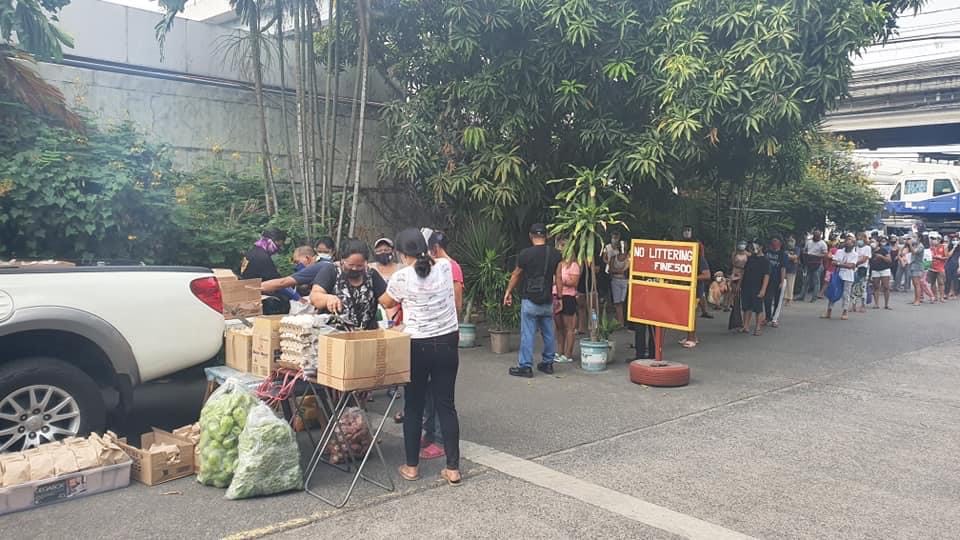
For Michael Barilea, a business support consultant at Wells Fargo, the fight is a call to service. In mid-April, he saw a viral social media post of the simple bamboo cart and a few items with two signs proclaiming: “Maginhawa community pantry – Give what you can. Take what you need.” Inspired to replicate the model in his local community, he immediately gathered the financial support of his neighbors to buy groceries for a nearby under-resourced community. His pantry turned out to be one of the hundreds that sprouted across the country in the days that followed. Together, these community pantries would address the urgent hunger crisis resulting from over a year of lockdown.
Do What’s Right
Barilea cites Do What’s Right — one of Wells Fargo’s Expectations of employees — as his motivation for setting up a community pantry in Alabang. “Knowing that people lost their jobs and were experiencing challenges to make ends meet, the only right thing to do was to help. Wells Fargo trained me to be a leader and not just a follower. I was motivated to step up and actually do something concrete.”
At work, Barilea is referred to as “Mr. Engagement” for his participation in employee engagement groups such as Pride Connections, Green Team, and Well-being Champions program, on top of his day job. “Wells Fargo gave me the opportunity to be part of organizing committees for these groups, which honed my skills. The pantry’s operations evolved to be more efficient and sustainable when I applied the lessons learned from those experiences,” he said.
Barilea and his partner, Michael Sioson, are known by their friends and neighbors as “The Mikeys.” After an initial community pantry launch on April 20, The Mikeysteamed up with a local grocery so the goods could be delivered directly to them for sorting into food packs. They coordinated closely with community representatives to distribute stubs and assign schedules to ensure goods were distributed evenly and safely, and with community volunteers to ensure that safety protocols could be followed at all times. After a fire ravaged a nearby low-income neighborhood, they used some of the funds to purchase construction materials to help survivors rebuild around 30 houses.
In total, after joining forces with nearby villages to scale up their operations, Barilea estimates they helped close to 900 families in their first month of One Alabang Community Pantry operations.
The Fight Continues
This isn’t the first community service project the couple has done. Before the pandemic, The Mikeys would regularly participate in medical missions to help indigenous folks in Mindoro.
Barilea’s decision to join Wells Fargo in 2017 became a turning point in their lives. Before joining Wells Fargo, Sioson did not have medical insurance. Wells Fargo’s employee benefits include HIV/AIDs consultation, diagnostics, and treatment; gender re-affirmation surgery; and medical insurance coverage for domestic partners, regardless of gender — which meant that, for the first time, Sioson could receive medical insurance coverage as Barilea’s dependent.
Barilea also credits Pride for helping him become a ‘late bloomer.’ In 2017, he had not yet embraced his identity fully, and he was looking for a sense of purpose. By following the example of his fellow Pride members, who were bold in taking action and advocating for themselves, Barilea learned how to do the same. “I used to wish I could be up front, waving the rainbow flag, standing with my LGBT+ brothers and sisters. I wasn’t ready then, but I am now.” Today, Barilea considers himself an out and proud gay man with a heart to serve his community. He has found his purpose.
Great things can come from small beginnings, just like the community pantry idea. “I know people are hesitant to take action, because they think their efforts are just small. If you want to fight for something, have a goal in mind, but don’t be afraid to take small steps,” Barilea reflected. He and Sioson talk often about sustainability. How long can they keep this up? “As long as there are people in need and people willing to help, we’ll be here. The fight continues.”
WASHINGTON – The World Bank on Tuesday raised its global growth forecast to 5.6% for 2021, marking the strongest recovery from a recession since 1940 due to U.S. stimulus spending and faster growth in China but held back by “highly unequal” access to COVID-19 vaccines.
The development lender’s latest Global Economic Prospects report showed a 1.5-percentage-point increase from forecasts made in January, before the Biden administration took office and enacted a $1.9 trillion U.S. COVID-19 aid package.
Since then, vaccines have become much more widely distributed in the United States and some other wealthy countries, boosting their output, as forecasts lag for emerging market and low-income countries.
“This recovery is uneven and largely reflects sharp rebounds in some major economies — most notably the United States, owing to substantial fiscal support — amid highly unequal vaccine access,” the World Bank said in the report.
Many emerging market and developing economies were seeing elevated COVID-19 caseloads, obstacles to vaccination and withdrawal of support, the bank said.
By 2022, this will leave global output about 2% below pre-pandemic projections, and about two-thirds of emerging market economies will still not have made up last year’s per-capita income losses.
World Bank President David Malpass reiterated his calls for rich nations, including the United States, to free up excess vaccine doses to developing countries as quickly as possible.
Ayhan Kose, economist and director of the World Bank’s Prospects Group, said the latest forecasts assume that advanced economies will have their populations vaccinated by year-end, and a number of major emerging market economies also will make significant vaccination progress. But vast numbers of people in developing and poor countries will still be waiting for vaccines into next year.
“Right now we are predicting growth next year around 4.3%. That growth number can be around 5% if we see faster distribution of vaccines,” said Kose.
The World Bank’s 2021 U.S. growth forecast was bumped up by 3.3 percentage points from January to 6.8% in the latest report, its fastest pace since 1984, due to economic support that the bank described as “unprecedented in peacetime.”
The euro zone’s forecast was raised 0.6 percentage point to 4.2%, while China’s was raised 0.6 percentage point to 8.5%. As a major exporter, China is benefiting from a boost in global demand, along with prior stimulus and virus containment efforts, the bank said.
Emerging markets excluding China are expected to grow 4.4% in 2021, a forecast that was raised by one percentage point since January.
The World Bank report also noted risks associated with rising inflation pressures that will add about one percentage point to global inflation in 2021. It said the fall in inflation last year was the “most muted and shortest-lived of any of the five global recessions over the past 50 years.”
And the increase in inflation since May 2020 has been faster than in previous recoveries, but it said that inflation expectations were expected to remain well-anchored, pointing to low and stable inflation in the long term.
“If this increase is temporary and inflation expectations remain well-anchored, this may not warrant a monetary policy response,” the bank said. “If, however, inflation expectations risk becoming unanchored, EMDE central banks may be compelled to tighten monetary policy more than would be appropriate for their economies’ recoveries.”
The report said market concerns about inflation could raise borrowing costs in emerging markets and low-income countries, which are also more challenged by short-term inflation because of rising food costs. — Reuters
President Rodrigo R. Duterte on Tuesday night said he would retire from politics when his six-year term ends next year.
The tough-talking leader, who is barred by law from running for reelection, told SMNI Channel he would spend his life as a private citizen in his hometown of Davao City, where he served as a mayor and prosecutor for years.
Mr. Duterte, 76, also claimed to have told his daughter, Davao City Mayor Sara Duterte-Carpio, not to “commit the mistake of running for the presidency.”
“Do not ever, ever commit the mistake of running for presidency,” he said, adding that she would not get anything back.
The ruling Partido Demokratiko Pilipino–Lakas ng Bayan (PDP-Laban) earlier passed a resolution urging Mr. Duterte, the chairman, to run for vice president. It also allowed him to choose his own running mate.
His spokesman Herminio L. Roque on Tuesday said the President would consider the advice of his allies about his political career.
Senator Emmanuel D. Pacquiao and Taguig Rep. Alan Peter S. Cayetano had discouraged him from running for vice president next year.
The boxing champion earlier urged the supporters of Mr. Duterte and Ms. Carpio, who is being urged to run for president, to “give others a chance.”
Mr. Cayetano, Mr. Duterte’s running mate in 2016, said it is better for the President to become an “elder statesman.”
Political analysts and constitutional experts have said the push for a Duterte vice presidency violates the spirit of the 1987 Constitution.
The late President Corazon C. Aquino oversaw the drafting of the basic law that limited the powers of the presidency and re-established the bicameral Congress, which her predecessor, the late dictator Ferdinand E. Marcos, Sr. abolished.
Mr. Marcos and his family were forced into exile in the US after he was ousted by a popular street uprising in 1986.
Michael Henry Ll. Yusingco, a senior research fellow at the Ateneo de Manila University Policy Center, said the push for Mr. Duterte to run for vice president is more a party issue than a personal one.
“I see certain elements in the party probably feeling anxious of a possible Sara Duterte presidency given that she is not actually a member of the party,” he said in a Facebook Messenger chat.
Filipino millennials prioritize financial freedom in their daily lives and as such, they often look for the right bank that will help them achieve it.
In a study by data analytics company Nielsen, half of the smartphone users in the Asia-Pacific region use their phones to check their bank accounts. In addition, consumers also want more control over their banking experience, with 90% of them saying that there should be a consumer alert feature.
The ongoing digitalization of banking services has made it easier for Filipinos to apply for products such as credit cards. When picking a new card, annual fees are the top consideration for Filipino consumers because these could eventually become costly in the long run.
“Choosing the right bank is an important decision for millennials to make because if they do it right, they will have the correct tools to achieve financial freedom,” said Celeste Lim, FVP and head of Security Bank’s Cards Business Development and Operations Group. “A good thing to know is that the rise of technology has expanded the number of banking services millennials can avail of.”
While many cardholders use their credit cards for e-commerce and cashless transactions, others also see credit cards as an emergency fund that allows them to pay it back in installments or in full if need be.
Millennials also prefer credit cards that are customized according to their needs. “Young Filipinos also put a high premium on the versatility they will get from their credit cards. They want their cards to have multiple features such as being easy to use when traveling abroad, having transaction alerts, and being mobile-friendly,” adds Lim.
Online transactions may have gotten more popular due to the pandemic, but cybercrime is on the rise as well. Fraud prevention and online safety are among consumers’ top concerns, with 61% of them saying these factors affect how they pay for their purchases.
Given these data, it is important for Filipino millennials to have a reliable partner for their online transactions. With Security Bank’s NEXT Mastercard, millennials are assured of a BetterBanking experience whenever they go shopping.
Security Bank’s newest credit card offering makes it easier for shoppers to pay for their purchases. For example, consumers will no longer have to worry about paying for big-ticket essential items such as tuition fees and other expenses that do not have a credit card facility with the bank’s SimplyPay service.
“The SimplyPay service is the ideal tool for customers who need to spend on essential items yet may currently not have sufficient cash on hand. This is a payment method that allows shoppers to pay for purchases up to Php 500,000 to stores that do not have a credit card facility,” Lim explained.
The NEXT Mastercard also helps address clients’ financial security concerns by automatically allowing them to pay all purchases above Php 5,000 in 12-month installments. As added protection, NEXT Mastercard customers are required to provide a one-time password they can use to validate their transactions each time they shop online.
“Millennials should see credit cards as a tool that they can use to increase their financial literacy. For example, they can use them to manage their budgets given they would have to strategize on how they are going to pay for their purchases,” Lim said. “With Security Bank’s NEXT Mastercard, millennial shoppers will have the ideal partner as they start their journey to achieving financial freedom.”
MEGAWIDE CONSTRUCTION CORPORATION
No. 20 N. Domingo Street, Barangay Valencia, Quezon City
Tel. No. (02) 8655-1111
NOTICE OF ANNUAL STOCKHOLDERS’ MEETING
To the Stockholders of MEGAWIDE CONSTRUCTION CORPORATION (the “Company”):
Notice is hereby given that the Annual Stockholders’ Meeting of the Company will be held on 30 June 2021, at 2:00 P.M. The meeting will be conducted via remote communication and can be accessed through the following link: https://bit.ly/3yRdaF8
The agenda of the meeting is as follows:
1. Call to Order
The Chairman will call the meeting to order.
2. Proof of Notice and Quorum
The Corporate Secretary will certify that notices of the meeting have been duly sent to the stockholders of record date as required by the By-Laws. He will also attest to the attendance at the meeting and whether a quorum is present. Except as otherwise provided by law, a quorum shall consist of stockholders owning majority of the outstanding capital stock (exclusive of treasury stock) participating in person, in absentia, or by proxy.
3. Approval of the Minutes of the Annual Stockholders’ Meeting held last 30 June 2020
The Minutes of the Annual Stockholders’ Meeting held last 30 June 2020 will be submitted for approval. It contains the following matters: (a) approval of the minutes of the Annual Stockholders’ Meeting held last 02 July 2019; (b) Chairman’s Address and President’s Report; (c) Election of Directors; (d) Amendment of the Articles of Incorporation to Increase Authorized Capital Stock; (e) Approval of the 2019 Audited Financial Statements; (f) Appointment of the External Auditor; and (g) Ratification of All Acts of Management and the Board of Directors.
A copy of the Minutes of the Annual Stockholders’ Meeting held last 30 June 2020 is available in the Company’s website and attached to the Definitive Information Statement as Exhibit “5”.
4. Approval of the Minutes of the Special Stockholders’ Meeting held last 21 May 2021
The Minutes of the Special Stockholders’ Meeting held last 21 May 2021 will be submitted for approval. It contains the matter on the Amendment of the Articles of Incorporation to Increase Authorized Capital Stock for Preferred Shares.
A copy of the Minutes of the Special Stockholders’ Meeting held last 21 May 2021 is available in the Company’s website and attached to the Definitive Information Statement as Exhibit “6”.
5. Chairman’s Address and President’s Report
The Chairman and President of the Company will give a welcome address and provide the operational highlights of 2020.
6. Election of Directors
The stockholders will approve the election of the regular and independent directors to hold office until the next Annual Stockholders’ Meeting and until their respective successors have been elected and qualified. The nominees were evaluated on the basis of all qualifications required by the Company’s By-Laws, New Manual on Corporate Governance, and that no provision on disqualification would apply to them. The profile and qualifications of the nominees are in the Company’s Definitive Information Statement and Annual Report (“SEC Form 17-A”) which are available in its website.
7. Approval of the 2020 Audited Financial Statements
The 2020 Audited Financial Statements of the Company will be submitted for the approval of the stockholders.
8. Appointment of the External Auditor
The stockholders will approve the appointment of Punongbayan & Araullo as the Company’s external auditor.
9. Ratification of All Acts of the Board of Directors and Management
For ratification of the stockholders are all acts of the Board of Directors and Management in the ordinary course of the Company’s business. A list of such acts is too voluminous to be included in the Definitive Information Statement. These acts pertain to obtaining government permits and clearances, execution of contracts, availment of services from banks, and other acts necessary for various construction projects of the Company.
10. Other Matters
The floor will be open for questions from the stockholders.
All stockholders of record at the close of business on 13 May 2021 are entitled to notice of and vote at the annual meeting and at any adjournment thereof. The stock and transfer books of the Company will be closed from end of business day on 14 May 2021 until 30 June 2021.
Please refer to Exhibit “1” of the Definitive Information Statement (available in the PSE EDGE website) or visit
for the full details on the submission of proxies, procedure for voting, participation in the Annual Stockholders’ Meeting, and to view the SEC Form 17-A.
The unemployment rate “moderately increased” to 8.7% in April, from 7.1% in March, the statistics agency said on Tuesday. — PHILIPPINE STAR/ MICHAEL VARCAS
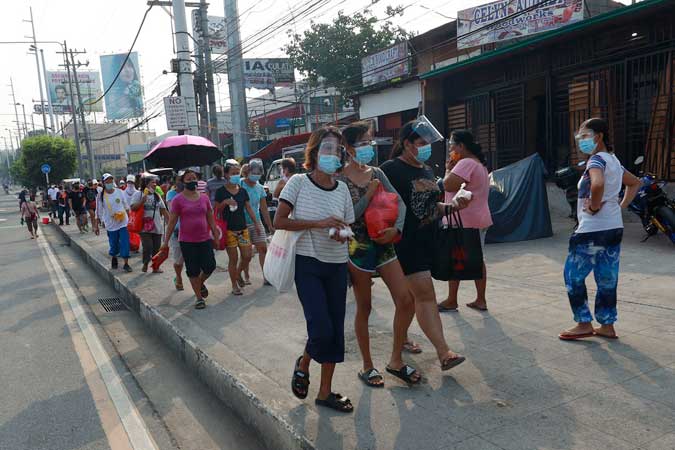
THE RANKS of unemployed Filipinos increased in April, when the government tightened lockdown restrictions in Metro Manila and nearby provinces to curb a surge in coronavirus disease 2019 (COVID-19) cases, data released by the Philippine Statistics Authority (PSA) showed.
Preliminary results of the PSA’s April 2021 round of the Labor Force Survey showed an unemployment rate of 8.7%, inching up from 7.1% in March.
Metro Manila, Cavite, Laguna and Rizal were placed under an enhanced community quarantine from March 29 to April 11 as the government tried to slow the surge in COVID-19 cases that were overwhelming hospitals. This was later relaxed to a more lenient modified enhanced quarantine from April 12 to 30.
The April unemployment rate was still lower than 17.6% in April 2020 — at the height of the strictest form of lockdown in Luzon at the onset of the pandemic.
In absolute terms, there were 4.138 million unemployed Filipinos in April, higher than 3.441 million in March and 7.228 million in April 2020.
The underemployment rate — the proportion of those already working but still looking for more work or longer working hours — worsened to 17.2% in April from 16.2% in March. This translated to 7.453 million underemployed Filipinos, more than 7.335 million in the previous month.
The latest figure was lower than April 2020’s 18.9% underemployment rate, though there were fewer underemployed Filipinos (6.398 million) because many had left the labor force that time.
The size of the labor force was about 47.407 million in April, down from 48.772 million in March. This brought the labor force participation rate to 63.2% of the working age population in April from 65% a month earlier.
In a joint statement, Socioeconomic Planning Secretary Karl Kendrick T. Chua, Finance Secretary Carlos G. Dominguez III and Budget Secretary Wendel E. Avisado noted that while the results in April were “substantially better” than last year, there was “temporary reversal” of the gains made in the previous months due to the lockdowns.
“The impact of the enhanced community quarantine and modified enhanced community quarantine on unemployment is more pronounced in regions with stricter quarantine measures, further highlighting the sensitivity of the labor market to the quarantine level,” they said.
The economic managers said unemployment rates in the National Capital Region and Calabarzon (Cavite, Laguna, Batangas, Rizal, and Quezon) regions, where the strictest quarantines were imposed, were the highest in April at 14.4% and 13.4%, respectively.
“Meanwhile, the unemployment rate outside NCR continued its general downward trend, declining from 8.7% in January 2021 to 7.9% in April 2021. This reflects the gains from the safe reopening of the economy in the provinces,” they said.
They also noted that total employment in April remained above pre-pandemic levels: “While the economy lost 8.7 million jobs at the height of the quarantines last April 2020, the economy generated 9.4 million jobs or a net of 0.7 million jobs between April 2020 and April 2021. Improving the rate of job creation will be crucial in our recovery effort this year,” they added.
In an e-mail, Security Bank Corp. Chief Economist Robert Dan J. Roces said the April result “underscores the sensitivity of sectors to stricter mobility curbs.”
The employment rate — the proportion of the employed to the total labor force — stood at 91.3% in April, down from 92.9% in March. This was equivalent to 43.269 million Filipinos in April compared with 45.332 million in the previous month.
The service sector made up 57.4% of total employment in April, slightly up from 57.2% in March. Agriculture remained mostly unchanged with 24.4%, while industry edged down to 18.2% from 18.4%.
Between April 2020 and April 2021, services saw the most jobs generated on a net basis at about 5.509 million, followed by industry’s 2.131 million and agriculture’s 1.799 million. Among subsectors, wholesale and retail trade led with 3.391 million net jobs created followed by agriculture and forestry (1.55 million) and construction (1.346 million).
In contrast, 2.062 million net jobs were lost between March and April led by industry (917,484), services (575,124), and agriculture (569,742). On a month-on-month basis, construction posted the largest drop in net employment among subsectors (804,893), followed by agriculture and forestry (492,608) and wholesale and retail trade (456,747).
“Moving forward, the main challenge to economic authorities will be to restore business confidence on the back of gradual reopenings that should result in more persons joining the labor force. With the recent decision by authorities to start the ‘phased implementation’ of the vaccination of workers in essential industries (A4 sector), a turnaround in confidence is possible soon and should lead to better employment numbers and contribute to the pace of the economic recovery beginning in the second half of this year,” Mr. Roces said.
In a separate e-mail, Asian Institute of Management economist John Paolo R. Rivera said normalization would only happen once herd immunity is achieved and the economy is fully opened.
“The employment figures so far, given measures to contain the pandemic, can be an indication that we still cannot expect significant improvements in GDP (gross domestic product) growth figures. Steep growth rates are constrained by the ‘opening-lockdown-opening’ approach because momentum is not sustained,” he said.
“There might be a need to channel resources in enabling enterprises to stay afloat and allowing consumers to sustain consumption through assistance or amelioration programs. It cannot be a one-time-big-time provision. It has to be strategically and systematically done,” he added. — Lourdes O. Pilar with inputs from Beatrice M. Laforga