Home Blog Page 7476

Top business groups press Congress on 17 reform bills
MORE THAN A DOZEN business groups are pressing Congress to pass 17 priority reform bills in its third and final session which opens later this month.

Fifteen business groups representing various industries and foreign chambers wrote a letter to President Rodrigo R. Duterte advocating for the passage of 17 measures, which they say will help the economy recover from the coronavirus disease 2019 (COVID-19) pandemic.

“With one year left in the current Congress, we believe the 17 measures are achievable reforms that will generate substantial impact in achieving our shared vision of inclusive growth through job generation, poverty reduction, and global competitiveness,” the groups said in a statement on Wednesday.

“These reforms will also support economic recovery and higher GDP growth in 2022 and beyond in the wake of the COVID-19 pandemic.”

The business groups said that Congress should pass pending amendments to the Foreign Investments Act, Public Service Act, and Retail Trade Liberalization Act as these would open up the economy to more foreign investment.

They also support the creation of the Department of Disaster Resilience and Department of Water Resources Management.

They also backed the passage of the government’s remaining tax reform packages, namely the Property Valuation and Assessment Reform Act and Passive Income and Financial Intermediary Taxation Act.

The former would broaden the property-related taxes of the government and generate more revenue for local government units “without increasing the existing tax rates or devising new tax impositions,” while the latter aims to simplify the tax structure for financial instruments.

Mr. Duterte last month asked Congress to pass these last two tax reform bills, both of which are still pending at the Senate.

The business groups also supported measures on Ease of Paying Taxes, Electric Vehicles and Charging Stations, Freedom of Information, National Land Use and Management, Open Access in Data Transmission, Philippine Creative Industries, Promotion of Digital Payments, Public Private Partnership, Rural Agricultural and Fisheries Development Financing System, and Secrecy of Bank Deposits Law amendments.

“Most of these bills have reached advanced stages in Congress and require counterpart action in the House or Senate,” the groups said.

Senate President Vicente C. Sotto III said the same, noting in a mobile message that “most of these bills are in the advance stages in the Senate plenary.”

The groups said that they sent the letter in anticipation of the President’s final State of the Nation Address and Congress opening its third regular session on July 26. Separate letters were also sent to Mr. Sotto and to House Speaker Lord Allan Jay Q. Velasco.

The business groups include Alyansa Agrikultura, Bankers Association of the Philippines, Financial Executives Institute of the Philippines, Foundation for Economic Freedom, IT and Business Process Association of the Philippines, Makati Business Club, Management Association of the Philippines, Philippine Association of Multinational Companies Regional Headquarters, Inc., and the Semiconductor and Electronics Industries in the Philippines Foundation, Inc.   

Foreign chambers that have signed the position paper include the American, Australian-New Zealand, Canadian, European, Japanese, and Korean business groups. — Jenina P. Ibañez
PHL outlook clouded by political risks from upcoming polls

PHILIPPINE STAR/ MICHAEL VARCAS
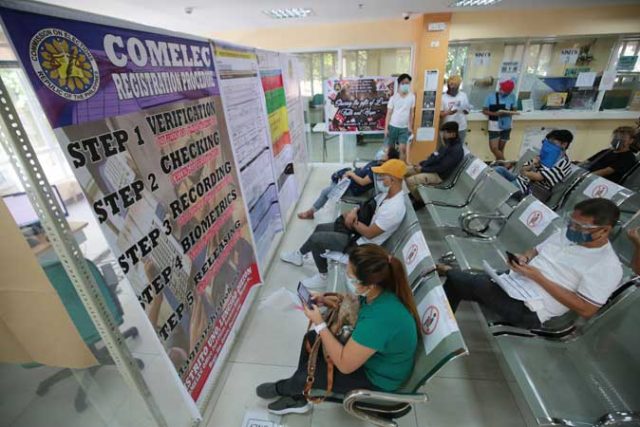
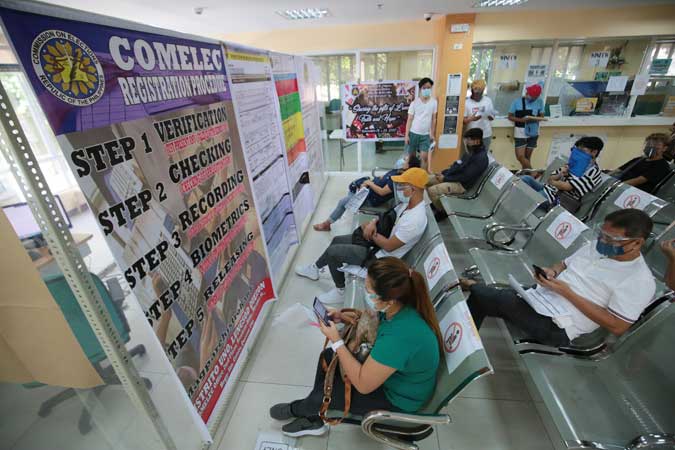
Voters’ registration for the 2022 elections is ongoing until Sept. 30. — PHILIPPINE STAR/ MICHAEL VARCAS

THE PHILIPPINE ECONOMY may face risks to its outlook due to the upcoming 2022 elections and “pandemic fatigue,” Fitch Solutions Country Risk & Industry Research said.

“We flag risks to political stability not only due to the pandemic, but also as countries face major elections over the coming years,” Fitch Solutions Head of Asia Country Risk Anwita Basu said in a webinar.

Ms. Basu noted there may be heightened “political risks” arising from the upcoming elections in the Philippines, as well as South Korea, Australia and Japan.

The Philippines is scheduled to hold national elections on May 9, 2022. President Rodrigo R. Duterte is set to step down from office on June 30, 2022, although he has hinted at the possibility of running for vice-president.

Also, Ms. Basu said the significant rise in income inequality in the Asia-Pacific region due to the pandemic poses downside risks to stability.

“Moreover, as governments have taken on more authoritarian stances to curb the viral outbreak, anti-establishment sentiment is likely to be on the rise,” she said.

Ms. Basu said Myanmar is a “sad reminder” of how sentiment can turn against an authoritarian state and may pose a threat to the economy.

In May, Fitch Solutions lowered its growth forecast for the Philippines to 5.3% from an earlier estimate of 5.8%. This is also below the 6-7% target of the government for the year after the record 9.6% contraction in 2020.

The delay in coronavirus disease 2019 (COVID-19) vaccine shipments to the region has also affected the growth outlook.

“This has resulted in delays to vaccination programs for countries worldwide that are reliant on the COVAX scheme for vaccine supply. This will impact emerging markets including Vietnam, Cambodia, Laos, Myanmar, Bangladesh, Sri Lanka, Indonesia, Philippines, and Malaysia,” Ms. Basu said.

The government has administered 11.71 million doses of coronavirus vaccines from March 1 to July 4, of which 8.84 million were first doses. So far, 2.869 million Filipinos or less than 3% of the population have been fully vaccinated.

The government targets to vaccinate 500,000 people daily in Metro Manila, Rizal, Bulacan, Cavite, Laguna, Metro Cebu and Metro Davao to achieve herd immunity in these high-risk areas by end-November. — L.W.T.Noble

PHL population reaches 109M

PHILIPPINE STAR/ MICHAEL VARCAS

THE TOTAL number of Filipinos swelled to 109.04 million as of May 2020, up from 100.98 million when the census was last conducted in 2015, according to the Philippines’ latest Census of Population.

The latest figures placed annual population growth for the period 2015-2020 at an average of 1.63%, slowing from the 1.72% average recorded in 2010-2015.

Of the 17 regions, six had growth rates that were roughly equal or higher than the national average: Bangsamoro Autonomous Region in Muslim Mindanao (BARMM, 3.26%), Calabarzon (2.48%), Central Luzon (2.17%), Central Visayas (1.88%), Mimaropa Region (1.82%), and Caraga (1.63%).   

Meanwhile, Eastern Visayas posted lowest annual population growth for the five-year period at 0.5%, followed by Cordillera Administrative Region at 0.91%, and the National Capital Region (NCR) at 0.97%.

In absolute terms, Calabarzon gained the most in population with an additional 1.78 million in 2020 from 2015. Other regions that saw significant increments were Central Luzon (1.20 million), Central Visayas (685,090), BARMM (622,901), and NCR (607,209).

Calabarzon remained the most populous region with 16.20 million people, followed by neighboring NCR at 13.48 million and Central Luzon with 12.42 million. These three regions make up 38.6% of the country’s population.

The three most populous provinces were Cavite (4.34 million), Bulacan (3.71 million), and Laguna (3.38 million).

The least populous were the islands of Batanes (18,831), Camiguin (92,808), and Siquijor (103,395).

Among highly urbanized cities, Quezon City had the greatest number of warm bodies with 2.96 million people, followed by the cities of Manila (1.85 million), and Davao (1.78 million).

Among the localities in Metro Manila, Valenzuela posted the highest growth rate at 3.03% to 714,978 people. Trailing second and third are the cities of Mandaluyong and Taguig with 2.07% (to 425,758) and 2.06% (to 886,722), respectively.

Meanwhile, Quezon City recorded the slowest growth among NCR localities at 0.17% with Marikina City (0.25% to 456,059) and the municipality of Pateros (0.45% to 65,227) coming in at second and third, respectively. On the other hand, the city of Navotas posted a 0.16% decline in its population to 247,543 people. — B.T.M. Gadon

SEC flags 3 entities’ unlicensed investment offer

THE Securities and Exchange Commission (SEC) has flagged three unlicensed entities for offering unauthorized investments to the public.

In separate advisories, the regulator warned against Cloud Network/Cloud Network Marketing or www.cloudnetworkmarketing.com, Lendvest International, and Earn Cash Quarantine Lending Consultancy Services.

Cloud Network’s investment program promises investors a five percent daily payout for 44 days, on top of an earning opportunity through direct referrals.

It is not registered as a corporation or as a partnership and lacks the required license to collect investments from the public.

The SEC said the scheme of Cloud Network “shows indication of a possible Ponzi scheme, where monies from new investors are used in paying ‘fake profits’ to prior investors.”

Lendvest is also not registered with the SEC and does not have the secondary license to offer, collect, and distribute investments or securities to the investing public.

“Based on the information gathered by the commission, Lendvest entices the public to invest by offering investment packages from P1,000 up to P1,000,000 with a return of up to P23,298,090 for one year,” the regulator said in an advisory dated July 6.

Lendvest has a variety of investment packages, with programs ranging from a month’s worth of investments, three months, six months, and a year.

Meanwhile, Earn Cash is said to be headed by a certain John Mitchell Mapaye Alcantara. BusinessWorld sought comment from Mr. Alcantara via Facebook Messenger, but he has yet to respond as of writing.

The public may invest through Earn Cash for as low as P2,000. Its investment plans guarantee returns of 40% in 12 days, 50% in 25 days, 100% in 30 days, and 300% in 75 days. Investors may also earn via direct and indirect referrals.

However, the SEC flagged Earn Cash for offering investment programs without being registered with the commission. It is also not authorized to collect investments from the public as it lacks the necessary license to do so.

The corporate regulator is advising the public to stop investing in Cloud Network, Lendvest, and Earn Cash. It is also calling on those who can provide information on the three entities’ operations to reach out to the SEC.

Meanwhile, the commission is warning those who act as salesmen, brokers, or those who represent these entities by offering their programs to the investing public that they may be prosecuted and held criminally liable under the Securities Regulation Code. They may be penalized with a fee of up to P5 million and/or face 21 years of imprisonment. — Keren Concepcion G. Valmonte

France’s OCEA allots P1.5B for shipyard – DTI

FRENCH shipbuilding company OCEA plans to invest P1.5 billion to build a shipyard in the Philippines, the Department of Trade and Industry (DTI) said.

OCEA Chief Executive Officer Roland Joassard revealed the plan during a joint economic committee meeting between the two countries last week, DTI said in a press release on Wednesday.

The project will create 500 to 600 direct and indirect jobs. OCEA has not yet responded to inquiries about the site of the project or the construction timeline.

The announcement is the latest international investment in Philippine shipyards, amid ongoing talks of the potential takeover of the shipyard left behind by the collapsed Hanjin Heavy Industries and Construction-Philippines, Inc.

Representatives from both France and the Philippines during the economic meeting also discussed potential bilateral cooperation in areas like agriculture, aviation, aeronautics, creative industries, electronics, energy and green technology, transportation, and shipbuilding.

Both countries agreed to work on integrated circuit design projects through partnerships between their electronics industry groups.

French Minister for Foreign Trade and Economic Attractiveness Franck Riester also confirmed financial support for Philippine government transportation projects and support for a training boat contract for the Philippine Merchant Marine Academy.

“Both countries also identified specific projects on dairy development, geographical indications, and control and eradication of African Swine Fever (ASF) in the agriculture sector, and areas for market access as the Philippines and France prepare for a future bilateral agriculture meeting,” DTI said.

The joint economic committee with France is the longest-running high-level economic dialogue between the Philippines and a European country. Representatives from both economies plan to meet next year in Paris. — Jenina P. Ibañez

Yields on BSP’s term deposits drop as inflation eased in June

BW FILE PHOTO
THE CENTRAL BANK’S term deposits fetched lower yields on Wednesday. — BW FILE PHOTO

YIELDS ON THE central bank’s term deposits slipped on Wednesday as inflation came in slower than expected in June.

Demand for the term deposit facility (TDF) of the Bangko Sentral ng Pilipinas (BSP) amounted to P771.292 billion on Wednesday, surpassing the P540 billion on offer and the P652.901 billion in tenders seen a week ago.

Broken down, bids for the seven-day term deposits reached P216.209 billion, higher than the P150 billion auctioned off by the BSP and the P208.413 billion in tenders logged for the previous week’s offering.

Accepted rates for the tenor ranged from 1.7% to 1.729%, a thinner band compared with the 1.7% to 1.7345% seen a week earlier. This caused the average rate of the papers to inch down by 0.85 basis point (bp) to 1.7176% from 1.7261% previously.

Meanwhile, the 14-day papers fetched bids amounting to P555.083 billion, well above the BSP’s P390-billion offer and also beating the P444.488 billion in tenders received last week.

Banks asked for yields ranging from 1.75% to 1.8144%, a narrower margin versus the 1.75% to 1.83% band recorded a week ago. With this, the average rate of the two-week term deposits slipped by 1 bp to 1.8014% from 1.8114% on June 30.

The BSP did not offer the 28-day term deposits for the 37th straight week to give way to its weekly offerings of bills with the same tenor.

The TDF and the short-term BSP bills are used by the central bank to mop up excess liquidity in the financial system and to better guide market rates.

The lower yields on the BSP’s term deposits came a day after the release of the consumer price index (CPI) report, which showed that headline inflation eased last month, Rizal Commercial Banking Corp. Chief Economist Michael L. Ricafort said in a text message.

Inflation eased to a six-month low in June, the Philippine Statistics Authority (PSA) reported on Tuesday.

Preliminary data from the PSA showed headline inflation stood at 4.1% in June, easing from the 4.5% logged in May and the slowest rate in six months or since the 3.5% recorded in December 2020. However, this was above the 2.5% recorded in June last year.

The latest headline figure was lower than the 4.3% median in a BusinessWorld poll conducted late last week. It likewise fell within the 3.9%-4.7% estimate given by the Bangko Sentral ng Pilipinas (BSP) for June, but was still higher than the central bank’s 2-4% target for the year.

For the first half, headline inflation averaged 4.4%, also above the BSP’s target band and its 4% forecast for 2021. — L.W.T. Noble

Synergy Grid clears P1.09-B follow-on offering

LISTED holdings firm Synergy Grid & Development Phils., Inc. said on Wednesday that its management had greenlit a follow-on offering of up to P1.09 billion, subject to clearance from the corporate regulator and the stock exchange.

“The board approved the conduct of a follow-on offering of up to 1,087,634,000 common shares with a par value of P1 per share,” Synergy Grid told the local bourse in a regulatory filing.

The firm said that the offer is contingent on the registration requirements of the Securities and Exchange Commission and listing qualifications of the Philippine Stock Exchange.

Synergy Grid said the offer also hinges on the approval of its capital stock hike to P5.30 billion, from the previous P5.05 billion.

Last week, the company’s board of directors approved to raise its capital stock so Synergy Grid can conduct a follow-on offering in line with achieving the firm’s target public float of 20%.

The Sy-led firm’s first-quarter attributable net income to its parent stood at P79,476, higher by 18% than the comparative year-on-year figure as the economy started to show signs of recovery.

Last year, Synergy Grid reported a net loss of P1.99 million, swinging from its P1.95-million income in 2019, after incurring losses from operations amid the pandemic. — Angelica Y. Yang

PNB looking to convert holding company to digital-only lender

BW FILE PHOTO

PHILIPPINE National Bank (PNB) is looking to convert its holding company into a digital lender and will seek the necessary license from the central bank, it said on Wednesday.

“The PNB Board of Directors approved and confirmed the conversion of Allied Integrated Holdings, Inc. (formerly PNB Savings Bank) into a digital bank, subject to regulatory and other necessary approvals,” the Tan-led bank said in a filing on result of their board meeting on Wednesday.

PNB last month said its board of directors approved a plan to create a digital bank during their June 25 meeting.

Sought for comment, Bangko Sentral ng Pilipinas (BSP) Deputy Governor Chuchi G. Fonacier said PNB has “not yet” communicated with the regulator on its plan.

“In case they will file an application for a digital bank, it will be considered as a new application for a digital bank. The BSP will follow the usual licensing process,” Ms. Fonacier said in a Viber message.

BSP Circular 1105 released in December last year set apart digital banks from other types such as universal, commercial, thrift, rural, cooperative and Islamic lenders.

Digital banks offer financial services, including taking loans and deposits, through online platforms instead of the brick-and-mortar model of conventional lenders.

These online-only banks are required to have a minimum capital of P1 billion.

The Monetary Board earlier capped the licenses it will issue under the new digital banking framework to five, but BSP Governor Benjamin E. Diokno said they could allow more lenders to operate if there is strong demand.

The BSP has so far granted digital bank licenses to the Overseas Filipino Bank, Tonik Digital Bank, Inc. (Philippines), and UNOBANK.

Among local commercial lenders, only UnionBank of the Philippines, Inc. has filed an application for a digital bank license, which is still pending with the BSP.

Rizal Commercial Banking Corp. has also expressed interest in securing a digital bank license. The bank launched its Diskartech app last year where users can create accounts, make deposits, and apply for loans.

PNB’s net profit increased 34% to P1.791 billion in the first quarter from P1.337 billion a year earlier, with lower expenses offsetting the decline in its total operating income.

The Tan-led bank’s shares closed at P22.90 apiece on Wednesday, down by 20 centavos or by 0.87% from the previous day’s finish. — LWTN

Shari’ah-compliant firms reach 60

PHILIPPINE STAR/KRIZ JOHN ROSALES

THE number of firms compliant with Islamic guidelines has bumped up to 60 for the period ending June 25, higher than last quarter’s list comprised of 57 securities.

According to a circular published by the Philippine Stock Exchange (PSE) on Tuesday, eight new companies were tagged as Shari’ah-compliant firms.

Century Peak Holdings, Corp., Concrete Aggregates Corp. “A,” Concrete Aggregates Corp. “B,” DDMP REIT, Inc., iPeople, Inc., Nickel Asia Corp., The Philodrill Corp., and PXP Energy Corp. passed the screening for the latest quarter.

Meanwhile, five firms were removed from list, namely: Da Vinci Capital Holdings, Inc., Forum Pacific, Inc., Kepwealth Property Phils., Inc., LMG Corp., and Philippine Infradev Holdings, Inc.

As part of the PSE’s Shari’ah stock market program, the local bourse screens listed companies every quarter to identify which are compliant with Shari’ah laws with the help of IdealRatings, Inc. The program aims to make investing in the PSE inclusive to Muslim investors.

Listed firms are checked for their compliance with standards under the Accounting and Auditing Organization for Islamic Finance Institutions.

Shari’ah compliance involves a business and a financial ratios screening.

Businesses in adult entertainment, alcohol, cinema, defense and weapons, financial services such as insurance and conventional banking, gambling, gold and silver hedging, interest-bearing investments, music, pork, and tobacco must only account for less than five percent of a company’s earnings.

Additionally, firms must ensure that its cash or interest-bearing deposits or investments and interest-bearing debt do not exceed 30% of its market capitalization. — Keren Concepcion G. Valmonte

Pentagon hits reset on Trump’s $10-B cloud deal, welcoming new players

WASHINGTON — The US Defense Department canceled its $10-billion JEDI cloud-computing project on Tuesday, reversing the Trump-era award to Microsoft Corp. and announcing a new contract expected to include its rival Amazon.com and possibly other cloud players.

The contract was coveted not for its dollar value as much as its prestige: Both companies for years have sought to persuade businesses and governments that it was safe to shift computing work into their data centers. Meeting all the security requirements of the US military would have been a visible stamp of approval likely to sway other corporate and government clients, analysts said.

Seattle-based Amazon, the biggest cloud computing provider, was widely expected to win the contract. But when the Pentagon awarded the sole-source deal to Microsoft in 2019, the announcement gave “huge credibility” to Microsoft, which had been working hard to catch Amazon after a late start with cloud technology, said Mark Moerdler, a senior research analyst at Bernstein.

But the contract has been on hold after Amazon filed a lawsuit challenging the decision under then-President Donald Trump, alleging that the former president exerted improper pressure on military officials to steer the contract away from Amazon.

Trump publicly derided then-Amazon CEO Jeff Bezos and repeatedly criticized the company. Amazon said in 2019 the Pentagon decision was full of “egregious errors,” which it suggested were a result of “improper pressure from Trump.” The company cited a 2019 book that reported Trump had directed the Defense Department to “screw Amazon” out of the JEDI contract.

Shares of Microsoft and Amazon both closed at a record high with the online retailer up 4.7% and shares of the software firm a penny higher.

Michael Pachter, an analyst with Wedbush Securities, said the absolute dollars involved — $10 billion over a decade — are at most a nice-to-have for the cloud companies, with AWS alone generating $45.3 billion in sales and $13.5 billion in operating profits for 2020. The value, he said, was in showcasing the security of the clouds, “but it’s not going to move the needle” for either company.

But the cancelation and new contract could benefit Microsoft, Moerdler said, because the Redmond, Washington-based company has had nearly two years during the legal wrangling to invest in its technology.

“If there is now another competition, Microsoft is going in from a better position,” Moerdler said. As recently as September, the Defense Department re-evaluated the contract proposals and said Microsoft’s submission was the best.

While the Trump administration wanted a single provider, the Biden administration has said it would likely parcel out the project to multiple companies. Such a move would put the military more in line with private-sector companies, many of whom split up their cloud computing work among multiple vendors to avoid being locked in to any specific one.

Other top cloud companies include Oracle Corp., Alphabet, Inc.’s Google and IBM Corp. Google and IBM on Tuesday said they were both interested in working with the federal government but stopped on short of saying whether they would enter the bidding process.

The Pentagon hopes to have the first awards by April 2022 for its new Joint Warfighter Cloud Capability (JWCC).

John Sherman, acting chief information officer for the Defense Department, said he expects both Microsoft and Amazon will get cloud contracts. He said the need was urgent.

“I’ve got to get this now — as soon as possible — starting hopefully as soon as April,” Sherman said.

Microsoft said in a statement the company was confident it will “continue to be successful as the DoD selects partners for new work.” Microsoft could submit a termination bid to recover costs of the scrapped project, Sherman said.

Amazon’s cloud unit Amazon Web Services (AWS) said it agreed with the Pentagon’s decision to cancel the contract. Amazon said the initial award was “not based on the merits of the proposals and instead was the result of outside influence that has no place in government procurement.” AWS added it looks “forward to continuing to support the DoD’s modernization efforts and building solutions that help accomplish their critical missions.” 

In April, a judge refused to dismiss Amazon’s claims alleging the Trump administration interfered in the Pentagon’s award to Microsoft after putting it on hold indefinitely in February 2020.

The now-cancelled Joint Enterprise Defense Infrastructure Cloud (JEDI) contract was budgeted for as much as $10 billion and was part of a broader digital modernization of the Pentagon aimed at making it more technologically agile.

“We don’t have an estimate yet, but I wouldn’t latch onto the $10-billion figure,” Sherman said, but added that the plan would likely involve a direct award for “urgently needed” capabilities and then a “full and open” competition for multiple suppliers by early 2025.

Republican Senator Chuck Grassley praised the Pentagon’s decision.

“The JEDI contract has been burdened by potential conflicts of interest, size, needless delays and its single awardee structure,” Grassley said, saying a fresh review process “will afford the program an opportunity for greater public trust and confidence.” — Reuters

Nickel Asia unit eyes P1.6-B syndicated loan

A SUBSIDIARY of mining firm Nickel Asia Corp. (NAC) plans to enter into a syndicated loan agreement this month worth up to P1.6 billion to fully fund solar power projects.

NAC released an amended disclosure on Thursday to clarify that the amount of JSI’s intended syndicated loan agreement is “up to P1.6 billion” and not “about P885 million” as disclosed by the listed firm on Wednesday.

NAC said in a stock exchange disclosure on Wednesday that the parties included in the planned syndicated loan are its subsidiary, Jobin-SQM, Inc. (JSI) as borrower, the Manila branch of Industrial and Commercial Bank of China and Security Bank Corp. as lenders; Security Bank Corp.–Trust and Asset Management as facility agent and collateral trustee; and SB Capital Investment Corp. as sole issue manager and lead arranger.

Meanwhile, JSI shareholders, namely: NAC, Emerging Power, Inc., and TBEA International Engineering Co. Ltd. will serve as share collateral security grantors and sponsors.

“A portion of the proceeds of the syndicated loan will refinance the existing loan of JSI from NAC which was used by JSI for its solar power plant expansion projects that commenced in 2020,” the disclosure said.

On July 6, NAC’s board of directors approved the company’s obligations in relation to the syndicated loan.

“[It approved] the pledge and delivery for the benefit of the lenders of stock certificates evidencing the shares beneficially owned by NAC in JSI to secure the obligation of JSI as borrower; and the guarantee by NAC of the Debt Service Reserve Account of JSI pursuant to the syndicated loan,” the disclosure said.

“The board of directors further authorized NAC to negotiate, agree and execute the Omnibus Loan and Security Agreement, the Share Collateral Security Agreement, the Guarantee Agreement, and any other document required in connection with the syndicated loan on behalf of NAC for the benefit of the lenders,” it added.

Sought for additional comment, NAC Vice-President for Corporate Communications Jose Bayani D. Baylon said the syndicated loan will fund the completion of a 100-megawatt (MW) solar plant project in Subic.

“It is being taken out by JSI, one of NAC’s renewable energy subsidiaries, for which the shareholdings of NAC and its co-investors in JSI will be pledged to secure the loan,” Mr. Baylon said in a mobile phone message.

According to NAC, JSI is a firm that has business interests in solar power generation and currently operates a 32-MW solar power plant in Subic Bay Freeport Zone.

“In June 2021, the Energy Regulatory Commission (ERC) granted JSI a provisional authority to operate its 30-MW solar power plant expansion, bringing the total operational capacity of its solar power plant to 62 MW,” NAC said in the disclosure.

For the first quarter, NAC posted an attributable net income of P584.1 million, a turnaround from a net loss of P89.34 million in the same period last year, due to higher ore selling prices.

On Wednesday, shares of NAC at the stock exchange dropped 0.36% or two centavos to finish at P5.48 apiece. — Revin Mikhael D. Ochave

Fraud cases make up 70% of ‘dirty money’ transactions

MONEY GENERATED from fraud or swindling made up 70% of the value involved in suspicious transaction reports from 2018 to 2020, a study by the Anti-Money Laundering Council (AMLC) showed.

“Dirty money” related to swindling reached P35.816 billion, making up 70% of the total value of selected reports from Jan. 1, 2018 to Dec. 31, 2020 covered in an AMLC study titled “An Assessment of the Philippines’ Exposure to External and Internal Threats Based on Suspicious Transaction Reports for 2018 to 2020.” AMLC’s study analyzed data from 258,087 suspicious transaction reports filed from 2018 to 2020 amounting to P50.574 billion.

Cases that fell under the predicate crime of swindling include an “outlier, amounting to P29 billion, which pertains to a single transaction involving the presentation of fictitious financial documents,” the AMLC said.

Investment scams that fall under violations of Republic Act 8799 or the Securities Regulation Code came next in terms of value at P6.519 billion or 12.89% of the total. This was followed by transactions related to predicate crimes on illegal drugs (P3.493 billion); web-related crimes (P1.69 billion); plunder and corruption (P1.204 billion), and human trafficking (P574 million), among others.

By the number of suspicious transaction reports filed from 2018 to 2020, the five leading predicate crimes were violations of the Securities and Regulation Code (39.19%); swindling (26.68%); violations of the special protection of children (17.99%); web- related crimes (8.97%); and illegal drugs (3.64%). 

The AMLC study showed banks were the most commonly tapped financial channel to move dirty money, specifically for big-ticket transactions. Meanwhile, money service businesses and pawnshops that have remittance capabilities were the modes used frequently for smaller value transactions.

The study also found that proceeds from the majority of the high-risk and medium-risk predicate crimes circulated within the local financial system. Meanwhile, illicit funds related to child exploitation and terrorism-related activities mostly came from abroad, with the Philippines being the destination.

Countries found to pose the highest threat for dirty money inflows in terms of transaction frequency include the United States, Saudi Arabia, and the United Kingdom. Meanwhile, the US, Hong Kong and Kenya topped the list in terms of outflows.

Suspicious transaction reports filed by covered institutions have increased in the past eight years and are expected to climb by 26% and 44% in 2021 and 2022, the AMLC earlier said.

The dirty money watchdog also noted a surge in suspicious transaction reports in the last three months of 2020 due to the passage of the controversial Republic Act 11479 or the Anti-Terrorism Act of 2020.

In June, the Philippines was added to the Financial Action Task Force’s “gray list” or jurisdictions that will be under increased monitoring for its implementation of tighter anti-money laundering and counter-terrorism financing measures. — L.W.T. Noble