Home Blog Page 747

Trump administration recommends location verification for AI chips

STOCK IMAGE | Image by Gerd Altmann from Pixabay

 – U.S. President Donald Trump‘s administration on Wednesday recommended implementing export controls that would verify the location of advanced artificial intelligence chips, a move that was applauded by U.S. lawmakers from both parties in both houses of Congress.

The recommendation was part of a broader AI blueprint released on Wednesday that aimed to boost exports of AI hardware and software to U.S. allies and relax U.S. environmental rules to speed the construction of new AI data centers.

But the plan released Wednesday also said the U.S. should continue denying access to advanced U.S. AI chips made by companies like Nvidia NVDA.O and AMD AMD.O to foreign adversaries. It added the U.S. government should “explore leveraging new and existing location verification features on advanced AI compute to ensure that the chips are not in countries of concern.”

The recommendation drew support from two lawmakers who previously introduced bills that would require location verification of chips after sale over concerns that they are finding their way to countries such as China, where their export is banned.

Key details – such as how the technology would be implemented and how much cost it would add – remain to be worked out, both in the proposed bills and the Trump administration’s recommendations.

“I was encouraged to see that the recommended export control policy includes location verification mechanisms and aligns closely with our bipartisan Chip Security Act. I look forward to learning more of the technical details and next steps for end-use verification,” Representative Bill Foster, an Illinois Democrat who helped introduce a chip-location bill in May, told Reuters.

“Senator Cotton was pleased to see verification included in President Trump’s AI Action Plan, as it’s a vital part of his bipartisan, bicameral Chip Security Act and an important tool to keep advanced American technology out of the hands of Communist China,” said Patrick McCann, a spokesperson for Senator Tom Cotton, an Arkansas Republican who introduced a similar bill in the U.S. Senate. – Reuters

Columbia University to pay over $200 million to resolve Trump probes

STOCK PHOTO | Image by PublicDomainPictures from Pixabay

 – Columbia University said on Wednesday it will pay over $200 million to the U.S. government in a settlement with President Donald Trump’s administration to resolve federal probes and to have most of its suspended federal funding restored.

Mr. Trump has targeted universities including Columbia since returning to the White House in January over the pro-Palestinian student protest movement that roiled college campuses last year.

In March, the Trump administration said it was penalizing the university over how it handled last year’s protests by canceling $400 million in federal funding. It contended that Columbia’s response to alleged antisemitism and harassment of Jewish and Israeli members of the university community was insufficient.

“Under today’s agreement, a vast majority of the federal grants which were terminated or paused in March 2025 – will be reinstated and Columbia’s access to billions of dollars in current and future grants will be restored,” Columbia said in a statement.

The university said it has also agreed to settle investigations brought by the U.S. Equal Employment Opportunity Commission for $21 million and that its deal with the Trump administration preserved Columbia’s “autonomy and authority over faculty hiring, admissions, and academic decision-making.”

After the government announced the funding cancellations, the school announced a series of commitments in response to the Trump administration’s concerns.

Last week, Columbia adopted a definition of antisemitism that equates it with opposition to Zionism. The school also said it would no longer engage with pro-Palestinian group Columbia University Apartheid Divest.

The Trump administration had no immediate comment on Wednesday. Mr. Trump had said in recent weeks that a deal with Columbia was close.

The government has labeled pro-Palestinian protesters as antisemitic and as sympathizers of extremism. Protesters, including some Jewish groups, say the Trump administration has wrongly conflated their criticism of Israel’s military assault in Gaza with antisemitism and their advocacy for Palestinian rights with support for extremism.

Wednesday’s announcement came one day after the university disciplined dozens of students over a pro-Palestinian protest in May in which demonstrators seized Columbia’s main library.

The government has attempted to use the leverage of federal funding with other educational institutions as well, including Harvard University, over campus protests. It has also tried deporting some foreign pro-Palestinian students but has faced judicial roadblocks.

Rights advocates have raised concerns about due process, academic freedom and free speech over the government’s actions. – Reuters

Tesla likely faces ‘a few rough quarters’ from end of US EV support, Musk says

STOCK PHOTO | Image by Blomst from Pixabay

Tesla Chief Executive Elon Musk said on Wednesday that U.S. government cuts in support for electric vehicle makers could lead to a “few rough quarters” for the company before a wave of revenue from self-driving software and services begins late next year.

Shares fell nearly 5% after Mr. Musk responded on a quarterly results conference call to questions about new U.S. government policies under President Donald Trump.

Mr. Musk’s electric vehicle maker posted the worst quarterly sales decline in more than a decade and profit that missed Wall Street targets, but its profit margin on making cars was better than many feared. Mr. Musk is pursuing autonomous driving to power privately owned vehicles as well as robotaxis that it plans to put into production next year.

In the meantime, it is working on a new, cheaper car, though Chief Financial Officer Vaibhav Taneja said that production would ramp up next quarter, slower than initially expected. It produced some initial units by the end of June. The company did not provide an update on its full-year deliveries forecast, citing the economy and timing of the new car rollout.

“Tesla’s disappointing results aren’t surprising given the rocky road it’s traveled recently,” said eMarketer analyst Jacob Bourne. “A truly affordable model will hit the bullseye in terms of boosting sales if Tesla can effectively position it right without detracting from its higher-priced models.”

The second straight quarterly revenue drop, with a 12% fall, comes despite the launch of a refreshed version of its best-selling Model Y SUV that investors had hoped would help revive demand.

A 51% dive in sales of automotive regulatory credits, which other automakers who have difficulty complying with government emissions rules buy from Tesla, also hurt revenue and profit.

Revenue fell to $22.5 billion for the April-June quarter from $25.50 billion a year earlier, slightly behind analyst targets compiled by LSEG. Adjusted profit per share of 40 cents lagged the Wall Street consensus.

The automotive gross margin, which excludes regulatory credits, was 14.96%, above Wall Street estimates, helped in part by lower cost per vehicle.

Pricing and margins are important as Tesla wrestles with demand and faces falling government support. Tesla global deliveries dropped 13.5% in the second quarter, and the U.S. government later this year is cutting $7,500 tax credits for EV buyers.

“We probably could have a few rough quarters,” Mr. Musk said, when asked about the credits. “I’m not saying we will, but we could – you know, Q4, Q1, maybe Q2, but once you get to autonomy at scale in the second half of next year, certainly by the end of next year, I think I’d be surprised if Tesla’s economics are not very compelling.”


AUTONOMOUS RIDE HAILING

Tesla had said in April it would start producing the more affordable model by the end of the first half and sources had told Reuters the vehicle, a stripped-down version of its Model Y SUV, would be delayed by at least months. Tesla on Wednesday did not disclose any details of the model, how many units it had made, or how it would be priced. Mr. Musk responded to a question of what the vehicle would look like by saying, “It’s just a Model Y,” joking that he “let the cat out of the bag there.”

Tesla’s lineup is relatively old, despite a recent refresh of the flagship Model Y, and it faces rising competition from cheaper EVs, especially in China, and a persistent backlash against Musk’s far-right political views.

The company also said it continued to expect volume production of its custom-built robotaxi – called the Cybercab – and Semi Truck in 2026.

Much of the company’s trillion-dollar valuation hangs on its bet on its robotaxi service – a small trial of which was started in Austin, Texas, last month with about a dozen Model Y SUVs – and on its development of humanoid robots.

“Autonomy is the story,” Musk said on the conference call, describing plans to roll out autonomous ride hailing to about half of the U.S. population by the end of this year. Tesla is looking for robotaxi regulatory approval in the San Francisco Bay Area, Nevada, Arizona, Florida and other places, he said, and the company is close to getting regulatory approval for supervised Full Self-Driving driver assistance software in the Netherlands. The robotaxi business was likely to have a material impact on financials around the end of next year, Musk said.

Investors are concerned about whether Mr. Musk will be able to devote enough time and attention to Tesla after he locked horns with Mr. Trump by forming a new political party this month. He had promised weeks earlier that he would cut back on government work and focus on his companies.

A series of high-profile executive exits, including a longtime Mr. Musk confidant who oversaw sales and manufacturing in North America and Europe, is also adding to the concerns. – Reuters

Trump was told he is in Epstein files, Wall Street Journal reports

U.S. President Donald Trump — REUTERS/LEAH MILLIS/FILE PHOTO

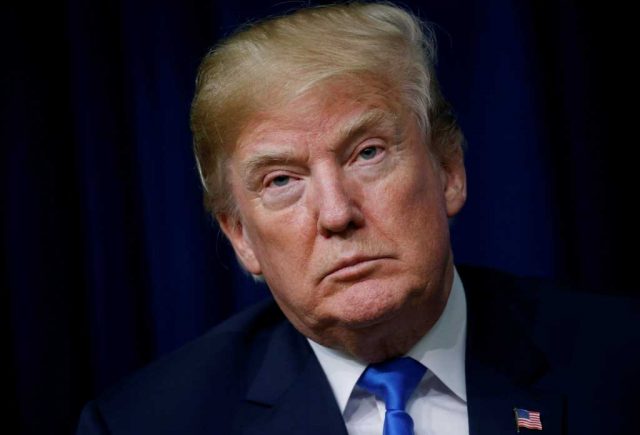
 – U.S. Attorney General Pam Bondi told President Donald Trump in May that his name appeared in investigative files related to convicted sex offender Jeffrey Epstein, the Wall Street Journal reported on Wednesday.

The disclosure about Mr. Trump’s appearance in the Justice Department’s case records threatened to deepen a political crisis that has engulfed his administration for weeks. Some Trump supporters for years have fanned conspiracy theories about Mr. Epstein’s clients and the circumstances of his 2019 death in prison.

The White House sent mixed signals following the story. It released an initial statement characterizing it as “fake news,” but a White House official later told Reuters the administration was not denying that Trump’s name appears in some files, noting that Trump was already included in a tranche of materials Bondi assembled in February for conservative influencers.

Mr. Trump, who was friendly with Mr. Epstein in the 1990s and early 2000s, appears multiple times on flight logs for Mr. Epstein’s private plane in the 1990s. Mr. Trump and several members of his family also appear in an Epstein contact book, alongside hundreds of others.

Much of that material had been publicly released in the criminal case against Mr. Epstein’s former associate Ghislaine Maxwell, who was sentenced to 20 years in prison after her conviction for child sex trafficking and other crimes.

During her trial, Mr. Epstein’s longtime pilot testified that Mr. Trump flew on Mr. Epstein’s private plane multiple times. Trump has denied being on the plane.

Reuters was not able to immediately verify the Journal’s report.

Mr. Trump has faced intense backlash from his own supporters after his administration said it would not release the files, reversing a campaign promise.

The Justice Department said in a memo earlier this month that there was no basis to continue probing the Epstein case, sparking anger among some prominent Trump supporters who demanded more information about wealthy and powerful people who had interacted with Mr. Epstein.

Mr. Trump has not been accused of wrongdoing related to Mr. Epstein and has said their friendship ended before Mr. Epstein’s legal troubles first began two decades ago.

Ms. Bondi and Deputy Attorney General Todd Blanche issued a statement that did not directly address the Journal’s report.

“Nothing in the files warranted further investigation or prosecution, and we have filed a motion in court to unseal the underlying grand jury transcripts,” the officials said. “As part of our routine briefing, we made the President aware of the findings.”


MANY NAMES APPEARED

The newspaper reported that Bondi and her deputy told Mr. Trump at a White House meeting that his name, as well as those of “many other high-profile figures,” appeared in the files.

Mr. Epstein died by suicide in 2019 while awaiting trial on sex trafficking charges, to which he had pleaded not guilty. In a separate case, Mr. Epstein pleaded guilty in 2008 to a prostitution charge in Florida and received a 13-month sentence in what is now widely regarded as too lenient a deal with prosecutors.

Under political pressure last week, Mr. Trump directed the Justice Department to seek the release of sealed grand jury transcripts related to Epstein.

On Wednesday, U.S. District Judge Robin Rosenberg denied one of those requests, finding that it did not fall into any of the exceptions to rules requiring grand jury material be kept secret.

That motion stemmed from federal investigations into Mr. Epstein in 2005 and 2007, according to court documents; the department has also requested the unsealing of transcripts in Manhattan federal court related to later indictments brought against Epstein and Maxwell.

Last week, the Journal reported that Trump had sent Epstein a bawdy birthday note in 2003 that ended, “Happy Birthday — and may every day be another wonderful secret.”

Reuters has not confirmed the authenticity of the alleged letter. Mr. Trump has sued the Journal and its owners, including billionaire Rupert Murdoch, asserting that the birthday note was fake.


MAGA PUSHBACK

Mr. Trump and his advisers have long engaged in conspiracy theories, including about Epstein, that have resonated with Mr. Trump’s political base. The Make American Great Again movement’s broad refusal to accept his administration’s argument that those theories are now unfounded is unusual for a politician who is accustomed to enjoying relatively unchallenged loyalty from his supporters.

Mr. Epstein hung himself in prison, according to the New York City chief medical examiner. But his connections with wealthy and powerful individuals prompted speculation that his death was not a suicide. The Justice Department said in its memo this month that it had concluded Epstein died by his own hand.

In a sign of how the issue has bedeviled Mr. Trump and divided his fellow Republicans, U.S. House Speaker Mike Johnson on Tuesday abruptly said he would send lawmakers home for the summer a day early to avoid a floor fight over a vote on the Epstein files.

His decision temporarily stymied a push by Democrats and some Republicans for a vote on a bipartisan resolution that would require the Justice Department to release all Epstein-related documents.

But a subcommittee of the House Oversight Committee on Wednesday approved a subpoena seeking all Justice Department files on Mr. Epstein. Three Republicans joined five Democrats to back the effort, in a sign that Mr. Trump’s party was not ready to move on from the issue.

Mr. Trump, stung and frustrated by the continued focus on the Epstein story, has sought to divert attention to other topics, including unfounded accusations that former President Barack Obama undermined Mr. Trump’s successful 2016 presidential campaign. Obama’s office denounced the allegations as “ridiculous.”

More than two-thirds of Americans believe the Trump administration is hiding information about Mr. Epstein’s clients, according to a Reuters/Ipsos poll conducted last week. – Reuters

French president Macron sues right-wing podcaster over claim France’s first lady was born male

EMMANUEL MACRON — PICRYL

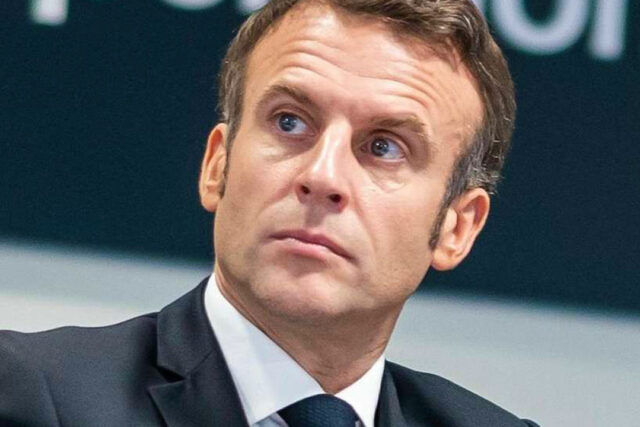
French President Emmanuel Macron and his wife Brigitte filed a defamation lawsuit in the U.S. on Wednesday against right-wing influencer and podcaster Candace Owens, centered on her claim that France’s first lady is male.

The Macrons said in a complaint filed in Delaware Superior Court that Owens has waged a lie-filled “campaign of global humiliation” to promote her podcast and expand her “frenzied” fan base.

These lies included that Brigitte Macron, 72, was born under the name Jean-Michel Trogneux, the actual name of her older brother, the Macrons said.

“Owens has dissected their appearance, their marriage, their friends, their family, and their personal history — twisting it all into a grotesque narrative designed to inflame and degrade,” the complaint said.

“The result,” the complaint added, “is relentless bullying on a worldwide scale.”

In her podcast on Wednesday, Owens said, “This lawsuit is littered with factual inaccuracies,” and part of an “obvious and desperate public relations strategy” to smear her character.

Owens also said she did not know a lawsuit was coming, though lawyers for both sides had been communicating since January.

A spokesperson for Owens called the lawsuit itself an effort to bully her, after Brigitte Macron rejected Owens’ repeated requests for an interview.

“This is a foreign government attacking the First Amendment rights of an American independent journalist,” the spokesperson said.

In a joint statement released by their lawyers, the Macrons said they sued after Owens rejected three demands that she retract defamatory statements.

“Ms. Owens’s campaign of defamation was plainly designed to harass and cause pain to us and our families and to garner attention and notoriety,” the Macrons said. “We gave her every opportunity to back away from these claims, but she refused.”


HIGH LEGAL STANDARD

Wednesday’s lawsuit is a rare case of a world leader suing for defamation.

U.S. President Donald Trump has also turned to the courts, including in a $10 billion lawsuit accusing The Wall Street Journal of defaming him by claiming he created a lewd birthday greeting for disgraced late financier Jeffrey Epstein in 2003.

The Journal said it would defend against that case and had full confidence in its reporting.

In December, meanwhile, Mr. Trump reached a $15 million settlement with Walt Disney-owned ABC DIS.N over an inaccurate claim that a jury found him liable for rape, rather than sexual assault, in a civil lawsuit.

To prevail in U.S. defamation cases, public figures must show defendants engaged in “actual malice,” a tough legal standard requiring proof the defendants knew what they published was false or had reckless disregard for its truth.

Owens has more than 6.9 million followers on X and more than 4.5 million YouTube subscribers.


TUCKER CARLSON, JOE ROGAN

The Macrons’ lawsuit focuses on the eight-part podcast “Becoming Brigitte,” which has more than 2.3 million views on YouTube, and X posts linked to it.

According to the Macrons, the series spread “verifiably false and devastating lies,” including that Brigitte Macron stole another person’s identity and transitioned to female, and that the Macrons are blood relatives committing incest.

The complaint discusses circumstances under which the Macrons met, when the now 47-year-old president was a high school student and Brigitte was a teacher. It said their relationship “remained within the bounds of the law.”

According to the complaint, baseless speculation about Brigitte Macron’s gender began surfacing in 2021, and the topic has been discussed on popular podcasts hosted by Tucker Carlson and Joe Rogan, who have many conservative followers.

In September, Brigitte won a lawsuit in a French court against two women, including a self-described medium, who contributed to spreading rumors about her gender.

An appeals court overturned that decision this month, and Brigitte Macron has appealed to France’s highest court.

The case is Macron et al v Owens et al, Delaware Superior Court, No. N25C-07-194. – Reuters

US Supreme Court lets Trump remove consumer product safety commissioners

STOCK PHOTO | Image by VBlock from Pixabay

 – The U.S. Supreme Court let Republican President Donald Trump on Wednesday remove three Democratic members of the government’s top consumer product safety watchdog, boosting his power over federal agencies set up by Congress to be independent from presidential control.

Granting a Justice Department request, the justices lifted Maryland-based U.S. District Judge Matthew Maddox’s order that had blocked Mr. Trump from dismissing three Consumer Product Safety Commission members appointed by Democratic former President Joe Biden while a legal challenge to their removal proceeds.

Maddox had ruled that Mr. Trump overstepped his authority in firing Commissioners Mary Boyle, Alexander Hoehn-Saric and Richard Trumka Jr.

The Supreme Court in a brief unsigned order indicated that the Trump administration was likely to show that the president is authorized by the U.S. Constitution to remove Consumer Product Safety Commission members. It was the latest in a series of legal victories for Trump in which the Supreme Court halted lower court rulings that had blocked his actions.

The court has a 6-3 conservative majority. Its three liberal members dissented on Wednesday.

Justice Elena Kagan, joined by fellow liberal Justices Sonia Sotomayor and Ketanji Brown Jackson, wrote that the court had again used its “emergency docket to destroy the independence of an independent agency, as established by Congress.”

The Consumer Product Safety Commission was created by Congress in 1972 and tasked with reducing the risk to consumers of injury or death from defective or harmful products. The agency sets safety standards, conducts product-safety investigations and issues recalls of hazardous products.

To establish the five-member commission’s independence from direct White House control, Congress authorized the president to fire commissioners only for neglect of duty or malfeasance, not at will.

Nicolas Sansone, an attorney for the fired commissioners, vowed to continue fighting for their reinstatement.

“The Supreme Court’s intervention deprives the public of important voices on the Consumer Product Safety Commission and sows substantial legal uncertainty,” Sansone said.

After being notified in May that Mr. Trump had fired them, Ms. Boyle, Mr. Hoehn-Saric and Mr. Trumka sued, arguing that their removals were without basis and that Trump had exceeded his authority. The staggered, seven-year terms of the commissioners were not set to expire until October 2025, 2027 and 2028, respectively, according to court filings.

The Justice Department argued that the law shielding commissioners from being fired except for good cause violates the president’s removal authority under the Constitution’s provision delineating executive power.


A 1935 PRECEDENT

Mr. Maddox, a Biden appointee, sided with the commissioners in a June 13 ruling and ordered their reinstatement. The judge upheld the commission’s removal protections under a 1935 Supreme Court precedent in a case called Humphrey’s Executor v. United States that preserved similar protections for U.S. Federal Trade Commission members.

Ms. Kagan wrote that Wednesday’s decision “all but overturned” the Humphrey’s Executor precedent.

The Richmond, Virginia-based 4th U.S. Circuit Court of Appeals on July 1 denied the administration’s request to halt Maddox’s reinstatement order. This prompted the Justice Department’s emergency filing to the Supreme Court.

The commissioners in their Supreme Court filing had urged the justices to reject the administration’s request. They said that allowing the dismissals would deprive the American public of critical consumer safety expertise and oversight.

In May, the Supreme Court in a similar case allowed Trump to remove two Democratic members of the National Labor Relations Board and Merit Systems Protection Board – despite job protections for these posts – while litigation challenging those removals proceeded.

The court in that ruling said the Constitution gives the president wide latitude to fire government officials who wield executive power on his behalf and that the administration “is likely to show that both the NLRB and MSPB exercise considerable executive power.”

The court on Wednesday said that the Consumer Product Safety Commission “exercises executive power in a similar manner as the National Labor Relations Board.”

In her dissent, Ms. Kagan criticized the conservative majority for using the court’s emergency docket – an abbreviated mode of adjudication involving shorter-than-usual written briefs and no oral argument – to “override Congress’s decisions about how to structure administrative agencies so that they can perform their prescribed duties.”

“By allowing the President to remove Commissioners for no reason other than their party affiliation, the majority has negated Congress’s choice of agency bipartisanship and independence,” Ms. Kagan wrote.

“By means of such actions, this court may facilitate the permanent transfer of authority, piece by piece by piece, from one branch of government to another,” Ms. Kagan added.

The Supreme Court has sided with Trump in a series of cases on an emergency basis since he returned to office in January, including clearing the way for his administration to pursue mass government job cuts, gut the Department of Education and implement some of his hardline immigration policies. – Reuters

Trump sets 19% tariff on PHL goods

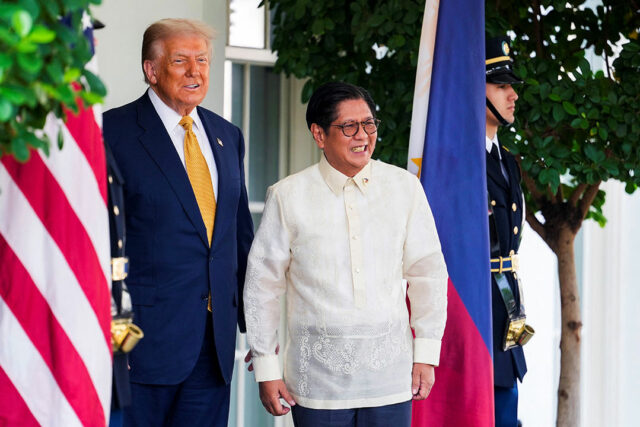
US PRESIDENT Donald J. Trump welcomes Philippine President Ferdinand R. Marcos, Jr. at the White House in Washington, DC, US, July 22. — REUTERS/KENT NISHIMURA

By Chloe Mari A. Hufana, Reporter and Luisa Maria Jacinta C. Jocson, Senior Reporter

US PRESIDENT Donald J. Trump on Tuesday announced he was imposing a new 19% tariff rate for goods from the Philippines, following a meeting with President Ferdinand R. Marcos, Jr. at the White House.

“It was a beautiful visit, and we concluded our trade deal, whereby the Philippines is going open market with the United States, and zero tariffs. The Philippines will pay a 19% tariff,” Mr. Trump said on his Truth Social platform.

While the new tariff rate is slightly lower than the threatened 20%, the 19% rate is higher than the 17% “reciprocal tariff” that Mr. Trump announced in April.

“One [percentage point] might seem like a very small concession. However, when you put it in real terms, it is a significant achievement,” Mr. Marcos told reporters in Washington following his meeting with Mr. Trump in the Oval Office. A copy of the transcript was released to the media.

“They told us that it is because of the special relationship between the Philippines and the United States.”

Contrary to Mr. Trump’s social media post, Mr. Marcos clarified that the Philippines will only open its market for US automobiles.

“The major areas that he (Mr. Trump) said were automobiles. Because we have a tariff on American automobiles, we will open that market and no longer charge tariffs on that,” he said.

As part of the deal, Mr. Marcos said the Philippines will also increase US imports of soy and wheat products, as well as medicine.

“There’s still a lot of detail that needs to be worked out on the different products,” he said, adding the template has been laid out.

A Reuters report quoted Philippine Ambassador to the United States Jose Manuel Romualdez as saying this was “an evolving good deal for both countries that could be further improved over time.”

Mr. Trump said the “very big numbers” in the trade agreement would only grow larger.

Data from the United States Trade Representative showed the US goods trade with the Philippines amounted to around $23.5 billion in 2024. US goods exports stood at $9.3 billion, while imports from the Philippines totaled $14.2 billion, bringing the US goods trade deficit with the Philippines to nearly $5 billion, up by 21.8% from 2023.

The US is a top export destination for Philippine goods, accounting for around 16% of total exports such as semiconductors and electronic products in the January-to-May period.

STILL SECOND LOWEST
Meanwhile, the Department of Economy, Planning, and Development (DEPDev) said the new 19% tariff puts the Philippines in a good position compared with its Southeast Asian neighbors.

“But still, if you look at the entire Association of Southeast Asian Nations (ASEAN) so far, we’re second to Singapore. To me, it’s still a very good outcome,” DEPDev Secretary Arsenio M. Balisacan told reporters on the sidelines of a conference on Wednesday.

Mr. Balisacan said the potential impact of the 19% and previous 20% tariff is “not really that much.”

“We are more worried about the indirect one. Indirect is how other countries’ tariffs will look like compared to us. That’s the one that’s more important because of the potential trade diversion benefits,” he said.

The Philippines’ new US tariff rate is now the same as Indonesia, and slightly lower than Vietnam’s 20%. Singapore faces the lowest US tariff rate of 10%.

While Vietnam was able to secure a 20% tariff, any transshipped goods will be subject to a 40% rate.

“How much of that are actually imports from China indirectly through Vietnam? That will be affected by the high tariff,” he said.

Asked about the zero tariff on US automobile imports, Mr. Balisacan said this is not a cause for concern.

“When you look at the current account deficit, you don’t look at it country by country. You should look at the total and that’s what matters,” Mr. Balisacan said.

“As a country, you should be able to accept a deficit from a country where you can import much cheaper products than what you can get elsewhere. And then you are able to export your products to where you can command higher value.”

Mr. Balisacan said the Philippines will heavily rely on domestic demand against the backdrop of these trade uncertainties.

“That’s what you can count on. And that’s actually what’s saving our economy now with all this uncertainty in the global economy.  It’s domestic,” he said.

“We have to strengthen that even as we are preparing for better times in trade, in the global economy. Still, we need to keep doing reforms to improve our competitiveness. Unlike in past decades, though the global economy improved, we were not ready. So, we missed the boat. Still a lot of things to do.”

IBON Foundation Executive Director Jose Enrique A. Africa said this new trade deal heavily favors the US.

“This is a bad deal, and President Marcos, Jr. is coming home empty-handed. There are virtually no benefits for the Philippines and only costs,” he said in a Viber chat.

Zero tariffs on US automobiles, in particular, could result in revenue losses, provoke trade tensions with other auto exporters like Japan, Korea, China, and the European Union, and hinder any plans to develop a domestic automotive industry, he added.

The economist also noted that the public must know the full extent of the concessions made by the Philippines, especially on the economic and defense fronts.

ADB, AMRO slash PHL growth forecasts for 2025, 2026

The Philippine economy is now likely to grow below 6% this year and in 2026 as the US tariffs and global economic slowdown cloud the outlook. — PHILIPPINE STAR/MIGUEL DE GUZMAN

A GLOBAL SLOWDOWN and higher US tariffs have clouded the growth outlook for the Philippines, as the Asian Development Bank (ADB) and ASEAN+3 Macroeconomic Research Office (AMRO) both downgraded their Philippine growth projections for this year and in 2026.

In its latest Asian Development Outlook, the ADB slashed its gross domestic product (GDP) growth forecast for the Philippines to 5.6% for 2025 from 6% previously. For 2026, the ADB projects Philippine GDP to grow by 5.8% from 6.1% previously.

However, this would be within the government’s 5.5 to 6.5% target for this year, but below the 6-7% goal for 2026.

At the same time, AMRO cut its growth projections for the Philippines to 5.6% for this year and 5.5% for 2026 in its latest ASEAN+3 Regional Economic Outlook (AREO) report. These are lower than its previous forecast of 6.3% for both 2025 and 2026.

AMRO also cut the ASEAN+3 region’s growth outlook to 3.8% (from 4.2%) in 2025, and 3.6% (from 4.1%) in 2026, reflecting the impact of higher US tariffs that will take effect on Aug. 1.

“These (US) tariffs will likely reduce US demand, increase investment uncertainty and dampen consumer confidence. Given the broad scope of the tariffs, the associated slowdown in global growth would further weigh on the region’s outlook,” AMRO said in the report.

ASEAN+3 comprises the Association of Southeast Asian Nation (ASEAN) members plus China, Hong Kong (China), Japan and South Korea.

AMRO also cut the growth forecast for ASEAN to 4.4% (from 4.7%) this year, and 4.2% (from 4.7%) in 2026.

Based on the latest AREO, the Philippines is expected to be the second-fastest growing economy this year and in 2026, after Vietnam. Vietnam is projected to grow by 7% this year and 6.5% next year.

AMRO Group Head and Principal Economist Allen Ng said Philippine growth forecasts were lowered on expectations of slower global growth.

At a briefing on Wednesday, Mr. Ng said the Philippines’ weaker-than-expected 5.4% GDP expansion in the first quarter hinted that the “growth momentum is slower than initially expected.”

Mr. Ng said the country’s growth will likely remain strong, thanks to sustained private consumption, stable labor market conditions, slower inflation and “robust” remittance outlook.

He said the newly announced 19% tariff that the US will impose on Philippine goods is unlikely to change its forecasts.

“In the case of the Philippines, our assessment is that the impact will be very limited and it’s unlikely that we will materially change our forecast given the changes is actually from 20% to 19%,” he said.

However, Mr. Ng noted the impact of the higher tariffs remains smaller in the country compared with its Association of Southeast Asian Nations (ASEAN) neighbors given the Philippine economy is more focused on the domestic market.

“But there will be broader impact on global slowdown on the economy. So, this will affect both exports as well as business sentiment and investment activities in the Philippines,” he said.

For 2026, AMRO said the impact of the tariffs on ASEAN+3 is projected to be “more significant.”

“This is particularly so for regional economies which face both higher tariffs from the US and rely more on external demand. Overall, however, continued strength in domestic demand and sustained external demand for electronics and tourism is expected to continue to underpin regional growth,” it said.

More aggressive protectionist policies from the US pose a major risk to the growth outlook for the region, AMRO said, citing potential tariffs on exempted sectors, such as semiconductors and pharmaceuticals.

“As these products represent a substantial share of exports to the US for some regional economies, such measures could further dampen growth. Idiosyncratic considerations are also influencing tariff decisions, it said.

Other risks include a sharper slowdown in the US and Europe, tighter financial conditions, a spike in global commodity prices and weaker growth in China.

Meanwhile, AMRO lowered its inflation forecast for the Philippines to 1.8% from 3.3% for 2025. This is slightly higher than the Bangko Sentral ng Pilipinas’ (BSP) 1.6% average forecast for this year.

AMRO kept its projection for 2026 at 3.2%, unchanged from its April forecast. This is below the central bank’s 3.4% target forecast for 2026.

AMRO has noted that central banks in half of ASEAN+3 economies have eased monetary policy amid slowing inflation and tariff concerns.

“Headline inflation in the region is projected to remain low and stable at around 1% in 2025 and 2026. This outlook reflects stable commodity prices, including the normalization of oil prices following the temporary volatility during the brief escalation of Iran-Israel conflict,” it said.

ADB FORECAST
Meanwhile, the ADB still expects the Philippines to post the second-fastest growth in Southeast Asia this year and 2026, despite lowering its projections.

Vietnam is projected to grow by 6.3% this year, followed by the Philippines (5.6%), Indonesia (5%), Malaysia (4.3%), Thailand (1.8%) and Singapore (1.6%).

For 2026, Vietnam is still likely to post the fastest growth at 6%, followed by the Philippines (5.8%), Indonesia (5.1%), Malaysia (4.2%), Thailand (1.6%) and Singapore (1.5%).

In a statement, the ADB said it lowered its growth forecasts for developing Asia and the Pacific region this year and next year “driven by expectations of reduced exports amid higher US tariffs and global trade uncertainty as well as weaker domestic demand.”

It trimmed its 2025 growth forecast for the region to 4.7% from a projection of 4.9% made in April. It also cut the region’s growth outlook for 2026 to 4.6% from 4.7%.

“Asia and the Pacific has weathered an increasingly challenging external environment this year. But the economic outlook has weakened amid intensifying risks and global uncertainty,” ADB Chief Economist Albert Park said in a statement.

Southeast Asia is expected to post the slowest growth among sub-regions. ADB projects Southeast Asia growth at 4.2% in 2025 and 4.3% in 2026, lower than the earlier forecasts of 4.7% for both years.

“Economies in the region should continue strengthening their fundamentals and promoting open trade and regional integration to support investment, employment and growth,” Mr. Park said

According to the ADB, developing Asia and the Pacific comprises 46 economies ranging from China to Georgia to Samoa, and excluding countries such as Japan, Australia and New Zealand.

REMITTANCE DECLINE
In the same report, the ADB said the Philippines is expected to see the “largest proportional decline” in remittance inflows from the US once the US tax on remittances is implemented in 2026.

“In the rest of the region, the Philippines is projected to face the largest proportional decline, with US remittance inflows falling by the equivalent of 0.05% of GDP, followed by Vietnam and Nepal (both 0.03%),” it said.

On the other hand, India’s potential remittance loss would be the largest in absolute terms at $315 million, but accounting for 0.01% of its GDP.

Mr. Trump signed the “One Big Beautiful Bill” into law on July 4, imposing a 1% excise tax on cash-based remittances from the US to recipients abroad. The tax will be implemented starting Jan. 1, 2026.

The ADB said senders finding ways to circumvent the tax will curb the impact on remittances.

“However, remittance service providers may absorb part or all of the tax to remain competitive against US banks, which are exempt,” it said.

The ADB said money transfer services such as Western Union, PayPal, or MoneyGram may likely absorb part or all of the levy and negatively hit their profit margins.

It added that the US tax may also accelerate shifts toward alternative channels, including cryptocurrency transfers and informal systems, as senders seek to avoid higher fees. — Aubrey Rose A. Inosante with Reuters


Philippine exporters to face ‘hard climb’ with 19% US tariff

BW FILE PHOTO

By Justine Irish D. Tabile, Reporter

A US TARIFF of 19% on Philippine goods will likely undermine the competitiveness of local exporters compared with those in neighboring Southeast Asian countries, analysts said.

Foreign Buyers Association of the Philippines (FOBAP) President Robert M. Young said that with the 19% tariff, it will be a “hard climb” for Philippine exports to remain competitive in the US market.

“It was just heartbreaking that despite the goodwill that we gave, that we were able to give accommodations to the military, we are not given some importance,” he said.

“Even before the reciprocal tariffs, our prices were already 15% higher than the other guys in the region — Bangladesh and Vietnam, and also China and the rest of the guys,” Mr. Young said. “Now that our tariff is more or less on the same level as theirs at 19%-20%, it will be a really, really hard climb,” he added.

The US trimmed its tariff rate to 19% from the threatened 20% following a meeting between US President Donald J. Trump and Philippine President Ferdinand R. Marcos, Jr. at the White House. However, this is still higher than the 17% “reciprocal tariff” that Mr. Trump announced in April.

“We concluded our trade deal, whereby the Philippines is going open market with the United States, and zero tariffs. The Philippines will pay a 19% tariff,” Mr. Trump said on his Truth Social platform.

The 19% US tariff on Philippine goods matches the rate for Indonesia, and slightly lower than the 20% tariff on Vietnam. However, it is still the second lowest in Southeast Asia after Singapore which faces a 10% US tariff.

FOBAP’s Mr. Young said that its members are already negotiating deals with US buyers on cost sharing. He noted they are looking at concentrating on higher-priced items, as it is where the group’s members see a competitive edge in terms of pricing.

“This is where we will have a chance, somehow, on the pricing scheme as far as competition is concerned with the other ASEAN neighbors. I think high fashion items can be a chance for us to continue dealing with the US,” he added.

Mr. Young also said that FOBAP members may also focus on other markets, including Russia, Australia, Canada and the European Union, among others.

‘TOO HIGH’
Meanwhile, Reyes Tacandong & Co. Senior Adviser Jonathan L. Ravelas said that the tariff is too high given that the Philippines will open up its automotive market.

“The imbalance undermines fair trade and places Philippine exporters at a competitive disadvantage. Reciprocity is key to sustainable bilateral trade,” Mr. Ravelas said in a Viber message.

Mr. Ravelas said that some sectors may benefit from the trade deal, including retail, logistics, and import-reliant sectors such as food, pharmaceuticals, and consumer goods, as “it will reduce input costs, thereby improving profit margins.”

However, zero tariffs on some US goods could potentially result in the dumping of cheaper American products in the Philippines.

“With zero tariffs on US imports, the local market may be flooded with cheaper American products, threatening domestic industries unless protective measures are introduced,” Mr. Ravelas said, adding that electronics, garments, and agricultural sectors would be the most vulnerable.

However, Mr. Marcos told reporters in Washington that the Philippines will only open its market for US automobiles.

Capital Economics Senior Asia Economist Gareth Leather said the impact of the tariff deal on the Philippines is “unlikely to be huge” as it is one of the least dependent Asian economies on US demand.

“While the economic hit to the Philippines will be modest, the deal does at least help shield it from losing ground to regional rivals,” he said in a report.

“However, it does remove at least some downside risks facing the country — the fact that the 19% tariff rate is close to what other countries in the region are likely to face means they won’t experience a loss of competitiveness vis-à-vis other countries in the region.”

The Philippines was also initially expected to be in a better position to win more concessions from the US.

“The fact that it has had to settle for tariffs of 19% suggests other countries still in negotiations with the US will have difficulty negotiating tariff rates much below 20%, which looks set to become the benchmark for the rest of the region (excluding China),” Mr. Leather said.

Former Tariff Commissioner George N. Manzano said the reduction in the tariff rate was “quite minimal and below expectations.”

“If we get only 1%, that seems to be too little for what we have given up… We were hoping to get even lower than 19%, so 1% is too little I think,” he said.

Rizal Commercial Banking Corp. Chief Economist Michael L. Ricafort said the tariff’s drag on exports would also not be as significant, as the country is not export-oriented.

“The Philippine economy is less reliant on exports as a source of economic growth. Philippine merchandise exports are 3-5 times lower compared with major ASEAN countries on a yearly basis,” he said.

“However, there may have already been some frontloading of Philippine exports beforehand in anticipation of these higher US import tariffs.”

However, he noted slower global growth due to the tariff war could “indirectly weigh on the Philippine economy.”

At the same time, some analysts said the Philippine government should continue negotiations to secure a lower US tariff.

“We should still do our best to lower it because our neighbors are actively negotiating to lower theirs,” Ateneo Center for Economic Research and Development Director Ser Percival K. Peña-Reyes said in a Viber message.

He noted the terms of the US-Philippines trade deal obviously favor the US.

“This is a one-sided arrangement that favors US exports while punishing Philippine producers despite our continued market openness,” John Paolo R. Rivera, a senior research fellow at the Philippine Institute for Development Studies, said in a Viber Message.

Mr. Rivera also noted that the country follows most-favored-nation rules and the World Trade Organization schedule, while the US has unilaterally abandoned this in favor of reciprocity based on its own trade deficit metrics, he said. — with Luisa Maria Jacinta C. Jocson and Aubrey Rose A. Inosante

SMGP acquires 43.2 million Meralco shares for P90 each under long-delayed deal

RAMON ANG — SANMIGUEL.COM.PH

SAN MIGUEL Global Power Holdings Corp. (SMGP), the power arm of San Miguel Corp. (SMC), has acquired a 3.8% stake in Manila Electric Co. (Meralco) for P3.9 billion following a long-delayed deal with the Land Bank of the Philippines (LANDBANK).

SMC disclosed the transaction to the stock exchange on Wednesday, following a report by news site InsiderPH.

“Such shares were transacted in the Philippine Stock Exchange this morning through the deed of absolute sale which contained the terms and conditions mutually determined by and acceptable to both parties and conformably with the decision of the Court of Appeals (CA),” the company said.

SMGP acquired 43.23 million common shares of Meralco at P90 each — about 83% lower than Meralco’s Tuesday closing price of P540.50.

On Wednesday, Meralco shares rose 0.83% to close at P545.

The deal marks the conclusion of a long-running legal dispute between SMGP and LANDBANK.

In 2008, SMGP — then known as Global 500 Investment — entered into a share purchase agreement with LANDBANK involving Meralco shares.

LANDBANK later rescinded the deal, prompting SMGP to sue for damages, arguing that the cancellation was unjustified.

In November 2022, the Court of Appeals sided with SMGP, ruling that the bank’s decision to withdraw from the agreement had no factual basis.

At the time, the deal was worth P4.19 billion, plus interest of P553.85 million.

LANDBANK had argued that the sale would be “grossly disadvantageous to the government,” as the shares were involved in a just compensation case with the Department of Agrarian Reform — a claim the court ultimately rejected.

“Their P3.9-billion stake in Meralco has already grown five times in value, so cashing out now locks in a substantial profit,” said Moses Frando, head of sales and trading at Seedbox Securities.

Redirecting the proceeds into “high-impact projects or strategic acquisitions will drive diversified growth and strengthen the balance sheet,” he added.

Following the acquisition, SMC’s Meralco stake is now worth around P23.6 billion, implying a “windfall gain” of roughly P19.7 billion, according to DragonFi Securities Equity Research Analyst Franco M. Fernandez.

“Given that it’s been more than a decade and the scale of this unrealized gain, I think the SMC group would benefit from selling a portion or even all of its stake,” Mr. Fernandez said.

He added that if SMC retains the stake, it could benefit from Meralco’s dividend stream or upstream a portion of the gains to declare a special dividend, “rewarding long-term shareholders and boosting investor confidence.”

“Either way, this unexpected upside strengthens SMC’s consolidated balance sheet at value,” he said.

Meralco’s controlling stakeholder, Beacon Electric Asset Holdings, Inc., is partly owned by PLDT Inc. Hastings Holdings, Inc., a unit of PLDT Beneficial Trust Fund subsidiary MediaQuest Holdings, Inc., has an interest in BusinessWorld through the Philippine Star Group, which it controls. — Sheldeen Joy Talavera

Different words, same language

SMOKED DUCK Leg Rendang with turmeric leaf and a side of glutinous rice cooked in bamboo. — JOSEPH L. GARCIA

A masterful dinner at the Tagaytay Food Festival

BUSINESSWORLD popped in on the second day of the Tagaytay Food Festival, which ran from July 18 to 20 mainly at the Tagaytay Vista Hotel. While inclement weather canceled events such as off-site tours, the frightening rains served as a canvas for chefs Jay Jay and Rhea Sycip of The Fatted Calf (a cult Tagaytay favorite worth the drive) and their collaborator for the evening, Hafizzul Hashim of the one Michelin-starred Restaurant Fiz in Singapore. All three presented a vision of comfort food across these seas, with the theme “Food that Binds.”

The food served did not give us comfort — what it did give us was a sense of euphoria.

Perhaps it was the generous servings, the sheer amount of dishes (we lost count after 10) stretching our stomachs, or just that the food made us feel so good, we reached a level of cheer that could be described as akin to a runner’s high.

The restaurant was noisy that evening, so much so that some couldn’t tell it was still raining if not for the raindrops tinkling against the skylight. Someone at our table read kinky love letters from James Joyce, also from the food-borne euphoria.

The dinner started calmly enough with a rondeau of amuse bouches, including Fried Siopao, Fish Tartlet, Kaya Toast with Caviar, and Crispy Fish Skin. Mr. Hashim bade us to eat that in a reversed order, so we had the fish skin first: frothy and light with smoked milkfish mousse. The Kaya Toast was a revelation: we didn’t realize that the common breakfast item in Singapore could reach such a luxurious height, but then how many people top this with caviar? The texture of the brioche toast contrasted with the creamy kaya while the caviar just gave a rarefied accent, without becoming vulgar with the expense. The Fish Tartlet, with kinilaw na papaya (ceviche, but using papaya instead), house pineapple vinegar, weaver ant salt, and kaffir lime oil, was delicate but interestingly muscular, with all the textures of the firm fish felt on the tongue.

A first course saw Rellenong Alimasag (stuffed crab), with a topping of turmeric custard and a crab fat emulsion. With lemon basil oil, it tasted very clean, despite the spiciness of the curry: the overall impression was a clear, sharp, white-hot flavor. It shared these characteristics with a Prawn Skewer with Sambal Tumis (fried chili paste; we encountered different versions of sambal during this dinner), but this prawn was more straightforward with its heat than the crab.

The chefs all worked on the Sinigang (sour soups), which they found they had in common. This version uses tomato, balmimbing (Averrhoa carambola or star fruit), alibangbang, (butterfly tree), and calamansi (a small native citrus) to sour the broth, and serves this with pansit-pansitan (a local herb) and dry-aged sea bream. The result was a sinigang that was earthier with a slight medicinal hint.

The main course was Mr. Hashim’s special pride, a Smoked Duck Leg Rendang (a coconut milk curry) with turmeric leaf. This had a side of glutinous rice cooked in bamboo (we had two; this might have been the straw that broke this camel’s stomach), Urap (a side dish with pako – ferns – and winged beans, toasted coconut, and another kind of sambal), cassava leaf in turmeric leaf-infused coconut sauce, and green chili sambal (Sambal Ijo). It was more than a mouthful, but we ate through all of it: it was lively, heavily nuanced, just exotic enough, but still strangely familiar.

Next, the chefs served duck again for their version of Tres Marias, a local Cavite trifecta often served for Sunday lunch. This had the Shio Koji dry-aged duck in a roasted rice sauce and duck fat-annatto oil (like kare-kare, a peanut-based stew); an adobo using Black Onyx brisket, house pili vinegar, and fermented black garlic. The third dish was a Papaya Kilawin with beef pancreas and topped with crispy ox tripe and ubod (heart of palm) miso. The Duck Kare-Kare was divine. The vegetables were wrapped in a leaf with flowers, which one breaks. It had an excellent lively flavor with just a hint of herbal, earthy indulgence. I could write sonnets about that duck, perfectly juicy but with an honest, straightforward taste.

We were much too full, and the rest of the evening passed in a haze, but we do remember a bite of the Kelapa, Bingka, and Itlog Maalat — coconut, bibingka (a rice cake), and salted egg, topped with mantecado (custard) ice cream. The richness was cut with the peppery flavor of fresh edible flowers.

The Sycip couple recalled meeting Mr. Hashim through fellow chef Waya Araos-Wijangco just this past summer. “Every time we got to see each other, we never stopped talking about ingredients,” said Mr. Sycip in a speech. “So many things, so many elements are the same.”

“We talk about food, the similarities of ingredients,” said Mr. Hashim. “We have a difference in cooking methods and cultural differences, yet the same root.”

In an interview, Ms. Sycip said, “We speak different languages, and yet we speak the same. We were able to connect through the food… it’s sharing stories.” — Joseph L. Garcia

DigiPlus seeks dialogue on proposed online gambling ban

BW FILE PHOTO

LISTED digital entertainment provider DigiPlus Interactive Corp. is appealing for dialogue with lawmakers amid proposed restrictions on online gambling, warning that a total ban could affect the livelihood of those in the industry.

“If there are new standards to meet, or better ways to protect players, we will act swiftly and responsibly; but please, do not condemn an industry, and the 50,000 Filipino families who rely on it, without hearing the facts first,” DigiPlus Chairman Eusebio H. Tanco said in an e-mailed statement on Wednesday.

DigiPlus called for a fact-based dialogue “grounded not in fear or stigma but in the shared goal of building a stronger, safer, and more accountable gaming industry.”

The company operates the platforms BingoPlus, ArenaPlus, and GameZone.

“We are appealing to the government: Let us approach this rationally. If we study the issue with clear eyes, we will see that the social ills being blamed on online gaming stem from the illegal market. That is where underage gambling happens. That is where financial abuse thrives. Target that, and the harm disappears,” DigiPlus said.

According to DigiPlus, a total ban puts at risk over 3,000 direct DigiPlus employees and an estimated 50,000 jobs across the online gaming industry.

It also said that a ban would only push players toward unregulated sites.

“In every city, in every province, our people are asking: are we no longer welcome, even when we’ve done everything right?” Mr. Tanco said.

Mr. Tanco said DigiPlus is open to evolving and improving its platforms wherever needed.

“Tell us what more we must do, and we will do it without hesitation. Just grant us the fairness owed to any lawful Filipino enterprise,” he said.

DigiPlus noted that the current atmosphere surrounding online gambling “feels less like regulation and more like retribution.”

“We stand licensed, audited, and transparent, yet we are made to answer for the crimes of illegal operators who respect neither law nor livelihood,” Mr. Tanco said.

DigiPlus said it is concerned that law-abiding operators are being swept into suspicion aimed at catching illegal operators.

Since November last year, the company has been implementing many of the measures now being debated in Congress, such as rigorous know-your-customer checks, mandatory age verification, self-exclusion tools, and responsible-gaming prompts.

The company added that it has consistently aligned its operations with regulatory expectations from the Philippine Amusement and Gaming Corp. (PAGCOR) and other relevant government agencies.

“Every peso flowing through its platforms is taxed, audited, and remitted to PAGCOR and the Bureau of Internal Revenue, funding healthcare, infrastructure, and disaster relief,” DigiPlus said.

“We are not asking for special treatment. We are simply asking to be judged by our actions, not by perception, nor by association with those who break the law. Regulation works best when it uplifts what is working, not when it dismantles it,” it added.

The country’s online gambling industry has come under heightened scrutiny, with lawmakers calling for either its regulation or a total ban amid concerns over rising addiction and financial harm.

The Bangko Sentral ng Pilipinas recently released a draft circular to regulate online gambling payments and address the misuse of financial services.

Separately, the Department of Finance has proposed a tax on online gaming as well as cash-in limits.

DigiPlus shares rose by 22.6% or P4.47 to P24.25 each on Wednesday. — Revin Mikhael D. Ochave