Home Blog Page 745

Rights group blasts Imee’s PRRD bill

BAGUIO CITY — Human rights alliance Karapatan denounced the proposal of Senator Maria Imelda “Imee” R. Marcos, dubbed the President Rodrigo R. Duterte (PRRD) bill, that seeks to prohibit the transfer of individuals within Philippine territory to any foreign entity not recognized through a treaty, or without a local court order.

“Imee Marcos wants to turn the country into a haven for Duterte’s co-conspirators in the drug war as well as other high-ranking political leaders and military officers who may be held liable in the future for crimes against humanity,” said the human rights group’s secretary general Cristina Palabay.

The bill references Duterte’s arrest by the International Criminal Police Organization (Interpol) last March on the basis of a valid arrest warrant for crimes against humanity issued by the International Criminal Court (ICC).

Ms. Palabay believes, “among those she wants to shield are Sen. Ronald ‘Bato’ dela Rosa who is reportedly on the verge of being arrested by the ICC,” she added. “Even Imee Marcos’ own brother Ferdinand Jr. may benefit, should such a law be passed, since he is already accountable for numerous war crimes perpetrated in the course of his brutal counter-insurgency war

“This bill plays into the myth of a competent and fully functioning justice system in the country, one that dispels any hint of impunity,” Ms. Palabay decried.

“And yet no less than the Department of Justice (DoJ) has admitted that it could not prosecute suspects in the drug war killings because the police refused to cooperate and hand over evidence and necessary documents, among others,” she said.

Ms. Palabay added that, “facing a brick wall, the DoJ had to admit that it had no choice but to allow the ICC to pursue cases related to Duterte’s bloody war on drugs.”

Karapatan further decried Ms. Marcos’ proposal as “thoroughly self-serving and is a slap in the face of the tens of thousands of victims of Duterte’s drug war as well as those who suffered other injustices committed under his regime.” — Artemio A. Dumlao

PSEi jumps to 6,400 level after PHL-US tariff deal

PHILIPPINE STAR/KRIZ JOHN ROSALES

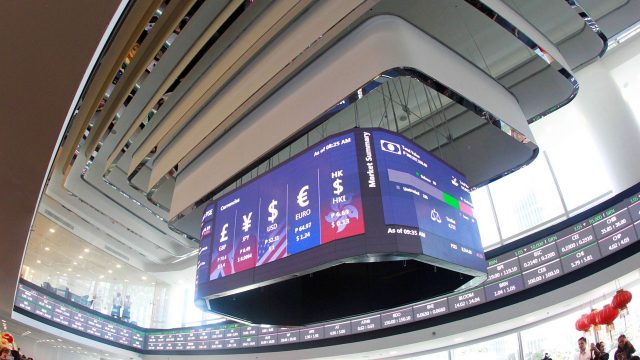
SHARES jumped on Wednesday, with the main index breaching the 6,400 level and hitting an over one-week high, after the Philippines secured a slightly lower “reciprocal” import tariff rate from the United States.

The benchmark Philippine Stock Exchange index (PSEi) rose by 1.67% or 106.56 points to close at 6,462.25, while the broader all shares index increased by 1.33% or 50.15 points to 3,807.35.

This was the PSEi’s highest close in over a week or since it ended at 6,525.04 on July 14.

“The market seemed to have taken positively the US-Philippines trade deal announced by President Donald J. Trump, wherein the tariff rate set on Philippine exports was marginally brought down from 20% to 19%,” Philstocks Financial Inc. Research Manager Japhet Louis O. Tantiangco said in a Viber message.

“PSEi ended with a strong showing after the recently concluded negotiations between the US and the Philippines despite a minimal reduction on the initial 20% tariff,” Regina Capital Development Corp. Head of Sales Luis A. Limlingan likewise said in a Viber message.

The new tariff rate — which was still higher than the 17% announced by Mr. Trump in April — came at the close of President Ferdinand R. Marcos, Jr.’s three-day state visit to Washington.

As part of the deal, Mr. Marcos said the Philippines will increase its imports of soy, wheat products, and medicines from the US. Mr. Trump also requested that certain markets be opened, including the automobile sector.

“Investors also cheered the peso’s appreciation against the US dollar this Wednesday,” Mr. Tantiangco added.

The peso strengthened by 16.9 centavos to close at P56.881 versus the dollar on Wednesday, which was also its best finish in over a week or since it ended at P56.73 on July 15.

All sectoral indices closed higher on Wednesday. Services surged by 5.84% or 125 points to 2,264.35; mining and oil went up by 2.08% or 191.78 points to 9,391.19; holding firms improved by 1.34% or 72.31 points to 5,469.51; financials climbed by 0.47% or 10.73 points to 2,259.63; industrials jumped by 0.43% or 39.82 points to 9,179.93; and property inched up by 0.36% or 8.61 points to close the session at 2,399.87.

“Bloomberry Resorts Corp. was the day’s index leader, jumping 7.19% to P4.62. Bank of the Philippine Islands was the main index laggard, falling 1.56% to P125.80,” Mr. Tantiangco said.

Value turnover increased to P10.18 billion on Wednesday with 1.94 billion shares traded from the P5.01 billion with 1.07 billion shares that changed hands on Tuesday.

Advancers outnumbered decliners, 128 versus 71, while 49 names closed the session unchanged.

Net foreign buying was at P181.16 million on Wednesday, a turnaround from the P14.67 million in net selling recorded on Tuesday. — Revin Mikhael D. Ochave

Eala braces for tournaments in Canada ahead of US Open in Aug.

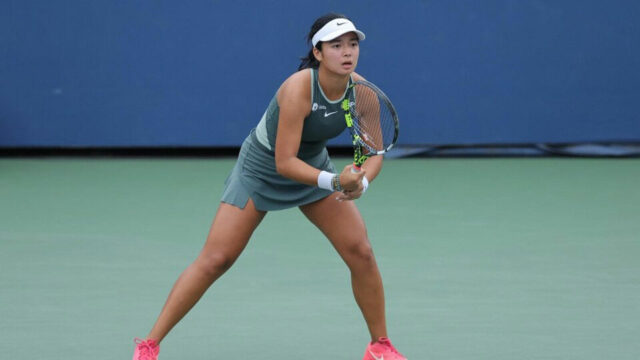
ALEX EALA — USOPEN.ORG/BRAD PENNER/USTA

VACATION’S over for Filipina tennis ace Alexandra “Alex” Eala.

Following a well-deserved homecoming and much-needed break in the Philippines, Ms. Eala troops to Canada to begin her preparations for the US Open next month.

“And just like that, we’re off again. Here’s to Montreal (Canada),” said Ms. Eala on her social media selfie on Wednesday with an emoji of the Philippine flag while on a plane en route to North America.

Ms. Eala reunited with her family here in Manila and spent time with her fans, local media and private supporters after etching historic milestones for Philippine tennis abroad, mostly in Europe.

The 20-year-old sensation is the first Filipina ever to play in not one but two Grand Slam main draws in the French Open and Wimbledon before another major shot in the US Open in New York on Aug. 24 to Sept. 7.

She’s also the first Filipino to reach the Top 100 of the world rankings, currently at No. 69 due to inactivity from a career-best of No. 56 last month.

In North America, the first order of business for Ms. Eala is the National Bank Open in Montreal, Canada from July 26 to Aug. 7 where she is already seeded in the main tournament.

The National Bank Open has yet to release the official draw but Ms. Eala is expected to be up against more seasoned and higher-ranked opponents, who are also ramping up their preparations for the centerpiece US major.

Montreal is a WTA 1000-level hardcourt tourney, making it a tough transition for Ms. Eala after spending her summer on the grass and clay courts of Europe.

Good thing for Ms. Eala, she has been impressive in WTA 1000 tournaments with a semifinal finish in the Miami Open and a finale stint in the Eastbourne Open, which were both historic feats for Philippine tennis.

Ms. Eala is expected to vie in more tournaments in Canada and the United States before strutting her stuff in New York with hopes of scoring her first-ever Grand Slam main draw win.

After that, she will fly closer to home with stints in China, Hong Kong and other Asian cities to continue harvesting pro points in a bid to finally barge inside the Top 50. — John Bryan Ulanday

Severino finishes 2nd place at Chinese Taipei chessfest

FIDE MASTER SANDER SEVERINO — SANDER SEVERINO FACEBOOK ACCOUNT

FIDE MASTER (FM) Sander Severino drew with countryman Grandmaster (GM) Joey Antonio in the ninth and final round to finish a strong second in the Chinese Taipei Chess Association International Open on Tuesday.

Mr. Severino, a multiple Asian and ASEAN Para Games gold winner, finished undefeated with seven points on five wins and four draws, or just half a game behind eventual champion GM Sayantan Das of India.

The Silay City, Negros Occidental native had a chance to tie first and beat Mr. Das for the crown due to a higher tiebreak score.

But he couldn’t get the victory and settled for the truce instead for the runner-up finish.

Mr. Antonio, Jasper Rom and Darry Bernardo, finished in a five-player logjam at No. 3 with 6.5 points apiece and ended up fourth, fifth and sixth, respectively, after tiebreaks were applied.

Hungarian GM Gergely Aczel was third while Spain’s Aitor Garcia-Ruiz Fuentes was eighth.

Rounding out the top 10 were Australian World GM Zhang Jilin, another Filipino FM Roel Abelgas and Japanese International Master Ryosuke Nanjo. — Joey Villar

Petro Gazz Angels bid goodbye to Tsuzurabara

KOJI TSUZURABARA — PVL

SAYONARA Koji Tsuzurabara.

This was how the Petro Gazz Angels bid goodbye to their Japanese coach, who has recently left the team just months after steering the franchise to a breakthrough Premier Volleyball League (PVL) All-Filipino Conference crown.

The 60-year-old Mr. Tzurabara is scheduled to fly back home to Japan on Thursday after posting on his social media account a farewell message to the team and all their supporters.

In the same post, Mr. Tsuzurabara also thanked Petro Gazz volleyball operations head Oliver Almadro for recommending the former to be the team’s head coach.

“I’m so grateful,” he said.

Under his watch, Petro Gazz had two podium finishes in the league including that mammoth upset of dynastic champion Creamline last conference.

In all, Mr. Tsuzurabara had a 35-15 mark with the Angels, including a 1-3 card in the ongoing PVL on Tour where they were hobbled by the absences of their top two stars in Brooke Van Sickle and MJ Phillips, who were out due to Alas Pilipinas duties. — Joey Villar

PSC approves P5,000 monthly stipend increase for national athletes, coaches

THE Philippine Sports Commission (PSC) officially approved recently the monthly stipend increase worth P5,000 for all national athletes and coaches that was earlier announced by its chairman Pato Gregorio.

It was announced through a one-page advisory letter disseminated by PSC OIC-Executive Director Guillermo Iroy, Jr. to all national sports associations (NSA).

The letter also stated it will be effective next month.

Also, national team members will no longer be required to submit a daily time record signed individually as well as the comprehensive activity report.

“In place of these documents, NSAs are now required to submit the newly adopted monthly training attendance certification,” said Mr. Iroy.

“This certification must be duly signed by the NSA president or secretary-general and notarized, and shall serve as the official basis for qualified members of the national training pool to receive their allowance for the particular month.”

Mr. Iroy said the process “aims to enhance efficiency, streamline administrative requirements, while maintaining accountability in the disbursement of government support.”

“It’s great to be a national athlete if the support is continuous,” said national para chess team member Sander Severino.

“It’s a blessing considering the rising cost of living,” Henry Lopez, Mr. Severino’s teammate, said.

“Great move. Hope it will be sustained in years to come,” said national women’s chess team’s Janelle Mae Frayna. — Joey Villar

England fights back to down Italy in extra time to reach Euro 2025 final

GENEVA — Chloe Kelly fired home the rebound from her own penalty to net a 119th minute winner as reigning champions England pulled off a stunning comeback to beat Italy 2-1 after extra time on Tuesday and reach the Women’s European Championship final.

England fell behind in the first half but hit back to level through Michelle Agyemang six minutes into second-half stoppage time and when Emma Severini pulled down Beth Mead in the box in extra time, Kelly grabbed the chance to decide the game.

Her first effort was saved but she was quick off the mark to rifle in the rebound and send England through to the final where they will face either Spain or Germany.

After a come-from-behind penalty shootout win over Sweden in the quarterfinals, England again flirted with disaster, but their late surge floored Italy, whose hopes of reaching a first final since 1997 were crushed.

The win propelled England into a third successive major final after their Euro 2022 success and World Cup loss to Spain the following year.

With the Italians riding a wave of confidence after a last-minute winner against Norway in their quarterfinal, they defended brilliantly and attacked incisively on the break.

Their persistence paid off in the 33rd minute of a gritty semifinal when a ball from the right found its way to Barbara Bonansea, who took a touch before lashing it into the roof of the net.

England then dominated possession and created a slew of chances as the Italians rode their luck, but too often the English attackers unleashed shots from distance that were easily dealt with or flew harmlessly over the bar.

With their hopes of defending their title slowly slipping away, 19-year-old substitute Agyemang snapped up a loose ball in the box and fired home to send the game to extra time.

Agyemang almost scored again with an effort deep into the second half of the extra period, out-sprinting and out-muscling the Italian defense only to see her deft lob towards goal bounce back off the crossbar.

Sensing that they could avoid a repeat of their quarterfinal penalty shootout against Sweden, England poured forward and reaped their reward when Mead was fouled in the box, but there was one more twist in the tale.

Kelly took her usual prancing run-up, but Italy keeper Laura Giuliani kept her nerve and saved, only for the England winger to score from the follow-up and seal her side’s spot in Sunday’s final in Basel.

England defender Lucy Bronze said they had been forced to dig deep to reach the final.

For Italy, who had defended superbly until England’s equalizer, the loss was a devastating blow. — Reuters

A’ja Wilson’s 24 points propel Aces to win over Dream

AN ALL-STAR performance by A’ja Wilson gave the Las Vegas Aces their first three-game winning streak of the season, as they beat the visiting Atlanta Dream 87-72 on Tuesday.

Wilson, fresh off her seventh All-Star Game appearance, led the Aces (12-11) with 24 points and 12 rebounds. Dana Evans added 14 points off the bench and Jackie Young contributed 14 points and seven assists in the victory.

Allisha Gray carried the offensive load for the Dream (13-10) with 24 points and five 3-pointers. Jordin Canada logged 12 points and six assists as Atlanta took its third loss in four games.

After the Aces trailed by seven points after the first quarter, Las Vegas surged to a 16-2 run at the start of the second and never looked back.

Las Vegas increased the lead up to 14 points with 4:11 remaining in the third quarter on a basket from Jewell Loyd and held back an Atlanta side that tried making adjustments all night.

Atlanta started the night with the league’s lowest turnover rate per game at 11.8 but committed 19 turnovers on Tuesday, resulting in 24 points for Las Vegas. — Reuters

Mars Wrigley eyes expansion in PHL market 

Mars Wrigley Asia General Manager Kalpesh Parmar in the company’s Antipolo factory. | photo by Almira Louise S. Martinez, BusinessWorld
Mars Wrigley logo

Confectionery manufacturer Mars Wrigley said on Thursday that it aims to expand its presence beyond modern trade channels and venture into general trade through sari-sari stores in the Philippines.

“We have done well in modern trade channels,” Mars Wrigley Asia general manager Kalpesh Parmar told reporters in a press briefing.

“But if you look at the future, there is a lot more opportunities in the general trade also,” he said.

Mr. Parmar added that despite the complexity, exploring local key accounts could help the company expand its market in the country.

“During turbulent times, these are the channels which keep growing,” he said. “Our focus is more on penetrating more outlets and households in Vietnam, Indonesia, and the Philippines.”

In 1965, Mars Wrigley began its manufacturing operations in the country in Pasig City, and moved to Antipolo in 1999.

The Antipolo plant currently produces up to 30 metric tons of chewing gum products, such as Doublemint, Juicy Fruit, and CoolAir, daily. Of this output, 86% is distributed to other Southeast Asian countries, including Vietnam, Thailand, Malaysia, Indonesia, Bangladesh, Laos, and Brunei.

“Mint as a platform is big in Vietnam for us, big across Southeast Asia, North Asia, and globally also,” said Mr. Parmar.

Apart from partnering with small-scale businesses, the snacking company also said it will invest $2 million over the next three years in its Antipolo factory to “continuously upgrade infrastructure, packaging, and machinery to meet customer demand, as well as improve facilities that support associate well-being.”

“For the last three, four years, we’ve been investing $2 million,” Salazar Maquito, factory director of Mars Wrigley Antipolo, said in a briefing.

“These are the things that we do to ensure that we continue to support all the evolving customer needs,” he added. “So this will continue for the next two or three years.”  – Almira Louise S. Martinez

Trump strikes tariff deal with Japan; auto stocks up

PHILIPPINE STAR/EDD GUMBAN

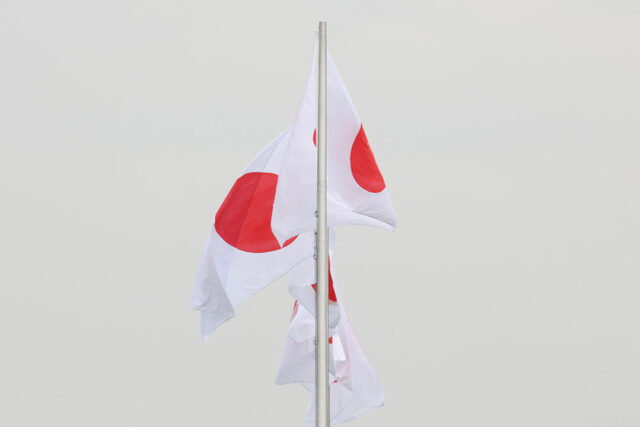
WASHINGTON/TOKYO — US President Donald J. Trump struck a trade deal with Japan that lowers tariffs on auto imports and spares Tokyo from punishing new levies on other goods in exchange for a $550-billion package of US-bound investment and loans.

It is the most significant of a clutch of agreements Mr. Trump has bagged since unveiling sweeping global levies in April, though like other deals, exact details remained unclear.

Japan’s autos sector, which accounts for more than a quarter of its US exports, will see existing tariffs cut to 15% from levies totaling 27.5% previously. Duties that were due to come into effect on other Japanese goods from Aug. 1 will also be cut to 15%.

The announcement sent Japan’s benchmark Nikkei stock index climbing almost 4% to its highest in a year, led by stocks in automakers with Toyota up more than 14% and Honda nearly 11%.

“I just signed the largest TRADE DEAL in history with Japan,” Mr. Trump said on his Truth Social platform. “This is a very exciting time for the United States of America, and especially for the fact that we will continue to always have a great relationship with the Country of Japan,” he added.

Mr. Ishiba, who plans to resign after a bruising election defeat on Sunday, according to a source close to the embattled premier, hailed the tariff agreement as “the lowest rate ever applied among countries that have a trade surplus with the US”

The 68-year-old leader later said that reports that he had decided to resign were “completely unfounded.”

Two-way trade between the two countries reached nearly $230 billion in 2024, with Japan running a trade surplus of nearly $70 billion. Japan is the fifth-largest US trading partner in goods, US Census Bureau data show.

The US investment package includes loans and guarantees from Japanese government-affiliated institutions of up to $550 billion to enable Japanese firms “to build resilient supply chains in key sectors like pharmaceuticals and semiconductors,” Mr. Ishiba said.

Japan will also increase purchases of agricultural products such as US rice, a Trump administration official said. Mr. Ishiba said the share of US rice imports may increase under its existing framework but that the agreement did “not sacrifice” Japanese agriculture.

Bank of Japan Deputy Governor Shinichi Uchida called the deal “very big progress” and said it reduces uncertainty over the economic outlook.

Some economists had forecast the tariffs could have tipped Japan — the world’s fourth-largest economy — into recession.

The exuberance in financial markets spread to shares of South Korean carmakers, as the Japan deal stoked optimism that South Korea could strike a comparable deal. The yen firmed slightly against the dollar, while European auto shares and US equity index futures rose.

But US automakers signaled their unhappiness with the deal, raising concerns about a trade regime that cuts tariffs on auto imports from Japan while leaving tariffs on imports from their plants and suppliers in Canada and Mexico at 25%.

“Any deal that charges a lower tariff for Japanese imports with virtually no US content than the tariff imposed on North American-built vehicles with high US content is a bad deal for US industry and US auto workers,” said Matt Blunt, who heads the American Automotive Policy Council which represents General Motors, Ford and Chrysler parent Stellantis.

‘MISSION COMPLETE’
Autos are a huge part of US-Japan trade, but almost all of it is one-way to the US from Japan, a fact that has long irked Trump. In 2024, the US imported more than $55 billion of vehicles and automotive parts while just over $2 billion were sold into the Japanese market from the US

Japanese Finance Minister Katsunobu Kato told reporters the agreement made no mention of foreign exchange rates, another issue the Trump administration had long complained about.

Mr. Trump’s announcement followed a meeting with Japan’s top tariff negotiator, Ryosei Akazawa, at the White House on Tuesday.

“#Mission Complete,” Mr. Akazawa wrote on X, later saying the deal did not include Japanese exports of steel and aluminum that are subject to a 50% tariff, nor any agreement on defense budgets.

Japan will also drop additional safety tests currently imposed on imported US cars and trucks — requirements that Mr. Trump and other US officials have said limit the volume of American-built vehicles sold in the country.

A photo of Mr. Akazawa’s meeting with Mr. Trump at the White House indicated the two sides engaged in some last-minute negotiations over the investment package to seal the deal.

The photo posted on X by Mr. Trump’s assistant Dan Scavino, showed the president seated across from Akazawa with a document titled ‘Japan Invest America’ and a sum of “$400B.” The figure was scored out, with “$500” hand-written above it.

Japan is the largest investor in the United States. Together with pension giant GPIF and Japanese insurers, the country has about $2 trillion invested in US markets.

Besides that, Bank of Japan data show direct Japanese investment in the United States was $1.2 trillion at the end of 2024, and Japanese direct investment flows amounted to $137 billion in North America last year.

Speaking later at the White House, Mr. Trump also expressed fresh optimism that Japan would form a joint venture with Washington to support a gas pipeline in Alaska long sought by his administration.

Mr. Trump’s aides are feverishly working to close trade deals ahead of an Aug. 1 deadline that Mr. Trump has repeatedly pushed back under pressure from markets and intense lobbying by industry. By that date, countries are set to face steep new tariffs beyond those Mr. Trump has already imposed since taking office in January.

Mr. Trump has announced framework agreements with Britain, Vietnam, Indonesia and paused a tit-for-tat tariff battle with China, though details are still to be worked out with all of those countries. — Reuters


Indonesia agrees to slash tariffs, nontariff barriers in US deal

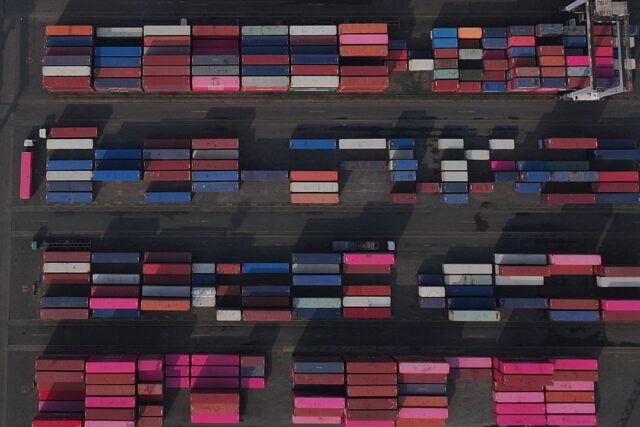
A DRONE view shows stacks of containers at the Tanjung Priok port in Jakarta, Indonesia, July 10, 2025. — REUTERS/AJENG DINAR ULFIANA

WASHINGTON — Indonesia has agreed to eliminate tariffs on more than 99% of US goods and scrap all nontariff barriers facing American firms, while the US will drop threatened tariffs on Indonesian products to 19% from 32%, the two countries said on Tuesday.

Trump hailed the deal, which he first announced on July 15, in a posting on his Truth Social media platform, calling it a “huge win for our Automakers, Tech Companies, Workers, Farmers, Ranchers, and Manufacturers.”

Details of a framework for the accord were released in a joint statement by both countries, and a fact sheet issued by the White House. They said negotiators for both countries would finalize the actual agreement in coming weeks.

“Today, the United States of America and the Republic of Indonesia agreed to a framework for negotiating an agreement on reciprocal trade to strengthen our bilateral economic relationship, which will provide both countries’ exporters unprecedented access to each other’s markets,” the statement said.

The Indonesia deal is among only a handful reached so far by the Trump administration ahead of an Aug. 1 deadline when higher tariffs are due to kick in.

The US tariff rate on Indonesia, Southeast Asia’s largest economy, matches the 19% announced for the Philippines earlier on Tuesday. Vietnam’s tariff rate has been set at 20%.

Under the agreement, Indonesia will immediately drop its plans to levy tariffs on internet data flows and it agreed to support renewal of a longstanding World Trade Organization moratorium on e-commerce duties, a senior Trump administration official told reporters on a conference call.

Indonesia also will remove recently enacted pre-shipment inspections and verifications of US exports that have posed problems for US agricultural exports and contributed to a growing US farm trade deficit, the official said.

The official, who was not authorized to speak publicly, said the agreement could help restore the surplus in agricultural goods that the United States once had with Indonesia, until it implemented the pre-shipment requirements.

In a win for US automakers, the official said Indonesia has agreed to accept US Federal Motor Vehicle Safety Standards for vehicles exported from the United States to the growing country of 280 million people.

Indonesia also has agreed to remove export restrictions on industrial commodities, including critical minerals, the joint statement said. The US official said it would also remove local content requirements for products using these commodities that were shipped to the United States.

The joint statement said the US would reduce the reciprocal tariff rate to 19%, and “may also identify certain commodities that are not naturally available or domestically produced in the United States for a further reduction in the reciprocal tariff rate.” No further details were provided.

The two countries said they would negotiate rules of origin to ensure the benefits of the deal accrue mainly to the US and Indonesia, not third countries.

They said Indonesia would work to address barriers for US goods, including through the removal of import restrictions and licensing requirements on US remanufactured goods or parts.

Indonesia also agreed to join the Global Forum on Steel Excess Capacity and take actions to address global excess capacity in the steel sector. — Reuters

Trump says Fed’s Powell will be out in 8 months, calls him a ‘numbskull’

US Federal Reserve Chair Jerome H. Powell — REUTERS

WASHINGTON — US Federal Reserve Chair Jerome H. Powell is a “numbskull” who has kept interest rates too high, but he will be out in eight months, President Donald Trump said at a news conference on Tuesday.

“I think he’s done a bad job, but he’s going to be out pretty soon anyway. In eight months, he’ll be out,” he said from a meeting at the White House with Philippine President Ferdinand R. Marcos, Jr.

Mr. Powell’s term as Fed chair runs through May 15, and he has repeatedly said he will not leave the post early. Eight months would mean Mr. Powell would remain in place until mid-March; it was not immediately clear why Mr. Trump picked that time frame.

Mr. Trump has been hammering at Powell for months for not cutting rates and has frequently raised the possibility of ousting him, while also saying that firing him would be “unlikely.”

Lately, the White House has intensified Mr. Trump’s pressure campaign, launching a review of the Fed’s renovation of two buildings in Washington which they say are inappropriately lavish and may not have followed planning protocols, charges that the Fed vigorously rejects. Treasury Secretary Scott Bessent on Tuesday repeated his call for a “big internal investigation” of the Fed’s non-monetary policy operations.

Economists warn that efforts to push the Fed to loosen monetary policy could actually have the opposite effect.

They point to hyperinflation in countries from Argentina to Zimbabwe as examples of what can happen when politicians exert influence on central bank rate-setting. Some see evidence in financial markets that the Trump administration’s constant attacks on Mr. Powell are eroding confidence in the Fed’s ability to achieve its dual goals of price stability and maximum employment.

“Market participants seem to agree that the risk to Fed independence is rising,” Goldman Sachs economist Jan Hatzius wrote late on Monday, pointing to a rise in longer-term inflation expectations as captured in 5-year forward inflation swaps, which measure expected inflation over five years beginning five years out.

“A further increase could make Fed officials more reluctant to cut,” Mr. Hatzius said.

If inflation expectations rise, the thinking goes, actual inflation is likely to follow. Mr. Powell and other Fed officials believe that longer-term inflation expectations remain stable, but they say they are watching nearer-term measures closely, particularly with tariffs likely to increase upward price pressures as companies pass on more of the costs to consumers.

“Efforts by the administration to push the (Fed) into an accommodative monetary policy stance that would not be justified by macroeconomic conditions would likely backfire with higher long-term rates, higher inflation expectations, and ultimately the need for a tighter monetary policy stance,” Barclays economists wrote on Tuesday.

On Tuesday Mr. Trump repeated his view that the policy rate should be 3 percentage points (ppts) lower than it is now.

The central bank’s policy-setting Federal Open Market Committee is nearly universally expected to leave the policy rate in its current range of 4.25%-4.5% when it meets next week, as policymakers wait to see how inflation and employment react to tariffs.

“Our economy is so strong now, blowing through everything. We’re setzting records,” Mr. Trump said on Tuesday. “But you know what? People aren’t able to buy a house because this guy is a numbskull. He keeps the rates too high, and is probably doing it for political reasons.”

Mortgage rates had increased last year even as the Fed cut its policy rates by a total of 1 ppt, tracking US Treasury yields, which surged amid economic resilience and worries about Mr. Trump’s proposed policies.

Mr. Bessent, at the same meeting, raised a different complaint against the Fed.

“The Fed has had big mission creep, and that’s where a lot of the spending is going,” Mr. Bessent said. “That’s where, why they’re building these new, or refurbishing these buildings, and I think they have got to stay in their lane.” — Reuters