Home Blog Page 7423

Philippines slumps to lowest competitiveness ranking in 5 years
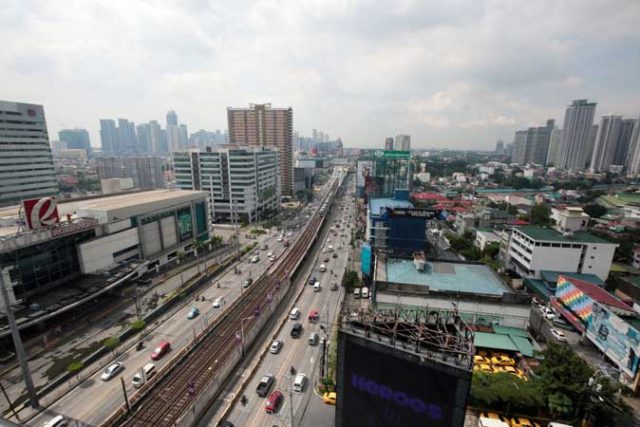
PHILIPPINE STAR/ MICHAEL VARCAS

By Jenina P. Ibañez, Reporter

THE PHILIPPINES slipped seven spots in an annual global competitiveness report, the steepest decline in Asia after its economic performance slumped amid the coronavirus disease 2019 (COVID-19) pandemic.

Switzerland-based business school International Institute for Management Development’s (IMD) 2021 World Competitiveness Report ranked the Philippines 52nd out of 64 countries, down seven spots from 45th last year. This year’s ranking is the Philippines’ lowest in five years.

Switzerland took the top ranking overall in this year’s World Competitiveness Index, followed by Sweden, Denmark, and the Netherlands.

The country still lags in the region, as it ranked 13th out of 14 Asia-Pacific economies.

Singapore took the highest spot among Asian economies at fifth place, followed by Hong Kong (7th), Taiwan (8th), and China (16th). At the 60th spot, Mongolia was the only Asia-Pacific economy behind the Philippines.

“This year’s results expose the strengths and weaknesses of the world’s economies under the litmus test of the COVID-19 pandemic and how economies that were caught most off guard with managing the health side of the pandemic were not necessarily those that suffered the most on an economic level,” IMD said.

The IMD report ranked a country’s competitiveness using indicators grouped under four factors: economic performance, government efficiency, business efficiency, and infrastructure.

The Philippines’ performance according to IMD declined after the economy slumped by a record 9.6% last year. The country implemented one of the world’s longest and strictest lockdowns, leaving many out of work and businesses struggling to survive.

“Its economic performance fell the hardest due to its poor domestic economy, international investment and employment which saw unemployment rates double from around 5% to more than 10%. It has also suffered in its public finances and productivity of firms in the private sector.”

The annual unemployment rate reached a record-high 10.3% last year, versus the 5.1% in 2019. This is equivalent to 4.5 million Filipinos who do not have jobs, but are looking for one.

According to IMD, the Philippine rankings dropped in three of the factors — plunging to 57th spot from 44th in economic performance and falling three places to 45th in government efficiency. Business efficiency slipped four spots to 37th due to poorer performance in productivity, labor market, finance, and management practices.

The country retained its poor infrastructure ranking at 59th for a third straight year, despite the government’s massive “Build, Build, Build” program.

IMD World Competitiveness Center Chief Economist Christos Cabolis said that the country’s decline in ranking is not specifically related to its recent response to the COVID-19 pandemic.

“Its long-term performance has also played a part, which limited its options in addressing the health and economic crises,” he said in an e-mail to BusinessWorld. “Digitally advanced economies that have seamlessly transitioned to ‘work-from-home’ have thrived compared to their peers.”

The economies that did well, he added, are those that have set up long-term trends in innovation, digitalization, social nets, health, and social cohesion.

Chris Nelson, British Chamber of Commerce executive director, said the lockdowns adversely affected the country’s consumer-driven economy, especially in Metro Manila.

“What investors and people are looking at is clarity. Particularly in the case of the Philippines, you’ve been particularly affected by certain key sectors: transportation, hotels, tourism, real estate. So this will change if we can get more clarity,” he said in a phone interview, referring to vaccine and other pandemic-related programs.

European Chamber of Commerce of the Philippines President Nabil Francis in a mobile message on Wednesday said that the chamber supports workforce skills development measures to improve the country’s competitiveness.

“The recent ranking is a call for policy makers to swiftly enact key economic reform measures,” he added, naming foreign investment liberalization measures pending in Congress.

Comparing the Philippines’ performance to Asian economies that took the top spots, Mr. Francis said “population size also plays a role in the competitiveness of some economies as is the case with Singapore and Hong Kong with relatively smaller demographics.”

The Philippine results reflect the impact of the pandemic, the Asian Institute of Management’s center for competitiveness said in a statement on Thursday.

“Some of the challenges that the Philippines face in 2021 include ensuring inclusive economic recovery and quickly reviving business and consumer confidence, effectively controlling the COVID-19 pandemic and implementing full vaccination rollout, building resilient social infrastructure, especially in health and education, sustaining increased investment in physical and digital infrastructure, and maintaining fiscal health while adequately providing stimulus and support, especially for vulnerable sectors,” the center said.


World Competitiveness Ranking 2021

Finance department prefers emissions trading scheme over carbon tax

UNSPLASH/BRENDAN O'DONNELL

By Beatrice M. Laforga, Reporter

THE DEPARTMENT of Finance (DoF) said it prefers the adoption of an intensity-based carbon emissions trading scheme (ETS) over an outright carbon tax, as the Philippines seeks to adopt a policy response to climate change.

DoF Assistant Secretary and Spokesperson Paola Sherina A. Alvarez told BusinessWorld that based on a study conducted with the World Bank, an intensity-based ETS is the more suitable option of carbon pricing instrument (CPI) for the Philippines than a carbon tax because such form of taxation requires huge institutional capacity to implement.

“Based on the PMR (Partnership for Market Readiness) CPI technical report, the DoF supports the establishment of an intensity-based ETS primarily focused on the power sector rather than other CPI options with other sectors, such as an absolute ETS and a carbon tax on the transportation and industry sectors,” Ms. Alvarez said in an e-mail last week.

An intensity-based cap measured through the “grid emission factor” (tCO2/MWh) will have the option of “buying out” excess emissions. The system puts a limit on the volume of carbon emissions producers can generate, with a trading platform where entities can buy emission units to cover their needs or sell those that they do not use.

The DoF said it is looking at price volatility as a major factor in the government’s decision on whether or not to rely on taxation to limit carbon emissions.

“An emissions trading scheme is initially preferable to a carbon tax given this sectoral focus and the strong public sensitivities around energy prices and the impacts of increased taxation on these. Given the large levels of uncertainty around future economic growth and emissions in the absence of a CPI, the use of an intensity-based cap on emissions is favored to help manage this without major price volatility,” Ms. Alvarez said.

However, she said initial findings showed that CPI should be limited to the power sector first for easier but targeted implementation, while ensuring that the system covers the segment with growing emissions.

The government also has to carefully design the system to make sure that it will not overlap, but instead complement the Department of Energy’s (DoE) Renewable Portfolio Standards (RPS).

She said the DoF prefers setting a limit based on intensity than an absolute cap because the latter entails a high risk or may result in low allowance prices, while the country still has no accurate forecasts on emissions.

“Once established, it will be possible to consider expansion to other emitting sectors such as large industrial facilities…. The CPI might also be readily combined with existing mechanisms to support clean energy, such as the Renewable Energy Technology Fund (RETF), by channeling the proceeds from ‘buying-out’ excess emissions into this fund,” she added.

Ms. Alvarez said the DoF is still developing a CPI with the help of the World Bank. They are currently studying the impact of reducing emissions and the advantages of CPIs, and are working on to promote public awareness on the measure.

“Moreover, analyses will be conducted on CPI’s interplay with energy sector policies and the potentials for including the industry sector,” she added.

Antique Rep. Loren B. Legarda filed House Bill 2184, which proposed a cap-and-trade system in the industry to bring down greenhouse gas emissions and combat climate change. The measure is still pending at the House Committee on Climate Change.

The Philippines aims to cut its emissions by 75% by 2030 under its commitment to the Paris Agreement.

DoE expects more red alerts in Luzon until July

THE LUZON GRID will likely experience more red alerts until July, raising the possibility of more “brownouts” as several power plants undergo maintenance work, according to the Energy department.

“In the coming weeks up until Week 30 (end of July), we will see that the preventive maintenance schedules (of power plants) will happen at the same time,” Department of Energy (DoE) – Electric Power Industry Management Bureau Director Mario C. Marasigan said during a public hearing on Thursday.

The country is currently at Week 24, based on DoE’s method of reckoning.

He said GNPower Mariveles Energy Center Ltd. Co. is still on extended outage, while Sual unit 1 of TeaM Sual Corp. will start its preventive maintenance next month.

“As these numerous plants undergo preventive maintenance in the coming weeks, there is a potential that we won’t just have yellow alerts, but red alerts,” Mr. Marasigan said, noting this may happen if unit 1 of the 668-megawatt (MW) GNPower Dinginin Ltd. Co’s (GNPD) coal plant does not begin operations by next week.

A yellow alert is issued when reserves fall below ideal levels. A red alert is declared if the supply-demand balance deteriorates further, bringing the possibility of power interruptions.

During the hearing, GNPD Vice-President Roberto Racelis, Jr. said that unit 1 of the plant is expected to begin full operations by end of August.

Meanwhile, KEPCO Ilijan Corp., which operates the 1,200-MW gas plant, said through a company representative that it is delaying its maintenance schedule to July from May.

DoE data showed that the KEPCO Ilijan plant was operating on a de-rated basis or reduced capacity of 716 MW as of June 2.

The Luzon grid was placed under red alert for three consecutive days from May 31 to June 2, amid the forced outages of plants and higher temperatures.

RESERVE REQUIREMENT
On Thursday, DoE Secretary Alfonso G. Cusi maintained the need for reserves which assures the stability of the power grid. He emphasized that it was the system operator’s mandate to ensure that there was enough firm-contracted ancillary services (AS).

Citing estimates from the department, Mr. Cusi explained that firm contracting is “far more economical” than having low reserves which result in load dropping that causes “brownouts.”

He noted the National Grid Corp. of the Philippines (NGCP) is currently collecting 34 centavos per kilowatt-hour for firm contracts.

The DoE previously said that the NGCP has not been complying in terms of the required reserves procured through firm contracts as of end-2020.

It reported that the grid operator has only contracted firm-based regulating, contingency, and dispatchable reserves of 237 MW, 180 MW, and 145 MW, respectively, for the Luzon grid.

The major island grid’s required capacity for regulating, contingency and dispatchable reserves are at 491 MW, 647 MW, and 647 MW.

Under a department circular issued in 2019, the NGCP is required to fully procure firm-contracted reserves to guarantee the grid’s reliability.

In the same hearing, Energy Regulatory Commission Chairperson (ERC) Agnes VST Devanadera said since the issuance of the ruling, the commission “does not act on any applications for non-firm (contracts).”

In a separate statement, NGCP President and Chief Executive Officer Anthony L. Almeda said that procuring AS on either firm or non-firm contracts will not solve the recurring brownouts or power interruptions.

What we have is a supply and not a distribution problem. For the grid to effectively address imbalances between supply and demand, we need to increase the power capacity of the country to meet rising demand as we start to recover and fully reopen the economy,” he said.

The NGCP earlier announced that it would hold a competitive public bidding process for the supply of AS to fulfill government requirements and secure the “best value” for consumers. — Angelica Y. Yang

Fed ripples hit hardest in Asia as rates outlook shifts

REUTERS

THE FEDERAL RESERVE’S new outlook for interest rates ricocheted through Asian markets as the dollar and Treasury yields surged, easing pressure on some of the region’s biggest central banks and complicating the outlook for others.

Expectations for higher US rates tend to suck capital away from Asia, sending local currencies lower and borrowing costs higher. That may be a boon for the likes of the People’s Bank of China and Bank of Japan as it stems unwanted currency gains. But central banks in emerging economies such as India and Indonesia may rue a constraint on their scope to ease policy.

“If dollar appreciation continues, it also exerts pressure on Asian central banks,” said Teresa Kong, a portfolio manager at Matthews International Capital Management LLC in San Francisco. “I see the Fed’s statement today as leaving emerging market central banks with less policy flexibility, shifting probabilities to higher rates to temper inflation even though their economies may benefit from lower rates for longer.”

The dollar rallied the most in a year in the wake of the Fed meeting, disproportionately hitting Asia markets, based on a gauge of risk-adjusted moves. The Philippine peso, Indonesian rupiah and South Korean won were among the largest underperformers since the policy announcement, as measured by the three-month z-score, which tracks the swings relative to the mean.

At the same time, a sharp sell-off in Treasuries weighed heavily on developed market bonds. New Zealand’s and Australia’s 10-year yields jumped on bullish local data and bets the Fed’s new twist will allow room for others to shift tone without risking too much currency strength.

PRICE PRESSURES
Markets price a good chance for a Fed rate hike by late 2022 — and overnight swap markets shifted to price in close to 50 basis points (bps) of tightening by New Zealand’s central bank by the end of 2022, compared with around 32 bps on Tuesday.

“We are looking at regional central banks here in Asia and debating which one could move earlier than projections and some of that could be moving ahead of the Fed,” Stephen Chang, a Hong Kong-based portfolio manager at Pacific Investment Management Co. told Bloomberg Television. He cited the Bank of Korea and Australia as possible candidates for a sooner-than-anticipated move.

In a speech Thursday, Reserve Bank of Australia (RBA) Governor Philip Lowe said requirements for raising the benchmark interest rate could be met in 2024 in some of the scenarios the bank has reviewed, but not in others. The RBA will look at the scenarios again at its meeting next month. Soon after he wrapped up, May labor force data showed a surprising jolt lower in the jobless rate to 5.1%.

Bank Indonesia Governor Perry Warjiyo, who held rates steady on Thursday for a fourth straight month, said the reaction to the Fed’s move so far appears to be relatively stable, though he added the bank remains on watch.

“We will continue to be vigilant and ensure the stability of exchange rates and financial markets,” he told reporters after announcing the bank’s policy decision.

BIG TAILWIND
For the Bank of Japan (BoJ), which meets on Friday, the Fed’s move may offer some reprieve, said Tomo Kinoshita, global market strategist at Invesco Asset Management in Tokyo.

“The Fed is sending a big tailwind for the BoJ by adding pressure for the yen to weaken,” Mr. Kinoshita said. “All the BoJ has to do is to stick with what they have been doing for a distant inflation target.”

As for the PBOC, it will likely welcome the Fed’s shift too as it grapples with yuan strength, surging inflows of capital and sky-high commodities prices. The central bank has been vocal in warning against expectations for ongoing yuan appreciation.

China’s stock benchmark CSI 300 Index rose as much as 0.8%, the best performer among major Asian equity gauges.

Fed officials sped up their expected pace of policy tightening amid optimism about the labor market and heightened concerns for inflation, and released forecasts that show they anticipate two interest-rate increases by the end of 2023 — sooner than many thought.

Fed Chair Jerome Powell told a press conference that officials would begin a discussion about scaling back bond purchases used to support financial markets and the economy during the pandemic.

That will have knock-on consequences for Asia and other regions, said Marc Chandler, chief market strategist at Bannockburn Global Forex.

“If US rates really do rise in a sustained fashion and the dollar moves higher, many EM countries will be squeezed, especially where interest rates differentials have been an important support,” he said. — Bloomberg

PAL operator expects positive monthly cash flows

FACEBOOK.COM/PHILIPPINEAIRLINES

Optimism comes despite annual losses hitting P73B

By Arjay L. Balinbin, Senior Reporter

PAL Holdings, Inc., the listed operator of flag carrier Philippine Airlines, expects positive monthly operating cash flows this year after its net loss after tax widened to P73.08 billion in 2020 from P9.70 billion previously due to the “extraordinary impact” of the global health crisis on the company’s operations.

PAL Holdings’ net loss attributable to equity holders of the parent company reached P71.91 billion in 2020 from P10.31 billion in 2019, the listed company said in its annual report released on Thursday.

The company remains optimistic that it will be able to continue operations in the next 12 months.

It expects to generate “positive monthly operating cash flows” this year “as a result of the gradual recovery in the travel industry and the effect of the cost containment measures implemented in 2020 and early 2021.”

PAL Holdings’ total revenues for 2020 dropped 64.2% to P55.26 billion from P154.54 billion a year earlier.

The company noted that it was able to cut expenses by 46% last year compared with the figure in 2019, but this was offset by the decrease in revenues.

“The Philippine government halted all commercial flights in April, May and part of March 2020 as part of a nationwide community quarantine, while local and worldwide travel restrictions held airlines down to a limited number of flights for the rest of 2020,” it explained.

Passenger revenue declined 68.8% last year to P41.86 billion from P134.29 billion in 2019, while cargo revenue saw a slight improvement of 0.32% to P9.41 billion from P9.38 billion a year earlier.

Ancillary revenue dropped 62.8% to P3.98 billion from P10.70 billion in 2019.

“For 2021, PAL has increased its regular flights on most of its pre-pandemic routes, in addition to new all-cargo services and special repatriation flights on multiple routes to North America, the Middle East, Asia and throughout the Philippines,” PAL Holdings noted.

PAL Holdings’ attributable net loss for the first quarter of 2021 narrowed slightly to P8.60 billion from a loss of P9.38 billion in the same period a year ago, but total revenues dropped 74.1% to P8.30 billion from P32.07 billion.

Passenger revenue decreased P80.3% to P5.32 billion in the first quarter from P27.01 billion in the same quarter last year, while cargo revenue grew 31.2% to P2.48 billion from P1.89 billion previously.

Ancillary revenue dropped 84.3% to P494.94 million from P3.16 billion.

PAL Holdings expects to pay its obligations based on restructured debts, with the assumption that negotiations with its lessors and creditors will be successful and the rehabilitation plan will be approved by the court.

The company noted it has “not made principal and/or interest payments due in respect to its long-term obligations since April 2020, resulting in breach of certain loan covenants and default provisions in the lease and loan agreements.”

It said it expects a funding of up to $505 million from a “major stockholder,” and this may involve sourcing of the fund by the major stockholder from the government and private financial institutions, estimated to be around $250 million.

“This is on top of the funds initially committed and provided by the major stockholder amounting to $358.2 million in various dates from fourth quarter of 2019 to first quarter of 2021,” it added.

The company likewise expects an exit facility amounting to $125 million.

It is currently in the “final stages” of its comprehensive restructuring plan.

“We are confident that the restructuring will enable PAL to strengthen its capital structure, meet stakeholder obligations and position the company for long-term success,” PAL Holdings said.

Sales of imported cars surge

BW FILE PHOTO

IMPORTED car sales almost quadrupled in May compared with the level in the same month last year as lockdown restrictions loosen, latest industry data show.

In a report on Thursday, the Association of Vehicle Importers and Distributors, Inc. (AVID) said vehicle sales of its 21 members carrying 26 global brands in May surged 293% to 4,864 units from 1,239 in the same month in 2020.

Restrictions during the start of the pandemic had dampened consumer activity, with some dealerships just starting to reopen in mid-May 2020 after lockdown rules were relaxed.

May 2021 sales also grew 8% compared with the April figure as companies sold more light commercial vehicles. Metro Manila and adjacent provinces were under a modified enhanced community quarantine (MECQ), a stricter lockdown measure, to curb a spike in coronavirus disease 2019 (COVID-19) infections until May 14.

Year-to-date sales rose 59% to 25,217 vehicles from 15,811 in the first five months of 2020.

Passenger car sales in May increased by 191% to 1,029 vehicles compared to last year, led by sales from Suzuki Philippines, Inc. The category’s year-to-date sales went up 29% to 6,357 units.
Light commercial vehicle sales surged 335% to 3,814 in May, with a bulk of sales going to Ford Group Philippines, Inc. Year-to-date sales went up 68% to 18,128 units.

AVID sold 21 commercial vehicles in May, or 133% more than the nine sold in the same month last year. But this figured dropped 93% from the 293 sold a month earlier. Year-to-date sales rose 625% to 732 units.

“We attribute the gradual improvement in AVID sales to our members’ tireless commitment to provide customers with quality vehicles and after sales service that will see them safely through life’s many journeys,” AVID President Ma. Fe Perez-Agudo said.

Another car industry group recorded a 360.8% sales surge to 22,062 units in May. Sales had jumped 23.6% from April, data from the Chamber of Automotive Manufacturers of the Philippines, Inc. (CAMPI) and Truck Manufacturers Association (TMA) showed.

Imported car sales growth in 2021 is expected to come in at between zero and 20%, depending on the government’s final decision on safeguard duties, Ms. Perez-Agudo said in March. — Jenina P. Ibañez

Cebu Pacific ‘cautiously optimistic’ on 2022 recovery

BW FILE PHOTO

BUDGET carrier Cebu Pacific, operated by Cebu Air, Inc., is sticking to its forecast of returning to pre-pandemic levels next year, saying it is “cautiously optimistic” given the current pace of vaccine rollout in the country.

“To be honest, initially, when it started rolling out and we were monitoring the inoculation rate, we were pleasantly surprised with the 130,000 a day. Now, with the A4 (priority) and private vaccinations, we’re cautiously optimistic,” Candice A. Iyog, Cebu Pacific vice-president for marketing and customer service, said at an online briefing on Thursday.

“We’d like to stick to what we’ve said before, the 2022, but again so many things can still happen,” she added.

Cebu Pacific currently operates flights to 32 domestic destinations.

To recall, the number of flights Cebu Pacific had in 2020 was 71% lower at 41,804. The number of passengers it carried last year also dropped 78% to five million.

Ms. Iyog said flights from Manila to Boracay will be five times daily starting June 21, while flights to Bohol will also operate daily.

As of June, it operates flights to Dubai, Hong Kong, Seoul, Tokyo, and Singapore.

“When demand comes back, there will be higher expectation from us to be more digital and to provide more contactless options for our passengers because we understand that ‘contactless’ is somehow part of safety,” Ms. Iyog noted.

“Yesterday (June 16), we successfully launched our new website and our iOS and Android booking channels,” she added.

The airline has partnered with GCash, GrabPay, and PayMaya for cashless payment options for new bookings.

The budget carrier will be implementing starting July this year a new policy for passengers who want to make voluntary changes to their flights.

“Starting July 1, the travel fund option for voluntary flight changes will only be available for passengers who pre-purchased the CEB Flexi add-on during initial booking as this new and improved product allows passengers to cancel their flights for free, up to two hours before departure, and store the value of the booking in a Travel Fund for as low as P499,” Cebu Pacific said in a statement on Wednesday.

“The amount in this virtual wallet is valid for two years and may be used to book new flights or purchase other add-ons such as seat selection, additional baggage allowance, or travel insurance,” it added.

As for passengers who want to change their bookings voluntarily without purchasing CEB Flexi, the budget carrier said: “They can make use of the Unlimited Rebooking option of CEB and rebook as many times as they want up to two hours before their scheduled time of departure.”

The low-cost carrier said it permanently removed change fees since March.

Cebu Air shares closed 1.66% lower at P53.25 apiece on Thursday. — Arjay L. Balinbin

The return of Puto

THIRTY years after the release of the comedy-fantasy film Puto, its main character is returning, this time on television.

The 1987 comedy-fantasy film, Puto becomes a television series on TV5 with magical adventures, and new and a few original cast members.

The film followed the shy young Ivanhoe “Puto” Dela Cruz who was bullied by his classmates. The TV series is set 30 years later, Puto is now a father and tries to save his son Uno from the same fate he suffered as an unpopular kid in high school. The fantasy aspect of “comedy-fantasy” comes from the involvement of Filipino mythical creatures in Puto and Uno’s adventures.

TV5’s Puto stars Herbert Bautista, reprising his role as Puto (who gets his nickname since he sells puto or steamed rice cakes).  “I think it is still as relevant as it was [from] 30 plus years ago…,” Mr. Bautista said in an online press conference on June 16 via Zoom. “I had to watch [the movie] again, so that I can relate myself as the father of Uno.”

The teenage Uno, played by dancer and actor McCoy De Leon (who previously starred in an episode of TV5’s Wanted: Ang Serye), finds himself struggling to find acceptance among his peers at school. “Mahilig ako sa mga lumang comedy. Iba ang atake ng comedy dati, tumatatak talaga (I am fond of old comedy. The comedy landed differently before),” Mr. De Leon said. “Ang sarap makagawa ng ganoong proyekto na may halong napapanahon na istorya. (It is good to create a project with a timely story).

The comedy-fantasy series will show the dynamics of Filipino families.

In the TV5 reboot, directed by Raynier Brizuela, Puto and Uno embark on new adventures as their lives are intertwined with creatures of the duwende (dwarf) realm. Lassy Marquez, MC Calaquian, and Chad Kinis play The Mamitas, the three elves rescued by Puto in the movie who now take on human form and help care for Uno. The Mamitas serve as Uno’s mother figures growing up.

As the series unfolds, Uno will realize that he is half-duwende and is born with magical powers which could either lead to something good or bad.

Joining the new cast are Rafa Siguion-Reyna as Uno’s professor; Andrea Babierra and Bob Jbeili as Uno’s best friends; Carlyn Ocampo as Uno’s love interest; Andrew Muhlach as the school bully; Caleb Santos and TJ Valderrama play good duwendes; Billy Villeta plays the bad duwende; and Giovanni Respal plays the leader of the bad duwendes.

The series also brings back performers from the original movie: Janno Gibbs reprises his role as Puto’s best friend Juanito; Gelli de Belen as Puto’s former schoolmate Mindy who is now a cook in the school canteen; and Bing Loyzaga as Tere, now a life insurance agent and self-proclaimed plantita.

Ang conversation naming original cast is more about buhay namin noong araw at kung ano yung buhay namin ngayon, and yung mga challenges bilang mga magulang (The conversation of the original cast revolves around our live then, and our lives now, and the challenges of being a parent),” Mr. Bautista said.

His character, Mr. Bautista said, remains the same. “He still lives by the principle of hard work,” Mr. Bautista said, adding that Puto has now expanded his business. “Hindi siya malayo sa nakaraan pero yung (It is not far from before), [but the] flavor is very different from 30 years ago.”

Puto will air on Saturdays, 6 p.m., on TV5 beginning June 19. Replays air on Sundays at 5 p.m. beginning June 20 on the Sari Sari Channel, available on Cignal Ch. 3 and SatLite Ch. 30. Viewers can also watch via TV5’s livestream on the Cignal Play app which is available for iOS and Android users. Michelle Anne P. Soliman

Venture Securities’ Tanco declines PSE post on stocks issue

By Keren Concepcion G. Valmonte

EUSEBIO H. Tanco declined his nomination as director of the Philippine Stock Exchange, Inc. (PSE) following issues against his brokerage, Venture Securities, Inc. (VSI)

“Recent events which, unfortunately and unjustifiably, have besmirched the reputation of Venture Securities and its officers and employees compel me, out of delicadeza, to decline the nomination for membership in the board of the exchange,” he said in a letter to PSE Chairman Jose T. Pardo.

The PSE, also a listed company, will be electing its board on July 2. Mr. Tanco currently holds a position as director in the PSE, while sitting as chairman in the troubled brokerage.

On Tuesday, a Securities and Exchange Commission (SEC) panel revoked the license and imposed a P32-million penalty fee on Venture Securities and its key officers over a stocks fraud that led to the collapse of another brokerage, R&L Investments, Inc.

R&L Investments trading floor assistant and settlement clerk Marlo Moron stole client shares from 2012 to 2019 and transferred them into a Venture Securities account under Julieto Sulapas. The panel also canceled the license of R&L Investments and slapped a P25-million fine.

Meanwhile, the SEC Markets and Securities Regulation Department decision on Venture Securities only mentioned its president Wilfred Racadio, associated person Adora Aguilar, salesman Loreto Balabis, and settlement head Teresita Mosenabre. Mr. Tanco was not held liable by the SEC.

The decision said Venture Securities “indispensably contributed to, if they had not been the proximate cause of, the losses incurred by the clients of R&L.”

In his letter dated June 16, Mr. Tanco said they intend to contest the decision, adding that the investigation “has unnecessarily dragged” his brokerage and that it is “much a victim as the clients of R&L” by making it appear that Venture Securities was complicit in the stocks fraud.

“Had the Capital Markets Integrity Corp. (CMIC) bothered to look at R&L and its activities, the CMIC would have easily noticed what was happening as they are better equipped to detect this kind of transactions violative of the rules of the exchange,” Mr. Tanco said, explaining that the CMIC has also been auditing his brokerage for years.

CMIC responded and said: “Adopting effective internal/financial controls including compliance therewith and adherence to good corporate governance standards and practices are properly the responsibilities of the owners and management of a company, not its auditor.”

In a separate statement, the SEC affirmed CMIC’s findings against the Tanco-led brokerage: “VSI violated multiple trading rules in facilitating transactions that eventually wiped-out client shares in R&L Investments.”

“CMIC found that the associated person of VSI failed to properly supervise the activities of its employees, which resulted in the multiple violation of securities laws,” the corporate watchdog said.

The CMIC also reported that Venture Securities failed to record several transactions executed by and assigned to Mr. Sulapas. The brokerage also allowed him to trade beyond his declared financial capacity.

“CMIC’s audit findings of any trading participant (TP), Venture included, should not be construed as relieving any such TP of its accountabilities and its responsibility to answer for its violations of the pertinent securities laws, and for matters which were and are within its power, control or management,” CMIC said.

Mr. Tanco maintains that Venture Securities had every right to be protected by the CMIC and rely on its findings.

“It is truly incomprehensible that CMIC — for all of over seven years — was not able to discover the discrepancies/anomalies in R&L’s clients’ position vis-a-vis the balances in the PCD system, something which a standard auditing procedure called ‘confirmation’ would have easily shown,” Mr. Tanco said.

Miley Cyrus can use name as trademark in Europe after long-running row

MILEY CYRUS — FACEBOOK.COM/MILEYCYRUS

BRUSSELS —  US pop star Miley Cyrus has won the right to use her name as a trademark on a wide range of products in the European Union, after Europe’s top court on Wednesday annulled a decision by the EU patent office to limit the scope of her brand.

The case dates to 2014 when the 28-year-old “Wrecking Ball” singer’s company, Smiley Miley, Inc., sought to trade mark MILEY CYRUS with the EU Intellectual Property Office (EUIPO) for audio and video discs, mobile phone cases, e-books, electronic board games, calendars and other goods.

British Virgin Island-based Cyrus Trademarks Ltd., which had registered the mark CYRUS in 2010, however opposed the application for some of the products.

EUIPO backed part of its argument, citing the likelihood of confusion between the two trademarks. Smiley Miley appealed but failed to convince the patent office last year and subsequently took its case to the Luxembourg-based EU Court of Justice (CJEU).

The Court overruled EUIPO’s decision, dismissing its arguments that the brands could be confused and that the name Miley Cyrus had no conceptual meaning.

“The mark applied for, MILEY CYRUS, has a clear and specific semantic content for the relevant public given that it refers to a public figure of international reputation, known by most well-informed, reasonably observant and circumspect persons…,” the CJEU said. —  Reuters

Vivant allots P5 billion for power projects until 2023

By Angelica Y. Yang, Reporter

VIVANT Corp. said on Thursday that it is allocating P5 billion in capital expenditures (capex) to finance its power projects until 2023, as the listed energy company detailed its plans to focus on renewable energy (RE).

“We’re allocating P5 billion in capex… for all power projects over the next three years so that’s until 2023,” Vivant Senior Vice-President for Power Emil Andre M. Garcia said during a press briefing on Thursday when the company held its annual stockholders meeting.

“We’re looking at all the types of generation for that,” he said.

However, he added that a “large” portion of the budget is dedicated to RE undertakings.

Mr. Garcia said that Vivant is allotting around P3 billion for power projects this year.

During the briefing, the official of the Cebu-based firm also detailed plans to focus on the solar rooftop sector.

“On the solar rooftop side, we’ll be ending the year with around 10 to 11 megawatts (MW) of installed capacity, and we have in the pipeline another 13 MW… Right now, we’re funding everything via equity so roughly its around $600[,000] to $800,000 per MW of the total project cost,” Mr. Garcia said.

Shem Jose W. Garcia, Vivant’s assistant vice-president for corporate communications and business development innovation, said the firm is planning to ramp up on RE projects in the coming years.

“What we have in the pipeline — we should be able to hit (or) increase our RE portfolio by 100 MW by 2023,” he said.

Vivant is hoping to add more renewables in its portfolio mix, which is currently made up of “95% conventional” power sources.

Vivant previously said its net income attributable to its parent firm decreased by 38% to P1.4 billion for the full-year 2020, as revenues declined.

Vivant shares at the local bourse shed 2.6% or 40 centavos to finish at P15 apiece on Thursday.

Harry Potter, Friends may fall victim to Hungary’s anti-LGBT law —  broadcaster

MERCEDES MEHLING/UNSPLASH

BUDAPEST — The largest broadcasters in Hungary criticized a new law banning the “display and promotion of homosexuality” among under-18s as a threat to freedom of expression, and one said it could impact showings of some Harry Potter films and classic TV shows.

Prime Minister Viktor Orban’s nationalist government pushed the law through parliament on Tuesday despite criticism from rights groups and the European Union, which said it could result in a loss of development funds for Hungary.

Mr. Orban and his ruling Fidesz party, which faces a tight election race next April, have increasingly railed against LGBT+ people and immigrants as part of their self-styled illiberal regime, which has deeply divided Hungarians.

German media giant RTL’s Hungarian unit, the country’s top broadcaster by audience, issued a statement saying it “condemned homophobia… We worry that the bill gravely harms freedom of expression, human rights and basic freedoms.”

Other major broadcasters including HBO, SPI International, and A+E Networks joined RTL’s statement. An RTL spokesman said it would come up later with a strategy to deal with the new legislation.

The law says it aims to “defend the right of children to an identity that conforms to their birth gender,” and bans content for minors that “promotes or depicts gender change and homosexuality.” The same rules apply for advertisements.

RTL said Hungary’s new law could provide grounds for banning family favorites from prime-time TV because they touch on homosexuality in some manner. “Based on this, works like Billy Elliott, Philadelphia, Bridget Jones’ Diary, or even some Harry Potter films would only be shown late at night,” RTL said. “Series like Modern Family would be banned, as would some episodes of Friends.”

The law will cause significant harm to the media business and makes it more difficult for all Hungarians to access certain kinds of content, the broadcaster added.

The government and the Fidesz deputy who submitted the bill did not reply to Reuters’ requests for comment on the possible impact of the law on programming. — Reuters