Home Blog Page 7375

Lawmaker pushes for Department of Sports following historic Olympic wins

PHILIPPINE STAR/ MICHAEL VARCAS

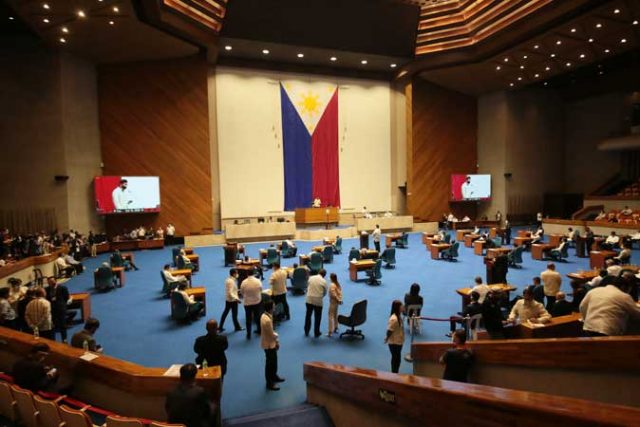
THE AUTHOR of a bill seeking the creation of a Department of Sports, filed in 2018, is now pushing for the law’s passage following the gold medal win of weightlifter Hidilyn F. Diaz and guaranteed medal for boxer Nesthy A. Petecio at the ongoing 2020 Tokyo Olympics.

“With the creation of the Department of Sports, there will be a dedicated function and budget to put as many infrastructures as possible because, if you look at it, our athletes need to train outside of the Philippines because we don’t have any infrastructure,” Deputy Speaker Michael Odylon L. Romero, author of House Bill 920, said in a press conference Wednesday.

Mr. Romero said that to create “elite” athletes, the national government would need at least P10 billion annually, with P9 billion to be spent on building training centers while P1 billion will be used to fund local athletes.

Malacañang has acknowledged that government funding for local athletes has been insufficient, with Presidential Spokesperson Herminio L. Roque Jr. saying that national athlete’s allowance is equivalent to “minimum wage.”

Mr. Romero is also planning to file a resolution, together with Deputy Speaker Bienvenido M. Abante, Jr., to make the incentives given to athletes who competed at the 2020 Tokyo Olympics tax-free.

Albay Rep. Jose Maria Clemente S. Salceda is filing a similar bill to institutionalize tax-free incentives for athletes.

The still unnumbered bill will amend Republic Act 10699 or the National Athletes and Coaches Benefits and Incentives Act signed in 2015. — Russell Louis C. Ku

Angara says budget must reflect pandemic recovery plan

PHILIPPINE STAR

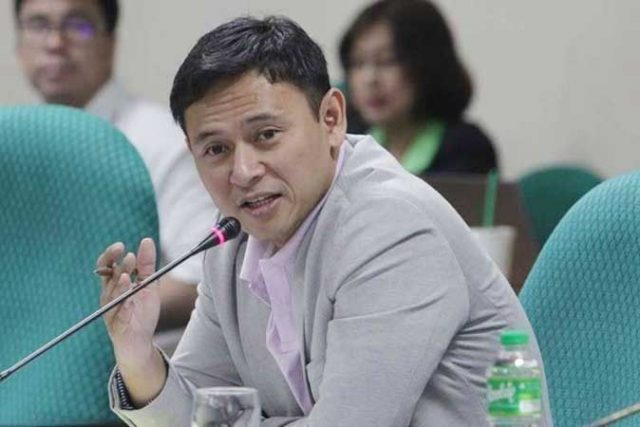
SENATOR JUAN Edgardo E. Angara, chair of the ways and means committee, said on Wednesday that the 2022 budget must reflect the government’s concrete plans for the country’s recovery from the coronavirus pandemic.

In a statement, he said the 2022 expenditure plan serves as “the major downpayment we will be making for our hard and long road to recovery.”

He said President Rodrigo R. Duterte’s last budget request should “capture the urgency and the dimensions” of the recovery that he laid out during his final State of the Nation Address on Monday.

“The budget puts the money where the rhetoric is,” Mr. Angara said.

Mr. Duterte, in his more than 14,500-word address, did not lay out specific steps on how his administration, on its last year, aims to get the country out of recession.

“But the good thing is that the foundations for that recovery have been laid out through laws and programs that promote economic growth with social equity,” Mr. Angara said, citing the Universal Health Care Act and other laws passed addressing social services improvement.

Nonetheless, the lawmaker stressed the need to fast-track all programs “because the window to make the turnaround won’t stay open for long.” — Alyssa Nicole O. Tan

BI personnel in airport scam back to work; investigations not done yet

JUSTICE SECRETARY MENARDO I. GUEVARRA — PCOO.GOV.PH

MORE than 80 immigration personnel involved in the airport bribery scam in Feb. 2020 are again reporting for duty as their six-month suspension has ended, but their cases are still pending in the Office of the Ombudsman.

Justice Secretary Menardo I. Guevarra, in a group message on Wednesday, said “the 6-month preventive suspension of BI (Bureau of Immigration) personnel allegedly involved in the so-called ‘pastillas’ scheme has already lapsed.”

“However, the preliminary investigation being conducted by the OMB (Ombudsman) is still going on; so is the administrative proceedings being conducted by the DoJ (Department of Justice),” he added.

Dana Krizia M. Sandoval, spokesperson of the DoJ-led bureau, said they are assigned in “back-end and non-sensitive positions,” until their cases are resolved.

Ms. Sandoval, in a separate group message on Wednesday, said 84 of the 86 BI personnel charged resumed work, one has retired, and one is the whistleblower.

Mr. Guevarra explained that under civil service rules, the DoJ and the Ombudsman may dismiss government employees from service for dishonesty and other major administrative offenses only “after giving the respondents their day in court.”

The personnel still have pending cases with the DoJ, Ombudsman, and the National Bureau of Investigation.

In Feb. 2020, Senator Ana Theresia N. Hontiveros-Baraquel exposed the scheme wherein Chinese citizens who want to work in the Philippines, particularly in Philippine Offshore Gaming Operators, and other foreigners who have been blacklisted in the country, gain speedy entry by paying off immigration officials. — Bianca Angelica D. Añago

Valuing sustainability without financializing: Evidence of best practice

OUR TEAM-FREEPIK

How can economic actors, who care about increasing shareholder value, truly engage in sustainable practices without oversimplifying it into numbers? In this article, I share results of a qualitative longitudinal study that my co-authors and I conducted on a sustainability reporting and assessment framework of a group of asset management companies that had signed to the United Nations’ Principles for Responsible Investment (PRI).

This framework was created in response to criticism that asset managers were “greenwashing” or merely claiming to be sustainable, without real evidence on whether their practices truly had an impact on society. Launched in 2013, the framework is an annual survey which PRI signatories are required to complete by answering a set of questions related to the following: How do you govern and implement responsible investment? It sounds simple but, in a situation wherein the definitions of sustainability were fuzzy and contested, and where asset managers had been programmed to financialize everything, it was difficult to commit to reporting on indicators which themselves had not been defined. This document was to be filled in online and consisted of 220 indicators across 12 modules tailored for each asset class. Each module contained a mix of mandatory and voluntary indicators. The creation and implementation process of the framework, which spanned more than three years, was the most extensive consultation in responsible investment and possibly sustainability history. It emerged through a lengthy consultation across more than 400 signatories, numerous deliberation meetings, calls and workshops, and pilot tests.

The move towards the structuration of reporting through the framework as well as the imposition of its public disclosure was meant to address the greenwashing critique. In order to achieve this, the signatories of the PRI engaged in a unique valuation process through which they collectively agreed upon why sustainability should be valued (i.e., for societal reasons, not only for financial ones) and how to report on it (i.e., through non-prescriptive evaluation criteria), thereby enabling the presence of a plurality of values in RI practices. Since the valuation of sustainability that took place was chosen by the signatories themselves and ratified by a corresponding accounting device (i.e., the framework), an assessment of RI practices judged legitimate by the signatories could be done by the PRI, potentially leading to the delisting of signatories if their practices did not align with the way their peers valued sustainability. Doing so reinforced the collective identity of the movement and provided signatories with a safe space within which learning could occur.

The generally successful process in which this heterogeneous, multivocal tool was created, accepted, and disseminated in an industry so concerned with numbers is testament to the fact that criteria can be created for sustainability without financializing it. Signatories opted to accommodate the diversity of motives and practices associated with RI. They did so by creating a framework that encouraged asset management professionals to describe their processes and purposes, rather than complying with a set of prescriptive criteria, which might not be applicable to all organizations. Such an approach enabled them to explain whether and how they were pursuing sustainability, without preconceived ideas about how they should be doing this — thus enabling the expression of a plurality of values in the reporting system itself.

Once almost all signatories embarked on the project, the framework started to “perform” the reality it envisioned of valuing sustainability for its societal benefits and not just for its financial ones. In accordance with the non-prescriptiveness of the metrics in-use in the framework, the PRI did not use quantitative figures to assess signatories based on their reporting. It introduced innovative and alternative means of measurement such as the use of stars, relative positioning versus peers, and summary of progress relative to themselves. These rankings — though they could not be put in a financial figure — nevertheless became the new aspiration and evaluation system of RI practices that are separate from the pursuit of financial profit. Signatories took pride in being well ranked, but evaluation was most useful as a learning tool to collectively progress and push the entire RI movement.

Ultimately, we show that economic actors do not necessarily look for what could appear as legitimate in conventional economic practices (i.e., financial metrics). Instead, they might embrace the diversity and multivocality of sustainability and favor an ongoing and collective search through which each organization could envision and practice sustainability in its own way.

“It doesn’t have to be so complicated. It’s just about using it.” (Reporting and Assessment Senior Manager, PRI)

Note: This article is based on a working paper entitled “Valuing Sustainability Without Financializing? The Case of the Reporting and Assessment Framework of the United Nations Principles for Responsible Investment (Un-Pri)” written by the author with Diane-Laure Arjalies of Ivey Business School, Western University (Canada) and Nicolas Mottis of the Ecole Polytechnique Paris. References are available upon request.


Daniela “Danie” Luz Laurel is a business journalist and anchor-producer of BusinessWorld Live on One News, formerly Bloomberg TV Philippines. Prior to this, she was a permanent professor of Finance at IÉSEG School of Management in Paris and maintains teaching affiliations at IÉSEG and the Ateneo School of Government. She has also worked as an investment banker in The Netherlands. Ms. Laurel holds a Ph.D. in Management Engineering with concentrations in Finance and Accounting from the Politecnico di Milano in Italy and an MBA from the Universidad Carlos III de Madrid.

Interrupting life, again

PHILIPPINE STAR/ MIGUEL DE GUZMAN

With the National Capital Region experiencing another surge in COVID-19 cases, probably due to the more contagious Delta variant, it remains uncertain whether Metro Manila and nearby provinces will again be locked down for 15 days or longer. I am already anticipating localized lockdowns, at the very least, starting this week.

In a report in yesterday’s BusinessWorld, OCTA Research Group was quoted on the need for “circuit-breaker” lockdown for two weeks to contain the pandemic. OCTA researchers from the University or the Philippines said about 1,000 cases were now being reported daily in Metro Manila, where the coronavirus reproduction number had risen to 1.33 from 0.6 last month.

In his State of the Nation Address three days ago, President Rodrigo R. Duterte called on people to get vaccinated, noting that the economy could no longer afford more lockdowns. However, I believe it is not beyond the National Government to pull the ECQ lever yet again, like in March 2020 and in March 2021, especially if the rise in hospital cases becomes unmanageable.

Going through national figures as of July 27, the situation appears to be worsening: over 7,000 new cases daily, and over 56,000 active cases nationwide. In this line, I am already expecting localized containment measures in the next few days, and possibly a return to Modified ECQ — if not ECQ (with some adjustments) — by Aug. 1.

In Makati City where I live, during the March-April 2021 “surge,” the number of active cases climbed from 435 on March 1 to peak at 1,544 by April 22. This was despite imposing ECQ starting March 29, and then shifting to MECQ by April 16. From April 23, cases began to slide, hitting a low of 419 by July 11. At that point, the March-April 2021 surge could be deemed over.

Since July 12, however, cases have been climbing again. In a span of just 16 days, Makati City reported that active COVID cases in the city have climbed from 437 on July 12 to 665 as of July 27. Cases surged by over 50% during the period, and the drastic rise is expected to continue unless something changes by way of local or national “intervention.” It cannot be Business-As-Usual from hereon.

As I noted previously, our healthcare system barely coped when we hit 7,000 daily cases in August 2020. Healthcare workers had to call for a timeout, and the government responded by reimposing stricter quarantine measures for two weeks. Then we hit an average of about 15,000 cases daily in April 2021, overwhelming our hospitals. Are we going to hit 15,000 daily — or more — this time around?

Whether by coincidence or not, the creation of the NCR+ Bubble and the imposition of ECQ from March 29 to April 15, and MECQ from April 16 to May 15, seemed to have helped address the March-April 2021 surge. Question is, will the same measures prove to be similarly helpful now, given the strong possibility that the highly contagious Delta variant is fueling the surge in cases?

I support the OCTA call for a two-week hard lockdown for Metro Manila, perhaps for the period Aug. 1-15, and possibly its extension until Aug. 30. This is a hard choice to make, knowing its negative impact on the economy and on people’s lives. But, unless we actually do something new that can effectively contain the surge, we may not have a choice.

OCTA, in the past, called the ECQ a “one-time, big-time” measure. By now, however, the ECQ lever has been pulled once too many times, that it has become a fact of life. Yes, people’s lives will be interrupted and disrupted yet again. Poverty will worsen. But there are no new interventions in the horizon. So, it appears we should expect lockdowns to remain a regular feature of COVID interventions until the pandemic finally ends.

I prefer that people go on ECQ by choice: those who can afford to keep still should opt to keep still. No one wants a return to ECQ, given its dire implications on lives and the economy, but I don’t think we have a choice. And to wait beyond Aug. 1 for an ECQ declaration may be too late. Vaccination and compliance with health protocols will not be enough to beat Delta.

Much like in March and April, we may need a 15-day ECQ to cover Metro Manila and Cavite, Laguna, Rizal, and Bulacan. Add Batangas to the mix. Localized or granular lockdowns should also be considered, but there should be better coordination among LGUs particularly in the movement and transportation of food, food products, farm produce, and livestock.

This August, and perhaps all the way to December, we may yet see the worst stage of the pandemic. With a Delta-fueled surge now, the March-September 2020 as well as the March-April 2021 surges may pale in comparison. We should prepare for the worst possibilities. Containing the spread starts with those in a position to self-quarantine in the next 15-30 days.

Those who are lucky enough to go about our lives — work and school — from within the confines of our home should do so, immediately. This personal choice to limit movement for two to four weeks — to self-quarantine — can go a long way in battling the surge. Employers can also opt to stagger work-hours yet again and to opt anew for longer work-from-home arrangements.

We urgently need to free up indoor spaces and avoid congestion particularly inside offices and workplaces and public transportation. Curfew hours can be kept as long as there is better dispersal of workers and more people can avoid commuting by staggering working hours and pushing work-from-home arrangements where and when possible.

The sad reality is that even the most efficient vaccination program cannot beat COVID-19’s present reproduction rate. And unless we have new interventions that can be more effective in helping manage the COVID surge, then the tough decision of locking down yet again may have to be made soon.


Marvin Tort is a former managing editor of BusinessWorld, and a former chairman of the Philippine Press Council

matort@yahoo.com

Hidilyn answered the question… emphatically

WWW.FACEBOOK.COM/HIDILYNWEIGHTLIFTER

With a new Olympic record lift, three-time Olympian Hidilyn Diaz won the country’s first gold medal since its Olympics debut in 1924 at the Paris Olympics, the first in the modern era.

Hidilyn’s gold medal performance once again highlighted the significant role women continue to play in any aspect of economic and human development. Aside from the record- breaking performance, Hidilyn beat the best of the best in her weightlifting class, including perennial rival China.

That last nuance did not go unnoticed among some observers.

The victory also answered the question, “Can the Philippines win an Olympic gold medal?,” which was the title of a recent virtual webinar organized by the Archer Talks and the Benita and Catalino Yap Foundation. Although that question was answered, there was a second one: “How do we get it done?”

Before we answer that relevant query, it may be worthwhile to be reminded and be mindful of the principles of Olympism as espoused by Baron Pierre de Coubertin, founder of the modern Olympics and re-emphasized by Juan Antonio Samaranch. Samaranch is the Spaniard who headed the International Olympic Committee (IOC) from 1980 to 2001:

“Olympism is a philosophy which by blending sport with culture seeks to create a way of life based on the joy found in effort, the educational value of a good example and respect for universal ethical principles.”

In answering these questions, including the first which has been resolved by Hidilyn, we must establish the fact that sports development is a constitutional mandate. Section 19 of the Constitution states, “the state shall promote physical education and encourage sports programs, league competitions and amateur sports including training for international competitions, to foster self-discipline, teamwork and excellence for the development of a healthy and alert citizenry.”

Having addressed the legal basis for the commitment of government resources to sports and physical education, it is time to respond to the second. Incidentally, another reason why the state must devote resources for physical education and sports is the Philippines is committed to the International Charter of Physical Education, Physical Activity and Sport.

The charter “is a rights-based reference that orients and supports policy- and decision-making in sports.” This particular formulation is at the heart of the question “What needs to be done.” In essence, the charter says any person has the right to play the sport of his choice. In short, “sports is for all, regardless of age, talent, gender, capability, religion, race, ethnicity or creed.”

The second question is a bit tricky since a sensible answer will cover a lot of territory. First there is an actual and ideal framework of Philippine sports and an actual and ideal way of breathing life into the framework.

Breathing life into the framework will require a thorough understanding of the logic of the sports sector. To begin with, at opposite ends of the spectrum are mass-based sports and elite or high-performance sports. Mass-based sports start, obviously, at the grassroots, the barangays and municipalities and rural areas. This sector is supposed to provide the extraordinarily talented for elite sports such as the SEA Games, Asian Games, the Olympics, and world and regional/continental championships.

These raw talents at the grassroots are identified ideally through the physical education system in schools and intramurals. Kids who are identified as more talented than the others get to compete in barangay, municipal, city, district, provincial, regional meets and ultimately at the Palarong Pambansa, collegiate leagues, the Philippine National Games (the Philippine Olympics) and the national championship.

Imagine a pyramidal structure with the barangays and out-of-school youth at the base of the pyramid and elite sports and sports for entertainment at the apex.

The other participants in the framework are the different sectors of the body politic. For a truly comprehensive and inclusive approach to a solid elite athlete development program, that program must be anchored on an equally comprehensive and inclusive mass-based plan of action. As the saying goes, “it’s easier to choose 100 elite athletes from 100,000 than from 1,000.” To have a wider base of selection, sectors like farmers, fisherfolk, drivers and conductors, laborers, OFWs, etc., need to be mobilized. These sectors, when consolidated, provide talent for competitions and programs that serve as a feeder to the national training pool and eventually for the national team. Our population is still our biggest resource.

At the middle of all these is the Philippine Sports Commission (PSC) that funds the training of elite athletes and provides policy direction and guidelines for sports development. Ideally, the PSC should be engaging all other line departments in the executive branch especially the Department of Education and Commission on Higher Education for school sports and complementation and synergy with the physical education program. The PSC cooperates with the Philippine Olympic Committee for participation of the Philippines in the highest levels of international competitions.

The PSC is in the middle of all these to represent government. Government involvement is, at this stage of our economic development, crucial. Government, in consultation with the citizenry, has to make basic policy decisions on budgets for mass-based and elite sports, physical education, the role of the private sector and how to encourage it to take part in sports development. The development of software and hardware require enormous amounts of money. It is government that can mandate the allotment of government funds for these purposes.

Inasmuch as the Olympics are the apex of elite sports development, a calculation of the cost of training and preparing an athlete over a four-year period is presented as part of the answer to the question “What is needed to make it happen?” The estimate is based on our own experience over the years as chairman of the PSC and as president of a National Sports Association. The figures do not include all earlier expenses prior to training specifically for the Olympics.

Our most recent estimates, based on actual costs and some assumed outlays, indicate that at least P40 million is needed over four years to make the athlete “battle ready and prepared” to compete at the Olympics. The basic assumptions are the athletes is training either at the United States or Europe, competing in at least 12 high level outdoor and indoor events per year, quartered and training full time at modern facilities, with availability of top-level skills and strength and conditioning coaches, therapist, osteopath and other professionals.

The expenses can be divided as follows: training allowance 8%; professional fees 38%; training camp 24%; competitions 13%; airfare 5%; other expenses 6%; contingency 5%.

To be sure, as the country is able to provide more resources for elite sports and as the PE program is given much, much more than what it is getting, we will have more athletes in proper training venues and in more high-level competitions. Being exposed to high level competitions is essential if all the training one undergoes is to be maximized. Modern training facilities by themselves are not enough.

In spite of the cost, we will continue to participate in all Olympics and in Olympic-type sports events. Participation is part of the cost of being a member of the international community, and participation in the Olympics is part of diplomacy. To participate in the Olympics is to make a statement which countries need to make periodically.


Philip Ella Juico’s areas of interest include the protection and promotion of democracy, free markets, sustainable development, social responsibility and sports as a tool for social development. He obtained his doctorate in business at De La Salle University. Dr. Juico served as Secretary of Agrarian Reform during the Corazon C. Aquino administration.

The need to explain

GOONERUA-FREEPIK

FINANCIAL STATEMENTS, especially of publicly listed companies, are required to explain certain entries that may be vague or out of the ordinary. Such items as “other income” need to be given a breakdown of their component parts, such as revenues from subsidiaries or Christmas cash gifts. “Advances to affiliates” need details on which companies are involved and the nature of the advances given and whether it is expected to be liquidated at some future time.

Explanatory notes also apply to social situations.

If you bump into a friend at an out-of-the way restaurant (like Tagaytay on a weekday), he is likely to explain what he is doing there, maybe a despedida for a colleague. (You recognize him even with the face mask.) You too will need to reciprocate with an explanation of your own, after the fist bump.

More complicated situations can arise as when one is seen in the same place with a person of the opposite sex (or the same sex for that matter) who is 40 years younger. If the other party is there attending a company seminar (we don’t believe in webinars), he has a legitimate explanation. The one with a younger associate in tow then tries to promote an acceptable fiction on the situation — she’s showing me some properties for investment. (Wait, we have to check the basement parking of this building.)

To avoid awkward explanations which anyway are difficult to concoct at a moment’s notice and likely to cause stammering and many pregnant pauses, it is best to simply avoid acquaintances altogether. This evasion technique requires a double mask or taking the fire exit to the parking lot.

Westerners, or even natives with more sophisticated civility, will not inquire into why a person is where she is or why she is with who she’s with. They don’t presume intimacy such as blurting out intrusive observations on a person’s status — Wow, you’re so fat. What have you done to yourself? Meddling and the inability or unwillingness to recognize borders behind which individuals deserve their privacy are somehow an intrinsic part of our culture. Aunts don’t think anything of asking what one does for a living and sometimes even how much one’s salary is.

The social pressure to explain oneself even when not asked to do so may be part of our maternal culture. Mothers, it seems, have a carte blanche authority to ask what their offspring are up to, especially when they are behind locked doors — What are you doing in there? Open this door at once. Are you soiling the bedsheets again?

Is it possible to greet an acquaintance and his family at a restaurant without introducing the person one is with? The knowing looks directed at the unidentified and masked partner are silent appeals to introduce who is standing quietly beside you. Briskly moving on and heading for the exit without further ado may cause some static with the companion. (Why didn’t you introduce me? I feel so slighted.)

Explanations try to prove that what looks embarrassing is just taken out of context. It craves for another person’s good opinion. Thus, those who have nothing to hide, being where they have every right to be and with a companion legitimately related to them are only too eager to walk across the wide hall to greet distant acquaintances with the cheery — Hi, how are you doing? I’d like you to meet my wife. (And is that one dining beside you your niece perhaps?)

Politicians, especially those running for office (or thinking about it), try to avoid explanations. Even when caught in a compromising situation (like an unexplained bank account) they dodge and avoid interviews. They can even argue quite calmly that lying is part of the political game — Everybody lies, so why are you in such a snit if you caught me in one? It was always just a joke.

Anyway, when there are all sorts of things that need to be explained, the attention span of the public can be short. The sovereignty issue over some body of water may just require too many details in fine print.

Those who have something to hide or are required to explain what they have not successfully hidden can take comfort in the dismissive shrug of a bored audience that wants to move on…after getting “too much information.”


Tony Samson is Chairman and CEO of TOUCH xda

ar.samson@yahoo.com

Biden’s ‘summer of joy’ turns grim as Delta infections skyrocket

REUTERS

PRESIDENT Joseph R. Biden promised a “summer of joy” on July 4 as he declared America’s independence from Covid-19. Three weeks later that sense of victory is evaporating in the face of a resurgent pandemic.

The US now faces a surge in cases fueled by vaccine holdouts and the highly transmissible delta variant, prompting the federal government and companies on Tuesday to weigh mandatory vaccinations of workers and a return to widespread mask wearing.

That reversal of fortune could bring back restrictions many Americans had hoped were gone for good — a bitter setback for Mr. Biden, who has counted on defeating the pandemic as a cornerstone of the nation’s economic recovery.

As the seven-day rolling average of new infections approached 52,000 on Tuesday, more than four times the level just three weeks ago, the Centers for Disease Control and Prevention (CDC) issued new guidance recommending Americans resume wearing masks in indoor public places in many parts of the country — regardless of whether they’re vaccinated.

Just two months ago, the agency said vaccinated Americans could safely remove their masks everywhere.

The rapidly rising case count is prompting concern about the safety of schools, which are poised to begin reopening for the fall in less than a month, and whether the economy will suffer another blow should Americans resume social distancing practices.

Virus fears could keep Americans away from restaurants, hotels and bars, especially in areas with high transmission, and cause them to reconsider reporting to their jobs or traveling.

The apprehension was evident on Tuesday at the White House. Press Secretary Jen Psaki spent much of her daily briefing jousting with reporters over the new CDC guidance.

Since May, virtually all White House staff and reporters at the complex had gone without face coverings. But on Tuesday, even before the CDC formally announced its new recommendations, a handful of reporters and photographers donned masks at Psaki’s briefing.

Vice President Kamala Harris put one on during a meeting with Native American leaders, and reporters accompanying her were abruptly instructed to wear masks by press aides, who said the level of virus transmission in Washington had been upgraded by the CDC to “substantial.”

At 5 p.m., White House staff received an email directing them to wear masks while indoors at the White House even if they’re fully vaccinated. The White House Correspondents’ Association sent a similar message to the hundreds of journalists credentialed to be in the complex.

Staff and journalists quickly followed suit, digging masks out of bags and desk drawers.

After months of resisting vaccine mandates, Mr. Biden told reporters that he was considering forcing federal employees to get shots. While there have been so-called breakthrough cases among the vaccinated, Mr. Biden said the Delta variant is primarily circulating among those who aren’t inoculated.

“If you’re not vaccinated, you’re not nearly as smart as I thought you were,” Mr. Biden said during a visit to Tuesday to the headquarters of the Director of National Intelligence in Virginia.

Some major employers are implementing similar policies. The Washington Post announced Tuesday it would require employees to show proof of vaccination, joining the ranks of companies mandating workers get their shots. Ford Motor Co. reinstated masking requirements for workers at facilities in Missouri and Florida, after General Motors Co. did the same at a Missouri factory.

The president faces significant political risks if rising case levels once again disrupt everyday life in the US. He has touted progress against the virus as his most significant achievement and Americans have given him high marks for his handling of the pandemic thus far.

Almost two-thirds of Americans approved of his approach to the virus, according to a CBS News/YouGov poll released last week.

The CDC’s reversal on masks could make it more difficult to convince Americans to adhere to the new policy, according to Leana Wen, a former Baltimore health commissioner.

“The CDC made a critical mistake back in May. By issuing guidance that led to the end of indoor mask mandates prematurely, they gave the impression that the pandemic was over. It’s very hard to walk this back,” she said.

But Peter Hotez of the Baylor College of Medicine says he believes the CDC made the correct decision in easing masking rules in May and again on Tuesday, given how high viral loads are for people with the Delta variant.

“They’re following the evidence, following the science,” he said. “The problem is it’s not a 30-second Unicef commercial, it takes nuance and time to explain” why the policy reversal makes sense.

Mr. Biden missed his July 4 target of 70% of US adults receiving at least one dose of a COVID-19 vaccine, and the holdouts — particularly in parts of the country that are heavily Republican, such as the Deep South — have left the country vulnerable.

More than two weeks past that deadline, 69% of adults have had at least one inoculation, according to the CDC.

Republicans, many of whom have only recently begun to urge their constituents to get vaccinated, have indicated they don’t plan to offer Mr. Biden help in getting them to follow the CDC’s suddenly stricter mask guidance. Former President Donald Trump, in a statement on Tuesday night, belittled the new concerns: “We won’t go back. We won’t mask our children.”

And Senator Ted Cruz of Texas said, “today’s decision, sadly, was driven by politics, not science. Let me be clear: There should be no more COVID mandates, no mask mandates, no vaccine mandates, no vaccine passports, no lockdowns, and no school closures. Enough is enough.”

Delta’s spread has touched all corners of the country — from Cruz’s home state, which posted its biggest daily jump in new infections in five months, to New York and Los Angeles, which have joined rural states among places where the new mask guidance applies.

But the White House has some reason to hope that the latest surge will not lead to the type of widespread turmoil and death that occurred last year.

The U.K. recently went through a spike in infections driven by the Delta variant, despite having fully vaccinated 56% of its population, according to the Bloomberg Vaccine Tracker.

Cases there topped 50,000 a day, close to the level of the country’s winter surge. But unlike the winter peak, there has been little corresponding rise in hospitalizations or deaths, a sign that the wide use of vaccines has prevented infections from becoming severe.

Yet in the US, where case counts are following a similar trajectory, the outcome is less certain. Parts of the country, in particular the East and West Coasts, have vaccination levels in line with the U.K. But in the central and southern parts of the US, the share of people getting shots has lagged badly and hospitalization rates are rising.

In Missouri and Arkansas, two of the states with the worst ongoing outbreaks, hospitalizations are at levels not seen since January. In younger age groups, such as those ages 30-59, new hospitalizations have already passed the US winter peak and continue to rise. — Bloomberg


Vatican starts corruption trial with cardinal among defendants

THE VATICAN started a corruption trial with alleged offenders including a previously powerful cardinal as Pope Francis ramps up a campaign to overhaul the city state’s scandal-plagued finances.

Cardinal Angelo Becciu, who served as chief of staff in the Vatican’s secretariat of state, is the highest-placed Vatican figure to face a trial for alleged financial crimes. At the trial that started on Tuesday, the 73-year-old Mr. Becciu and two former leaders of the Vatican’s financial watchdog are among the 10 defendants who are accused of offenses including fraud, embezzlement, abuse of office, money-laundering and corruption.

Pope Francis, who once called money “the devil’s dung,” has made the clean-up of the Catholic church’s finances a pillar of his papacy. To drive his campaign home, Pope Francis last year requested and accepted Mr. Becciu’s resignation after the cardinal was linked to a controversial London property deal. In the 2014 transaction the Vatican’s Secretariat of State — equivalent to the prime minister’s office — invested in a former Harrods warehouse in the affluent Chelsea neighborhood that was slated to become luxury apartments.

Pope Francis dismissed five Vatican employees over the London deal, which went south, and an investigation was launched to determine whether the bureaucrats were scammed or if they themselves profited.

After Tuesday’s first hearing, Mr. Becciu awaits the continuation of the trial and expects that “numerous pieces of evidence and witnesses will indicate his innocence with respect to every accusation,” according to a statement by his lawyer, Fabio Viglione, cited by the Ansa news service.

“I believe this trial marks a turning point, which can lead to greater credibility for the Holy See on economic matters,” Father Juan Antonio Guerrero Alves, the Vatican’s economy minister, told the official Vatican News website on Saturday. “The fact that this trial takes place means that certain internal checks work: the accusations came from inside the Vatican.”

Defendants in the trial include financial brokers, Vatican officials and a lawyer, according to a Vatican statement.

The Vatican’s losses in the London deal amount to as much as 150 million pounds ($208 million), Archbishop Nunzio Galantino, who heads the Administration of the Patrimony of the Holy See which manages real estate holdings, told the Catholic newspaper Avvenire last year. — Bloomberg

Kuwait bans unvaccinated citizens from traveling abroad

CAIRO — Kuwait on Tuesday said only citizens who have been vaccinated for the coronavirus will be allowed to travel abroad starting on Aug. 1.

A government statement said the rule excepted children under age of 16, those with a health ministry certificate saying they cannot be vaccinated, and pregnant women who have a pregnancy proof certificate from authorities.

Also on Tuesday, the civil aviation authority said that all arrivals in Kuwait must have a negative COVID-19 PCR test before they board their flights and must not be showing any symptoms.

All arrivals will have to be home quarantined for seven days unless they take a COVID-19 PCR test inside Kuwait that comes out negative.

The Kuwaiti government on Monday eased some coronavirus related restrictions and resumed all activities except for gatherings which include conferences, weddings, and social events. — Reuters

UnionBank Private Banking, Lombard Odier, to push for Circular, Lean, Inclusive, Clean (CLIC™) economy in the Philippines

From resource-intensive mass production methods that often lead to overconsumption, to anti-green practices that contribute to the continuous degradation of the environment, many of today’s investment strategies employ models that are not sustainable. Lombard Odier has aptly named these models WILD or “Wasteful, Idle, Lopsided, Dirty”, an issue UnionBank Private Banking is similarly trying to address, in the context of sustainable investing in the local landscape.

There are many factors that Filipino ultra-high net worth individuals consider when choosing a bank. Sustainability, one such factor, is starting to grow in weight of preference. According to the whitepaper “Connection, Transition, Transformation: engaging Asia’s UHNWI in the New Normal” published in February 2021 by Lombard Odier and UnionBank Private Banking together with Lombard Odier’s other strategic alliances in the region, many UHNWIs have noted their concern for climate change and the need for action once the pandemic has ended with 89% of the respondents believing that the sustainability trend in one form or another is here to stay in the long run.

As an answer to the WILD model, Lombard Odier has created the CLIC™ framework. Short for “Circular, Lean, Inclusive, Clean,” the CLIC™ framework promotes sustainable and forward-looking business practices and further drives the ongoing shift toward a circular and leaner economy, where waste and emissions are minimized, and growth is inclusive. Through the framework, Lombard Odier aims to meet the long-term objectives of its private banking clients through strategies that are aligned with the United Nations Sustainable Development Goals.

“The CLIC™ economy leverages efficient production and consumption, and the sharing economy, reducing the wasteful accumulation of idle assets. It reduces the dependence on ever-greater extraction of mineral resources and draws on the substantial value of the materials and components that constitute the products that we so readily discard today. The transition to a circular, lean economy; one which invests to protect and regenerate its natural capital; will unlock trillions in untapped value,” said Dr. Christopher Kaminker, Head of Sustainable Investment, Research, Strategy and Stewardship at Lombard Odier.“The transition is already underway, and we are seeing many regions across Asia embrace the CLIC™ revolution.”

UnionBank Private Banking believes in the power of the CLIC™ framework to usher in a new age where economic growth can enjoy a harmonious co-existence with eco-conscious efficiency and innovation. Because the framework synergizes perfectly with UnionBank’s “Tech Up Pilipinas” advocacy, the Bank is once again leveraging on its strategic alliance with Lombard Odier to inspire Filipino UHNWIs to become catalysts of the CLIC™ economy in the Philippines.

“UnionBank’s “Tech Up Pilipinas” sustainability thrust revolves around three focus areas- Digital Transformation, Sustainable Finance, and Inclusive Prosperity, which are compatible with Lombard Odier’s CLIC™ framework. We are happy that this synergy allows us to be one of the movers in the local banking industry to pioneer an ESG-led investment program for our UNHWI clients.” said UnionBank Senior Vice President and Head of Private Banking Atty. Arlene Agustin.

“The Philippines is one of the countries in the region that is on the lower side of the transition towards Sustainable Investments. However, we see positive change where more and more investors are looking towards the better business models and practices. UnionBank Private Banking continues to strive towards a more cognizant approach towards sustainable investing and pave a way towards more sustainable frameworks such as CLIC™. We are committed towards this positive change that could lead to a shift in methods within the local market. We share the same belief as Lombard Odier that it is time to let go of old wasteful, idle, lopsided, and dirty practices to bring forth a clean change towards society.” Arlene added.

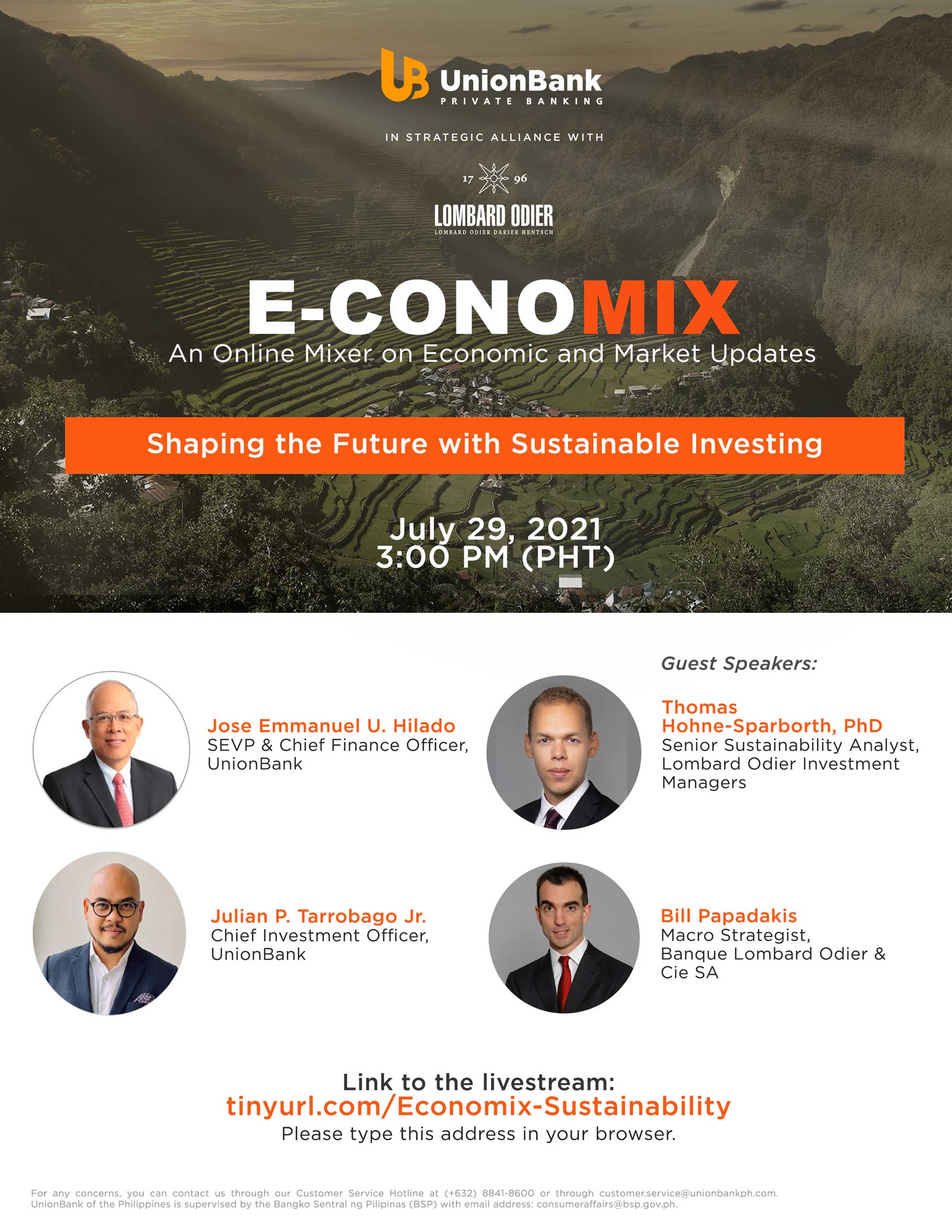
Join UnionBank Private Banking and Lombard Odier in a live virtual event “E-conoMix: Shaping the Future with Sustainable Investing” on July 29 where subject-matter experts from both banks will share their current global and local market views as well as insights on sustainable investing and transitioning to a CLIC™ Economy.

The event is open to the public and will be live-streamed via YouTube on July 29 from 3:00 to 4:30 PM. To access the event, visit tinyurl.com/Economix-Sustainability.

For any concerns, you may contact us through our Customer Service Hotline at (+632) 8841-8600 or through customer.service@unionbankph.com. Union Bank of the Philippines is an entity regulated by the Bangko Sentral ng Pilipinas (BSP) with website address: https://www.bsp.gov.ph.

NextPay raises $1.6M to develop digital banking solutions for MSMEs

Financial technology startup NextPay raised $1.6 million in its new round of seed funding, which was led by Golden Gate Ventures, a Singapore-based venture capital firm; and Gentree Fund, a private investment vehicle of the Sy Family, which owns Filipino conglomerate SM Group.    

The funds will be used to develop digital banking solutions for micro, small, and medium enterprises (MSMEs), allowing them access to financial services such as digital invoicing, cash management, and batch payments to local banks or e-wallets. 

“We believe that business banking will continue to digitally evolve, as the Philippines accelerates its digital transformation initiatives,” said Don Pansacola, NextPay chief executive officer and co-founder, in a statement on Wednesday. “This investment supports our goal of putting the power of big banks in the hands of small businesses.”  

Other investors include Tribe Capital; Broadhaven Ventures; Ayala Group’s Kickstart Ventures; Lisa Gokongwei-Cheng of JG Summit; Rohit Mulani of GoTrade; and Goodwater Capital, which has invested in Facebook, Spotify, and Twitter.  

“NextPay uniquely addresses the local needs of its customers by matching SMEs looking to go digital with mobile and convenient digital financial tools, which scales dynamically with their businesses,” said Mark Sng, Gentree Fund vice-president.  

The fundraiser adds to the $125,000 pre-seed investment the startup received after graduating from the Y-Combinator program in April. Since its launch in 2020, NextPay has processed $9.1 million (P457.5 million) in digital transactions for more than 100 businesses. — Brontë H. Lacsamana