MALAYSIA-BASED AirAsia Group Berhad announced on Wednesday that its Philippine unit, Philippines AirAsia, Inc., saw a 2% increase in passengers carried in the second quarter of the year.
“AirAsia Philippines’ strong rebound seen in 1Q2021 (first quarter) further increased in 2Q2021 (second quarter), posting a 2% higher number of passengers carried quarter-on-quarter and 4 percentage points higher load factor to record a solid 78%,” AirAsia Group Berhad said in an e-mailed statement.
“Monthly breakdown showed that load factor was as high as 83% in June 2021, boosted by active capacity management,” the airline group noted.
“This was despite running a limited number of charter and passenger flights due to community quarantine restrictions and despite flying only from its Manila hub,” it added.
AirAsia also said that expectation of high vaccination rates in Southeast Asian countries by the end of 2021 is lending confidence on upcoming recovery, supported by its “robust short-haul model in addition to leaner and more stabilized operations.”
The group has said it expects domestic operations in the Philippines to be below 25% of pre-pandemic levels until at least September while the population awaits widespread vaccination against the coronavirus disease 2019 (COVID-19).
Philippines AirAsia announced last week its plan to restore its hub in Clark by the fourth quarter of the year.
AirAsia said it started its Philippine operations in Clark in March 2012.
“Pre-pandemic, Philippines AirAsia flew to 10 domestic and three international destinations from Clark namely, Cagayan de Oro, Caticlan, Cebu, Davao, Iloilo, Puerto Princesa, Tacloban, Incheon, Kaohsiung, and Taipei,” it said. — Arjay L. Balinbin
Cover of Wu-Tang Clan’s album Once Upon A Time In Shaolin — EN.WIKIPEDIA.ORG
Cover of Wu-Tang Clan’s album Once Upon A Time In Shaolin — EN.WIKIPEDIA.ORG
NEW YORK —The US government said it sold imprisoned drug company executive Martin Shkreli’s one-of-a-kind album by Wu-Tang Clan to pay off the $7.36 million he was ordered to forfeit after being convicted of fraud.
In a letter to US District Judge Kiyo Matsumoto, who oversaw Mr. Shkreli’s 2017 trial in Brooklyn, prosecutors said the forfeiture amount has been fully satisfied following the sale of the album, Once Upon a Time in Shaolin, and other asset sales.
The sale price and buyer were not disclosed because of a confidentiality provision in the contract, prosecutors said.
Mr. Shkreli, 38, paid $2 million for Wu-Tang Clan’s only copy of Shaolin at an auction by the hip-hop group. He later bragged that he did not plan to listen to the album and purchased it to “keep it from the people.”
Benjamin Brafman, a lawyer for Mr. Shkreli, in an e-mail said he was pleased the forfeiture obligation was satisfied, and said the album’s sale price was “substantially more” than what Mr. Shkreli paid.
Nicknamed “Pharma Bro,” Mr. Shkreli remains widely vilified for hiking the price of Daraprim, which treated a potentially fatal infection, by more than 4,000% overnight when he led Turing Pharmaceuticals, now known as Phoenixus AG.
He has served more than half of a seven-year prison sentence for cheating investors in two hedge funds and trying to prop up the stock price of another drug company he led, Retrophin, Inc. His release date is Oct. 11, 2022, prison records show.
Prosecutors said they still possess two other Shkreli assets, a Phoenixus stake and a Pablo Picasso engraving, that could be applied toward a $2.6 million judgment against him in a separate Manhattan civil case.
Brianne Murphy, a lawyer for Mr. Shkreli in the Manhattan case, in an e-mail said Mr. Shkreli told her he was “pleased with the sale price and RIP ODB,” an apparent reference to late Wu-Tang Clan co-founder Ol’ Dirty Bastard.
In January, Matsumoto rejected Shkreli’s request to be freed from prison, rejecting his claim that his deteriorating mental health justified “compassionate” release. —Reuters
A COUNTERTERRORISM organization formed by some of the biggest US tech companies including Facebook and Microsoft is significantly expanding the types of extremist content shared between firms in a key database, aiming to crack down on material from white supremacists and far-right militias, the group told Reuters.
Until now, the Global Internet Forum to Counter Terrorism’s (GIFCT) database has focused on videos and images from terrorist groups on a United Nations list and so has largely consisted of content from Islamist extremist organizations such as Islamic State, Al-Qaeda and the Taliban.
Over the next few months, the group will add attacker manifestos — often shared by sympathizers after white supremacist violence — and other publications and links flagged by UN initiative Tech Against Terrorism. It will use lists from intelligence-sharing group Five Eyes, adding URLs and PDFs from more groups, including the Proud Boys, the Three Percenters and neo-Nazis.
The firms, which include Twitter and Alphabet, Inc.’s YouTube, share “hashes,” unique numerical representations of original pieces of content that have been removed from their services. Other platforms use these to identify the same content on their own sites in order to review or remove it.
While the project reduces the amount of extremist content on mainstream platforms, groups can still post violent images and rhetoric on many other sites and parts of the internet.
The tech group wants to combat a wider range of threats, said GIFCT’s Executive Director Nicholas Rasmussen in an interview with Reuters.
“Anyone looking at the terrorism or extremism landscape has to appreciate that there are other parts… that are demanding attention right now,” Mr. Rasmussen said, citing the threats of far-right or racially motivated violent extremism.
The tech platforms have long been criticized for failing to police violent extremist content, though they also face concerns over censorship. The issue of domestic extremism, including white supremacy and militia groups, took on renewed urgency following the deadly Jan. 6 riot at the US Capitol.
Fourteen companies can access the GIFCT database, including Reddit, Snapchat-owner Snap, Facebook-owned Instagram, Verizon Media, Microsoft’s LinkedIn and file-sharing service Dropbox.
GIFCT, which is now an independent organization, was created in 2017 under pressure from US and European governments after a series of deadly attacks in Paris and Brussels. Its database mostly contains digital fingerprints of videos and images related to groups on the UN Security Council’s consolidated sanctions list and a few specific live-streamed attacks, such as the 2019 mosque shootings in Christchurch, New Zealand.
GIFCT has faced criticism and concerns from some human and digital rights groups over centralized or over-broad censorship.
“Overachievement in this takes you in the direction of violating someone’s rights on the internet to engage in free expression,” said Mr. Rasmussen.
Emma Llanso, director of Free Expression at the Center for Democracy & Technology, said in a statement: “This expansion of the GIFCT hash database only intensifies the need for GIFCT to improve the transparency and accountability of these content-blocking resources.”
“As the database expands, the risks of mistaken takedown only increase,” she added.
The group wants to continue to broaden its database to include hashes of audio files or certain symbols and grow its membership. It recently added home-rental giant Airbnb and e-mail marketing company Mailchimp as members. — Reuters
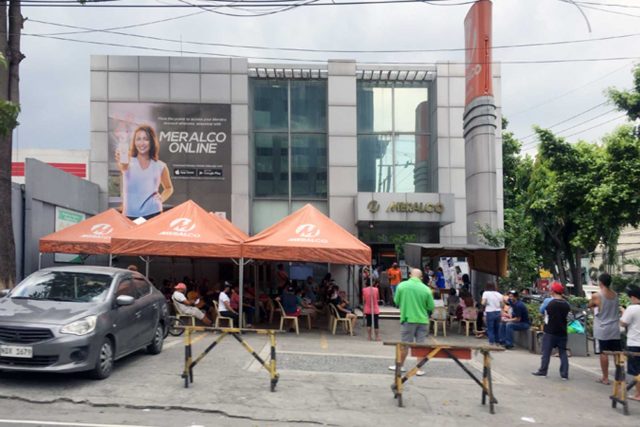
POWER distributor Manila Electric Co. (Meralco) reported that average retail rates declined by around 3% in the six months to June as generation charges fell.
Meralco registered an average retail rate of P7.92 per kilowatt hour (kWh) in the first half, a P0.27 per kWh drop from the P8.19 per kWh year on year, said its First Vice-President and Regulatory Management Head Jose Ronald V. Valles in a statement issued on Wednesday.
Generation charges, which made up more than half or 57% of the total retail price during the period, decreased by 1.3% to P4.5 per kWh due to a decline in charges from the spot market, lower fuel prices and the local currency’s appreciation.
Transmission charges, which accounted for 9% of the total retail price in the first half, fell by 7.5% to P0.73 per kWh as the firm implemented a refund of its transmission over-recoveries between January and April.
Meralco explained that lower ancillary service charges also led to a decline in transmission rates.
System losses, which took up 3% of the retail price, went down by 6% to P0.28 per kWh in the first half.
“Distribution charges, on the other hand, inched up by only 0.1% as residential sales continued to increase brought about by the imposition of enhanced community quarantine,” the company said.
The continued rollout of the firm’s P13.9-billion distribution rate true-up refund tempered retail rates as well, according to the distribution utility. The refund was implemented beginning March.
In the six months ending June, subsidies, taxes and universal charges were lower by 5.8% to P0.85 per kWh year on year due to lower effective taxes.
However, the feed-in tariff allowance (FiT-All), which comprised 1% of the retail rate, rose by 61% due to a FiT-All rate hike of P0.0488 per kWh starting January.
The FiT-All is a uniform charge included in the bills of electricity customers. It is collected by distribution utilities, the National Grid Corp. of the Philippines, and retail electricity suppliers, while the payments are remitted to the FiT-All fund held by the National Transmission Corp.
The country’s largest private sector distribution utility previously reported that its core net income rose by 8% to P11.4 billion in the first half year on year after registering higher revenues from its joint venture project San Buenaventura Power Ltd.
Shares in Meralco shed 1.84% or P5 to close at P267 apiece on Wednesday. — Angelica Y. Yang
THE BANGKO SENTRAL ng Pilipinas (BSP) told banks and other financial institutions to stop making transactions with the social media platform LYKA as it remains unregistered as an operator of payment system (OPS).
BSP Deputy Governor Mamerto E. Tangonan issued Circular Letter No. CL-2021-060 dated July 27 informing BSP-supervised financial institutions of its previous directive to LYKA or Things I Like Co., Ltd. to stop from operating as a payment system in the country.
Banks and other financial institutions should only deal with registered OPS and nonbank electronic money issuers, the BSP said.
The Monetary Board last week ordered LYKA to suspend its payment system activities, saying it has not registered as an OPS with the central bank.
It also asked Digital Spring Marketing and Advertising, Inc. to stop providing LYKA its cash-in service, merchant accreditation and settlement process, among others, while the platform is not yet registered with the BSP. The regulator also canceled the provisional registration of Digital Spring.
LYKA is a social media platform by a Hong Kong-based company granting users rewards through gift cards in electronic mode or GEMs based on the number of activities or posts they like and share. These GEMs can then be used to pay for goods and services in partner stores.
The BSP earlier said the platform has expressed willingness to register with the regulator.
BSP Circular 1049 requires all OPS to register with the central bank as provided under
Republic Act No. 11127 or the National Payment Systems Act mandates all OPS to register with the BSP before they can operate. Examples of OPS include cash-in providers, merchant acquirers, payment facilitators, payment gateways, platform providers, bills payment service providers and other entities facilitating payments for goods and services. — B.M. Laforga
THE United States Agency for International Development (USAID) has allotted P3.5 million to support capacity training initiatives that will benefit seven rural cooperatives in Negros Occidental and Isabela.
The USAID provided the funding to a subsidiary of renewable energy (RE) provider Citicore Power, Inc. and Netherlands-based firm Agriterra for the “Generating Rural Opportunities by Working with Cooperatives (GROW Coop) initiative.”
“Through a grant from the USAID… the parties (Citicore Candlewick Bioenergy, Inc. or CCBI, and Agriterra) shall implement a 15-month community development program aimed at generating income sources and enhancing the quality of life for communities within or near CCBI plantations,” Citicore Power said in a statement on Wednesday.
CCBI is a forest management company that produces sustainable biomass fuel chips, while Agriterra is an organization that specializes in providing training and advice to cooperatives.
On Wednesday, Citicore Power separately told BusinessWorld that the USAID allocated the P3.5 billion for capacity building and training initiatives for seven growth-oriented agriculture cooperatives (GOACs).
The GOACs include the Buenavista Upland Agricultural Cooperative, Carabalan Upland Agricultural Cooperative, Mahalang Upland Agricultural Cooperative and Alolong Upland Agricultural Cooperative, and Binadlan Bi-ao Agricultural Cooperative, which are all located in Negros Occidental; the Kauswagan Sang Pangabuhi Agriculture Cooperative and Riverside Upland Agricultural Cooperative in Isabela.
The cooperatives have been benefitting from Citicore-Agriterra-USAID project since March.
“We are very grateful for this partnership with USAID and Agriterra to help uplift the lives of communities where our projects are located. We believe that giving these cooperatives the necessary training and tools will help them perform better, earn more, and ensure their long-term sustainability,” Citicore Power President, Oliver Y. Tan said.
“CCBI is committed to promoting inclusive growth and creating opportunities for its local communities. The company supports programs that create sustained shared value for its project sites and its host communities,” he added.
Last month, Citicore Power announced its plan to reinvest the proceeds from its energy-focused real estate investment trust (REIT) offer in 15 pipeline solar projects in Luzon.
The company targets to hold the country’s first “energy REIT” in September or October, and hopes to raise up to P10 billion in proceeds.
This year, the RE firm has allotted P4 billion in capital expenditures for solar and hydro projects. — Angelica Y. Yang
NOBU Manila at City of Dreams brings back its Sunday brunch, highlighting the new-style Japanese cuisine globally popularized by the legendary chef Nobu Matsuhisa. The brunch action stations offer an extensive selection of appetizers, varied fare of kushiyaki or grilled skewered seafood, red meat, poultry and vegetable items, a choice of seafood and vegetable tempura, sautéed or grilled seafood, meat, and vegetables complemented with a hearty selection of rice, salad and soup dishes. Diners can choose their preferred dishes from the display counter, chefs prepare fresh from the kitchen, and served on mini plates and lacquer masu (Japanese cups) to be enjoyed family style. Guests can also opt to remain at their table and pick dishes off the brunch menu as they enjoy a choice mocktail, chilled juice, soda, tea or coffee that are included in the brunch. For P2,950 net per person, Nobu Manila’s Sunday eat-all-you can brunch menu becomes even more attractive, as it offers a 25% discount until Aug. 31 for fully vaccinated individuals availing of the Sunday brunch promotion. The discount applies per person during a single, dine-in transaction upon presentation of the diner’s vaccination card and a valid identification card. Nobu Sunday Brunch is served from 11 a.m. to 4 p.m. Reservations are encouraged due to limited seating and restricted capacities for indoor and al fresco dining. For the rest of the week, Nobu Manila is open from 11 a.m. to 9 p.m. offering donburi specials for lunch, and an a la carte and signature Omakase menus for dinner.
Conrad Manila’s Brasserie on 3 reopens
CONRAD Manila’s award-winning dining restaurant Brasserie on 3 welcomes back patrons with a festival especially designed by Executive Chef Daniel Patterson. The live food stations serve a special selection including Brasserie’s Signature Bulalo, Creamy Laksa, a Sashimi-Sushi bar, a Tempura section, and Fresh Seafood prepared a la minute. There are also Asian Favorites (Hainanese chicken, dimsum basket, Korean beef bulgogi, duck red Thai curry, crispy pork belly, ox-tail kare-kare, and Brasserie 3’s 48-hour beef bulalo, among others), From the Grill (Wagyu beef burger, organic chicken, and savory daily roasts, among others), or Pizza & Pasta stations, each complemented by the Chef’s daily offers of appetizers, soup, and dessert. A salad bar offers salads-in-a-jar with fresh organic vegetables ready with a variety of salad dressing mixes. The dessert station offers the latest craze: Flambe crepe suzette, along with the wide variety of local and international sweets, and a chocolate tower. Guests may also choose from a premium a la carte menu to add to their interactive buffet experience. Brasserie on 3 has stringent health measures in place including social distancing practices, acrylic table barriers and a digital a la carte menu which can be viewed by scanning a QR code for contactless ordering, among other best practices. Brasserie on 3 is open on Fridays to Sundays, with lunch from 11:30 a.m. to 2:30 p.m. and for dinner from 5:30 to 9:30 p.m. Buffet lunch is at P2,200 net per person, while dinner buffet is P2,400 net per person. For inquiries or reservations, call 0917-650-4043 or e-mail conradmanila@conradhotels.com.
Kenny Rogers goes Korean with Kimcheese Roast
KENNY Rogers Roasters now gives its customers a Korean flavor experience with the new Kimcheese Roast. The chicken is marinated with Gochujang paste to give a sweet, sour and spicy flavor that’s distinctly found in Korean cuisine. Each chicken comes with Kenny Rogers’ signature Kimcheese sauceand a serving of sesame bean sprouts. With the new Kimcheese Roast, two new side dishes are available: Kimchi and K-Glazed Potatoes or gamja jorim. The new Kimcheese Roast comes in two main meal selections: Solo Plate B features a quarter Kimcheese Roast with Kimcheese pour over sauce, two side dishes, rice, and a Kenny Rogers muffin for P 315.00; and the Kimcheese Roast Group Meal which has a whole Kimcheese chicken, four side dishes, four servings of rice, and homemade muffins, and a 1.5 liter bottle of Pepsi for P1,105. Complete the K-experience with Jinro Soju available in Fresh, Grapefruit, Green Grape, and Plum flavors for P145 each at selected Kenny Rogers Roasters stores. The Korean chicken is now available in all Kenny Rogers Roasters stores nationwide. Order viakennyrogersdelivery.com.ph or the hotline at 8-555-9000, GrabFood and Food Panda.
DITO Telecommunity Corp. has signed a data protection contract with a Singapore-based consultancy firm to help it comply with the government’s operational requirements.
Consultancy firm Straits Interactive said in a statement that it signed on Tuesday a Data Protection-as-a-Service (DPaaS) contract with DITO along with IT firm Advanced Information Solutions and Concepts, Inc.
DPaaS is a bundle of data protection services that will allow DITO to set up its data protection management program, Straits Interactive said. These services include its data protection platform software DPOinBOX and will also come with advisory support and training for DITO’s staff responsible for data protection.
“These three services will help move the organization towards operational compliance with data protection requirements in the Philippines,” Straits Interactive said.
“We are excited to be part of DITO Telecommunity’s journey towards data protection excellence and believe that the firm’s bold move in ensuring that they stay on top of data protection as part of their commitment towards their customers is truly commendable,” Straits Interactive CEO Kevin Shepherdson said.
The firm added that this will likewise help DITO protect its customers against data breaches, which have become more prevalent in an increasingly digitalized environment.
“Filipinos have come to rely on dependable connectivity as a result of the pandemic. And this, of course, has highlighted digital risks that need to be monitored closely,” DITO Chief Administrative Officer Adel A. Tamano was quoted as saying.
“By implementing DPaaS, DITO will have additional support in our data protection efforts for our customers. The service provides us with the ability to monitor and take action on data protection risks expeditiously as well as train new and existing staff in data protection matters,” Mr. Tamano said.
FILIPINO fintech startup NextPay raised $1.6 million from a new round of seed funding led by Golden Gate Ventures, a Singapore-based venture capital firm, and Gentree Fund, the private investment vehicle of the Sy family, which owns the SM Group.
NextPay, which was launched during the pandemic in 2020, plans to use the funds to develop more digital banking solutions for its growing customer base of entrepreneurs, freelancers, and micro, small, and medium enterprises (MSMEs). It aims to provide access to financial services like digital invoicing, cash management, and batch payments to any bank or e-wallet in the Philippines.
Since its launch, the startup has processed over $9.1 million (P457.5 million) in digital transactions for more than 100 businesses with over 3,500 employees, the statement said.
“We believe that business banking will continue to digitally evolve, as the Philippines accelerates its digital transformation initiatives,” said Don Pansacola, NextPay’s chief executive officer and co-founder. “This investment supports our goal of putting the power of big banks in the hands of small businesses.”
Other foreign and local investors include Tribe Capital, Broadhaven Ventures, the Ayala Group’s Kickstart Ventures, Lisa Gokongwei-Cheng of JG Summit Holdings, Inc., Rohit Mulani of GoTrade, and Goodwater Capital, which has invested in Facebook, Spotify, and Twitter.
The fundraiser adds to the $125,000 pre-seed investment the startup received after graduating from the Y-Combinator program in April.
NextPay is now seeking partnerships with other organizations, businesses, and startups to create a more seamless financial ecosystem for its clients.
“The success of our seed funding exercise will help us accelerate our plans of introducing more meaningful digital banking solutions, including, but not limited to, corporate cards, loans, and integrations with other platforms focused on MSMEs. We will also be hiring more talent to make the NextPay platform more comprehensive, simple, and easier to use and avail of,” said NextPay Co-Founder and Chief Experience Officer Aldrich Tan.
“NextPay uniquely addresses the local needs of its customers by matching SMEs looking to go digital with mobile and convenient digital financial tools, which scales dynamically with their businesses,” Gentree Fund Vice President Mark Sng said. “As a key infrastructure layer for our budding Philippines startup ecosystem, Gentree believes that NextPay will play a key role in supporting our entrepreneurs and enabling the Philippines digital economy.” — BHL
Here’s what to expect in the new bill format that’s launching in September.
Here’s a tip you would want to know: understanding your Meralco bill can help you manage your energy consumption better, and actually help you save money.
Based on market research, a lot of the details are often overlooked because people may find the bill a little hard to read. So, as part of Meralco’s customer-centricity efforts, the company decided to fix that problem.
“Meralco conducted research and banked on consumer feedback to provide a bill format that we hope provides complete information that encourages energy efficiency,” says Ferdinand O. Geluz, First Vice President – Customer Retail Services and Chief Commercial Officer of Meralco.
In the Meralco Business Center (BC) Foot Traffic study, about 50% who transact with Meralco are household heads aged 45 and above with children. Presbyopia, the gradual loss of your eyes’ ability to see things clearly up close, sets in at age of 40. That meant that around 50% of bill readers needed their reading glasses to see the smaller font on the current format.
Additional insights from real customers and eye tracking studies led to several changes in the bill format. Every adjustment made was aimed at enhancing readability and keeping customers better informed and smarter with their power usage.
Easier on the eyes
The first thing customers will notice is the sky-blue box on the upper right-hand corner of the bill. The section prominently features the total amount due, due date, and your 10-digit Customer Account Number (CAN) for easier reference when paying your bill.
To improve readability, the page was upsized to 8” x 11”, an increase of three inches, allowing for bigger font for hassle-free reading.
“Mas clear yung mga info katulad ng amount kasi malaki at colored; mas malaki yung pagka print ng records, mas klaro at detailed,” as mentioned by a residential customer in a recent consumer study. (Info like the amount are clearer because it’s bigger and it’s colored; the printing of the records is bigger, clearer, and more detailed.)
What new features can residential customers expect?
The new Meralco bill format now includes ‘Your rate this month’ or the effective peso per kilowatt-hour (kWh) rate for your monthly consumption. This is computed by dividing your ‘Total Energy Amount,’ found at the back page of the bill, by your actual consumption. This may also change every month depending on prevailing rates and how much you consume.
Meralco has also expanded the ‘Your monthly consumption’ table to cover up to 24 months instead of the previous 13. Not only will you be able to see the trend of your power usage throughout the year, but you’ll also be able to compare consumption this month with last month versus last year.
It’s best to compare the same month this year with the same month last year as the temperature can affect consumption. For example, it is good to compare a June 2021 bill with a June 2020, versus May 2021 because June tends to be cooler versus May.
For your residential bills, you’ll now be able to see your average consumption per month, per day, and how this all amounts to pesos so that you have more control over your consumption and spending.
Moving to the back of your bill, you will notice more conversational headings, ‘What you’ve paid’ and ‘What remains unpaid,’ over a more detailed breakdown of your charges and payments. You can now verify your last six payment transactions, complete with amount, date of payment, and even the payment location.
“Ang pinakamaganda sa likod, nakarecord na yung history of payments mo so pwede ka na mag-compare,” as mentioned by a residential customer in a recent consumer study. (The best part is the one at the back, your history of payments is recorded so you can compare.)
Meralco found out that some customers rummage through their pile of bills to check what they have paid. This makes it easier for most of us.
To know more about the new Meralco bill for residential customers, you can watch this video here.
There’s also something new for businesses
For businesses, Meralco has made the same improvements, and packed it with more information to help businesses be more efficient. For instance, the ‘Your electric bill’ section explicitly states your billed demand and actual consumption. Giving more meaning to these, you will find at the back of the bill how your consumption and demand contribute to your total bill via a graph.
The ‘Your electric bill’ portion also includes your monthly kWh rate and load factor making it easier to track. And if your business is qualified to shift to the contestable market, you can leverage your load factor when negotiating with Retail Electricity Suppliers for competitive rates and use your bill as proof of your contestability.
In the ‘Your consumption explained’ section, there is a month-to-month comparison of your consumption as well as your actual demand against minimum billing demand. Your power factor is also indicated, which tells you if you are optimizing your electrical facilities by keeping this number above 85.
Going green with the new bill
Sustainability was championed by Meralco when President and CEO Atty. Ray C. Espinosa took over in 2019. Since then, Meralco has embedded sustainability as foundational to the business, and this was an inspiration in designing the new bill format.
You will also find an info box that highlights the environmental impact of your power usage. It’ll show the equivalent amount of greenhouse gas emissions, which will hopefully inspire more responsible energy use and serve as a reminder to show Mother Earth some love.
Service with a passion
All these improvements come as a result of a shift in priorities at Meralco, Geluz explains.
“In the last few months, our motto has been ‘service with compassion.’ With accumulated bills during ECQ and many being out of work, our kababayans were hard pressed to keep their accounts updated,” he says.
“We thus allowed installment plans at a magnitude unprecedented in Meralco’s history, balancing this with our duty to keep the energy industry solvent as the collecting agent for transmission and generation companies which also have their fiduciary responsibilities.
“Moving forward, and as signaled with all the effort behind this new bill, we will continue pursuing our passion of transforming customer experience in all our transactions and touchpoints.
“The new and improved Meralco bill, it’s clearer and gives more power to customers, by giving them a better understanding of their bill so they can better manage their consumption.”
“Masaya ka nang nagbabayad,” as mentioned by a residential customer in a recent consumer study. (You can now pay with joy.)
Coming this September.
#MorePowerToYou #ServiceWithPassion
For concerns you may reach us through the following channels: residential hotline 16211, business hotline 16210, email: customercare@meralco.com.ph. For businesses, you may also contact your Relationship Manager or Biz Partner Manager.