A SENATOR has filed a bill that will regulate and phase out the production of single-use plastic and styrofoam goods, citing the plastic pollution problem to which the Philippines is considered among the biggest contributors.
Senator Emmanuel “Manny” D. Pacquiao filed Senate Bill No. 2262, which aims to control the production, importation, sale distribution and use of single-use plastic and styrofoam products.
He noted that the Philippines produces 2.7 million tons of plastic waste each year, 20% of which end up in the ocean, citing a statement from the United States Agency for International Development last year.
This has placed the Philippines as the third largest contributor to plastic in the ocean.
The senator also cited a 2015 report indicating that almost half or 48% of solid waste in the country are produced in the capital region.
“The biggest contributor to this problem is our excessive use of single-use plastics. Single use plastics are designed to be used just once and are often thoughtlessly discarded,” he said in the explanatory note of the bill.
“Without decisive and effective action on this problem, we could end up with 12 billion tons of plastic litter in landfills and the environment and with more plastics than fish in the sea by 2050,” he said, citing the United Nations Environment Programme report in 2018.
The measure also calls for the formulation of a phase-out plan, which includes a reduction and recovery among consumers, responsibility schemes for producers, identifying alternative products, and establishing fiscal and non-fiscal incentives.
Under the bill, single-use plastic products such as plates and saucers, cups, bowls and lids, cutlery, food and beverage containers made of expanded polystyrene and sachets, among others, must be phased out within four years.
Drinking straws, stirrers, sticks for candy, balloon and cotton bud, buntings, confetti and packaging or bags of less than 10 microns shall be phased out within a year.
Production, importation, sale distribution, provision or use of the plastic or styrofoam product shall be prohibited.
On the other hand, properly labeled flexible disposable plastic straws for people with medical conditions shall be allowed when no reusable or compostable alternatives are available.
This provision on prohibition shall not apply to the use by hospitals, nursing homes or other medical facilities for medical treatment, according to the measure.
The proposal — similar to the Ecological Solid Waste Management Act of 2000 — also spells out the responsibilities of various departments as well as the National Solid Waste Management Commission in identifying plastic products that must be banned.
The bill also tasks government agencies to develop and implement programs that will assist local manufacturers in acquiring sustainable resources of raw materials and technology for recyclable materials as alternatives.
Producers and importers will also be required to establish responsibility programs to prevent plastic wastes from leaking into the environment within the first two years of the law.
Companies that fail to meet the recovery or offsetting of plastic product footprint target shall pay an amount equivalent to 5% of the cost if the single-use product “set in the market to the producers and importers’ responsibility corporation… net of whatever amount already spent for recovery for the period.”
Commercial establishments, meanwhile, will be mandated to promote the use of reusable and recyclable products. They shall also charge take-out food or delivery services for every use of single-use plastic product whether they are disposable or compostable.
The proposed law will also allow any citizen to file civil, criminal or administrative action against those who violate the provisions of the bill, government agencies with orders inconsistent with the measure and any negligent public officer.
Implementing rules and regulations of the law shall be crafted within six months from its effectivity. — Vann Marlo M. Villegas
THE SUPREME Court has directed the municipal trial court of Ozamiz City to resume the trial of cases filed by the Philippine National Bank (PNB) against a lawyer for P12.8 million worth of checks issued without sufficient funds.
The country’s highest court, acting on a petition filed by PNB, overturned the June 1, 2015 decision of the Court of Appeals (CA), which voided the criminal cases against respondent Henry S. Oaminal.
In its 2015 decision, the CA nullified the proceedings before the Ozamiz City court for having been conducted without jurisdiction because the criminal accusations were signed only by the previous prosecutor and not by the prosecutor in-charge of the case.
However, the Supreme Court, in its decision dated February 17 and published on June 22, held that the CA erred in dismissing the cases because the “informations” signed by the previous prosecutor were valid.
Informations are “accusation(s) in writing charging a person with an offense, subscribed by the prosecutor and filed with the court,” according to the Supreme Court.
It said the reinstatement of the informations by Heronimo S. Marave, Jr., the first prosecutor in-charge of the case, was “already sufficient to vest upon the trial court jurisdiction over the subject matter of the criminal cases.”
It added that Roberto A. Lao, the acting city prosecutor designated by the Department of Justice in August 2002, did not have to refile the exact same documents with his signature as it would “impose a redundant and pointless requirement on the prosecution.” — Bianca Angelica D. Añago
THE BUREAU of Fisheries and Aquatic Resources (BFAR) announced that areas in Leyte and Negros Oriental are officially free from red tide contamination.
BFAR said in its 19th bulletin that shellfish harvested in Cancabato Bay, Leyte and Tambobo Bay, Negros Oriental are safe for human consumption following results of water testing in these areas.
However, BFAR said the areas of Milagros, Masbate; Sorsogon Bay, Sorsogon; Dumanquillas Bay, Zamboanga del Sur; and Murcielagos Bay, Misamis Occidental have recently tested positive for red tide or paralytic shellfish poison.
Red tide warnings are also still up in Dauis and Tagbilaran City, Bohol; Daram Island, Cambatutay Bay and Irong-irong Bay, Western Samar; Calubian, Leyte; Murcielagos Bay, Zamboanga del Norte; Balite Bay, Davao Oriental; and Lianga Bay and Bislig Bay, Surigao del Sur.
All types of shellfish and Acetes sp. or alamang coming from areas with red tide warnings are unfit for human consumption. Other marine species sourced in the same areas can still be eaten with proper handling.
Red tide occurs as a result of high concentrations of algae in the water. Human consumption of contaminated shellfish may result in paralytic shellfish poisoning, which affects the nervous system.
Typical symptoms of paralytic shellfish poisoning are headaches, dizziness, and nausea. Severe cases may cause muscular paralysis and respiratory problems. — Revin Mikhael D. Ochave
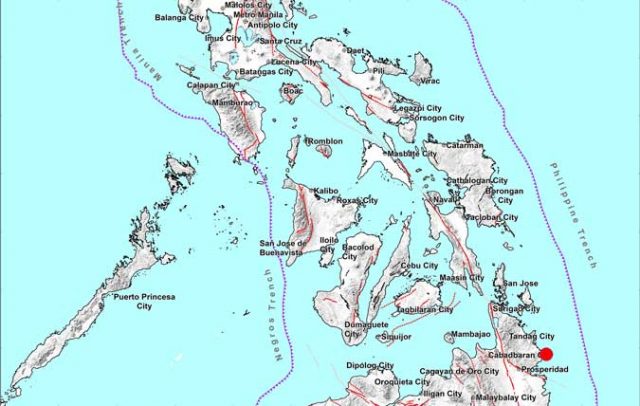
A MAGNITUDE 5.1 earthquake shook parts of eastern and northern Mindanao Sunday afternoon, with aftershock expected but no immediate reports of serious injury or damage. The Philippine Institute of Volcanology and Seismology (Phivolcs) recorded the tremor at 3:14 p.m. with epicenter east of Bayabas town in Surigao del Sur province. Various intensities were felt in areas along the southern mainland’s eastern areas and in the northern Mindanao province of Misamis Oriental.
One of the few experiences of pure exhilaration and hope at the start of 2021 was negotiating the newly opened Skyway 3. Those of us who have suffered through the travails and tribulations of the old normal EDSA on our way to south Metro Manila and NAIA feel like we are being teleported to the highways and byways of more affluent countries where these amenities are a common sight and which we, perhaps, sometimes and with reason, despaired of ever having. In my own mind I associate these amenities with economic abundance; which is why driving through Skyway 3 makes me feel like being at the door of similar abundance. Such buoyancy and exhilaration are becoming a more common experience, thanks to the presidency of Benigno Aquino III, popularly called PNoy.
What do all the entries in the following list have in common — the newly inaugurated Skyway 3, the Tarlac-Pangasinan Expressway (TPLEX), the Ninoy Aquino International Airport Expressway (NAIAX), the Cavite-Laguna Expressway (CALAX), the North Harbor Link Project? First of all, they were constructed under the Public-Private Partnership umbrella and, second of all, the contracts for major phases of these projects were signed and work started in President Benigno Aquino III’s watch. Finally, they will be operated by private groups making them more accountable and sustainable. They freed the national treasury of required funding apart from the right-of-way financing.
And they all make you feel increasingly like you belong to, rather than are being left behind by, the emerging Asian Century. When I was breezing through TPLEX for the first time on my way to Baguio, my heart skipped a beat and I stopped to acknowledge my debt of gratitude to PNoy’s watch. Viewed from the lenses of 20 years ago, they seemed so improbable, they may as well have been “black swans.” Thanks to PNoy’s watch that made PPP the main powertrain to arterial infrastructure, they are slowly being dragged towards the center of our experience where they belong. And because they lower the cost of transported produce to both rich and poor, they are inclusive.
And how did we, PNoy’s bosses, fare as a nation under his watch? The average rate of growth of the Philippine GDP during PNoy’s watch was 6.2%, higher than the average during the watch of any president in our history. The puzzle in 2015 was why the rapid economic growth (7.3% in 2014) did not seem inclusive — the poverty incidence seemed stuck at 26% which was where it was in 2010 when the PNoy watch started. So worked up was PNoy about this that he personally puzzled over it with Planning Secretary Dr. Arsenio Balisacan. Dr. Balisacan was, and still is, a strong proponent for riding economic growth to poverty reduction. This conundrum in 2015 proved premature when in November 2016 it was announced that the poverty incidence had declined from 26.3% to 21.6%, an almost 5% difference in six years, a remarkable achievement in our neck of the woods and even elsewhere. Had we chipped away at poverty at this rate during the Millennium Development Goal (MDG) Era (1990-2015), we would have more than attained the MDG target of 17% poverty incidence. As it turned out, we went from 34% to only 26% among those that fell short of the target. Dr. Balisacan was right: poverty reduction almost always tracts economic growth, if with a lag!
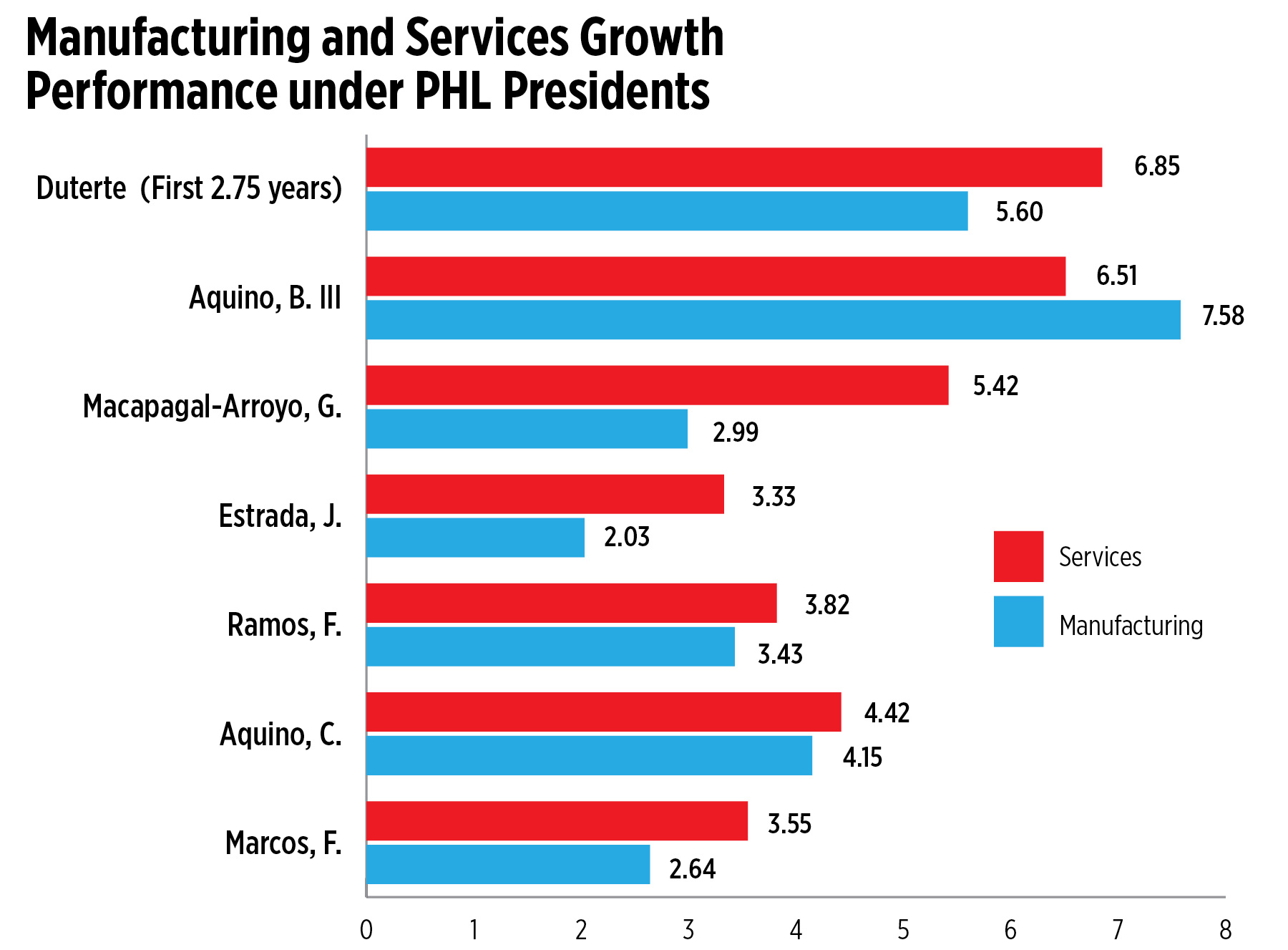
What made for this inclusion outcome during PNoy’s watch? PNoy’s watch scaled up the CCT Program (Conditional Cash Transfer or 4Ps) where targeted poor were accorded cash transfers to keep kids at school. That clearly should account for some improvement. But largely glossed over (PNoy himself was primarily concerned with why CCT did not seem to figure in the 2015 poverty statistics) was the marked change in the emerging structure of the Philippine economy in his watch. Everyone noticed the economy growing faster but few noticed that the quality of growth was also improving — growth was becoming more favorable to poverty reduction. This is because economic growth has two aspects: first is quantity of growth (whether it is high or low); the other is the quality of growth: whether its leading edge is markedly more pro-poor because it employs more people from low-income classes and pays higher and more stable incomes to the less educated. Manufacturing is more pro-poor in low-income countries (< $10,000 per capita) than the Services sector as it does exactly those functions better. Thus, when Manufacturing leads growth, poverty incidence retreats faster that when the economy is growing with Services as the leading edge. The figures in the chart show the comparative growth performance of Manufacturing and Service sectors for all the presidential watches since Marcos.
The red bar shows the growth of the Service sector and the blue bar shows the growth rate of the Manufacturing sector for each presidential watch. Note that the blue bar is always shorter than the red bar except during PNoy’s watch. Under Aquino III’s watch, Manufacturing was leading the growth of the economy: it was a growth characterized not only by quantity but by quality. Neither the romanticized Marcos’ watch nor the deservedly admired Ramos’ watch could match.
If I may hazard a guess, it was foreign investment and especially Japanese foreign investment that made the big difference in the growth of Manufacturing. Foreign investment just over $1 billion in 2010 grew to $8 billion by 2016. It was that time when super salesperson Director Lilia De Lima, having won the Japanese investors’ trust, was herding investors to PEZA (the Philippine Economic Zone Authority) in numbers which were outrunning the available space. Matuwid na daan (the straight path) had struck a chord with foreign investors; they saw in PNoy the pedigree of one who sticks religiously to contracts — a chip, as it were, of the old petticoat. For wasn’t his mother, Cory Aquino, who as president decided that the Philippines will honor all its debts even those contracted (and squandered) by the Dictator Marcos over the objections of many left leaners in her cabinet who favored repudiation? And foreign investors flock to contract stability like bees to nectar. For PNoy was a true child of Cory: a principled but a reluctant leader, ever uncomfortable with the wielding of power. In macho circles, he would fit the description of a wimp.
A disturbing observation emerges from the figures in the chart: the Duterte watch, halfway into its term, had reverted to the old normal with respect to the Manufacturing-Service growth comparison. In the first full year of Duterte’s watch, Manufacturing outpaced the Service sector, thus fulfilling the “continuity” promise of Duterte’s economic managers. But into the first half of his watch, the economy seemed to revert to business-as-usual. This was even before the COVID-19 pandemic which only worsened the outlook for the economy and the reduction of poverty.
Yes, PNoy looks like a wimp in comparison to his successor. But only time will tell how PNoy’s “mission accomplished” will compare in terms of measurable performance. From where we stand in mid-2021, we should be grateful if Duterte’s watch will manage to match the Wimp’s.
Raul V. Fabella is an Honorary Professor of the Asian Institute of Management (AIM), a member of the National Academy of Science and Technology (NAST) and a retired professor of the University of the Philippines. He gets his dopamine fix from hitting tennis balls with wife Teena and bicycling.
From the start of the COVID-19 vaccine rollout, experts and doctors emphasized equitable vaccine distribution as the key to ending the pandemic. Unfortunately, aside from having more physical barriers to vaccination, those of lower socioeconomic status are also more hesitant to be vaccinated.
On May 27, Secretary Carlito Galvez reported that 40% of those in classes D and E are unwilling to be vaccinated against COVID-19. Vaccine uptake is much higher among classes A, B, and C. This is concerning, as the poor are at high risk for COVID-19 due to their limited access to healthcare services and living in close quarters.
As local government units (LGUs) expand their vaccination program to the A5 group or indigent population, it’s crucial to understand the root of vaccine hesitancy so that communication strategies can fit to their situations. After all, there’s no simple, one-size-fits-all solution or response to vaccine hesitancy.
Action for Economic Reforms (AER), in partnership with the Healthcare Professionals Alliance Against COVID-19 (HPAAC), organized a focus group discussion towards understanding the reasons behind Filipinos’ vaccine hesitancy. Further, the discussion attempted to address specific concerns of the participants through explanations from doctors. The participants were composed of vaccine-hesitant people, including beneficiaries of the Pantawid Pamilyang Pilipino Program; members of AKTIB, an alliance of community organizations; and senior citizens from Metro Manila and the Visayas.
The main sources of vaccine hesitancy among the group include concerns on side effects, fear due to existing comorbidities, mistrust of the vaccine development process, preference for a certain vaccine brand, and false information circulating in their communities.
Fear of side effects was frequently brought up during the discussion. In exit interviews, frontline government workers were worried about being unable to work due to the fever, chills, and body pains that they heard were common reactions to the vaccine. In no-work, no-pay settings, the poor cannot risk sacrificing a day off to recuperate from vaccine side effects.
Based on the exit interviews conducted, participants responded well to the doctors’ discussions and were now willing to be vaccinated.
What worked in convincing the small group we gathered to get vaccinated?
Ensuring participants’ comfort helped in effectively communicating with the group. The doctors who facilitated the discussion kept the tone casual, engaging, and relatable, as if they were having a one-on-one chismis (gossip) session with participants. This put participants at ease and made them more open. They acknowledged and validated their concerns rather than dismissing them and explained every concern in simple terms. This healthy exchange of ideas and concerns provided a strong foundation of trust.
The results from the roundtable discussion showed that having empathy and trust, not using force nor shaming, is what encourages vaccination.
Clearly, our President could stand to practice this empathy and compassion. In a public address last week, he threatened to jail those who refuse to be vaccinated. Forcing people into being vaccinated only heightens their mistrust of authority, which contributes to vaccine hesitancy.
However, while it’s easy to tell people to “listen to the science,” we have to accept that, often, it’s not science that bears greater weight when people make decisions. Even after attending the roundtable discussion in which doctors lengthily explained the vaccine development process, one participant (who was otherwise still willing to be vaccinated) still had questions on its long-term effects due to the perception of a rushed vaccine process. “Sabi ng kaibigan ko, hindi sapat ang studies, seven years dapat ‘yung paggawa ng vaccine, ‘e ito one year lang.” (My friend said, the studies are insufficient; making a vaccine takes seven years, but here, it took only one year to produce the vaccine.)
Gossip and personal experiences often prove to be more potent than scientific studies in convincing people. This is understandable, as personal stories from friends appeal to their emotions, triggering a response that’s hard to calm by citing evidence from trials.
Studies show that one of the most effective ways to combat vaccine hesitancy is to highlight the personal benefits of vaccination. But from our discussion, the message people said stuck with them was the emphasis on the collective benefits from vaccination — how getting vaccinated against COVID-19 can protect the larger community from COVID-19 and help in reopening the economy.
As the government continues the vaccine rollout, we hope that more people are also able to utilize the power of a simple conversation in convincing those around them to get vaccinated. Sharing links to videos on how vaccines are developed or pronouncements from government authorities can often work but may not be as direct or effective as sitting down with people and having an open, respectful, validating conversation to discuss their specific concerns. More than this, community discussions and information campaigns are crucial especially for those who do not have access to the internet. The government needs to listen to the communities to learn the information being spread so they can immediately correct misinformation.
Responsible reporting from the media on vaccine side effects and effectiveness is still crucial, and the Department of Health’s initiative of setting up KIRA (Katuwang na Impormasyon para sa Responsableng Aksyon), a chatbot on Facebook Messenger built to address questions about COVID-19, is worth lauding.
But the problem of vaccine hesitancy is more than just a knowledge gap that can be solved with information drives; it is a complex issue that requires empathy and pakikipagkapwa-tao (humanitarianism).
Pia Rodrigo and Emmanuella Iellamo are communications and research officers of Action for Economic Reforms, respectively.
Thursday morning woke up crying. Guilt perhaps. Or regret at opportunities lost to appreciate and thank an honest and decent president, one of few that the country ever had. It was only at mid-day that it was formally announced on national television that immediate-past President Benigno Simeon “Noynoy/PNoy” C. Aquino III passed away June 24, 2021 at 6:30 a.m., of renal failure from complications of diabetes.
It has been five years since PNoy turned over the reins of government to long-time Davao Mayor Rodrigo R. Duterte, who won over runner-up Mar Roxas of Team PNoy in the 2016 presidential elections. And PNoy had been in quiet retirement until he died, except when the rabid fangs of the new power turned on his shins to try to bring him down to grovel in lost prestige and respect of the Filipino people. PNoy was perhaps the most accused and maligned post-term by the successor government.
Why was this? Some say that perhaps it was because he was not corrupt, as in the common qualifier for the traditional politician (derogatively called “trapo” in the local lingo, meaning “a stinking wet old rag that sops up the people’s money”). He was also painted as stupid and weak by his detractors — as if stupid and weak were opposite to wise, strong, and corrupt. Even in the campaign for the 2010 elections when he was convinced to run for president, opponents circulated alleged documents by known psychiatrists (later denied) stating that PNoy was mentally and emotionally unstable. It seemed that many did not like his political style and slow pacing, which was very similar to that of his mother, Corazon “Cory” Aquino, the first president in the restoration of democracy by the 1986 EDSA I People Power Revolution.
It has been the embarrassment of the EDSA Revolution that between 1986 and 1991 some 11 coup d’états were attempted to topple Cory Aquino’s government. President Cory Aquino’s only son (of five offspring), Noynoy was 27 years old when he was wounded in the siege of Malacañang Palace in 1987. As much as the physical and political trauma affected Cory, so must those early betrayals of the principles of EDSA I have seared into the heart and soul of that young man Noynoy, who saw his father Ninoy’s “Impossible Dream” of Filipino Freedom come true with a People Power Revolution, then immediately dissipate with the brutal, shamefaced attempts to grab power by trusted former supporters. Back to dictatorship?
The attempts to establish military rule or a military-backed dictatorship were thwarted, thanks be to God. But the coups were a tragic loss of idealistic innocence for Cory, for Noynoy, and for the Filipino people. A comment on a website painfully described the collective consciousness: “the situation appeared desperate, for not only were military commanders around the country waiting to see which side would triumph in Manila, but the people of Manila, who had poured into the streets to protect Aquino in February 1986, stayed home this time” (http://www.globalsecurity.org/military/ops/classic_resolve.htm, cited in Wikipedia). Without granting absolute credence and adherence to the independent opinion expressed therefrom, it stands to reason, why indeed was Cory Aquino left to fend for herself and her government in the crises? Where was people power?
The cascade to the subconscious of the “desertion” could have given license to more falling away of those unified by EDSA I. Political breakaways from Cory’s party formed new alliances among their preferred “friends” and even new friends from reconsidered enmities. So many new political parties were formed. Some political analysts and common observers thought that those who had worked hard for EDSA I might have expected to be rewarded with positions in the government of Cory. When expectations were not met, then they bailed out of Cory’s influence and dependence, and worked out their own political objectives and goals.
But Cory heroically pieced together the broken pieces of the democracy, laying the ground for the take-off of the country to social, political, and economic prominence in the ASEAN region and the world. Strict adherence to constitutional laws and principles of the country and those of the world, with her deep spirituality and morality, guided her governance. And the freedoms of the Filipinos, won at EDSA I, prevailed and strengthened. Fidel Ramos, Joseph Estrada, and Gloria Arroyo were presidents after her.
When Cory died on Aug. 1, 2009, the Filipino people came out en masse in a funeral procession from the five-day wake at the Manila Cathedral to the family mausoleum in Parañaque. It was like the emotional, demonstrative funeral procession of her late husband, Benigno Aquino, Jr., who was assassinated on Aug. 21, 1983 — the “cause” for the subsequent revolution against the dictator Marcos. Cory died at a most critical time, when deeply entrenched corruption was the shame of government and society. And so, her son Noynoy was convinced to run for president at the 2010 presidential elections.
It was the unrelenting positivity of the Filipino people that elected Benigno Simeon Aquino III as the 15th president of the Republic of the Philippines. It was trust that the pernicious graft and corruption would be stopped by a truly honest and decent president, in the mold of the president elected by the people in February 1986 and installed by the people by the EDSA People Power Revolution. It was the refurbishing of a symbol of integrity and loyalty to the people. “Kayo ang Boss” (you, the people, are my Boss), Noynoy declared upon taking his oath. He was nicknamed “PNoy” (for President Noynoy). His motto was “Walang mahirap kung walang corrupt” (there will be no poverty if there is no corruption). His mission-vision statement was embodied in the “Matuwid na Daan” (Straight Road) anti-corruption drive that was, unfortunately, weakly supported by legislators and jurists.
Good governance made for good economics, PNoy (an Economics graduate of the Ateneo de Manila University) espoused. At the end of his six-year term, the Philippines was crowned the fastest growing country in Asia as it hit 6.9% growth, even as the world was just recovering from the recession. “High growth numbers have become the norm under the watch of President Benigno Aquino III… the kind of growth the Philippines has sustained over the past six years has been significant and the world has taken notice. As he ends his presidency, Aquino will leave an economy now universally seen as a global star,” Rappler reported on June 17, 2016.
Like his mother, Cory, PNoy was strict against graft and corruption. He was “close to the ground,” not haughty or elitist, despite his advantage in social status and education. As an example, he outlawed the use of car sirens (the wang-wang) by government VIP vehicles that would give officials preferred passage though street traffic. But he was most criticized for often delayed action and reaction. But people might have forgotten how the traumas of being deserted, and betrayed by so-called “allies” or friends, as experienced in the early days post EDSA I, might have taught him to be careful and pause to analyze before acting.
Now that PNoy is gone is when he reaps accolades for integrity and honesty. He is forgiven his faults for having no malice or self-interest, only a deep concern for the Filipino people. Foreign Secretary Teodoro Locsin, Jr., former speechwriter to Cory Aquino, twitted gushingly: “I’m out of Twitter from grief over the death of a sea-green incorruptible, brave under armed attack, wounded in crossfire, indifferent to power and its trappings, and ruled our country with a puzzling coldness but only because he hid his feelings so well it was thought he had none; it was the way he and his siblings were raised by a great woman — their mother and of our restored democracy (without her none in power yesterday and today would be). She created the democratic space that made it possible. She believed that one must never let oneself go.”
Cory and PNoy. The fruit does not fall far from the tree.
Farewell President PNoy.
Amelia H. C. Ylagan is a Doctor of Business Administration from the University of the Philippines.
The DDS — some call them the Duterte Death Squad, others say it stands for Duterte Diehard Supporters. Whatever “DDS” stands for, this group has proven to be a strategic political tool that serves the Duterte dynasty.
Analytics derived from social media listening platforms shows that there were approximately 200,000 to 250,000 DDS members active on various social media websites last year. Of this number, 30% are organic (real people with real convictions), while the remainder consist of paid trolls who are under the employ of messaging agencies. Upon further research, I discovered that messaging agencies charge about P5 million to deploy 15 trolls, who in turn, have their own “smurf” villages, for a 30-day period. The core messages originate from the client themselves but are re-worded, re-contextualized and converted into MIMEs by the messaging agency or the public relations firms they are attached to. Maintaining an army of trolls requires both organization and money.
The DDS are strategic to the Duterte political agenda. Not only do they give the impression of a solid political base, their noise makes them appear more formidable than they really are. By design, they are encouraged to be rabid, confrontational and attack like a mob when challenged. The idea is to clobber dissenting voices into silence then strut like a peacock afterwards. The act of “strutting” validates the strength of the group from within. The overarching presence of the DDS in our political landscape is designed to portray the Duterte firmament as immovable.
This piece is not to meant to question the strength of the DDS nor validate/invalidate their effectiveness. Rather, my purpose is to delve into the psychology of the (unpaid) members DDS and what motivates them.
When Mayor Duterte announced his presidential bid in 2016, he was hardly known in the national stage. How was he able to recruit his first core members of DDS?
Political strategists infer that three factors played in Mayor Duterte’s favor.
The first factor is what strategists call “the edge of innovation” — also known as offering the right proposition at a time it is needed most. It will be recalled that back in 2016, the nation hankered for a “strong” leader.” One with unbendable political will, one who was not stymied by bureaucratic and/or democratic processes, one who could get things done without fear of repercussions and one who represented the common Filipino, not the elite. Intentionally or unintentionally, Mayor Duterte portrayed himself as that man.
The second factor was the absence of character dissonance. The Mayor presented himself as-is, where-is, complete with defects. He was unapologetically unrefined, un-academic (more street smart), irreverent and uncouth. He carried no pretenses. The narrative they heard from the Mayor’s speeches was a match to his optics. Authenticity sells and this is the wellspring of his appeal. The fact that he is a politician (known to be posers and liars), yet authentic, added to his attraction.
The third factor was simplicity of message. He solution to the country’s problems could not have been more elementary — solve the drug problem and our lives will be better, today and in the future. Although we all know that building a prosperous nation and an efficient government takes more than just solving the drug problem, it is man’s nature to want to distill complex issues into simple cases of cause and effect. This is especially true when the majority of the electorate don’t understand the workings of economics, public governance, and human development. The less educated resonate with quick fix solutions — and this is what the Mayor pandered to.
Fast forward to today and the DDS is still going strong despite the President falling short in fulfilling his promises. He even backtracked altogether in solving the drug problem and defending our territories from China’s grab. Why do the (unpaid) DDS persist?
Simply put, the DDS persists because of the feeling of empowerment the members get in being a part of the group. It has little to do with the President’s achievements.
Edward Louis Bernays is the Austrian pioneer in the field of propaganda. Bernays theorized that individuals naturally feel a sense of importance when they are attached to a group, especially one that is politically driven. Being a member of a group gives its members a feeling of potency, something they would not possess on their own. This feeling of potency and empowerment can be addictive.
When one is a member of a group, individual personalities and values disappear and its members take on the personality of the group. And since groups are naturally driven by impulses and emotions, they become highly suggestable. This is why a group like the DDS can be easily swayed by their handlers. They can be led to feel strong emotions (e.g., rage, contempt) and called into action even if it means breaking the law and breaking one’s moral code.
Mind you, the group does not have to physically together to feel a sense of belonging. Being a member of a group is a state of mind.
Members of a group can hide under the cloak of anonymity. With anonymity comes less fear of the law or social castigation. Group members act less civilized because anonymity exempts them from consequences. This is why group have the propensity to act like a mob.
A group, and the principles it stands for, are highly contagious too, asserts Bernays. The power of collective thought can easily sway others to adopt the same thought. One validates the other and a cascade of new recruits follows. This is why groups, like the DDS, have grown from just a handful of “apostles” to more than 200,000.
Love them or hate them, the DDS are part of our political landscape today. It will do us well to understand their psychology.
As plans progress rapidly toward reclamations of Manila Bay’s nearshore, events continue to inform us just how dangerous doing so would be.
Nature’s most recent warning was the collapse last Thursday of part of the 12-story seaside Champlain Towers South condominium complex near Miami, Florida. Each condo was worth $600,000.
The building was built on reclaimed wetland. Clearly, its footing was not of even strength because only part of the structure gave way.
Investigations will determine how much blame, if any, can be assigned to the reclaimed site. But the failure of the structure can definitely be blamed in large part to “concrete cancer.”
All concrete is porous to some extent, and over the 40-year lifespan of the Tower, the nearshore salty air slowly soaked into the concrete and rusted the steel rebar within into fatal weakness.
Manila Bay shares the same oceanside environment.
Furthermore, exceptionally porous Pinatubo lahar sand, which makes even more cancer-prone concrete, is being used for much Metro Manila construction, Philippine insurance community, take particular notice.
Kelvin S. Rodolfo, PhD Professor Emeritus of Earth
& Environmental Sciences,
University of Illinois at Chicago
Senior Research Fellow,
Manila Observatory
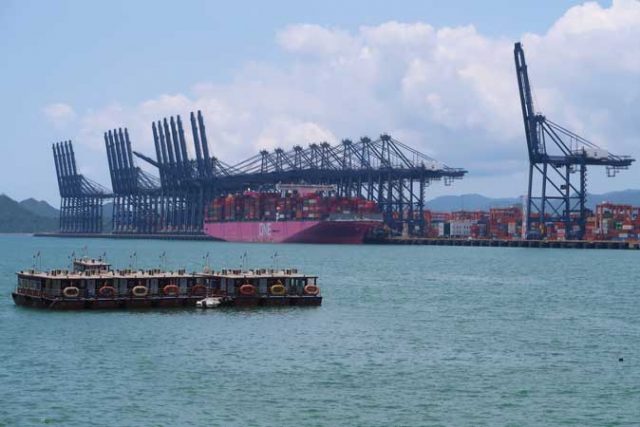
Cranes and containers are seen at the Yantian port in Shenzhen, China May 17, 2020. — REUTERS/MARTIN POLLARD
IF IT SEEMS like shipping delays and soaring delivery costs aren’t getting any better, it’s because they’re both getting worse.
Throughout the pandemic, blame for global supply-chain disruptions has bounced from COVID-19 outbreaks to container shortages, from spendthrift Americans gorging on garden tools to a massive ship beaching itself across the Suez Canal in March.
Those are still causing problems, but there’s a new hiccup that threatens to prolong the pain, maybe even long enough to upset Christmas shopping: The key export hub of Yantian in the heart of China’s factory belt was partially shut down in June to control virus cases, shrinking what little spare capacity existed in an industry that moves more than $4 trillion worth of goods across the global economy each year.
“The latest one is the worst in terms of the supply-constraint hits,” says Steve Saxon, a McKinsey & Co. partner in Shenzhen, China. He reckons it could be a month before Yantian is fully operational again, with the fallout rippling to other ports.
That means container shipping rates could stay high and delivery times could get stretched out even more heading into the peak season for inventory rebuilding in August, when retailers like to stuff warehouses with year-end Christmas items.
“US importers at the moment are panicking,” Mr. Saxon says. “People are already worried about whether they can the shipping capacity in August and September so they’re trying to lay their hands on whatever capacity they can get now.”
He expects consumer demand in the US will remain “reasonably high” through the rest of the year, with the main question being whether a supply side that’s “still creaking” can handle it.
“I would not predict another Suez — that feels like a true black swan,” he says. “But another port closing down and reducing capacity because of COVID is certainly foreseeable.”
With that dose of reality, here are six shipping signals to watch in the second half of the year:
PORT CONGESTION It’s not just bad off the coast of Los Angeles and Long Beach, California. Ships waiting to offload are parked outside ports from Singapore to Savannah, Georgia, and big European gateways for trade like Hamburg, Liverpool and Rotterdam are dealing with bottlenecks and delays, too. Dozens of ships are queued up around Yantian and, by one estimate, more than 400,000 20-foot containers were brought to a standstill.
So even as Yantian resumes normal operations, experts like Alan Murphy, CEO of Copenhagen-based of Sea-Intelligence, said the shockwaves might be felt far and wide. “There are literally hundreds of thousands of containers piling up in South China, while the other ports are already stressed to the max, and we have an acute shortage of both vessel space and empty containers, so the South China port situation is rapidly becoming a massive systemic disruption,” Mr. Murphy said in an email earlier this month.
CONTAINER RATES You’d be forgiven for mistaking the next chart for a couple of hot cryptocurrencies but unlike the value of Bitcoin lately, record-high container rates are marching only higher. A notice this month from Germany’s Hapag-Lloyd AG offers some perspective: Starting July 18, it will place a “peak-season surcharge” of $2,000 for each 40-foot container from East Asia to the US and Canada — an extra fee that by itself is higher than the full rate for a container shipped on transpacific routes in 2019.
The problem is there still aren’t enough steel boxes to meet the demand on the most sought-after routes, particularly from Asia to the US With Europe’s reopenings gathering pace, the strains may get magnified. “Europe is by no means immune to the capacity problems,” Mr. Saxon says. While shipping lines have deployed all their resources and have ordered hundreds of thousands of new containers, those are coming online only slowly and won’t ease the current capacity crunch very much if ports can’t handle the extra volume.
FREIGHT EXPENDITURES It’s not all about ships. According to Craig Fuller, CEO of the information and data firm FreightWaves, imports account for as much as one-fifth of trucking volumes. “When you see this massive amount of imports hit the freight market, it creates an enormous amount of strain in terms of trucking capacity or trucking demand,” he said on a recent episode of Bloomberg’s Odd Lots podcast. There aren’t enough drivers in many countries, and shortages of equipment like chassis to haul containers are particularly acute around ports.
Even with all the supply constrains, North America’s freight cycle “is in high-growth mode,’’ according to the latest monthly report from Cass Information Systems, Inc. Its truckload index has hit three consecutive record highs and might rise further. “US capital-goods orders have recently broken through a generational ceiling,’’ according to the Cass report. “We believe this portends an unprecedented US capex boom. So, even as federal-stimulus effects fade and consumer spending gradually reverts back to services from goods, the extraordinarily strong US freight recovery across the network in 2021 also has longer-term growth drivers.”
LOW INVENTORIES Some economists theorize that as countries reopen and travel restrictions are lifted, consumers will reduce online purchases of stuff and head off on vacation, easing the crunch in the global trade of physical goods. But the pandemic is rewriting old theories. Among the corporate casualties of Covid-19 is the just-in-time inventory model — a strategy justified if there’s cheap, reliable shipping on command. As the next chart shows, inventory-to-sales ratios are near historic lows. That’s largely because supply can’t keep pace with demand.
Lean storerooms aren’t a problem if you know exactly when your next convoy of containers arrives. But such certainty is also scarce these days, and no logistics manager wants to tell to the boss they’ve run out of something. So the drive to pad inventories might underpin demand even as people splurge again on holidays and entertainment. “As some businesses look to carry higher stocks — beyond typical levels of inventory — there is a risk that this could lead to further increases in competition for components and raw materials that are already in short supply,” HSBC trade economist Shanella Rajanayagam says.
CARRIER PROFITS An industry is having a banner year when the worst stock performance of the lot is a 34% gain nearly through the first half of the year. That’s the year-to-date performance of A.P. Moller-Maersk A/S, the Danish container line that’s currently the top player measured by global container capacity. In the midst of the industry’s most profitable run yet, the shares of eight other publicly traded rivals are having even better years, according to Bloomberg data, with Taiwan-based Yang Ming Marine Transport Corp.’s shares taking the title with a 416% increase so far this year.
Operationally, it’s been a nightmare “but they’re having a commercial bonanza,” Mr. Saxon says. This is a sea change from a decade of losses, bankruptcies and mergers that sheered the playing field from about two dozen major carriers to the current concentration of about 10 that control 85% of the market. After all that consolidation, rate-cutting wars should be less severe and capacity ought to be easier to match with demand, analysts say.
SHIP BUILDING With all the money being made, carriers are indeed placing a lot more orders for new vessels. Granted, this isn’t the heyday of 2008, when the orderbook was filled with more than 1,200 ships. Last week, Hapag-Lloyd said it’s doubling to 12 the number of ships it’s purchasing from South Korean shipyard Daewoo Shipbuilding & Marine Engineering Co. Each will carry more than 23,500 20-foot equivalent units of containers. That will add capacity to the market — but not until delivery in 2024.
For an industry that’s struggled with boom-and-bust cycles, these numbers will be interesting to track to see if overcapacity occurs again, ushering an eventual decline in ocean freight rates. For the near term, though, shipping headaches may linger. “The effects of disruption at Yantian will only now start to flow through, and could exacerbate existing congestion at major ports in a few weeks,” Ms. Rajanayagam says. “It certainly wouldn’t hurt for consumers to look to purchase products earlier than normal this year.” — Bloomberg
An artist wearing a protective face shield performs in Bangkok, Thailand, May 4, 2020. — REUTERS/SOE ZEYA TU
THAILAND ordered restaurants in its capital city Bangkok and nearby provinces to suspend dine-in services for a month as authorities tightened curbs to tackle the nation’s deadliest wave of COVID-19 outbreak.
The ban on dining in from Monday is in addition to the previously announced sealing of residential camps of construction workers in the Bangkok metropolitan areas and four other provinces after they became major clusters of infections. All gatherings of more than 20 people, seminars and conferences are banned in Bangkok and its neighboring provinces, according to a Royal Gazette statement late Saturday.
Thailand is tightening COVID restrictions ahead of a plan to gradually reopen its borders to vaccinated foreign tourists without the mandatory two-week quarantine that starts with its resort island Phuket next week. Prime Minister Prayuth Chan-Ocha has resisted calls for a lockdown of the capital to quell the current outbreak that began in early April and added more than 215,000 cases and about 1,800 deaths.
With the more contagious Delta variant now spreading in Thailand, new clusters found in temporary on-site housing shelters provided by companies have added to the strain on medical facilities and staff in the capital, challenging the government’s efforts to contain a surge. Mr. Prayuth has called for accelerating the pace of vaccinations and said harsher measures will hurt the economy, which is struggling to recover from its worst contraction in more than two decades.
The targeted COVID control measures have become necessary as the Bangkok metropolitan region and its vicinities “are at risk of developing a public health crisis, as can be seen from the number of new infections and patients admitted to hospitals,” according to the Gazette statement.
The region may see a spike in infections from an average of more than 1,000 a day if the containment steps are not expedited, and the health-care system may not be able to cope with an increase in the number of seriously-ill patients, it said.
Thailand reported 3,995 new infections in the past 24 hours, taking the cumulative caseload since the pandemic began to 244,447, official data showed Sunday. Total fatalities topped 1,900 with the addition of 42 new deaths.
The country, which was largely successful in controlling the pandemic last year, has been slow to rollout vaccinations, with only about 6% of its population inoculated. Mr. Prayuth said last week the so-called Phuket Sandbox plan to reopen tourism from July 1 will proceed even though case numbers are rising nationwide. — Bloomberg
JOHANNESBURG — New coronavirus infections in South Africa appear to be dominated by the Delta variant that was first identified in India, scientists said on Saturday as a third wave sweeps the hard-hit African country.
South Africa is the continent’s worst-affected nation in terms of coronavirus cases and deaths, accounting for roughly a third of confirmed infections and more than 40% of deaths.
But the rollout of vaccines has been slow, with just 2.7 million administered so far out of a population of 60 million.
The country’s second coronavirus wave was driven by the Beta variant first detected locally, but the Delta variant now looks to be leading new infections, specialists said.
“A new variant seems to be not only arising, but it seems to start dominating the infections in South Africa,” Professor Tulio de Oliveira at the University of KwaZulu-Natal told a news conference.
“It completely took over,” he said, adding that the Delta variant was more transmissible even than the Beta variant.
Mr. De Oliveira said there appeared to be community transmission of the Delta variant in KwaZulu-Natal province and that scientists were analysing the data for Gauteng, the province where the biggest city Johannesburg is located.
South Africa recorded more than 18,000 new infections on Friday, with 215 deaths.
Acting Health Minister Mmamoloko Kubayi-Ngubane told the news conference it was now likely that the peak of the third wave would surpass that of the second wave in January, when more than 21,000 new daily cases were recorded.
A government statement said a flurry of meetings would take place on Saturday and Sunday to consider measures to respond to the Delta variant and the ongoing surge in infections. — Reuters