Home Blog Page 7335

Addressing teenage pregnancies made a national priority

FREEPIK

PRESIDENT RODRIGO R. Duterte has signed an order recognizing the problem of teenage pregnancies in the country by making the implementation of “practicable” measures addressing its root causes as a national priority.

All government agencies, especially those involved in youth affairs, are directed to assist in finding solutions.

Under Executive Order No. 141, Mr. Duterte mandates all government agencies and instrumentalities to identify and implement “practicable” interventions to arrest adolescent pregnancies such as comprehensive sexuality education, education and employment opportunities for young people, and health promotion through media and communications.

Citing data from the Philippine Statistics Authority, the order said a total of 180,916 live births or 495 per day among adolescents aged 10-19 years were recorded in 2019.

Agencies should maximize the use of digital and online platforms in campaigning for responsible parenthood as well as raise awareness on the protection and promotion of reproductive health and rights, the order said.

Special focus should also be given to geographically isolated and depressed areas such as island towns, upland communities, and conflict-affected areas by empowering local offices and strengthening partnerships with civil society organizations and other stakeholders, the order said.

Among those that should be at the forefront of resolving teenage pregnancies are the Sangguniang Kabataan or local youth councils, National Youth Commission, and the Commission on Population and Development.

The order also tasks the Department of Budget and Management to ensure that the annual National Expenditure Program would “include initiatives for the prevention of adolescent pregnancies in the annual Budget Priorities Framework and its corresponding budget guidelines.” — Kyle Aristophere T. Atienza

NBI, IBP sign agreement to protect lawyers, judiciary members  

PHILSTAR FILE PHOTO

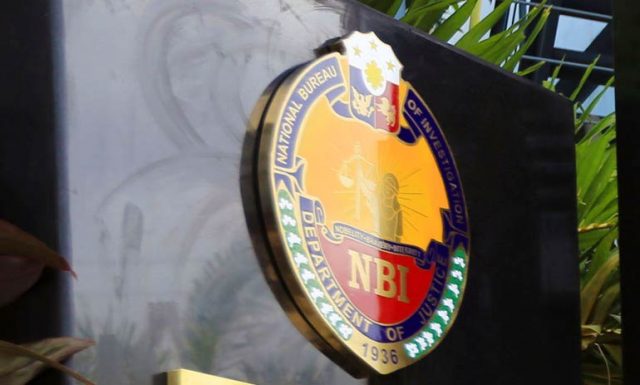
THE National Bureau of Investigation (NBI) and the Integrated Bar of the Philippines (IBP) signed a memorandum of agreement on June 25 to strengthen coordination and communication to prevent further attacks against lawyers and members of the judiciary.  

In a news release on Tuesday, the NBI said under the agreement, it committed to “provide timely assistance to lawyers, prosecutors, and magistrates in distress and extend appropriate security and protection in cases of threats or hazards in the performance of their duties and functions as may be allowed by law and regulations.”   

The IBP, meanwhile, “will provide legal assistance, through its legal aid program, to qualified NBI personnel who are unjustly harassed for doing their job and who do not have access to competent lawyers.”    

In addition, the lawyers’ group will provide a reward fund to encourage informants and witnesses in incidents of killing or attack against lawyers, prosecutors, and magistrates.   

The five-page document was signed by NBI Officer-in-Charge-Director Eric B. Distor and IBP President Domingo Egon Q. Cayosa. — Bianca Angelica D. Añago  

Manufacturer of cassava-made bags gets BoI approval

OIKOSPH.COM
OIKOSPH.COM

THE BOARD of Investments (BoI) has approved a P35-million facility in Bulacan that will make Hidrobags, which are packaging products made from cassava.

The Hidrobag project that uses cassava starch as a plastic alternative has been approved under the Corporate Recovery and Tax Incentives for Enterprises (CREATE) Act, BoI said in a press release on Tuesday.

The facility of Filipino-owned firm Oikos will produce 720,000 kilos of Hidrobags each year, with operations slated to start in August. The project will employ 15-31 people in the Baliuag town area.

“Hidrobag looks like plastic but has no plastic content. It will be manufactured by using only cassava starch and naturally derived vegetable oils. It can degrade naturally even in the landfill in 180 days,” BoI said.

Oikos has a licensing and distribution contract with Hidrobag Corp., which has proprietary rights over the brand name Hidrobag and the machinery used to make the products.

Headquartered in Chile, Hidrobag Corp. products are made in Costa Rica, while raw materials are manufactured in Indonesia and machines are delivered from China.

BoI said Oikos is aiming to sell the products to companies like supermarkets, shops, and hospitals that plan to use eco-friendly products as more local government units ban single-use plastics. — Jenina P. Ibañez

SEC-Davao warns public vs JC Pro Global Trading’s illegal investment scheme

THE SECURITIES and Exchange Commission’s (SEC) Davao office on Tuesday issued a warning against putting money in JC Pro Global Trading’s “compensation plan,” which is considered an illegal investment scheme.

“This investment-taking scheme cannot be sustained and inevitably will result in the collapse of the business,” SEC-Davao said in a statement, noting that the company’s operations is a “Ponzi scheme.”

SEC-Davao said JC Pro Global Trading does not have a license to solicit investments and warned that the company as well as its agents face penalties of up to P5 million or 21 years in prison based on the Securities Regulation Code and the Revised Corporation Code, among other regulations.

JC Pro Global Trading, according to SEC-Davao’s probe, uses Facebook to attract investors into a “system… designed to take care of everything which include, trading, buying and selling of cryptocurrency which provides daily income and a guaranteed profit of at least 200% in 20 days or double-your-money in 20 days which provides a no-risk investment because profits are assured.”

SEC-Davao identified the business head as “one Jameskie Earl Cornelio also known as Jaypee Halili.”

BusinessWorld sought comment from the Facebook pages of JC Pro Global Trading and Mr. Cornelio, but neither responded as of press time.

Based on its online posts, a basic “compensation plan” requires an investment of at least P500 up to P100,000. Investors are promised a profit as well as commission for bringing in new investors.

  SEC said such arrangement “is an investment contract because it involves the offering and sale of securities to the public where their investors need not exert any effort other than to invest or place money in the scheme in order to earn profit.” — MSJ

Prosecutor again junks sedition case vs teacher who tweeted reward for Duterte’s death

THE SEDITION complaint against public school teacher Ronnel A. Mas — who allegedly offered a P50-million reward to anyone who could assassinate President Rodrigo R. Duterte in a social media post on Twitter last year — has again been junked by a provincial prosecutor’s office after it denied the motion for reconsideration filed by the National Bureau of Investigation (NBI).

The Office of the Prosecutor in Olongapo City said the NBI “seeks to shortcut the proceedings” by submitting the video evidence of Mr. Mas’s public confession on social media with the motion for reconsideration instead of during the earlier filing of the case.

“The introduction of new evidence during a motion for reconsideration is not proper,” the prosecutor said.

The prosecutor also quoted a ruling from the Supreme Court stating that “the very purpose of a motion for reconsideration is to give the prosecutor a chance to correct any errors that he or she may have committed in issuing the resolution ordering the filing of an information in court or dismissing the complaint.”

Nevertheless, the prosecutor said the NBI can still re-file the case “with the sufficient documents and evidence to establish probable cause.”

The prosecutor also stressed that “rules on evidence in establishing probable cause must be upheld.”

This is the third time that the NBI lost the case against Mr. Mas.   

An Olongapo City court dismissed the NBI’s case last year, citing that Mr. Mas was illegally arrested. Then in February this year, a Zambales prosecutor also junked the new complaint filed by the NBI for failure to provide substantial evidence that it was Mr. Mas who posted the subject Twitter post.   

“I hope they accept defeat and they should already stop harassing Teacher Ronnel,” Mr. Mas’s lawyer, Dino S. De Leon, said in a public statement on Tuesday. — Bianca Angelica D. Añago 

Duterte orders drafting of workforce recovery plan

PHILIPPINE STAR/ MICHAEL VARCAS

PRESIDENT Rodrigo R. Duterte has signed an executive order directing the government to prepare a strategy to effect a workforce recovery.

Executive Order No. 140 creates a National Employment Recovery Strategy (NERS) task force, which will implement the government’s plan to restore employment until 2022.

The recovery plan, which is anchored on the Updated Philippine Development Plan 2017-2022, seeks to create a policy environment that encourages the generation of and improved access to employment, as well as livelihood and training opportunities.

The plan also seeks to improve worker employability, wellness, and productivity and expand support to current and emerging businesses.

The NERS task force is to be chaired by the Trade Secretary, with the Labor Secretary and the Director General of Technical Education and Skills Development Authority as co-chairs.

Its members include representatives from the Departments of Social Welfare and Development, Transportation, Tourism, Public Works and Highways, Science and Technology, Agriculture, Agrarian Reform, Interior and Local Government, Information and Communications Technology, Environment and Natural Resources, Education, Finance, and Budget and Management.

The order directs the task force’s member-agencies to conduct a joint evaluation of the policies and effectiveness of the recovery plan every three months.

The task force is to submit to the Office of the President periodic reports on the results of the joint evaluations and the implementation of the recovery plan.

Funding to implement the program is to be “charged against available appropriations of Task Force member-agencies.” 

“Subsequent funding requirements will be included in the respective budget proposals of the member-agencies, subject to the usual budget preparation process,” it said.

The unemployment rate rose to 8.7% in April as lockdowns were enforced in various parts of the country to curb a surge in coronavirus infections. — Kyle Aristophere T. Atienza

Agri trade deficit grows sharply in first quarter as imports expand

PHILIPPINE STAR/ MICHAEL VARCAS

AGRICULTURAL TRADE posted a deficit of $1.82 billion on total imports and exports amounting to $4.92 billion in the first quarter, with imports increasing sharply, the Philippine Statistics Authority (PSA) said.

The PSA said in a report Tuesday that imports rose 11.1% to $3.37 billion during the period, while exports fell 4.9% to $1.55 billion.

Agricultural exports accounted for 8.8% of total exports, while agricultural imports made up 13% of the import total.

“In the first quarter of 2021, the total balance of trade in agricultural goods was minus $1.82 billion. This reflects a deficit with an annual increase of 29.7%,” PSA said.

The top agricultural export was edible fruits and nuts and peel of citrus fruit and melons, which accounted for $421.59 million or 27.2% of agricultural exports.

Other leading exports were animal or vegetable fats and oils and their cleavage products, prepared edible fats, and animal or vegetable waxes with $298.55 million, preparations of vegetables, fruits, nuts or other parts of plants $199.07 million, tobacco and manufactured tobacco substitutes $140.36 million, and preparations of meat, of fish, or of crustaceans, molluscs and other aquatic invertebrates $125.52 million.

The PSA said cereals were the top import commodity, accounting for 18.7% of agricultural imports valued at $628.67 million.

Other top agricultural imports were miscellaneous edible preparations at $442.51 million, residues and waste from food industries and prepared animal fodder $393.65 million, animal or vegetable fats and oils and their cleavage products, prepared edible fats, and animal or vegetable waxes $328.64 million, and meat and edible meat offal $278.36 million.

In ASEAN, Malaysia was the primary buyer of Philippine agricultural exports, taking up $61.87 million, while Indonesia was the major regional source of agricultural imports, accounting for $387.07 million.

Leading agricultural exports to ASEAN were tobacco and manufactured tobacco substitutes worth $73.15 million, animal or vegetable fats and oils and their cleavage products, prepared edible fats, and animal or vegetable waxes $46.35 million, and preparations of cereals, flour, starch or milk and pastry cooks’ products $14.98 million.

Top imports from ASEAN were miscellaneous edible preparations valued at $332.98 million, animal or vegetable fats and oils and their cleavage products, prepared edible fats, and animal or vegetable waxes $312.32 million; and cereals $254.51 million.  

Within the European Union, the PSA said the Netherlands was the leading destination of Philippine agricultural exports, accounting for $120.51 million, while Spain was the top supplier of agricultural imports at $55.83 million. — Revin Mikhael D. Ochave

Mining industry contribution to 2020 GDP estimated at P102B

PHILSTAR

THE mining sector accounted for P102.3 billion, equivalent to 0.6% of gross domestic product (GDP) growth in 2020, according to the Mines and Geosciences Bureau (MGB).

The MGB said in a statement Tuesday that the value of metallic mineral production, including gold, nickel ore, mixed nickel-cobalt sulfide, scandium oxalate, chromite, and iron was P132.69 billion, while the total value of exported minerals, mineral products, and non-metallic mineral manufacture amounted to $5.2 billion.

“Meanwhile, the minerals industry contributed about P25.5 billion in national and local taxes, fees and royalties. The mining sector has allocated P379 billion for the implementation of the Environmental Protection and Enhancement Program as of December 2020,” the MGB said.

It said mining and quarrying activities created 184,000 jobs while a total of P25.71 billion was committed to the social development management program, which is used to improve the living conditions of the host and nearby communities in mining areas.

It added that 36.87 million seedlings have also been planted across 28,717.37 hectares of land under the mining forest program as of December.

Environment Secretary Roy A. Cimatu said the tally is “an indication of how massive the contribution of the mining industry is to our economy. Amidst the pandemic… the mining industry strived and did its part.  We are happy to know that this has been the outcome of the mining operations over the past year,” Mr. Cimatu said.  

Mr. Cimatu said the Environment department will monitor the operations of mining companies and improve the implementation of programs related to safety and environmental and social development initiatives.

Asked to comment, Chamber of Mines of the Philippines Chairman Gerard H. Brimo said in a mobile phone message that the group believes that responsible minerals development, when allowed to flourish, can contribute positively to the economic recovery.

Mr. Brimo said the mining sector can help in increasing government revenue and job generation while reducing poverty.

On April 14, President Rodrigo R. Duterte signed Executive Order No. 130 that lifted the ban on new mineral agreements.

The order is expected to bring in P21 billion in revenue for the National Government, with 100 mining projects in the pipeline after the lifting of the moratorium.

“The recent policy pronouncements of the government, particularly the lifting of the moratorium on new mining agreements and its implementing rules and regulations are indeed most welcome developments. We look forward to further policy pronouncements that will help maximize the Philippine mining industry’s growth potential and attract more domestic and foreign investment,” Mr. Brimo said.

The MGB has reported that the value of metallic mineral production for the first quarter of 2021 improved 14.11% to P28.91 million due to higher metal prices.

Nickel ore and other nickel by-products accounted for 47.12% or P13.62 billion of the total, followed by gold at 40.49% or P11.71 billion, copper 11.51% or P3.33 billion, and the combination of silver, chromite, and iron ore less than 1% or P254.92 million. — Revin Mikhael D. Ochave

Asian laggards to see mounting debt pressure on delayed revenue rebound

ASIA-PACIFIC economies such as the Philippines that are still struggling with virus containment will likely be compelled to take on more debt due to the delayed rebound of government revenue, S&P Global Ratings said.

“In countries with lagging economic activity, we see a threat of delayed revenue rebounds and higher debt accumulation. Recurring infections and lockdowns could further impede people mobility and dampen demand,” the company said in a note, One Region, Two Recoveries, issued Tuesday.

“The reintroduction of lockdowns and tighter mobility restrictions will dent the trajectory of economic recovery, particularly for consumption and tourism-dependent economies,” it added, noting the Philippines, India, Malaysia, Thailand, and Indonesia still struggle to contain the virus.

In a separate note, S&P said retail and food sectors in the Philippines will be most affected by recurring lockdowns.

“Discretionary sales and food service in countries such as India and the Philippines will feel more pain than in 2020 as the government enforces strict lockdowns given their more fragile conditions after previous waves,” it explained.

Metro Manila and nearby provinces were placed back under the strictest lockdown setting in late March as infections surged, straining the capacity of healthcare facilities. Restrictions were gradually eased by April as new case counts declined in high-risk areas.

Infections rose by 4,479 Tuesday to bring the tally to 1.408 million, according to the Department of Health. Active cases stood at 50,037.

S&P warned that new restrictions and slow vaccination rollouts pose a high risk to credit conditions in the near term within the Asia Pacific.

“While the recent pickup in vaccination rates across some geographies looks promising, the race to inoculate Asia-Pacific’s 4.7 billion remains challenging given ongoing vaccine shortages and uncertain vaccine efficacy against new virus strains,” S&P said.

Last week, S&P cut its growth forecast for the Philippines to 6% from 7.9% previously, saying low public mobility during the pandemic remains a drag on recovery. The latest estimate matches the lower end of the government’s 6-7% target growth for 2021.

Public mobility dampens consumption in the Philippines, where such spending accounts for 70% of the economy.

The economy contracted by a record 9.6% in 2020, the worst in Southeast Asia. It was in the negative for a fifth straight quarter in the three months to March, when gross domestic product declined by 4.2%. — Luz Wendy T. Noble

Small Business Corp. loan program expanded to trucking industry

PHILSTAR

GOVERNMENT LOANS from the Small Business Corp. (SB Corp.) will be extended to truckers affected by the pandemic through a partnership with an industry group.

SB Corp. on Tuesday signed a memorandum of agreement with the Alliance of Concerned Truck Owners and Organizations (ACTOO) extending the COVID-19 Assistance to Restart Enterprises (CARES) loan program to truckers.

ACTOO members through the program may apply for interest and collateral-free loans between P200,000 and P5 million.

“The transport and logistics sectors have been both adversely affected by the pandemic, but at the same time are in a position to recalibrate and be a significant contributor to the economic recovery,” SB Corp. Executive Vice-President Santiago S. Lim said at a launch event Tuesday.

SB Corp. has nearly used up P4 billion in general or non-tourism small business loan funding from the Bayanihan II stimulus package, more formally known as the Bayanihan to Recover as One Act.

Part of the funding dedicated to tourism businesses, as approved by the Tourism secretary, can be used for loans for truckers while uptake from the tourism sector remains slow.

Truckers availing of loans may be able to access the remaining P300,000 from the general CARES fund along with P1.5 billion out of P4 billion in tourism funds.

The funding total for tourism loans was originally P6 billion, which is part of the total SB Corp. loan allocation of P10 billion from Bayanihan II.

“It’s no longer P6 billion, because what has been downloaded to us was only P8 billion,” Mr. Lim said.

“Prior to the pandemic, the capitalization of SB Corp. was already at the P10 billion level. But over the past 29 years, out of the P10 billion capitalization, only P2 billion was funded. So there was a balance of P8 billion,” Mr. Lim added.

“That’s the argument that DBM (Department of Budget and Management) is using: that since your capitalization is only P10 billion, we cannot give you the full P10 billion because you are already fully subscribed or oversubscribed if we give you the P10 billion.”

Mr. Lim said SB Corp. is looking to fully avail of the allocated P10 billion for small business loans in Bayanihan II, and the organization is seeking legal advice on the matter.

“Hopefully, the Bayanihan II law will be extended tomorrow, so that we still have room for negotiation or for discussion with DBM.”

The Department of Trade and Industry earlier this month said that is it seeking additional funding for small business loans. — Jenina P. Ibañez

Rice farms advised to brace for fall armyworm infestation 

RICE RESEARCH and development workers are preparing for a possible infestation of the fall armyworm pest, according to the Philippine Rice Research Institute (PhilRice).  

PhilRice said in a statement that it has partnered with the Center for Agriculture and Bioscience International (CABI) to train personnel in how to identify and manage the pest, which is also damaging to corn.

According to PhilRice, the fall armyworm has been detected in both corn and rice fields in the Cagayan Valley, with majority of the affected crops at the seedling stage.

Training for possible fall armyworm infestation in rice involves researchers and extension workers from PhilRice, the Bureau of Plant Industry, the Regional Crop Protection and Management Centers in Cagayan Valley and Central Luzon, and local government units in Pampanga, Tarlac, and Pangasinan.

“The Department of Agriculture’s (DA) existing management protocol on fall armyworm only applies to corn. A protocol is required for rice because its cultivation is different,” PhilRice crop protection expert Genaro S. Rillon said.

“Early preparedness is necessary as any pest invasion in rice is a threat to food security,” PhilRice fall armyworm project team head Evelyn M. Valdez said.

The fall armyworm was first detected in June 2019 in Piat, Cagayan and has since been found in the Zamboanga Peninsula, Bicol, and Northern Mindanao. — Revin Mikhael D. Ochave

Customs smuggled goods seizures valued at P4.43 billion as of May

BW FILE PHOTO

THE BUREAU of Customs (BoC) said its seizures of smuggled goods were valued at P4.43 billion in the five months to May, the Department of Finance (DoF) said Tuesday.

The seized goods were impounded in 478 separate operations, the DoF said.

Citing preliminary data from the bureau, the DoF said fake products confiscated in the five months made up P1.98 billion, followed by smuggled general merchandise at P864.4 million.

Smuggled tobacco products were valued at P759.9 million amid a crackdown on tobacco smuggling.

Other smuggled goods found during the period include drugs (P373.2 million); various agricultural products (P221.81 million); cosmetics, personal protective equipment (PPE) and other medical supplies (P54.12 million); firearms (P40.12 million); and second-hand clothing (P39.13 million).

It also confiscated P23.5 million worth of electronics part and products, P23.47 million in vehicles and accessories; P3.9 million in alcoholic drinks and P3.73 million in wildlife.

In the first five months, the BoC filed 38 criminal cases before the Justice department against 144 smuggling suspects, and 23 administrative cases before the Professional Regulation Commission, against customs brokers. — Beatrice M. Laforga