Virtual taekwondo competition in Season 96 of the National Collegiate Athletic Association successfully came to a conclusion last week.
Held from June 14 to July 5, taekwondo jins from the NCAA’s 10-member schools competed in the different events, part of the league ‘s collective push amid the pandemic under the theme “Rise Up Stronger: NCAA Season 96.”
Taekwondo events included Poomsae Standard, Poomsae Freestyle, Speed Kicking Juniors, Speed Kicking Women’s, and Speed Kicking Men’s.
The De La Salle-College of Saint Benilde (CSB) emerged as the overall champion of the Speed Kicking event in the men’s and women’s divisions.
In the men’s division, the Blazers amassed a total of five gold medals from Ivan Murray Solimen (finweight division); Laurence Scott Santiago (featherweight); Mikko Michael Regala (welterweight); Matthew Cloyd Roxas (light middleweight); and Josemari Aiko Ong (heavyweight).
CSB’s good form extended in the distaff side, with its women players taking four gold medals care of Krizelle Therese Yadao (flyweight); Loralee Natividad (welterweight); Anne Christine Obenza (middleweight); and Lucille Cunanan (heavyweight).
Also emerging victorious in the Speed Kicking men’s division were San Beda University’s Jack Janggo Natividad (flyweight) and Christian Neil Arches (lightweight); and Arellano University’s Stanley Roy Laguio (bantamweight).
Others scoring gold in the women’s division were Jose Rizal University’s Emie Fernandez (finweight); San Beda University’s Princess Angel Doria (bantamweight); San Sebastian College-Recoletos’ Liza Leslie Bagay (featherweight); and Arellano University’s Paulene Gaye Rey (lightweight).
In the Juniors Speed Kicking division, San Beda ruled with three gold medals.
Topping their rivals in their respective divisions were San Beda’s Ignatius Vicente Lorenzo Pinera (bantamweight); Philip Joshua Lee (lightweight); and Louell Ivannerich Mamaclay (light middleweight).
Winning gold as well were CSB-La Salle Greenhills jins Victor Emmanuel Rodriguez and Raphael Ongkiko in the welterweight and middle/light heavyweight divisions, respectively.
Champions in other divisions were Lyceum of the Philippines University’s John Patrick Moneda (fin/flyweight); Colegio de San Juan de Letran’s Luke Morel (featherweight); and Arellano University’s Joshua Lyndon Dionio (heavyweight).
Poomsae
In Juniors Poomsae, Emilio Aguinaldo University (EAC) triumphed.
EAC’s John Vergel Reyes snagged the gold medal in Poomsae Standard Juniors while John Mc Leary Ornido won in the Poomsae Freestyle Standard Juniors.
Topping the women’s and men’s divisions in the Poomsae Standard, meanwhile, were Jose Rizal University’s Emie Fernandez and San Beda University’s Alfritz Victoria Arevalo.
CSB’s Krizelle Therese Yadao and San Beda University’s Michael Christian Macario were named champions in the Freestyle Standard Women’s Division and Freestyle Standard Men’s Division, respectively.
The taekwondo event was broadcast daily over GTV in close coordination with the NCAA’s official TV partner GMA Network.
Meanwhile, a day after NCAA taekwondo ended, the virtual chess competition kicked off on July 6.
For this season, all chess matches are done via knockout games, with the next round being the Round of 16, followed by the quarterfinal round, semifinals and finals.
Season 96 of the NCAA airs on GTV weekdays at 3 p.m. (with replays weeknights at 10:50 p.m.), Saturdays at 4:30 p.m., and Sundays at 5:05 p.m. For more information on the league, visit NCAA Philippines’ official website www.ncaa.com.ph and follow @ncaaphilippines and @gmasynergy on social media. – Michael Angelo S. Murillo
FIVE-star basketball player Jalen Lewis, 16, has become the youngest prospect in US history to turn pro, signing a deal with Overtime Elite, per multiple reports.
The Overtime Elite professional league made headlines in May by signing twin brothers Matt and Ryan Bewley. The league, funded by sports media company Overtime, aims to offer kids an alternative to NCAA enrollment as they transition to professional basketball.
The 6-foot-9 power forwards from the Class of 2023 are also five-stars.
Lewis, a 6-8 center set to graduate in 2023, held offers from Kansas, Kentucky, Arkansas, UCLA and USC, among others. He was the No. 12 composite ranked recruit in the country, per 247sports.com.
Former UConn head coach Kevin Ollie, who serves as the coach of Overtime Elite, told ESPN: “I’d describe Jalen as an absolute difference maker, a rare talent, with a combination of size, athleticism, good hands and ball skills that impact plays on both ends of the court. There are no limitations to what he’ll be able to do in his career and, through Overtime Elite, he’ll have the resources in place to help him reach his dreams.”
Lewis, like the Bewley brothers, is being compensated more than seven figures, per reports, and each loses his high school and college eligibility by signing with Overtime Elite. — Reuters
LAS VEGAS, Nevada — UFC boss Dana White has said that Conor McGregor and Dustin Poirier will meet for a fourth time after their trilogy fight at the T-Mobile Arena ended early when the Irishman suffered a broken leg at the end of the first round.
McGregor’s left leg was in a protective cast as he was wheeled out of the arena on a stretcher and brought to a local hospital, where White said he would be operated on Sunday morning.
“It sucks, it’s brutal, it’s not the way you want to see fights end. Dustin Poirier will fight for the title and when Conor is healed and ready to go, you do the rematch, I guess,” White told a news conference.
McGregor and Poirier fought at a frenetic pace during the first five-minute frame before doctors called a halt due to McGregor’s leg break.
Poirier, who was already the number one contender for the lightweight title, will now meet Brazilian Charles Oliveira, who won the belt in May when he defeated Michael Chandler.
The UFC 264 lightweight match-up was supposed to bring what had become a bitter rivalry to an end, but White said the pair still had unfinished business in the cage.
“The fight didn’t get finished. You can’t have a fight finish that way. We’ll see how the whole thing plays out. I mean, who knows how long Conor is out? Poirier will do his thing until Conor is ready.”
Former United States President Donald Trump was among the 20,062 fans in a sold-out T-Mobile Arena that heard McGregor launch an expletive-ridden post-fight tirade at Poirier, insulting the American’s wife in the process.
“I don’t like that. That’s not good. Leave people’s families and wives and all that stuff out of it. Family has nothing to do with it,” White said. — Reuters
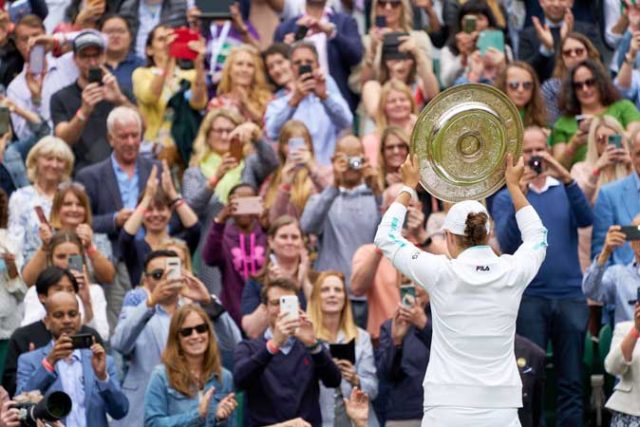
SYDNEY — Ash Barty’s close friend Casey Dellacqua led the way in typically Australian style as a proud sporting nation woke up to hail its first women’s Wimbledon singles champion in 41 years on Sunday.
Like much of Australia, former professional Dellacqua stayed up into the early hours to watch Barty beat Karolína Plíšková and end the long wait since her idol Evonne Goolagong claimed the second of her All England Club titles in 1980.
“Beyond proud of you. Wimbledon Champion! You bloody ripper,” Dellacqua posted on Twitter, using an Australian term of exuberant praise.
She added in a Channel Nine TV interview: “It’s just extraordinary… She does it with such grace and with such integrity, she sets a really good example for sport in Australia about how to be a champion.”
Barty’s triumph was lauded by a who’s who of Australians on social media, ranging from tennis great Rod Laver’s “congratulations” to pop star Kylie Minogue’s “ASSSSSSSSHHHHBAAAARRRTYYYYYYYY!!!.”
Cathy Freeman, whose gold medal run at the 2000 Olympics is widely regarded as a seminal moment in Australia’s relationship with its indigenous community, tweeted of her “massive pride” in her fellow Aboriginal athlete.
Barty’s triumph came on the 50th anniversary of Goolagong’s first Wimbledon title, and the 25-year-old said after her win that he she hoped she had done the indigenous sporting trailblazer proud.
“They are both relatable human beings, they are both great tennis players and they are both great to watch,” Dellacqua said of the pair.
Former French Open champion Barty was already one of Australia’s favourite athletes, beloved as much for her grounded personality as for her success.
An emotional Dellacqua said Barty’s parents deserved a great deal of credit for raising a “great human being.”
Barty spoke to her family, who were unable to travel to London from their Queensland home for the final, after her victory.
“Ash can’t wait to get home,” her father Rob told Brisbane’s Courier Mail newspaper.
“She knows she is on a long journey and won’t be home until November. She is dying to get back. But she talks to her sisters and her mum every day with FaceTime. She is very much a family person.” — Reuters
RIO DE JANEIRO — Argentina won their first major title in 28 years on Saturday and Lionel Messi finally won his first medal in a blue-and-white shirt when an Angel Di Maria goal gave them a 1-0 win over Brazil and a record-equalling 15th Copa America.
Di Maria, starting for just the second time in the Copa, justified his selection by scoring the opener midway through the first half.
Renan Lodi failed to cut out a long ball forward from Rodrigo De Paul and Di Maria lobbed the stranded Ederson with aplomb.
Brazil piled on the pressure in an exciting second half but even with five strikers on the field, they could not get an equalizer against an Argentine defense protected by the outstanding Rodrigo De Paul.
“First, we have to congratulate our opponents especially for the first half when they neutralized us,” said Brazilian defender Thiago Silva.
“In the second half, there was no contest — only one team tried to play football, the other just wasted time as we knew they would. It’s not an excuse, we didn’t do what we had to, principally in the first half.”
Argentina’s win was a particular triumph for Barcelona striker Messi, who picked up his first ever title in a blue-and-white shirt after more than a decade of club and individual honors.
The Argentine players surrounded their captain at the final whistle. Goalkeeper Emilian Martinez celebrated what he called a Maracanazo, a remarkable win at the famous Rio stadium.
“I’m speechless,” he said. “I knew my dream would come true, and where better than the Maracanazo and giving the title to the best in the world and fulfilling his dream.”
Messi finished the tournament’s joint top goalscorer with four goals and was elected joint best player along with Neymar.
But he was quiet throughout the game at the Maracana stadium and uncharacteristically missed a golden opportunity to wrap the game up with two minutes remaining.
When the final whistle went, Argentina TV declared “Argentina Champions, Lionel Messi Champion!”
The match itself was a disappointing one, with Argentina the better side in a cagey first half that featured 21 fouls.
However, Brazil came out more aggressively in the second period and as the time ticked on they threw more people forward — and at one point having five recognized strikers on the field.
Richarlison had a goal chalked off for offside seven minutes into the second half and then forced Emiliano Martinez into a good stop two minutes later.
But as Brazil poured forward gaps, opened up and Argentina missed two clear chances to score in the dying moments of the match.
The victory was Argentina’s 15th Copa America triumph and means they draw level with Uruguay as the all-time leading winners.
“This is a very big title,” said Argentine coach Lionel Scaloni. “I hope that Argentines can enjoy it. The fans love the team unconditionally and I think they identify with this side that never drops its guard.”
Their win extended their sequence of undefeated matches to 20 under Scaloni and handed Brazil their first competitive defeat since they lost to Belgium in the quarterfinals of the 2018 World Cup. — Reuters
Ashleigh Barty was understandably crushed when she had to withdraw in the middle of her second-round match at the French Open early last month. That she couldn’t defend the title she earned at Roland Garros in 2019 was bad enough. That she faced the possibility of missing out on Wimbledon due to an injury to her left hip added insult to the mix. In truth, she had been facing a variety of ailments, including one in her arm that forced her to forfeit her quarterfinal-round match at the Italian Open, the season’s final tune-up event heading into hallowed red clay.
That said, Barty was optimistic of her immediate prospects. “Everything happens for a reason,” she said. “There will be a silver lining in this, eventually. Once I find out what that is, it’ll make me feel a little bit better.” And better was precisely what she felt prior to her first-round set-to at Wimbledon, in which she figured to be well enough to compete. For all the confidence she bore as World Number One, however, she left room to accept the grueling reality of tennis: success requires just as much good fortune as unparalleled skill. And so she noted that, “One day, I would love to be the champion here” even though she knew there is always no better time for her than the present to carve her destiny.
As things turned out, Barty found the stars shining her way. After initially finding difficulty against veteran Carla Suarez Navarro in her tournament opener, she rattled off one straight-sets victory after another — if with some difficulty — en route to the final. Standing between her and the Venus Rosewater Dish was Karolína Plíšková, once also a top seed, but she had momentum, and unquenchable self-belief, on her side. Her innate assurance led her to claim the title contest’s first 14 points and 16 of the first 18 all told. And by the time her opponent regained some footing, the score was already 4-0 in her favor.
Barty would go on to win the first set six to three, and, after surrendering the second following a tie-breaker, the third as well with the same score. She had finally claimed the title she coveted most, and, in retrospect, it was but fitting that she commanded Centre Court on the golden anniversary of mentor Evonne Goolagong Cawley’s first date with fate in the sport’s premier stop. For her day of reckoning, she wore an outfit that paid tribute to her fellow Australian’s breakthrough win. She didn’t need to, of course. Just like her idol, her heart is already on her sleeve. Just like her idol, she is universally loved and respected. And just like her idol, she is a champion of champions.
Anthony L. Cuaycong has been writing Courtside since BusinessWorld introduced a Sports section in 1994. He is a consultant on strategic planning, operations and Human Resources management, corporate communications, and business development.
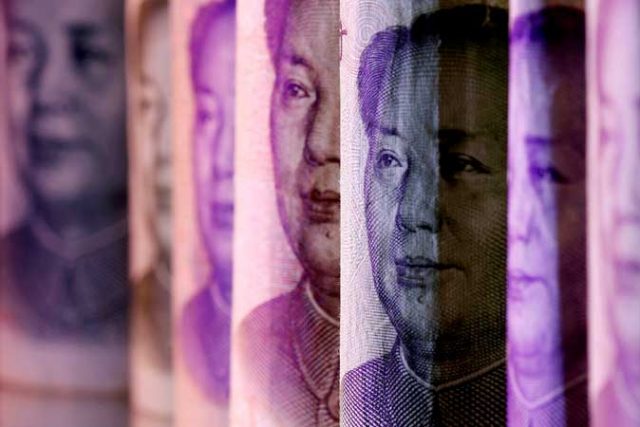
CHINESE YUAN banknotes are seen in this illustration taken Feb. 10, 2020. — REUTERS
IT WAS the kind of brazen PR stunt that Jack Ma might have dreamed up.
But this wasn’t the flamboyant Chinese billionaire who disappeared from public view eight months ago. It was Mark Zuckerberg, bobbing up and down on a hydrofoil surfboard, clutching an American flag and exuding all the confidence of a man worth $130 billion.
The contrast between the social media mogul’s July 4th Instagram video and the day’s big event in China could hardly have been starker. Regulators in Beijing had just hours earlier banned Didi Global, Inc.’s ride-hailing service from app stores, delivering their latest hammer blow to an entrepreneurial elite that once seemed destined to challenge Mr. Zuckerberg and his US peers at the top of the world’s wealth rankings.
The age of unfettered gains for China’s ultra-rich now appears to be coming to an abrupt end.
Even as the world’s 10 wealthiest people added $209 billion to their net worth in the first half of 2021, China’s richest tycoons in the Bloomberg Billionaires Index saw their combined fortunes shrink by $16 billion. Shares of their flagship companies sank by an average 13% during the period, the first time in at least six years they’ve recorded declines when the broader Chinese equity market was rising. Didi’s stock has plunged 14% since its June 30 debut on the New York Stock Exchange, slashing the wealth of the company’s co-founders by almost $800 million.
Behind the losses is a crackdown that has only intensified since November, when Mr. Ma’s Ant Group Co. was forced to pull its blockbuster initial public offering (IPO) at the last minute. Policy makers are tightening regulations on some of the most important facets of Asia’s largest economy, from financial services to internet platforms and the data that underpins most big businesses in modern China. In the latest salvo, regulators unveiled new draft rules on Saturday that would require nearly all domestic companies to undergo a cybersecurity review before listing in a foreign country.
Beijing’s motivations for the crackdown are varied. They include concerns about anticompetitive behavior in the tech industry, risks to financial stability from lightly regulated lending platforms and the rapid proliferation of sensitive personal information in the hands of large corporations.
But another undercurrent running through many of the government’s latest initiatives is a not-so-secret desire to rein in the power of China’s tycoons, some of whom have amassed an enormous amount of influence over the $14 trillion economy. As one government official familiar with the leadership’s thinking described it, Beijing wants to prevent its billionaires from becoming a force as strong as the family-run chaebol that dominate South Korea’s economy and many aspects of its politics.
Adding to Beijing’s resolve is the Chinese public’s growing concern over rising inequality. At a major speech on his economic plans in October, President Xi Jinping acknowledged that the country’s development was “unbalanced” and said “common prosperity” should be the ultimate goal.
The upshot is a new era for the country’s billionaires and the investors who back them. Gone are the days when tycoons like Mr. Ma could confidently bend the rules to supercharge their companies’ growth and challenge entrenched interests like state-owned banks. Outsized public personas — long seen as an asset for tech-company founders — now look like a liability. The new playbook for China’s ultra-rich calls for more deference to the Communist Party, more charitable donations and more focus on the wellbeing of rank-and-file employees, even if it hurts the bottom line.
“Some of the tech companies became larger than life,” said Allan Zeman, a property tycoon who gave up his Canadian passport to become a naturalized citizen of China in 2008. One big lesson from the crackdown: “Don’t get bigger than the government,” Mr. Zeman said, shortly after attending the Communist Party’s 100th anniversary celebration in Beijing on July 1.
Didi notwithstanding, the message appears to be getting through. Mr. Ma, who criticized Chinese financial regulators in his last public speech before Ant’s IPO was abruptly suspended, has since resurfaced only a handful of times in carefully choreographed appearances.
Colin Huang, whose e-commerce giant Pinduoduo, Inc. has come under scrutiny for its relentless working schedules, has given up his roles as chairman and CEO and donated shares worth billions of dollars. ByteDance Ltd. founder Zhang Yiming said in May he would step down as CEO and spend more time on educational charity.
Wang Xing, the chairman of food-delivery giant Meituan, has mostly steered clear of the public spotlight since he posted a 1,100-year-old poem in May that some regarded as an implicit criticism of the government. Mr. Wang, who later issued a clarification saying the post had been targeted at the shortsightedness of his own industry, was advised by Beijing officials to keep a low profile, according to people with knowledge of the matter.
The new environment will “fundamentally change” China’s tech sector, partly because investors will become more wary of funding entrepreneurs who could end up on a collision course with Beijing, said Eric Schiffer, CEO of Patriarch Organization, a Los Angeles-based private equity firm.
US President Joseph R. Biden has also taken aim at the billionaire class, calling for increased taxes on the rich and signing an executive order on Friday that aims to weaken dominance of America’s biggest companies. The move echoed an ongoing antitrust campaign in China that has ensnared giants including Alibaba Group Holding Ltd. and arch-rival Tencent Holdings Ltd.
One key difference is that Chinese authorities, unrestrained by Western-style checks and balances, can act more forcefully than their US counterparts, said Angela Zhang, director of the Centre for Chinese Law at the University of Hong Kong and author of “Chinese Antitrust Exceptionalism.” Mr. Zuckerberg’s hydrofoil joyride came just a few days after a judge dismissed two monopoly lawsuits against Facebook, Inc. that had been filed by the U.S. government and a coalition of states. “In the case of China, the pendulum swings very quickly,” Ms. Zhang said.
Beijing has a variety of tools for reining in billionaires, including detention in the most extreme cases. An internal disciplinary process for party members, known as shuanggui, has been used for some tycoons in the past. Investigations by antitrust, cybersecurity and other regulators are more common ways to influence the behavior of tech giants. The government also uses “soft” methods including state-media campaigns, Ms. Zhang said.
In the days after regulators halted Ant’s IPO, Xi visited a museum in the eastern city of Nantong that was created by Zhang Jian, a 19th century capitalist. The Chinese president described Zhang as a patriotic nation builder and philanthropist. Rather than disrupt the financial system with unregulated loans, he built factories and hundreds of schools.
“When you see a virtuous person, follow his example,” Xi was quoted as saying by Chinese media, calling on private entrepreneurs to “strengthen their feelings for the country and assume social responsibilities.”
While China’s crackdown has been most visible in the tech industry, the country’s property billionaires have also come under increased pressure in recent years. Authorities have steadily restricted the industry’s access to funding in an attempt to rein in home prices and reduce systemic risks to the financial system. China Evergrande Group Chairman Hui Ka Yan has been among the biggest casualties of the campaign this year, losing $6.7 billion, or nearly 30%, of his fortune as Evergrande’s stock tumbled on concerns the company faces a liquidity crunch.
A more subtle sign of billionaires’ waning influence can be seen in their shrinking share of political appointments. Data from the Hurun Report, which produces wealth rankings, shows that rich entrepreneurs accounted for 5.8% of delegates in the Chinese People’s Political Consultative Conference and the National People’s Congress, the lowest in at least eight years and down from 15.3% in 2013.
“There is an evolution in the thinking of which type of people should be within the mix,” said Rupert Hoogewerf, the Hurun Report’s chairman. “It’s becoming much harder for entrepreneurs.”
The big question is whether all of this will be good for China in the long run. One risk is that the onslaught of regulatory probes and rule changes undermines investor confidence, HKU’s Zhang said. That could make it less likely that the entrepreneurs behind the next potential Alibaba or Tencent get the funding they need to make their ideas a reality. Global venture capital firms will likely think twice about investing in Chinese companies if Beijing prevents them from listing overseas, a crucial exit route for early international backers.
Yet some of Beijing’s new policies may foster competition in the oligopolistic tech industry, clearing the way for a new class of billionaires to rise. Stricter regulations on fintech firms will help reduce systemic risks, even if they slow down innovation. China’s crackdown on Ant won praise last month from Berkshire Hathaway, Inc. Vice Chairman Charlie Munger, who said in an interview with CNBC that the “Communists did the right thing” by letting Ma know he couldn’t “wade into banking…and just do whatever he pleased.”
Either way, China’s entrepreneurs will have little choice but to embrace the “new normal,” said Chen Long, a partner at consulting firm Plenum. “The good old days of savage growth are gone.” — Bloomberg
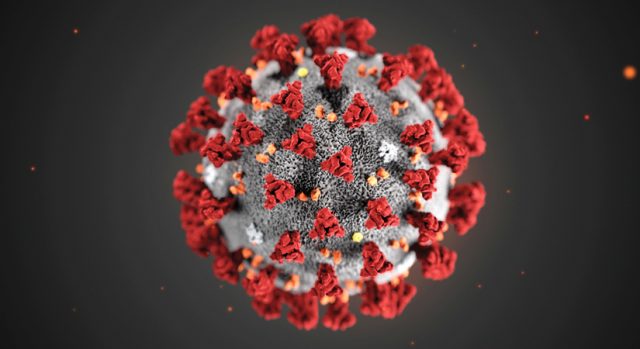
A 90-YEAR-OLD woman died after becoming infected with two different strains of COVID-19, revealing another risk in the fight against the disease, Belgian researchers found.
In the first peer-reviewed analysis of an infection with multiple strains, scientists found the woman had contracted both the alpha variant, which first surfaced in the UK, and the beta strain, first found in South Africa. The infections probably came from separate people, according to a report published Saturday and presented at the European Congress of Clinical Microbiology & Infectious Diseases.
The woman was admitted to a Belgian hospital in March after a number of falls, and tested positive for COVID-19 (coronavirus disease 2019) the same day. She lived alone, receiving nursing care at home, and hadn’t been vaccinated. Her respiratory symptoms rapidly worsened and she died five days later. When her respiratory samples were tested for variants of concern, both strains were found in two tests. The researchers couldn’t say whether the co-infection played a role in her rapid deterioration.
The idea of multiple infections isn’t completely new. In January, Brazilian scientists reported two cases of COVID-19 co-infection, but the study hasn’t yet been released in a scientific journal. Researchers have also previously found evidence of people becoming infected with multiple strains of influenza. The cases suggest co-infection might be more common than currently known.
“The global occurrence of this phenomenon is probably underestimated due to limited testing for variants of concern and the lack of a simple way to identify co-infections with whole genome sequencing,” said Anne Vankeerberghen, the lead author of the study and a molecular biologist from OLV Hospital in Aalst, Belgium. “Being alert to co-infections remains crucial.”
Such instances also raise questions over how much protection vaccines can provide. With the rapidly spreading delta variant now the dominant strain in many places, including the UK, drugmakers are rushing to test their shots against variants and create new versions that could provide a better defense. Countries are also mulling whether to offer booster shots this winter to guard against diminishing responses from vaccines. — Bloomberg
MELBOURNE — Australia reported its first coronavirus-related death of the year on Sunday and a 2021 record 77 new cases of the virus in the state of New South Wales, which is battling an outbreak of the highly infectious Delta variant.
State Premier Gladys Berejiklian said the numbers in and around the country’s biggest city Sydney, already under a hard lockdown, are expected to rise. “I’ll be shocked if it’s less than 100 this time tomorrow, of additional new cases,” Ms. Berejiklian told a televised briefing.
On Saturday there were 50 cases, the previous 2021 record high. The recent outbreak stands at 566 cases.
Of Sunday’s cases, 33 were people who had spent time in the community while they were infectious, raising the likelihood that the three-week lockdown of more than 5 million people in Sydney and surroundings will be extended.
“Given where we’re at and given the lockdown was supposed to be lifted on Friday, everybody can tell it’s highly unlikely at this stage,” Ms. Berejiklian said.
There are 52 cases in hospital, or about one in 10 people infected in the current outbreak. Fifteen people are in intensive care, five require ventilation. The death, the country’s first locally contracted case since December, involved a woman in her 90s.
Australia has fared much better than many other developed countries in keeping its COVID-19 numbers relatively low, seeing just over 31,000 cases since the start of the pandemic and 911 deaths.
The vaccination rollout, however, has been sluggish due to supply constraints and changing medical advice for its mainstay AstraZeneca shots.
Vaccinations are available for now only to people over 40 and groups at risk either due to their health or exposure to the virus at work. Of those hospitalised in Sydney, 11 are under the age of 35 and more than three-quarters of the patients have not had any doses, health authorities said. — Reuters
SEOUL — The leaders of North Korea and China traded messages vowing to strengthen cooperation on the anniversary of their treaty of friendship, cooperation and mutual assistance between the two countries, North Korea’s KCNA news agency reported on Sunday.
In a message to China’s Xi Jinping, North Korean leader Kim Jong Un said their relationship is vital in the face of hostile foreign forces, while Mr. Xi promised to bring cooperation “to a new stage,” KCNA said.
China has been North Korea’s only major ally since the two signed the treaty in 1961, and international sanctions imposed over Pyongyang’s nuclear weapons and ballistic missile programmes have made it more dependent than ever on Beijing for trade and other support.
“Despite the unprecedentedly complicated international situation in recent years the comradely trust and militant friendship between the DPRK and China get stronger day by day,” Mr. Kim said in his message, KCNA reported, using the initials for North Korea’s official name.
The treaty is defending socialism and peace in Asia “now that the hostile forces become more desperate in their challenge and obstructive moves,” Mr. Kim said.
Mr. Xi’s message said he plans to provide greater happiness to the two countries and their people by strengthening communication with Mr. Kim and “by steadily leading the relations of friendship and cooperation between the two countries to a new stage,” KCNA said. — Reuters
The Department of Trade and Industry (DTI) is developing national standards for Filipino dishes like adobo to establish a “common ground” among businesses.
A committee under the department has been tasked with developing Philippine National Standards (PNS) for popular dishes such as adobo, sinigang, lechon, and sisig, while considering the variation of cooking techniques across the country, the DTI said in a statement on Friday. The project starts with adobo.
Noting the wide variety in the ingredients and cooking methods used for adobo, the DTI said that the standard will set the common elements defining the “basic” Philippine adobo.
“There will be different approaches and opinions (on cooking Philippine adobo). As long as I have, say one to three steps, it’s this recipe. Anything else you add to it is a variation to the cooking technique,” chef Myrna Segismundo of the Food Writers Association of the Philippines said.
Ms. Segismundo is part of the committee developing the standards, along with representatives from restaurant and food industry groups, the Department of Science and Technology, and the National Commission for Culture and Arts.
The DTI Bureau of Philippine Standards Director Neil P. Catajay said that developing Filipino dish standards will create a “distinguished Filipino food culture while establishing the common ground for food businesses.”
“Standardizing the basic cooking technique for Philippine adobo will help ordinary citizens, foodies, and food businesses determine and maintain the authentic Filipino adobo taste,” he said.
The draft of the standards will be circulated nationwide for review from stakeholders.
Aside from Ms. Segismundo, the other members of the recipe committee (Bureau of Philippine Standards Technical Committee on Filipino Dishes or BPS/TC 92) are the committee chairperson chef Glenda Barretto of Via Mare, chef Raoul Roberto Goco from the Hotel and Restaurant Association of the Philippines, representatives from the University of the Philippines Diliman – College of Home Economics, Philippine Chamber of Food Manufacturers, Inc., Philippine Association of Meat Processors, Inc., Department of Science and Technology – Industrial Technology Development Institute, Philippine Association of Food Technologists, Inc., LTB Chefs Association, Asia Society Philippines, the National Commission for Culture and the Arts, and the Philippine Daily Inquirer which has had a long-running column on adobo recipes in its lifestyle pages.
The committee off the project on May 11 by starting the development of a PNS for adobo, using the cookbook Kulinarya: A Guidebook to Philippine Cuisine as their main reference.
“Adobo is not a recipe. It is a cooking technique,” Mr. Goco was quoted as saying in the DTI release, which also noted that there are a great number of adobo recipes around the country “ranging from those with laurel, pepper, soy sauce, vinegar, coconut cream/milk, atsuete, and other ingredients cooked through various methods such as braising and stewing, among others.”
“Benchmarking the cooking technique for Philippine adobo will help preserve the country’s cultural identity despite the variations made to it,” says the release.
Philippine National Standards are product characteristics and production guidelines, but compliance is not mandatory. — Jenina Ibañez
Brands are leveraging BTS’ global influence as the K-pop boy band continues to reign at the top of the music charts. A report by meta-search website iPrice found that Google searches on a brand can double after a collaboration with BTS.
BTS’ collaboration with McDonald’s this May contributed to a 47% increase in interest compared to the same period last year, according to iPrice. Coca-Cola and Louis Vuitton similarly benefitted from collaborating with the group, as interest in the brands increased by 127% and 65%, respectively, as compared to the same period in 2020.
Other collaborations include a BTS edition of Samsung’s Galaxy S20+ in July 2020, as well as with Tokopedia, an Indonesian shopping site, in October 2019.
A separate iPrice study revealed that a devoted member of the BTS Army — as the group’s global fan base is called — spends an average of $1,422 on the group’s merchandise, concert tickets, and albums.
In the Philippines, the BTS member with strongest pull is Jungkook, followed by V and Jimin. This trend carries over to the rest of the Southeast Asian region, iPrice found. — Patricia B. Mirasol
The success of BTS’ brand collaborations is based on the search volume seen on Google Keyword Planner. The searches recorded were during a three-month period during BTS’ collaborations, announcements, or product releases. The search volume of each brand is compared to the same three-month period of each year from 2018 until 2021. The brand keywords used depends on how it’s referred to in each country (e.g. in the Philippines, keywords used for McDonald’s included “McDo.” Popularity was based on each country’s Google searches per BTS member in the last six months (December 2020 to May 2021). The keywords used are each member’s stage name with the keywords “BTS” after (e.g. “V BTS”). For Thailand, keywords used were in Thai characters. The tool Google Keyword Planner was used to obtain the search volume.