Home Blog Page 7307

‘Christmas came early’: Villar’s AllDay soars on market debut

VILLAR GROUP Chairman Manuel B. Villar and Philippine Stock Exchange President and Chief Executive Officer Ramon S. Monzon rang the trading bell as AllDay Marts, Inc. listed on the stock exchange. Also in photo are AllDay Director Manuel Paolo A. Villar (far left), AllDay Vice Chairman Camille A. Villar (second from left) and former Public Works Secretary Mark A. Villar (far right).

By Keren Concepcion G. Valmonte, Reporter

SHARES of Villar-led AllDay Marts, Inc. surged in its debut on the stock market on Wednesday, as retail investors sought to grab a piece of the fast-growing supermarket chain.

AllDay shares opened at 90 centavos per share, hitting the 50% daily limit from its initial public offering (IPO) price of 60 centavos.

“Christmas came early for investors. AllDay’s rapid expansion in strategic areas triggered a lot of excitement,” AAA Southeast Equities, Inc. Research Head Christopher John Mangun said in a text message.

“This performance reminds us of [MerryMart Consumer Corp.]’s IPO and we may see more ‘jackpot’ trading days,” Mr. Mangun said. MerryMart also saw share prices surge by 50% on its first day of trading in June last year.

The supermarket operator raised P4.53 billion from its IPO, which will be used for debt repayment and store expansion.

Owned by tycoon and former Senate President Manuel B. Villar, AllDay currently has 33 supermarkets and aims to have 45 by 2022 and 100 by end-2026.

Claire T. Alviar, senior research and engagement officer at Philstocks Financial, Inc., said investors were attracted to the company’s trade proposition, with shares priced below one peso apiece and its P13-billion market capitalization.

“The positive outlook for the consumer retail industry also spurred optimism as this sector remains resilient amid the COVID-19 (coronavirus disease 2019) pandemic, especially that ALLDY (AllDay’s ticker symbol) is strengthening its online presence through digital innovation to meet the current needs of the consumers,” Ms. Alviar said in a Viber message.

Diversified Securities, Inc. Equity Trader Aniceto K. Pangan said the AllDay IPO also benefited from improved market sentiment driven by expectations of increased holiday spending.

“[AllDay’s IPO] was a recipient of the positive sentiment among investors as it moved up in price in anticipation of heavy consumer spending on Christmas holiday season,” Mr. Pangan said in a text message.

According to the PSE, AllDay set the record for the most number of local small investors (LSI) availing of the offer. 

“They subscribed to more than 1.1 billion shares, exceeding the LSI allocation of 685.7 million shares by 1.62 times. I understand that the allotment for institutional investors was likewise 2.5 times oversubscribed,” PSE President and Chief Executive Officer Ramon S. Monzon said during the listing ceremony on Wednesday.

“This clearly demonstrates the trust and confidence investors have in the Villar family with their proven experience and success in their various businesses,” Mr. Monzon said.

AllDay is the Villar family’s fifth listed company, after Golden MV Holdings, Inc., Vista Land & Lifescapes, Inc., Vistamalls, Inc., and AllHome Corp.

The company is expecting a shift in market behavior in the Philippines because of the “growing middle class” segment. AllDay Vice-Chairman Camille A. Villar said the supermarket chain, which operates in the mid-premium segment, is “the local player that is best equipped to meet this challenge head-on.”

AllDay boasts of a premium in-store aesthetic, an e-commerce platform, the first self-checkout kiosks, and personal shopper service.

By the end of the trading session, AllDay saw P405.73 million with 450.81 million shares switch hands. Philstocks Financial’s Ms. Alviar said market demand may further mean more gains for the issue.

“Moving forward, we’re still expecting a further upside given the demand from the market. However, fundamental-wise, [AllDay] has already reached our target price,” Ms. Alviar said.

PHL joins landmark initiative to retire coal plants early

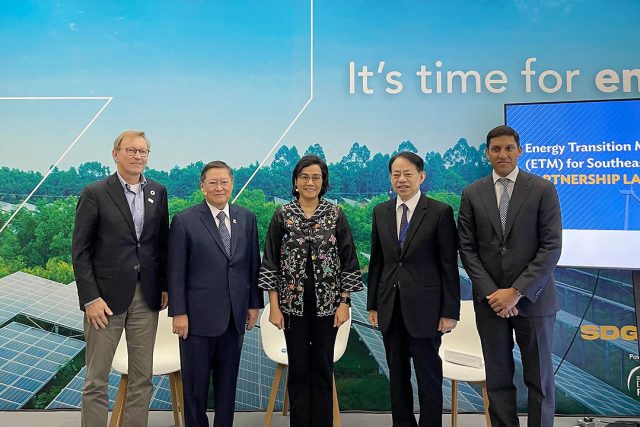
The Philippines, Indonesia and the Asian Development Bank (ADB) on Wednesday launched the Energy Transition Mechanism facility in Glasgow, Scotland. In photo, (from left to right) are Per Heggenes, CEO of IKEA Foundation; Philippine Finance Secretary Carlos G. Dominguez; Indonesian Finance Minister Sri Mulyani; ADB President Masatsugu Asakawa; and Dr. Raj Shah, President, The Rockefeller Foundation.

THE ASIAN Development Bank (ADB) partnered with the Philippines and Indonesia to launch an energy transition mechanism (ETM) which aims to fund the early retirement of coal-run power plants and replace them with renewable energy alternatives.

“The time for debate and merely discussing climate change theories is over. Today, we are focusing on applied solutions and workable programs to quickly reduce greenhouse gas emissions. We have a planet to save and we do not have much time to do it,” Finance Secretary Carlos G. Dominguez III said at the launch of the ETM Southeast Asia Partnership in Glasgow, Scotland.

Mr. Dominguez heads the Philippine delegation to the 26th United Nations Climate Change Conference of the Parties (COP26).

He said the Philippines has an opportunity to pilot the ETM facility in Mindanao, where the Agus-Pulangi hydropower plant is being rehabilitated. As Agus-Pulangi power plant increases its generating capacity, the government can gradually purchase coal-fired power plants in Mindanao and repurpose them through the ETM facility, the Finance chief said.

“Mindanao will showcase an Earth-friendly future that can be replicated in other areas in the Philippines — and even countries around the world… Together with the Asian Development Bank, the Philippines is pioneering an innovative model that will set a global standard in transitioning to a cleaner energy future,” Mr. Dominguez said.

The ETM is a public-private finance vehicle which has the potential of accelerating the retirement of coal plants by at least 10 to 15 years on average, he added.

The ETM’s pilot phase is expected to last for two to three years.

Throughout the pilot, ADB targets to raise enough funds to speed up the retirement of up to seven coal plants and channel investments in alternative clean energy options in both countries.

Under the partnership, the multilateral lender will work with government stakeholders to pilot the ETM in their respective countries.

The ETM is made up of two multibillion-dollar funds, with one focused on early plant retirement, while the other one devoted to new clean energy investments in power generation, storage, and grid upgrades. 

“It is envisioned that multilateral banks, private institutional investors, philanthropic contributions, and long-term investors will provide capital for ETM,” ADB said.

According to the bank, the full implementation of the ETM in Indonesia, Philippines and possibly Vietnam, can prevent carbon dioxide emissions by 200 million tons per year. This translates to taking 61 million cars off the road.

“Indonesia and the Philippines have the potential to be pioneers in the process of removing coal from our region’s energy mix, making a substantial contribution to the reduction of global greenhouse gas emissions, and shifting their economies to a low-carbon growth path,” ADB President Masatsugu Asakawa was quoted as saying in a statement. — A.Y.Yang

PHL, foreign business groups urge Congress to prioritize economic reform bills

PHILIPPINE STAR/ MICHAEL VARCAS

BUSINESS GROUPS and foreign chambers on Wednesday urged lawmakers to approve the remaining economic reform measures, including the amendments to the Public Service Act (PSA), in the homestretch of the 18th Congress’ third regular session.

Thirteen business groups and foreign chambers sent letters to Congress leaders calling on them to pass 11 bills that they say would help drive the economy’s post-pandemic recovery.

One of the priority measures is the bill amending the PSA, which has been approved by the House of Representatives but is still pending at the Senate. It aims to reclassify “public utilities” such as telecommunications and transportation to “public services” and allow more foreign ownership in these industries.

“While supporting the amendments to the Public Service Act, the business groups and foreign chambers expressed opposition to the inclusion of any provision in the pending Senate version, Senate Bill 2094, that expands the legislative franchise requirement to public services beyond those provided under existing laws,” the statement read.

Also included in the business groups’ priority list are the last two tax reform packages being pushed by the Duterte administration — Property Valuation and Assessment Reform and Passive Income and Financial Intermediary Taxation.

Also identified as priorities are bills seeking to relax the Bank Secrecy Law, ease the payment of taxes, provide open access in data transmission, and promote digital payments.

Other bills include the Philippine Creative Industries Development Act, the creation of the Department of Water Resources Management, Freedom of Information Act, and Rural Agricultural and Fisheries Development Financing System Act.

“Most of these 11 reform bills have reached advanced stages in either chamber of Congress and only require counterpart action in the other chamber,” the statement read.

The business groups and foreign chambers also expressed hope for an “early ratification” by Congress of the reconciled versions of three bills, namely the Foreign Investment Act amendments, creation of the National Transportation Safety Board and the Electric Vehicles and Charging Stations Act.

Sought for comment, Senate President Vicente C. Sotto III told BusinessWorld via Viber message that most of the said bills being pushed by the business groups are already pending at the Senate plenary.

“We are on it. It is just a senator or two who still have some issues (on the bills),” Mr. Sotto said.

Sought for comment, House Speaker Lord Allan Jay Q. Velasco has not responded as of deadline time.

Congress is scheduled to resume session on Nov. 8, but the Senate is expected to focus on national budget deliberations.

It adjourns for the Christmas break from Dec. 18 – Jan. 16, 2022, and resume session from Jan. 17 to Feb. 4. After a three-month break for the elections, session resumes on May 23 and sine die adjournment on June 4.

The statement was backed by the Bankers Association of the Philippines, Financial Executives Institute of the Philippines, IT and Business Process Association of the Philippines, Makati Business Club, Management Association of the Philippines, Philippine Association of Multinational Companies Regional Headquarters, Inc., and Semiconductor and Electronics Industries in the Philippines Foundation, Inc.

Also supporting the statement are the American Chamber of Commerce of the Philippines, Australian-New Zealand Chamber of Commerce of the Philippines, Canadian Chamber of Commerce of the Philippines, European Chamber of Commerce of the Philippines, Japanese Chamber of Commerce and Industry of the Philippines, Inc., and Korean Chamber of Commerce of the Philippines, Inc. — Revin Mikhael D. Ochave with inputs from Russell Louis C. Ku

Ayala Land net income up 38% as sales improve

AYALA LAND, Inc. (ALI) reported a net income attributable worth P2.55 billion for the third quarter, up by 38% year on year from P1.85 billion, as its sales reflected “sustained demand” despite renewed quarantined restrictions.

In a disclosure to the stock exchange on Wednesday, the company said its sales reservations hit P21.8 billion in the July-to-September period. Its consolidated revenues grew by 7% to P23.65 billion from P22.12 billion a year ago.

For the first nine months of the year, ALI’s attributable net income grew by 35% to P8.59 billion from P6.37 billion, while consolidated revenues went up by 15% to P72.6 billion from P63.32 billion.

“Our business recovery was sustained despite the reimposition of stricter quarantine measures last August,” Bernard Vincent O. Dy, president and chief executive officer of ALI, said in a statement.

“We remain positive that with the reopening of the economy, business activity will gain momentum in the fourth quarter, especially for segments like our malls, hotels and resorts, which broadly rely on increased mobility,” he added.

The company’s property development revenues rose 27% to P51.5 billion in the period. Meanwhile, sales reservations for the first nine months went up by 15% to P70.1 billion, which was attributed to the company’s “strong sales performance” earlier in the year. 

Office leasing revenues inched up by 5% to P7.47 billion from P7.12 billion. ALI said the growth was driven by the sustained operations of business process outsourcing and company headquarters.

Meanwhile, commercial leasing revenues for the period were at P14.23 billion, 18% lower than the P17.32 billion seen in the same period last year as quarantine restrictions were reimposed in August.

While the occupancy rate at Ayala Land’s malls stood at 80% to 85%, revenues from its shopping centers went down by 35% to P4.93 billion from P7.61 billion year on year due to limited operations, lower foot traffic, and the rental discounts offered to tenants.

Revenues from its hotels and resorts also declined by 29% to P1.85 billion from P2.6 billion due to renewed pandemic restrictions. Ayala Land said the average occupancy rate for its “stable hotels” was at 50% and 51%, while its “stable resorts” average occupancy rate stood at 12% and 13%.

ALI launched a total of 18 projects in the first nine months worth P59.1 billion, higher than the launches seen in full-year 2020 collectively worth P10.6 billion. The company said it “responded to stronger demand in the residential market.”

In the third quarter alone, Ayala Land launched projects collectively worth P13 billion in despite quarantine restrictions.

Under Ayala Land Premier, the company launched Ayala Greenfield Estates 4C Tranche 1 in Laguna and Lanewood Hills Phase 2 in Cavite. Meanwhile, it also opened Avida’s Centralis Towers in Pasay City and Amaia’s Steps Pasig Clara.

The company’s capital expenditures for the first nine months amounted to P44.7 billion, over half or 54% of which were spent on residential projects, 16% for estate development, 14% for commercial projects, and 13% were allocated for land acquisition.

Ayala Land has a land bank with over 12,000 hectares of property located across the country.

The company earlier listed its new P3-billion fixed-rate bonds at the Philippine Dealing and Exchange Corp. The issuance is meant to bring down the cost of its debt and lengthen maturities.

Ayala Land is also looking to achieve carbon neutrality by yearend through using clean energy sources, offsetting greenhouse gas emissions via carbon forests, and projects promoting the protection of forests, it said.

Shares of Ayala Land went up by 3.72% or P1.30 to close at P36.25 each on Wednesday. — Keren Concepcion G. Valmonte

AC Energy begins construction of 283-MW Zambales solar farm

AYALA-LED AC Energy Corp. has started construction works on its 283-megawatt (MW) solar farm in San Marcelino, Zambales, which the firm touted as the biggest in the country to date.

“The San Marcelino solar farm marks the fifth facility that we have commenced with construction this year, and these project milestones all make for a fascinating period in the expansion of our renewable energy portfolio,” said Jose Maria P. Zabaleta, the company’s chief development officer said in a press release on Wednesday.

The company hopes to complete the project by the first half of 2023.

Once operational, the Zambales facility will be the country’s “largest solar farm,” the company said, which can generate 421 gigawatt hours’ worth of clean power every year and remove more than 287,700 tons of carbon dioxide emissions annually.

The project is owned by AC Energy’s wholly-owned unit Santa Cruz Solar Energy, Inc., which recently contracted the services of Power Construction Corp. of China Ltd. and PowerChina Philippines Corp. for its engineering procurement and construction.

Construction works related to the facility are expected to generate up to 500 direct jobs for workers in the area.

“The San Marcelino solar farm will contribute significantly to ACEN’s goal of reaching 5,000 MW of renewables capacity by 2025, towards becoming the largest listed renewables platform in Southeast Asia,” the company added.

AC Energy did not provide details on how much it has allotted for the project. However, it said in an earlier disclosure that its executive committee had approved to hike its investment in the San Marcelino facility.

In a regulatory filing on Nov. 2, the firm said its management also approved to ramp up the capacity of the Zambales solar plant to 283 MW from 250 MW previously.

AC Energy has an attributable capacity of 2,600 MW in the Philippines, Vietnam, Indonesia, India, and Australia. It has said the share of renewables in its portfolio stood at 80%, one of the highest in the region.

Shares of AC Energy in the local bourse shed 0.33% or four centavos to finish at P12.20 apiece on Wednesday. — Angelica Y. Yang

Having pancit, queso de bola, or bibingka this Christmas?

There’s a wine that goes with that.

WHETHER they are celebrating in person or holding a Zoom party this year, with Christmas fast approaching folks are starting to come up with their holiday menus.  Many Filipino favorites are sure to make the line-up, but if you also are into wine the question comes up: What wine goes with XXX (fill in your Pinoy favorite party dish here)?

Since Winery.ph will be holding a major 11.11 sale (that’s Nov. 11), offering about 20 wines at 30-61% off at their website (www.winery.ph), BusinessWorld decided to narrow it down to those that match a Christmas menu. Chris Urbano, the Chief Sommelier and Managing Director of Winery.ph, worked with us for a wine pairing for a typical Filipino Christmas menu.

“This is so exciting because we actually do a lot of posts about pairing wine with different types of food,” he said in an e-mail. “We genuinely love them (pairing suggestions), because most pairing guides focus on Western foods and cuisines, when there’s actually a lot that you can do with Asian cuisines,” he said. Prior to this request, the company has made other lists for menus as diverse as Japanese food to fast food.

For the following dishes, Mr. Urbano suggests pairing them with these wines available from the sale, which are available by the case.

HAM, PANSIT, AND SWEET SPAGHETTI
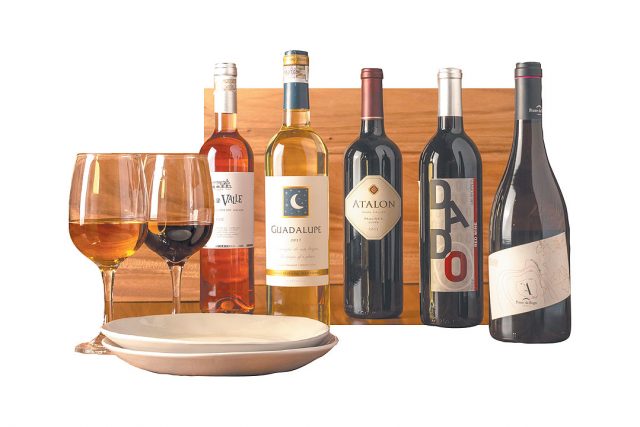
A Christmas Sweet Ham would go with the Dado Red Blend (P3,550 per case, P592 per bottle). “It has fruity, candied strawberry flavors that will go well with the sweetness of the pork and the pineapple glaze that often comes with it. It also has some white pepper aromas and smokiness to give it a little contrast, too,” said Mr. Urbano.

Everybody’s favorite queso de bola can be paired with the Guadalupe Red 2018 (P2,150 per case, P358 per bottle). “(It) balances out the heaviness (or umay) of eating this cheese with a lingering acid finish. Also adds a bit more savoriness with its vanilla and herbal aromas,” he said.

The many facets of Pancit Bihon (stir-fried noodles) benefit from a flourish from the Guadalupe White 2017 (P2,150 per case, P358 per bottle). “It has a lot of bright lime notes that go with the pancit — sort of like how you’d normally add a squeeze of calamansi to the dish. This is also pretty light and complements the freshness of the vegetables.”

Mr. Urbano faced a bit of a challenge when asked to search for a wine for Filipino-style sweet spaghetti, the favorite of children at birthday parties (but also adults at every party). “This one is tough, because the usual rule is to make the wine sweeter than the food, but because Pinoy spaghetti is so sweet, that narrows the options by a lot,” he said. For this he suggests the Ponte da Boga Albariño 2019 (P3,980 per case, P648 per bottle). “The Albarino does something different by instead contrasting the sweetness with a bright acidity that generally goes well with rich dishes. Also has a creamy mouthfeel to go with the sauce.”

LUMPIANG SHANGHAI, MORCON, AND LECHON
Lumpiang Shanghai (fried spring rolls) is a favorite at any party, whether you’re celebrating the birth of Jesus Christ, or someone else. It’s portable, it’s easy to eat, and the flavors are generally accessible — which makes it a match for the Penfolds Rawson’s Retreat Semillon Sauvignon Blanc 2016 (P1,850 per case, P308 per bottle). “The vintage we’re selling in particular is a good match because with aging, it’s developed these lovely honey notes to go with the dominant lemon and citrus — so it’s kind of like what we said about the pancit, where instead of acting like the calamansi, this wine would act like the sweet-and-sour sauce you have with lumpia. The crisp acidity is also a bonus because it gives a lift to the heaviness of the deep fry.”

No Filipino feast is complete without a lechon (either a whole pig or a whole chicken), and perhaps one can make these bottles a holiday tradition, too. For the whole spit-roasted roasted pig, Mr. Urbano suggests a Ponta da Boga Mencia 2018 (P3,890 per case, P648 per bottle), which has peppery notes and a great smoky finish that “will go well with the flavors of lechon. It’s relatively light for a red, so it won’t overwhelm the sweetness of the pork.” For lechon manok (spit-roasted chicken), Mr. Urbano suggests the Viña Albali Merlot 2018 (P1,850 per case, P308 per bottle). “It is an easy drinking red wine with dry herb aromas and a touch of oak that goes well with the smokiness of the chicken and the sheer amount of spices that will typically be on it.”

A little more complicated is the Beef Morcon, a roasted beef roulade. For this he suggests the Atalon Pauline’s Cuvee Red Blend 2013 (P7,990 per case, P1,332 per bottle). “It’s a great pairing with beef dishes in general because of its powerful black fruit characters, plus its smoky tobacco, leather, and forest floor aromas. The interplay between its firm mouth-drying tannins and the juiciness of the morcon is also going to make for a great pairing.”

A festive roast beef gets Nederburg Manor House Cabernet Sauvignon 2014 or that label’s Shiraz of the same vintage (both at P2,990 per case, P498 a bottle). “Both have a lot of black fruit and spice in their palates, plus a full body to stand up to the richness of the beef. Both have a nice acidity to cut through that richness as well,” he said.

SIMBANG GABI TREATS
Finally, we get to desert, with traditional treats served after Simbang Gabi (a series of dawn masses held over nine consecutive days) — though we forgot to ask about our actual favorite, leche flan. Puto Bumbong (purple rice cakes with toppings) goes well with Casa Do Valle Rosé 2019 (P2,050 per case, P348 per bottle). “It’s already a crowd favorite on its own, but sings when paired with many different kinds of food. It has a vibrant acidity to cut through the creaminess of the desiccated coconut and the molasses kind of flavor you get from the muscovado sugar (partially refined to unrefined sugar). It also brings a lot of fresh strawberry flavor to the table to keep your palate refreshed and give a lift to the richness.”

Bibingka (another rice cake variety), gets the Ponte da Boga Godello 2019 (P3,890 per case, P648 per bottle). “It has citrus flavors and a vibrant acidity to offset the creaminess that you get from the bibingka and its kesong puti (unaged carabao milk cheese) and salted egg. The vintage that will be part of the sale also has a nutty almond finish that complements the smokiness you get in bibingka.”

Get updates and wine drinking tips by following Winery.ph on Facebook and Instagram (@winery.ph). — JL Garcia

Gov’t makes full award of bonds

BW FILE PHOTO
THE BUREAU of the Treasury fully awarded the reissued five-year bonds it offered on Wednesday. — BW FILE PHOTO

THE GOVERNMENT made a full award of the reissued Treasury bonds (T-bonds) it offered on Wednesday as rates went up, with the market anticipating the result of the US Federal Reserve’s policy review.

The Bureau of the Treasury (BTr) on Wednesday raised P35 billion as planned via the reissued five-year T-bonds with a remaining life of four years and five months.

Tenders reached P46.65 billion, higher than the offer but lower than the P56.08 billion in bids fetched the last time these debt papers were auctioned off on Oct. 12, where the government made a full award.

The five-year notes fetched an average rate of 3.762% on Wednesday, up by 18.6 basis points from the 3.576% quoted for the tenor during the previous auction.

This was also slightly higher than the 3.75% quoted for the five-year bond at the secondary market prior to the auction, based on the PHL Bloomberg Valuation Reference Rates published on the Philippine Dealing System’s website.

National Treasurer Rosalia V. de Leon said in a Viber message to reporters after the auction that the higher rates submitted by investors in recent offerings were expected due to high inflation and expectations that the Fed would start reducing its asset purchases by this month.

“But we are in good cash position for rejection,” Ms. De Leon said.

A bond trader likewise said Wednesday’s T-bond auction attracted modest demand due to Fed taper bets.

“Strong two-way interest continued to be evident in the secondary market also ahead of October CPI (consumer price index) figure of the country to be released on Friday, so some maybe conservative on holdings ahead of the said risk events,” the trader said in a Viber message.

The US Federal Reserve is expected to announce at the conclusion of its policy meeting on Nov. 2-3 that it would taper its $120-billion monthly bond purchases.

Meanwhile, Philippine inflation likely quickened in October due to a continued rise in pump prices and a spike in food costs due to a severe tropical storm, analysts said.

A BusinessWorld poll of 21 analysts yielded a median estimate of 4.9% for the October CPI, which matches the midpoint of the 4.5-5.3% forecast given by the Bangko Sentral ng Pilipinas (BSP).

If realized, headline inflation will exceed the 2-4% BSP annual target range for the third straight month. This will also be faster than the 4.8% seen in September and the 2.5% a year earlier.

The Philippine Statistics Authority will release October inflation data on Nov. 5.

The BTr plans to raise P200 billion from the domestic market in November, or P60 billion via weekly offers of T-bills and P140 billion from weekly T-bond auctions.

The government wants to borrow P3 trillion from domestic and external sources this year to help fund a budget deficit seen to hit 9.3% of the country’s gross domestic product. — Jenina P. Ibañez

Wine press dating back 2,700 years discovered in northern Iraq

DOHUK, Iraq — Archaeologists have excavated the first, and what they believe is the oldest, industrial wine press in northern Mesopotamia dating back more than 2,700 years and coinciding with a sharp rise in wine demand among the ruling imperial elites of Assyria.

One of the world’s earliest empires, Assyria was located in the northern part of Mesopotamia — most of modern-day Iraq, as well as parts of Iran, Kuwait, Syria, and Turkey.

“This is a quite unique archaeological finding, because it is the first time in northern Mesopotamia that archaeologists are able to identify a wine production area,” said Daniele Morandi Bonacossi, Professor of Near Eastern archaeology at the university of Udine and director of the Land of Nineveh Archaeological Project in the Kurdistan Region of Iraq.

Unearthed at the archaeological site of Khanis, near the northern Iraqi province of Dohuk, the discovery’s value lies partly in its historical context, Mr. Bonacossi added.

Assyrian scripture has previously pointed to an increased demand in wine, especially among members of court and the broader social elite. It was used in various ceremonial practices among the rich.

Archaeobotanical remains have also shown an expansion in vineyards in the area at that time.

“In the late Assyrian period, between the 8th and the 7th century BC, there was a dramatic increase … in wine demand and in wine production,” said Mr. Bonacossi. “The imperial Assyrian court asked for more and more wine.”

The discovery includes 14 installations carved into mountain rocks. The upper, square-shaped basins were used by people to press grapes underfoot, extracting the juice which ran off into the lower circular basins.

The grape juice was then collected in jars, fermented and sold on a large scale.

The site was discovered by a group of Italian archaeologists from the university of Udine in cooperation with antiquities authorities in Dohuk.

The teams are working on adding the ancient structure to the UNESCO world heritage list. — Reuters

Century Pacific books higher earnings in Q3

CENTURY PACIFIC Food, Inc. (CNPF) booked a P1.26-billion net income in the quarter ending September, 22% higher than the P1.03 billion logged a year ago, as its topline improved by 21%. 

In a regulatory filing on Wednesday, the company said its topline reached P14.08 billion in the third quarter from P11.68 billion in the same period last year on the back of double-digit sales growth and “favorable tax rates.”

Its OEM export business posted a 49% growth in sales for the third quarter, driven by the faster reopening of global markets.

Meanwhile, its branded segment, which accounts for the majority of company revenues, posted a 13% growth year on year in the period due to the resilience of its consumer staples.

“Consumer sentiment has been impacted by the ongoing pandemic. Thus, they continue to prioritize consumer staples and affordable goods. As a result, our core segments and value-for-money portfolio are demonstrating robust performance,” Richard S. Manapat, chief financial officer at CNPF, said in a statement.

For the first nine months, the company reported a net income of P3.98 billion, up by 21% from P3.28 billion in the same period last year “despite cost pressures.” The company said its consolidated revenues grew by 12% to P41.08 billion from P36.79 billion.

CNPF said it continues to benefit from the implementation of the Corporate Recovery and Tax Incentive for Enterprises law. It also received an income tax holiday for its new tuna plant.

“We are now at the homestretch, grateful for the strong results posted thus far. We continue to expect that CNPF will end the year with a topline growth between 10 to 15% and a bottom line growth closer to 20%,” Mr. Manapat said. 

“Overall, we are pleased with the results of the past nine months,” he said. “We have been able to post a healthy bottom line, giving us room to reinvest in innovations and capacity expansion, which will, in turn, generate quality manufacturing jobs.”

CNPF earlier increased the capacity of its coconut facility by 50% and commissioned a 5.2-megawatt solar photovoltaic plant for its tuna and coconut facilities.

The company also launched two new brands during the period, dipping into the pet food category with Goodest and its dairy portfolio expansion to the chocolate malt segment with Choco Hero. It also started the global expansion of its plant-based meat alternative brand unMEAT.

CNPF shares went up by 0.92% or 25 centavos to close at P27.50 apiece on Wednesday. — K.C.G. Valmonte

PSE clears Sta. Lucia Land’s follow-on offer

THE PHILIPPINE Stock Exchange (PSE) on Tuesday evening approved the application of Sta. Lucia Land, Inc. (SLI) for the listing of up to three billion shares for its follow-on offering (FOO).

“The Exchange’s approval of the conduct of the FOO and listing of the Company’s shares is subject to its compliance with all of the conditions and post-approval requirements of the Exchange,” the PSE said in a listing notice. 

The company is planning to offer one billion to 2.5 billion common shares to be priced at P2.38 to P3.29 apiece, with an overallotment option of up to 500 million common shares. Its price-setting date is set on Nov. 5, Friday. 

It aims to conduct its offer period beginning Nov. 11 until Nov. 17, with Nov. 26 eyed for the tentative listing of the shares.

SLI could raise up to P9.87 billion should the shares be priced at the highest end of its price range and if the overallotment option is exercised.

The listed property developer plans to use net proceeds from the offer to partially finance its capital expenditures for new and ongoing projects, strategic land banking activities, to pay for short-term debts, as well as for general corporate purposes.

SLI tapped China Bank Capital Corp. for to be the transaction’s sole issue manage, lead underwriter, and sole bookrunner.

Shares of SLI declined by 2.04% or six centavos to end at P2.88 apiece on Wednesday. — K.C.G. Valmonte

Information sharing for fraud probes allowed by privacy law

RUPIXEN.COM
FINANCIAL INSTITUTIONS can share their clients’ information to help fraud investigations. — RUPIXEN.COM/UNSPLASH

INFORMATION SHARING by financial institutions for fraud investigations does not violate the country’s privacy law, the Bangko Sentral ng Pilipinas (BSP) said.

Memorandum No. M-2021-059 signed by BSP Deputy Governor Chuchi G. Fonacier told financial institutions to cooperate and share relevant information to third parties in aid of fraud investigation. The directive covers financial institutions, payment gateway providers, third-party service providers and law enforcement agencies.

Based on the memorandum, information that can be shared among stakeholders in a fraud investigation include clients’ name, home or delivery address, e-mail address, mobile number and other contact details, bank and financial account information, and transaction details.

Ms. Fonacier said they sought clarification and advice from the National Privacy Commission (NPC) on whether these details can be freely shared without the consent of the subject.

Based on Advisory Opinion No. 2021-026 of the NPC’s Privacy Policy Office, these information fall under exceptions to the prohibition of sharing privileged data under Republic Act 10173 or the Data Privacy Act of 2012.

In particular, the NPC said Section 13 (f) of the law applies to fraud investigations as they are “necessary for the protection of lawful rights and interests of natural or legal persons in court proceedings, or in the establishment, exercise of defense of legal claims, or when provided to government or public authority.”

“The same does not require an existing court proceeding, and thus, such processing will not necessarily require a court order,” the NPC said.

The agency said such investigations shall be strictly for the purpose of resolving previously committed frauds and preventing possible incidents from happening.

It added that only personal information relevant to the investigation can be processed.

As digital payments have increased during the pandemic, cybercriminals have had more chances to attack and exploit financial institutions, the central bank said.

BSP Governor Benjamin E. Diokno previously said they received about 20,000 complaints from financial consumers in 2020, most of which were related to fraud and unauthorized transactions.

“The BSP’s ongoing cyberthreat surveillance shows that the impact of cyberattacks and fraudulent schemes increasingly extend over two or more financial institutions simultaneously,” the memorandum said.

Mr. Diokno has said a major cyberattack could affect the stability of the financial system and vowed regulators will remain vigilant of emerging cyberthreat trends.

Fintech Alliance.ph Chairman Angelito M. Villanueva welcomed the new directive as it stressed the legal grounds of information sharing for fraud investigation among concerned financial institutions.

“It is only of utmost importance for regulators and industry leaders to continue collaborating to secure and protect consumer against digital fraud,” Mr. Villanueva said in a Viber message. — L.W.T. Noble

3 Pinoy properties chosen by Conde Nast Traveller readers

Lagen Island — ELNIDORESORTS.COM

THREE Philippine properties made it to Conde Nast Traveler’s Readers’ Choice Awards for the Top 25 Resorts in Asia for 2021. The list counts the top resorts in the region outside of Indonesia and Thailand.

The El Nido Resorts in Lagen, Apulit, Pangalusian, and Miniloc islands placed 9th with a score of 98.8; Shangri-La’s Boracay Resort & Spa placed 11th, with a score of 98.14; while Discovery Shores Boracay ranked #17 with a score of 97.11. Six Senses in Bhutan took the top spot with a score of 99.38.

On that note, a sister property of Discovery Shores, Club Paradise Palawan, under the Discovery World Corp. umbrella, was the only Philippine-based property included in the Top 100 Sustainable Stories awards.

Jose Parreño, Director and President of Discovery World Corp. said in a statement, “We are deeply grateful for these international recognitions for both resorts. Our dedication for service and our commitment to our guests, the environment and the community where we belong have been our driving force, especially during this very challenging time. We proudly carry the Philippine flag in all our wins and we are extremely delighted to be have been able to put the Philippines on the map of world-class tourism.”

Discovery Shores Boracay has consistently won awards since at least 2018: an e-mail from the company lists the property as the Hall of Fame winner of The Choice 2019’s Favorite Beach Resort Hotel, and the 2018 Winner of the Condé Nast Johansens Awards for Excellence Best for Families (Asia). Club Paradise, meanwhile, won the Hall of Fame award and the Certificate of Excellence from TripAdvisor in 2019, and was the 2018 winner of the World Luxury Hotel Awards for the category Global Winner – Luxury Wedding Destination.

In an e-mail to BusinessWorld, he discussed how the properties won the awards, despite the pandemic putting on hold travel plans for millions around the world. “Our passion for what we do, our dedication for service, and our commitment to our guests, the environment and the community where we belong have kept our spirits alive especially during these challenging times. The pandemic has not stopped us with our trainings and guest engagement activities. We used this time as an opportunity to renovate, to train and develop our skills, and to enhance our safety standards. This moment has allowed us to strengthen our brand culture,” he said.

“We remain positive as vaccines are being rolled out and we look forward to the restoration of confidence among travelers and eventually, an immediate rebound of the tourism industry.”

In the same e-mail, he continued: “We believe that the pandemic is just a momentary pause and that the tourism industry will bounce back because it is in people’s nature to travel and explore. This is our belief and our inspiration as we continue to innovate and develop our people and our product.”

“All of us at Discovery Resorts are true ambassadors of Filipino hospitality,” said Mr. Parreño in a statement. — JLG

ADVERTISEMENT
ADVERTISEMENT