Home Blog Page 7284

House panel approves bills on continued benefits for healthcare workers 

PHILIPPINE STAR/ MICHAEL VARCAS

THE HOUSE Committee on Health has approved several bills that would continue the allowances and benefits for healthcare workers as the spread of the coronavirus persists.  

In a hearing Tuesday, the panel approved House Bills 9640, 10198, 10285, 10331, and 10365 subject to their consolidation and style amendments.  

All measures seek to cover both public and private health facility workers along with non-medical personnel as well as other frontliners such as barangay health workers.    

They will be granted both special risk allowance and hazard duty pay during a state of public health emergency from July 1, 2021. These benefits will be exempted from taxes. 

Funding for the proposed acts will come from the budget of the Department of Health (DoH) for the current year as a separate line item.    

During the hearing, DoH officials affirmed their proposal for a singular COVID-19 allowance rate system based on three risk categories.  

The proposed monthly allocations consist of P3,000 for low-risk workers, P6,000 for medium-risk, and P9,000 for those at high-risk.  

“First, it is easier to implement since all benefits are lumped into one. Second, it allows for all healthcare workers to receive their benefits relative to the COVID-19 risk in the workplace. Third, it harmonizes the rate of benefits to be received by both public and private healthcare workers,” Health Undersecretary Leopoldo J. Vega said.  

However, Filipino Nurses United President Maristela P. Abenojar and Alliance of Health Workers President Robert Mendoza said they would support the version filed by the Makabayan bloc that proposed P15,000 per month for special risk allowance and P5,000 for active hazard pay.  

“This would mean that it would amount to P681 per day for special risk (allowance) and P227 a day for active hazard pay. This should be support and it should not be made pro-rated, but fixed,” Ms. Abenojar said in Filipino.  

Bayan Muna Rep. Carlos Isagani T. Zarate, one of the authors of House Bill 9640, said during his sponsorship speech that the allowances that healthcare workers received under the Bayanihan laws were “insufficient and limited” for their needs.  

A counterpart bill, Senate Bill 2421, is currently pending second reading at the upper chamber. — Russell Louis C. Ku 

Makabayan members say not enough to just slash budget of anti-communist task force 

MAKABAYAN lawmakers on Tuesday said it was not enough to cut the budget of the anti-communist task force and reiterated their call to abolish the multi-agency group. 

The Senate Finance Committee slashed the National Task Force to End Local Communist Armed Conflict’s (NTF-ELCAC) budget to P4 billion from the proposed P28 billion.  

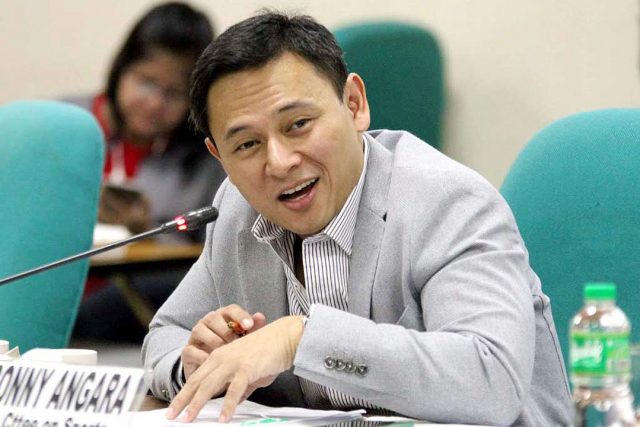
Senator Juan Edgardo “Sonny” M. Angara, who chairs the committee, told the media via Zoom on Tuesday that the retained allocation is for health allowances.  

Mr. Angara said the reduction was decided due to the ad hoc group’s failure to submit a report on its utilization of its P19-billion appropriation this year. 

“We can’t make a judgment really if the program has been a success or not because we’ve not received, very little information on the actual project,” he said. 

House Deputy Minority leader and Bayan Muna Representative Carlos Isagani T. Zarate on Tuesday said that “slashing the budget of the NTF-ELCAC is not enough, it should be completely defunded and abolished.”   

“Since the task force’s formation, its ballooning generals’ pork has been used for patronage, even more especially in this time of election,” Mr. Zarate said in a statement. — Alyssa Nicole O. Tan 

Justice chief still under medical observation  

PCOO

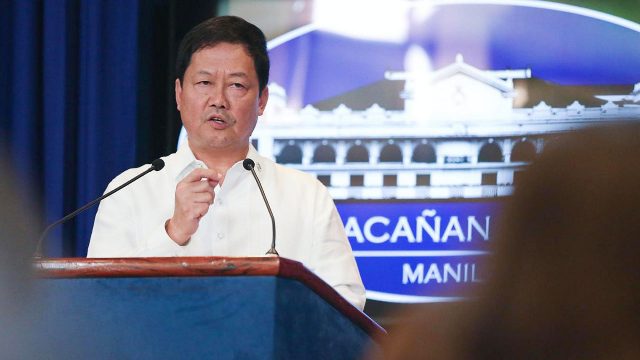
JUSTICE Secretary Menardo I. Guevarra was hospitalized on Tuesday morning, a department official said on Tuesday.  

Mr. Guevarra was under observation and would undergo routine tests, Justice Undersecretary Adrian Ferdinand S. Sugay said in a Viber message to reporters.  “He is now okay.”   

Later in the day, Mr. Guevarra told reporters in a Viber message that he “had breathing and fatigue problems the past few weeks.”    

The Justice chief, who served as deputy executive secretary under the administration of the late Benigno S.C. Aquino III, said he will undergo more tests, including a medical procedure to examine his blood vessels and arteries. — Kyle Aristophere T. Atienza 

Roque downplays new petition against his ILC nomination 

PCOO

PALACE Spokesman Herminio “Harry” L. Roque, Jr. on Tuesday slammed more than 150 lawyers for adding their voice to calls rejecting his nomination to a United Nations body responsible for codifying international laws.   

In a televised news briefing, Mr. Roque downplayed the new petition against his nomination to the International Law Commission (ILC), alleging that the lawyers’ move was motivated by politics.   

In their petition, the lawyers told the members of the United Nations that Mr. Roque has defended President Rodrigo R. Duterte’s statements, “enabling extrajudicial killings, attacks on the rule of law and due process and on his unacceptable positions on human rights, justice, pandemic responses and good governance.”  

Those claims are part of the International Criminal Court’s investigation of Mr. Duterte’s deadly drug war.   

In response, Mr. Roque dismissed them, saying that drug war-related killings should be verified by Philippine courts first before the International Criminal Court can act on the claims.   

“They are opposing my nomination because they believe I have guilt by association for being the spokesperson of the President. First of all, there’s no such thing,” he said in Filipino. “They should thoroughly study the concept of due process and presumption of innocence.”  

The petition filed by deans, law professors, heads of bar associations, incumbent and former government officials, among other public interest lawyers, said Mr. Roque “has rationalized extrajudicial killings and tolerated the weaponization of the law against activists, dissenters and the opposition.”   

“As fellow lawyers, we are scandalized by his spins and reinvention of basic legal principles and concepts in his zealousness to repackage President Duterte’s pronouncements of questionable legal and constitutional bases,” they said. — Kyle Aristophere T. Atienza 

Factory output sustains growth in Sept. as economy reopens

REUTERS

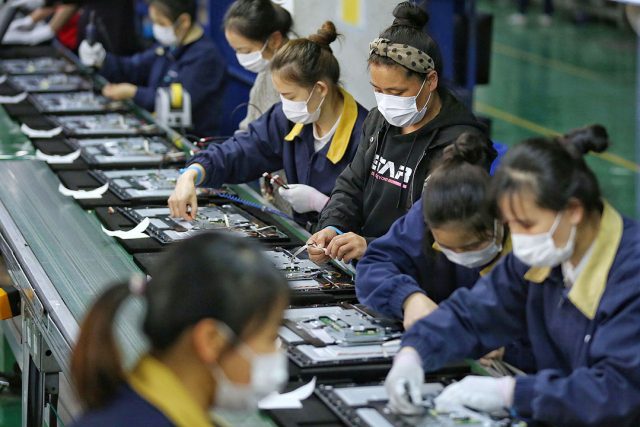
FACTORY OUTPUT rose for a sixth consecutive month in September in step with the recovering economy, according to the Philippine Statistics Authority (PSA). 

According to the preliminary results of the PSA’s Monthly Integrated Survey of Selected Industries report released Tuesday, the volume of production index (VoPI) rose 124% year on year in September. It was weaker than the revised August growth rate of 533.6%, but represents a turnaround from the 56.7% contraction in September 2020.

The value of production index (VaPI) rose 122.7%, slowing from the 527.3% growth rate posted in August. A year earlier, VaPI contracted 59%.

In the year to date, factory output growth averaged 65.8% and 59.4% for VoPI and VaPI, respectively.

The PSA said VoPI was boosted by expansion in 13 industrial categories, led by coke and refined petroleum products, which rose 739.7%; fabricated metal products except machinery and equipment (up 182.5%), and wood, bamboo, cane, rattan articles and related products (up 48.7%).

The average capacity utilization rate for manufacturing was 66.5% in September, against 66.2% in August.

“There were 20 out of 22 industry divisions with more than 50% average capacity utilization rate, led by manufacture of furniture (85.0%), manufacture of other non-metallic mineral products (81.0%), and manufacture of tobacco products (79.0%),” PSA said.  

IHS Markit’s Philippines Manufacturing Purchasing Managers’ Index (PMI) for September expanded to 50.9 from 46.4 in August as the government announced a more relaxed quarantine in the National Capital Region (NCR).

The PMI rose further to 51 in October amid improving business confidence on further easing of mobility rules in the capital.

A PMI reading above 50 signals increased manufacturing activity, as the index tracks the activity reported by purchasing managers, which is a leading indicator. Their orders herald the movement of goods that will be converted from raw materials to finished products. A reading below 50 means purchasing, and by extension manufacturing, is due to decline. 

Cid L. Terosa, a senior economist at University of Asia and the Pacific School of Economics, said in an e-mail interview that the increase in factory output was expected.

“The year-on-year increase in the volume and value of production in September 2021 was expected because quarantine conditions this year were more relaxed than the same month last year. More manufacturing firms have reported 70-100% capacity utilization in September,” Mr. Terosa said.  

“The growth of both volume and value of production in September 2021 was slower than in August 2021 partly because manufacturing firms were adjusting to a new localized lockdown system. The NCR was placed under modified enhanced community quarantine towards the end of August 2021, and this could have affected production plans and activities for September 2021,” he added.

Rizal Commercial Banking Corp. Chief Economist Michael L. Ricafort said in an e-mail interview that factory output will begin to normalize as the economy reopens. 

“The year-on-year growth will start to normalize starting September 2021 as the low year-earlier base months run their course. The growth is magnified by the further reopening of the economy, especially after the hard lockdowns a year ago,” Mr. Ricafort said.  

“Any year-on-year growth in manufacturing becomes massive amid measures to further re-open the economy from lockdowns,” he added.  

Mr. Terosa is expecting a continuous increase in production as the holiday season approaches.

“I expect both year-on-year volume and value of production to register positive growth from October until December 2021 because greater mobility among consumers can drive demand, perk up markets, and invigorate manufacturing activity,” Mr. Terosa said.  

“Also, I expect manufacturing activity to continue its upward trajectory since the Christmas season this year will probably be more conducive to greater consumer spending,” he added.

Mr. Ricafort sees manufacturing picking up following the further reopening of the economy, particularly in the NCR.

“The Christmas season… accounts for a large share of sales for many businesses/industries,” he said, adding that he sees increased spending “as part of the preparations for the May 2022 elections,” Mr. Ricafort said.

“Essential manufacturing (companies) continued to operate, both domestic and export-oriented… thereby minimizing the disruptions on manufacturing activity and sustaining the recovery in manufacturing output,” he added. — Revin Mikhael D. Ochave

Senate version of budget boosts PhilHealth, gov’t hospital funding

PHILSTAR FILE PHOTO

THE SENATE raised the allocation for health insurance and public hospitals in its version of the 2022 budget bill, known as the National Expenditure Program, citing the need to support the recovery from the coronavirus disease 2019 (COVID-19) pandemic.

According to the committee report on the Senate’s budget bill, the Department of Health (DoH), the Philippine Health Insurance Corp. (PhilHealth), and government hospitals, will see their allocations raised to P312.3 billion from the current P242 billion. Health agencies will be given the third-largest budget overall, following the Department of Education (DepEd) with P738.6 billion, and the Department of Public Works and Highways (DPWH) with P665.5 billion.

Senator Juan Edgardo M. Angara, who chairs the Senate finance committee, said Tuesday in an online briefing that the health-related programs to be funded include allowances for health workers, contact tracing, testing, and the procurement of booster shots.

“We don’t want to get caught flat-footed next year,” he said. “In case a new variant comes next year, we have to be ready.”

The allocation for COVID-19 benefits and compensation for health workers in the Senate version is P51 billion, with P11 billion programmed and P40 billion unprogrammed. The benefits will go to public and private health workers for the duration of the public health emergency.

Booster shot procurement has been allocated P61.6 billion, with P16.2 billion programmed and P45.3 billion unprogrammed. The estimated cost per dose is P544. The programmed funds can provide for 29.86 million citizens; including unprogrammed funds, the total rises to 83.4 million. Funds were also provided for logistics and hiring of vaccinators.

Some of the larger budget cuts, said Mr. Angara, will come from the National Task Force, the Public Works department, and the Transportation department.

The Senate version also proposes to amend budget rules in order to force the return of obligated funds to the General Fund should they not actually be utilized or disbursed by the end of 2023.

This was done to avoid the “parking” of funds, Mr. Angara said.

The Senate is hoping to have the budget bill approved on third reading by Nov. 25, which would allow the bicameral conference committee to convene by Dec. 2 or 3. Late Tuesday, the proposed General Appropriations Oct. was endorsed to the plenary by Mr. Angara.

Health funding is proving to be contentious after the People’s Budget Coalition said in a policy paper that P1.163 trillion — about a fifth of the 2022 budget — is not explicitly allocated for identifiable pandemic response measures.

“The National Government has missed the opportunity to provide aid and stimulus,” it said. “There is a need to reallocate fiscal space from non-urgent programs towards a mix of programs that prioritize health and inclusive recovery.”

The Coalition proposed to boost funding for health, labor and employment, social protections, education, and transport, and to divert funding from infrastructure and non-priority programs such as funding for the Government Corporate Counsel and confidential and intelligence funds for the Office of the President.

“When the pandemic started in 2022, we saw the poor pandemic response, and how important it is to be vigilant about it,” Julie Caguiat, representative of the Citizens Urgent Response to End COVID-19 (CURE COVID) Network, said in an online briefing. “The 2022 budget, while boasting of a 17% increase, only gives token amounts to the pandemic response.”

It recommended a P176.1 billion allocation for health worker benefits, affordable testing, and contact tracing.

The group is pushing for an employment program to be supported with funding of P268.1 billion, including wage subsidies, skills training, and contracts for public utility vehicle operators to support their livelihood.

“The massive loss of livelihood likely contributed to the incidence of 4.2 million families who experienced involuntary hunger earlier this year,” it said.

“There is no economy that can be saved if workers become sick and die. All talks should be centered on the circumstances of the people,” according to Benjamin Alvero III of Sentro ng mga Nagkakaisa at Progresibong Manggagawa, speaking at the same briefing. — Alyssa Nicole O. Tan

DPWH says enough time to pump-prime economy

DPWH

THE DEPARTMENT of Public Works and Highways (DPWH) announced the appointment of a new chief implementer for the Build, Build, Build program, saying that there is sufficient time to stimulate the economy with accelerated infrastructure programs, even as the administration’s time in office winds down.

Public Works and Highways Undersecretary Emil K. Sadain was tasked by President Rodrigo R. Duterte to oversee the government’s flagship building program, the DPWH said Tuesday.

“Although the term of current administration is winding down, there will be no let up in the government’s commitment to pump-prime the economy with investment in more projects to stimulate both short-term growth through employment generation and long-term inclusive development by ensuring that infrastructure is not merely concentrated in urban areas but extends even to the countryside,” the department said in a statement.

Mr. Sadain’s marching orders are “the expeditious execution and timely completion of well-planned, sustainable and integrated infrastructure identified as key to accelerating economic growth.”

Mr. Sadain will be responsible for bringing Philippine infrastructure up to par “with the world’s best.”

Mr. Sadain, a civil engineer, was quoted as saying that he will seek “reduce the lag time from conceptualization to implementation and shorten startup periods by compressing the timeline in the review and approval process so as to accelerate priority projects from pre-planning stage of feasibility studies to detailed engineering design, procurement, civil works construction, and completion.” — Arjay L. Balinbin

Trade dep’t expects US GSP renewal by 2022

PHILSTAR FILE PHOTO

THE RENEWAL of the Philippines’ participation in the US Generalized System of Preferences (GSP) is expected by next year, the Department of Trade and Industry said.

Ceferino S. Rodolfo, Trade undersecretary and Board of Investments managing head, said in a recent virtual briefing that the GSP is ‘likely” to be renewed.

“Most likely, the GSP will be renewed. However, based on the calendar of the US, it seems that the GSP will not be renewed within the year. Most likely, it will be renewed in 2022,” Mr. Rodolfo said.  

Mr. Rodolfo said the Philippines will meet with the United States Trade Representative to discuss the renewal as well as a proposed bilateral free trade agreement (FTA).

The Philippines’ US GSP privileges expired on Dec. 31. Philippine exports to the US that formerly enjoyed duty-free treatment under the scheme are now charged most-favored nation rates.  

Mr. Rodolfo said the improving relationship with the US is conducive for bringing up the renewal and the FTA. He cited as a positive development the decision of President Rodrigo R. Duterte to extend the Visiting Forces Agreement (VFA) for another six months.  

He added that the Philippines is aiming for industrial cooperation and increased US investment.  

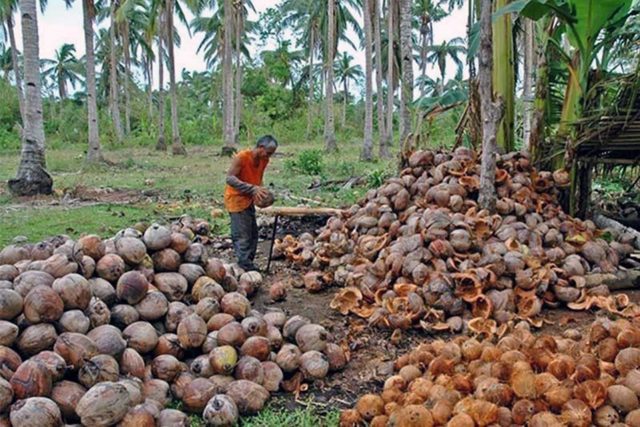
Philippine exports admitted under GSP to the US in 2020 totaled $1.6 billion. Top GSP-eligible exports were coconut oil, pineapples, crab meat, coconuts, fruit juice, and frozen tuna fillets. — Revin Mikhael D. Ochave

House bloc seeks P750 minimum wage, Palace control over wage setting

PHILSTAR

LEGISLATORS from the Makabayan bloc called for the passage of a bill that would set a uniform P750 national minimum wage for the private sector, which will also make the President responsible for wage setting.

It said House Bill 246, or the proposed National Minimum Wage Act, will help workers deal with rising prices, particularly fuel.

“Now more than ever, we need to immediately help (workers) cope with the crisis. Sufficient aid and a National Minimum Wage can help them survive the high cost of living,” the bloc of left-leaning legislators said in a statement.

House Bill 246 proposes to amend the Labor Code to give the President wage-setting authority for the entire country, instead of the current set-up in which the minimum wage is set regionally by wage boards.

The bill would also not recognize any wage increases won through collective bargaining as compliant with the national minimum wage.

The legislators said the current minimum wage, which is between P310 and P537 per day, is too low to support workers’ families. — Russell Louis C. Ku

PHL’s Glasgow delegation calls for more technical aid

PHILIPPINE STAR/ MICHAEL VARCAS

THE PHILIPPINES pressed home its core message to the climate change conference in Scotland, the developing countries require assistance from the rich world, with the Energy department focusing on the need for technical cooperation via the United Nations (UN).

Energy Undersecretary Felix William B. Fuentebella said at the 26th UN Climate Change Conference (COP26) in Glasgow that the Philippines supports the UN’s Santiago Network, a platform for connecting vulnerable countries to technical assistance from organizations and experts.

Mr. Fuentebella was quoted as saying in a statement issued by the Department of Finance (DoF) Tuesday that the developing world needs help from wealthier countries in preparing transparent and evidence-based loss and damage-related assessments and tracking under the Paris Agreement.

“(He) also proposed facilitating the provision of adequate risk management to attend to the increasing risk exposure of vulnerable countries to climate-induced hazards,” the DoF said.

The Philippine COP26 delegation is led by Finance Secretary Carlos G. Dominguez III.

Mr. Dominguez has been pushing for more climate financing from wealthy economies that have not offered sufficient help to developing nations in reducing their carbon footprint.

Such countries bear the most responsibility for their historic emissions, he said in the lead-up to the conference.

The Philippines has committed to reduce greenhouse gas emissions by 75% from 2020 to 2030. Of the 75% target, just 2.71% can be achieved with internal resources, while the remaining 72.29% rests on international assistance.

Extreme weather events have caused P506.1 billion in losses and damage to the Philippines over the past decade, highlighting the country’s vulnerability to the climate crisis even though it accounts for only 0.3% of the world’s total greenhouse gas (GHG) emissions, the DoF said. — Jenina P. Ibañez

Timor Leste replaces Brunei from Group A of Suzuki Cup

PHILIPPINE national football team Azkals

Group A: Azkals, Thailand, Singapore and Myanmar

TIMOR Leste will complete the cast of opponents the Philippine Azkals will face in the group stage of the ASEAN Football Federation (AFF) Suzuki Cup next month in Singapore.

The Timorese got a free pass to Group A action against seeded squads the Azkals, Thailand, Singapore and Myanmar after their supposed opponent in the qualifying round, Brunei, withdrew on Monday due to “complications caused by the pandemic on its preparations.”

Philippine coach Scott Cooper considered Timor as a tough customer as evidenced by the two sides’ faceoff in the 2018 edition.

“They will fight. We learned that in the last Suzuki Cup. They were really well-coached, they pressed us and we narrowly escaped that game with a 3-2 win,” said Mr. Cooper.

In that match, held in Kuala Lumpur, the Pinoy booters took a 3-0 lead before fending off a late charge by the Timorese.

Mr. Cooper regarded powerhouse Thailand as the team to beat in their group with Singapore and Myanmar also providing serious threats.

“You have to look at Thailand as the strongest in the group while Singapore is always well-organized and Myanmar always has talent,” he noted.

BRUNEI WITHDRAWS
Brunei said they have pulled out of next month’s Suzuki Cup qualifier as the impact of the coronavirus disease 2019 (COVID-19) pandemic left them unable to prepare for the regional tournament.

Brunei had been due to face Timor-Leste on Dec. 1 in a playoff for a place in the group phase of the championship, which is being played in Singapore.

The 2020 edition of Southeast Asia’s biennial Suzuki Cup was postponed due to COVID-19.

“The pandemic has unfortunately had far-reaching effects on our team’s preparations for the tournament,” said Matusin Matasan, the president of Brunei’s football association.

“While all efforts have been put forth to resolve the difficulties, it proved to be too complicated at this late juncture.”

Timor-Leste will now play in Group A alongside five-time champion Thailand, hosts Singapore, Myanmar and the Philippines. Defending champion Vietnam has been drawn in Group B with Malaysia, Indonesia, Cambodia and Laos.

The tournament is due to begin on Dec. 5 with the final on Jan. 1. — with reports from Reuters

Anthony Davis, Lakers survive in overtime against visiting Hornets

LOS ANGELES Lakers forward Anthony Davis (3) shoots against Charlotte Hornets center Mason Plumlee (24) during the second half at Staples Center. — REUTERS

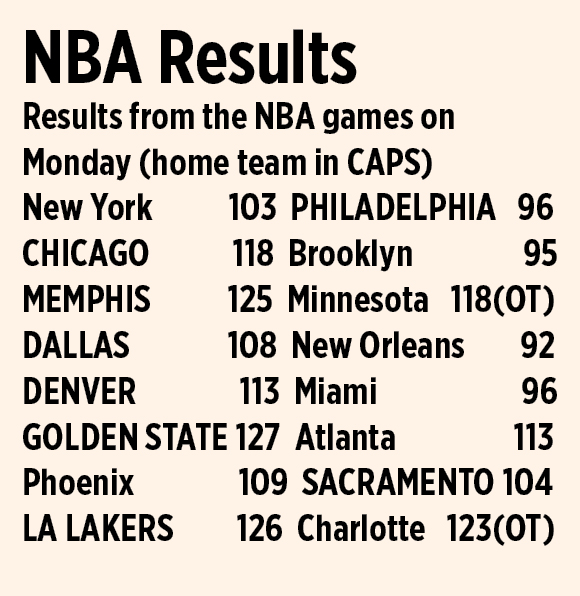
ANTHONY Davis scored six of his 32 points in overtime and added 12 rebounds as the Los Angeles Lakers ended a two-game losing streak with a 126-123 overtime victory over the visiting Charlotte Hornets on Monday.

Carmelo Anthony had 29 points off the bench and Russell Westbrook had a triple-double with 17 points, 12 rebounds and 14 assists as the Lakers won for the first time in three tries since star LeBron James was lost for at least a week with an abdominal strain.

Terry Rozier scored 29 points for the Hornets and LaMelo Ball, a Los Angeles-area native, had his second career triple-double with 25 points, 15 rebounds and 11 assists.

Gordon Hayward had 21 points for the Hornets, who lost their fifth consecutive game. Charlotte went 0-4 on a California swing, including a 120-106 loss on Sunday against the Los Angeles Clippers.

Davis’ productive night came after he sprained his right thumb in a loss to the Oklahoma City Thunder on Thursday and left Saturday’s loss at the Portland Trail Blazers with a stomach ailment.

After the third quarter, Davis retreated back to the locker room, where he said he vomited but returned and added a blocked shot on Rozier’s 3-pointer with 6.2 seconds remaining to help seal the victory.

The Lakers were up 103-89 with 9:02 left before the Hornets began to rally. A 26-12 Charlotte run, capped by Miles Bridges’ 3-pointer with 23.7 seconds remaining in regulation, tied the score 115-all.

Davis misfired on a 3-point attempt with 1.3 seconds left in regulation that would have won the game.

Bridges had 19 points for the Hornets, who still have one more game remaining on their road trip — at the Memphis Grizzlies. Mason Plumlee had 13 points and 10 rebounds for Charlotte.

The Lakers’ Rajon Rondo was ejected with 10:55 remaining for a flagrant foul on Rozier, swinging his arm straight down on the head of the Hornets guard from behind.

It was the second straight season the Hornets played consecutive games in Los Angeles against the Clippers and Lakers, and they went 0-4 in those games. — Reuters

ADVERTISEMENT
ADVERTISEMENT