Home Blog Page 7229

China FX committee urges banks to cap speculation as yuan surges

AN ORGANIZATION formed by key participants in China’s currency market urged banks to limit speculative foreign-exchange (FX) trading after the yuan climbed to a six-year high versus peers.

The China Foreign Exchange Committee (CFEC) — founded under guidance from the central bank — encouraged lenders to be risk-neutral when trading foreign exchange for themselves and for clients, according to people familiar with the matter. Banks were advised to better track their proprietary trading and improve risk management, the people said, citing a proposal made by core members of the organization that was circulated to members.

The move could be the latest sign that Beijing has grown uncomfortable with a rapid ascent in the yuan. The currency is the best performer in emerging markets this year as it benefits from robust exports and foreign investments in onshore bonds.

The CFEC suggests banks conduct internal reviews when trading volumes at proprietary desks deviate significantly from the norm, the people said, asking not to be identified as the matter is private. Proprietary trading that is 50% higher than the level during the year-earlier quarter, or is more than 15 times the size of transactions done on behalf of clients could be considered abnormal, they said. Banks need to report their findings to the CFEC.

The proposal is targeted at more than 50 Chinese and overseas banks operating onshore, and covers over 90% of the country’s foreign-exchange market, the people said. It will not impact on liquidity in the currency market, they added.

The measures aim to strengthen standards for banks’ foreign-exchange businesses, especially proprietary desks, which tend to make speculative bets on one-way moves in currencies, the people said.

The People’s Bank of China (PBoC) last week asked financial institutions and enterprises to step up exchange-rate risk management and to refrain from making one-way bets on the yuan. Volatility of the currency may increase in future as overseas central banks have started adjusting monetary policy, the PBoC said in a statement, which was about a meeting held recently by the CFEC.

Reuters reported earlier that the CFEC proposed a plan to limit trading volumes at Chinese banks’ proprietary desks. The organization, founded in 2016, includes representatives from regulatory agencies and financial institutions. — Bloomberg

UBS, Deutsche set the course for new era with new chairmen

TWO of Europe’s banking giants picked the leaders who will help chart their next era as they named successors for the chairmen who steered them through a decade of restructuring.

UBS Group AG on Saturday nominated former Morgan Stanley President Colm Kelleher to succeed Axel Weber as chairman next year. A day earlier, Deutsche Bank AG proposed Dutch insurance veteran Alexander Wynaendts for the same role, replacing Paul Achleitner.

Mr. Achleitner and Mr. Weber are set to step down after reshaping European banking during a period of major upheaval. The chief executive officers they helped pick — Deutsche Bank’s Christian Sewing and UBS’ Ralph Hamers — are both expected to provide strategy updates early next year, setting a path for growth as ebullient markets and the potential for higher interest rates provide a rare tailwind.

Deutsche Bank touted Mr. Wynaendts’s tech savvy and experience dealing with regulators, as Germany’s largest lender is looking to revamp its digital platforms and improve its standing with authorities after costly misconduct fines. UBS, which tapped its own Dutch executive evangelizing digitalization with last year’s hire of Mr. Hamers, turned to a Wall Street veteran whose previous firm found success with UBS’s model of a giant wealth management unit and an investment bank focused on stock trading. 

While both firms have been reshaped over the past decade, they enter their next phase from very different starting points. UBS has returned to strong levels of profitability and its shares trade on par with the book value of its equity, one of the few major European banks to do so. Deutsche Bank only recently posted its first profit in six years and still trades at a 60% discount to its book value.

The biggest banks in Germany and Switzerland — which have faced political scrutiny at home in recent years — prioritized relevant financial expertise over national ties in turning to the Dutch and Irish executives. And both men have extensive experience in the US, where European banks have consistently lost share to stronger American rivals since the financial crisis.

Deutsche Bank did nominate Norbert Winkeljohann, a German who serves as Bayer AG’s chairman, as vice chairman. UBS followed a similar model by proposing Lukas Gaehwiler, currently chairman of the board at its Swiss unit, for the same position.

Together with Antonio Horta-Osorio — a Portugal native who ran a British bank before replacing Urs Rohner as Credit Suisse Group AG chairman earlier this year — they represent a new era for the traditional powers in European investment banking.

The two chairmen handovers aren’t set to take place until annual shareholder meetings in the spring, but both firms had aimed to have candidates in place well ahead of time to ensure a smooth transition.

Mr. Wynaendts, 61, ran Dutch insurer Aegon NV for 12 years before leaving in 2020. Aegon typically gets the majority of its profit from the US, where it owns insurer Transamerica. Mr. Wynaendts worked at ABN Amro’s investment banking and private banking units before joining Aegon in 1997. In 2019, he joined the board of Citigroup, Inc., which he will leave before taking on the Deutsche Bank role.

Mr. Kelleher, 64, spent three decades at Morgan Stanley, where he served as chief financial officer and ran the trading business before rising to president. One of nine siblings who grew up in Ireland’s County Cork and an Oxford University graduate, he helped Morgan Stanley’s investment bank rebuild client confidence after hedge funds pulled money during the crash.

The appointments will do little to change the stark lack of diversity at the top of European banking. Ana Botin is the only woman among the chairmen and CEOs of the 10 biggest lenders on the continent, and there are no minority executives among their ranks. Mr. Weber had suggested in May that UBS should consider appointing a chairwoman after he exits next year, as the bank seeks to address a lack of gender diversity on its board. — Bloomberg

Solar Philippines pushes for collaboration with other power companies

SOLAR Philippines Power Holdings, Inc. (SPPHI) said the country can achieve its goal of increasing the share of clean energy sources through collaborations between power companies.

“We believe that the best way to bring change to the Philippine power industry is not to compete with the country’s power companies, but to convince them that solar is the best source to build in hopes that all of us can work to accelerate the renewable energy transmission,” Solar Philippines Founder Leandro L. Leviste said in a recent online interview.

The country’s Energy department is targeting to source 35% of its power from renewable energy sources by 2030 and 50% by 2040.

“The best way for us to grow this market is to meet the demand of these other companies that have been publicly saying that they want to do solar, but they need land,” Mr. Leviste said.

Solar Philippines’ strategy, according to Mr. Leviste, is to secure all the sites and enter into partnerships with other companies.

In a statement last month, its unit Solar Energy Zones, Inc. is said to be finalizing agreements for 10,000 hectares of land, which will be used to develop solar energy zones that will host other power companies.

Solar Philippines said the solar energy zones will be located near its power projects in Batangas, Tarlac and Nueva Ecija.

“We have also been entering into partnerships with the country’s leading power companies — some of which have been disclosed, much of which is soon to be disclosed,” Mr. Leviste said.

“We are hopeful that over the next few months, we would be able to show the market that solar will become the largest source of energy in the Philippines, not just from our own efforts, but from the collective efforts of the entire Philippine power industry,” he added.

Meanwhile, Solar Philippines subsidiary Solar Philippines Nueva Ecija Corp. (SPNEC) is preparing for a P2.7-billion initial public offering to fund the first phase of its 500-megawatt (MW) solar farm project.

SPNEC plans to use the first P1.3 billion of the proceeds to fund the first 25% of the solar farm plant’s first 225 MW. The next P1.3 billion raised will be used to secure more land in Nueva Ecija.

“Solar Philippines is used to trying to spread its resources so that it can get the most done. Why build only let’s say the first phase of the project when you can plant the seed for the second phase, while raising lower-cost financing thereafter to complete the first phase of the project,” Mr. Leviste said.

SPNEC will be offering to the public 2.7 billion shares for as much as one peso apiece. Its target offer period will run from Dec. 1 to 7, while its market debut is slated for Dec. 17. It will be the first entity of Solar Philippines to tap the capital markets.

On the other hand, Solar Philippines Tarlac Corp., owned by Solar Philippines and Prime Metro Power Holdings Corp., is also looking to raise P4.15 billion through its bond offering.

Solar Tarlac is developing a 150-MW solar plant in Concepcion, Tarlac. Proceeds from the offer will partially be used to fund a P2.225-billion loan, which was utilized for the plant’s 100-MW portion. — Keren Concepcion G. Valmonte

Pinoy personal care brand reduces plastic packaging

FILIPINO personal and home care brand Human Heart Nature has released a feminine wash bar as part of its ongoing mission to reduce plastic packaging in their products.

“One of the best ways to manage our plastic problem is to battle the bottle: go plastic bottle-free. By moving towards plastic-free, sustainable options through breakthrough waterless formulations such as bars and concentrated powders, consumers can now truly start breaking free from plastic themselves,” the brand said in a statement.

The Feminine Wash Bar (P139.75/35gm), said to contain mangosteen extract, chamomile, and virgin coconut oil, was formulated to be gentle and contain “no harmful chemicals” like parabens, PEGs, and synthetic fragrances. It was launched in October and followed the release of a shampoo bar in 2019.

The new product is one of the ways the product is trying to combat plastic pollution — the brand has been using recyclable plastic for its packaging, instituted a Balik Bote (bottle return) program where returned bottles are turned into eco-bricks, and, in 2018, introduced efforts to encourage upsizing and refilling.

“The concept started in 2018 when we realized that despite the fact that we use recyclable plastic for our products, only 9% of all recyclable plastic actually undergoes that process and the majority still end up in landfills,” Anna Meloto-Wilk, president and co-founder of Human Heart Nature, told BusinessWorld in an e-mail interview.

Upsizing means encouraging customers to buy bigger containers because the practice results in 73% less plastic use.

Ms. Meloto-Wilk said that their efforts successfully prevented over 17 tons of plastic waste from ending up in landfills and eventually the ocean as of Oct. 2021.

“You can see the progression of our sustainability efforts from using recyclable bottles to upsizing and refilling efforts to lessen our plastic usage, but we still weren’t satisfied with the impact we were making, especially since not everyone was adapting to these new ways of product delivery due to convenience or budget constraints,” she explained before adding that they are looking to create more “waterless formulations” to eliminate plastic bottle packaging together with its new product development team.

Human Heart Nature is looking to convert its facial washes, conditioners, and other categories to plastic bottle-free versions in the coming months.

Ms. Meloto-Wilk said they are hoping to prevent 20 tons of plastic bottles from ending up in landfills by the end of 2021. — contributed by Zsarlene B. Chua

Mercedes-Benz GLA 200 AMG Line: A star among crossovers

PHOTO BY KAP MACEDA AGUILA

The entry point into the Mercedes-Benz sport ute line is far from basic

YOU DON’T NEED me to tell you that crossovers/SUVs are ruling the roads. We’ve been long enamored with the category ever since the first Land Cruisers and Pajeros stole our hearts with their tall-riding, terrain-conquering mettle.

Along the way to the present, the segment players multiplied like Gremlins in the rain. Across a galaxy of price points and propositions, the SUV is now the understandable category king. There’s an SUV for every budget.

Having said that, the GLA 200 AMG Line is the most affordable three-pointed crossover star. That’s something of a misnomer because the premium tenets of Mercedes-Benz have hardly been known for being affordable. Still, this star nebula exists in both realities — a dichotomous though immensely attractive realm where luxe and (comparatively) attainable intersect.

The price of admission for this crossover is P3.59 million. Yes, even if it is in the lower range of the MB price band, it still better earn our attention and evoke inspiration and enthusiasm.

So off I went with an example of the GLA 200 AMG Line, waiting for it to both figuratively and literally move me.

If you’re a spec sheet reader, a 1.3-liter engine might fail to impress you. In fact, you’d probably wonder how it could move a solidly built vehicle like the GLA 200. But hold your horses; this 1.3 mill is turbocharged. It corrals 163 ponies and a relatively stout 250Nm of torque — the latter coming at an early 1,520rpm. You don’t have to wait long for the GLA to get a move on.

But I’m getting ahead of myself. The experience begins when you climb aboard. There’s no mistaking its premium character. Materials, execution, and even the smell of our test unit were as calming as a five-star hotel’s chambers. Even if it’s not the biggest of the lot, you won’t feel claustrophobic. While we’re at it, Mercedes-Benz obviously listened to the feedback of its customers when it trotted out this all-new GLA. The first generation (which debuted in 2013) was a lot less roomy — particularly for the folks in the back.

So while the all-new GLA is a tad shorter and narrower than the model in replaces, it is taller and is given a longer (by 30 millimeters) wheelbase. It also is bestowed 116mm more headroom, 45mm additional elbow room, and 43mm more rear shoulder room. Even the front passengers get 22 more delicious millimeters. That’s good news.

“This is fit for a barkada or family. We see the GLA as a gateway car that’s very capable,” opined Mercedes-Benz Philippines Product Management Head Benjie Bautista, who I got to interview when I picked up the unit. He also said that the days of the Mercedes-Benz as an “old man’s car” are done and dusted. “The GLA comes with a lot of connectivity features and functionalities,” he added. And yes, that’s definitely one of the surprising value propositions you get in a Merc these days. The touted MBUX (Mercedes-Benz User Experience) and its accoutrements bring the brand into the here and now and even to tomorrow.

The system is predicated on a large seven-inch touchscreen which is ensconced in a single upright structure atop the dashboard — also housing the fully digital instrument cluster. These may be bells and whistles, but the execution speaks volumes about how Mercedes-Benz is charting its future.

Elsewhere in the cabin, you’ll see the luxury (and sustainability) executed in the choice of materials and textures. The seats are swathed in Artico man-made leather/Dinamica microfiber (a happy consequence of the “AMG Line” appendage), and there are nice carbon-structure touches within, along with AMG mats.

Four driving modes (Dynamic Select) are available to suit your mood and the conditions on the road: Eco, Comfort, Sport, and Individual. I was surprised by the steering column-mounted stalk to change gears, but it’s easy to learn and adapt to. If you’re inclined for a little more dynamic manual gear changes, a pair of sporty paddle shifters are just behind the steering wheel.

Speaking of the steering wheel, it’s pretty busy one with plenty of controls and a touch control button which allow you to do more than just change the song that’s playing. The MBUX also has a Linguatronic feature which lets you command the car with a simple, “Hey, Mercedes.” I’m happy to report that there’s both Apple CarPlay and Android Auto. You also get a trackpad (with a thoughtful wrist rest) for an additional way to access the myriad of functions. The graphics and reversing camera function (along with the exquisite guidelines) are tastefully executed. Remember, things can get very gimmicky real fast if you don’t know what you’re doing. The folks at Stuttgart thankfully do.

The riding height is not at par with a more proper SUV, but that’s not what the GLA is about. I think of it as a larger hatchback blessed with more space and a higher perch. Additionally, this is not just your typical crossover; the three-pointed star on its grille indicates that and more.

“The best thing we offer to our customers is the experience of Mercedes-Benz. We want to let would-be customers experience the brand and get behind the steering wheel,” concluded Mr. Bautista.

Samal’s ‘bat mama’ steers bamboo industry development

BICYCLES AND FURNITURE are among the products showcased at The Living Green: Davao Bamboo Exhibit 2021, which runs from Nov. 17-30 at the Gaisano Mall of Tagum. — GAISANO MALL OF TAGUM FACEBOOK PAGE

A NEWLY-FORMED bamboo council in Davao — led by the lady known as the “bat mama” for her bat sanctuary and eco-tourism site in Samal Island — is aiming to make the region a major player in the emerging industry in four years through private-public collaboration.

“Give me four years and I will make Davao a major player,” Norma I. Monfort, head of the Davao Region Bamboo Council, said during the Nov. 17 opening of the region’s first bamboo products exhibit in Tagum City, Davao del Norte.

Ms. Monfort, who attended the first Mindanao Bamboo Summit in January, said she was driven to lead the industry’s development in Davao after learning that the region is considered a laggard.

“I will rally the private sector to plant bamboo… and coordinate with the government,” she said at the launch ceremony of the exhibit, which is supported by the Department of Trade and Industry.

Ms. Monfort said she will turn part of her Monfort Eco Tourism Estate into a bamboo farm and learning center.

“Bats and bamboo are allies in the fight against climate change,” she said, noting the numerous environment-friendly products that can be developed from bamboo.

Rod R. Bioco, president of the Bukidnon Giant Bamboo Resources Corp. and one of the key speakers during the January summit, said investing in post-harvest facilities is one of the most important components of the bamboo value chain.

“Central to the development is the bamboo post-harvest facility. Untreated and improperly dried, bamboo has little or no value,” Mr. Bioco said in an earlier interview with BusinessWorld.

“Without industrial scale post-harvest, we cannot build up our local bamboo industry to the global market… This is why critical is government support, especially in access to finance,” he said.

It was announced at the summit that state-run Development Bank of the Philippines has committed P1.2 billion to help jumpstart the Mindanao bamboo industry development program.

The program aims to have a million hectares of bamboo sites across the southern mainland over the next 10 years, with complementary infrastructure such as roads and processing facilities as well as a marketing program for various bamboo products.

The Mindanao Bamboo industry Council, composed of representatives from local governments and the private sector, will oversee the program.

The council estimates a global bamboo market of about $99 billion by 2026, with Europe, the US and Japan as the biggest buyers of bamboo and shoots.

The bamboo program is part of the Mindanao Development Authority’s Green Mindanao Project, which also promotes the development of high-value fruit farms and harvestable tree, particularly in denuded mountain areas. — Marifi S. Jara

F2 Logistics blank Baguio Lady Highlanders, keep perfect start

F2 LOGISTICS CARGO MOVERS FB PAGE

By John Bryan Ulanday

GAMES TODAY

(Aquamarine Recreational

Center Gym, Lipa, Batangas)

10 a.m. – Baguio vs. Tuguegarao Perlas

1:30 p.m. – California Precision Sports vs. Chery Tiggo

4 p.m. – Petro Gazz vs. F2 Logistics

LIPA CITY — F2 Logistics picked up where it left off and blanked the Baguio Lady Highlanders, 25-12, 25-10, 25-6, to stay perfect in the Philippine National Volleyball Federation (PNVF) Champions League yesterday at the Aquamarine Recreational Center Gym here.

It’s the second straight sweep for the Cargo Movers following a 25-21, 25-14, 25-19 victory over the Antipolo-based California Precision Sports (CPS) on Saturday for their roaring volleyball comeback from a 20-month hiatus.

With star spiker Kalei Mau and skipper Aby Maraño playing only in the first set, Kianna Dy took over with 13 markers on 11 kills as all other Cargo Movers saw action to prepare for a dreaded three-game stretch ahead.

Mary Rose Cailing (7), Majoy Baron (6) and Ara Galang (5) threw in help for Ms. Dy as Des Cheng, Tin Tiamzon, Iris Tolenada and Dawn Macandili also had limited minutes in F2’s lopsided win highlighted by a 14-0 start in the third set.

F2 clashes next with contenders Petro Gazz, Perlas and Premier Volleyball League (PVL) champion Chery Tiggo for the deciding schedule in the short six-team Champions League that will hail the top seed as the champion after the single-round robin format.

“Every team plays consecutive games here so you have to rotate your players well. We just gave exposure to all our players for different combinations that we can have in our sleeves down the road,” said coach Ramil de Jesus.

Mary Rose Cariño served as the only bright spot for the Lady Highlanders with seven markers as they slid to 0-2.

In the first match, Nicole Tiamzon (18) and Mich Morente (11) connived as Tuguegarao Perlas vented its ire on the young CPS squad with a 25-20, 25-27, 25-15, 25-17 win to improve at 1-1 after bowing to Chery Tiggo 25-22, 20-25, 25-14, 25-23 the other day.

CPS slipped to 0-2 despite the 18 markers of Casiey Monique Dongallo.

Chery Tiggo (1-0) and Petro Gazz (1-0) were to play last night in the main game.

PEDC submits lowest bid for Meralco’s 70-MW supply contract

PANAY Energy Development Corp. (PEDC) filed the lowest bid for the 15-year 70-megawatt (MW) supply deal during Manila Electric Co.’s, (Meralco) competitive selection process (CSP).

In a statement on Sunday, the third-party bids and awards committee (TPBAC) that oversaw the selection on Friday said PEDC offered a total headline rate of P2.991 per kilowatt-hour (kWh) and a total levelized cost of electricity (LCOE) rate of P2.948 per kWh.

PEDC’s offer was below Meralco’s reserve price of P5.0268 per kWh for the headline rate, and P3.7898 kWh for the LCOE price.

There were initially four power generation companies that bid out the supply deal until Quezon Power Philippines Ltd. (QPPL) withdrew from the bidding process.

The committee said the other companies that submitted offers were SEM-Calaca Power Corp. (SCPC) with a P4.8737 per kWh headline rate and Therma Luzon, Inc. (TLI) with P4.7 per kWh. Both companies offered rates above the LCOE reserve price at P5.2894 per kWh and P5.1650 per kWh, respectively.

“The TPBAC complied with its mandate to conduct the bid in an open and transparent manner to achieve the least cost of electricity, in accordance with the Department of Energy’s (DoE’s) Department Circular No. 2018-02-0003 on CSP,” said TPBAC Chairman Ferdinand A. Domingo.

The selection process was based on a pass/fail test of the companies’ submitted qualification documents for completeness.

After winning the bid, PEDC will undergo a post-qualification evaluation before TPBAC can issues a notice of award.

“As a regulated entity, Meralco has conducted its business in full compliance with all rules and regulations issued by the Energy Regulatory Commission (ERC) and the [DoE],” said TPBAC Secretariat and Meralco Vice-President and Head of Utility Economics Department Lawrence S. Fernandez in a statement.

In 2019, the Supreme Court ruled that Meralco and other power distributors must undergo a competitive selection process in power supply procurement.

The electricity distributor is set to carry out another bid through a CSP for a 170-MW power supply to ensure next year’s electoral process will not be marred by power interruptions.

Meralco’s controlling stakeholder, Beacon Electric Asset Holdings, Inc., is partly owned by PLDT, Inc.

Hastings Holdings, Inc., a unit of PLDT Beneficial Trust Fund subsidiary MediaQuest Holdings, Inc., has interest in BusinessWorld through the Philippine Star Group, which it controls. — Marielle C. Lucenio

The je ne sais quoi of a French beauty line

THERE’s a reason why the word “chic” comes from the French. The world looks to Paris (arguably the world’s fashion capital) for style tips, and to live like the French is something a lot of people want to do. A beauty brand, Varens Beauté Bio, is aimed at giving skin a little bit of je ne sais quoi (according to Merriam-Webster, “something that cannot be adequately described or expressed”; literally translated, it is “I don’t know what”), so skin can be Paris-ready (couture outfits to follow).

The brand was launched in a Zoom press conference last week. Apparently, the “quoi” in the brand’s je ne sais quoi are plants. The organic certification organization, Ecocert, has verified that at least 95% of the plant ingredients each product in the range contains are organic and at least 20% of organic ingredients are present in the total formula. The formulations are vegan-friendly, with such ingredients as aloe vera and avocado oil.

The product line, by perfume company Ulric de Valens, includes moisturizer, a vitamin C and E booster, a skin revitalizer, a skin nourishing cream, and an eye contour cream.

The Soin Hydratant (P499/40ml) helps restore moisture in the skin, thanks to the different molecular weights of hyaluronic acid, as well as the aloe vera pulp that replenishes the skin with vitamins. The Soin Vitaminé (P499/40ml) is enriched with powerful antioxidants to protect the skin against free radicals and stimulate cell renewal. The Soin Revitalisant (P499/40ml) has active collagen boosters and aloe vera to help reduce the signs of aging. The Soin Nourrissant (P499/40ml) is formulated with avocado oil, shea butter, and trace elements to immediately calm and repair dry, irritated skin. The Soin Beauté Du Regard (P499/15ml) is infused with caffeine and green tea to help reduce puffiness and dark circles around the eye area.

Each product has also been rigorously tested by 22 individuals for 26 days, and a safety assessment of all five products was carried out by a toxicologist in accordance with European regulations under strict conditions.

During the press conference, beauty journalist Nicole Romero Vagner, who has since moved to France, shared her experiences with skincare à la française: “With the French, less is more. There’s no need for a complicated routine.

“That’s why it seems effortless, I guess. For them, it’s just about consistency,” she said.

Varens Beauté Bio is available in Watsons and online on Lazada. — Joseph L. Garcia

Michelin presents better shoes for your SUV or pickup

The LTX Trail is touted as a versatile performer

By Angel Rivero

MICHELIN PHILIPPINES recently introduced the new Michelin LTX Trail, its latest tire product meant to serve the country’s flourishing pickup and SUV market. This feature-upgraded version is meant to replace the existing Michelin LTX tires, which will continue to be sold in the market until the end of this year.

The French tire brand’s country lead here, Daesy Natalya, shared, “At Michelin, we never stop innovating to enable people to move around more freely, safely; and to live a better life in motion. The new Michelin LTX Trail serves as the perfect fit for consumers, who own a pickup or SUV and whose lifestyle demands the ability to reach on- and off-road destinations, for work or pleasure.”

The Michelin LTX Trail was developed after rigorous R&D — with the intention of refining the formula for a tire compound and architecture that would be efficient for both on-road and off-road applications. More specifically, the tire type is advertised to fulfill its duties for driving purposes that are on-road 80% of the time, and off-road for 20%. What this simply means is that it is versatile enough to provide confidence even when doing some light off-road driving — a trend that seems to be emerging with customers who generally use their vehicles for city driving and yet prefer to go on little off-track adventure trips during weekends.

Usually, there is a compromise in strengths when a specific kind of tire is designed to serve either pure on-road (highway) or off-road driving. Using a tire outside of its specified purpose also generally shortens its expected lifespan. But the Michelin LTX Trail claims to offer good performance in both worlds, for as long as it is used within the 80/20 utility indicated.

Ms. Natalya adds that the new LTX Trail “is designed for multipurpose use” and that “it gives drivers a safe and comfortable ride,” whether on-road or off-road. She points out that the scientific research put into it enables it to “handle different types of terrain, ranging from city commuting to wet roads to highway driving and to light and moderate off-roading.”

It’s a pretty big deal for the Filipino market, whose appetite for pickups and SUVs is predicted to grow further by a strong 5.6%, year on year. The tires are a good fit whether they are for 4×2 or 4×4 high-riding pickups and SUVs.

And what assets does one usually look for in a tire? Well, what matters for most clients are longevity, safety, noise levels, fuel economy, and sometimes even environmental impact. The LTX Trail pledges to do well in the aforementioned criteria, as it claims 41% longer mileage potential with its RallyForce2 tread compound that was designed to offer maximum service life and therefore less tire changes in a given time span, if used properly. Its tread design features the “Biting Shoulder” that wraps down into the sidewall for extra protection against sidewall aggression. This is especially important when it comes to off-road scenarios when good traction is of utmost importance and sidewalls need more reinforcement than usual.

Tires are also considered safe when they adequately support the vehicle during braking, especially on wet roads. The LTX Trail has variable thickness sipes that offer a larger contact patch (and therefore more area for friction) to do its job well. According to the company’s studies, the LTX Trail stops a vehicle approximately 3.1 meters shorter compared to vehicles equipped with premium tire competitors. The difference seems to be even bigger when both tire types in comparison are already worn. This means the competition degrades faster, said Michelin.

When it comes to tire noise, which will matter even more to people who do a lot of fast highway driving, the LTX Trail claims 19.8% lower sound pressure level compared to its competitors. This is thanks to the shape of the blocks in the tread’s center, which tends to spread the pattern noise energy across a wider spectrum, less audible and bothersome to our ears.

The new Michelin LTX Trail tires are now available for purchase in all authorized tire dealers. They come in 15 sizes with rim dimensions ranging from 15 to 18 inches.

Boom in sugar-based biofuel leaves Brazil’s workers with a bitter taste

REUTERS

RIO DE JANEIRO/WASHINGTON — Pedro was just seven when he started work on a sugarcane farm with his father after refusing to go to school — little knowing what this small act of rebellion would cost him.

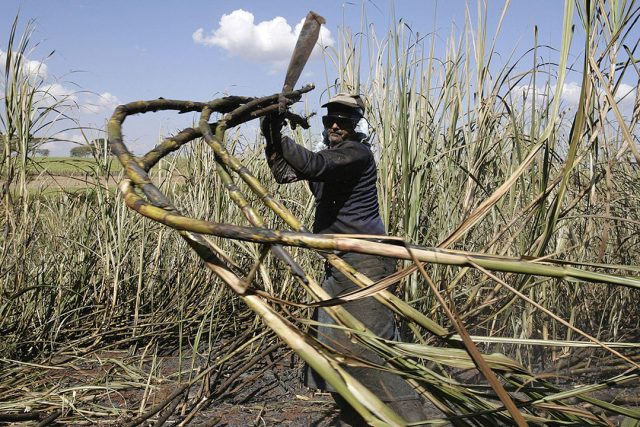
For nearly four decades, Pedro has cut sugarcane under the hot sun in Brazil, one of the world’s top producers of ethanol — a key material in the biofuel that powers vehicles worldwide and is seen as a key part of the global switch to cleaner energy.

It is backbreaking work. Pedro’s base pay is less than $7 a day — a monthly wage that falls way below Brazil’s statutory minimum of about R$1,045 ($192) — and he said he has seen co-workers collapse and die in the fields from heat and exhaustion.

Every day before going to work, he prays that he will be spared. “It’s not a good profession,” said Pedro, who asked that his real name be withheld for fear of reprisals for speaking out. “I want to stop, but I don’t know how to read. I’m old — I am 46, I’ll be 47 in April. I don’t have much hope, but if one day something better comes up, it would be very good,” he told the Thomson Reuters Foundation at his home in northeast Brazil.

Brazil is the world’s second-largest producer of ethanol, a biofuel made from sugarcane, corn and other crops that can be mixed with gasoline to reduce carbon emissions from vehicles powered by fossil fuels.

Much of the gasoline in the United States now contains ethanol, and some climate experts see the industry as a key element of the world’s transition from a carbon-based economy to a greener one. Yet ethanol has a human cost. Nearly 8,000 people have been found working in slave-like conditions on sugar plantations in Brazil, which produces most of its ethanol from sugarcane, since the government began conducting rescue operations in 1995. An investigation by the Thomson Reuters Foundation found the very workers who are contributing to the fight against climate change by harvesting sugarcane are also becoming its victims, as rising temperatures make the work increasingly hazardous.

Most workers the Thomson Reuters Foundation interviewed said they knew of colleagues who had died while working. One expert who studies the issue said the combination of heat and overwork could bring on heart attacks in those with a predisposition. Yet exclusively obtained documents show companies producing ethanol in Brazil remained on lists of suppliers cleared to export to Europe and the United States long after Brazilian authorities had named them in labor abuse cases. 

In March, Brazilian labor inspectors found 45 workers in slavery-like conditions on a sugarcane plantation in the state of Minas Gerais at a facility that until recently was cleared to export to the United States. Documents from Brazil’s Labor Inspector’s Office show the workers had been brought there from the impoverished northeast by two men and were housed in sheds without beds or access to drinkable water.

Labor inspectors said its owner, Delta Sucroenergia, had engaged in slave labor and human trafficking. Delta said it has since rescinded its contract with the two men who hired the workers, provided assistance to the rescued workers and revised its guidelines for service providers.

“Delta has collaborated and continues to cooperate with the authorities in fighting work analogous to slavery or any other form of work that is against the law,” it said in a statement.

The company had been authorized by the US Environmental Protection Agency (EPA) to export ethanol from Brazil to the United States as long ago as 2011, a public information request from the Thomson Reuters Foundation showed.

US-based companies bought Delta-produced ethanol and imported it into the United States on a “few occasions” between 2011 and 2013 from different facilities, according to information provided by the EPA. The agency deregistered the Minas Gerais facility in August for failing to meet some of its reporting requirements, but a second facility in the state of Alagoas is still registered to export ethanol to the US.

The EPA said its renewable fuel program rules do not specifically address labor practices in fuel production, but that they would refer credible allegations of illegality to the appropriate authorities. It considers slave labor “horrifying and unacceptable,” an agency spokesperson said by e-mail.

In 2015, Delta had received a loan of $80 million from the International Finance Corp. (IFC), the World Bank’s private-sector arm. One of its stated aims was improving social and environmental standards at the company. The IFC’s website says it aims to advance economic development and improve the lives of people in developing countries through its investments. Asked about the findings of labor abuse, the IFC said it took the allegations seriously and would continue to work with Delta Sucroenergia “on issues related to labor and working conditions.”

Dozens of Brazilian sugar companies have been certified as sustainable by Bonsucro, a London-based nonprofit that aims to ensure the production of sugar and ethanol meet environmental, social and business standards. But Brazilian authorities say the scheme, whose certification is recognized by the European Commission, has routinely failed to detect abuse.

In 2017, Brazil’s Labor Prosecutor’s Office sued Bonsucro for running a scheme that “claims to verify the existence of slave labor (and) child labor … but in practice does not,” said a Brazilian court filing. In 2019, a firm bought sugarcane from a plantation that had engaged in slave labor, a document obtained by the Thomson Reuters Foundation shows. A year later, it was certified by Bonsucro.

Sao Jose Agroindustrial bought sugar from an independently owned plantation in the northeastern state of Pernambuco from which labor inspectors rescued 45 people working in degrading conditions. The company’s president, Frederico Vilaça, said it has more than 340 suppliers of sugarcane, and will not stop buying from the plantation until it is found guilty by a court. He said the company would itself take over production at the plantation to ensure the same thing did not happen again.

Labor prosecutor Rafael de Araujo Gomes wrote to the European Commission in 2017 asking it to withdraw its recognition of Bonsucro certification. Two years later, in a letter obtained exclusively by the Thomson Reuters Foundation, the Commission declined to do so.

“The EU sustainability criteria are mainly aimed at the prevention of the direct conversion of land of high biodiversity value and land with high carbon stock while your complaint concerns other matters,” it said. The Commission said Bonsucro had promised to reform its certification scheme and improve coverage of social issues in the ensuing months.

Yet Gomes said there had been “a consistent failure” to investigate labor issues. This year, after a long legal battle in Brazil, Bonsucro signed a deal with Gomes agreeing to revamp its certification process by the end of 2021. “This is a clear demonstration of Bonsucro’s constant efforts for the continuous improvement of its standards,” the nonprofit said in a statement.

Bonsucro said companies must now disclose ongoing human rights risks in their sugarcane supply chain, under requirements introduced in 2021, adding that it would “review information in relation to” Sao Jose Agroindustrial.

Among the biggest concerns for workers on Brazil’s sugarcane plantations is worsening heat. Workers are becoming so severely dehydrated they suffer from a condition caused by severe dehydration that is known locally as “kangaroo” because it causes their hands to cramp, clenching into fists that resemble the animal’s front paws.

“We used to have 20 cases of kangaroo per harvest. Now it is 20 cases per week,” said a sugarcane mill manager who spoke on condition of anonymity. Lucio Verçoza, a professor at Alagoas’ Federal University who studies the issue, compared the challenge of staying hydrated with that faced by endurance athletes. “The effort is similar, but the conditions for sugarcane workers are different. (They run) a marathon every day.”

The industry maintains that it is cleaning up its act on labor as well as helping the environment. Mario Campos, president of Brazil’s Forum Nacional Sucroenergético, an association of ethanol producers, said there had been significant improvements to working conditions on sugarcane plantations, crediting mechanization.

Farmworker Pablo said conditions had improved since he first started, when workers were transported in trucks, there were no bathrooms, and they had no water to drink during the day. But minimum harvest quotas for workers introduced in the 1990s have steadily increased and some mills now dismiss those who cannot cut at least seven tons a day.

Overwork in such hot, demanding conditions can lead to sudden death by heart attack, said Verçoza, the professor, who has recorded 10 such cases since 2008. “We see workers who at 40 are used up,” he said. “How to explain a job that leads to the risk of sudden death?” — Thomson Reuters Foundation


Peso may strengthen vs dollar on local data, oil price decline

BW FILE PHOTO

THE PESO may appreciate versus the greenback this week amid a decline in global oil prices and ahead of the release of October budget balance data.

The local unit ended trading at P50.41 per dollar on Friday, depreciating by 18 centavos from its P50.23 close on Thursday, based on data from the Bankers Association of the Philippines.

The local currency also weakened by 56 centavos from its P49.85-per-dollar finish a week earlier.

The peso weakened amid cautious sentiment due to an increase in coronavirus cases in some economies, Rizal Commercial Banking Corp. Chief Economist Michael L. Ricafort said in an e-mail.

Infections are surging in countries including Germany, The Netherlands, Russia, and China, among others, despite their relatively high vaccination rates.

Robust US retail sales data also caused the peso to weaken amid expectations of an earlier rate hike due to its impact on inflation, UnionBank of the Philippines, Inc. Chief Economist Ruben Carlo O. Asuncion said in an e-mail.

The US Commerce department on Nov. 16 said October retail sales went up by 1.7%, which is its largest rise since March. It was the third straight monthly expansion and was better than the 1.4% growth expected by economists polled by Reuters.

Mr. Asuncion said the peso may strengthen this week on prospects of lower oil prices.

Last week, global fuel prices dropped as China released some of its petroleum reserves. Pump prices have been increasing in the past months due to supply chain disruptions and as major oil exporting countries have yet to agree on increasing further their production despite uptick in demand.

Meanwhile, Mr. Ricafort said the market is awaiting the release of the latest budget balance and balance of payments (BoP) data.

The Bureau of the Treasury is expected to release its October cash operations report on Nov. 24. The government’s budget deficit widened by 30% to P180.9 billion from a year earlier in September and was also bigger by 49.6% from August as spending outpaced the increase in revenue collection.

Meanwhile, latest central bank data showed the country’s BoP position reverted to a deficit of $412 million in September from a $2.104-billion surplus a year earlier and the $1.044-billion surfeit in August.

For this week, Mr. Asuncion gave a forecast range of P50 to P50.55 per dollar, while Mr. Ricafort expects the local unit to move within P50.10 to P50.60. — L.W.T. Noble with Reuters

ADVERTISEMENT
ADVERTISEMENT