Home Blog Page 7224

As climate damage mounts, poor nations press wealthy to pay up

STOCK IMAGE - Pixabay.com

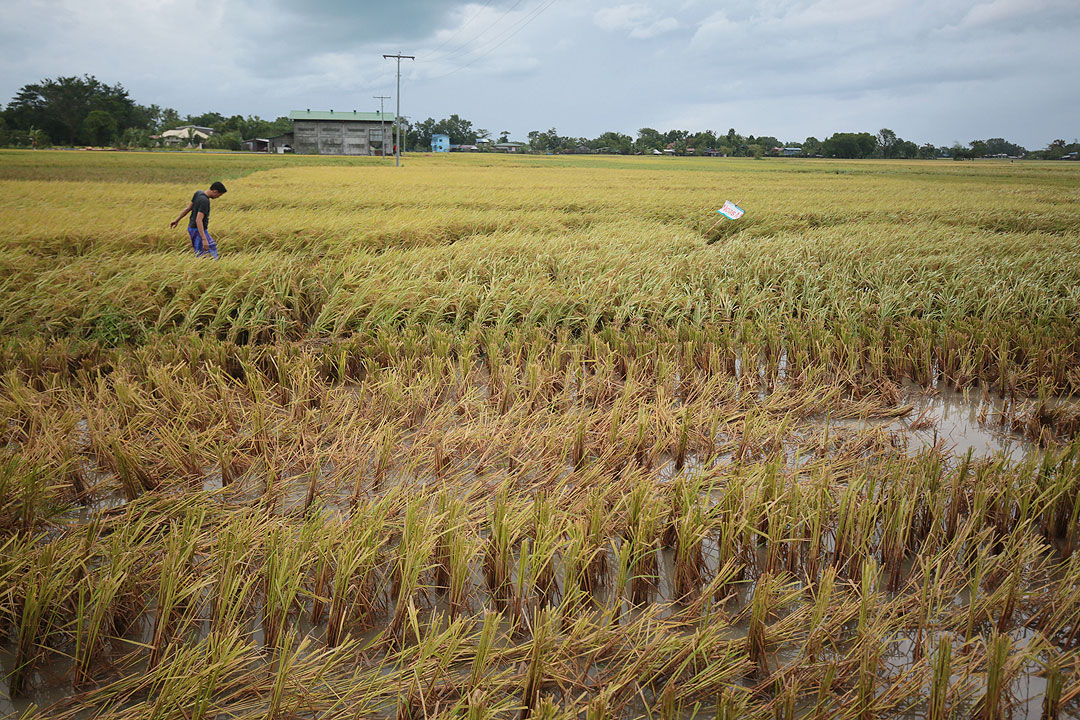
GLASGOW – Poor nations are pressuring their wealthy counterparts at the U.N. climate summit to pay up for the mounting damage being caused by global warming, pointing to increasing powerful storms, cyclones, droughts and floods afflicting their people.

The campaign being waged at the U.N. climate summit in Glasgow, Scotland seeks hundreds of billions of dollars per year more for climate-vulnerable economies even as they struggle to access some $100 billion pledged by world powers years ago.

Those previously promised funds, meant to help developing nations transition off fossil fuels and adapt to the future realities of a warmer world, were offered in recognition that poorer countries are least responsible for climate change.

“We’ve been too slow on mitigation and adaption, and so now we have this big and growing problem of loss and damage,” said Harjeet Singh, an advisor with Climate Action Network, who is involved in the negotiations on behalf of developing countries.

He said negotiations so far were focused on including language about “loss and damage” in the official text of the summit agreement, a request that he said was facing resistance from the United States, the European Union and other developed countries worried by the potential costs and legal implications.

Asked whether the European Union should consider a loss and damage fund separate from funding for mitigation and adaptation, Juergen Zattler, head of the German Ministry for Economic Cooperation and Development, said he believed the question was premature.

“I don’t think the discussion is at that stage yet,” he told reporters at the Glasgow summit. “We do not know yet what loss and damage actually is, how it is different from adaptation. We are poking in the dark here.”

EU climate policy chief Frans Timmermans told reporters the bloc supported efforts to “get money where it needs to be as quickly as possible” but that work still needed to be done to get the details right.

A representative of the U.S. delegation at the conference did not respond to a request for comment.

Climate-vulnerable countries have been raising the issue of who should pay for climate damage since the earliest international talks on global warming decades ago, before the impacts of global warming were seen as a current threat.

Economists now estimate the costs of damage from climate change-related weather events could be around $400 billion per year by 2030. A study commissioned by development agency Christian Aid, meanwhile, estimated that climate damage could cost vulnerable countries a fifth of their gross domestic product by 2050.

“It has been a fight every time to get loss and damage to become a standing item at COP. We need to continue to hold the big emitting countries accountable,” said Kathy Jetnil-Kijiner, a representative of the Climate Vulnerable Forum representing nations disproportionately affected by global warming.

Singh, from the Climate Action Network said wealthy nations could acquire the funds, at least in part, by revoking subsidies and imposing fees on fossil fuel companies.

He added that without some financial assistance, the costs of damage from climate change could bankrupt fragile economies, hampering their ability to contribute to the fight against climate change. If financially ruined, for example, countries will further struggle to fund measures like switching off dirty coal.

“If your house is on fire, you first put out the fire. Not think about how to prevent fires 10 years from now,” he said. – Reuters


Philippine factory production continues to expand in September

REUTERS

THE COUNTRY’s factory output expanded for a sixth month in a row in September amid the ongoing economic recovery, according to the Philippine Statistics Authority (PSA).

Preliminary results of the PSA’s latest Monthly Integrated Survey of Selected Industries showed the volume of production index (VoPI) increased 124% year on year in September. However, this was slower than the revised annual growth rate of 533.6% in August and a reversal of the 56.7% contraction in September last year.

The value of production index (VaPI), a similar composite indicator in the survey, also improved 122.7% year on year. While lower than the 527.3% growth rate recorded in August, it is a turnaround from the 59% contraction posted in September 2020.

The September figures released by PSA signified the sixth consecutive month of growth in manufacturing output.

The PSA said the increase in VoPI was driven by strong growth in 13 industry divisions, led by coke and refined petroleum products (739.7%); fabricated metal products except machinery and equipment (182.5%), and wood, bamboo, cane, rattan articles and related products (48.7%).

The average capacity utilization rate for the sector reached 66.5% in September, inching up from the 66.2% in August.
“There were 20 out of 22 industry divisions with more than 50% average capacity utilization rate, led by manufacture of furniture (85.0%), manufacture of other non-metallic mineral products (81.0%), and manufacture of tobacco products (79.0%),” PSA said. — Revin Mikhael D. Ochave

Jollibee, Yum China eyes bids for China restaurant chain Wagas

Yum China Holdings Inc., Jollibee Foods Corp. and Restaurant Brands International Inc. are among companies considering bids to acquire Chinese healthy food and bakery chain Wagas, according to people familiar with the matter.

The closely held company has also drawn interest from private equity firms, the people said, asking not to be identified because the information isn’t public. The owners of the business, whose sales are expected to reach close to 1.2 billion yuan ($188 million) this year, are seeking a valuation of $800 million to $1 billion or more, based on previous transactions in the industry as well as initial interest, the people said.

A buyer for the business could emerge as soon as this year, with the goal of completing the transaction next year, the people said. Considerations are still ongoing and no final decision has been made, the people said.

Jollibee, Yum China and Wagas declined to comment, while representatives for Toronto-based Restaurant Brands didn’t immediately respond to requests for comment.

Shares of Jollibee rose as much as 3.8% in Manila, the biggest intraday gain in about two weeks.

Founded in 1999 as a cafe in Shanghai, Wagas has since expanded across China, counting more than 160 stores, according to its website. It sells light meals including power salads, pasta, sandwiches, juices and coffee.

Last month, Bloomberg News reported Wagas was exploring a sale amid initial interest from potential investors. — Bloomberg

Philippine economic growth beats estimates despite curbs

PHILSTAR

The Philippines’ economic recovery gained traction in the third quarter despite tough curbs on movement amid the nation’s worst COVID outbreak yet.

Gross domestic product grew a seasonally adjusted 3.8% in July-September from the previous quarter, the statistics agency reported Tuesday, higher than all estimates in a Bloomberg survey of 13 economists. That compares to the 1.4% median growth estimate in the survey and a revised 1.4% contraction on a sequential basis in the second quarter.

Compared to the previous year, GDP expanded 7.1% in the third quarter, slower than the revised 12% growth in April-June.

Sequential growth in the third quarter “indicates sustained recovery” despite tough restrictions, Economic Planning Secretary Karl Chua said in a briefing. “Our strategy is correct.”

The economy had been expected to disappoint in the third quarter as daily infections rose to records and the capital region was placed under lockdown, pushing up the jobless rate. Restrictions have since been eased and movement in shops and workplaces has improved as infections ebb.

The peso rose as much as 0.4% against the dollar in the spot market, while the benchmark Philippine Stock Exchange Index gained as much as 0.5% after the data.

“Stronger-than-expected growth underlines resilience to headwinds from another lockdown in Metro Manila and the country’s worst Covid-19 outbreak yet. The easing of those restrictions and a receding virus wave should lift growth further in 4Q, especially given the high vaccination rate in the capital region,” Justin Jimenez of Bloomberg Economics, said.

The quarterly performance all but ensures the economy will fulfill the government’s growth target of 4%-5% for the year, Chua said.

“We will return to the path of rapid and more inclusive growth,” he said.

Even with a better growth outlook, central bank Governor Benjamin Diokno has said he’s prepared to keep monetary settings loose to boost the economy, which is expected to log one of the slowest recoveries in Asia. Policy makers are scheduled to set the key rate on Nov. 18.

“Output is set to jump again in Q4 following a sharp drop in virus cases and the further easing of restrictions,” Alex Holmes, Asia economist at Capital Economics Ltd., wrote in a note. “That said, even after rapid growth in the second half of this year, the recovery will still have a long way to go, and the economy will still be in catch-up mode throughout 2022.”

On a seasonally adjusted basis, only services grew, expanding by 6.6% quarter-on-quarter.

Agriculture and industry sectors shrank by 0.7% and 0.3%, respectively, from the previous quarter. — Bloomberg

Jollibee, McDonald’s offer their restaurants as vaccination sites to encourage more Filipinos to get vaccinated

The proposal is in partnership with the National Task Force Against COVID-19 and participating LGUs

The two biggest quick-service restaurants, Jollibee Group and McDonald’s Philippines, are again teaming up to assist the government in providing accessible venues for vaccination across the country with a focus on Region 3, Region 4A and other key cities outside Metro Manila.

Both Jollibee and McDonald’s have offered their store network nationwide as vaccination sites for two weeks to assist the government in meeting the national daily jab target of 1.5 million Filipinos daily.

“We are willing to offer the space in our stores for 2 weeks in November, to help LGUs administer the 1st doses for the eligible population of adults and those aged 12-17 years old,” Margot Torres, McDonald’s Managing Director explained.

According to the proposal, the two biggest restaurant brands will work with LGUs where their stores are located and these LGUs will be responsible for the implementation of the vaccination program including the vaccines and ancillary supplies including their storage and disposal and manpower.

“Our teams can work with the DOH regional offices to ensure safety measures and proper implementation of the vaccination in the identified stores to be used as vaccination sites. We expect that we can achieve 150 to 300+ jabs per day depending on the location, size and store layout,” Pepot Miñana, Chief Sustainability and Public Affairs Officer of Jollibee Group, added.

The proposal has been endorsed by National Task Force Against Covid-19 Chief Implementer Sec. Carlito Galvez and Deputy Chief Implementer Sec. Vince Dizon to local government units all over the country where Jollibee and McDonald’s stores are present.

The two restaurant chains expect to open-up their branches nationwide in the next few days as vaccination sites to further assist the national and local governments in providing greater access to vaccines.

Both companies are staunch supporters of Task force T3’s Ingat Angat, Bakuna Lahat Campaign, a program that assists the government in its efforts to help the government’s vaccination efforts in generating demand for vaccination and providing private sector expertise in logistics to optimize supply management and daily jab targets.


Spotlight is BusinessWorld’s sponsored section that allows advertisers to amplify their brand and connect with BusinessWorld’s audience by enabling them to publish their stories directly on the BusinessWorld Web site. For more information, send an email to online@bworldonline.com.

Join us on Viber to get more updates from BusinessWorld: https://bit.ly/3hv6bLA.

Agricultural output slumps in Q3

PHILIPPINE STAR/ MICHAEL VARCAS
Industry experts said the Agriculture department’s growth target of 2% for this year may already be out of reach. — PHILIPPINE STAR/ MICHAEL VARCAS

By Revin Mikhael D. Ochave, Reporter

THE PHILIPPINES’ agricultural output shrank by an annual 2.6% in the third quarter as crops, livestock and fisheries production declined due to bad weather, the statistics authority reported.

The Philippine Statistics Authority (PSA) on Monday said the value of production in agriculture and fisheries slumped by 2.6% in the July-September period, a reversal of the 0.7% growth a year ago. The decline is also steeper than the -1.5% recorded in the second quarter.

“Production declines were noted for crops, livestock, and fisheries, while poultry grew during the period,” the PSA said in the report.

Performance of Philippine Agriculture (Q3 2021)

“At current prices, production in agriculture and fisheries was valued at P446.46 billion, an increase of 5.2% this quarter.”

Agriculture typically makes up around 10% of overall economic output, and a fourth of the country’s jobs. Third-quarter gross domestic product (GDP) data will be released today (Nov. 9).

For the first nine months of the year, the PSA said the value of production in the agriculture sector contracted by 2.5%, worse than the -0.2% recorded last year.

Agriculture Secretary William D. Dar said in a mobile phone message to BusinessWorld that the Department of Agriculture (DA) will have to do its best in the last two months to meet the 2% full-year growth target for sector.

Roy S. Kempis, Pampanga State Agricultural University professor, said the recent typhoons hampered agriculture production.

“Physical factors brought by weather-related events have continuously wreaked havoc on agriculture and food production. The weather elements and their destructive effects are known, but the DA should know the science on how to channel away the destruction with its own risk reduction measures,” Mr. Kempis said in a mobile phone message.

Federation of Free Farmers (FFF) National Manager Raul Q. Montemayor said in a mobile phone message that the DA should help farmers to recover faster from these typhoons.

“Recovery programs should be in place ahead of time especially during the typhoon season, such as provision of seeds, fertilizer, condonation of loans or crop insurance, and other support, so that they can help farmers immediately after the disaster,” Mr. Montemayor said.

Mr. Dar said the DA is already implementing programs to enhance the sector’s resiliency against typhoons.

“There is the early planting of rice, use of climate smart crop varieties, off-season planting of vegetables in greenhouses, and balanced fertilization strategy,” the Agriculture chief said. 

CROPS OUTPUT FALLS
In the third quarter, crops production, which accounted for over half of the overall agricultural production, dipped by 0.2%. Palay or unmilled rice output went up by 6.7%, while corn production declined 18.6%.

“Crop damage caused by inclement weather in September also contributed to the overall struggles of the agricultural sector,” Nicholas Antonio T. Mapa, ING Bank N.V. Manila Senior Economist, said in an e-mail.

Based on DA data, agriculture damage caused by Typhoon Jolina reached P1.36 billion. The typhoon swept through Central Luzon, Calabarzon (Cavite, Laguna, Batangas, Rizal, and Quezon), Mimaropa (Mindoro, Marinduque, Romblon, and Palawan), the Bicol Region, Western Visayas, Central Visayas and Eastern Visayas.

The southwest monsoon enhanced by Typhoon Fabian also caused P698.53 million worth of farm losses.

Crops that posted lower production included abaca (-21.9%), cabbage (-18.1%), potato (-13%), onion (-8.1%), mongo (-7.6%), eggplant (-5%), coffee (-4.3%), ampalaya or bitter gourd (-3.8%), cacao (-3.6%), sweet potato (-1.4%), cassava (-0.3%), and banana (-0.2%).   

On the other hand, higher production was recorded for sugarcane (110.8%), pineapple (13.1%), calamansi (8.3%), tobacco (3.2%), rubber (2.6%), coconut (1.9%), tomato (1.6%), and mango (0.6%).

ASF IMPACT
Livestock production, which made up 15.3% of the total, fell by 15.2% amid the prolonged outbreak of African Swine Fever (ASF).

PSA data showed lower production for hog (-17.8%), goat (-7.4%), dairy (-3.6%), and cattle (-2.5%), while carabao production improved by 9.5%.

Rolando E. Tambago, Pork Producers Federation of the Philippines, Inc. president, said the livestock subsector, particularly hogs, will continue to decline unless the government addresses issues such as the ASF outbreak.

“We expect the trend will continue even toward the end of the year unless the government will do something tangible to reverse the situation. One is the ASF outbreak, second is the low confidence of the hog industry to repopulate or increase production due to massive importation at low tariffs,” Mr. Tambago said in a mobile phone message.

To recall, President Rodrigo R. Duterte issued two executive orders that increased the allowable pork import volume and lowered the tariff rates of pork imports for one year.

Fisheries output, which accounted for 16.2%, slipped 0.4% in the third quarter.

A decline in production was seen for bigeye tuna (-41.1%), blue crab (-22.1%), frigate tuna (-21.1%), yellowfin tuna (-19.9%), threadfin bream (-19.1%), slipmouth (-12.4%), skipkack, (-11.8%), round scad (-11.8%), Indian mackerel (-7.8%), bali sardinella (-5.8%), and seaweed (-3.7%).

On the other hand, production increased for mudcrab (29.2%), milkfish (9.9%), big-eyed scad (9.7%), cavalla (9.4%), fimbriated sardines (7%), squid (5.7%), tilapia (5.7%), grouper (3.5%), and tiger prawn (1.6%).

“Aside from typhoons which made fishing more difficult, capturing fish in our seas is affected by the China factor that drives away our fishermen from their traditional fishing grounds,” Mr. Kempis said.

The Department of Foreign Affairs (DFA) said on Oct. 21 that it submitted 211 diplomatic protests since 2016 against China’s presence in the West Philippine Sea. However, Chinese vessels remain in the area.

Poultry was the only bright spot, growing by 1.3% in the third quarter. It accounted for 14.6% of the overall agricultural output. There was a drop in production of duck (-2.1%) and chicken (-1.4%), while an increase was seen in chicken eggs (8.1%) and duck eggs (7%). 

“Broiler (production) declined because of poor demand, high input cost, high levels of frozen meat inventories both local and imported, and high arrivals of imports of chicken and pork,” United Broiler Raisers Association (UBRA) President Elias Jose M. Inciong said in a mobile phone message.

OUTLOOK DIMS
Industry experts said the DA’s growth target of 2% for this year may already be out of reach.

“It is definitely out of reach. The DA needs to recover too much ground before it can achieve the 2% target,” Mr. Montemayor said.

Mr. Kempis noted farm output in the fourth quarter would have been affected by Typhoon Maring, which caused up P2.26 billion in agricultural damage.

“With Typhoon Maring wreaking havoc in October, the growth for the fourth quarter of 2021 will be a challenge, making it difficult to achieve the 2% overall 2021 growth,” he said.

Q2 GDP growth higher than initially reported

PHILIPPINE STAR/ MICHAEL VARCAS

By Jenina P. Ibañez, Senior Reporter

ECONOMIC GROWTH in the second quarter grew at a slightly faster pace than initially reported, the Philippine Statistics Authority (PSA) said on Monday.

Gross domestic product (GDP) — the value of all finished goods and services produced in the country at a given period — rose by 12% in the second quarter, quicker than the 11.8% preliminary estimate.

Major contributors to the revision were higher growth rates in education (12.6% from 10%), financial and insurance activities (5.2% from 4.2%), and construction (27.1% from 25.7%).

However, the decline in net primary income (NPI) from countries abroad was faster than initially reported at -54.4% from -53.8%.

Gross national income — the sum of the country’s GDP and NPI received from overseas — was revised upwards to 6.8% from 6.6% previously.

Rizal Commercial Banking Corp. Chief Economist Michael L. Ricafort said the slight upward revision may be attributed to unusually low base effects from the height of mobility restrictions in the second quarter last year compared with more business activity this year.

Measures to reopen the economy benefited the construction sector along with financial and insurance activities, he said in a Viber message.

“The shift and the start of online learning may have benefited the education sector, compared to a year ago,” he added.

ING Bank N.V. Manila Branch Senior Economist Nicholas Antonio T. Mapa said in an e-mail that revisions came mostly from services and construction, reflecting the improved mobility and consumer confidence that led to a quicker pickup in economic recovery.

“The lockdowns and poor sentiment (both consumer and business) have held back expansion, particularly in the services sector. This development also manifests in the recent labor market data that shows most of the challenges faced by the labor force are in services that oftentimes require face to face interaction,” he said.

The preliminary estimate for the third-quarter GDP will be released today (Nov. 9).

A BusinessWorld poll of 18 analysts yielded a GDP growth estimate of 4.7% in the third quarter, lower than the 12% jump in the second quarter of 2021 and a turnaround from the 11.4% decline in the third quarter last year.

The government cut its economic growth target for 2021 to 4-5% from 6-7% previously.

Mr. Ricafort said the data revision for the second quarter could have a slight positive impact on GDP growth estimates for the succeeding quarters as well as the full-year economic growth rate.

An economic rebound and curbing coronavirus disease 2019 (COVID-19) infections go hand in hand, Mr. Mapa said.

“Cutting corners and rushing reopening without properly addressing the healthcare crisis oftentimes leads to costly reversal in quarantine restrictions as COVID-19 infections surge,” he said.

Makati subway project secures tax perks

THE FISCAL Incentives Review Board (FIRB) has approved the grant of tax incentives for the rail operations of the P81-billion subway project in Makati City.

According to a Finance department statement, the Makati subway project will be given four years of income tax holiday followed by five years of duty exemptions for imports of goods related to building and maintaining the project.

Rail operations set to start in January 2026 could increase economic productivity by P24.4 billion each year.

“This will be monitored, along with the other projected benefits, in accordance with the principle of granting incentives based on merit or performance embodied in the Corporate Recovery and Tax Incentives for Enterprises (CREATE) Law,” the Department of Finance (DoF) said.

Trade Secretary and FIRB Co-Chair Ramon M. Lopez said the productivity boost would offset foregone revenues.

The CREATE Law or Republic Act No. 11534, overhauls the tax incentives system to make them more performance-based and timebound.

Finance Secretary Carlos G. Dominguez III, who co-chairs the FIRB, said the incentives only apply to the Makati subway’s rail operations.

Other business activities related to the subway, such as the leasing of retail areas and advertising, will be subject to the regular income tax rate.

Philippine Infradev Holdings, Inc. is developing the Makati subway under a joint venture agreement with the Makati City government. Philippine Infradev is led by President and Chief Executive Officer Antonio L. Tiu and Chairman Ren Jinhua.

Mr. Dominguez also said that the Makati City government and the Department of Transportation (DoTr) should “work out the details” of connecting the proposed subway to the National Government’s Metro Manila Subway Project.

Excavation work for the Metro Manila Subway Project is expected to start in the first quarter next year, the DoTr said in September.

Shares in Philippine Infradev rose 1.72% to P1.18 each on Monday. — Jenina P. Ibañez

PHL ranks last in Asia-Pacific economic integration

ICTSI

THE PHILIPPINES has fallen behind in economic integration in the Asia-Pacific region as it registered the poorest performance in an index measuring 17 economies’ performance in 2019.

The Pacific Economic Cooperation Council (PECC) in its State of the Region Report 2021-2022 released on Monday said the Philippines’ integration performance “still has the biggest gap behind the regional average, and its convergence ranking remains the lowest amongst all 17 economies in both 2015 and 2019.”

The index measures the degree of economic integration in the region based on trade of goods, investment, and tourism. It also measures convergence in gross domestic product (GDP) per capita, the share of non-agriculture to GDP, the urban resident ratio, life expectancy, and share of education expenses in the gross national income.

“The process of economic integration is commonly defined as the intra-regional freer movement of goods, services, labor, and capital across borders,” PECC said.

The Philippines scored -11.35 in the composite index, behind the 15.61 regional average.

The report said the rankings should not be read as league tables, given that lower rankings may imply that an economy is more oriented globally than regionally.

Recent figures show increasing integration indicating a more frequent exchange of goods, capital, and people among some economies in the Asia-Pacific.

Singapore, Hong Kong, Thailand, Vietnam, and Korea performed best in the 2019 index.

“As the freest business harbors, Singapore and Hong Kong (China) benefit the most from economic integration in trade, investment, and tourism,” PECC said.

PECC said intra-regional trade flows have improved among some economies, including the Philippines.

“Compared to 2015, in 2019 only six out of the 17 included economies show an increase in their intra-regional trade shares: the Philippines, Vietnam, Mexico, Canada, Australia, and New Zealand,” it said.

“Meanwhile, major trading economies, such as China, the United States, Japan, and Korea, have nontrivial decreases, which mainly occurred in 2018 and 2019.”

Rizal Commercial Banking Corp. Chief Economist Michael L. Ricafort said relatively poor Philippine integration might in part have been brought about by restrictions on foreign ownership preventing the country’s regulations from aligning with the region.

“There are also some constraints on the further integration of financial markets such as the need to further harmonize financial market/banking regulations,” he said in a Viber message.

“Competitiveness (is) also relatively lower such as the ease of doing business relative to the other countries.”

UnionBank of the Philippines Chief Economist Ruben Carlo O. Asuncion said the Philippines has been more integrated with the Association of Southeast Asian Nations (ASEAN) than before.

“If we indeed have fallen behind, then, this is the most wonderful opportunity to improve integration efforts (because there are literature affirming the impact of economic integration on economic growth),” he said on Viber.

“This said ‘falling behind’ should be known and heard by our (presidential) candidates so that they will know how to help the country and incorporate it in their respective platforms.” — Jenina P. Ibañez

Fruitas to acquire Surehealth in foray into healthcare business

FACEBOOK.COM/SUREHEALTHCLINICS
FRUITAS Holdings, Inc. will buy 100% of shares of Surehealth Multi-Specialty and Diagnostic Clinic Corp. — FACEBOOK.COM/SUREHEALTHCLINICS

LISTED food and beverage store operator Fruitas Holdings, Inc. entered an agreement to acquire 100% of shares of its healthcare provider, Surehealth Multi-Specialty and Diagnostic Clinic Corp. to take advantage of the growing demand for healthcare services in the Philippines.

Fruitas will acquire 100% of Surehealth under the agreement, which will include its assets like medical equipment, specialized manpower, and a physical clinic at Sta. Mesa in Manila.

“The transaction is subject to execution of definitive agreements and closing is expected within two months. Consideration will be paid thru cash and is below 10% of the total assets and book value of Fruitas as of June 30, 2021,” the company said in a disclosure to the stock exchange on Monday.

Fruitas said its chief financial officer and treasurer, Juneil Dominic P. Torio, was “not involved in the evaluation of the potential acquisition” as his mother Maxima Torio is the president and a shareholder of Surehealth Clinic.

“The acquisition enables Fruitas to provide medical diagnostic services apart from the current products we offer,” Fruitas President and Chief Executive Officer Lester C. Yu said in a statement on Monday.

“We are extremely excited to enter the healthcare industry to further encourage a healthy lifestyle among our customers,” he added.

Surehealth, which was established in 2007, is a private medical and diagnostic clinic providing services for firms in the airline support industry, construction, and logistics through medical pre-employment packages, annual physical examinations, and medical laboratory tests for its clients’ work force.

It is also the listed company’s health service provider amid the pandemic.

“With Surehealth’s services, Fruitas has not had a single case of local transmission and had zero COVID-19 (coronavirus disease 2019) casualty since day one of the pandemic,” Mr. Yu said.

“Fruitas has also established its own quarantine and isolation facility to aid its work force during these trying times and we were successful against the dreaded virus.”

Fruitas shares closed unchanged at P1.35 apiece on Monday. — Keren Concepcion G. Valmonte

Robinsons Land net profit up 38% in Q3

GOKONGWEI-LED Robinsons Land Corp. (RLC) said its net income in the third quarter improved by 38% year on year to P990 million on the back of improved operating conditions.

“We sustained business recovery despite the reimposition of stricter quarantine restrictions in August,” RLC President and Chief Executive Officer Frederick D. Go said in a statement on Monday.

“As we head into the last quarter of the year, we are encouraged by the waning number of COVID-19 (coronavirus disease 2019) cases in the country, the progress of the government’s vaccination program, and increased mobility,” he added.

RLC’s net profit surged 47% to P6.44 billion in the first nine months, while its consolidated revenues climbed 41% to P30.88 billion from P21.94 billion year on year.

The company said its malls business is “gaining momentum,” with third-quarter revenues and earnings before interest, taxes, depreciation, and amortization (EBITDA) improving by 8% and 14% year on year, respectively, due to the “improving business environment.”

RLC launched Robinsons Place La Union in September, which is the company’s 53rd lifestyle center and its third in the Ilocos Region. Meanwhile, Robinsons Place Tacloban was reopened after its rehabilitation.

Robinsons Malls booked revenues worth P6 billion in the first nine months, while its EBITDA totaled P2.84 billion.

Meanwhile, Robinsons Offices’ third-quarter revenues grew by 10% year on year to P1.56 billion. RLC said it “sustained its stable topline results,” with a 5% increase year on year to P4.66 billion in the first nine months.

In the first nine months, Robinsons Offices completed Cyber Omega in Pasig’s Ortigas Center and Bridgetowne Campus One, which is located at RLC’s Bridgetowne Destination Estate. The company said two more projects, Cybergate Iloilo 1 and Cybergate Galleria Cebu, are expected to be completed by yearend.

RLC had an office portfolio spanning 649,000 square meters (sq.m.) in net leasable area at end-September, 93% of which are leased.

On the other hand, revenues from Robinsons Logistics and Industrial Facilities grew by 24% to P187 million, owing to the current e-commerce market and the “steady demand” for warehousing facilities. It currently has five industrial facilities, which are located in Sucat, Muntinlupa, Sierra Valley in Cainta, San Fernando in Pampanga, and Calamba in Laguna.

“Encouraged by the consistent performance of this business, RLC is looking to infuse select industrial assets including land into its wholly owned subsidiary Robinsons Logistix and Industrials, Inc., or RLX, via a tax-free property-for-share swap,” RLC said.

Meanwhile, its property development business sold over 2.6 hectares of its 31-hectare Bridgetowne Destination Estate to Shang Robinsons Properties, Inc. and RHK Land Corp.

“The investment from the two of the most respected and recognized real estate names in Asia, during this time of economic uncertainty, exemplifies a vote of confidence in the estate’s future growth prospects,” Robinsons Land said.

RLC’s hospitality business saw revenues surge 60% year on year in the third quarter, generating P314 million. The company also launched its Grand Summit Hotel General Santos last month.

Robinsons Hotels and Resorts is “capitalizing” on the demand for quarantine facilities and long-stay accommodations.

Meanwhile, for its China business, RLC realized revenues worth P10.51 billion from its Chengdu Ban Bian Jie project after handing over condominium units from the first phase. It has also recovered 89% of its invested capital in the project with the repatriation of $200 million.

The company said the project is already 95% sold out.

Robinsons Land said it has spent 89% of its capital expenditure budget earmarked for the year, which were used for its malls, offices, hotels, industrial facilities, destination estates, residential projects, and for land acquisition.

The company plans to boost capital spending using proceeds from the P23.5-billion initial public offering of its real estate investment trust (REIT), which made its market debut in September.

REIT UNIT BOOKS PROFIT
RLC’s REIT, RL Commercial REIT, Inc. (RCR), booked a net income of P633.79 million in the first nine months ending September, a reversal of the net loss worth P18,950 incurred a year ago.

“This net income surge is mainly attributable to the earnings generated from two months of commercial operations covering Aug. 2 to Sept. 30, 2021,” RCR said in a separate disclosure to the exchange.

“[This is after] the infusion by the sponsor to the company of 12 office assets via [a] property-for-share swap and from the Cybergate Center Buildings under a building lease arrangement with the sponsor,” it added.

RCR booked a topline of P719.49 million for the period. Rental income accounted for the majority of its revenues at P585.55 million.

RCR currently has an asset size spanning 425,315 square meters (sq.m.) of gross leasable area (GLA).

RLC, its sponsor, plans to infuse one or two assets yearly into RCR. RLC previously said it is eyeing to add 40,000 to 100,000 sq.m. of GLA into RCR’s portfolio in the next 18 months. Its potential pipeline for infusion stands at approximately 422,000 sq.m. of GLA. RCR will also consider third-party assets for its growth and expansion.

Shares of RLC went up by 2.77% or 0.52% on Monday to close at P19.32 each, while RCR stocks declined by 1.80% or 13 centavos to end at P7.08 apiece. — Keren Concepcion G. Valmonte

Gov’t makes full award of T-bill offering at slightly higher rates

BW FILE PHOTO

THE GOVERNMENT made a full award of the Treasury bills (T-bills) it auctioned off on Monday even as rates inched up amid improved economic prospects as coronavirus disease 2019 (COVID-19) cases drop.

The Bureau of the Treasury (BTr) raised P15 billion as planned via the T-bills it offered on Monday as total tenders reached P42.52 billion, almost triple the initial offer and higher than the P41.78 billion in bids logged in the previous auction.

Broken down, the BTr raised P5 billion as planned via the 91-day debt papers from P14.53 billion in bids. The three-month T-bills fetched an average rate of 1.143%, up by 1.3 basis points (bps) from the 1.13% seen at last week’s offering.

The BTr also borrowed P5 billion as programmed from the 182-day securities it offered on Monday as tenders reached P15.26 billion. The average yield of the six-month debt paper rose 0.6 bp to 1.401% from 1.395% fetched last week.

Lastly, the government made a full P5-billion award of the 364-day T-bills as the tenor attracted bids worth P12.73 billion. The average rate of the one-year instrument stood at 1.616%, up by 0.3 bp from the 1.613% a week ago.

At the secondary market prior to the auction, the 91- 182- and 364-day T-bills were quoted at 1.2164%, 1.4427% and 1.655%, respectively, based on the PHL Bloomberg Valuation Reference Rates published on the Philippine Dealing System’s website.

National Treasurer Rosalia V. de Leon said in a Viber message to reporters after the auction that the BTr did not see a significant rise in rates after inflation decelerated.

She added that there was no market tantrum after the US Federal Reserve’s taper announcement last week.

Headline inflation in October settled at 4.6%, slower than the 4.9% median estimate of 21 analysts in a BusinessWorld poll.

The October figure was slower than the 4.8% in September, but faster than 2.5% a year earlier. Still, this was the third straight month inflation exceeded the 2-4% target of the Bangko Sentral ng Pilipinas (BSP) for the year. Inflation has topped the BSP target this year except in July.

This brought headline inflation for the first 10 months to 4.5%, faster than the 4.4% forecast by the central bank for the year.

Meanwhile, the Fed last week announced the start of the reduction of its $120-billion monthly asset purchases at $15 billion per month.

Fed Chairman Jerome H. Powell added they could stay patient and keep rates low to support the economy as the job market remains weak.

On the other hand, a bond trader said demand for T-bills remained strong but waned compared with tenders seen in the last few months.

“The rise in short term yields may be attributed to better economic prospects as more industries reopen given the drop in COVID-19 cases onshore,” the trader said in a Viber message.

“So with the economic reopening, some of the excess liquidity in the system that were placed in the short end of the curve during the lockdown may have been deployed to riskier or higher yielding assets…with the continued threat of an elevated inflation backdrop,” the trader added.

The Department of Health on Sunday reported 2,605 new COVID-19 infections. Daily cases could fall below 1,000 by the end of the month, OCTA research said.

On Tuesday, the BTr will offer P35 billion in reissued 10-year Treasury bonds (T-bonds) with a remaining life of nine years and eight months.

The Treasury plans to raise P200 billion from the domestic market in November: P60 billion via weekly T-bill auctions and P140 billion from weekly offers of T-bonds.

The government wants to borrow P3 trillion from local and external sources this year to help fund a budget deficit seen to hit 9.3% of gross domestic product. — Jenina P. Ibañez