Home Blog Page 7059

A big night for Big Night! at the 2021 MMFF awards

CAST and crew of Big Night! at the 2021 MMFF awarding ceremony at the Samsung Hall in SM Aura — SCREENSHOT BY MICHELLE ANNE P. SOLIMAN

JUN Robles Lana’s dark comedy on innocent civilians getting caught up in the current drug war’s watchlists was the big winner in this year’s Metro Manila Film Festival (MMFF), bagging a total of eight awards.

As the coronavirus disease 2019 (COVID-19) pandemic is waning for now, the awarding ceremonies were held onsite this year at the Samsung Hall at SM Aura in Bonifacio Global City (BGC), Taguig on Dec. 27. They were also streamed on Facebook.

Big Night! went home with eight awards: Best Picture, Best Director, Best Screenplay, Best Actor for Christian Bables, Best Supporting Actor for John Arcilla, Best Cinematography, Best Musical Score, and the Gender Sensitivity Award.

The film centers on the gay beautician Dharna (played by Bables) whose name is mistakenly placed in the current drug war watchlist and how he stops at nothing to prove his innocence.

The film was recently screened at the Tallinn Black Nights Film Festival in Europe in Nov. 2021.

This is Mr. Bables’s second MMFF acting award having previously won the Best Supporting Actor trophy in 2016 for his work in Die Beautiful which was also directed by Jun Robles Lana.

Ito ay inaalay ko para sa taong merong same situation na kagaya kay Dharna, people who are voiceless or oppressed (I offer this award to people who are in a situation similar as Dharna, people who are voiceless and oppressed). I may find it hard to express my thoughts and opinions in words. But let me fight for you and with you through my art,” Mr. Bables said in his acceptance speech.

Meanwhile, Kun Maupay Man It Panahon (Whether the Weather is Fine) about a mother and son who struggle for survival after Typhoon Yolanda, won Second Best Picture of the festival. It also took several acting awards: Best Supporting Actress for Rans Rifol, Best Actress for Charo Santos, and the Special Jury Prize for Daniel Padilla.

The Third Best Picture was A Hard Day, the Philippine adaptation of the South Korean action thriller of the same title. The film also went home with trophies for Best Sound, Best Editing, and the FPJ Memorial Award.

A PANDEMIC FESTIVAL
After being held exclusively online last year because of the COVID-19 pandemic, this year’s film festival returned to the cinemas, albeit with a number of restrictions ranging from the number of theaters allowed to participate and limitations on the number of audience members in each screening.

The film festival organizers remain hopeful and continue to encourage the public to support the local film industry.

“The mere fact na nandito tayo ngayon is still a victory for us sa ating pelikulang Pilipino (The mere fact that we’re here today is still a victory for us in Philippine cinema),” said Metropolitan Manila Development Authority (MMDA) and MMFF concurrent Chairman Benhur Abalos in his opening speech. The MMDA is the festival organizer.

In a Facebook post, MMFF spokesperson Noel Ferrer wrote that despite a huge fall in the number of viewers compared to the festival’s non-pandemic years, this year’s festival did much better than last year’s.

The festival’s traditional opening day, Dec. 25, was the highest grossing day.

“In fact, the first day gross alone this year covered 1/3 of the total MMFF Online gross (in its entire run) last year,” Mr. Ferrer wrote. “With more people going to the cinemas by the day, sa first three to four days pa lang, puwede nang malampasan ang (it can surpass) total gross last year.”

Last year’s online film festival made less than P50 million, compared to the P995 million it earned in 2019.

The festival is ongoing until Jan. 7. — Michelle Anne P. Soliman


The winners of the 2021 Metro Manila Film Fest are:

Best Picture: Big Night!

Second Best Picture: Kun Maupay Man It Panahon

Third Best Picture: A Hard Day

Best Director: Jun Robles Lana (Big Night!)

Best Actress in a Leading Role: Charo Santos (Kun Maupay Man It Panahon)

Best Actor in a Leading Role: Christian Bables (Big Night!)

Best Actor in a Supporting Role: John Arcilla (Big Night!)

Best Actress in a Supporting Role: Rans Rifol (Kun Maupay Man It Panahon)

Best Screenplay: Big Night! (Jun Lana)

Best Cinematography: Big Night! (Carlo Canlas Mendoza)

Best Sound: A Hard Day (Albert Michael Idioma)

Best Original Theme Song: “Umulan Man o Umaraw(Louie Ignacio) from the film Huling Ulan sa Tag-Araw

Best Editing: A Hard Day (Lawrence Fajardo)

Best Musical Score: Big Night! (Teresa Barrozo)

Best Production Design: Kun Maupay Man It Panahon (Juan Manuel Alcazaren)

Best Visual Effects: Kun Maupay Man It Panahon (Mofac Creative Works)

Best Float: Huwag Kang Lalabas

Gender Sensitivity Award: Big Night!

Creator Jury’s Choice Award (Best Short Film): Kandado by Pio Balbuena

Gatpuno Antonio J. Villegas Cultural Award: Kun Maupay Man It Panahon

FPJ Memorial Award: A Hard Day

Marichu Vera Perez-Maceda Memorial Award: Rosa Rosal

Special Jury Prize: Daniel Padilla (Kun Maupay Man It Panahon)

Natatanging Gawad Award: former MMDA Chairman Danilo Lim, and National Artist for Literature Bienvenido Lumbera

PCC reminds UnionBank, Po group of notification requirement

UNIONBANK of the Philippines, Inc. has not yet notified the Philippine Competition Commission (PCC) of its acquisition of the local consumer unit of Citigroup, Inc., the antitrust body said on Tuesday.

The PCC also reminded the Po family-led Century Pacific Food, Inc. of the notification requirement regarding its acquisition of Ligo Sardines.

Shakey’s Pizza Asia Ventures, Inc., also a Po family-led company, disclosed on Dec. 24 that it was also acquiring food kiosk operator Potato Corner. According to the PCC, the group has yet to notify the commission of the acquisition.

“Given the P50-billion thresholds qualification, the parties are encouraged to conduct due diligence to check if they meet the thresholds for compulsory notification, or to steer clear of any competition issues by undergoing voluntary notification in case they do not meet the thresholds,” Krystal T. Uy, director of the PCC Mergers and Acquisitions Office, said in an e-mailed statement.

“Parties are allowed to file their notifications before consummation, in PCC’s consideration of waiving the usual notification period of 30 days upon signing of definitive agreement, due to the pandemic,” she added.

At the same time, the antitrust body also pointed out that transactions of this nature “may very well indicate the outset for economic recovery or post-pandemic restructuring.”

UnionBank announced last week that it would buy Citi’s local consumer unit for P55 billion.

The transaction would include Citi’s credit card, personal loans, wealth management and retail deposit businesses in the country, the company said in a disclosure to the stock exchange.

The acquisition also includes Citi’s real estate interests in relation to Citibank Square in Eastwood, three full-service bank branches, five wealth centers and two bank branch lites.

“While change of ownership of well-known brands means efficiency or expansion for former competitors into partners, this also means consumers may be faced with fewer choices and possible changes of price points,” PCC’s Ms. Uy said.

“As the antitrust authority, PCC’s merger reviews will ensure that the transactions do not lead to substantial lessening of competition in the relevant markets,” she added. — Arjay L. Balinbin

How companies — and employees — can avoid a burnout crisis

NEW YORK — In a more typical time, burnout is an exception.  

In the era of coronavirus disease 2019 (COVID-19), it almost feels like the norm.  

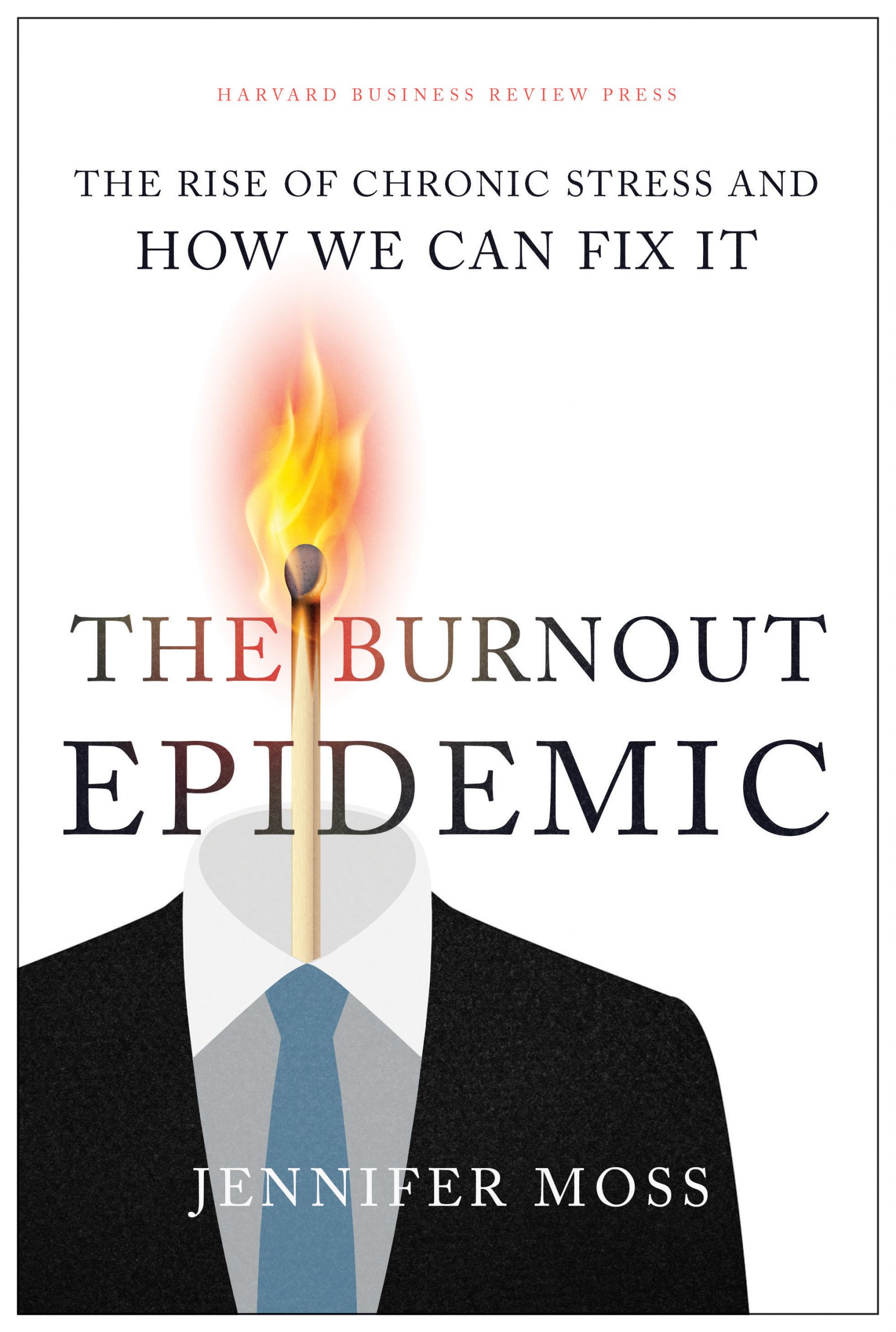
According to Jennifer Moss, organizations should take a hard look in the mirror for fostering cultures of overwork that make things worse. The author, speaker and workplace wellness expert has penned The Burnout Epidemic: The Rise of Chronic Stress and How We Can Fix It to help slam the brakes on this crisis before we all hit the wall.  

Ms. Moss spoke with Reuters about making it through the pandemic in one piece. Edited excerpts are below.  

Q: You did some research about how people feel now. What did you find?  

A: During COVID’S second wave, we found that only 2% of people rated their well-being as excellent, and 89% said their work life was getting worse. We expected that people would be exhausted, working more hours in the day and losing efficacy.  

But we also found that cynicism was really high: People are starting to feel like they don’t have any control over outcomes. That’s really dangerous.  

Q: How do you define burnout specifically?  

A: It’s chronic workplace stress left unmanaged. There are six root causes: An unsustainable workload, perceived lack of control, insufficient rewards for effort, a lack of a supportive community, a lack of fairness and mismatched values and skills.  

Q: Companies know something serious is going on, so are they doing enough?  

A: Leaders are worried about people leaving, so they have been adding some well-being strategies to their portfolio. This has put employees more in the driver’s seat; for instance, we have been seeing many companies delaying a return to the workplace. Self-care strategies can be a good thing, but sometimes they are a Band-Aid solution to a much bigger problem that needs to be managed upstream.  

Q: What should companies be doing to prevent burnout?  

A: They need to be looking at the root causes of workload. Giving people a day off is okay, but you also need to reduce your expectations of productivity.  

If you have a culture of overwork, that is not making people more effective — it’s making them sick. Companies need to give people more agency about how and when they come back to work, pay people what they’re worth, compensate them if they’re working extra hours, and make sure they’re promoting people for the right reasons.  

A lack of fairness is a big issue here, because young people feel like there is no path for them.  

Q: What can individuals do to make sure they’re not running on empty?  

A: Organizations need to have a huge amount of accountability for burnout, but employees can be part of the solution, too. We can do a lot of work to identify whether we’re burning out, like how often we feel exhausted and disengaged and cynical. Then we need to start to think about pulling back, like taking breaks every couple of hours, digitally detoxing, going outside, putting on music.  

Set boundaries about answering e-mails and manage your clients’ expectations, so everything doesn’t always seem so urgent.  

Q: Leaders get burned out too. How can they manage those feelings?  

A: We have never had a collective trauma like this where every single person is going through it. We are all feeling fear and social anxiety, and the same is true for leaders.  

Have some self-compassion, show transparency with your team and don’t worry about appearing vulnerable. You’ve got things going on too, and employees can’t be what they can’t see, so model the behavior. If you’re not taking care of yourself, you can’t help the team.  

Q: Have you dealt with burnout personally?  

A: It’s been really hard. We have to give ourselves the space to not be as effective as we used to be. We’re tired, and nothing about this is normal.  

I really did try to follow my own rules and take moments for myself — sitting outside, reading some fiction, walking my dog in nature.  

I knew the only way I was going to get through this in a healthy way for my kids, was to do this work. And it helped.  

Every day, every single one of us should look back at the past year and pat ourselves on the back and say, “I made it.” — Reuters

Metro Manila Film Festival 2021: High stakes all the way

A SCENE from the fim A Hard Day — YOUTUBE/VIVAFILMS

MMFF Movie Review
A Hard Day
Directed by Lawrence Fajardo

ADAPTED from the critically and commercially successful 2014 South Korean action thriller of the same name, A Hard Day pulls no punches when it comes to the intensity of both acting and fighting scenes.

It starts off with high stakes already — corrupt detective Edmund Villon (played by Dingdong Dantes) runs over a man on his way to his mother’s wake and chooses to cover up the accident by hiding the body in painstaking ways. Meanwhile, his team’s office is being searched by the police internal affairs department. In all the hullabaloo, he forgets to buy his daughter a present he had promised her.

By this point, we’re in for a ride with crooked protagonist Villon, which Mr. Dantes plays sufficiently in leading-man fashion. But things get really exciting when he discovers that the body he hid belongs to Apyong, a man involved in a drug case his team must investigate, and doubly so when a mysterious man (played excellently by scene-stealer John Arcilla) emerges, a witness to Villon’s accident and his charismatic harasser to the very end.

Despite being a remake of award-winning Kim Seong-hun’s work, the screenplay feels as if it’s naturally Filipino, which is good news for an adaptation. This is in large part due to the supporting cast who, whether in dramatic, comedic, or action scenes, provide texture to the story, namely Villon’s coworkers at the intel department (Janno Gibbs, Garry Lim, Al Tantay), his family (Meg Imperial, Lhiane Key Gimeno), and a traffic officer that gives Villon much grief in the beginning (played by Jelson Bay).

Lawrence Fajardo’s direction and editing gives it the dynamic energy that any thriller needs and Rodolfo Aves, Jr.’s cinematography serves the action-packed scenes well. It’s safe to say that this may be one of the most engaging entries in this year’s Metro Manila Film Festival.

Though A Hard Day doesn’t bring anything new to the table, it’s got much an audience would want — Mr. Arcilla being a despicable badass who taunts the perpetually aggravated Mr. Dantes, well-choregraphed and painful-looking fist fights, insane explosions, fast-paced car chases, a bit of humor, and even a cute dog that’s important to the plot. — Bronte H. Lacsamana

MTRCB Rating: R-13

DICT says Smart, Globe achieve over 70% service restoration in typhoon-hit areas

THE Department of Information and Communications Technology (DICT) on Tuesday said Globe Telecom, Inc. and Smart Communications, Inc. both achieved an overall mobile service restoration of over 70% in areas hit by Typhoon Odette.

“Globe reported that 95% [of] cell sites are operational in Palawan, 60% [are] operational in Visayas, and 64%… in Mindanao. Overall restoration is [at] 73%,” DICT Acting Secretary Emmanuel Rey R. Caintic said in a televised Palace briefing.

“Smart reported that 76% [of] cell sites are operational in Palawan, 78% [are] operational in Visayas, and 60%… in Mindanao. Overall restoration is [at] 71%,” he added.

Meanwhile, DITO Telecommunity Corp. reached “above 75%” restoration in Mindanao.

DITO reached more than 70% restoration in Leyte, Mr. Caintic noted, adding that “overall restoration is above 55%.”

In an e-mailed statement, Globe said it was extending bill rebates and payment due dates for affected Globe At Home and Globe Platinum and Postpaid mobile customers up to Jan. 2, as the company “continues its restoration efforts, especially in the areas hit by Typhoon Odette.”

“This means eligible Globe Platinum and Postpaid mobile customers will receive [text] notifications on prorated rebates, and can pay their bills beyond their due date or before the Jan. 2 extension,” it added. Globe also noted that there would be no payment-related service disconnection during this time.

“Eligible Globe At Home Postpaid customers meanwhile will see the rebate adjustment in their bill.”

In a separate statement, PLDT, Inc. and its wireless arm Smart said they were ramping up repairs in Bohol and Cebu to restore affected services.

“The group has also been focusing efforts on bringing key public facilities across the region back online,” the PLDT group said.

“On Tuesday, PLDT and Smart have reconnected Panglao and Tagbilaran airports in Bohol, as well as the Bacolod-Silay International Airport in Negros Occidental,” the group added.

In Cebu province, PLDT and Smart have partially restored services in the cities of Cebu, Lapu-Lapu, Mandaue, and Talisay.

“More and more towns have been fully restored in the northwest, northeast, midwest, southeast and southwest portions of Cebu, as well. The group has also reconnected more barangays in the town of Loboc in Bohol,” PLDT and Smart said.

The group has set up free call, charging, and Wi-Fi stations in more than 40 typhoon-damaged areas in Palawan, Visayas, and Mindanao.

Hastings Holdings, Inc., a unit of PLDT Beneficial Trust Fund subsidiary MediaQuest Holdings, Inc., has a majority stake in BusinessWorld through the Philippine Star Group, which it controls. — Arjay L. Balinbin

Metro Manila Film Festival 2021: A Tito’s take on an online story

YOUTUBE/ABSSTARCINEMA

MMFF Movie Review
Love at First Stream
Directed by Cathy Garcia-Molina

HOW lucky I am to be old enough not to deal with the problems faced by the characters in the pandemic rom-com Love at First Stream.

The romantic comedy, directed by Cathy Garcia-Molina and produced by Star Cinema and social media and streaming app Kumu, sees four youngsters finding love and grappling with the pressures of being social media stars. The film is heavily reliant on what goes on in Kumu’s space (of which Star Cinema’s parent ABS-CBN is an investor*), and it sometimes feels as if the film is a vehicle for the platform itself.

V (short for Vilma, played by Daniela Stranner), is an aspiring vlogger viciously racking up likes on social media, hoping to monetize the attention she gains from the internet so she can move away from her mother (played by Agot Isidro), with whom she has a distant relationship. With her is her cousin and foster sister Megumi (played by Pinoy Big Brother alum Kaori Oinuma) who is a little bit more immersed in the real world (online classes notwithstanding), save for a short flirtation she has on Kumu with a certain CatBoy. She has a rivalry in her Zoom classes with the handsome and popular Gino (Jeremiah Lisbo). V cooks up a scheme to manufacture a love story with her former prom date, Tupe (Anthony Jennings), in order to gain her requisite likes.

If you’re upwards of 30, this plot would hold little appeal. It doesn’t help that the kids speak a la Gen Z, so get your Tita Translator ready. The film is also heavily reliant on the aesthetics of the internet, and texts and Kumu’s interface are as much a part of the film as the set. Otherwise, it might be able to secure the short attention span of younger viewers, and fans of the pairings might find some enjoyment in seeing the stars.

We have to commend the team for making a narrative out of life during the pandemic as the pandemic is still unfolding. The kids are still attending online classes, deliveries have become as necessary as a limb, and the cast are sometimes in their required masks. Perhaps it’s the pandemic too that makes the film so chaste: love is lost and gained through hugs and almost-kisses.

Back to the story: V’s scheming to get more likes (and money) leads her to a dating show on Kumu, where the prize is cash, an online love team with Gino, and a chance to be on a campaign to be the top trending love team on the app (are you still with me?). However, this reel romance compromises the real blossoming love she has with Tupe. Megumi fights for an internship abroad (a goal that’s at least relatable), while trying to discern her feelings for Kumu’s CatBoy (spoiler: it’s Gino).

The stars of this film are rehashes of other, bigger stars. Ms. Stranner has the air of the young Anne Curtis-Smith in her, before that actress hit her stride. Ms. Oinuma has the charisma of another PBB alum, Kim Chiu (make of that what you will). Mr. Jennings is a bootleg Timothée Chalamet, and what luck for him for that look to be fashionable. Mr. Lisbo has the charm of the late Rico Yan, and for being the most watchable in this set (maybe it’s a bias for his storyline of being the adopted son of two women, one of them played in a cameo by a glistening Pinky Amador), I wish him luck.

V’s scheme blows up in her face — but not before getting enough money to secure a down payment for a condominium (congratulations). In another world, I would have sympathized if the climb to the top didn’t rely on likes and online validation. Have the metrics of success changed while the grown-ups were napping? Because this is a rom-com, everybody makes up again, and everybody falls into the arms of their designated lovers.

The film is a commendable take on the culture of the internet audience, and its propensity to form mobs (the mob as a collective, which the four youngsters have to appease, is as much a character in the film). It’s also a nice-enough slice of life piece during the pandemic, should someone from the future find this film. As a romantic comedy, the plot is spread too thinly over its almost-two-hour runtime, propped up as it is by internet ephemera. I left the movie theater an ornery uncle, wondering what the kids were talking about.

*https://news.abs-cbn.com/business/11/07/19/pinoy-app-kumu-grows-by-tapping-millennial-and-genz-need-for-authenticity and https://www.bworldonline.com/sparkup-community-mediatech-startup-kumu-raises-5-m-in-series-a/

US CDC cuts COVID-19 quarantine time 

STOCK PHOTO

US HEALTH authorities on Monday shortened the recommended isolation time for Americans with asymptomatic cases of coronavirus disease 2019 (COVID-19) to five days from the previous guidance of 10 days.  

The Centers for Disease Control and Prevention (CDC) also said the asymptomatic people after isolation should follow five days of wearing a mask when around others.  

It also recommended a five-day quarantine for those exposed to the virus who are unvaccinated or are over six months out from their second mRNA dose or more than two months after the Johnson & Johnson vaccine and not yet boosted. The quarantine period should be followed by strict mask use for an additional five days.  

According to the CDC, isolation separates sick people with a contagious disease from people who are not sick, while quarantine separates and restricts the movement of people who were exposed to a contagious disease to see if they become sick.  

“CDC’s updated recommendations for isolation and quarantine balance what we know about the spread of the virus and the protection provided by vaccination and booster doses,” CDC Director Rochelle Walensky said in a statement.  

Omicron accounts for 73% of US coronavirus infections, the federal CDC had said last week.  

Breakthrough infections are rising among the fully vaccinated population, including those who have had a third booster shot. However, Omicron appears to be causing milder symptoms in those people, some of whom have no symptoms at all.  

Reducing the CDC’s 10-day quarantine recommendation would help asymptomatic people return to work or school, with proper precautions, White House medical adviser Anthony Fauci had told CNN last week.  

Individuals who have received their booster shot do not need to quarantine following an exposure, but should wear a mask for 10 days, the CDC said. — Reuters 

POC finds Philip Juico ‘harassed,’ ‘abused’ pole-vaulter EJ Obiena

By Joey Villar

THE Philippine Olympic Committee (POC) on Tuesday declared Philippine Athletics Track and Field Association (PATAFA) President Philip Ella Juico for alleged harassment and abuse against Tokyo Olympian pole-vaulter Ernest John “EJ” Obiena.

“We’re dealing with an Olympian and world-class athlete who has a future,” said POC President Abraham Tolentino after their hybrid executive board meeting at the East Ocean Palace in Parañaque on Tuesday.

Eleven of the 14 executive board members attended the meeting with chairman Steve Hontiveros absent and International Olympic Committee (IOC) representative Mikee Cojuangco-Jaworski and netball’s Charlie Ho abstaining.

Athletes Commission representative Nikko Huelgas moved for the recommendation by the Ethics Committee chaired by rowing’s Patrick Gregorio against Mr. Juico and was seconded by POC vice-presidents Alfredo Panlilio of basketball and Richard Gomez of modern heptathlon and fencing.

“We are not removing him (Mr. Juico) as president, we’re not suspending him, we’re just declaring him persona non grata,” said Mr. Tolentino.

“We don’t recognize him as president of PATAFA until its new election of president,” he added.

The decision came exactly a decade after the POC also handed down the same decision against Go Teng Kok, who was incidentally Mr. Juico’s predecessor at PATAFA, for violation of its constitution and by-laws by going to court an issue involving the karate federation.

Mr. Obiena sought the help of the POC after PATAFA accused him of allegedly falsifying liquidations involving payment to the former’s Ukrainian coach Vitaly Petrov.

The Southeast Asian Games gold medalist and Asian record-holder denied it.

“We have to stop it. He (Mr. Obiena) complained to the Athletes Commission and Ethics Committee. There was due process. There was clarificatory meeting. He (Mr. Juico) waived his right so we have to decide,” said the congressman from Tagaytay.

The STAR tried to get Mr. Juico’s comment, but he has yet to respond at press time.

Harry Potter cast recalls first kisses, horrible haircuts in reunion special

RUPERT GRINT, Emma Watson, and Daniel Radcliff in Harry Potter 20th Anniversary: Return to Hogwarts (2022) — IMDB.COM

LOS ANGELES —  Daniel Radcliffe remembers the embarrassing haircuts, Emma Watson found meeting up with her Harry Potter cast mates “an unexpected joy,” and director Christopher Columbus recalls the sets for the movies as “the greatest playground in the world.”

Many of the cast of the Harry Potter film franchise reunited for a 20th anniversary TV special, called Return to Hogwarts, to be broadcast on Jan. 1 on HBO Max.

Mr. Radcliffe, 32, was just 11 years old when he was cast as the orphaned boy with magic powers. He said in the reunion on the set in Leavesden, outside London, that he would always be happy to talk about the film.

“Every part of my life is connected to Potter and to Leavesden. My first kiss is connected to someone here, my first girlfriends were here. … It all spirals out from the Potter set somewhere,” he said, according to advance excerpts released on Monday.

Mr. Radcliffe recalls how he and Rupert Grint (Ron Weasley) hated being told to grow their hair out for a shaggier look in later films in the series.

“We’re like, ‘No, no, no, no, no. You’re not leaving us like this? We’re supposed to be becoming teenagers and dating girls in this film! That’s not what it’s going to be, is it?’ So, I think we were pretty devastated as we realized that it was,” he said.

Mr. Radcliffe, Mr. Grint, Ms. Watson (Hermione), and Columbus are joined by actors Robbie Coltrane (Hagrid), Jason Isaacs (Lucius Malfoy), Gary Oldman (Sirius Black), Helena Bonham Carter (Bellatrix Lestrange), and other cast members for the reunion.

Ms. Watson said she was been overwhelmed with emotion at the reunion after so many years.

“Some of us haven’t seen each other for years. So it’s just been a joy. An unexpected joy,” she said.

Mr. Oldman said getting back together was a “weird experience because you met them as kid, and now some of them are married and they’ve got kids of their own.”

Harry Potter and the Sorcerer’s Stone (Philosopher’s Stone in the UK) was released in Nov. 2001. The eight-film franchise based on J.K. Rowling’s stories took in some $7.8 billion at the global box office.

Ms. Rowling does not make a personal appearance on the reunion special but will show up in archive footage. Ms. Rowling’s opinions on transgender issues in the last year have been a cause of controversy, with some in the LGBTQ community accusing her of transphobia. — Reuters

UnionBank says charges filed versus four after fraud incident

BW FILE PHOTO

By Luz Wendy T. Noble, Reporter

UNIONBANK of the Philippines, Inc. has pressed charges against persons involved in a fraud incident where the bank was among financial institutions that received unauthorized fund transfers from accounts of some BDO Unibank, Inc. clients.

“As the next step, we have actually filed cases for these perpetrators that we have identified and we’re working still very closely with all the regulators and BDO to make sure that the issue is closed and the perpetrators are brought to justice,” Albert Raymond C. Cuadrante, senior vice-president and chief marketing officer at UnionBank, said in an online interview on Thursday.

Pressed for details, UnionBank Chief Information Security Officer and Vice-President Jose Paulo G. Rufo said investigations are still ongoing.

UnionBank officials earlier said they had identified six persons of interest involved in the fraudulent transactions.

“The cases filed were for the first four. New set of cases are being prepared for the other two recipients,” Mr. Rufo said in a Viber message.

Earlier this month, individuals claiming to be account holders of BDO posted on social media that their funds were supposedly transferred to the UnionBank account of a certain Mark Nagoyo. UnionBank officials earlier said the name was likely fictitious as they do not have an account holder with that identity.

Mr. Cuadrante also reiterated that UnionBank was “never hacked” in relation to the incident.

“We were just one of the 11 recipient accounts of this fiasco. So, we continue to make sure we fortify our cybersecurity measures and it’s a high priority for us,” Mr. Cuadrante said.

BDO earlier said it had already processed about 700 claims of clients that were affected by the incident.

The Bangko Sentral ng Pilipinas has formed a task force dedicated to investigate the incident. Central bank officials said they are checking whether there were gaps in the security measures of the involved financial institutions.

In the third quarter, UnionBank’s net earnings declined by 43% year on year to P2.395 billion from P4.211 billion on the back of lower income streams as well as higher operating expenses and credit provisioning, based on its financial report.

Its nine-month net profit increased by 26% to P10.71 billion from P8.482 billion in the same period of 2020.

On Tuesday, its shares closed at P101.80 each, down by 50 centavos or 0.49% from its previous finish.

AREIT raises P3B from bond issuance 

BW FILE PHOTO

AREIT, Inc. raised P3 billion from its maiden bond issuance, which was also the initial tranche of its P15-billion debt securities program.

The P3-billion 3.0445% fixed-rate bonds due in 2023 were listed at the Philippine Dealing & Exchange Corp. (PDEx) on Tuesday.

During its virtual listing ceremony, PDEx President and Chief Executive Officer Antonino A. Nakpil noted that AREIT was the first real estate investment trust (REIT) firm to hold a bond issuance for public investors.

The bonds were said to be 5.6 times oversubscribed and reached P16.9 billion. AREIT Director, President, and Chief Executive Officer Carol T. Mills said demand came “mostly from retail and institutional investors.”

“[Retail investors] accounted for 58% or roughly P1.75 billion of the total issuance,” said Commissioner Ephyro Luis B. Amatong of the Securities and Exchange Commission.

Net proceeds from the bond issuance will be used to refinance debt and will also partially fund AREIT’s acquisition of a Pasig City mixed-use commercial development, The 30th.

AREIT’s maiden bond offering marked the 23rd listing at the PDEx this year, bringing total new listings to P213.45 billion. Meanwhile, the total level of tradable corporate debt instruments stood at P1.3 trillion, which were issued by 54 firms via 191 securities. — Keren Concepcion G. Valmonte

Step away from the table — why you keep eating when you’re full 

UNSPLASH

By Amanda Salis/The Conversation 

EVER EATEN that last slice of pizza, even though you’ve had enough? Or polished off kids’ leftovers, despite already feeling full? 

To understand what’s happening — and how to fix it — let’s explore your body’s “stop eating signals” (satiety signals). 

THE SCIENCE OF SATIETY SIGNALS
Your body’s satiety signals kick in when your brain senses you’ve consumed enough of the nutrients you need. 

Your brain takes its cue from sources such as: 

  • stretch signals from your gastrointestinal tract (like your stomach and intestines), which indicate the volume of foods and drinks you’ve consumed 
  • “satiety hormones,” such as cholecystokinin (CCK) and peptide YY, which are released into your bloodstream when particular nutrients from your digested food come into contact with certain parts of your gastrointestinal tract nutrients from your digested food, which pass into your bloodstream and can exert satiety effects directly on your brain 
  • leptin, the hormone primarily produced by adipose tissue, which stores excess nutrients from your food as fat. The more fat you have in your adipose tissue, the more leptin your adipose tissue releases into your bloodstream, and the more your brain senses you’ve consumed enough of the necessary nutrients.

EATING IS ABOUT EMOTIONS, TOO
Your brain puts all those sources of information into a “satiety algorithm” and, at a certain point, sends you the signal that it’s time to stop eating. 

This helps explain why, if you aren’t getting enough of the nutrients you need overall, you might feel unsatisfied and keep eating even when you’re full. 

Your body’s satiety signals are easy to ignore — especially when you’re tempted with varied and tasty foods and you feel social expectations to eat. Add an alcoholic drink or two, and it may get even easier to ignore satiety signals. 

Other factors may include your ethics about not wasting food, and habits such as routinely eating dessert after dinner — regardless of how you feel. 

If you’ve ever overeaten while feeling bored, fearful, stressed, lonely, tired or guilty, you’ve discovered that food can improve your mood (at least temporarily). Indeed, some of the hormones and natural brain chemicals involved in satiety signaling have been shown to affect mood. 

If you regularly keep eating when you’re full, it’s worth exploring possible underlying psychological contributors. 

Depression, anxiety and stress have been linked to overeating. 

So has post-traumatic stress disorder (PTSD) — and no, you don’t have to be a war veteran to have PTSD.  

Eating disorders such as binge eating disorder or bulimia nervosa are also linked to overeating. 

Having had adverse experiences in childhood can also play a role in habitual overeating.  

HOW TO STOP EATING WHEN YOU’RE FULL
If you suspect psychological contributors to overeating, know there are scientifically proven treatments that can help. 

For example, depression and anxiety now have well established treatment pathways. PTSD can be treated with proven therapies. Eating disorders can be treated effectively with cognitive behavioral therapy for eating disorders, among other treatments. Your local healthcare professional can help you find treatment options, and some are free. 

Other strategies you may like to consider are listed below: 

  • keep a diary of your satiety signals so you learn to recognize them. Every time you eat, note whether you feel unsatisfied, satisfied or over-satisfied. Aim for “satisfied” every time. If you have an iPhone, you can use Wink by Amanda Salis, the free app I co-designed with Zubeyir Salis (a contributor to this article), based on scientific evidence 
  • when you recognize yourself eating to the point of feeling “over-satisfied,” note what’s happening in your satiety diary (or app). Feeling unworthy? Jealous? Irritated? Tired? Or are you procrastinating about something? Think about what you really need; give yourself more of that instead of food
  • choose a nutrient rich diet with a minimum of ultra-processed foods, and heed cravings for particular healthy foods. This will help deliver the nutrients you need so your satiety signals are activated. Use this free, evidence-based quiz to see if you’re on track for a nutrient rich diet 
  • be the boss of how much food is served to you, so that only the amount you feel you can eat appears on your plate
  • unless you need to eat, put obstacles between yourself and food. Leftovers can be frozen or stored (safely). Move away from the table once your satiety signals have told you it’s time to stop. 

May you always be “satisfied.”  


Amanda Salis is National Health and Medical Research Council senior research fellow in the School of Human Sciences, The University of Western Australia. 

ADVERTISEMENT
ADVERTISEMENT