Leylah Fernandez didn’t exactly have sterling credentials heading into the United States Open. She was just one victory above .500 in 32 matches, first-round exits at the Australian Open and Wimbledon included. Don’t tell that to her, though; for all her seeming lack of experience at 18, she has confidence in abundance. It doesn’t matter who she’s up against; she believes she will win every time she treks to the court. An irrational mind-set? Perhaps not. After all, it’s what led to her first Women’s Tennis Association title at the Monterrey Open last March, and what enabled her to climb to 73rd in the world prior to landing in New York for the last major event of the year.
Fast forward to the aftermath of her third-round set-to at Flushing Meadows, and it’s clear to all and sundry that nothing will keep Fernandez from exuding self-assurance. Not a few quarters will contend that it borders on cockiness. That said, there can be no arguing with the results, the latest of which has her progressing to the Round of 16. And it isn’t simply because she’s still in contention for the hardware; it’s that she upended four-time Grand Slam champion Naomi Osaka in the process. Never mind that she found herself down a set and facing match point.
To be sure, Fernandez’s cause was helped in no small measure by Osaka’s shakiness under pressure. Despite breezing through the first set, the latter did not seem sharp at all; to the contrary, flareups that flirted with code violations marked the ultimately failed stint. Meanwhile, she stuck to her plan; as she noted in her post-mortem, “Honestly, I wasn’t focusing on Naomi. I was only focusing on myself.” And “what I needed to do” was precisely what she did, taking the battle to her far more accomplished, if unsteady, opponent and seizing the moment.
It’s fair to argue that Fernandez’s fortitude came from the fact that she had nothing to lose. She was expected to be yet another statistic in Osaka’s redemption arc. Then again, there can be no discounting the bottom line. She prepared well, consistently increasing the pace of her first serves to the forehand side, and then slicing her way through on the other. It’s why she claimed 16 of 17 service games and managed to dictate the tempo of the match. And it’s why she emerged triumphant as the battlesmoke cleared. Opportunity came knocking, and she was only too ready to answer.
Anthony L. Cuaycong has been writing Courtside since BusinessWorld introduced a Sports section in 1994. He is a consultant on strategic planning, operations and Human Resources management, corporate communications, and business development.
It is easy to make a plan but difficult to develop one that addresses a specific concern that is not based on accurate data or information. A case in point is a local government unit (LGU) from Mindanao, which could no longer benefit from programs of a funding organization because the former failed to deliver a vaccination project with at least 1,000 children up to five years old as beneficiaries. Because the target was not based on verifiable data, the LGU could only vaccinate around 600 children, some of whom were not even qualified because they were already seven years old.
To prevent similar incidents from happening, the Philippine Government enacted Republic Act 11315, otherwise known as the Community-Based Monitoring System (CBMS) Act. The law aims to ensure that LGUs will have a concrete and verifiable basis for a comprehensive poverty analysis and needs prioritization. With the CBMS Act, it is expected that data collection, data sharing, and information management will be systematized. CBMS is defined as the “organized technology-based system of collecting, processing and validating necessary disaggregated data that may be used for planning, program implementation and impact monitoring at the local level while empowering communities to participate in the process.”
It is not a new system and has existed since 1994 with the pioneering efforts of Dr. Celia Reyes of the Angelo King Institute of the De la Salle University (AKI-DLSU). Seeing the potential of CBMS to address the need for localized poverty-related data, the Department of the Interior and Local Government (DILG) and the National Anti-Poverty Commission (NAPC) entered into a partnership with AKI-DLSU and became advocates of the system. The partnership was a success and became instrumental to the development of local programs that cost less but produce long-term results.
A case in point is the CBMS implementation in Bongao, Tawi-Tawi which led to the counting of the Badjaos — a group of indigenous people known as sea gypsies, living either in small houseboats or houses on stilts built along the shores. In 2015, the Badjao population in Bongao numbered 3,650 and of this number, only 15% were registered. Because of their non-registration, the Badjaos had difficulty accessing services and programs, particularly those that require a proof of identification. Using this data from the CBMS and knowing the location of the unregistered Badjaos, then Mayor Jasper Que conducted a civil registration program — a simple activity with almost no additional cost to the local government. With birth certificates in their possessions, the Badjaos were able to access local and National Government programs, including the Pantawid Pamilyang Pilipino Program (4Ps) and PhilHealth.
The partnership between the NAPC, the DILG and AKI-DLSU also led to the improvement of the CBMS data collection platform. LGUs now have the option to utilize smartphones or computer tablets, thus eliminating the digitization phase or the encoding of the responses collected through paper-and-pen enumeration. The digitization phase not only delays the whole process but exposes the data collected to encoding errors.
Prior to 2016, there were reports of LGUs not being able to utilize their CBMS data because these were un-encoded. For those LGUs that had encoded their data, data cleaning competed with other tasks, forcing the assigned personnel to set aside CBMS-related functions.
More importantly, the use of smartphones and tablets in data collection allows the enumerator to utilize the gadgets’ global positioning system (GPS) — a navigation system that provides accurate determination of geographical locations. With GPS data, the Municipality of Mulanay in Quezon Province was able to overlay CBMS-enumerated houses with the hazard maps from the National Government. The result: a systematic identification of houses in danger-prone areas and the provision of appropriate interventions prior to and during disasters.
The questions asked by CBMS have also improved over time. From purely socio-economic data to measure poverty, CBMS has been used as a monitoring tool to measure the government’s performance vis-à-vis the Millennium Development Goals and, eventually, the sustainable development goals.
With the Philippine Statistics Authority (PSA) now at the helm of CBMS data collection, more improvements are expected. For this year, the PSA aims to pilot the rollout of CBMS data collection in at least seven LGUs and by 2022 expand the data collection to fifth- and sixth-class cities and municipalities.
CBMS, however, is not just data collection. It also involves data processing and utilization so that decision-makers will be able to utilize relevant information to be able to come up with appropriate and properly designed programs and projects. Hence, it is expected that the PSA will also focus on capacitating the LGUs on how to process and maximize their CBMS and other data. In that way, the plans of the LGUs will be evidence-based and directly address the specific concerns of their constituents.
Jay Carizo is Partnerships Coordinator of Action for Economic Reforms’ COLLABDev Project, and Special Projects Consultant of the Galing Pook Foundation. This column is part of a series on data-driven development.
The collapse of the Islamic Republic of Afghanistan on Aug. 15 sent a shock wave throughout the world. After two decades of the trappings of democracy, it is gone, together with the hopes of millions of men, women, and children; even as we hope that the “new” Taliban has learned the lesson of its own recent history and steer clear of wanton reprisals. For the few of us old enough to have witnessed the fall of Saigon in 1975, this feels like déjà vu. At that time, it was the Socialist challenge that was riding high. But Uncle Ho proved much wiser than the Khmer Rouge and would eventually steer Vietnam to an economic miracle if along capitalist lines. But for the moment, J. Schumpeter’s categorical “No” to his own rhetorical question, “Can Capitalism survive?” seemed prescient.
The toppling of the Berlin Wall and the collapse of the Socialist challenge in 1989 put paid to all the lost ground to Socialism. “Euphoric” hardly described the swelling mood among those under the sway of the Western worldview and schooled in the fear of a socialist takeover. We knew that something fundamental had ended. The Socialist challenge had not only stalled, it died!
For Francis Fukuyama (1992), what ended was “history,” understood as the clash of competing arrangements for society and economy. When the smoke finally clears, he surmised, the last one standing will be liberal democracy! For every challenge to liberal democracy, there will always be a Berlin Wall moment of reckoning! Many of that persuasion believed that 1989 was as final as the mathematician’s QED. Liberal democracy had become history’s anointed. Fukuyama professed his belief that history is an evolutionary process but rendered evolution strangely eschatological revealing its direction and terminal state. Still and all, euphoric license is generous. The fact that evolution is a process of emergence with irreducible un-predictability in its DNA was lost in the exuberance. Among the acolytes, liberal democracy has the character of an absorbing state in non-linear dynamics — once there you are stuck. Did not Karl Marx of Das Kapital make a similar mistake when he made the classless society the eschatos of his evolving system? The “end of history” thesis was roundly criticized as hopelessly naïve. Huntington (1993) suggested that the “clash of civilizations” with emphasis on the Islamic challenge will quickly replace the “clash of ideologies.” The August 2015 Afghanistan debacle reiterates Huntington’s point; as did the much ballyhooed Arab Spring that sputtered into chaos and dictatorships.
Illiberal democracy is even more of a challenge to the end of history narrative. Venezuela, Turkey, Poland, Hungary, Thailand, Myanmar, and the Philippines have lurched into illiberal democracy. What was once the heartland of liberal values, the USA, seems now irretrievably fractured along the post-truth fault line. Autocratic China and Russia, both intent on driving a wedge between Capitalism and liberal democracy, are in vocal ascendance both politically and economically. Hong Kong, caught in the awkward middle, has been wrenched away from the liberal democratic fold. Meanwhile, the EU, now having to receive even more migrants following Kabul’s collapse, will see an intensification of seemingly irreconcilable clash of cultures which may still result in what D. Murray (2017) calls the “strange death of Europe.” As the Berlin Wall moment recedes farther and farther, liberal democracy is proving to be less and less its own excuse for being!
What seems glossed over in this welter of claims and counterclaims is another and deeper divide: the clash between the individual and the group. Faithful to Emmanuel Kant, liberal democracy views the group as ancillary to the individual; for its rivals, the group seems paramount. This may be partly due to relative affluence and how attained: the North already enjoys what the South aspires for. The affluent North indulges the individual mainly by allowing greater and greater latitude to political and social preferences (what economists called “universal domain” which, in social media lingo, is “my truth is as good as your truth”) and tutors the South to do the same. The South knows that the North attained its affluence not by indulging the individual but by carefully husbanding the scarce economic capital of the group mostly through two pathways: the blind and ruthless discipline of laissez faire and the restriction of social and political preferences among its populace. Another of Ha-Joon Chang’s kicked ladders (2002), in a sense.
The Gilded Age from 1878 to1900, when the USA caught up with, and even overtook, Europe had an abundance of jobs and land but not an abundance of worker and minority rights. It was a living breathing illiberal democracy. Freed slaves were fenced in by Jim Crow laws. As late as the 1930s, the Chinese, Filipinos, and Mexicans in California were treated as dogs, and when they resisted, were hunted down as canids (Bulusan’s America is in the Heart, 1946; or Steinbeck’s Grapes of Wrath, 1939). Thus, when China restricts preferences among its minorities, the Uighurs and the Tibetans and among dissident fellow Han Chinese of Hong Kong, it is just being a good student of history. In the Confucianist tradition, the individual has little meaning outside the group which in China is the 90% Han Chinese majority.
The insistence on the individual’s priority over the group is painfully reflected in modern Western economic thinking which adopted the behavioral type homo economicus as a first principle. Homo economicus, truth be told, is the sociopath in other social sciences, a spectrum of autism devoid of any regard for others though gifted in other ways. Western economics, under the spell of Physics envy over the last three-quarters of a century, has increasingly distanced itself from the study of real humans. That every economic agent is a fallible member of some group and regards others as valuable now begs to be restored at the heart of the hopeful post-Physics envy economics. Homo economicus is now a member of the trivial group with exactly one member, himself. All the vaunted theorems of neoclassical economics are still valid but only for this nested special subspace of humans. Economics can only help itself by embracing Kahnemann-Tversky’s humans as starting position and completing the program started by G. Myrdal (An American Dilemma: The Negro Problem and Modern Democracy, 1944) and H. Simon (Models of Man, 1957). The birth and death of groups, the entry into and exit from groups like Brexit, the decision to migrate or a become suicide bomber become tractable economic problems. Perhaps then Economics can better engage the great debates of our time.
Raul V. Fabella is an Honorary Professor of the Asian Institute of Management (AIM), a member of the National Academy of Science and Technology (NAST) and a retired professor of the University of the Philippines. He gets his dopamine fix from hitting tennis balls with wife Teena and bicycling.
The country’s infrastructure network was at its breaking point when President Benigno Aquino III took office in 2010. Roads and bridges were acutely insufficient; airports and seaports were ageing, badly managed and short of capacity; railways were decrepit and poorly maintained; flood control structures were few and far between.
We faced an infrastructure crisis brought about by anemic spending over 11 years under the Estrada and Arroyo presidencies. Average infrastructure spending amounted to less than 1.5% of gross domestic product (GDP) for the said period, three times less than what it should have been.
All these came to a tipping point during President Aquino’s term. It choked economic development, jacked-up the cost of doing business and, more significantly, caused untold inconvenience for us all.
Duterte propagandists, particularly those whose mission is to vilify anything related to the Aquino brand, would like us to believe that the former administration did little towards infrastructure development. This is a lie. A review of the data shows that infrastructure spending increased five-fold during Aquino’s term, from P145.5 billion in 2011 (1.8% of GDP) to P759.6 billion in 2016 (5% of GDP). Although this pales in comparison to the debt-driven spending of the Duterte administration, these amounts were the most that the Aquino government could muster at that time.
The Aquino government cleverly augmented government-financed projects with those financed through Public Private Partnerships (PPPs). Among them are the Mactan International Airport, built and managed by Megawide Corp.; the NAIA-Expressway and Skyway Stage 3, built by SMC Infrastructure; Daan Hari-SLEX Link by Ayala Infrastructure; and the NLEX Harbor Link Road by the Metro Pacific Group.
Back in 2010, the Department of Public Works and Highways (DPWH) penned an ambitious masterplan to elevate Philippine infrastructure to regionally competitive levels. This involved the expansion of road networks, the upgrade of maritime ports and airports, the expansion of railways, the construction of flood control structures, and building classrooms for the Department of Education.
What made the masterplan unique was that it was not politically driven. Infrastructure projects were initiated not based on the political leanings of a particular local government unit (as it was during the Estrada and Arroyo years) but based on necessity and its role in the overall masterplan.
In fact, a review of infrastructure spending from 2010 to 2016 shows that Mindanao got the bulk of the appropriation with a 31.6% share. It was followed by Northern Luzon with a 22.9% share, Southern Luzon with 19.6% share, the Visayas with 18.5% share, and the NCR with 7.4% share.
The Mindanao Logistics Network Masterplan was also formulated to make the island more conducive for agro-industrial manufacturing. A massive 2,206 kilometers of new roads were built at the cost of P80.4 billion.
In terms of roads, the masterplan called for the construct of high quality, multi-lane roads to link airports and RORO ports to tourism sites and industrial zones. For agrarian communities, the thrust was to link farms to markets. A total of 18,547 kilometers of national roads and 8,931 kilometers of local roads were built from 2011 to 2016. This includes the Baybay City Diversion Road in Leyte, the Candelaria Bypass Road in Quezon, the Laoag City Bypass Road in Ilocos, the Butuan-Cagayan de Oro link, the Plaridel Bypass Road in Bulacan, the Abbut-Conner-Kabugao-Solsona Road in Apayao, the Duyoc Calaan-Panitian Road in Capiz, and the STAR Highway in Batangas, among others.
A total of 1,550 kilometers of tourism-related roads were built primarily in Palawan, Batangas, Bohol, Banaue, and Surigao.
As for bridges, 107,579 linear meters of national bridges and 16,550 linear meters of local bridges were built. All wooden bridges were replaced with ones made of concrete and steel.
For flood control, 12,072 projects were completed which include new dikes, river walls, drainage, and mini dams. Among them were the Obando flood control project in Bulacan, the Tibu River channel in Legazpi City, and the Mandaluyong main drainage project.
For the Department of Education, 35,484 classrooms were constructed, 10,000 of which were built via PPP (care of Megawide Corp.) and 1,138 funded by PAGCOR (the Philippine Amusement and Gaming Corp.).
Railways, airports, and seaports are another story since these were under the jurisdiction of the Department of Transportation and Communications (DoTC). Admittedly, the DoTC’s performance was not as stellar as that of the DPWH. It is better remembered for mismanaging the accident-prone MRT-3 and NAIA (named world’s worst airport) rather than its body of good work. To be fair, the DOTC laid the groundwork for the LRT 1 extension to Cavite and the MRT2 extension to Antipolo. It also initiated the expansion and privatization of the Caticlan airport, finished construction of the Laguindingan airport, and initiated the construction of the airports in Puerto Princesa, Bacolod, Iloilo, and Bicol, among others.
All things considered, to say that the Aquino administration did little towards infrastructure development is both untrue and unfair. It did a lot considering the scarce resources it had to work with. They certainly did much more than President Gloria Macapagal Arroyo’s government.
The Duterte administration is fortunate in that President Aquino left him an economy in the pink of health. Debt was down to 44% of GDP, Government International Reserves were up to $84 billion, Government’s revenue collection ratio was up to 15.2%, the budget deficit was at a manageable 2%, and both foreign direct investments and export revenues were up. All these gave the Duterte government the latitude to borrow and spend on infrastructure. It is a case of one administration riding on the success of its predecessor, as it should be.
The tragedy is that the Duterte government will not be leaving an economy in good health. The budget deficit is at alarming level as is the national debt. Meanwhile, most sources of tax revenue have dried up. Although it is mostly pandemic induced, records show that the degradation of the economy really started in 2018, only to fall off the cliff with the mismanagement of the contagion.
The next administration will be hard pressed to sustain the current trend of infrastructure spending of five to six percent of GDP. But then again, we should never underestimate a determined Chief Executive. As seen in the case of President Aquino, much can be done with scarce resources if only good governance is put into play.
AS MY TIME in the Philippines draws to a close, I consider with hope the future of our bilateral relationship. I smile as a I remember how quickly Manila came to feel like home, thanks to the hospitality and bayanihan spirit of the Filipino people. Above all, I reflect on the deeply moving moments I have been privileged to share, from meeting Filipino heroes at the Day of Valor in Bataan, to honoring World War II veterans with US Congressional Gold Medals, to the extraordinary efforts of today’s frontliners battling the COVID-19 pandemic.
The United States will continue to do all in our power to help the Philippines prevail in its fight against COVID-19, through vaccine donations, medical equipment, and public health assistance. To date, the US has donated over 13 million vaccine doses to the Philippines through COVAX. Millions more will come; the Philippines will receive 44 million vaccine doses from COVAX. I am heartened by each delivery of these life-saving vaccines, which are saving lives and bolstering confidence that, together, we will overcome this terrible pandemic. Our support goes beyond vaccines to include over P1.38 billion in assistance, including ventilators, ICU beds, personal protective equipment, and training.
Historically, our security alliance has been the backbone of US-Philippine relations. We deeply appreciate President Duterte’s decision in July to restore the Visiting Forces Agreement, key to the operational effectiveness of our Mutual Defense Treaty — whose 70th anniversary we commemorate this year. We believe our alliance strengthens both countries’ operational readiness, deters conflict, and defends a peaceful, stable, rules-based order throughout the region. The recent visits by our Defense Secretary and the Commander of the US Indo-Pacific Command highlight our unwavering commitment to our oldest treaty ally in the region.
September marks Maritime Archipelagic and Nation Awareness Month — a timely reminder that a strong maritime presence includes much more than traditional security. During the past three years, our cooperation has promoted the economic and environmental sustainability of the West Philippine Sea, whose resources are critical to Filipino livelihoods and to the nation’s prosperity. USAID’s Fish Right Program has advanced best-practice fishery and maritime resource management and curtailed illegal, unreported, and unregulated fishing in Philippine waters. Together we are supporting innovative approaches to reduce ocean pollution; protect sensitive marine environmental areas; and strengthen international maritime scientific research. It is so inspiring to see the creative ideas pursued by the next generation of Filipino leaders, such as the team from Agusan del Norte that won the Department of State’s 2021 regional Haquathon competition.
I am confident that our security alliance and our cooperative partnership will continue to thrive in the years to come, and that our countries will grow ever more secure and prosperous. My optimism is rooted in something far more profound and lasting than our shared political and economic interests; it springs from the hearts of our two peoples. We are more than allies: we are friends and family. The ties between Americans and Filipinos stretch back over a century, refreshed each day by the close bonds among millions of our countrymen. My wife and I feel so very fortunate to have experienced that warmth and that friendship with so many Filipinos we have met throughout this beautiful country. Though we could stay only a few years, we are so happy we could call this land our home, if only for a while. These friendships and memories we will take with us, and cherish always.
It has been an immense privilege to serve in the Philippines these past three years, and I leave deeply grateful to the Filipino people for their kindness and friendship. Salamat, hanggang sa muli.
John C. Law is the outgoing Chargé d’Affaires of the Embassy of the United States of America.
WEALTHY COUNTRIES face mounting pressure to divert coronavirus disease 2019 (COVID-19) vaccine supplies to lower-income regions, with a new analysis showing they’ll likely have about 1.2 billion extra doses available by the end of the year.
The US, Britain, European nations and others could satisfy their own needs — vaccinating about 80% of their populations over the age of 12 and moving ahead with booster programs — and still have large quantities to redistribute globally, according to London-based analytics firm Airfinity Ltd.
Those governments have so far delivered a meager amount of the supplies they’ve pledged to poorer countries as some move forward with plans for booster shots in a race to combat the delta variant. Health advocates worry that the slow pace will prolong the pandemic and increase the risk more worrisome variants will emerge. Some are also calling for more transparency on the agreements between governments and manufacturers.
“There needs to be an urgent global reckoning,” said Fatima Hassan, founder and director of the Health Justice Initiative, a nonprofit in Cape Town. “We need to divert doses to those in need and open all the contracts.”
An independent review of the international COVID response earlier this year urged high-income nations to provide more than two billion doses to poorer regions by mid-2022. Of the more than 1 billion doses Group of Seven countries and the European Union (EU) have pledged, less than 15% has been delivered, Airfinity found.
The issue is often seen as a choice between going ahead with booster campaigns at home or reallocating doses abroad, Rasmus Bech Hansen, the company’s chief executive officer, said in an interview.
“Our data is showing it’s a false dichotomy,” he said. “You can do both.”
Global output is rising steadily, and disruption seems unlikely, he said. Production could cross 12 billion doses by the end of the year, including shots in China, Airfinity estimates. That’s more than the roughly 11 billion required to vaccinate the world.
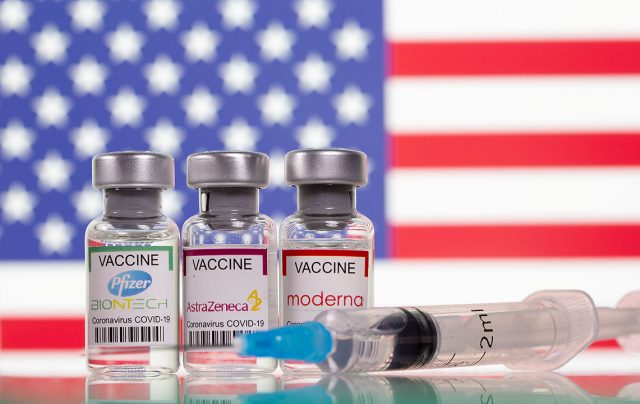
Western countries have about 500 million doses available to be redistributed today, some of that already donated, with that number rising to about 2.2 billion by the middle of 2022, the analysis shows. The Pfizer, Inc. and BioNTech SE vaccine accounts for about 45% of the available shots that could be redistributed, while Moderna, Inc.’s makes up roughly a quarter of the total, according to Airfinity.
Many lower-income nations are relying on Covax, an initiative led by groups including the World Health Organization that’s designed to provide fair access to the shots for every country, but the program has fallen short of its targets. COVID booster plans should be postponed until more shots are distributed to countries where they’re scarce, WHO Director-General Tedros Adhanom Ghebreyesus has said.
Meanwhile, President Joseph R. Biden’s booster program is mired in controversy of its own, having encountered pushback from health authorities in the Food and Drug Administration and the Centers for Disease Control and Prevention who say scientific support is lacking. Health leaders in the EU have also said that boosters aren’t yet needed as the current regimens of COVID shots remain effective.
“High-income countries have ordered over twice as many doses as are needed for their populations,” the former co-chairs of the panel that reviewed the Covid response wrote last week. “Now is the time to show solidarity with those who have not yet been able to vaccinate their frontline health workers and most vulnerable populations.”
It’s not just a question of having the means to acquire COVID vaccines, Bech Hansen said. There needs to be a more coordinated effort globally to allow countries with ample supplies to resell and donate doses, he said.
“It’s not a purely high-income-world, low-income-world discussion — it’s a little more complicated than that,” he said. “One could imagine the US, the UK and the EU getting together and agreeing on a way forward.” — Bloomberg
MORE THAN one billion Asians are set to join the global middle class by 2030, according to a new study that predicts the pandemic will prove just a temporary pause in the world economy’s great demographic shift.
The middle class — households where per-capita spending is between $11 and $110 a day — amounts to some 3.75 billion people this year, according to the World Data Lab. That cohort is projected to keep growing through 2030 with India and China, the most populous countries, adding about three-quarters of a billion members between them.
The other biggest contributors are also in Asia. They include countries like Indonesia — projected to have the world’s fourth-biggest middle class by 2030, overtaking Russia and Japan — and Bangladesh, a densely populated country the size of Iowa, which is set to rise up the rankings faster than any other nation. It’s forecast to jump from 28th to 11th place, adding more than 50 million middle-class consumers.
Asian countries already make up more than half of the world’s middle class, but they account for only 41% of that group’s consumer spending, according to the study. The share is set to exceed 50% by 2032.
China, India and the US are projected to retain the top three rankings as the countries with the largest middle-class populations, according to World Data Lab. Slow or negative population growth in some advanced economies will lead to a shrinking middle class in countries like Japan, Germany, Italy and Poland. — Bloomberg
SAO PAULO — Brazil’s federal health regulator Anvisa on Saturday suspended the use of over 12 million doses of a COVID-19 vaccine developed by China’s Sinovac Biotech Ltd. that were produced in an unauthorized plant, it said in a statement.
Anvisa said it was alerted on Friday by Sao Paulo’s Butantan institute, a biomedical center that has partnered with Sinovac to locally fill and finish the vaccines, that 25 batches, or 12.1 million doses, sent to Brazil had been made in the plant.
“The manufacturing unit … was not inspected and was not approved by Anvisa in the authorization of emergency use of the mentioned vaccine,” the regulator said. The ban was “a precautionary measure to avoid exposing the population to possible imminent risk,” it added.
Butantan also told Anvisa that another 17 batches, totaling 9 million doses, had been produced in the same plant, and were on their way to Brazil, the regulator said.
During the 90-day ban, Anvisa will seek to inspect the plant, and find out more about the security of the manufacturing process, it said.
During Brazil’s vaccine rollout earlier this year, the vast majority of administered vaccines were from Sinovac. More shots from other manufacturers have since come online.
Brazil on Saturday reported 21,804 new coronavirus cases, and 692 COVID-19 deaths. — Reuters
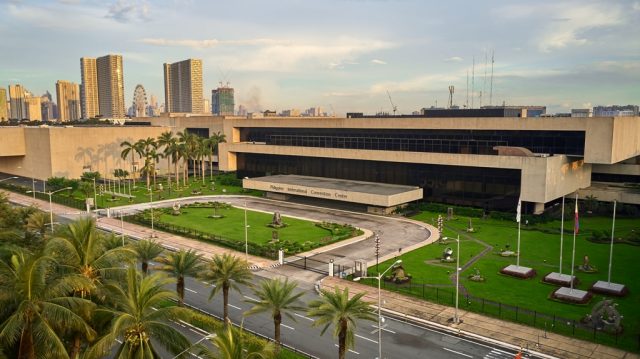
The iconic façade of the Philippine International Convention Center.
The setting for many of the country’s biggest and most historic events celebrates its 45th year
On Sept. 5, 1976, all roads led to the Philippine International Convention Center (PICC) as it opened its doors and made headlines as Asia’s first international convention center.
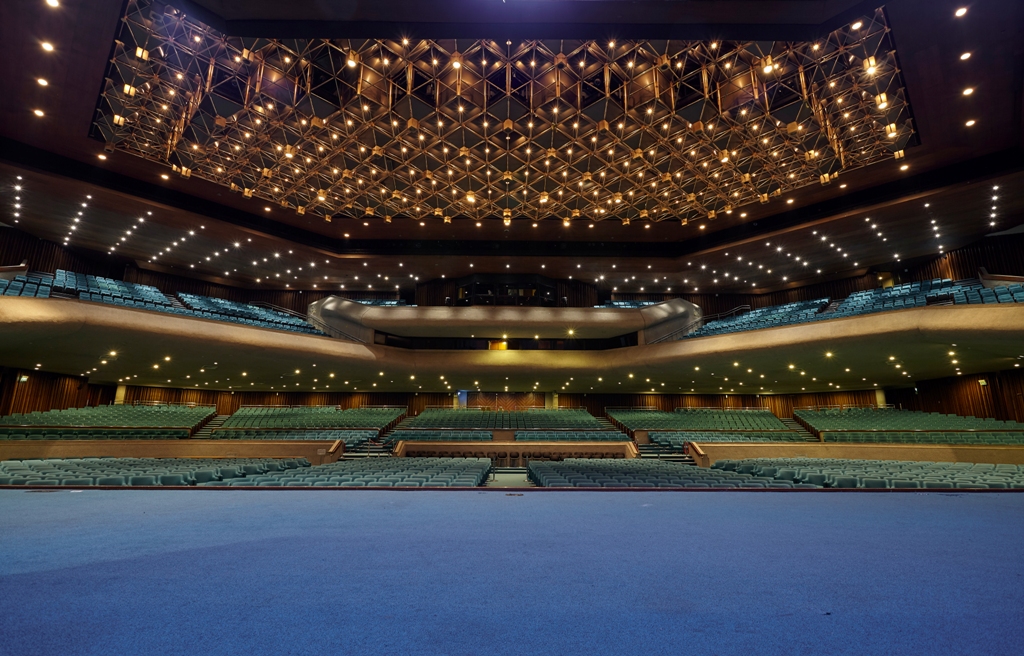
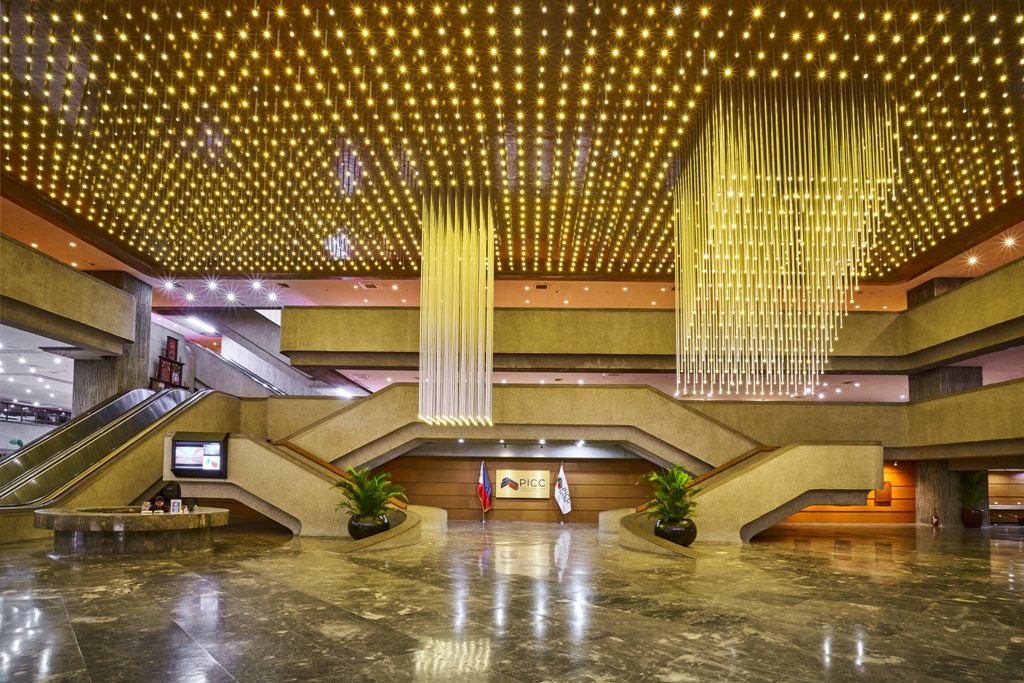
Delegates and guests from all over the world were welcomed to this architectural wonder that was designed by Leandro Locsin, Filipino National Artist for Architecture, and took only 23 months to build. Sitting on a 12-hectare area within the Cultural Center of the Philippines complex in Pasay City, the PICC boasts a most elegant, chandelier-lit lobby, a Reception Hall that can accommodate 5,000 guests, a 3,500-seat Plenary Hall, more than 30 event and meeting rooms, plus a wide range of facilities that can accommodate almost any gathering of any size. It’s equipped with dedicated wired and wireless internet connectivity and everything that makes it an ideal MICE (meetings, incentives, conferences, and exhibitions) venue. It has prayer rooms for Muslim guests. It’s got a state-of-the-art central kitchen, a cold kitchen, a halal kitchen with walk-in and blast freezers.
PICC is also the proud home of some of the country’s most prized art pieces. In 2003, the PICC Forum, a tent facility, was inaugurated to address the need for an exhibition and event space.
HOST TO WORLD LEADERS AND WORLD-CLASS ARTISTS
Over the past 45 years, PICC has played host to many international conferences attended by world leaders, like the APEC Summit in 1996 and 2015, 112th Inter-Parliamentary Union and related meetings in 2005, ADB Meeting of the Board of Governors in 2012, and ASEAN Summit in 2017.
World-class concert artists have graced its stage, like Burt Bacharach, Luciano Pavarotti, Janet Jackson, Ricky Martin, Michael Buble, Josh Groban, and our very own Lea Salonga. Even saints (Mother Teresa and Pope John Paul II) and royalty (Queen Maxima of The Netherlands) once walked through its gleaming, immense halls.
The famed Plenary Hall where most university graduations happen
The eyes of the world were on the PICC when it hosted the 1994 Miss Universe pageant, where Miss India Sushmita Sen ran away with the crown.
Over the years, PICC has undergone several renovations and improvements, updating and upgrading its equipment and facilities.
PICC General Manager Renato Padilla adds, “We have also adopted sustainable practices in our operations, like installing solar panels on our roof decks, converting to LED lights, replacing air-conditioning units to inverter type of technology, and implementing other energy-efficient measures and water conservation efforts to minimize our environmental impact and the carbon footprint of our events.”
PICC Deputy General Manager Roberto Garcia cites 2019 as PICC’s best year yet, with the most number of events and the highest revenue to date. That year, PICC hosted 763 events and was expecting, more or less, the same number of events in the succeeding years. In fact, 2020 saw a strong booking calendar, with events already confirmed. But the COVID-19 pandemic did not spare the Philippines as it swept across the globe.
“The pandemic adversely affected business operations of the Center as a venue for meetings, conventions, exhibitions and special events,” discloses Garcia, who is also chairperson of the PICC COVID-19 Task Force. “While a few government-initiated meetings have taken place at the PICC this year, varying degrees of restrictions on mass gatherings have forced our clients to either cancel or postpone their bookings.”
FACING THE PANDEMIC HEAD-ON
Amid the pandemic, PICC rose to the occasion. PICC continues to be in operation, providing services to its tenants and the general public who continue to make transactions with them. These tenants are the Securities and Exchange Commission (SEC), Professional Regulation Commission (PRC), National Privacy Commission (NPC), and the Senate Electoral Tribunal (SET).
Over 2 months ago, the One Hospital Command Center moved into the 4th floor of the Delegation Building for its 24/7 operations and the Office of the National Vaccination Operations Center also moved in just 2 weeks ago.
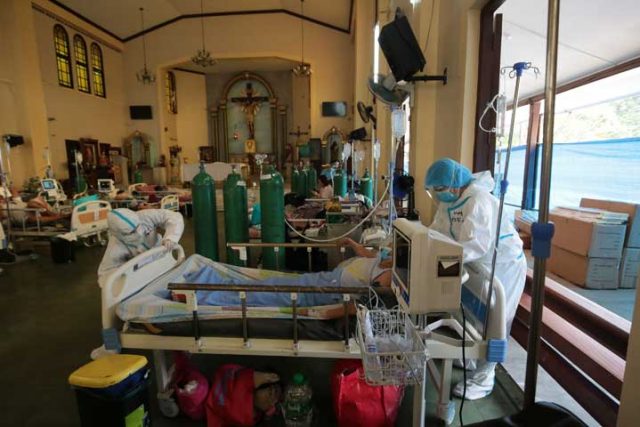
The PICC was one of the first to respond to the governments’ call for the need of quarantine facilities in the Metro when the lockdown was first implemented. In April 2020, the PICC Forum was turned over to the Department of Health to serve as a 294-bed quarantine facility, as it is today.
“While the events industry is finding ways to conduct activities in the new normal, the PICC has deemed it well to maximize the lull in the holding of events by implementing and fast-tracking a number of infrastructure projects to generate additional revenue as well as improve business operations in the future. Amongst these are the rehabilitation of the 4th floor of the Reception Hall and the 3rd floor of the Plenary Hall which will be converted into additional office spaces for lease,” says Garcia.
A grandiose spectacle await guests inside the Reception Hall, taken by Patrick Kasingsing
Aside from the required safety and sanitation measures, PICC also upgraded its WiFi and technology capacities to address the requirements of virtual and hybrid events.
While most companies retrenched personnel due to losses as a result of the pandemic, PICC retained its workforce — yes, no layoffs, no furloughs. A task force committee was created to monitor the health and well-being of PICC personnel and ensure compliance with safety protocols.
Employees underwent RT-PCR tests quarterly in 2020, and 100% of PICC employees have been vaccinated against COVID-19. 99% of its outsourced personnel (Housekeeping, Security, Landscaping, Physical Arrangements, Audio-Video, and Aircon Technicians) have also been vaccinated to date.
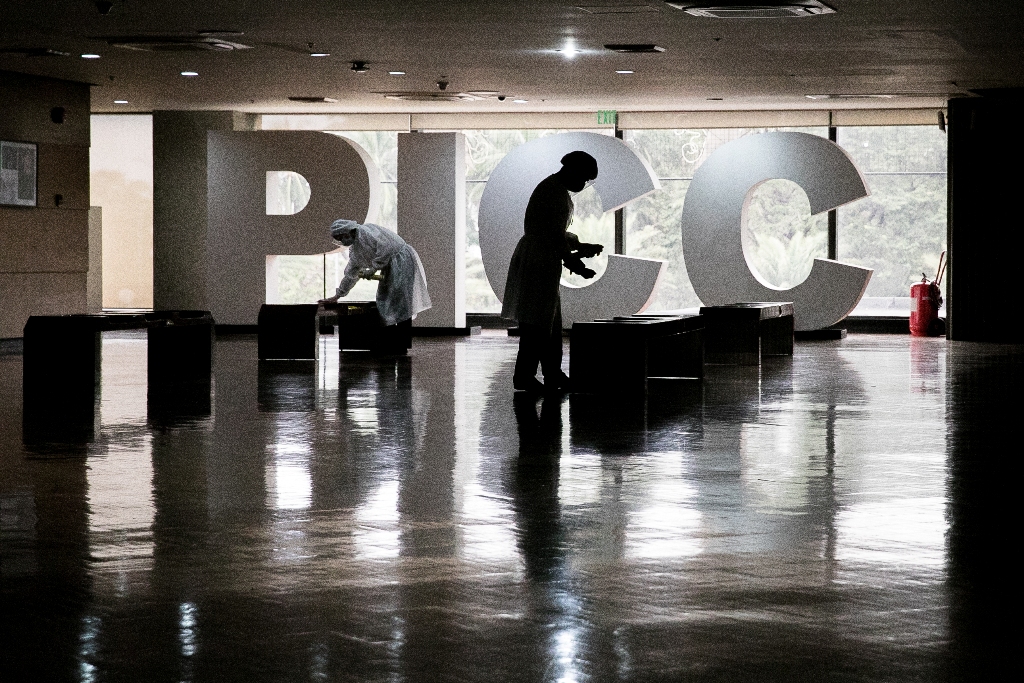
PICC staff dressed in their PPEs regularly disinfect the venue as part of sanitary protocols, taken by Basilio Sepe
“We have been implementing strict preventive measures within our premises to ensure the safety and security of all employees, clients, and guests,” Garcia points out. “At the onset of the pandemic in 2020, thermo-scanners, personal protective equipment, disinfection equipment, air ionizers, hand sanitizers were procured. In compliance with government-mandated health and safety protocols, wearing of masks and shields, an accomplishment of health declaration forms, and physical distancing are enforced as well as regulations governing the conduct of food and beverage services. Printed signages and LED monitors in public areas bear messages on the guidelines of health and safety. Meeting rooms, offices and public areas are disinfected twice daily with touchpoints being disinfected more frequently throughout the day.”
You will also find isolation rooms at the main entrances of the Delegation and Secretariat Buildings that serve as temporary holding areas in case there are guests who manifest symptoms of COVID-19.
When booking their events, clients are advised on the new guidelines, food and beverage protocols, venue capacities, and logistical requirements. These guidelines are based on industry standards and the protocols of the World Health Organization and Inter-Agency Task Force on Emerging Infectious Diseases.
For now, PICC is only accommodating clients and guests of tenants to limit the number of people inside the Center and minimize the risk of virus transmission. Dealings are on a per appointment basis and may take the form of a virtual engagement if needed.
LONGEVITY SECRET
Chandeliers lit up as PICC welcomes its guests for the day.
Celebrating its 45th anniversary this year, the PICC has stood the test of time as a cultural treasure and historical icon. “The PICC has remained as one of the country’s premier event venues due to the support of the Bangko Sentral ng Pilipinas which has remained committed to its mandate of operating an International Convention Center with the highest quality of facilities and services,” Padilla reveals. “Our commitment to help our customers create successful events has been key to our success in the last 45 years. Our clients have remained loyal to us because of the excellent service our skilled people provide, before, during, and after their events. Excellent service in Events Management seems to be a natural birthright of all our employees.”
Expect a lot more as you unravel future plans for PICC. Padilla shares, “A two-storey office and commercial building will be constructed south of the Secretariat Building, which will allow us to lease more spaces for government offices and commercial establishments. When the Forum ceases to be used as a quarantine facility for COVID-19 patients, it will eventually be replaced with a new, modern, and state of the art building that will have 30,000sqm for the holding of Trade Exhibitions and 60,000 sqm for Office spaces for lease on the upper floors and a multi-storey parking building that will accommodate more than 200 vehicles of event attendees and office space lessees.”
Coming up are more infrastructure projects to address the ever-changing needs of PICC clients, like replacing elevators and converting to sensor-type escalators, constructing covered pathways and service hallways at the Secretariat Building meeting rooms, converting air-conditioning systems at the Plenary and Reception Halls to make them more cost-effective, and upgrading the sewage treatment plant.
Looking ahead, when the PICC celebrates its golden year in 2026, it will be more than a nice MICE venue. “It will be a multi-use facility that’s a mix of the old and the new — a convention center, a house of art and culture, a government office complex, and a commercial establishment,” Padilla muses.
He hastens to add, ” We also plan to continue our environmental stewardship and be more aggressive in promoting our advocacy on environmental sustainability, and to be eventually recognized as a model “green” MICE venue.”
At 45, the PICC shines as an architectural icon, a national cultural heritage, and a priceless gem of a venue.
Spotlight is BusinessWorld’s sponsored section that allows advertisers to amplify their brand and connect with BusinessWorld’s audience by enabling them to publish their stories directly on the BusinessWorld Web site. For more information, send an email to online@bworldonline.com.
A Philippine Airlines plane is seen flying over Antipolo, Rizal in this file photo. -- Photo by Michael Varcas, The Philippine Star
Philippine Airlines Inc. filed for Chapter 11 bankruptcy in New York with a lender-supported plan that helps the country’s main carrier recover after the pandemic devastated global travel.
The company aims to cut $2 billion in borrowings through a proposed restructuring plan, which needs court approval and will allow the carrier to reduce its fleet capacity by 25%, it said.
Philippine Airlines will also get $505 million in equity and debt financing from its majority shareholder, as well as $150 million of debt financing from new investors.
Chapter 11 lets a company continue to operate while it restructures. The filing on Friday comes after the airline spent months negotiating with its stakeholders. Billionaire owner Lucio Tan called the filing a “major breakthrough” for the carrier.
The restructuring plan allows the airline “to overcome the unprecedented impact of the global pandemic that has significantly disrupted businesses in all sectors, especially aviation, and emerge stronger for the long-term,” Mr. Tan, who’s the chairman and chief executive officer, said in a statement.
While an end to lockdowns eased the strain on travel at the start of the summer season in the Northern Hemisphere, the delta variant of COVID-19 has recently begun hurting many airlines, especially in the U.S. and China.
NEW FINANCING
Mr. Tan has said previously that the airline, which was founded in 1941, was working on a comprehensive restructuring plan.
Philippine Airlines is the latest international carrier to reorganize in the United States, under U.S. bankruptcy code. By using Chapter 11, the company will subject its reorganization plan to the final decision of a U.S. judge.
Bankruptcy experts say the U.S. is often the preferred venue, in part because the law in America is more favorable to a company, and partly because creditor contracts are often based on state law in New York or Delaware. Latam Airlines, based in Chile, Aeromexico and Colombia’s Avianca Holdings all sought court protection in New York last year, blaming the drop in air travel caused by the coronavirus.
The pandemic has forced airlines to suspend flights, lay off employees and seek financial help. In June, PT Garuda Indonesia’s president said the carrier was considering options including restructuring debt and renegotiating contracts with aircraft lessors.
The challenges for PAL Holdings Inc., the holding company of Philippine Airlines, predate the pandemic. It has reported losses since the first quarter of 2017. The company suffered a record P71.8 billion ($1.4 billion) loss in 2020, compared with a P10.3 billion shortfall the year before.
The airline will continue to operate its passenger and cargo flights based on demand and travel restrictions. The company also said it expects to gradually add domestic and international flights as the market recovers.
The case is Philippine Airlines Inc., 21-11569, U.S. Bankruptcy Court for the Southern District of New York (Manhattan). — Bloomberg
The Philippines is currently in the midst of a Delta-driven surge in COVID-19 infections, with 20,310 new cases reported on Friday. -- Photo by Michael Varcas, The Philippine Star
The economic recovery of the Philippines and rest of Southeast Asia may be pushed back to 2023, amid the threat of new and more contagious coronavirus disease 2019 (COVID-19) variants, Oxford Economics said.
Philippine gross domestic product (GDP) is expected to grow by 3.5% this year, Makoto Tsuchiya, economist at the think tank, said in an email.
This is more pessimistic than the 4.5% it gave last month and is also below the 4-5% full-year target of the government.
“If new virus variants result in another global lockdown, we expect ASEAN’s growth recovery will be further delayed to 2023 from 2022,” Sung Eun Jung, a senior economist at Oxford Economics said in a note on Friday.
Mr. Jung said this will be the case in a “long COVID-19” scenario which would require the need for stricter lockdowns and in turn, result in persistent risk aversion.
“In our baseline, for most of our ASEAN-6 economies, we forecast above-trend growth next year. But in this downside scenario, we would expect these above-trend growths to be further delayed to 2023,” Mr. Jung said in an email.
The World Health Organization (WHO) has said that the more infectious Delta has become the dominant variant in the Philippines. The Lambda variant, which was first identified in Peru and is considered a variant of interest by the WHO, was also already detected in the Philippines by mid-August.
New COVID-19 cases on Friday rose by 20,310, the second highest daily tally since the pandemic began. This brought the total active cases to 158,994, based on data from the Department of Health.
Oxford Economics said the new wave of infections which resulted to tighter restriction measures is expected to hurt third quarter growth in the Philippines and across the region.
The research firm expects the Philippine economy to grow by 4.3% for the July to September period. Metro Manila was placed under the most stringent form of lockdown for two weeks in August, and is currently under modified enhanced community quarantine until Sept. 7.
In the second quarter, GDP rose 11.8% year-on-year but declined by a seasonally adjusted 1.3% quarter on quarter.
“The main threat remains the Delta variant and the possible tightening/extension of the restrictions. This is especially the case given the rising COVID-19 cases and a low vaccination rate, with only less than 13% of the total population fully vaccinated,” Mr. Tsuchiya said in an email.
“Tighter social distancing measures would weigh on sentiment and consumer spending, particularly on social spending,” he added.
Household spending, which accounts for about 70% of the economy, rose 7.2% year on year in the second quarter. Seasonally adjusted, it declined by 2.4% in the second quarter versus last year’s -13.3% contraction.
Meanwhile, Mr. Tsuchiya said the manufacturing sector will likely benefit from relatively strong external demand, making it likely perform to perform better than the services sector.
However, he cautioned the new surge in infections in the ASEAN region could pose risks for manufacturing and exports.
“The short-term manufacturing and export outlook faces several headwinds, including lower growth expectations among major trading partners and supply disruptions due to renewed COVID-19 outbreaks in the region,” he said.
President Rodrigo R. Duterte has continued to reiterate his pledge to fighht corruption despite scandals involving key allies. -- Photo by Michael Varcas, The Philippine Star
The Presidential Anti-Corruption Commission (PACC) on Friday formed a new inter-agency task force to bring its campaign against graft and corruption to the lowest level of the government, as the administration faces questions over allegedly anomalous deals.
More than 40 agencies under the Executive branch signed a memorandum of agreement to form the National Anti-Corruption Coordinating Council, which will institutionalize anti-corruption committees (ACCs) in all levels of government.
The new inter-agency task force was created to quicken the detection of irregularities in all levels of government, PACC Chairman Greco B. Belgica said at the project’s virtual lunch.
“Bawat opisina, hanggang sa barangay, merong PACC na lumalaban at itinatag na institusyon para labanan ang korapsyon,” Mr. Belgica said. “We have not seen this in any government.”
The creation of the new anti-graft body, which will be chaired by President Rodrigo R. Duterte, comes after senators launched an inquiry into the government’s procurement of overpriced medical goods from Pharmally Pharmaceutical Corp. Executives of the subsidiary of Taiwan-based Pharmally International have been linked to various crimes.
In a taped message, the President pledged his support for the PACC’s anti-corruption efforts.
“The fight against corruption allows us to serve the public with utmost excellence and integrity as well as regain the trust and faith of our people in our institutions,” said Mr. Duterte, who has slammed senators for investigating the government’s pandemic spending.
“Let us work together to fully realize our dream of a corruption-free Philippines,” he added.
In March 2017, the President was introduced by his former economic adviser, Michael Yang, to executives of Pharmally International.
The initiative “amplifies the effort of the Duterte administration in fighting graft and corruption,” Senator Christopher Lawrence T. Go said at the virtual launch.
Mr. Go, the President’s long-time friend, has been linked to former Budget official Lloyd Christopher Lao, who signed most of the deals with Pharmally.
The new anti-corruption council is “nothing but a konseho de abswelto (acquittal council) of government, given the unending high-level controversies surrounding the administration,” InfraWatchPH convenor Terry L. Ridon said in a Facebook Messenger chat.
“It is nothing more than a PR play seeking to douse cold water on the public’s mounting anger over allegations of overpricing and profiteering during the current pandemic,” Mr. Ridon said.
“Had they truly been serious about corruption, this should have been launched years ago, and more importantly, the overpricing in the pandemic response would not have slipped under the nose of PACC,” he added.
‘COMPLEMENTARY’
Mr. Belgica said the new anti-graft council complements the Department of Justice (DoJ)-led Task Force Against Corruption.
“It will be complementary because the DoJ-led task force also meets office, also meets people and is more investigative than what we are doing today which is preventive as well as educative,” he said.
The future anti-graft committees would also complement the functions of the Commission on Audit’s resident auditors, he added.
The Philippines slipped two spots in a global corruption index released by Transparency International in January.
Widespread corruption has weakened many countries’ response to the coronavirus pandemic, it said.