Home Blog Page 7050

Making a difference

VECTPRJUICE-FREEPIK

The decision of Google and its subsidiaries such as YouTube and about a dozen others not to accept political advertising during the official campaign period of the 2022 elections invites approval as well as hopes that Philippine media organizations would do something similar. It would be in affirmation of their public service function, and, as in Google’s case, in furtherance of their Corporate Social Responsibility (CSR) of being accountable to their stakeholders and the public.

“Something similar,” however, should mean television, radio as well as online media’s putting a stop to the airing of political advertising during the current, pre-official campaign period instead of from Feb. 9 to May 9, 2022 as Google has decided.

The cynical would dismiss that possibility as a form of idealism to which the dominant media organizations are immune. Philippine media corporations collectively make millions in political advertising, specially during Presidential elections: they are practically sustained by it. Exercising their CSR through that option would be directly contrary to their interests as basically commercial, profit-driven enterprises.

But while it would certainly reduce their earnings, those losses, or at least part of them, can be recovered through the reduction of the taxes their parent corporations pay government. It would be a small price to pay in exchange for meeting the urgent need to make Philippine elections and governance more meaningful for everyone including the media themselves, the business community, the poor and the dispossessed, and the rest of Philippine society.

Surely the Philippines’ own media corporations are aware that their power to provide information through editorial and advertising content influences the public mind enough for the results of elections and their consequences on the quality of Philippine governance to be partly their doing and therefore their responsibility.

It should be equally evident that they have an interest in good government. Bad government, as the events of the last five and a half years have shown, has an even higher cost in terms of the suppression of media freedom, harassment, intimidation, and — as in the case of ABS-CBN — huge losses in profitability. Any media organization whose news reporting, analyses, opinion columns and editorials, among others, are perceived to be independent and critical of incompetent, self-aggrandizing, and corrupt governance can be similarly victimized.

Editorial content does help shape citizen opinion on such public issues as who to vote for and why. But political advertising, specially of the disguised kind, is arguably more powerful. Political advertising has for decades endowed those candidates with the biggest campaign war chests the distinct advantage of constant media exposure over their less financially endowed rivals.

That power is not limited to ads that are either identified or identifiable as such; it also includes advertising disguised as editorial content. “Stealth advertising,” as the latter practice is known, is not only used to sell toothpaste, fruit juice, food supplements, and other consumables but also ideas and candidacies.

One study found that some broadcast networks offer candidates shady arrangements such as being featured or interviewed in their news programs in exchange for a fee. In some cases, this kind of advertising has also consisted of a candidate’s publicist’s being identified as a “political analyst” whose views are presented as academic and non-partisan while actually in support of their employer. Some “polling firms” that release to the media supposedly scientifically validated results on which candidates the public favors most are also widely suspected to be similarly in the pay of those running for office whom they claim are the most popular among the voters.

The results of advertising that’s identified as such as well as of stealth advertising are essentially the same. Both keep the candidate’s name in the public sphere in a country where name recall rather than a candidate’s platform and track record can make the difference between losing or winning an election. Because both forms of advertising can cost hundreds of millions, they also contribute to Philippine elections’ being primarily decided by money rather than platform, competence, honesty, or character.

The Commission on Elections (Comelec) has many complicated rules on the conduct of elections, among them a ban on “premature campaigning.” But the same rule has a loophole huge enough for a truck to pass through. It does not regard as such what are obviously early campaigning stratagems via the old and new media, or through tarpaulins, posters, and other means of communication as long as a presumed candidate has not filed a Certificate of Candidacy (COC) and has not officially qualified. In addition, a candidate cannot be penalized for that offense for so long as his or her ads do not directly solicit votes.

As a consequence, despite the prohibition against campaigning early, some TV and radio networks had already been airing the political ads of various candidates even before they had filed their COCs. The present stream of political ads since the deadline for the filing of COCs last November is likely to swell into a tidal wave as the year 2021 ends, election year 2022 begins, and the official campaign period from Feb. 9 to May 9 commences.

During that three-month period, both the old media of print and broadcast and the digital-based new media will inundate their audiences with even more ads from the candidates for President, Vice-President, and senator, as well as those vying for local posts. But it will impose some restraint on an otherwise unregulated system of campaigning via the mass media by putting a limit on the space and length of advertising airtime candidates are allowed under Comelec rules.

Some candidates’ campaigns over social media did not end with the 2019 elections, however. In its wake, and as the newly elected senators, congressmen, and other elective officials began their terms of office, the troll farms did not stop celebrating, exaggerating, and outrightly concocting the “achievements” of their patrons, while name-calling, insulting and spreading false information about those groups and personalities their patrons regard as critics and/or as possible candidates in the 2022 elections. The result is an information crisis among the vast legions of Netizens who uncritically accept and share disinformation with hundreds of thousands of users who in turn spread the same to hundreds of thousands more.

The decision of Facebook to continue to accept political advertising does dampen hopes that the dissemination of false information through social media can be controlled. But Philippine-based media organizations with online news sites can help correct this state of affairs by fact-checking the claims of candidates for public office and through their own adherence to the standards of ethical reporting.

Because informed choice is at the heart of electoral politics as a democratic exercise, what little remains of Philippine democracy is further eroded by the many advantages, among them via advertising, of those candidates with the most campaign funds. Because of persistent doubts over the Comelec’s capacity, readiness and independence to conduct and oversee fair and honest elections, the media organizations could do this country and the democratic process the singular service of helping level the electoral playing field.

They could pro-actively put a stop to the wealthier candidates’ using for their own benefit the power of media to influence the public mind.

Perhaps the qualified and the competent, rather than the corruption-ridden and mostly incompetent members of Philippine political dynasties, would then have at least a fighting chance of winning the power they need to make a difference in this country’s troubled present and uncertain future.


LUIS V. TEODORO is on Facebook and Twitter (@luisteodoro).
www.luisteodoro.com

Malaysia tightens rules over Omicron

REUTERS

KUALA LUMPUR — Malaysia on Thursday announced new COVID-19 restrictions, including banning mass gatherings and requiring booster doses for high-risk groups, as it reported its second case of the Omicron coronavirus variant.

Health Minister Khairy Jamaluddin said authorities were also verifying 18 more suspected cases of the variant, believed by experts to be the most transmissible yet, with results expected by Friday.

The second case was an 8-year-old traveling with family from Nigeria, where the family resided, via Qatar, Mr. Khairy told reporters.

All close contacts, including 35 passengers on the same flight, have tested negative for the coronavirus so far.

Malaysia reported its first case of the Omicron variant earlier this month in a traveler from South Africa.

To curb Omicron risks, mass New Year gatherings will be banned and those attending private New Year and Christmas celebrations must undergo COVID-19 self-tests, Mr. Khairy said.

Malaysians over 60, and all adult recipients of the Sinovac COVID-19 vaccine, are required to get a booster dose by February to keep their status as “fully vaccinated,” Mr. Khairy said. Singapore is considering a similar policy.

This week, researchers in Hong Kong urged people to get a third dose of COVID-19 vaccine as soon as possible, after a study showed insufficient antibodies were generated by those of Sinovac and BioNTech to fend off Omicron.

Malaysia has temporarily banned the entry of foreign travelers from eight countries in southern Africa and designated nine countries as “high-risk,” including Britain, the United States, Australia and India.

All arrivals from these countries must undergo mandatory quarantine and be fitted with digital tracking devices, regardless of their vaccination status.

Those from Britain will also be required to conduct daily self-tests during quarantine, Mr. Khairy said. — Reuters

Servathon’s Harvest for Health

“In 2001, I contacted Hands On Network USA to inquire if we could set up an affiliate in the Philippines. I was attracted to their innovative and flexible model of volunteerism which did not exist in the country then. I was surprised to find out that they had no international affiliate. Happily, they agreed to have Hands on Manila be the first. Twenty years later, we continue to develop sustainable programs that contribute to nation building. And we hope to continue to do so in the years to come.” -— Gianna R. Montinola, Hands On Manila Co-founder

Hands On Manila (HOM) is the leading non-profit organization that works to promote volunteerism in the Philippines. It is an affiliate of Hands On Network USA (now known as Points of Light Foundation).

handsonmanila.org

Last October, HOM gathered and organized 15 companies and seven private groups with more than 285 volunteers to patriciate in Servathon’s culminating event. With the theme “Harvest for Health,” one of the events was an interactive talk on “Zero Waste Kitchen” with Asia Best Female Chef 2016, Margarita Forés.

To fulfill their participation in this project, the partner companies gave grants for public school gardens which produce nutritious vegetables to sustain food security and livelihood for communities. The corporate volunteers had two options: to design self-watering planters made from recycled bottles or create a liquid fertilizer out of food waste from the safety of their homes. Then they turned over the products to HOM for distribution to partner public school gardens and communities. Among these were the Tipas National High School, Capt. Hipolito Francisco Elementary School – Annex, Sto. Rosario Elementary School, Manuel Roxas Elementary School, and the Pabahay Project.

Finally, Servathon hit a record. There were 11 partner corporations, 711 volunteers who logged in a total of 2,508 volunteer hours. Its equivalent monetary cost was P711, 000. There were 6,000 target beneficiaries, and 12 community gardens that produced 450 liters of organic fertilizer.

Here are some testimonials from the beneficiaries, volunteers and trustees:

“I am grateful to Hands On Manila because of the support that you have extended to Silangan Elementary School. It makes the school a better place for learning. You also have awakened, strengthened, and heightened the spirit of volunteerism of the teaching and non-teaching personnel and that includes me. Your project does not only benefit the school clientele, but it has benefitted the community because the influence goes outside of the school. Your hand truly is an extension of God’s hand. God bless you and more power HOM! — Dr. Flordelyn T. Umagat, Principal, Silangan Elementary School.

“I’ve been part of HOM’s Servathon for two consecutive years as a volunteer leader. It was a very humbling experience seeing people from different walks of life come together for a common cause. The experience changed my perspective in life. I’m now more sensitive to the needs of our less fortunate brothers and sisters. It also opened my mind on how doing simple things can save the environment. You don’t have to be rich to be able to give back to the community. All you need is a willing body, a sensitive soul and a generous heart.” — Mr. Mars Gatchalian.

“We select public schools around Metro Manila that have idle land within a secure area. We give them the knowledge and skills they need to grow their gardens. We teach them how to use environmentally friendly methods for farming so that they can learn to grow their own food and feed themselves.” — Michelle Batungbacal, Servathon 2021 Co-chair and HOM Trustee

“The problem of food security in the Philippines has been magnified and exacerbated by more than 20 months of one of the strictest pandemic lockdowns in the world. Further, the World Bank reported that childhood undernutrition in the Philippines has become a ‘silent pandemic.’” — Marianne Po, Servathon 2021 Co-chair

“Just like any other NGO, HOM has been greatly impacted by the COVID-19 pandemic but has continued to survive because of it loyal partners… and all stakeholders. All of you are an inspiration to the organization. We thank you all for inspiring us to keep creating programs that celebrate the joy of volunteering!” — Jen Ferraren-Navas, HOM Executive Director

During the virtual culmination ceremony, HOM, together with its volunteers, celebrated its 20th year with the theme “To Infinity and Beyond.”

The participating companies were: American Express, EON, Far Eastern University, ICTSI Foundation, One Meralco Foundation, London Stock Exchange Group (LSEG), Rockwell Land, Romulo Law, True Value, Wells Fargo & Co., and Wells Fargo Philippines. Also participating were seven private groups including F31, Assumption College Alumnae Batch ’81, and HOM’s Board of directors, past and present.

“These proactive individuals are key to the sustainability and successes of HOM in the last 20 years. They have shared years of adventure serving, helping, volunteering… witnessing transformations …within themselves, amongst beneficiaries, and communities served. Moving forward, HOM aims to constantly improve and discover more ways to make volunteering digitally interactive and meaningful; remain committed to our mission vision of creating more community programs that will address issues on health education, livelihood, and the environment,” said  Lizette B. Cojuangco, HOM president.

Happy 20th Anniversary and congratulations to Hands On Manila, the Board of Trustees, the staff, and enthusiastic volunteers. They all exemplify the spirit of selfless giving and sharing of oneself and resources to help others during this prolonged crisis.

A Blessed Christmas to all!


MARIA VICTORIA RUFINO is an artist, writer and businesswoman. She is president and executive producer of Maverick Productions. mavrufino@gmail.com

Economic security is national security

Last October, Japan unveiled a new minister for economic security, Takayuki Kobayashi, and also a proposed economic security law to be submitted to parliament in 2022.

Prime Minister Fumio Kishida described the economic security minister’s role as ensuring that “we have the strategic technology and supplies, prevent technologies from flowing out of the country, and create a self-sustaining economy.”

And yet, it is undeniable that the main concern of such new measures is to restrain China. The economic security law is “targeted at China’s increasing economic clout over Japanese companies and the risk of trade disruption as experienced when China halted shipments of rare earth elements in 2010 and during the shortage of medical supplies at the beginning of the COVID-19 pandemic.” Indeed, Japan approaches “China’s economic coercion from a national security perspective, pointing to the risks of disrupting of semiconductor supplies from Taiwan, export restrictions on rare-earths, purchases of Japanese companies and land, and economic espionage.” (“Japan’s opaque economic security policy agenda,” East Asia Forum, December 2021)

Akira Igata, executive director at Tokyo’s Tama University Center for Rule-Making Strategies, is even more succinct: “These are all responses to the new reality of China becoming much stronger, China being dissatisfied with the status quo, China exploiting the system.” (“Japan minted a new economic security minister to fix supply chain disruptions,” Quartz, October 2021)

Economic security is a must idea for the Philippines. In relation to the economy and trade, the main area of concern for the country should not be larger Philippine conglomerates but rather the possibility of foreign powers sneaking up and acquiring Filipino companies or influencing to the point that economic powers are exercised from beyond Philippine jurisdiction, constricting Filipino entrepreneurial efforts, and damaging local consumer interests.

After all, the primary job of any Philippine government, as provided under our Constitution, is “to serve and protect the people” and to “call upon the people to defend the State.” The government should also: “pursue an independent foreign policy,” “strengthen the family as a basic autonomous social institution,” and to “equally protect the life of the mother and the life of the unborn from conception,” to “inculcate in the youth patriotism and nationalism,” “develop a self-reliant and independent national economy effectively controlled by Filipinos,” and “foster the preservation, enrichment, and dynamic evolution of a Filipino national culture.”

One study (“Relationships between the economy and national security: Analysis and considerations for economic security policy in the Netherlands,” Lucia Retter, et al, 2020) points out that “national security can also be understood as the protection of infrastructure and sectors that are critical for the uninterrupted functioning of a nation’s economy. This interpretation of national security highlights the strong interconnectedness between security and the economy in a system that is complex, interdependent and involves multiple variables.”

Two key findings are that “foreign direct investment (FDI) and ownership of critical infrastructure and sectors can increase the risk that foreign entities gain influence and control over their operations” and that “espionage and access to sensitive information could be enabled by the close proximity or ownership of critical infrastructure and sectors by a foreign body.”

Take those findings and place them within the context of China being the Philippines’ biggest Asian FDI source (January-May 2021 showed a total of $10.33 million, representing a 128% increase from the same period of the previous year). Add to that a $1.1-billion trade deficit, with 150,000 Chinese workers (others estimate 200,000) entering the Philippines these past few years.

The 2017-2022 Philippine National Security Policy defines national security as “a state or condition wherein the people’s welfare, well-being, ways of life; government and its institutions; territorial sovereignty; and core values are enhanced and protected.” In relation to the economy, the goal is to “bolster solidarity-based and sustainable economic development.”

The 2018 Philippine National Security Strategy, on the other hand, recognizes that the “prevailing challenge of the 21st century is how to achieve the competitive advantage. The challenges of globalization such as economic integration and increasing competition have called for the development of the strategic industries which can play a significant role in the country’s pursuit of rapid economic development and national security.” It also called for the development of “agriculture and aquaculture, aircraft, investment and banking, biotechnology, construction, disaster prevention, electronics, environment, information and communications technology, land combat, manufacturing, robotics, satellite systems and space, shipbuilding, strategic materials and minerals, transportation, weapons, and tourism.”

The issue, however, is that both documents treat the economy either merely as a developmental matter or as support for “traditional” (i.e., military led) national security. Which it isn’t. The economy is both a weapon and a theater for conflict and it must be treated as such. Clearly, a national deliberation has to be initiated, with the goal of introducing measures that will immediately protect the Philippine economy from malignant foreign influences, as well as insulating the economy enough to sustain a coherent military defense strategy.


Jemy Gatdula is a senior fellow of the Philippine Council for Foreign Relations and a Philippine Judicial Academy law lecturer for constitutional philosophy and jurisprudence https://www.facebook.com/jigatdula/
Twitter @jemygatdula

Climate change imperils much of the world’s oil and gas reserves — research

REUTERS

LONDON — Much of the world’s reserves of oil and gas is under threat from rising tides, storms, floods and extreme temperatures caused by climate change, risk consultancy Verisk Maplecroft said on Thursday.

Access to the equivalent of 600 billion barrels or 40% of the world’s recoverable oil and gas reserves could be affected by the wild weather, with major producers Saudi Arabia, Iraq and Nigeria among the most vulnerable, the UK-based firm wrote in a research note.

Climate change confronted the industry this year when extreme cold weather pummeled the main US oil, gas and refining hub on the Gulf Coast, leading to long outages and reduced output.

“These types of events are going to become more frequent and more extreme, creating even greater shocks within the industry,” said Rory Clisby, environmental analyst at Verisk Maplecroft.

Just over 10% of the world’s commercially recoverable reserves are in areas rated by the consultancy as extreme risk, while nearly a third were deemed high risk.

For Saudi Arabia, extreme heat, water shortages and dust storms could be the “Achilles’ heel” for the top oil exporter, the researchers found.

In Africa’s number two exporter Nigeria, where reserves are concentrated around the Niger Delta river system, droughts and flooding present threats, they added. — Reuters

vivo VISION+ Grand Exhibition 2021 opens in Beijing

vivo has partnered with Three Shadows Photography Art Centre and creators to recap “Our 2021” and convey the human-centric fascination of mobile imaging technology

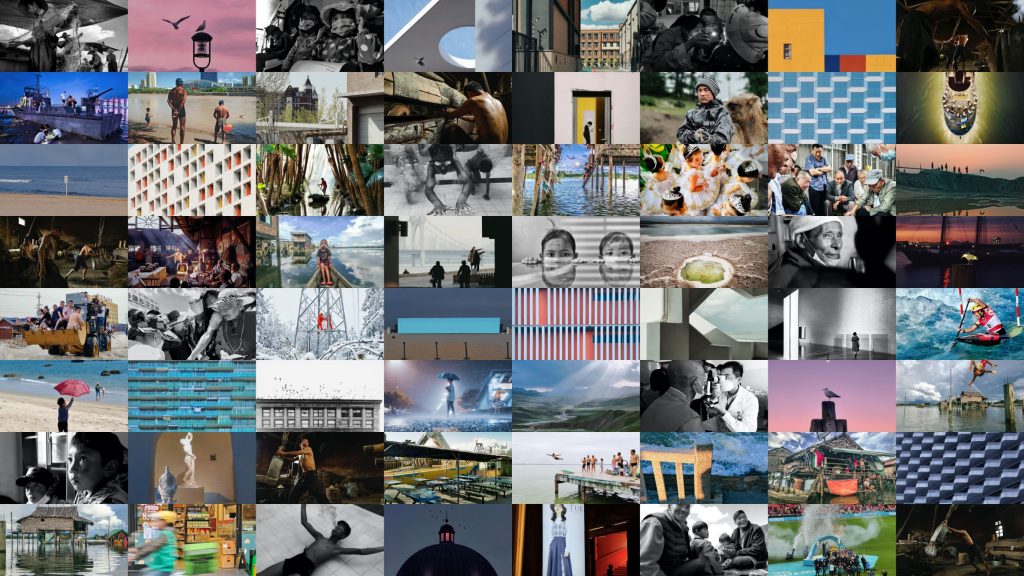
vivo VISION+ Grand Exhibition 2021 (“Exhibition”) officially opened in the Three Shadows Photography Art Centre, Beijing. The Exhibition, on view from December 6 to December 22, 2021, serves as a wrap-up event for the 2021 vivo VISION+ Project. It will display outstanding works selected from the VISION+ Mobile PhotoAwards 2021 and VISION+ Short FilmAwards 2021, as well as images created with vivo smartphones by internationally acclaimed photographers, including Martin Parr and Xiao Quan. Together, the featured creations embody the theme of the VISION+ Project, “Create Together”.

With the theme “Create Together, Our 2021”, the Exhibition is divided into five sections, including “We”, “Growing Up”, “Night and Dream”, “The Future and Far Away”, and “End: Create Together”. Through a variety of media and imaging techniques, the Exhibition links the living circumstances, feelings, and everyday moments recorded with smartphones by VISION+ Project participants over the past year. It tells the stories of creators living in the present moment, setting out from their hometowns to pursue their dreams. The Exhibition demonstrates that anyone can become a creator, capturing one’s surroundings with only a smartphone.

“We are honored to join hands with Three Shadows to present the VISION+ Grand Exhibition comprising the achievements of the 2021 vivo VISION+ Project,” said Spark Ni, Senior Vice President and CMO of vivo. “The VISION+ Project has served as an exchange platform for many outstanding creators and their photography works. With the physical exhibition, we hope these touching works will encourage more people to document the beauty of everyday life with their smartphones. vivo is committed to deepening the partnership with our global imaging strategic partner, ZEISS, inspiring more people to experience joy through creation with more human-centric professional photography technology.”

“The VISION+ Grand Exhibition gives us a glimpse of the new styles and trends pertaining to the ‘Create Together’ movement. These photos record not only individuals and objects but also the emotions of ordinary people during this extraordinary year,” said Rong Rong, curator of the vivo VISION+ Grand Exhibition 2021 and founder of Three Shadows. “As a communication platform between contemporary photographic arts and the public, we are very excited to partner with vivo to present the outstanding works of the VISION+ Project in a distinctive narrative and share the power and charm of mobile imaging with the public.”

From hometowns to remote places, experiencing the powerful emotions of everyday life through images and videos

The Exhibition collects photos and short films shot with smartphones by VISION+ Project creators. These images not only depict a range of collective memories from the past year, including the fight against the pandemic, disaster relief efforts, and international sports events, but also intimate moments of everyday life. Thus, delivering strong emotional resonance and unique visual experiences to every visitor.

In the first section, entitled “We”, multiple images are suspended on both sides of the exhibition hall. Like walking into a smartphone album, visitors can enjoy creators’ most cherished memories and familiar places. Documentary photographer Martin Parr chose to feature his hometown on the coast of Cornwall in the U.K., while famous Chinese portrait photographer Xiao Quan captured the everyday routine of the craftsmen in his birthplace, Chengdu. Through their smartphone lens, these creators turned snapshots of life into personal stories that we can all relate to.

The section “Growing Up” displays difficult moments in which creators had to overcome obstacles. Three short films illustrating real-life challenges are looped on three screens, emphasizing the power of support and love from friends and family. It also includes a series of photos focusing on specific groups in different regions, such as herdsmen on the plateau waiting outside a free clinic, and citizens weathering a rainstorm together in Zhengzhou. Despite the diverse living scenarios, all of these subjects portray active and optimistic attitudes towards life. These images demonstrate that every one of us is drawing life from everyday connections with those around us.

In the section “Night and Dream”, visitors can appreciate the magnificent bird’s eye views of New York at night through the lens of National Geographic photographer Michael Yamashita. They will also follow the lenses of multiple other creators who depict individuals pursuing their dreams against the backdrop of night. An interactive installation illustrating a nighttime scene is specially set up in this section. Several cubic lamps are simultaneously switched on in a dark room, creating an immersive experience. Interwoven are numerous dreams-like scenes that appear to the audience like starlight illuminating the whole world.

With a bright, vibrant orange color as the main tone, the section “The Future and Far Away” displays various scenes of life through a range of creative images. It aims to inspire more people to leverage the convenience and portability of mobile imaging, documenting life through new angles while fueling creativity.

Empowering more people to experience joy through creative expression

Walking through the Exhibition, visitors can experience intimate stories captured with smartphone cameras by creators worldwide. Although they depict different realities, they all demonstrate respect for ordinary life. These numerous images convey strong emotions and inspire visitors to document and share everyday life with their smartphone cameras. This also echoes the original intention of the VISION+ Project: calling on more people to capture moments with their smartphones and experience joy through creative expression.

vivo will continue to join hands with ZEISS and other renowned partners to improve human-focused professional photography capabilities and carry out the value of the VISION+ Project, “Create Together”. By doing so, vivo aims to enrich the culture of smartphone photography by encouraging people-centric projects and conveying the “Joy of Humanity” ethos though mobile imaging with more creators worldwide. Visit www.vivoglobal.ph, and follow vivo Philippines’ official Facebook, Instagram, and Twitter pages for more details.


Spotlight is BusinessWorld’s sponsored section that allows advertisers to amplify their brand and connect with BusinessWorld’s audience by enabling them to publish their stories directly on the BusinessWorld Web site. For more information, send an email to online@bworldonline.com.

Join us on Viber to get more updates from BusinessWorld: https://bit.ly/3hv6bLA.

Trust and evangelism: how marketing is like religion

PIXABAY

As in religion, trust and evangelism are critical in making a powerful brand, according to Martin Lindstrom, founder of branding consulting firm Lindstrom Company. 

“If you are a strong believer of a brand, the same region of the brain is activated as if you are a strong believer in faith,” said Mr. Lindstrom in a recent webinar organized by Adobe Commerce, a digital commerce platform.   

Next to trust and evangelism, are the “essential” (a clear purpose, storytelling, and symbols); the “necessary” (a sense of belonging, sensory appeal, and authenticity); and the “desirable” (rituals and grandeur).  

A 2016 study published in Social Neuroscience found that religious experience was associated with brain activation in areas commonly associated with reward: the nucleus accumbens, frontal attentional, and ventromedial prefrontal cortical loci.  

“Our craving spot is the nucleus accumbens,” Mr. Lindstrom said. A study his company conducted on smokers, he added, found that this part of the brain lit up whenever a smoker thought of the cigarette brand Marlboro or any of its related images.  

Ski Dubai, an indoor ski resort in the United Arab Emirates, is as an example of a brand whose ads are driven by a sense of purpose. Lindstrom Company found that it was a dream of Dubai residents to create a snow angel, hence the marketing tag, “Snowflakes that make every day ordinary.”  

Sensory appeal likewise plays a role in how people buy. Most don’t like the taste of their first beer, Mr. Lindstrom said, but the desire to be an adult is so high that people continue to imbibe the beverage until they end up developing a taste for it.  

Citing a quote attributed to Benjamin Franklin — “Tell me and I forget, teach me and I may remember, involve me and I learn.” — Mr. Lindstrom advised involving people in order to create rosy memories associated with a brand.  

“A sense of belonging is almost like a religion, which is based on storytelling,” he said, while warning against the use of “hard core” religious symbols in branding since people have differing opinions about faith. — Patricia B. Mirasol 

US builds new software tool to predict actions that could draw China’s ire

REUTERS

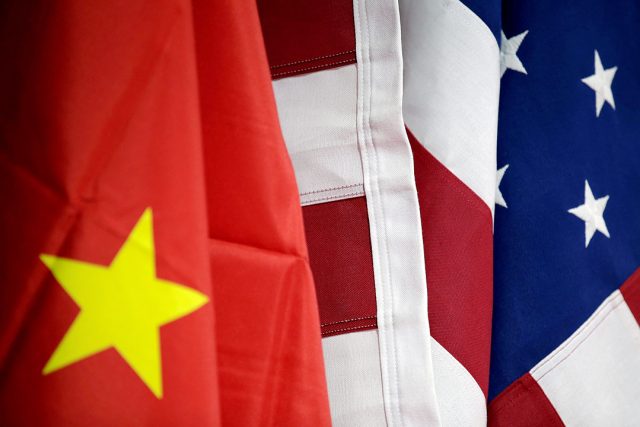
HONOLULU, Hawaii — US military commanders in the Pacific have built a software tool to predict how the Chinese government will react to US actions in the region like military sales, US-backed military activity and even congressional visits to hotspots like Taiwan.  

Deputy Secretary of Defense Kathleen Hicks was briefed on the new tool during a visit to the United States Indo-Pacific Command in Hawaii on Tuesday.  

“With the spectrum of conflict and the challenge sets spanning down into the gray zone. What you see is the need to be looking at a far broader set of indicators, weaving that together and then understanding the threat interaction,” Ms. Hicks said in an interview aboard a military jet en route to California.  

The tool calculates “strategic friction,” a defense official said. It looks at data since early 2020 and evaluates significant activities that had impacted US-Sino relations. The computer-based system will help the Pentagon predict whether certain actions will provoke an outsized Chinese reaction.  

In October, the Chinese military condemned the United States and Canada for each sending a warship through the Taiwan Strait, saying they were threatening peace and stability in the region. The incident and others like it have fueled demand for the tool, the US official said, to ensure the United States does not inadvertently upset China with its actions.  

While relations between the United States and China are already at a low point, the tool provides visibility across a variety of activities such as congressional visits to Taiwan, arms sales to allies in the region, or when several US ships sailing through the Taiwan Strait could provoke an outsized or unintended Chinese reaction.  

China claims democratically ruled Taiwan as its own territory, and has mounted repeated air force missions into Taiwan’s air defense identification zone (ADIZ) over the past year, provoking anger in Taipei.  

The new software will allow US officials to look forward at planned actions as far as four months in advance, the official said.  

Ms. Hicks is touring US bases this week while the Biden administration’s draft 2023 budget takes shape. The Department of Defense hopes to move budget dollars toward a military that can deter China and Russia. — Mike Stone/Reuters 

Manulife Investment Management (Philippines): Providing sound investing solutions to Philippine businesses

Ms. Aira Gaspar, President and Chief Executive Officer of Manulife Investment Management (Philippines)

Every institution commits to fulfill its financial goals and obligations, and one of the strategies to attain such objectives is through investments. While the concept of investing is associated with returns, it does come with risks. In an economic climate where uncertainties linger, businesses need a trusted partner to help them find the best available investment opportunities.

Manulife Investment Management and Trust Corporation, or Manulife IM (Philippines), works with institutions in the Philippines by understanding their needs and providing tailored investment solutions, harnessing the company’s global and century-long experience in investments.

“For any investor, whether it’s individual or institutional, it’s important to consider that it’s never too early to start investing,” said Aira Gaspar, President and Chief Executive Officer of Manulife IM (Philippines). “Investing helps organizations achieve many corporate goals.”

According to Gaspar, institutions invest for varied reasons like income generation, wealth creation, capital growth, and funding contractual obligations.

Appropriate investment outlets are determined by the investment objectives of an institution and its capacity and willingness to take risks, said Gaspar. In addition, the pandemic has shown that there is no single asset class that outperforms across market cycles, which underscores the value of diversification given that local bond and equity markets can move in the same direction.

“We work with our clients by recommending solutions that are aligned with their investment objectives,” Gaspar shared. “This is an essential process for us so we recommend investment solutions that will address their needs. We seek better outcomes through active asset allocation, supported by fundamental research. We also aim for deeper diversification and create tailored solutions for our clients,” she added.

Institutions may consider investment solutions offered by Manulife IM (Philippines) that cover fixed income, alpha-focused equity, and multi-asset solutions. The company’s specialist teams leverage the local expertise of over 600 investment professionals and offices across 18 geographies, as part of the Manulife Investment Management Group.

Manulife Investment Management is part of a global financial institution that has been protecting investor assets since 1887. Currently, Manulife Investment Management has US$492 billion in assets under management.

With its access to Manulife’s global investment management capabilities, Manulife IM (Philippines) has launched many first in the market investment solutions since starting its operations in 2017. The company is the first trust corporation to offer income-paying unit investment trust funds (UITFs) that invest offshore and are available in Philippine peso and US dollar share classes.

It is also the first and only trust entity that offers UITFs that invest in Asia-Pacific REITs, global REITs, global preferred securities, and India equity. This year, the company became the country’s first trust entity to offer a UITF that provides access to a global healthcare strategy.

Manulife IM (Philippines) holds its place as one of the top investment houses in the country, as recognized by leading Asia financial magazine, The Asset, at the 2021 Benchmark Research Awards.

Through Manulife iFunds, its online investment platform, Manulife IM (Philippines) has enabled its clients to conveniently manage their UITF investments, especially when the pandemic started. Manulife iFunds allows retail clients to open an account, add funds, do regular top-ups, switch and redeem their UITF investments online.

Given the needs of the current times, Manulife Investment Management will continue leveraging and maximizing digital platforms to inform clients of crucial market developments and investment options to help them grow and diversify their investment portfolio.

Manulife IM (Philippines) will also continue building its track record of launching differentiated and customized investment solutions for its clients, drawing from Manulife’s global investment capabilities.

Gaspar assured: “Manulife is well-positioned to offer our clients alternative ways of generating income through asset classes that are not as sensitive to shifts in interest rates to help them reach their financial aspirations.”


Spotlight is BusinessWorld’s sponsored section that allows advertisers to amplify their brand and connect with BusinessWorld’s audience by enabling them to publish their stories directly on the BusinessWorld Web site. For more information, send an email to online@bworldonline.com.

Join us on Viber to get more updates from BusinessWorld: https://bit.ly/3hv6bLA.

Australian states told not to ‘overreact’ amid Omicron scare

REUTERS

SYDNEY — Australian state leaders must not “panic and overreact” to predicted outbreaks of the Omicron variant of the coronavirus, Federal Treasurer Josh Frydenberg said on Thursday, as some states ease curbs despite rising cases.  

New South Wales and Victoria, home to more than half of Australia’s near 26 million people, on Wednesday rolled back most tough restrictions, including for the unvaccinated, as double-dose vaccination levels in people above 16 topped 90%.  

More relaxations have come as New South Wales, home to Sydney, on Thursday reported its biggest caseload since the pandemic began. The state reported 1,742 new cases, eclipsing a rise of 420 just a week ago. A total of 1,622 new infections have been logged in Victoria, its biggest in nearly seven weeks.  

Amid a surge in cases as social distancing rules ease, Mr. Frydenberg urged state leaders to “not panic.”  

“Don’t overreact, show compassion and common sense. Understand that we need to live with the virus … [No one] wants to go back to lockdowns,” Mr. Frydenberg told Seven News, as he looks to deliver the mid-year budget review later on Thursday.  

Prime Minister Scott Morrison is urging people to focus less on case numbers and more on hospitalization rates, which are still low, although some experts have called for restrictions to be tightened to stop the spread of the Omicron strain.  

“There is nowhere else in the world that has decided to say we have this new variant coming that seems to spread much faster, so let us relax restrictions,” epidemiologist Nancy Baxter told broadcaster ABC.  

Authorities have warned daily infections could rise to 25,000 in New South Wales by the end of January as Omicron infections creep up.  

Australia, which has so far recorded about 239,000 COVID-19 cases and 2,126 deaths, cut the waiting time for booster shots after detecting Omicron cases more than two weeks ago. — Renju Jose/Reuters 

Airlines place their bets, looking past pandemic to renew fleets

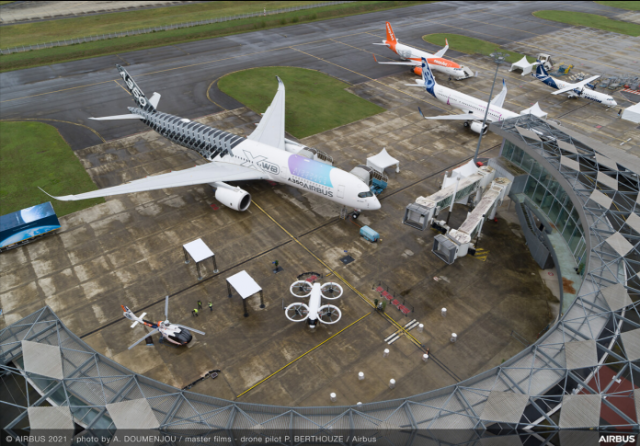
Image via Airbus

PARIS/SINGAPORE/SEATTLE — As the world hunkers down for Omicron, some investors might expect the global jet market to be withering away. Far from it.  

Business has begun humming again as airlines look to snap up the greener passenger and freight planes they believe will give them an edge in a post-pandemic recovery driven by predicted travel demand plus the relentless rise of online shopping.  

From Arizona to Amsterdam, some of the industry’s sharpest buyers are eyeing efficient jets for the second half of the decade, aiming to get ahead of the long waiting lists they fear could derail their growth and environmental targets.  

On Wednesday, Singapore Airlines kicked off a trio of major decisions, with a tentative order to replace its cargo fleet with a new A350 lightweight freighter offering from Airbus.  

Australia’s Qantas Airways on Thursday selected Airbus to replace its fleet of ageing narrowbodies in what Chief Executive Alan Joyce has described as a “one-in-a-generation” decision that involved a switch from Boeing.  

The European planemaker also looks likely to seize a narrowbody order from Dutch airline KLM as early as Thursday.  

“People are thinking about long-term fleet plans and especially about ESG [environmental, social and governance],” said Rob Morris, global head of consultancy at Ascend by Cirium.  

“It’s a case of: ‘If I don’t think about my replacement cycle now, am I going to get left behind,’” he added.  

Airbus and Boeing are sold out on benchmark medium-haul models until mid-decade after a previous, much larger order boom that was losing momentum when the pandemic wreaked havoc.  

But with such long lead times before jets can be delivered, the focus is now turning towards the second half of the decade and a move to get in the front of the queue for future capacity.  

“It’s a buyer’s market and a great time to take advantage of that,” said aviation consultant Brendan Sobie.  

The starting pistol was fired last month when two industry heavyweights, Air Lease Corp Executive Chairman Steven Udvar-Hazy and a stable of airlines led by Indigo Partners founder Bill Franke, ordered over 300 jets at the Dubai Airshow.  

‘FEEDING FRENZY’  

Some were skeptical, noting the PR value of such events. But others said the delivery dates pointed to a preemptive strike.  

“It is pretty obvious that ESG considerations are going to be critical through this cycle. There is a bit of a feeding frenzy again with people worried they will not be able to get enough slots,” Mr. Morris said.  

Not everyone is hungry for new capacity. Singapore Airlines canceled some orders for passenger jets even as it ordered its new freighters. Asia is expected to be among the slowest regions to recover.  

Nonetheless, combined gross orders for Airbus and Boeing jets have trebled to 1,439 in the first 11 months of the year, compared to the pandemic-depressed levels of a year ago, lifted also by a surge in demand for the Boeing 737 MAX after it was cleared to fly following a safety ban.  

That figure is about 200 higher than at the same point of 2018, the last year of data undisturbed by the MAX crisis.  

Whether investors who are gambling on buying new jets are proved right depends on factors that remain difficult to gauge, though. They include global travel demand, China’s tight border controls and the impact of the Omicron variant, analysts warn.  

Eamonn Brennan, director general of air traffic control agency Eurocontrol, cautioned that any delay in reopening China’s massive market beyond the fourth quarter of next year could delay the whole aviation recovery by a year.  

GREEN WAVE RISKS  

Planemakers are playing up emissions savings of 15% compared to most earlier models as the industry strives to reach a target of net zero emissions by 2050. In the near term, the industry is otherwise reliant on energy firms to make more sustainable fuel.  

Frontier Airlines CEO Barry Biffle stressed the benefits of locking in those savings soon, rather than waiting for 2050, as he took part in the Indigo Partners order in Dubai.  

A possible green order wave comes with new risks for some companies in the aviation industry, however.  

The combination of pent-up demand from the pandemic and pressure from investors and customers — especially in Europe — to curb emissions could drive the previous generation out of service sooner than expected and upset industry economics.  

That would be a payday for manufacturers who rely mainly on selling new product, but a blow for leasing and engine firms whose profits are spread over the whole life of a jet.  

Olivier Andries, head of French engine maker Safran, told reporters earlier this month that the average retirement age of single-aisle jets could fall to 20 or more years from 23 years once the dust settles from the pandemic. — Tim Hepher, Jamie Freed, and Eric M. Johnson/Reuters 

Torre Lorenzo Loyola: A home for the future

As students start to head back to hybrid classes, Torre Lorenzo Loyola makes an ideal home away from home.

In the bustling university district that is Katipunan Avenue in Quezon City, Torre Lorenzo Loyola stands tall and ready to cater to the evolving needs of Filipino homebuyers.

Carrying the hallmark quality and elegance of Torre Lorenzo Development Corporation’s (TLDC) premium residences, Torre Lorenzo Loyola features intuitively-designed studio and one-bedroom units for flexible end-use of investors.

Flexible end-use

The building features a wifi-equipped Sky Lounge.

TLDC Chief Executive Officer Tomas Lorenzo says they have built Torre Lorenzo Loyola for the hybrid work-study setup in the new normal. “We wanted to build smarter in anticipation of changing customer demands in the new normal,” underscored Lorenzo, who led the recent topping off of the project. “We have taken into account the need for conducive study and work spaces where residents will feel safe and secure,” he added.

The 35-story residential tower is located at the nexus of some of the country’s top educational institutions – such as the University of the Philippines – Diliman, Ateneo de Manila University, Miriam College, and the Center for Culinary Arts – making it a preferred address for students and their families looking to pursue top-tier tertiary education.

Located within short distances of Quezon City’s dynamic business centers, such as TechnoHub and Eastwood, Torre Lorenzo Loyola also offers young professionals a convenient address that has enviable access to daily essentials, such as groceries, banks, restaurants, wellness and medical centers, and places of worship.

Dynamic, balanced lifestyle

Torre Lorenzo Loyola has a modern, well-equipped fitness center for residents’ use.

Beyond the residential units, Torre Lorenzo Loyola was designed for a dynamic yet balanced lifestyle. A lap pool, fitness center, and adequately-spaced function halls provide secure venues for exercise and physical activity. Meanwhile, a Wi-fi-equipped sky lounge as well as study rooms help residents seamlessly blend work and study into their lives, providing conducive spaces for creativity and productivity.

Torre Lorenzo’s proactive property management ensures that these spaces are stringently maintained according to safety protocols.

Peace of mind

Torre Lorenzo has taken safety and security a notch higher with its hallmark RFID security system. Exclusive electronic access to residential units ensures proper monitoring of residents’ entry and exit, which can also be reported real-time to guardians or family members.

Residents can also call on a 24-hour emergency hotline for urgent concerns, underscoring the developer’s commitment to residents’ peace of mind.

Lorenzo emphasized that whether it’s fully remote, onsite, or a combination of both setups for work and study, Torre Lorenzo Loyola and other TLDC properties are flexible for residents’ needs. “Location, track record, and value for money – these are key considerations for any real estate investor, and we are proud that our properties check all of these boxes,” he added.


Spotlight is BusinessWorld’s sponsored section that allows advertisers to amplify their brand and connect with BusinessWorld’s audience by enabling them to publish their stories directly on the BusinessWorld Web site. For more information, send an email to online@bworldonline.com.

Join us on Viber to get more updates from BusinessWorld: https://bit.ly/3hv6bLA.