Home Blog Page 6940

Cooperating with the world to achieve a net-zero future
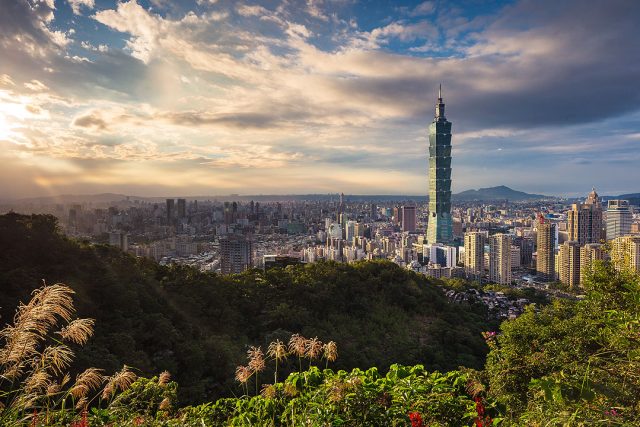
SUNSET over Taipei City — THOMAS TUCKER-UNSPLAH

AS THE COVID-19 pandemic ravages the world, carbon dioxide concentrations in the atmosphere keep setting record highs. The Working Group I contribution to the 6th Assessment Report published by the Intergovernmental Panel on Climate Change in August 2021 strongly confirmed that human activity has furthered the warming of the atmosphere, oceans, and land. The atmosphere, oceans, cryosphere, and biosphere have all undergone broad and rapid changes. The weather in 2021 has also been unstable, as can be seen by the winter storm in the US state of Texas that severely damaged the energy system and the record-setting temperatures of nearly 50 degrees Celsius on the North American west coast. By the same token, Western Europe and China have suffered from heavy rains. In addition, Taiwan experienced its worst drought in more than 50 years, which was followed by abnormally heavy rainfall. One can clearly see how climate change has profoundly affected the whole world.

With extreme weather events challenging the entire globe today, the United Nations calls on all countries to implement the Paris Agreement and take more proactive steps. As a responsible member of the international community, Taiwan strives to integrate with global efforts to mitigate climate change. President Tsai Ing-wen declared on this year’s Earth Day (April 22) that realizing net-zero emissions by 2050 is the goal of the world, including Taiwan. She also unveiled clear greenhouse gas emission targets for Taiwan. At the 33rd meeting of the National Council for Sustainable Development, Premier Su Tseng-chang announced the inclusion of the 2050 net-zero emission target in the amendment bill for the Greenhouse Gas Reduction and Management Act, demonstrating Taiwan’s determination to actively reduce carbon emissions. More and stronger management mechanisms and incentive systems will be introduced with other vital amendments so as to enhance governance efficiency, introduce carbon pricing mechanisms, and adapt strategies for climate change. Such measures aim to encourage private investment in research and development, as well as public participation in the sustainable development of Taiwan.

Taiwan has established long-term reduction targets and is planning a practical path to attain 2050 net-zero emissions. The Executive Yuan has coordinated relevant ministries and agencies, convened a working group on paths to net-zero emissions, and sought professional consultation from Academia Sinica and the Industrial Technology Research Institute. Four working groups have been formed to focus on the areas of decarbonized energy, industry and energy efficiency, green transportation and vehicle electrification, and carbon-negative technology so as to carry out interministerial technical assessments. With respect to energy and industrial policies, short-, medium-, and long-term markers for 2030, 2040, and 2050 will be set on the path toward net-zero emissions. In addition, the Environmental Protection Administration (EPA) and other relevant ministries and agencies have launched a public consultation on visions for 2050 to facilitate social dialogue on critical issues such as agricultural and forestry carbon sinks, net-zero buildings, green transportation, low-carbon industries, economic instruments, and just transformation. With diverse participation from all sectors and research and development investment in innovative technology, Taiwan will seek the most suitable climate governance path for its sustainable development.

The COVID-19 pandemic has shown that Taiwan’s industries are an extremely reliable and significant partner in the global supply chain. Countries worldwide have successively proposed new goals on net-zero emissions to bring about a net-zero economy. The Taiwan government aims to formulate a clear and comprehensive carbon reduction path and green growth strategy. Cooperation with private enterprises plays a critical role in these efforts. The Taiwan Climate Alliance, formed by eight ICT companies, has set the goal of using renewable energy in 100% of their manufacturing processes by 2050 and will lead other manufacturers in the supply chain to jointly reach this target. In addition, the Taiwan Alliance for Net Zero Emission, formed by traditional manufacturing, technology, finance, and service industries, seeks to attain net-zero carbon emissions at office sites by 2030 and at production sites by 2050. To support the climate actions of enterprises and other actors in the private sector, the Taiwan government has implemented financial mechanisms such as green financing and green bonds, thus creating a virtuous circle in the investment and industrial pursuit of sustainable development.

Taiwan, situated in a region highly vulnerable to the effects of climate change, has long been actively engaged in policy formulation, the establishment of related legal systems, energy transformation, technological research and development, industrial innovation, social transformation, and environmental sustainability in response to climate change. It hopes to actively construct a sustainable green homeland from the facets of supply, manufacturing, demand, and environmental protection. Furthermore, Taiwan will continue to share its experiences and capabilities with the international community to overcome this crisis.

The spirit of cooperating and working together remains key to accelerating and extending global efforts. Although Taiwan is not a member of the United Nations, it will always seek to be a model citizen for the international community. We will continue to work with all other countries to foster a global net-zero emissions future and a more resilient living environment for coming generations and to realize intergenerational justice.


Chang Tzi-Chin is the minister of the Environmental Protection Administration of the Republic of China (Taiwan).
Energy prices, climate spending and NGCP

The bad energy supply situation in Europe, China, and India has worsened as evidenced by continued rise in prices of key energy commodities. This column discussed this topic three weeks ago.*

HUGE SPIKE IN GAS AND COAL PRICES
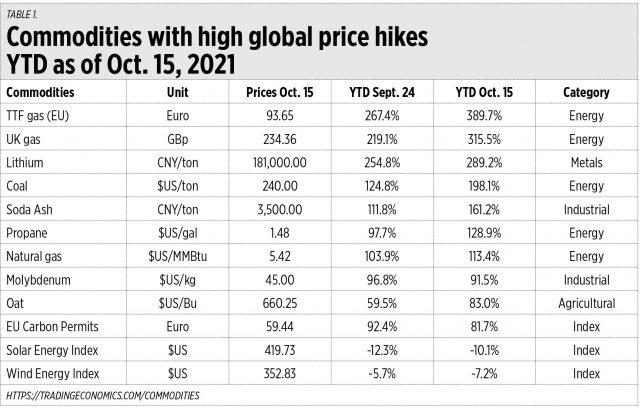
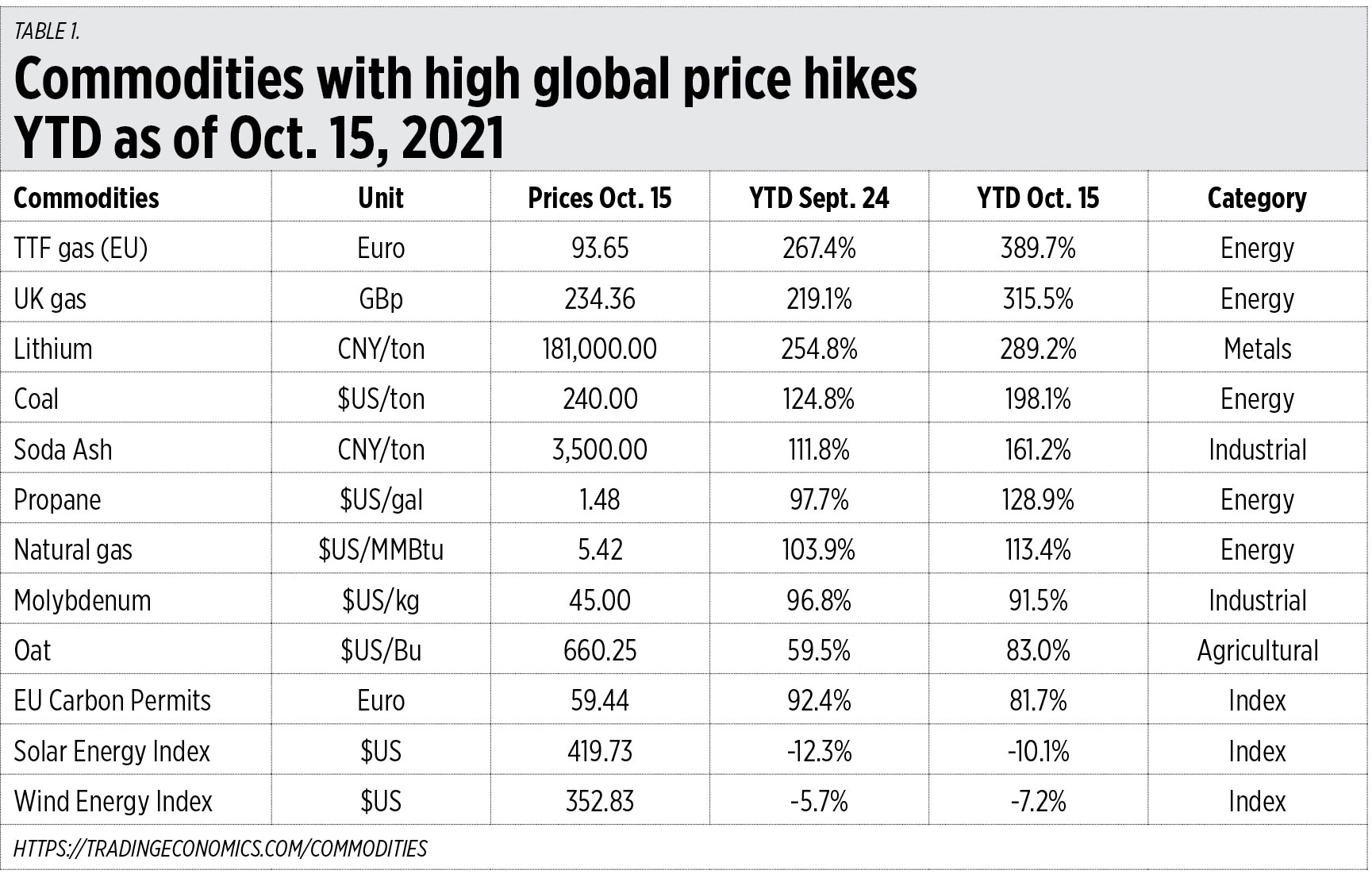
Over the last three weeks, the price of coal has nearly doubled while EU gas and UK gas prices are three to four times higher than end-2020 levels. The year to date (YTD) or from end-2020 to Sept. 24 then Oct. 15, 2021 percentage increase in prices are shown in Table 1.

Now more businesses recognize that solar-wind are non-reliable sources as shown by their continued index price contraction. And the EU carbon permits index continued to slide. The non-distortionary price of carbon permit or carbon tax should be zero.

COP26 AND CLIMATE SPENDING
The UN Climate Change Conference known as COP26 will be held from Oct. 31 to Nov. 12 in Glasgow, UK. “The Conversation” has estimated that about 25,000 people from around the world are expected to attend. They will burn lots of fossil fuels in this global travel to demand “net zero” reduction if not the death of fossil fuels for the rest of humanity who are not privileged like them.

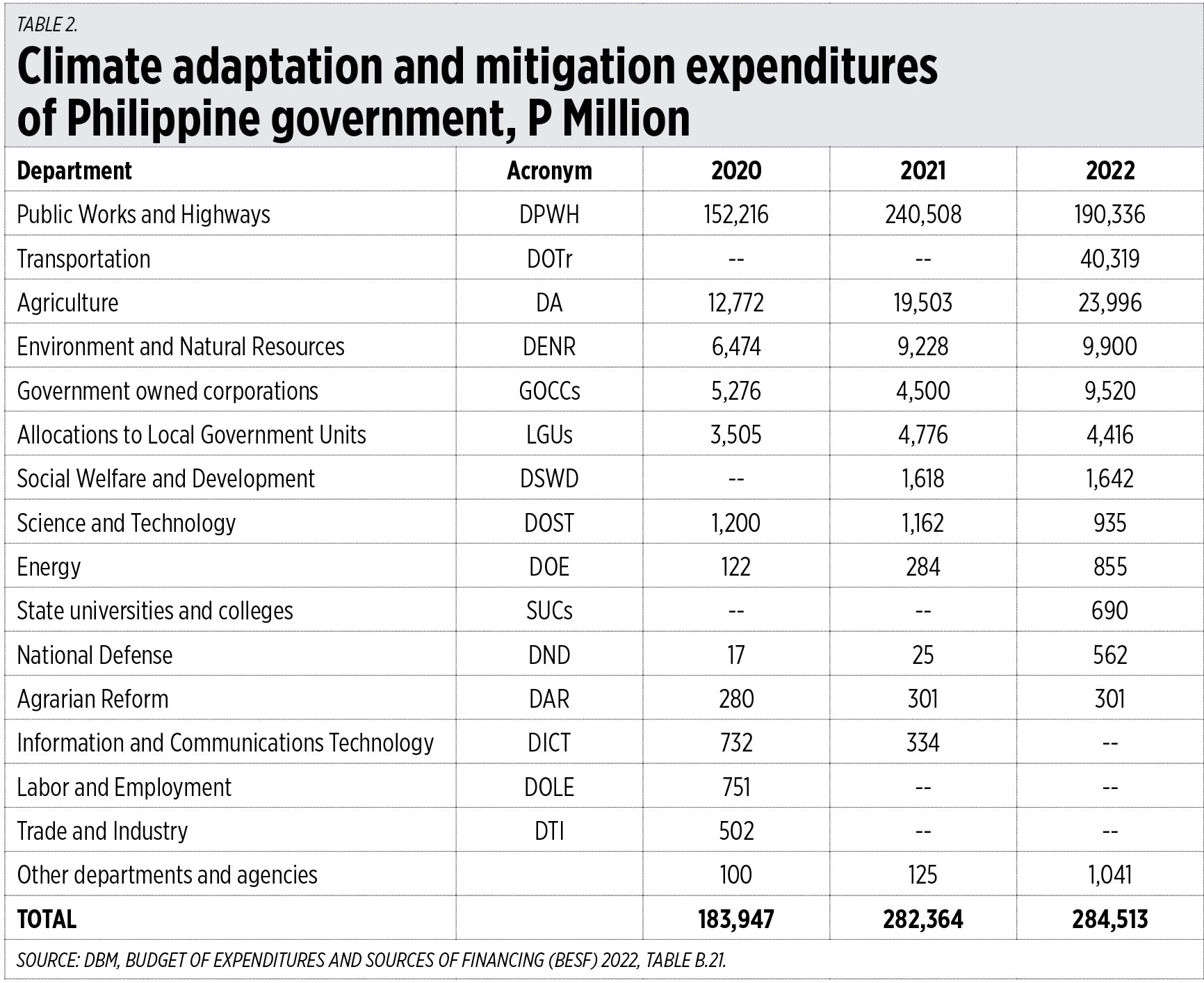
While waiting for a portion of that $100 billion a year of climate money from rich countries as agreed upon in COP20 in Paris in 2015, the Philippine government has been doing big climate spending on its own, P184 billion in 2020 and P284 billion in 2022. Many departments and agencies jumped into the climate issue because there is huge funding allocation (see Table 2).

Excluded here are climate spending of many LGUs as they have other sources of revenues aside from the transfers they get from the National Government. Also excluded here is the budget of the Climate Change Commission (CCC) with P118.7 million in 2020, P150.5 million in 2021, and a proposed P145.4 million in 2022.

Hundreds of billions of pesos yearly to fight less rain and more rain, less flood and more flood, less cold and more cold. Whatever the weather and climate, they say it is a scary “climate crisis” and just spend-spend-spend then tax-tax-tax the public.

NGCP AND TRANSMISSION ISSUES
These recent reports in BusinessWorld caught my attention:

• “Meralco rates to go up this month” (Oct. 8),

• “ADB funding for climate mitigation projects since 2011 hits $31.5 billion” (Oct. 11),

• “NGO says RE plants prone to fewer outages than coal-fired facilities” (Oct. 14),

• “NGOs say ADB climate financing targets not ambitious enough” (Oct. 17).

Report number 1 is due to higher transmission charge, higher ancillary service (AS) charges by the National Grid Corp. of the Philippines (NGCP). AS are needed most if the grid has plenty of intermittent, unstable, and weather-dependent sources like wind-solar, also ageing conventional sources like old coal, geothermal, and hydro plants.

And this belies the claim by NGOs in report No. 3. They hide the inconvenient truth that wind-solar are intermittent and will require AS 24/7. That solar is out every night, 365 nights a year, and even at day time when it is very cloudy and rainy. Wind is also out when the wind does not blow. This is what happened in Europe since around July this year — they had calm weather, the wind hardly blew, and they have so many wind farms, and the grid was edging towards blackout so they scampered for more gas and coal, even at high, prices to prevent actual blackouts.

Reports No. 2 and 3 are related to climate spending discussed above. And the ADB is bitten by the same NGOs it has accredited as partners because these NGOs will not be satisfied with $31 billion or $100 billion of climate-related lending.

Finally, a good opinion column by Barok Biraogo, “The NGCP controversy should be an election issue” in Manila Standard on Oct. 8. He noted that the only national monopoly in the country “the NGCP made hostages of both the Philippine government and the Filipino people by declaring that there will be no hikes in electricity bills if the NGCP is allowed to violate its franchise and to ignore the EPIRA… the Communist Party of China, which controls the NGCP… has been hiring Chinese nationals for its management posts. This is a violation of the constitutional provisions on alien involvement in public utilities, as well as the Anti-Dummy Law. In short, Congress has valid reasons to cancel the NGCP franchise.”

*See https://www.bworldonline.com/energy-prices-gdp-projections-the-erc-and-hydro-development/.


Bienvenido S. Oplas, Jr. is the president of Minimal Government Thinkers.

minimalgovernment@gmail.com

Richest families in Southeast Asia scout for the next unicorn

REUTERS

SOME of Southeast Asia’s old-money tycoons are boosting investment in technology startups, looking to ride a wave of surging valuations as they seek to counter the fallout of the pandemic on businesses ranging from retail to hospitality and manufacturing.

Holding companies, family investing arms and other vehicles of moguls from Thailand’s Dhanin Chearavanont to the Philippines’ Lance Gokongwei are either plowing millions of dollars directly into promising companies or setting up venture capital funds. Partnering with Silicon Valley venture capital firms is also gaining popularity.

With the flurry of investments, these traditional brick-and-mortar business empires are also transitioning to a new world of e-commerce and digitization, paving the way for fresh revenue streams after being crippled by months of lockdowns and travel restrictions. The pivot has gained even more urgency under a new crop of leaders — in some cases younger, third-generation heirs.

“The universe of family money in Southeast Asia has become very alive to what technology and tech investments are bringing because of recent startup successes,” said Vishal Harnal, managing partner of 500 Startups Southeast Asia, which was an early investor in ride-hailing giant Grab and online marketplace Carousell. “There’s a lot more family money coming in to chase that, and the pandemic’s accelerated that race.”

The conglomerates, which have helped power Southeast Asia’s economies for decades, are now facing some tough challenges as governments still battle to contain COVID-19 infections. The Asian Development Bank last month slashed the 2021 growth outlook for the region to 3.1%, saying “developing Asia remains vulnerable” to the pandemic.

CHASING UNICORNS
Although Covid-19 has decimated tourism and retail in Southeast Asia, the region is home to some of the fastest-growing internet markets. Venture backers made a record 393 deals in the first half of 2021, raising $4.4 billion by investing in startups across Southeast Asia, according to a separate research by Cento Ventures.

Among the leaders in the race is Charoen Pokphand Group Co., a 100-year-old Thai conglomerate spanning agri-food to retail and telecommunications. The group’s senior chairman is Dhanin, the head of Thailand’s wealthiest business dynasty.

Bangkok-based CP Group led a series C investment round in startup Ascend Money in September -— backed by Jack Ma’s Ant Group Co. — that spawned Thailand’s first fintech unicorn with a valuation of $1.5 billion. CP Group also partnered with Siam Commercial Bank the same month to set up a $800-million emerging-technologies venture fund, seeding it with $100 million each.

“CP Group is actively embracing innovation and exploring advanced technologies such as robotics, logistics, cloud and other digital technologies,” said Yue Jun Jiang, CP Group’s chief technology officer. “Southeast Asia is going into a golden era of transformation where corporations are upgrading with advanced technologies and new business models, and the pandemic has further accelerated digitization.”

In Indonesia, Intudo Ventures raised $115 million to close its third fund in September to focus on the region’s biggest digital economy. Investors in the fund include more than 30 Indonesian families and their conglomerates, according to the company.  

PLUG AND PLAY
Plug and Play Tech Center, a Sunnyvale, California-based early-stage investor that’s backed more than 20 unicorns including PayPal Holdings, Inc., has signed on more than a dozen partners in Southeast Asia, most of them family-controlled groups. They include Philippine construction-to-power conglomerate Aboitiz Power Corp. in the Philippines, Thailand’s CP Group and Indonesia’s Astra International.

While the surging valuations may be alluring, the groups face some risks as they embrace the tech strategy.

Early stage companies typically burn a lot of cash before showing any signs of gaining traction in their businesses. They also require a lot more support and guidance than established corporations may be willing to offer. Plus, the conglomerates also have to jostle with investors with deeper pockets and longer experience such as sovereign-wealth and venture capital funds.

But many family-owned businesses are undaunted by the challenges. Some have started pilot projects with tech startups with the aim of investing in those with promising technologies. They are seeking deals and partnerships that run the gamut from manufacturing automation to sustainable innovations, as well as fintech, health tech and electrical vehicles.

“They’re looking at what will impact their business, like the pandemic, and they need to develop new ideas,” said Shawn Dehpanah, Plug and Play’s executive vice president and Asia-Pacific head of corporate innovation and investment. “These big corporations are the pillar for speeding up innovation among startups now.”

TECH PARK
Even Thailand’s state-owned oil and gas company PTT Pcl doesn’t want to be left behind. It’s signed a partnership agreement with Plug and Play, and this month, one of its units, teamed with 500 Startups to set up a $25 million fund to invest in early-stage businesses in Thailand and Southeast Asia that can help the group expand its own footprint.

CP Group unit True Corp., Thailand’s No. 2 mobile operator, meanwhile has spent about $17 million to build Southeast Asia’s largest tech park that now houses a mix of foreign and domestic ventures, as well as the local operations of established tech giants such as Google and Mitsubishi Corp.

The tech park, which takes a leaf out of Silicon Valley’s book by outfitting the space with sports and entertainment facilities and adding venture capital pitch sessions, is set to expand next year.

Such investments will help accelerate the cycle of innovation and build tech ecosystems in developing markets like Thailand, said Vinnie Lauria, founding partner at Golden Gate Ventures in Singapore.

“I’ve been impressed meeting with the family patriarchs,” said Lauria, whose venture capital firm is also a True Digital Park partner in Bangkok. “They are asking the right questions about how to build and grow their businesses with tech.” — Bloomberg

Myanmar junta leader blames opponents for prolonging unrest  

FLOWERS hang during a nationwide flower campaign against the military coup in Yangon, Myanmar, April 2, 2021. — REUTERS

Myanmar’s junta chief on Monday said that the ruling military was committed to peace and democracy, and that the Association of Southeast Asian Nations (ASEAN) should consider the provocations and violence being carried out by its opponents.  

In his first comments since Myanmar’s neighbors decided to exclude him from an upcoming ASEAN summit over a lack of commitment to its five-point roadmap, Min Aung Hlaing reiterated the junta’s own five-stage plan to restore democracy.  

Min Aung Hlaing, who led the Feb. 1 coup that plunged Myanmar into deadly chaos, made no mention of the ASEAN decision, but suggested the outlawed National Unity Government (NUG) and armed ethnic groups were trying to sabotage the ASEAN-led peace process.  

“More violence happened due to provocations of terrorist groups,” Min Aung Hlaing said in a speech on television, where he appeared in civilian attire. “No one cares about their violence, and is only demanding we solve the issue. ASEAN should work on that.”  

ASEAN decided to invite a non-political representative from Myanmar to its Oct. 26–28 summit, in an unprecedented snub to the military leaders behind the coup against Aung San Suu Kyi’s elected government.  

Min Aung Hlaing said Myanmar wanted ASEAN’s special envoy, Erywan Yusof, to visit the country as agreed, but some of his demands were non-negotiable. He did not elaborate.  

The NUG, a broad alliance of anti-coup groups that includes members of Suu Kyi’s ousted ruling party, has backed the training and formation of militias called “People’s Defence Forces” behind attacks on security forces in several regions of the country.  

The NUG recently declared a nationwide rebellion against military rule.  

The shadow government on Monday welcomed ASEAN’s exclusion of the junta leader, but said the NUG should be the legitimate representative.  

IMPORTANT STEP 
“ASEAN excluding Min Aung Hlaing is an important step, but we request that they recognize us as the proper representative,” said its spokesman Dr. Sasa.  

However, he said the NUG would accept inviting a truly neutral alternative Myanmar representative.  

ASEAN’s decision was an unusually bold step for the consensus-driven bloc, which traditionally favors a policy of engagement and non-interference.  

Brunei, ASEAN’s current chair, issued a statement citing a lack of progress on a roadmap that the junta had agreed to with ASEAN in April.  

A spokesman for the military government at the weekend blamed “foreign intervention” for the decision.  

Myanmar has been in turmoil since the coup, which ended a decade of tentative democracy and economic reform. Thousands of its opponents have been arrested, including Ms. Suu Kyi.  

Security forces have killed more than 1,100 people, according to activists and the United Nations.  

Minutes after Min Aung Hlaing’s speech, state television announced that more than 5,600 people arrested or subject to arrest warrants over their roles in anti-coup protests would be freed in an amnesty.  

It said the decision was on humanitarian grounds, and blamed the shadow government for causing the unrest. — Reuters 

iPhone 13’s price predicted to drop 12% in six months 

By Patricia Mirasol 

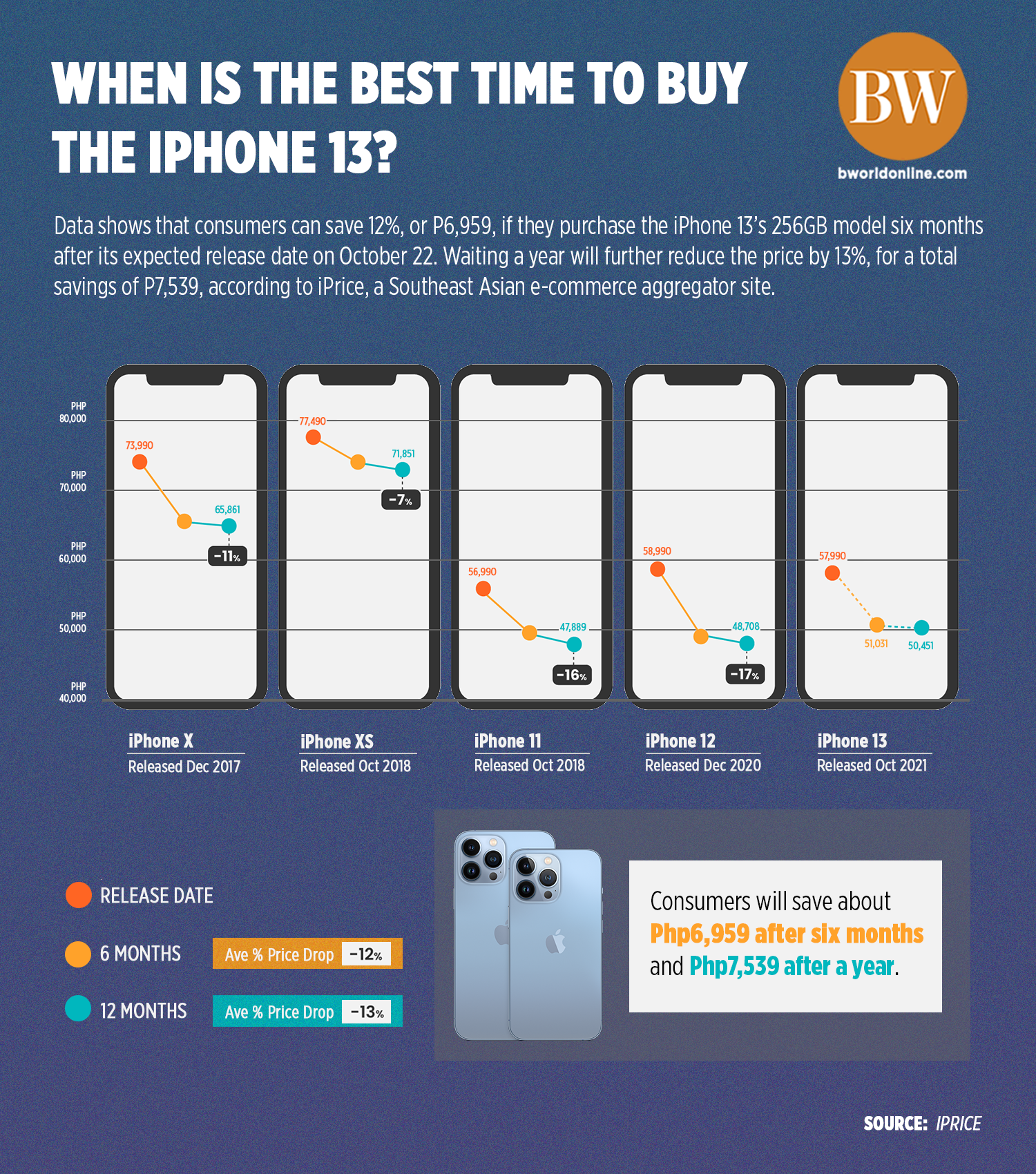
Data shows that consumers can save 12%, or P6,959, if they purchase the iPhone 13’s 256GB model six months after its expected release date on Oct. 22. Waiting a year will further reduce the price by 13%, for a total savings of P7,539, according to iPrice, a Southeast Asian e-commerce aggregator site.  

The iPhone 13 sells at P57,990 for the 256GB model. Its 128GB model, meanwhile, is P51,994, or $1,025, said MoneySuperMarket, a UK-based site that compares various deals online. 

Filipino Apple fans would need to work an average of 775 hours (or 97 days) to purchase the 128GB model, the deal comparison site also said. This makes the Philippines the least affordable country to purchase the latest iPhone. In comparison, people residing in Switzerland – a country where the average annual salary is $79,270 – will only need to work 34 hours to purchase the same model.  

The least expensive place to get the iPhone 13 is Hong Kong, where the 128GB option starts at $874.  

IPrice’s research also determined the unique selling point of iPhone 13 by using data from GSM Arena. It found that the latest iPhone’s battery (with a A15 bionic processor and an 11% larger battery), cameras (with a 12-megapixel system featuring larger sensor-shift stabilization), and screen performance (with a higher absolute color accuracy plus its ProMotion refresh rate) are exclusive to the smartphone.  

Apple’s latest iPhone has been available for pre-booking since Sept. 17. Analysts at J.P.Morgan and Credit Suisse said customers worldwide who had pre-ordered online would have to wait about two weeks for the base iPhone 13.  

Market and consumer data firm Statista said iPhone sales consistently make more than 40% of the California-based company’s overall share of sales. Sales for the phone accounted for 48.59% of Apple’s overall revenue in the third quarter of fiscal year 2021.

China’s economy stumbles on power crunch, property woes 

REUTERS

BEIJING — China’s economy hit its slowest pace of growth in a year in the third quarter, hurt by power shortages, supply chain bottlenecks and major wobbles in the property market and raising pressure on policymakers to do more to prop up the faltering recovery.  

Data released on Monday showed gross domestic product (GDP) grew 4.9% in July–September from a year earlier, the weakest clip since the third quarter of 2020 and missing forecasts.  

The world’s second-largest economy is facing several major challenges, including the China Evergrande Group debt crisis, ongoing supply chain delays and a critical electricity crunch, which sent factory output to its weakest since early 2020, when heavy coronavirus disease 2019 (COVID-19) curbs were in place.  

“The domestic economic recovery is still unstable and uneven,” said National Bureau of Statistics (NBS) spokesperson Fu Linghui at a briefing in Beijing on Monday.  

China’s economy had staged an impressive rebound from last year’s pandemic slump thanks to effective virus containment and hot overseas demand for the country’s manufactured goods. But the recovery has lost steam from the blistering 18.3% growth clocked in the first quarter of this year.  

“In response to the ugly growth numbers we expect in coming months, we think policymakers will take more steps to shore up growth, including ensuring ample liquidity in the interbank market, accelerating infrastructure development and relaxing some aspects of overall credit, and real estate policies,” said Louis Kuijs, head of Asia economics at Oxford Economics.  

A Reuters poll of analysts had expected GDP to rise 5.2% in the third quarter.  

The weak numbers sent the yuan and most Asian stock markets lower amid broader investor concerns about the world economic recovery.  

Global worries about a possible spillover of credit risk from China’s property sector into the wider economy have also intensified as major developer China Evergrande Group wrestles with more than $300 billion of debt.  

Chinese leaders, fearful that a persistent property bubble could undermine the country’s long-term ascent, are likely to maintain tough curbs on the sector even as the economy slows, but could soften some tactics as needed, policy sources and analysts said.  

NEW RISKS 
New construction starts in September slumped for a sixth straight month, NBS data showed, the longest spate of monthly declines since 2015, as cash-strapped developers reined in investment and paused projects following tighter borrowing limits.  

Meanwhile, the industrial sector has been hit by power rationing triggered by coal shortages, as well as environmental curbs on heavy polluters like steel plants and floods over the summer.  

Overall industrial output rose just 3.1% in September from a year earlier, marking the slowest growth since March 2020, during the first wave of the pandemic.  

Aluminum output declined for the fifth consecutive month and daily crude steel output hit the lowest level since 2018.  

Bucking the negative trend, retail sales grew 4.4%, faster than forecasts and the 2.5% growth in August, and the surveyed nationwide jobless rate fell from 5.1% to 4.9%.  

“Most of the [negative] factors are policy-driven… the economy is having a lot of pain points and these pain points are not going away soon because policies are here to stay, and therefore it will continue into 2022,” said Iris Pang, chief economist for Greater China at ING.  

On a quarterly basis, growth eased to 0.2% in July–September from a downwardly revised 1.2% in the second quarter.  

Premier Li Keqiang said last week that China has ample tools to cope with economic challenges despite slowing growth, and expressed confidence in hitting full-year development goals.  

On Sunday, People’s Bank of China governor Yi Gang said the economy is expected to grow 8% this year.  

“At present, China’s fiscal strength is continuously increasing, and there is still relatively big room for monetary policy,” said the NBS’s Mr. Fu.  

Still, the central bank is expected to remain cautious about monetary easing due to worries about high debt and property risks.  

Analysts polled by Reuters expect the People’s Bank of China to refrain from attempts to stimulate the economy by reducing the amount of cash banks must hold in reserve until the first quarter of 2022. — Kevin Yao and Gabriel Crossley/Reuters  

Spain’s ‘Crying Room’ seeks to banish mental health taboo

PIXABAY

MADRID — “Enter and cry,” one sign tells visitors. “I too have anxiety,” glows another notice in pink. There are phones in one corner with the names of people you can call when you are feeling down, including a psychologist.  

Welcome to La Lloreria, or the Crying Room. Anyone can drop in at the project, housed in a building in central Madrid, which aims to remove the stigma in society attached to mental health, crying, and seeking help.  

“It is a really excellent idea to visualize the mental health issue. It is stigmatized to cry in Spain as in many other countries,” said Jon Nelssom, a Swedish student who lives in the Spanish capital.  

A week ago Spanish Prime Minister Pedro Sanchez separately announced a 100-million-euro ($116 million) mental healthcare drive, which will include services such as a 24-hour suicide helpline.  

“It is not a taboo, it is a public health problem that we must talk about, make visible and act accordingly,” he said about mental illness as he launched the plan on Oct. 10, World Mental Health Day.  

In 2019, 3,671 people died from suicide in Spain, the second most common cause of death after natural causes. One in 10 adolescents has been diagnosed with a mental health condition while 5.8% of the overall population suffers from anxiety, according to government data. — Michael Gore/Reuters 

Globe Forefront 2021 focuses on new online learning modalities

In celebration of National Teachers’ Month and World Teachers’ Day, Globe held its second year of “Forefront: The National Conference on Digital Learning” last Oct. 1 via livestream on Globe Business’ and the Department of Education’s official Facebook pages. Forefront paved the way for educators and academic institutions from all over the country to come together and share their insights about new online learning modalities.

“This is a very important initiative to strengthen partnership between Globe and educational institutions as allies in technology integration and learning innovation,” said Maridol Ylanan, Head of Strategy and Marketing, Globe Business-MSME Group.

In partnership with the National Teachers’ Month Coordinating Council (NTMCC), the Department of Education (DepEd), and the Commission on Higher Education (CHED), Globe provided a platform in the form of a National Conference on Digital Learning called Forefront to allow delegates from the academe and the industry to share ideas on how to improve online learning and pedagogies.

“It recognizes our educators for their determination and hard work, and provides the ideal venue for interactions to establish productive engagements. It’s also a venue for them to present studies on online learning and pedagogies,” explained CHED executive director, Atty. Cinderella Filipinas Benitez-Jaro.

Among the delegates, 18 were chosen to present their shortlisted papers following the theme, “Transformative Online Pedagogies: Reimagining Education for a Better Tomorrow”. The topics they discussed provided insights about technology integration across the curriculum, best practices in remote learning and teaching, emerging technologies in education, e-learning initiatives, adaptation to new technologies, blended learning, online assessment, e-tutoring, and plagiarism technologies.

Globe has also partnered with different learning technologies companies like D2L Brightspace, Microsoft, Google for Education, and ClassIn. Technology leaders from these providers imparted knowledge about their platforms, offering more accessibility, safer learning environments, and interactive platforms for students, teachers, and educational institutions.

DepEd Undersecretary Tonisito M. C. Umali addressed the risks learners and educators go through, such as the safety and reliability of information students receive, and how teachers maximize the learning management system. Umali also added that the number of enrollees from both public and private in basic education has reached 26.3 up to 27 million, higher compared to last year.

For the plenary session, international guest speaker Dr. Edwige Simon provided the attendees insights about the significance of technology in pedagogy. Dr. Simon holds a PhD from the University of Colorado Boulder. She currently the Online Learning and Instructional Technology director of International Center for Language Studies located in Washington, D.C. “Teaching takes two things: it takes skills, and it takes imagination,” said Dr. Simon.

She also discussed how online learning was no longer an innovation, as several countries have already embraced it even before the pandemic. However, most of these online courses targeted adult learners since the majority of society believes schools are still the best place for children to learn. She explained this with an example of a framework seen in her presentation.

“We need new online pedagogies to meet the needs of young learners,” Dr. Simon said. “Online learning is not a silver bullet. And it’s certainly not a silver bullet for our younger learners. For online learning to be deployed effectively, it requires proper training, it requires knowing the pedagogical frameworks, and it also requires access to the right technology.”

She also discussed adept solutions to meet the need of learners and provide high quality education programs. “As always, when we’re looking at educational initiatives and programs, the priority should always be the learners,” Simon suggested.

Dr. Simon concluded her discussion with a comment on the connection between technology and pedagogy: “We need educational technology companies to collaborate closely with teachers, with educators to develop products that will meet their needs and the needs of their students. We also need new pedagogies and tools for synchronous online learning.”

The conference concluded by announcing the awardees of Globe’s Forefront Best Research Presentation. Mark Arthur Payumo Abalos, Segment Head for Education, mentioned that “Globe recognizes selected studies that aim to contribute to a body of knowledge on digital learning. The award is a form of recognition to individuals who have used their advanced knowledge and expertise in digital learning and educational technology in helping students, fellow teachers, and their institutions.” The presentations that stood out in the conference are the following:

● Achieving Best Learning Moments Through Virtual Fieldtrips by Mr. Kaybee F. De Ocampo

● Developing teachers’ Growth Mindset: The secret to student achievement? by Ms. Joanne T. Sison

● (Re)Thinking Course Content Design and Development in the Next Normal by Dr. Louie B. Dasas

● Exploring Digital Intelligence Among Generation Z Learners: Basis for a Faculty Development Program by Dr. Jayson Bergania

Globe Business-MSME Group head KD Dizon highlighted the dedication of teachers in the continuance of learning for every student despite the pandemic crisis in her message.

“In the end, we all want to see a Philippines were families’ dreams come true, businesses flourish, and the nation is admired,” Dizon said.

With joined hands, Globe continuously extends support in providing solutions that schools can easily adapt. Enhancing digital pedagogy is enhancing the quality of online education.

To access the livestream, please visit: http://www.globe.com.ph/forefront.


Spotlight is BusinessWorld’s sponsored section that allows advertisers to amplify their brand and connect with BusinessWorld’s audience by enabling them to publish their stories directly on the BusinessWorld Web site. For more information, send an email to online@bworldonline.com.

Join us on Viber to get more updates from BusinessWorld: https://bit.ly/3hv6bLA.

Merck COVID-19 pill sparks calls for access for lower income countries  

REUTERS

The plan to roll out Merck & Co.’s promising antiviral pill to treat coronavirus disease 2019 (COVID-19) risks repeating the inequities of vaccine distribution, potentially leaving the nations with the greatest need once again at the back of the line, international health groups say.  

For example, only about 5% of Africa’s population is immunized, creating an urgent need for therapeutics that could keep people out of hospitals. That compares with more than a 70% inoculation rate in most wealthy nations.  

Merck on Oct. 11 applied for US emergency clearance of the first pill for COVID-19 after it cut hospitalizations and deaths by 50% in a large clinical trial. The medicine, made with Ridgeback Biotherapeutics, could gain authorization as soon as December.  

The US drugmaker has taken the unusual pandemic step of licensing several generics of its antiviral molnupiravir before its branded version was even authorized for marketing.  

But international health officials said even that is not enough for the medicine to reach many in low- and middle-income countries in large enough numbers, while noting shortcomings and red tape among global organizations that could further slow distribution.  

Merck this year plans to produce 10 million treatment courses of the pill, which is taken twice a day for five days, and another 20 million next year.  

In addition, its licensing deals with eight Indian drugmakers will allow cheaper generic versions for 109 low- and middle-income countries including in Africa, a move international groups acknowledge is a positive concession.  

But as wealthy nations secure molnupiravir supply deals — the United States has already locked up 1.7 million courses with an option for 3.5 million more by January of 2023 at about $700 per course — concerns grow over who might be left out.  

NOT MOVING QUICKLY ENOUGH 
Merck said it has worked on the technology transfer needed to start generic manufacturing, in contrast to vaccine makers who continue to resist calls to waive patents or allow for generic versions to boost supplies.  

But a recent report prepared for the United Nations’ Access to COVID-19 Tools Accelerator program tasked with buying COVID-19 therapeutics for poor countries cited concerns that UN agencies were not moving quickly enough to secure adequate volumes of potential new treatments ahead of time, including Merck’s drug.  

Medicines Patent Pool (MPP), a United Nations-backed public health organization, has 24 companies signed up and willing to make the drug if Merck agrees to expand the licenses.  

“If you’re not in the license, you’re relying on Merck, and it looks to us that that could mean a potential supply shortfall as well as overpricing,” said Peter Maybarduk of Public Citizen, who sits on the MPP governance board. He suggested that could lead to wealthy countries outbidding poor nations for the medicine.  

It is unclear how many generic pills will be available or when. The licensed Indian manufacturers including Aurobindo Pharma, Cipla Ltd, Dr. Reddy’s Labs, Emcure Pharmaceuticals, Hetero Labs, Sun Pharmaceuticals, and Torrent Pharmaceuticals declined to provide details on production plans.  

In addition, manufacturing for low-income countries in many nations also requires World Health Organization (WHO) approval, a regulatory process that typically takes months.  

Merck said it is committed to providing timely access to its drug globally with plans for tiered pricing aligned with a country’s ability to pay. A spokesperson confirmed it is in discussions about expanding licenses for generic molnupiravir “to build sufficient global supply of quality-assured product to meet orders globally.”  

But middle-income countries will be hard pressed to negotiate against the richest nations, another MPP official said.  

The governments of Australia, South Korea, Thailand, Taiwan, Singapore and Malaysia said they already had deals or were negotiating supply contracts with Merck. The EU is considering buying the pill after Merck applies for authorization in Europe.  

The eight generic manufacturers chosen by Merck all have WHO pre-qualified facilities to allow them to supply buyers like the Global Fund, according to Paul Schaper, Merck’s executive director of global public policy. They will set their pricing and decide how much they plan to manufacture.  

“What we are anticipating and hoping for is that they will compete with each other on pricing,” Mr. Schaper said. — Francesco Guarascio and Michael Erman/Reuters  

China condemns US, Canada for sending warships through Taiwan Strait

USS Dewey. -- Image via US Navy/Flickr

BEIJING/TAIPEI — The Chinese military on Sunday condemned the United States and Canada for each sending a warship through the Taiwan Strait last week, saying they were threatening peace and stability in the region.  

China claims democratically-ruled Taiwan as its own territory, and has mounted repeated air force missions into Taiwan’s air defense identification zone (ADIZ) over the past year, provoking anger in Taipei.  

China sent around 150 aircraft into the zone over a four-day period beginning on Oct. 1 in a further heightening of tension between Beijing and Taipei that has sparked concern internationally.  

The US military said the Arleigh Burke-class guided missile destroyer USS Dewey sailed through the narrow waterway that separates Taiwan from its giant neighbor China along with the Canadian frigate HMCS Winnipeg on Thursday and Friday.  

Dewey’s and Winnipeg’s transit through the Taiwan Strait demonstrates the commitment of the United States and our allies and partners to a free and open Indo-Pacific,” it added.  

China’s People’s Liberation Army’s Eastern Theatre Command said its forces monitored the ships and “stood guard” throughout their passage.  

“The United States and Canada colluded to provoke and stir up trouble… seriously jeopardizing peace and stability of the Taiwan Strait,” it said.  

“Taiwan is part of Chinese territory. Theatre forces always maintain a high level of alert and resolutely counter all threats and provocations.”  

US Navy ships have been transiting the strait roughly monthly, to the anger of Beijing, which has accused Washington of stoking regional tensions. US allies occasionally also send ships through the strait, including Britain   

While tensions across the Taiwan Strait have risen, there has been no shooting and Chinese aircraft have not entered Taiwanese air space, concentrating their activity in the southwestern part of the ADIZ.  

While including Taiwanese territorial air space, the ADIZ encompasses a broader area that Taiwan monitors and patrols that acts to give it more time to respond to any threats.  

Taiwan’s defense ministry said on Sunday that three Chinese aircraft — two J-16 fighters and an anti-submarine aircraft — flew into the ADIZ again. — Reuters 

Unioil raffles off a brand new car, motorcycles, and fuel vouchers for its 55th Anniversary

In celebration of its 55th Anniversary, Unioil launched its Fill and Win promo last October 15, 2021 which aims to reward its customers with a chance to win a brand new Suzuki Jimny, Honda ADV 150, Yamaha YZF R-15, and fuel vouchers when they gas up at Unioil.

Every P200 purchase of Unioil Euro5 fuels entitles customers one raffle entry. Customers can easily register their raffle entries at raffle.unioil.com. The promo will be having 10 weekly draw dates (October 29, November 5, November 12, November 19, November 26, December 3, December 10, December 17, December 24, and December 29) and 1 grand draw which is scheduled on January 5, 2022.

Winners will be announced on Unioil’s official Facebook page and will also be notified through their registered mail, email, and text message.

Unioil’s success and longevity in the industry would not be possible it weren’t for the tireless support and patronage of its customers throughout the years. With this promotion, Unioil wishes to thank its customers by offering only the best – the best fuels with awesome prizes up for grab.

For more information and updates, follow Unioil on Facebook, Twitter, Instagram or visit www.unioil.com


Spotlight is BusinessWorld’s sponsored section that allows advertisers to amplify their brand and connect with BusinessWorld’s audience by enabling them to publish their stories directly on the BusinessWorld Web site. For more information, send an email to online@bworldonline.com.

Join us on Viber to get more updates from BusinessWorld: https://bit.ly/3hv6bLA.

Globe’s 917 celebrations raise over P13.4M worth of donations through Globe Rewards

Globe, together with its over 85 million subscribers, raised more than P 13.4 million worth of donations to aid health and wellness, education, environment protection, unemployment and hunger, disaster response, and child safety advocacies from the #GDayEveryday celebrations last September.

Donations were raised through Globe Rewards’ many activities that catered to its Globe and TM customers, including G Music Fest, an online concert and an intimate Q&A segment with the artists; G Legends Cup, an amateur gaming tournament for Mobile Legends players; G Super Sale, and G Chance the Raffle, and on-ground rewards programs.

Globe’s #GDayEveryday campaign celebrated the long-standing connections that Globe has built with its customers over the years. The annual 917 celebration intends to show the company’s gratitude and appreciation in a way that uplifts the lives of many ka-Globe and their communities all over the country.

Customers in Northern Luzon and Boracay were able to avail themselves of free tricycle or jeepney rides within their vicinity after donating their Rewards points to Globe partner-beneficiaries.

The G Legends Cup, through the support of Globe’s mobile and broadband customers, contributed P1 million to several partner beneficiaries including the PGH Medical Foundation, Tanging Yaman Org, the Pawsion Project and more.

Meanwhile, participation in G Chance the Raffle, G Super Sale activities, and G Music Fest contributed P2 million each to the total, including the support pledged by the local indie band I Belong to the Zoo.

“The overwhelming response to our 917 celebrations this year has been truly inspiring,” said Bianca Wong, Globe’s Head of Feel Valued Tribe. “Whether online or on-ground, we saw true bayanihan spirit among our ka-Globe and TM customers with the Rewards points they have donated to our partner beneficiaries. We will continue to create more rewarding experiences for our customers while helping uplift the communities around us.”

Wong also shared that results from the collective efforts of the campaign speaks of Filipinos’ capability to share; seeing how every customer was able to pitch in whatever donation value they can and contribute to the significant amount earned.

The beneficiaries set to receive aid include Ayala Foundation, GMA Kapuso Foundation, Hero Foundation, Hineleban Foundation, Moments with Fr. Jerry Orbos, Natasha Goulbourn Foundation (Hopeline), the Philippine Animal Welfare Society (PAWS), PGH Medical Foundation, Inc (PGH MFI), Rise Against Hunger, Rotary Foundation, Save Philippine Seas, Teach for the Philippines, Virtualahan, and Walang Iwanan Alliance.

Following the month-long festivities, Globe is encouraging customers to maintain the practice of paying it forward through their shared advocacies even outside of 917. Customers can continuously donate their Rewards points all year round via the New GlobeOne app.

As a member of the Globe Group, the company strongly supports the United Nations Sustainable Development Goals, particularly UN SDG No. 9 in building resilient infrastructure, promoting sustainable industrialization, and fostering innovation. Globe is committed to upholding the United Nations Global Compact principles and contributing to 10 United Nations Sustainable Development Goals (UN SDG).

To know more about Globe Rewards, you may visit www.globe.com.ph.


Spotlight is BusinessWorld’s sponsored section that allows advertisers to amplify their brand and connect with BusinessWorld’s audience by enabling them to publish their stories directly on the BusinessWorld Web site. For more information, send an email to online@bworldonline.com.

Join us on Viber to get more updates from BusinessWorld: https://bit.ly/3hv6bLA.