Home Blog Page 6933

Torn by a competitor’s lucrative job offer
I’ve been offered a job by an industry competitor that proposes to triple my pay and perks package. My current pay has remained fixed since 2018 and I’ve not been given any merit increase as I was told by the Human Resources (HR) department that I’m already receiving the maximum level of our salary scale. I’m still motivated by material needs but I can’t decide on the new job offer. Could you please help me explore my options? — Rising Tide.

You need to make a decision based on your understanding of your own situation, status at your current job, and possible issues that may crop up with a new employer should you accept the new job offer. Let’s focus on the last two — your current employer and what a new employer could give you.

What are the prospects that you can achieve your career and pay package goals with the current employer? Would it be possible in one to three years? What are the factors that could hasten the actualization of your dreams? How would you describe your work performance and can it somehow fast-track your promotion? How old is your boss, how long has your boss been in the company, and what are the chances you might someday step in as a replacement?

Have you received a written offer that spells out all details of your compensation package with the new employer? Why or why not? What’s the reason for the vacant position being offered to you? Did the former executive retire or accept another job elsewhere? Was your predecessor forced out? The answer could give you a good idea of what’s in store for you.

Furthermore, why are they hiring from outside? Why don’t they promote from within? Do they have a robust succession plan? Why or why not? Have you carried out a background check of your potential boss? What is the new boss’s management style? How would former employees describe that employer? These days, it has become easy to pick up clues from social media and from the pages of job hunting sites.

HR INTERVENTION
You have to understand the situation very clearly. First of all, your current company has a salary system with a maximum level for each job. This is not the fault of your current employer unless it is remiss in updating pay levels to make it competitive with the standards of your industry or other companies in your geographical area.

Therefore, a good question to explore with your HR department is to find out how updated the pay structure of the company is. One caveat though. You need to be diplomatic with HR as it may misinterpret your “investigation” and word could reach your boss. You know them better than I do.

In knowing the industry trends in pay and perks, major organizations rely on input from objective sources, like the annual industry survey of Willis Towers Watson and other similarly consulting firms that sell it for an average of one million pesos.

If buying a survey report is impossible, the other option is for your HR department to conduct a friendly benchmarking event with three or four companies within your industry or other major companies of comparable size that are located in your geographical area.

The benchmarking event could be a “kaliwaan” exercise — an on-the-spot exchange of salary information at a face-to-face meeting among HR professionals from other companies. Your company may even offer to host a lunch meeting to establish rapport and explore other opportunities.

To make it easy for other HR people to join the benchmarking event, limit it to key officers in your company and be prepared to discuss annual salary in terms of minimum, average, and maximum levels. You can also include other benefits like a car plan, housing, medical and insurance coverage, among other “golden handcuff” provisions.

This is an economical approach, although it is difficult to do given that most companies are secretive about their pay packages.

INTELLIGENT DECISION
There’s always something you can work on. Who knows? Depending on your relationship with the boss, you may opt to discuss your pay with your superior and the new offer being dangled to you. If the job offer is three times your current pay and perks, there’s also a chance it’s at par with the package that your boss is receiving. Be careful about this.

Your boss may hold all the cards in helping you make an intelligent decision. What your boss can do is important. The boss’s opinion carries the same weight as what you consider important insofar as your career is concerned. If you can’t wait long, then you have to make a decision based on your instincts. And if you’re still torn about the right decision, then I suggest you stay put at your current job.

That’s because you don’t want to make a mistake that could leave you empty-handed if you accept the offer. The new job could turn out to be worse than expected because of certain issues that you were not aware of.


Have a consulting chat with Rey Elbo on Facebook, LinkedIn, or Twitter or you can send anonymous questions to elbonomics@gmail.com or via https://reyelbo.consulting


Mobile number portability service now ready

TELECOMMUNICATIONS Connectivity, Inc. (TCI) announced on Thursday that the mobile number portability service is now available to customers.

This means that customers can now keep their mobile numbers as they transfer from one mobile service provider to another.

“We wish to announce to the Filipino people that as of today, Sept. 30, the core services of mobile number portability are now ready,” TCI General Manager Melanie A. Manuel said in a statement.

“We do expect to experience some inconveniences as we start offering the service, but we are confident that with the continued cooperation and hard work of our three partner telcos, we can say that finally, forever is here,” she added.

TCI is the company put up by the country’s dominant mobile network operators to facilitate mobile number portability.

To port within networks, customers should be able to meet the following requirements: an active SIM and the requestor is the assignee of the mobile number to be ported, no remaining balance from previous bill (for postpaid), no existing court prohibitions, and no pending transfer of ownership.

Ms. Manuel said at a recent media briefing that Smart Communications, Inc., Globe Telecom, Inc., and DITO Telecommunity Corp. had invested P120 million in the project.

The telcos selected the Florida-based Syniverse to be the mobile number portability service provider. — Arjay L. Balinbin

Mobility for the vaccinated

The Financial Executives Institute of the Philippines (FINEX) has expressed support for the proposed “bakuna bubbles” that will allow greater mobility for fully vaccinated people while protecting the unvaccinated.

FINEX President Francis Lim revealed that pockets of the economy will be allowed to open up and operate at a limited capacity in order to breathe life into the country’s battered economic system. Presidential Adviser for Entrepreneurship Joey Concepcion has been the main advocate for the use of these so-called bubbles, which he believes is the safest way to reopen the economy.

According to Concepcion, vaccination in the private sector has already reached 90% due to the business bubbles. Based on their experiences, corporate entities and government agencies such as Republic Gas Corp. (Regasco), South Pacific, Inc. (SPI), and the Authority of the Freeport Area of Bataan (AFAB) have validated Concepcion’s observation.

In the case of liquefied petroleum gas (LPG) companies Regasco and SPI, they have inoculated 70% and 99% of their respective workforces. SPI’s Human Resources Administration Department (HRAD) made this announcement on its social media platforms: “In the face of uncertainty, we have learned valuable lessons. As we continue to battle with the unseen enemies, we are encouraging everyone to get COVID-19 vaccines to protect our loved ones. Herd immunity is our best weapon against the dangers brought by the existing viruses.”

HRAD has also disseminated a series of posters reminding employees and contractual workers that they should make it a habit to wash and sanitize hands regularly; wear face masks and shields; maintain social distancing; accomplish SPI’s daily health checklist; and report any symptoms to HRAD and the Safety Department immediately.

For its part, AFAB disclosed that more than 10,000 workers in the Freeport Area of Bataan (FAB) are already fully vaccinated while some 6,000 others are waiting for their second dose to be administered at the FABakuna Center in Mariveles, Bataan.

Recently, AFAB launched the COVID Safety-Assured FAB Enterprise (SAFE) Shield to continue encouraging companies in improving their response to the challenges posed by the pandemic. The COVID SAFE Shield will be issued to companies that regularly conduct free monthly testing for workers and have at least 90% fully vaccinated workers at all times. Qualified companies may be allowed to continue their operations even during the declaration of ECQ or MECQ protocols in the freeport zone.

Dr. Noel Bernardo, AFAB’s public health consultant, shared the facts about COVID-19 vaccines and other related topics during the recent FAB Speaks webinar. “We know that vaccination is the most evidence-based and has the highest effectiveness in ending a pandemic. One of my advocacies as a doctor is to encourage people to get vaccinated. I would like vaccinated people to be our partners in encouraging other Filipinos to get vaccinated as well so we can achieve herd immunity,” he said.

During the recent FINEX general membership meeting, Lim made another pitch for mass inoculation: “In order to adapt to this new normal, it is very important that all qualified individuals get vaccinated. Although supply is still an issue, there are still many of our countrymen who resist being vaccinated. Let us help and educate each other in order for us to reach the government’s target to achieve herd immunity. As a citizen of this nation, let us do our share.”

After all, he thinks that allowing the vaccinated to assist in reviving the country’s economy also helps the hard-hit sectors get back on their feet.

INCLUSIVE DISRUPTION
The 53rd annual conference of FINEX will be held via Zoom on Oct. 4-8, 2021 with the theme of “Inclusive Disruption: Achieving A Sustainable Future in the New Frontier.”

Just like in the 2020 edition, there will be 10 virtual sessions spread over five days next week. Featured this year are leaders and experts who will discuss how they direct the disruptions in their respective fields to help push the agenda related to inclusivity, sustainability, and cohesiveness in their respective organizations as well as the ecosystem in which they operate.

Among the confirmed speakers are former New Zealand Prime Minister Helen Clark, Bangko Sentral ng Pilipinas Governor Benjamin Diokno, Ayala Corp. Chairman Jaime Augusto Zobel de Ayala, Warburg Pincus Managing Director Saurabh Agarwal, UnionBank CEO Edwin Bautista, Google Philippines Industry Manager Karissa Herrera, Royal Dutch Shell Chief Economist Mallika Ishwaran, BPI CFO Maria Theresa Marcial, IBM Institute for Business Value Director Anthony Marshall, and ADB Vice-President Bambang Susantono.


J. Albert Gamboa is the chief finance officer of Asian Center for Legal Excellence and co-chairman of the FINEX Week Committee. The opinion expressed herein does not necessarily reflect the views of these institutions and BusinessWorld.

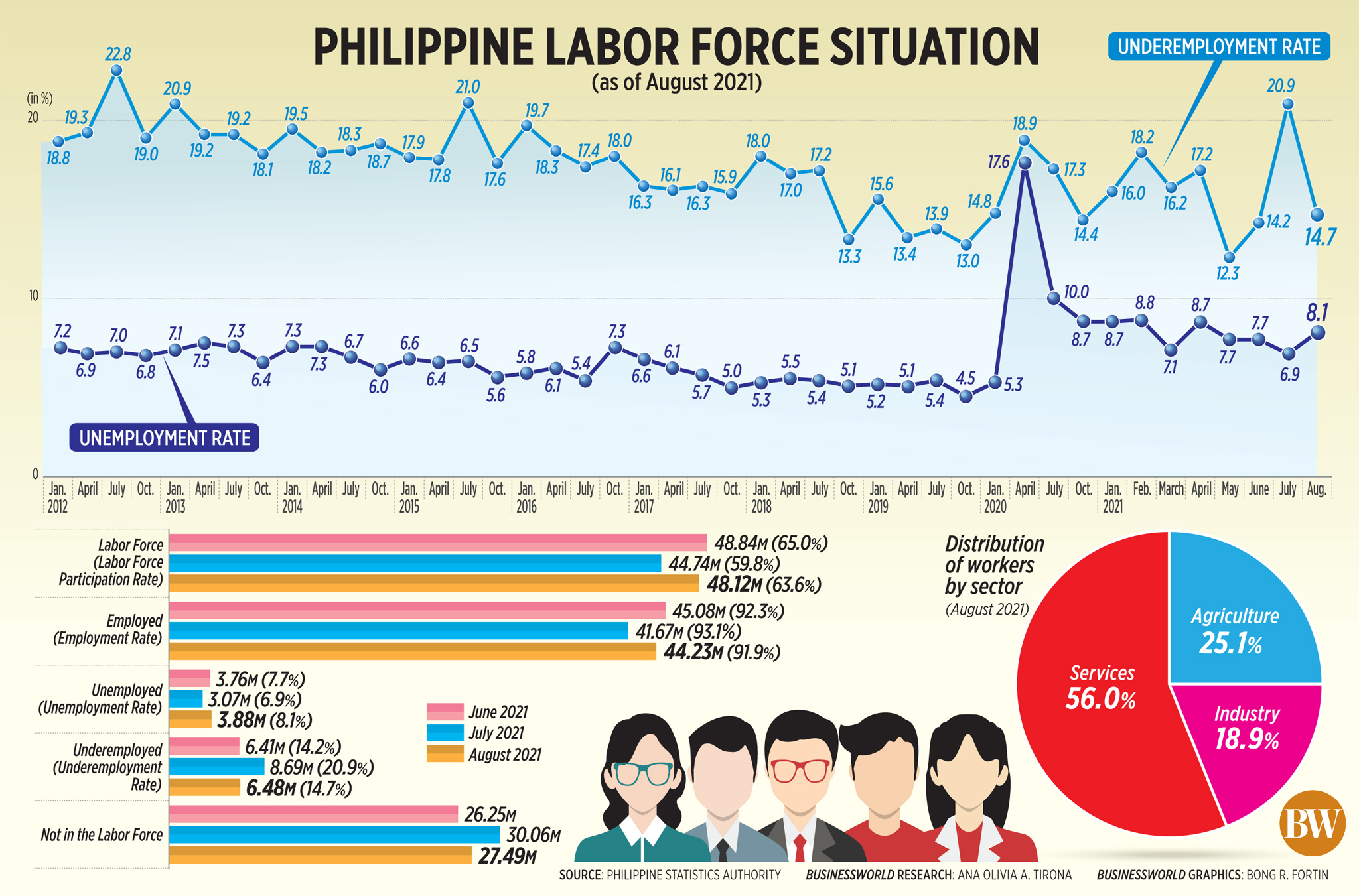
Philippine labor force situation (as of August 2021)

MORE FILIPINOS went jobless in August even as people forced to work in low-paying or low-skill jobs declined, according to the local statistics agency. Read the full story.

Philippine labor force situation (as of August 2021)

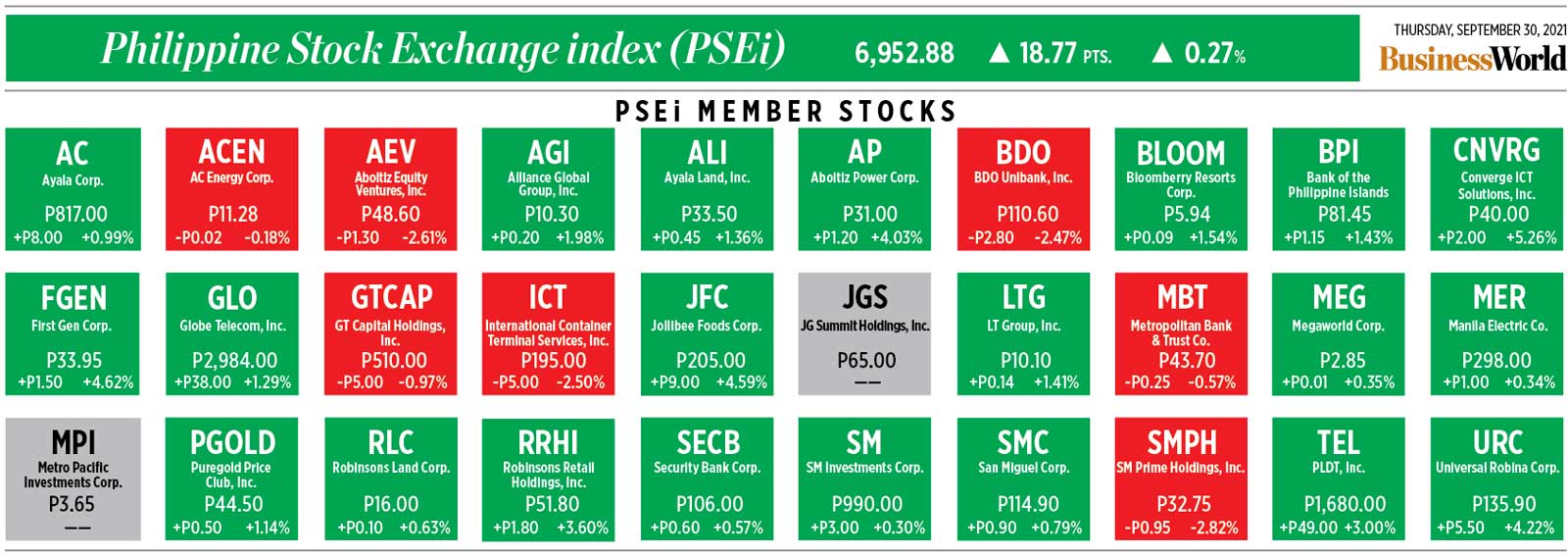
How PSEi member stocks performed — September 30, 2021

Here’s a quick glance at how PSEi stocks fared on Thursday, September 30, 2021.

DTI backs opening nearly all firms regardless of alert level

REUTERS

TRADE SECRETARY Ramon M. Lopez said he supports allowing most businesses to open regardless of alert level, restricting only their capacity levels when infections surge.

Speaking on ANC News Thursday, he said his proposed lockdown rule change would promote business continuity and avoid an “open-close-open” cycle of operations.

“The idea is really just to reduce operating capacity every time we reach alert level 4,” he said.

The alert level system determines the lockdown restrictions implemented in response to the coronavirus pandemic, with level 1 being the least strict.

Alert level 4 implemented in Metro Manila since Sept. 16 bans indoor sports events, gyms, amusement parks, and indoor entertainment venues from operating.

“Since it may be too early to change these percentages, what can be done is to recognize the Safety Seal system also in (alert level) 4, so we can add 10 percentage points,” Mr. Lopez told reporters in a Viber message.

This means that he is proposing that businesses that obtain government safety seals — stickers displayed at establishment entry points if they comply with health and safety protocols — be allowed to increase capacity by 10%.

“So the good approach is to have continuity in operations and jobs, regardless of (alert) level.  Changes only in operating capacity,” he said.

He added that there could still be a list of businesses excluded from being allowed to open, although this would be a shorter list consisting of “high risk non-essentials.”

Mr. Lopez has been supporting the resumption of some gym operations when alert level 4 is raised.

“We’ve been arguing that exercise is really one vital activity for anyone to increase immunity levels,” he told ANC. — Jenina P. Ibañez

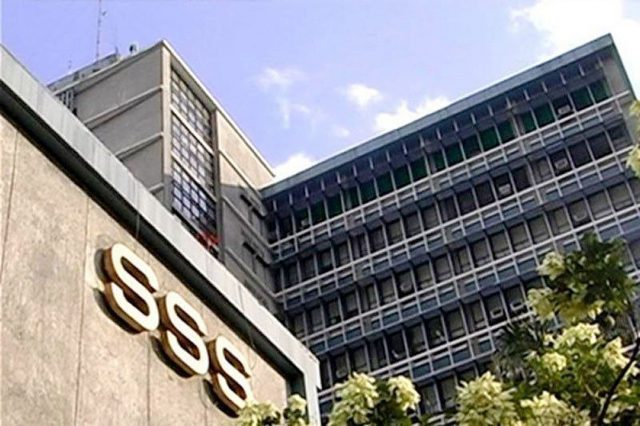
Palace studying request to defer SSS contribution hike

The Palace said Thursday that it will look into postponing a scheduled social security contribution hike, as requested by businesses and labor leaders.

“The proposal is now being studied by the Office of the President,” the President’s spokesman Herminio L. Roque, Jr. said at a televised news briefing.

“We are looking into the financial viability of the SSS (Social Security System) and the weaknesses of businesses and livelihoods amid the pandemic,” he added. “So, expect the decision to come out as soon as possible.”

Leaders of at least 10 business and labor organizations earlier signed a letter urging President Rodrigo R. Duterte to order a postponement of the SSS contribution hike.

They said that months after Mr. Duterte signed a law granting him power to defer contribution hikes for the duration of a state of calamity, “the Executive Order (EO) implementing it has yet to be issued, even as the higher SSS premium took effect in January 2021.”

“We were informed by the SSS that it is still waiting for this,” according to the groups, which include the Management Association of the Philippines, the Employers Confederation of the Philippines, the Trade Union Congress of the Philippines, Partido Manggagawa, the Federation of Free Workers. 

“Postponing the implementation of the higher SSS premium will be a critical recovery measure by helping sustain the cash flow especially of the very vulnerable MSMEs,” they said. “It will also serve as a very concrete government contribution to the National Employment Recovery Strategy (NERS) program that is implementing with the private sector.”

The letter was also signed by leaders of the Makati Business Club, the Philippine Exporters Confederation, Inc. (Philexport), the Sentro ng mga Nagkakaisa at Progresibong Manggagawa, the Philippine Chamber of Commerce and Industry, and the Federation of Filipino-Chinese Chamber of Commerce and Industry, Inc. – Kyle Aristophere T. Atienza

National Gov’t debt hits P11.6 trillion at end of August

BW FILE PHOTO

THE National Government’s outstanding debt rose to P11.64 trillion at the end of August, with the new lockdown compelling the government to borrow more from the debt market, the Bureau of the Treasury (BTr) said Thursday.

According to preliminary BTr data, the end-August debt level was up 0.28% from a month earlier. It was up 21% from a year earlier.

Since the start of the year, government debt rose 18.9% from the end of 2020. The government added P1.85 trillion in debt over the first eight months.

The debt consisted of 70.6% in domestic borrowing and 29.4% borrowed overseas.

Domestic debt at the end of August rose 1.2% from the end of July to P8.22 trillion. Year on year, the domestic debt stock grew 22.5%.

The BTr increased its borrowing last month, bringing outstanding government securities up 1.3% at P7.68 trillion.

The government also has P540 billion from the central bank, which it borrowed last year to help fund its pandemic response.

External debt fell 2% at the end of August to P3.422 trillion compared to its level at the end of July following the repayment of foreign loans worth P34.22 billion.

“The impact of both local- and third-currency fluctuations against the dollar further lowered the peso value of external obligations by P32.04 billion and P2.39 billion, respectively,” the Treasury said.

Foreign debt at the end of August rose 18% from a year earlier. It has grown 10.4% since the start of the year.

Foreign debt consisted of P1.47 trillion in loans and P2.02 trillion in government securities. The latter included P1.5 trillion in dollar notes, P241 billion in euro bonds, P138 billion in yen paper, P19 billion in yuan notes and P85 billion in peso global bonds.

The government’s overall guaranteed obligations fell 2.7% from a month earlier to P432.2 billion after it repaid P9.9 billion worth of domestic and foreign guarantees last month.

“The impact of local- and third-currency exchange rate fluctuations against the dollar further reduced external guarantees by P1.85 billion and P340 million, respectively,” the Treasury said.

Increased borrowing last month was attributed to the government’s heightened spending needs after Metro Manila and other provinces reverted to stricter lockdown measures for two weeks in August, Rizal Commercial Banking Corp. Chief Economist Michael L. Ricafort said in a note Thursday.

The government handed out P15 billion in emergency cash aid to residents of areas under strict quarantine.

Mr. Ricafort said the recent policy shift to granular lockdowns starting September could help the economy reopen and increase tax collections, which could ease the need for borrowing.

“However, this could be offset by the risk of relatively slower economic recovery from lockdowns… and any delays in the COVID-19 vaccine arrivals… (as this could) lead to relatively wider budget deficits that entail more government borrowing,” he said. — Beatrice M. Laforga

ADB, partner institutions to finance sustainable infrastructure

BW FILE PHOTO

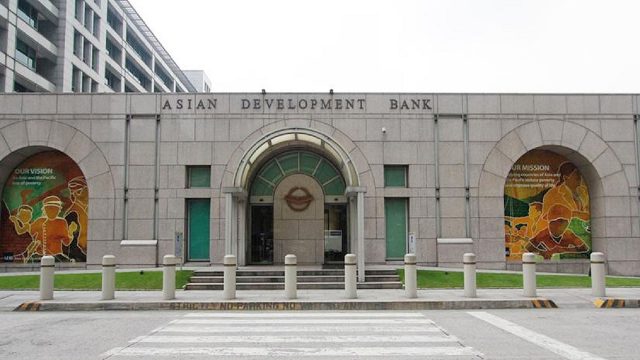
THE Asian Development Bank (ADB) said it has teamed up with other institutions to set up a debt financing facility supporting sustainable infrastructure projects in Asia, beginning with Southeast Asia.

In a statement Thursday, the bank said it partnered with HSBC Holdings, Singapore investment firm Temasek and Clifford Capital Holdings to establish the new platform that will provide concessional capital.

“The initiative aims to bridge the financing gap by helping countries develop bankable sustainable infrastructure projects based on global standards,” the ADB said.

ADB Vice-President Ahmed M. Saeed said the bank will extend technical assistance in project development and sector reforms, while working with its partners to promote the use of blended finance and other risk mitigation solutions to mobilize resources.

HSBC and Temasek will provide equity with a combined investment of up to $150 million in the initial stage, Reuters reported, while Clifford Capital Holdings will join the ADB as a strategic partner for the program.

The ADB said the facility will first focus on clean transport, renewable energy and energy storage, and water and waste management infrastructure projects, before it explores other areas like climate adaptation, agriculture and land use, and technology-led solutions.

Developing Asia needs to invest $26 trillion or $1.7 trillion each year between 2016 and 2030 to sustain high economic growth, end poverty and address climate change. Southeast Asia remains one of the most exposed regions to climate change.

It said the private sector could help plug the funding gap but 65% of infrastructure projects in the region are not considered bankable, while large upfront costs and long project preparation times are needed before these can be considered viable by creditors.

“Marginally bankable projects typically face a range of barriers to accessing private sector finance. These may include a variety of capability, policy and economic issues which can impact a project’s ability to attract commercial financing,” it said. — Beatrice M. Laforga

Golden Rice expected to be competitively priced

IRRI

GOLDEN RICE is expected to be competitively priced when it becomes available on the market, according to an official from the Philippine Rice Research Institute (PhilRice).

Reynante L. Ordonio, PhilRice Healthier Rice project lead, said in a virtual briefing Thursday that Golden Rice can be grown the same way as other rice varieties.

On July 21, the Bureau of Plant Industry issued the permit for the commercial propagation of genetically modified Golden Rice, which aims to address Vitamin A deficiencies.

“In terms of price, we are expecting that Golden Price will be competitive since it is an inbred variety. This means that Golden Rice seed can be used again for the next planting season,” Mr. Ordonio said.

According to Mr. Ordonio, Golden Rice seeds will be available in selected areas by 2022, expanding to other provinces by 2023.

Initial provinces to receive Golden Rice include Catanduanes, Qurino, Samar, Antique, Lanao del Norte, Agusan del Sur, and Maguindanao.

“Commercialization of Golden Rice is expected by 2024,” Mr. Ordonio said.

On Thursday, the Department of Agriculture (DA) inaugurated the P272-million crop biotechnology center in Science City of Muñoz, Nueva Ecija alongside the official launch of Golden Rice.

Agriculture Secretary William D. Dar said during the launch that more consumers and farmers will accept Golden Rice as long as the government continues its extension work and information campaigns.

“As Golden Rice can now be commercially planted in the Philippines, we aim to complement current interventions to address malnutrition among children and pregnant women due to Vitamin A deficiency,” Mr. Dar said.

The DA said the crop biotechnology center will focus on improving the performance, yield, and quality of commodities such as rice, corn, and coconut. It will also help in the development of high-value crops such as mango, garlic, onion, tomato, cotton, cacao, banana, and abaca. The center is funded by the US Public Law 480 program.

“The CBC aims to advance biotechnology research for development and innovation, and generate various products that will enhance the competitiveness of Philippine agriculture, and push for food security and climate change resiliency,” the DA said. — Revin Mikhael D. Ochave

Local stocks rise on hopes of gradual reopening

REUTERS

SHARES closed higher on Thursday, shrugging off data showing the increase in the number of unemployed Filipinos, on hopes that more sectors could reopen or expand their operations this month.

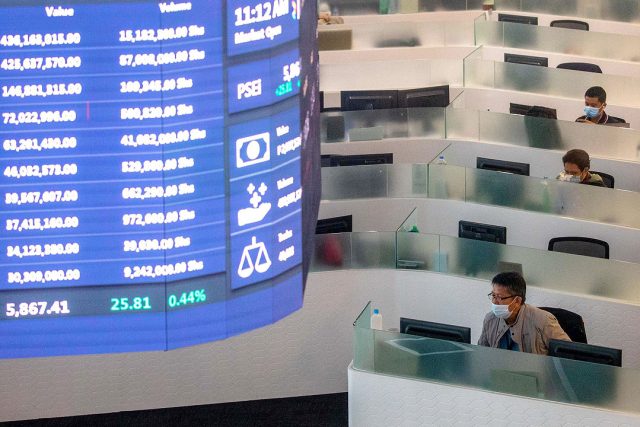
The benchmark Philippine Stock Exchange index (PSEi) rose 18.77 points or 0.27% on Thursday to close at 6,952.88, while the broader all shares index went up by 28.83 points or 0.67% to finish at 4,325.84.

“Market is looking forward to a likely gradual business reopening this month (even under the extended lockdown), which could make supply chain-related inflation transitory and lift consumption spending as well toward yearend,” First Metro Investment Corp. Head of Research Cristina S. Ulang said in a Viber message.

The government was expected to announce new restrictions for Metro Manila yesterday.

“The main index continues to hover right below the 7,000 key level, which is the inflection point for its movement in the long term,” AAA Southeast Equities, Inc. Research Head Christopher John Mangun said in an e-mail.

“Investors shrugged off the higher unemployment rate in August since we think that, this has already been priced in by the investors,” Claire T. Alviar, senior research and engagement officer at Philstocks Financial, Inc., said in a separate Viber message.

The country’s unemployment rate rose to 8.1% in August from the 6.9% in July, the Philippine Statistics Authority’s labor force survey showed. This was the highest jobless print in four months and translates to some 3.882 million unemployed Filipinos in August from 3.073 million in July.

Majority of sectoral indices ended higher on Thursday except for property, which lost 24.14 points or 0.79% to 3,024.21, and financials, which declined by 6.70 points or 0.47% to end at 1,404.49.

Meanwhile, industrials climbed 219.53 points or 2.18% to 10,256; mining and oil gained 196.02 points or 2.15% to close at 9,281.90; services went up by 18.18 points or 0.94% to 1,935.38; and holding firms rose 12.13 points or 0.17% to finish at 6,963.05.

Value turnover amounted to P9.88 billion on Thursday with 1.54 billion issues traded, inching down from the P9.88 billion with 1.99 billion shares seen on Wednesday.

Advancers beat decliners, 115 against 78, while 51 issues remain unchanged. Net foreign selling plunged to P346.7 million on Thursday from the P1.47 billion seen on Wednesday.

“Investors are deciding to be more optimistic which is resulting in higher valuations despite the sluggish pace of recovery in the fundamentals of most companies. Investors are also counting on a much stronger [fourth quarter], which also gives a lot of consideration to the beginning of the campaign season for the 2022 national elections,” AAA Southeast Equities’ Mr. Mangun said.

“We expect to see the PSEi to move in a sideways trend channel as investors and fund managers perceive current price ranges to be fairly valued considering the current internal and external risks,” he added. — Keren Concepcion G. Valmonte

Peso returns to P51:$1 level on hawkish signals from Fed official 

BW FILE PHOTO

THE PESO retreated versus the greenback on Thursday following hawkish signals from a key US central bank official. 

The local unit closed at P51 per dollar on Thursday, shedding 13.5 centavos from its P50.865 finish on Wednesday, based on data from the Bankers Association of the Philippines. 

The peso also closed at P51 per dollar on Monday and Tuesday, its weakest point in more than a year or since it ended at P51.07 on March 26, 2020. 

The local unit opened Thursday’s session stronger at P50.85 per dollar. Its weakest showing was its closing level, while its intraday best was at P50.79 versus the greenback. 

Dollars exchanged inched down to $1.104 billion on Thursday from $1.106 billion on Wednesday. 

The peso weakened due to concerns on the US Federal Reserve’s plan to cut its asset purchases following recent statements from a key official, Rizal Commercial Banking Corp. Chief Economist Michael L. Ricafort said. 

Reuters reported that Philadelphia Fed Bank President Patrick T. Harker said it will soon be time to trim the bond purchases that have supported the markets at the onset of the pandemic. 

“I am in the camp that believes it will soon be time to begin slowly and methodically — frankly, boringly — tapering our $120 billion in monthly purchases of Treasury bills and mortgage-backed securities,” Mr. Harker said in a virtual event on Wednesday. 

Mr. Harker also said that the Fed could look into raising interest rates starting late 2022 or early 2023, depending on the economy’s situation. 

Meanwhile, a trader said the contraction in China’s manufacturing activity also affected peso-dollar trading. 

Data from China’s National Bureau of Statistics showed the official manufacturing Purchasing Manager’s Index (PMI) was at 49.6 in September versus 50.1 in August. This marked the first time since February 2020 that the reading fell below the 50-mark which separates expansion from contraction. 

The decline in factory activity was attributed to wider curbs on electricity use and elevated input prices. 

For Friday, Mr. Ricafort gave a forecast range of P50.85 to P51.05 per dollar, while the trader expects the local unit to move within P50.80 to P51.10. — L.W.T. Noble with Reuters