Home Blog Page 6881

Pfizer CEO sees annual COVID-19 vaccine rather than more frequent booster shots

JERUSALEM — Pfizer, Inc. Chief Executive Albert Bourla said on Saturday that an annual coronavirus disease 2019 (COVID-19) vaccine would be preferable to more frequent booster shots in fighting the coronavirus pandemic.

Pfizer/BioNtech’s COVID-19 vaccine has shown to be effective against severe disease and death caused by the heavily-mutated Omicron variant but less effective in preventing transmission.

With cases soaring, some countries have expanded COVID-19 vaccine booster programs or shortened the gap between shots as governments scramble to shore up protection.

In an interview with Israel’s N12 News, Mr. Bourla was asked whether he sees booster shots being administered every four to five months on a regular basis.

“This will not be a good scenario. What I’m hoping (is) that we will have a vaccine that you will have to do once a year,” Mr. Bourla said.

“Once a year — it is easier to convince people to do it. It is easier for people to remember.

“So from a public health perspective, it is an ideal situation. We are looking to see if we can create a vaccine that covers Omicron and doesn’t forget the other variants and that could be a solution,” Mr. Bourla said.

Mr. Bourla has said Pfizer could be ready to file for approval for a redesigned vaccine to fight Omicron, and mass produce it, as soon as March.

Citing three studies, the US Centers for Disease Control and Prevention (CDC) said on Friday that a third dose of an mRNA vaccine is key to fighting Omicron, providing 90% protection against hospitalization.

A preliminary study published by Israel’s Sheba Medical Center on Monday found that a fourth shot increases antibodies to even higher levels than the third but was likely not enough to fend off Omicron. Nonetheless, a second booster was still advised for risk groups, Sheba said. — Reuters


New Zealand PM Ardern cancels her wedding amid new restrictions

New Zealand Prime Minister Jacinda Ardern. — REUTERS

SYDNEY — New Zealand Prime Minister Jacinda Ardern has canceled her wedding as the nation imposes new restrictions to slow the community spread of the COVID-19 Omicron variant, she told reporters on Sunday.

New Zealand will impose mask rules and limit gathering from midnight on Sunday after a cluster of nine COVID-19 Omicron cases showed community spread from the North to South islands after a wedding.

A family returned to Nelson in the South Island by plane after attending a wedding and other events in Auckland in the North Island. The family and a flight attendant tested positive.

New Zealand will move to a red setting under its COVID-19 protection framework, with more mask wearing. Indoor hospitality settings such as bars and restaurants and events like weddings will be capped at 100 people. The limit is lowered to 25 people if venues are not using vaccine passes, Ms. Ardern said.

“My wedding will not be going ahead,” she told reporters, adding she was sorry for anyone caught up in a similar scenario. Ardern had not disclosed her wedding date, but it was rumored to be imminent.

Asked by reporters how she felt about the cancellation of her wedding to longtime partner and fishing-show host Clarke Gayford, Ms. Ardern replied: “Such is life.”

She added, “I am no different to, dare I say it, thousands of other New Zealanders who have had much more devastating impacts felt by the pandemic, the most gutting of which is the inability to be with a loved one sometimes when they are gravely ill. That will far, far outstrip any sadness I experience.”

New Zealand’s borders have been shut to foreigners since March 2020. The government pushed back plans for a phased reopening from mid-January to the end of February out of concern about a potential Omicron outbreak as in neighboring Australia.

People able to travel to New Zealand under narrow exceptions must apply to stay at state-managed quarantine facilities. The government last week stopped issuing any new slots amid a surge in the number of people arriving with Omicron.

About 94% of New Zealand’s population over the age of 12 is fully vaccinated and about 56% of those eligible have had booster shots. — Reuters

Manchester City’s winning streak is over

MANCHESTER United moved into the top four of the Premier League with a last second goal from Marcus Rashford. — MANCHESTER UNITED FC

MANCHESTER, England — Manchester City’s seemingly unstoppable charge to the Premier League title slowed slightly as they were held to a 1-1 draw at Southampton on Saturday, snapping a 12-match winning sequence that had distanced their rivals.

Manchester United moved into the top four of the Premier League with a last second goal from Marcus Rashford earning them a 1-0 win over West Ham United at Old Trafford.

Everton began life after Rafa Benitez in much the same manner as they ended it — in defeat — a 1-0 loss at home to Aston Villa leaving them in 16th place, just four points above the relegation zone.

Newcastle United claimed only their second league win of the season as they beat Leeds United 1-0 away, boosting their hopes of beating the drop.

Wolverhampton Wanderers won 2-1 at Brentford where the match was halted because of a drone flying above the ground.

City was stunned after seven minutes at St. Mary’s as Kyle Walker-Peters struck his first Premier League goal, a stunning effort with the outside of his right foot.

It knocked Pep Guardiola’s side out of their silky stride and it took a 65th-minute header by Aymeric Laporte to earn them a second draw of the season against Southampton.

Kevin de Bruyne, Gabriel Jesus and Rodri all hit the woodwork for City as they extended their lead at the top to 12 points, although second-placed Liverpool have played two games less. Liverpool faces Crystal Palace on Sunday.

“I don’t understand the way people say that now, after this result, the race is open, when before it is over,” Guardiola, whose side have 57 points, said.

“I would love to be 40 points ahead of Liverpool and Chelsea, but that’s impossible. I would never expect to be in this position, with this margin.”

United’s title aspirations have long been over and their target is now finishing in the top four.

They created little against a cautious West Ham, but interim manager Ralf Rangnick threw on Rashford, Edinson Cavani and Anthony Martial and they finally got their reward.

Martial collected from Cristiano Ronaldo and fed Cavani who slipped a low ball across for Rashford to score.

The three points pushed United above West Ham and back in the top four for the first time since early October.

United has 38 points from 22 matches while the Hammers are now fifth on 37 from 23.

There was an unpleasant atmosphere at Goodison Park where visitors Aston Villa had players hit by missiles thrown from the crowd.

Emiliano Buendia scored the decisive goal, just before half time, with a header that looped over keeper Jordan Pickford and the celebrations led to a bottle being launched from the stands and hitting the Villa players.

Lucas Digne, who was booed by Everton fans on his return to Goodison Park since last week’s transfer provided the assist and he was also hit by an object, with stewards and police trying to identify the perpetrators.

Everton, who is searching for a new manager and had ex-striker Duncan Ferguson in charge on a caretaker basis, have won only once in the league since September.

Jonjo Shelvey’s 75th minute goal earned Newcastle a vital win at Leeds, moving them to 18th in the standings, one point from the safety zone, having played one game fewer than Norwich City in 17th, and seven points behind Leeds in 15th.

“It was a massive win for us,” manager Eddie Howe said. “We hope to use it as a turning point in our season, we need to.”

Wolves midfielder Ruben Neves struck in the 78th minute to seal a 2-1 win at Brentford although the main talking point was a 19-minute delay caused by a drone. Joao Moutinho’s opener had been canceled out by Brentford’s Ivan Toney.

Sunday’s big game takes place at Stamford Bridge where third-placed Chelsea faces sixth-placed Tottenham Hotspur. — Reuters

Suns beat shorthanded Pacers for sixth straight win

MIKAL Bridges scored 23 points and Bismack Biyombo added 21 points with 13 rebounds as the Phoenix Suns extended their winning streak to six games with a 113-103 victory on Saturday over the visiting Indiana Pacers.

Chris Paul added 18 points with 16 assists as the Suns won for the ninth time in their last 10 games in their return home from a perfect five-game road trip. Phoenix won on an off-night for leading scorer Devin Booker, who finished with 11 points while shooting 5 of 23 from the field.

Chris Duarte and Lance Stephenson each scored 17 points for the Pacers and Goga Bitadze added 16 with 11 rebounds, but the Pacers were not able to match the effort they delivered Thursday in a victory at Golden State.

Indiana was without starters Caris LeVert (calf), Malcolm Brogdon (Achilles) and Domantas Sabonis (ankle) for the second consecutive game. Sabonis leads the Pacers with 19.0 points per game, while Brogdon is second (18.5) and LeVert is third (18.4).

Booker was just 3 of 12 from the field in the first half with six points and did not make his second field goal until 3:28 remained before half time. — Reuters

Atletico strikes late to seal dramatic 3-2 win against Valencia

MADRID — LaLiga champions Atletico Madrid snatched victory from the jaws of defeat to win 3-2 at home against Valencia, scoring two of their goals in stoppage time.

Atletico are fourth in the standings with 36 points, 13 behind leader and city rival Real Madrid.

Valencia took advantage of slack defending by Atletico to score twice in the first half, the first goal struck by American winger Yunus Musah in the 25th minute and the second on the stroke of half time by striker Hugo Duro, on-loan from Getafe.

However, Diego Simeone’s team returned from the break much more determined and halved the deficit shortly after the hour mark when substitute Matheus Cunha scored from a rebound following a corner kick.

Argentine forward Angel Correa equalized in the first minute of stoppage time before Mario Hermoso tapped in a low cross from Cunha two minutes later to send the home fans wild and seal an exhilarating win.

“Sometimes soccer is about the will to overcome adversities. This will be a day to remember,” Simeone told reporters.

“We have to learn from our mistakes and that first half was one to learn from, but we came back as a team after the break and that was amazing to watch.”

Under fire manager Simeone, who is under intense pressure to turn around his club’s fortunes following a series of bad results, entered the arena hearing his name chanted by fans who had showed up on a freezing night at Metropolitano Stadium.

Saturday’s last-gasp win will go some way in silencing the critics and fans will be hoping that it is a sign of better things to come.

The team usually known for their rock-solid defense have leaked in 26 goals in 21 games, which is already more than the 25 they conceded in 38 games during their triumphant run to the LaLiga title last season.

In becoming an indisciplined, mistake-prone unit, they have conceded the most number of goals among the top eight in LaLiga and have also won only three of their last nine games in all competitions. — Reuters

Keys downs Badosa to make quarterfinals at Melbourne Park

MELBOURNE — Madison Keys continued her resurgence by reaching the quarterfinals of the Australian Open on Sunday with a 6-3, 6-1 win over eighth seed Paulo Badosa at Rod Laver Arena.

Former US Open finalist Keys, who has slipped to 51st in the world rankings, booked her place in the last eight of a Grand Slam for the first time since the 2019 French Open with a comprehensive win over the Spaniard.

“I’m so happy to be back, I was so sad to miss last year and this amazing crowd and this amazing court,” said Keys, who was absent from the 2021 tournament due to coronavirus disease 2019  (COVID-19).

Keys, who rose to seventh in the world in 2016, has reached the quarterfinals twice before in Melbourne, defeating Venus Williams to advance to the semis in 2015, but losing to Angelique Kerber at this stage three years later.

The American took control early on Sunday, breaking her opponent in her first service game and closing out the set in 32 minutes having put Badosa’s serve under constant pressure.

The players traded breaks in the opening two games of the second set before Keys broke Badosa twice more as the Spaniard started to struggle in the heat.

Badosa’s difficulties continued as Keys broke her for a third time in the set to advance to the next round, where she will face Barbora Krejčíková following the Czech’s win over Victoria Azarenka.

“I think she’s kind of just making tennis look easy,” Keys said of Krejčíková “It seems like no matter what people are doing, she very quickly figures it out and has another game plan to quickly implement.

“She moves forward so naturally that I feel like if you give her the opportunity, she’s just on top of you all of a sudden, then she’s at the net. Obviously, it’s not easy to pass her.”

Badosa said she was overwhelmed by Keys’ serve and the power and accuracy of her returns.

“Sometimes, I was serving 180. I had to look what the serve said because I didn’t understand how a winner came back that fast,” she said.

“I thought I was serving bad. Then I saw it was her game, that she was playing very, very good.

“Madison, she’s like that. When she has confidence, she’s very dangerous.” — Reuters

Dangerous foul

Alex Caruso still played the equivalent of one full quarter after a flagrant 2 foul was deemed to have been committed on him midway through the third period of the Bulls’ match against the Bucks the other day. The contact was far from incidental; in fact, it was downright ugly, with Grayson Allen catching his arms not once, but twice, toppling him parallel to the maple hardwood. After a while, though, he appeared none the worse for wear — save for soreness that made shooting the ball difficult, as evidenced by two missed free throws immediately thereafter and five of six field goal attempts the rest of the way.

The Bulls lost by four, but the ignominious start to a three-game road trip was reflected more by the play than the outcome. Subsequent tests revealed Caruso to be suffering from a wrist fracture that requires surgery and up to eight weeks of convalescence. To argue that he will be missed is an understatement; he’s not fifth on the team in minutes played per outing, and with starters Zach LaVine and Lonzo already out due to knee injuries, he has been expected to fill in the slack even more. Which, in a nutshell, was why head coach Billy Donovan, normally a picture of calm in his post-mortems, could not help but unload on Allen for committing the “dangerous.”

Needless to say, Bucks counterpart Mike Budenholzer thought otherwise. And, not surprisingly, reactions from those on the outside looking in likewise depended on perspective. That said, the referees did throw Allen out of the match after repeated reviews of the play, with the National Basketball Association front office looking into it further. How things go for the fourth-year guard remains to be seen, although it must be noted that any penalty, if at all, will take into consideration the intent and not the outcome.

Speaking of intent, Donovan referenced Allen’s “history” of questionable contact. Yet, it bears noting that said transgressions occurred back when he was still in college. Since being chosen 21st overall in the 2018 draft, he has had just one misstep — made during a preseason set-to in his rookie year. Don’t tell that to Caruso, though, and don’t tell that to the Bulls, who will need to navigate the next third of their schedule without a vital cog. They may be able to welcome him back in two months, but it’s small consolation under the circumstances.


Anthony L. Cuaycong has been writing Courtside since BusinessWorld introduced a Sports section in 1994. He is a consultant on strategic planning, operations and Human Resources management, corporate communications, and business development.

BSP presses Congress to approve key reforms

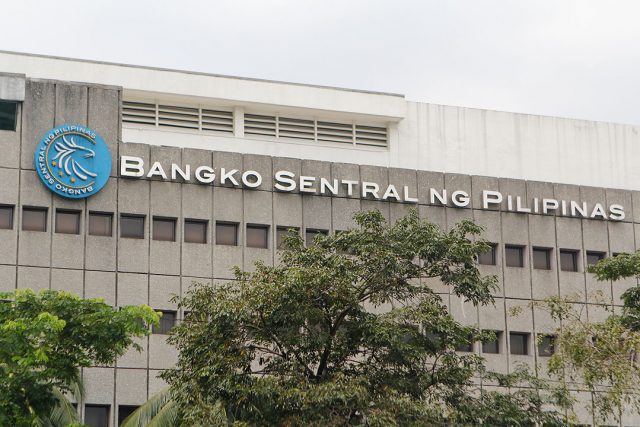
BW FILE PHOTO

The Philippine central bank is pressing Congress to approve several key reform measures, including one that would amend the bank secrecy law. 

Lawmakers are under pressure to pass the Duterte administration’s priority bills before they go on break on Feb. 4 for the election campaign. 

The Bangko Sentral ng Pilipinas (BSP) identified bills that would support the economy’s recovery after the pandemic — the Bank Deposits Secrecy Bill, the proposed Financial Products and Services Consumer Protection Act, amendments to the Agri-Agra Act, amendments to the charter of the Philippine Deposit Insurance Corporation (PDIC), and the Bank Accounts and E-wallets Regulation Bill. 

“The BSP’s legislative agenda aims to strengthen the banking system, foster financial inclusion, enhance the delivery of and address social issues related to access to financial products and services, and support economic growth,” BSP Governor Benjamin E. Diokno said in a press release Friday. 

The BSP supports the Bank Deposits Secrecy bill, saying this would equip it with necessary tools to prove fraud, irregularities, and unlawful activity. 

“The bill will also allow the BSP to holistically examine a banking institution to consider all risk areas in assessing a bank’s financial condition, risk management, and corporate governance,” BSP said. 

The measure would allow the central bank to look into accounts of bank officials and employees when there are grounds for fraud. 

The House Committee on Banks and Financial Intermediaries in February 2021 approved House Bill (HB) 8991, which amends Republic Act No. 1405 or the Secrecy of Bank Deposits Law, while there are five versions of the bill in the Senate. 

Mr. Diokno also said the proposed Financial Products and Services Consumer Protection Act is “envisioned to provide an armor of protection to all financial consumers.” House Bill 6768 have been approved on third and final reading, while six versions have been filed in the Senate. 

“It will ensure that relevant government institutions and financial regulators will be fully equipped with the legal authority to enforce prudent, responsible, and customer-centric standards of business conduct,” he added.  

Meanwhile, BSP said amendments to the Agri-Agra Reform Credit Act of 2009, which sets a percentage of a bank’s loan portfolio for agriculture, would strengthen rural development. 

The central bank wants to amend the law so that loans in the agricultural value chain – including distribution, manufacturing, processing, and manufacturing – are part of compliance with the quotas. 

House Bill 1634, which tackles the expansion of eligible agri-agra loans, was passed on third reading in March 2020, while the Senate counterpart is pending at the committee level. 

Finally, the BSP supports amendments to the charter of the Philippine Deposit Insurance Corporation (PDIC) and the Bank Accounts and E-wallets Regulation bill. 

Changes to the PDIC charter, it said, would make the state deposit insurer an attached agency of the BSP instead of the Department of Finance to promote policy coordination and streamline the financial sector’s regulatory framework. 

“To protect people from falling prey to various cybercrime schemes, the BSP also supports the legislative measure that will regulate and prohibit the use of bank accounts, e-wallets, and other financial accounts for criminal activities,” BSP said. 

“Should this measure become a law, it will strengthen consumer protection and inspire trust and confidence in the financial system.” — Jenina P. Ibañez  

StanChart hikes PHL economic growth outlook for 2022

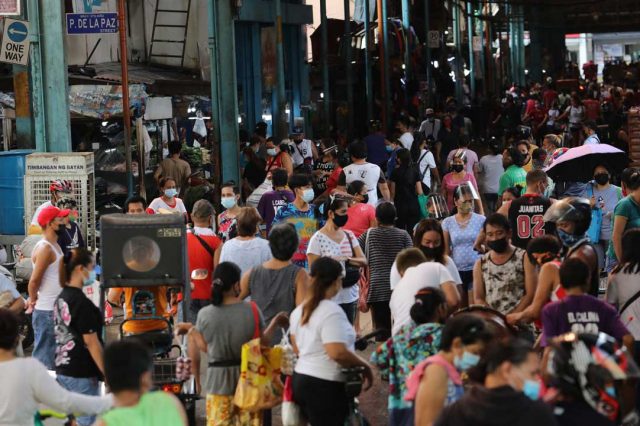
A crowded market in Marikina City is seen in this file photo. -- Photo by Michael Varcas, The Pilippine Star

By Jenina P. Ibañez, Senior Reporter  

Standard Chartered Bank raised its economic growth outlook for the Philippines this year in response to the lower base effect seen after slower-than-expected growth in 2021. 

The bank expects the Philippine gross domestic product (GDP) to expand by 7.5% in 2022, up from 6.6% set in July last year.  

“I think we originally probably expected Philippines’ recovery to be strong (last year),” Standard Chartered Bank Economist Jonathan Koh said in a virtual event on Friday. “I think the whole of ASEAN region was really hit by the Delta variant quite badly.” 

The economy grew by 7.1% in the third quarter amid lockdown restrictions declared to curb a Delta-driven surge in coronavirus disease 2019 (COVID-19) cases, slower than the 12% growth in the April to June period. 

The bank expects Philippine GDP to have grown 5% in 2021, from its previous 4.6% forecast. The government is scheduled to release fourth quarter GDP data on Jan. 27. 

“I think on the back of a lower base effect in 2021 as well as the pretty strong recovery that we saw in Q3 and probably going forward, our growth forecast was revised higher to 7.5%” 

The bank’s outlook is on the lower end of the government’s 7-9% growth target for 2022. 

Breaking down the components of GDP, Mr. Koh said only government consumption has been above pre-pandemic levels, while private consumption and investments still fall short. 

He noted that the unemployment rate has been improving. 

Preliminary data showed that unemployment eased to 6.5% in November compared with 7.4% a month earlier. In absolute terms, there were 3.159 million unemployed Filipinos in November, down from 3.504 million in October.   

This was the lowest jobless rate since the government started releasing data monthly in 2021. Including the quarterly releases, the November figure was the lowest since the 5.3% logged in January 2020. 

The unemployment rate hit a record high of 17.6% in April 2020, when the government implemented the strictest lockdown to contain the pandemic. 

“I think there’s still some room for improvement,” Mr. Koh said. 

For 2022, Mr. Koh said remittances will contribute to private consumption growth, along with investments. 

“Firstly, on the public side, clearly we see that the latest budget for 2022, there’s been a shift in focus to infrastructure spending, increasing the share of GDP for capex spending. And we have seen that in the increasing capital goods imports. And we do expect that to actually provide support on the investments front,” he said. 

“And for the private sector, we have seen that business loan growth has really brought up and has started to turn positive and pick up over the past few months. And as sentiment actually improves and as the economy reopens further, we do expect loan credit growth to continue to pick up.” 

About a fifth or P1.019 trillion of the P5-trillion national budget this year will go to capital outlays, which includes infrastructure spending. 

October wholesale price growth fastest in 7 years

PHILIPPINE STAR/ MICHAEL VARCAS

The Philippines’ wholesale price growth of general goods climbed to its highest level in seven years in October as global and domestic price pressures caught up.  

Preliminary data from the Philippine Statistics Authority (PSA) showed the general wholesale price index (GWPI) accelerated to 3.9% annually in October, picking up from 3.3% in September and 2% recorded in the same month of 2020.  

The October figure was the fastest reading in seven years or since the 4.1% print in October 2014, the statistics agency’s data showed.  

In the 10 months to October, the GWPI averaged 2.9%, higher than the 2.4% during the same period in 2020.  

The GWPI is used to monitor the wholesale trade sector and serves as a basis for price adjustments in business contracts and projects.  

The PSA said the acceleration in bulk prices during the month to the following commodities: crude materials, inedible except fuels (34.4% from 21.6% in September); mineral fuels, lubricants, and related materials (30.1% from 22.8%); chemicals including animal and vegetable oils and fats (5.2% from 4.3%); manufactured goods classified chiefly by materials (6.4% from 5.8%); and food (1.7% from 1.3%).  

However, price growth slowed down for beverages and tobacco at 4.7% in October from 5.3% in the previous month.  

Machinery and transport equipment as well as miscellaneous manufactured articles were unchanged at 1.2% and 0.5%, respectively.  

By island group, Luzon’s GWPI rose by 4.1% in October, following a 3.4% in September. It was faster than 2.2% in October 2020.  

In the Visayas, the bulk prices inched up 0.8%, from 0.4% the previous month and a rebound from the 0.1% contraction seen in October 2020.  

Growth in Mindanao’s GWPI, meanwhile, eased to 4.8% from the 4.9% in September 2021 but still higher than 1.9% growth seen a year ago.  

While lagging consumer price trends for a bit, the wholesale price index data “are finally starting to catch up as both global and domestic price pressures continue to mount,” Bank of the Philippine Islands Lead Economist Emilio S. Neri, Jr. said in a Viber message.  

Headline inflation in October slowed to three-month low of 4.6% as food costs eased. This was the third straight month that it exceeded the central bank’s 2-4% target. It was slower than the 4.8% in September but faster than 2.5% in October 2020.  

This easing headline inflation trend continued for the remaining months of 2021, bringing the full-year inflation to 4.5%, still above the 2-4% target band and missing the 4.4% central bank forecast for the year.  

“Rising cost to producers are likely to be aggravated by the weakening peso as imports continue to soar as part of the [Philippines’] reopening and recovery story in 2022,” Mr. Neri said.  

Balance of trade in goods reached a record $4.71-billion deficit in November as imports continue to outpace exports, latest preliminary data from the PSA showed.  

This brought the trade balance to a $37.92-billion shortfall from January to November last year, wider than the $22.15-billion deficit recorded in the same period in 2020. — Ana Olivia A. Tirona  

Community-managed shelter recovery pushed

PHILIPPINE COAST GUARD FACEBOOK PAGE

The government should provide shelter that speeds up recovery and ensures the safety of families affected by disasters, mostly by supporting local community-based plans, the World Bank said in its disaster recovery framework for the Philippines.

The World Bank on Friday released its Post-Disaster Shelter Recovery Policy Framework (PDSF) done in partnership with the Department of Human Settlements and Urban Development (DHSUD).

“The PDSF is an instrument to help the government and stakeholders systematically address the shortcomings in the current approaches to shelter recovery and to put in place a more predictable, efficient, and effective shelter recovery system. Over time, it also should reduce the need for major shelter recovery programs as the vulnerability of the housing stock is reduced and community resilience grows,” the World Bank said.

The framework emphasizes that shelter recovery should be community-managed, not contractor-driven.

“A priority of the PDSF is to put the Philippines on a path away from overemphasis on contractor-driven resettlement toward a more integrated, community-based approach to shelter recovery (in situ, whenever possible),” the World Bank said.

Under a community-based recovery model, there should be capacity-building and support for households to allow them to

“work collectively and to make repairs and oversee shelter reconstruction.”

The Department of Human Settlements and Urban Development (DHSUD) will coordinate with agencies that have experience in community-driven shelter, such as the Philippines Red Cross and UN Habitat.

The Philippines is the site of climate-related and other natural disasters, including tropical storms, earthquakes, and volcanic eruptions.

“It has been estimated that, on average, 300,000 shelter units are affected by disasters each year,” the World Bank said, noting an annual housing loss that worsens the country’s shelter deficit.

The World Bank said the government should promote disaster risk reduction by using building practices that mitigate hazards and reduce the risk of further damage.

The framework also promotes national and local shelter recovery plans, which means that local government units need to develop clear guidelines on funding sources.

As for funding, the framework said that shelter assistance should be targeted to households, not shelter units.

“(The framework) supports developing transparent procedures for registering affected households that ensure complete coverage while reducing duplication and free riders. Existing rules and procedures will be streamlined and strengthened.” — J.P.Ibañez

IATF raises alert levels in more areas until the end of Jan.

PHILIPPINE STAR/ MICHAEL VARCAS

THE INTER-AGENCY Task Force for the Management of Emerging Infectious Diseases (IATF) has raised the alert levels of several areas in the country beginning today until the end of the month to better manage the rising number of coronavirus cases in the country, according to the Presidential Palace.

Alert Level 4 was raised in Kalinga, Ifugao, Mt. Province, and Northern Samar, meaning establishments or activities there will only be allowed to operate at a maximum of 10% capacity for indoor venues and only for fully vaccinated individuals, and 30% capacity for outdoor venues.

It also disallows people under the age of 18 and over 65 from going outside the house. People with underlying illnesses and pregnant women are likewise prohibited from leaving their homes.

Health Undersecretary Maria Rosario S. Vergeire noted during an online news briefing that in these areas, the healthcare utilization rate has hit over 70%.

She pointed out that there are other areas in the country which have reach similar utilization rates but whose Alert Level has not been increased. This was because they also looked at the bed utilization rates and saw that these were only around 30% to 50% for COVID patients.

In comparison, the areas now under Alert Level 4 were allocating close to 80% of their beds to COVID patients and were having a difficult time coping.

ALERT LEVEL 3

Other areas have now been placed under Alert Level 3. They are: Apayao, Puerto Princesa City, Masbate, Siquijor, Zamboanga del Norte, Zamboanga Sibugay, Lanao del Norte, Davao de Oro, Davao Oriental, North Cotabato, Sarangani, Sultan Kudarat, Surigao del Norte, Basilan, and Maguindanao.

Under the third of the five alert levels, establishments will be allowed to operate or activities be undertaken at a maximum capacity of 30% for indoor venues and only for fully vaccinated individuals, and 50% capacity for outdoor venues.

“We urge all those who reside in these areas to please follow the protocols of your corresponding alert levels,” said Acting Presidential Spokesman and Cabinet Secretary Karlo Alexei B. Nograles during the same briefing.

“For our fellowmen who are under a lower alert level classification, remain assured but do not be complacent. You can help keep the number of COVID cases low in your areas by continuing to be vigilant,” he added in a mix of English and Filipino.

Mr. Nograles also reminded the public to continuously follow minimum health protocols and promote vaccination.

RULES FOR TRAVELLERS

Also on Friday, the IATF began allowing the entry of international Filipino passengers who have recently recovered from COVID-19 but who still test positive in the required pre-departure RT-PCR test.

However, the cabinet secretary said they must present their test results and show a medical certificate proving their completion of the mandatory isolation period, that says they are no longer infectious, and that they have been allowed free movement or travel.

Upon their entry into the Philippines, they will have to undergo the facility-based quarantine applicable to them based on the classification of the territory they came from and their vaccination status. — Alyssa Nicole O. Tan