Home Blog Page 6826

A new global tax regime

ORIGINAL PHOTO BY MICHAEL LONGMIRE-UNSPLASH

(Second of two parts)

This article focuses on Pillar 2 which requires the imposition of a 15% global minimum corporate tax on multinational enterprises (MNEs).

As mentioned in Part 1, this new global tax regime consisting of a two-pillar solution (Pillar 1 and 2) was agreed to by 136 members of the Organization of Economic Co-operation and Development (OECD) representing more than 90% of global GDP. It is regarded as the most radical overhaul of the global tax system which establishes a new framework for international tax, aligned with a digitalized and globalized economy. (Pillar 1 was discussed in an earlier article).

The core feature of Pillar 2 is the introduction of GloBE or Global Anti-Base Erosion which fixes a global minimum corporate tax of 15% at the overall income of a multinational, and for every jurisdiction it operates, thus putting a floor on tax competition. It requires the ultimate parent company to account for its share of its income from member companies in low tax jurisdiction and taxes that income to the 15% minimum tax.

Overall, GloBE is meant to make MNEs account for the income of its members in various jurisdiction ensuring that the 15% minimum corporate tax is paid in that country. It is a measure to protect the tax bases of countries from harmful tax practices especially with the proliferation of tax havens and the practice of “race to the bottom” lowered tax rates and super generous tax incentives.

How does this work? Multinationals with an effective tax rate below the 15% minimum global tax rate in any particular jurisdiction will be required to pay top-up tax on the income of its members that does not meet the 15% minimum tax.

For example, the parent company of an MNE operating in the Philippines may be required to pay a top-up tax if its effective tax payment in the Philippines is lower than 15%, as in the case where there is availment of generous incentives that brings the effective tax rate below 15%. There are however, carve out rules for incentives based on substantial activities in the host jurisdiction and are meant to support valid policy considerations.

The application of Pillar 2 is not all encompassing. It applies only to large and profitable businesses with global revenues exceeding €750 million (or P44 billion in global revenue), and there are exclusions and carve outs. Industries excluded may include global shipping companies, government organizations and certain fund vehicles. As of now, there are no detailed rules yet for the standard determination of the minimum corporate tax but expectedly, a set of formulaic and non-formulaic standards for global application will be soon be out.

The application of the global minimum tax consists of four principle-rules, as follows:

i. The Income Inclusion Rule (IIR), which imposes a top-up tax on a parent entity in respect of low taxed income of a constituent member entity. The IIR will require a parent company to bring profits of foreign subsidiaries into account for domestic taxation. It will apply in respect of each jurisdiction in which the MNE group has a subsidiary or branch.

Under the IIR, the effective tax rate of each jurisdiction, calculated in accordance with specific global minimum tax rules, will be determined based on all of the consolidated companies or branches in that jurisdiction. It will then be compared with the minimum effective tax rate (ETR) of at least 15%. Top-up tax will be charged to the head office to make up for any shortfall. For example, if a wholly owned subsidiary has an ETR of 12%, based on a minimum rate of 15%, top-up tax at 3% should be applied at the level of the parent on the subsidiary’s undertaxed income.

ii. The Undertaxed Payments Rule (UTPR) denies deductions or requires an adjustment to the extent the low taxed income of a branch or subsidiary is not subject to the global minimum corporate tax.

It acts as a backstop to IIR to deal with circumstances where the IIR is unable, by itself, to bring low tax jurisdictions in line with the minimum rate. This reduces the incentives for tax driven inversions where business entities relocate operations overseas to reduce their income tax burden. Companies undertaking a corporate inversion usually select a country which has a lower tax rate than their home country. The UTPR discourages this practice.

iii. The Switch-Over Rule (SOR) enables jurisdictions to overturn treaty obligations where there are commitments to exempt incomes attributable to foreign permanent establishments under tax treaties. This will enable jurisdictions to remove tax treaty hindrances and subject the income to the minimum tax.

iv. The Subject to Tax Rule (STTR) allows the source jurisdiction to impose tax on certain related-party payments below the minimum rate. The STTR is a treaty-based rule, which may override treaty benefits in existing treaties in respect of certain payments where those payments are not subject to a minimum level of tax in the recipient jurisdiction. The covered payments include interest, royalties and other payments for mobile factors such as capital, assets, or risks.

IMPLEMENTATION
At the latest by the end of 2022 an implementation framework will be developed that facilitates the coordinated implementation of the GloBE rules. Pillar 2 should be brought into law in 2022, to be effective in 2023, with the UTPR coming into effect in 2024.

The implementation framework will include safe harbors and other mechanisms to simplify administration and implementation. It will be a targeted implementation, as much as possible, to avoid compliance and administrative costs disproportionate to the objectives of the measures.

WHAT’S IN IT FOR THE COUNTRY?
Foremost, the imposition of the GloBe Rules relieves the country from the pressure of having to compete in providing excessively generous tax incentives or low taxes in what we call a “race to the bottom” practice around the region. It levels the playing field in attracting investments, staying away from the use of fiscal incentives, and focusing instead on non-fiscal attractiveness of the country. To the extent that the income is subject to a floor or a minimum tax of 15%, the incentive to shift or siphon income out of the country is lessened.

Even post CREATE, our corporate tax of 25% remain the highest in the region which could make us still a favorite victim of harmful tax practices, base erosion and profit shifting, by multinational enterprises operating in the country. With the 15% global minimum tax, the incentive to shift income to low tax jurisdictions, would be lessened, though not totally eradicated unless we bring our corporate tax rate to 15%.

Will it remove tax competition? Not totally, but it will be lessened. There would still be variations in tax rules in each jurisdiction and MNEs would still try to maximize those differences for higher group profits.

In terms of revenue, it is expected that the Philippines, considered as a high-tax jurisdiction (thus, a natural favorite victim of harmful tax practices) compared to its peers, will earn additional revenues from these measures. Based on OECD estimate, corporate tax avoidance costs countries anywhere from $100 billion to $240 billion annually, which is equivalent to 4% to 10% of global corporate income tax revenues.

WHAT TO WATCH OUT FOR
The proposals open up as many questions as they answer. The four components of Pillar 2 are complex and have a significant overlap and it is far from clear how they will interact. One thing is clear — it will be difficult for developing countries like the Philippines to implement and achieve the Pillar 2 objective of a minimum effective tax.

The two-pillar Blueprint acknowledges that both the Subject to Tax Rule and the Switch-Over Rule would require changes to existing bilateral tax treaties which could be implemented through bilateral negotiations and amendments to individual treaties or more efficiently through a multilateral instrument.

While the Income Inclusion Rule and the Undertaxed Payment Rule could be implemented through changes to domestic law, this by itself is also a difficult and long process. Also, further guidance and mechanisms should be developed to ensure there is a consistent, comprehensive and coherent application of these rules, and there is effective overall coordination of their application across multiple jurisdictions. This would require a comprehensive model legislation and guidance together with a multilateral review process.

The practical application of Pillar 2 would also be a challenge for developing countries since it will be difficult to determine the tax base for global income. The Pillar 2 consultation document suggests the use of consolidated financial statements but that pose its own challenges. Which accounting principles (GGAP) should be used? How will local tax authorities audit consolidated financial statements? How will the change in tax base bring changes to accounting principles?

It is not without a doubt whether the Blueprint will be enforced — they will certainly be enforced in the years to come.

Where we end up remains to be seen but businesses and governments should keep abreast of developments to enable them to remain agile, review their operations and prepare for adoption. This is the main objective of this article.

This article reflects the personal opinion of the author and does not reflect the official stand of the Management Association of the Philippines or MAP.


Benedicta “Dick” Du-Baladad is chair of the MAP Tax Committee, and founding partner and CEO of Du-Baladad and Associates (BDB Law).

map.map@map.org.ph

dick.du-baladad@bdblaw.com.ph

Marketing a presidential candidate

I liken a presidential campaign to a total marketing effort, the electorate to the market, the candidate to a brand, public opinion polls to market surveys, platform speaking to product display, hugging voters and shaking their hands to personal selling, and assistance in cash or kind to barangay projects to sales promotions. Advertising a candidate is exactly the same as advertising a brand.

Some candidates, like many senior executives from other management disciplines, think that advertising is all there is to marketing, or that advertising and marketing are synonymous. That is why the air lanes are now saturated with advertisements of candidates for public office when the official campaign period for next year’s elections has not yet started. The advertisements were crafted to sound and look like information spiels or “infomercials” to avoid running into conflict with election laws.

In product advertising, the No. 1 principle of effective advertising is that the advertisement must be consumer oriented, meaning it should say what benefit the consumer would derive from the product. A commercial that says Brand X is the No. 1 in the market would not be as good as one that says Brand X provides the benefit you seek, like “it makes your breath smell fresh.” Principle No. 2 says the benefit promised should be the most important among the several benefits that can be derived from the product, as in “It’s so juicy, you need no sauce.”

Similarly, advertisements of political candidates should be voter oriented. The advertisement should address the need of the voter, his interest, and his values. It must tell the voter that he or she is the best person among the candidates that can meet the need of the voter. The difference between product advertising and presidential candidate advertising is that the former addresses only a segment of the entire market, like only the young or the budget-conscious, whereas the latter must convince the entire voting population, young and old, rich and poor, educated or school dropout, to get elected.

Principle No. 2 of effective advertising (the advertisement should be focused on only one benefit, the most important one to the target market segment) may not be applicable in presidential candidate advertising. The advertisement should convince every socio-economic and geographical sub-group of the entire voting population. Necessarily, the candidate has to make multiple promises.

The advertiser of a product determines through market surveys what benefits the target consumers are looking for in a product and which benefit among many is the most important to them. Some political candidates are oblivious to the importance or necessity of a methodical study of the electorate first before they launch their campaign. They do not believe in surveys. They cannot comprehend how the opinions of 1,200 people could reflect the sentiments of millions of voters scattered all over the archipelago.

Many presidential candidates have been guilty of this serious blunder. During the presidential race of 2016, candidate Miriam Defensor Santiago asked, “Why is it that when universities are asked, from left to right, it is Miriam? But if commercial surveys are conducted, I’m not even there.”

She was “disheartened” by the national surveys. She had fared very well in campus surveys and mock polls. That was because her public appearances were mostly in universities. She did not speak to other sectors of Philippine society — the farmers in Central Luzon, the factory workers in the Calabarzon area, the fishermen in Southern Mindanao, and many more. The people the major pollsters, Social Weather Stations and Pulse Asia, interviewed represented all the sub-groups of the voting population. Collectively they reflect the sentiments of the entire electorate.

In the 2010 presidential derby, candidate Gilbert Teodoro, who did not believe in public opinion polling or surveys, used “Talino at Tiyaga” (Talent and Perseverance) as his campaign watchword. Had his campaign staff studied the electorate, they would have learned that it was riling at the immoderate greed, unconscionable extravagance, and brazen abuse of power of the Gloria Arroyo presidency. Teodoro was Arroyo’s own choice to succeed her. Benigno Aquino III, who ran with the slogan “Kung walang corrupt, walang mahirap” (If there is no corruption, there is no poverty) was elected president. Teodoro placed fourth in the race.

Candidate Richard Gordon, another detractor of surveys, adopted the campaign theme “Pagbabago” (Change). If he had a survey done on how the voters saw him, he probably would have found out that in the eyes of the voters he was a “trapo” the pejorative sense of traditional politician. In the view of the voters, the “trapo” Gordon could not possibly bring about change. He garnered only a half million votes or 1.4% of the total cast for presidential candidates.

Only Mayor Isko Moreno and former Senator Bong Bong Marcos among the presidential candidates have so far produced and aired advertisements. Panfilo Lacson’s launch of his candidacy was obviously filmed in a recording studio under the direction of a professional group. It seems it was meant to be a TV commercial. There are only copies of the live coverage of the launch of the candidacies for president of Vice-President Leni Robredo and Senator Manny Pacquiao.

Isko Moreno’s infomercial says he will be a healing president who will work with anybody to achieve national reconciliation and reconstruction based on justice and the rule of law. Bong Bong Marcos promises in his advertisement new life, to provide jobs, find new sources of energy, and develop agriculture. Ping Lacson’s video has the message “Enough is enough, right the wrong, this is the beginning.”

It seems to me that those promises were not based on formal research, for if they were, there would be some uniformity in the promises of the candidates. Scientific surveys, though conducted by different professional research groups, would have come up with the same findings: what the voters’ need, interest, and values are. The candidates’ promises would have been their responses to those issues. The responses therefore should have been similar.

The advertisements should vary only on the qualifications of the candidates for the presidency. The advertisements of Moreno, Marcos, and Lacson do differ in that regard. Isko projects the image of one who raised himself by his own effort from the depth of poverty to mayor of the premier city of the country. He can raise the great majority of the Filipino people from poverty to comfortable life. Bong Bong, as the son of the president who was supposed to have been responsible for the golden age of the Philippines, can bring about good times again. Ping, once the chief of the national police, can bring peace and order in the country.

The next reports of pollsters Social Weather Stations and Pulse Asia will tell us if those images and promises work.


Oscar P. Lagman, Jr. had worked for a public opinion/market research firm, an advertising agency, and taught marketing subjects in three graduate schools.

Vaccination plateau and rising cases, Part 2

This is a follow-up to this column’s Sept. 20 piece (https://www.bworldonline.com/vaccination-plateau-and-rising-cases/), and also complements a BusinessWorld Nation story yesterday about the government plan of compulsory vaccination, “Analysts warn against compulsory vaccination” (https://www.bworldonline.com/analysts-warn-against-compulsory-vaccination/).

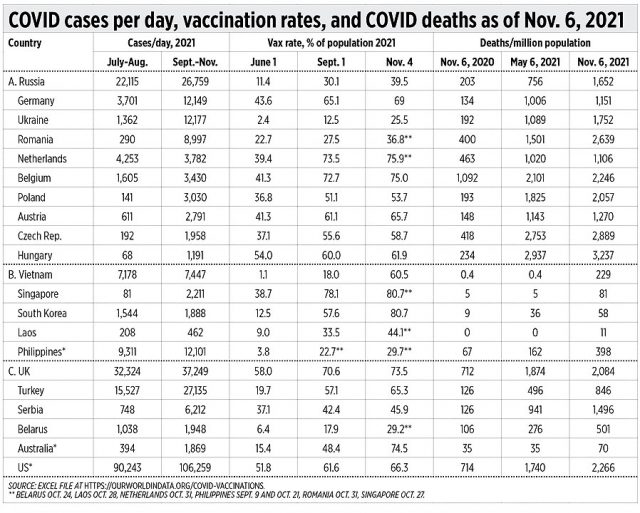
I downloaded the excel file in Our World in Data (OWID). The numbers can be complicated because there are many columns and indicators, plus there are many rows per country representing daily data from February 2020 until Nov. 6, 2021 for many countries and regional blocs.

To simplify the presentation, I took the average of daily cases from July to November this year, the vaccination rate since June 1, and COVID-19 deaths per million population at six months apart from Nov. 6, 2020.

Countries in group A are Europeans with recent rises in cases, group B are Asians also with rising cases, group C are those somehow flattening their lines but at a high number of cases. Other countries in Europe with rising cases — Armenia, Estonia, Finland, Greece, Georgia, Bulgaria, Croatia, Denmark, Ireland, Lithuania, Moldova, Norway, Slovakia, Slovenia, few others — I did not include to simplify the table that accompanies this article. Three countries with recent declining cases but which I included anyway are the Philippines, Australia, and the US, indicated by an asterisk. The reason? Well, I often read about them.

Several important trends are showing. One, there is a “vaccination plateau” once 50% or more of the population in a country has been inoculated. Examples are Germany, the Netherlands, Belgium, Poland, Austria, Hungary.

Two, a rise in cases and infections from July-August to September-Nov. 6 coincided with the rise in vaccination rates. In particular, the Czech Republic, Hungary, Poland, Romania, Serbia, Australia, Singapore.

It is possible that a vaccination plateau is due to hesitance by the public upon seeing or reading about more infections and deaths with new variants and the vaccines seem unable to protect the inoculated.

Three, rich countries with high vaccination rates of 60%+ of the population like Germany, Belgium, and the UK continue to suffer high rates of infections and high death rates, more than 1,000 COVID-19 deaths per million population (CDPMP).

Take also Singapore with a vaccination rate of 80%, which went from only five CDPMP until May 6 this year, then it jumped to 81 six months later. And more dramatic is Vietnam with a vaccination rate of 60% this month. From only 0.4 CDPMP last May, it hopped to 229 this month. It is an “outlier” case and can elicit vaccine hesitancy among the non-inoculated people yet.

Four, the Philippines has a relatively high rate in Asia of nearly 400 CDPMP, but compared to many countries in Europe, and North and South America, ours would look mild and does not warrant all the draconian policies like long curfew hours, mandatory face shields in public, closure of many provincial boundaries, shut down of many businesses for 19 months.

So, the planned mandatory or compulsory vaccination by the government, whether by legislation or by discrimination, plus local governments pressuring the residents to be inoculated is not justified. For three reasons:

One, government has zero discrimination in tax collections, it just imposes the taxes and fees on everyone, vaxxed or unvaxxed. Two, people’s right to mobility does not come from government but from our being humans, guaranteed by the Constitution’s Bill of Rights and not just from any RA or EO. Three, even vaxxed people can infect and be infected, the virus does not discriminate between the vaxxed and unvaxxed.

Let vaccination be voluntary and not mandatory. Many people believe in the protective power of vaccines, others still have lots of questions and reservations about COVID vaccines. Both should be respected to avoid unnecessary divisiveness in society.

Other ways to ensure that cases and infections can be controlled without forced inoculation are: 1.) give away human-grade ivermectin and immune-boosting vitamins and supplements as prophylaxis to elderly, those with comorbidities; 2.) have an early treatment protocol for those with symptoms and recovering at home, avoiding hospitalization; and, 3.) have faith in natural immunity from natural infection, which is more long-lasting than vax immunity that wanes in a few months and would need regular booster shots. I am in my late 50s, never had a flu or pneumonia vaccination in my entire life, not once, and I am fine. Natural immunity works perfectly with me.

The Concerned Doctors and Citizens of the Philippines (CDC PH) is planning to hold a COVID Summit with some doctor friends from the US plus locals, later this month.


Bienvenido S. Oplas, Jr. is the president of Minimal Government Thinkers.

inimalgovernment@gmail.com

People’s movements and the 2022 presidential election

Elections are the means to s/elect leaders and governments. Through elections, we can hold leaders and governments accountable, although with varying success. Through elections, we can ensure that citizens’ interests and needs are represented in the democratic process, although not all the time. Most importantly, through elections, we get to exercise our right to vote, although we don’t always choose to cast our vote.

In elections, political parties usually play an important role. A political party fields its candidates during elections and ensures its candidates win. Winning an election means seizing power in government. The more seats a party wins, the greater its control over the decision-making processes.

In the Philippines, political parties have never reached a 100% mark for relevance and utility during elections. Where votes are based on candidates and personalities rather than party principles or ideals and social issues, political parties fail in aggregating all interests and socializing voters to choose on the basis of party platform, ideology, or performance.

What’s wrong with Philippine political parties?

Since time immemorial, party switching has been common in the Philippines. Politicians gravitating towards the party in power has been a constant feature of every new administration. Is the presidential system of government at fault? Or is the lack of a sense of party loyalty among politicians the culprit?

What may be worse than disloyal party members are the self-serving if not self-aggrandizing party members. Writing about weak intra-party solidarity that marked the Philippine party system, Carl Lande (1967) highlighted “rebel candidates” among “party members who, having failed in their efforts to have themselves named their parties’ ‘official candidates,’ run for office nonetheless despite the fact that by doing so, they will assure the defeat of their party’s official candidates at what otherwise might have been certain victories.” Weak intra-party solidarity is also evidenced by “the existence of many arrangements for mutual help between candidates of opposite parties running for different offices.” This isn’t déjà vu, right?

If not for the political resources that a political party may provide, why would one covet a political party’s support during elections when political party membership is not even one of the qualifications for an elective office? Even the party-list system is not spared from unscrupulous politicians who run under the system without a track record of advocacy for that sector one supposedly belongs to and represents.

Without conventional politics — that is, political parties effectively steering the public space — and with the stakes much higher in the upcoming 2022 presidential election, the alternative is for citizens to resort to creating “people’s movements” at various levels of engagement where they can create popular spaces and mobilize support for their candidates. Through these people’s movements, citizens hope to expand the political space available to them and bring in the concerns of everyday life. If they succeed, they can vote into office the candidates that they support; and if they get luckier, they can initiate changes in the structures of power and domination that operate in the society.

But would people’s movements win the 2022 election?

Like social movements, people’s movements present themselves as symbols of resistance to the dominant powers and to those seeking a path back to power. These movements offer a ray of hope to hold the government (past and present) accountable for its excesses and consequently, initiate process of social change.

Unlike “old” social movements, which were more class-based and sought power, these people’s movements demand democracy. By organizing themselves as people’s movements, they provide an alternative to the conventional form of politics which is more of a power game.

But can these people’s movements win the 2022 election? Hopefully, yes! But only if these people’s movements can keep their popular spaces growing in terms of both numbers and significance and attain the scale and strength capable to persuade voters on the election day in May 2022. But how will they do this? Let’s leave it to the seasoned political strategists to worry about this question.

Instead, we ask, “What can the people’s movements, which have mushroomed in recent months, learn and adopt from social movements?”

Nardini, et al. (2020) in their article, “Together We Rise: How Social Movements Succeed,” offered a framework for explaining how social movements succeed in creating social change. Building on the findings of extant research on social movements, Crutchfield’s (2018) research at the Global Social Enterprise Initiative at Georgetown University, and insights from consumer psychology, Nardini et al.’s framework highlights broad actions leading to the success of a social movement. The framework provides some useful tips for people’s movement organizing for the 2022 presidential election.

1. Build grassroots momentum. Grassroots organizing or local groups targeting and organizing their own communities is the key. Success is likely if individuals and groups at the grassroots level are enjoined and connected both to the movement’s cause and through relationships between the movement’s members.

2. Connect people to the movement. Individuals and groups must feel that they belong and that they matter to the movement. The more they feel connected, the stronger their group engagement is, and hence, makes them feel powerful. When they feel powerful, they are more likely to develop stronger, more certain convictions; and when they do, they become more committed to the cause.

3. Connect movement members to each other. This is important for developing a collective sense of purpose and identity, thereby reinforcing shared views and positions. Regardless of where it takes place, either in shared, physical spaces or in online platforms, what matters more is that these connections must happen.

4. Build a network to connect the movement. To reach optimal efficiency, strong ties (i.e., with close friends) and weak ties (i.e., with distant acquaintances) between members must be nurtured for information and resource sharing. Through the networks and the brokers of the networks, bystanders may be transformed into upstanders.

5. Be leaderful. Movements need not be leader-led or leaderless. Instead, develop a hybrid form of leadership in which multiple leaders and organizations collaborate through coalition building, power-sharing, decentralized grassroots organizing, and collective decision making.

6. Win hearts and minds. Anger, frustration, feeling of exclusion are not the sole motivators for individuals and groups to join a movement. Combining negative emotional cues with positive messages such as strength, inspiration, helping messages can mobilize broader social support and spur action. Moreover, use the power of storytelling — the sharing of a movement’s narrative. More importantly, as movements navigate between physical spaces and online platforms, work toward winning hearts and mind through online connections and interactions in lieu of offline interactions.

How are the people’s movements faring in engaging in these actions? How far are we from winning the 2022 election?


Diana J. Mendoza, PhD is an assistant professor of Political Science at the Ateneo de Manila University.

Global coronavirus infections reach 250 million

GLOBAL COVID-19 (coronavirus disease 2019) cases surpassed 250 million on Monday as some countries in eastern Europe experience record outbreaks, even as the Delta variant surge eases and many countries resume trade and tourism.

The daily average number of cases has fallen by 36% over the past three months, according to a Reuters analysis, but the virus is still infecting 50 million people every 90 days due to the highly transmissible Delta variant.

By contrast, it took nearly a year to record the first 50 million COVID-19 cases.

Health experts are optimistic that many nations have put the worst of the pandemic behind them thanks to vaccines and natural exposure, although they caution that colder weather and upcoming holiday gatherings could increase cases.

“We think between now and the end of 2022, this is the point where we get control over this virus … where we can significantly reduce severe disease and death,” Maria Van Kerkhove, an epidemiologist leading the World Health Organisation, told Reuters on Nov. 3.

Infections are still rising in 55 out of 240 countries, with Russia, Ukraine and Greece at or near record levels of reported cases since the pandemic started two years ago, according to a Reuters analysis.

Eastern Europe has among the lowest vaccination rates in the region. More than half of all new infections reported worldwide were from countries in Europe, with a million new infections about every four days, according to the analysis.

Several Russian regions said this week they could impose additional restrictions or extend a workplace shutdown as the country witnesses record deaths due to the disease.

VACCINE INEQUITY
Several world leaders have stressed the need to improve vaccination programs around the world, particularly in the least wealthy countries.

More than half the world’s population has yet to receive a single dose of a COVID-19 vaccine, according to Our World in Data, a figure that drops to less than 5% in low-income countries.

Improving vaccine access will be on the agenda of meetings of the powerful Asia-Pacific trade group APEC, hosted virtually by New Zealand this week.

APEC members, which include Russia, China and the United States, pledged at a special meeting in June to expand sharing and manufacturing of COVID-19 vaccines and lift trade barriers for medicines.

“Together we are continuing to keep supply chains functioning and are supporting trade in critical medical supplies — including testing kits, PPE and now vaccines,” New Zealand Prime Minister Jacinda Ardern said on Monday.

The World Health Organization (WHO) and other aid groups last month appealed to leaders of the world’s 20 biggest economies to fund a $23.4 billion plan to bring COVID-19 vaccines, tests, and drugs to poorer countries in the next 12 months. — Reuters

Business leaders optimistic climate conference’s visions will become reality

REUTERS
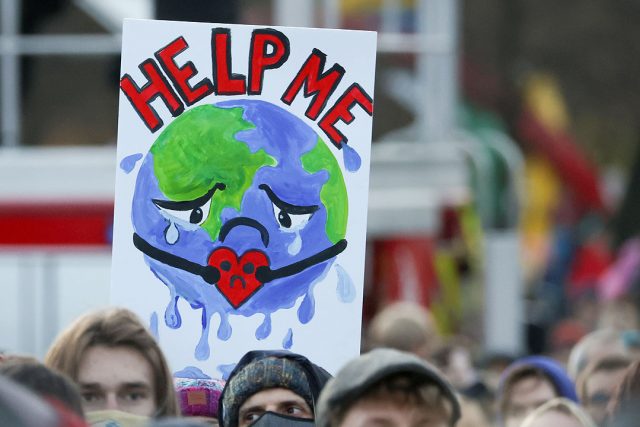
People carry a sign as they attend a protest during the UN Climate Change Conference (COP26), in Glasgow, Scotland, Britain, Nov. 6, 2021. — REUTERS/YVES HERMAN

BOSTON/GLASGOW — A week into the United Nations’ high-profile climate conference in Glasgow, executives and financial analysts said they are optimistic the talks will lead to changes needed for business to play a bigger role in tackling climate change.

The business observers pointed to several steps by world leaders they said could boost sustainable business and investing efforts to mobilize the vast sums of money needed to wean the world off fossil fuels.

These include a pledge by financial firms with a combined $130 trillion in assets to focus on climate change, the creation of a global standards body to scrutinize corporate climate claims, and pledges to cut methane emissions and to save forests.

Jefferies managing director Aniket Shah said although many of the steps lacked specific promises, they showed a global consensus forming to tackle climate change that will make it easier for private investors and governments to put in money and effort.

“There’s a certain power of signaling of intentions that can’t be dismissed here,” Mr.  Shah said. He pointed to the goal set by India’s prime minister, Narenda Modi, on Nov. 1 for his country to reach net-zero carbon emissions by 2070.

Although two decades later than what scientists say is needed to avert catastrophic climate impacts, the pledge was still more than India had offered in the past and could be accelerated with financial help from developed nations, Mr. Shah said.

Peter Lacy, Accenture’s global sustainability services lead, said that for investors and companies, the most significant step at the conference was the creation on Nov. 3 of the International Sustainability Standards Board, meant to create a baseline for companies to describe their climate impact.

Mr. Lacy called it a seismic moment for business and in line with the hopes of CEOs Accenture surveyed ahead of the conference.

The new board, Mr. Lacy said, “will give investors and stakeholders a much better understanding of related risks and opportunities and help guide the allocation of the huge amount of capital needed as the world transitions to net zero,” he said via email.

LACK OF DETAIL
Critics say many of the conference’s key announcements lack specifics and give companies wiggle room. For instance, banks, insurers and investors pledged to work to cut emissions to net zero by 2050, but each entity has made its own net zero commitments “with potential overlap across initiatives, institutions and assets,” according to the group’s press statement.

Leslie Samuelrich, media of Green Century Capital Management in Boston, which does not invest in fossil fuel stocks, said she worries bigger investment firms signed on so quickly to carbon-reduction pledges advertised at Glasgow because their terms might be too easy to meet.

“The speed with which some have adopted this makes me cautious,” Ms. Samuelrich said.

But other finance executives say it is inevitable businesses will move to cut emissions under pressure from customers and to chase profits. Mark Haefele, chief investment officer for UBS Global Wealth Management, said promising areas include renewable energy, transport and batteries.

Diplomats now must hash out rules on areas like constructing markets to help businesses price carbon and how much developed nations will help poorer ones.

On a call with journalists on Friday, David Waskow, a director of the nonprofit World Resources Institute, said he was more optimistic than a week ago that the attendees would strike meaningful agreements.

“I think the beginning of the week actually did lay good groundwork. Not to say everything is all rosy,” he said. — Reuters

Malaysia fails in its bid to forfeit luxury goods seized from former PM

REUTERS

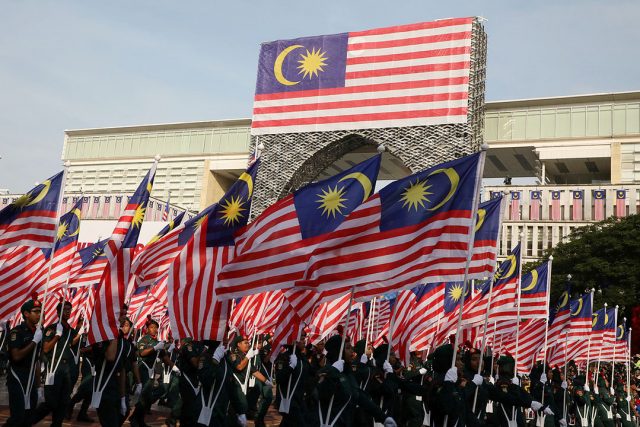
MALAYSIA’S government failed in its attempt to forfeit luxury items seized from former Prime Minister Najib Razak and his family members.

The Kuala Lumpur High Court on Monday dismissed the suit, saying the government failed to prove that the goods were bought using 1MDB funds. The government will appeal the decision, Deputy Public Prosecutor Harris Ong Mohd Jeffery Ong said.

“It is apparent that the investigating officer came to this conclusion based on his presumption. This is insufficient as they need to credibly prove a direct link between the money that was gained illegally to the cash found as well as the items bought,” Judge Mohamed Zaini Mazlan said.

The ruling follows the government’s failed court bid in May to prove the 114 million ringgit ($27 million) seized from a residence linked to Mr. Najib was part of 1MDB’s stolen funds. Mr. Najib had claimed the cash was for election purposes.

The cash and the luxury goods were part of the 1.1 billion ringgit of items seized in 2018 amid investigations into 1MDB. The inventory included a 6.4 million ringgit diamond necklace, Hermes bags and Rolex watches.

The raids occurred a month after Najib’s coalition lost the national elections, the first change in government since Malaysia achieved interdependence from Britain in 1957. — Bloomberg

Crypto queens: Women stake out space in blockchain world 

UNSPLASH/THOUGHTCATALOG.COM

As an artist and women’s rights activist, Maliha Abidi is adept at using digital technologies, so when she came across non-fungible tokens (NFTs) she quickly figured they could be a way to reach more people, and for women artists to gain a bigger following.  

Ms. Abidi, 25, who was born in Pakistan and migrated to the United States as a teenager, created her first NFT a few months ago — a type of asset which uses blockchain to record ownership of digital items such as images, videos, and collectibles.  

The UK-based activist is about to launch Women Rise, a campaign to bring 100,000 girls and women into cryptocurrency by the end of 2022.  

She is one of a growing number of women artists, coders, entrepreneurs, and investors embracing cryptocurrency and NFTs, and advocating for other women to join the blockchain movement and bridge the gender gap in this quickly expanding space.  

“When I first heard about blockchain, I didn’t think it was for me. But I was attracted to the art, and realized artists can be a part of this, and that it can be an inclusive space for women and people of color,” she said over a video call.  

“NFTs give people who haven’t had the opportunity to invest in or sell their art the traditional way, a chance to do so. Crypto and NFTs are a path to financial independence, so it’s important that women and girls know about them,” she said.  

As large institutional investors pushed bitcoin to record highs this year, adoption of cryptocurrencies has grown amongst younger investors and in developing countries, where anyone with a mobile phone can bypass the formal banking system.  

India has the most crypto owners in the world at about 100 million, according to platform BrokerChooser, compared to about 27 million in the United States and 17 million in Russia.  

Meanwhile, sales of NFTs surged to nearly $11 billion in the third quarter of 2021, up more than eightfold from the previous quarter, according to market tracker DappRadar.  

But more than two-thirds of US cryptocurrency investors are men, and about 60% are white, according to a recent survey by CNBC and Acorn, a gender gap that is wider than in other financial investments such as stocks, bonds and mutual funds.  

While a crypto exchange in India said only 15% of its users were women.  

“The crypto world seems to mirror the tech and finance worlds in terms of gender; there are women, but the space is heavily male-dominated,” said Angela Walch, a research associate at the UCL Centre for Blockchain Technologies in London.  

“As crypto becomes more mainstream, it is important to have diverse perspectives in creating and running the systems so that better decisions can be made,” she told the Thomson Reuters Foundation.  

MORE INCLUSIVE 
Less than half of women worldwide use the internet, compared to 55% of men, with the gap wider in poorer countries, according to the United Nations’ technology agency (ITU).  

Similarly, women also lag men when it comes to managing and accessing assets or financial services worldwide, according to the World Economic Forum’s annual gender gap report.  

Blockchain technology — which underpins cryptocurrency and NFTs — has been hailed as a path to a fairer, more transparent and inclusive world with its decentralized format.  

And cryptocurrencies are quickly shifting from the fringes of finance to the mainstream, with investors, companies and countries adopting them as an asset, as a payment vehicle, and as a hedge against uncertainty and hyperinflation.  

NFTs meanwhile, have drawn celebrities, artists, and investors, with the sale of a digital collage this year for more than $69 million recorded as the most expensive NFT sale so far — even as the number of NFT buyers remains relatively small.  

But while cryptocurrency has drawn younger people, as well as a mix of races, women only make up about a fifth of US investors, the CNBC poll showed.  

Black women — who historically have been shut out of many investment verticals — make up just 4% of crypto investors.  

This is why British-based entrepreneur Lavinia Osbourne founded Women in Blockchain Talks as a space for women, and plans to launch an NFT marketplace called “Crypto Kweens” for female artists, entrepreneurs, and collectors.  

“The inequity exists so deeply and systematically in society, and people bring their biases into all walks of life,” she said, adding that she had faced bias “steeped in racism”.  

“This is why it is so important for diverse voices to be a part of the blockchain conversation — if not, we will have a repeat of the inequality that exists elsewhere,” she said.  

CRYPTO CHICKS 
With Twitter handles such as @crypto_chicks, @NFTgirl and @BTCbombshell, women NFT artists and collectors flaunt their affiliation on social media and cheer each other on. Many also support charitable causes for women and girls.  

Their work is gaining recognition: a physical version of an NFT from Boss Beauties, a collection of 10,000 NFT portraits of women, was displayed at the New York Stock Exchange last month.  

While Tavonia Evans, a US-based data scientist who goes by the Twitter handle @cryptodeeva, created Guapcoin, a cryptocurrency to “amplify the economic voice of the Black community.”  

“The crypto world is an extension of the tech space, with a huge diversity gap,” she said, adding that access to capital remains a huge challenge for women of color.  

“That’s why we created Guapcoin — to focus on our own underserved community and do our job in closing the gap,” said Ms. Evans, who is a member of the National Policy Network of Women of Color in Blockchain that advocates for greater inclusion.  

Efforts such as these will go a long way in bridging the gender gap in blockchain, said Ms. Walch.  

“There are quite a few women leaders in the crypto space who are well respected, who command strong influence within the space and have credibility with policy makers,” she said.  

“Their successes should draw other women to crypto.”  

While many of the prominent female crypto investors and artists are in the West, more women are entering the space in countries such as India, and artists including Sneha Chakraborty and 14-year-old Laya Mathikshara are fast gaining a following.  

“When I started, it took me time to find women, and women of color, and have my questions answered,” said Ms. Abidi, who was looking forward to meeting many of her peers at the NFT conference in New York City last week.  

“But once you get past the white male gatekeepers, there is a great community of women here. I think crypto has the power to  

radically advance women’s rights,” she said. — Rina Chandran/Thomson Reuters Foundation 

‘Don’t make them wait’: Pressure grows at COP26 for new funding for climate damage 

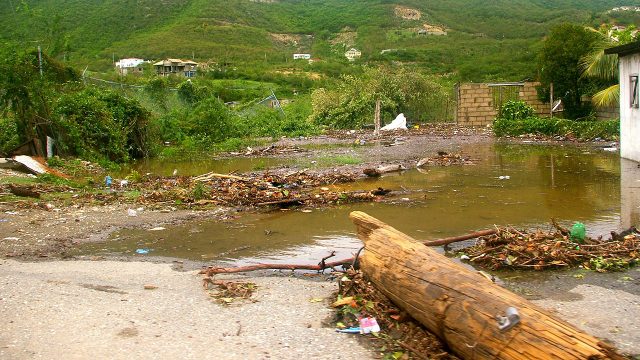
Hurricane damage in Jamaica. Image via Christina Xu/CC BY-SA 2.0/Flickr

GLASGOW — The small island nation of Jamaica, like many others in the Caribbean, is battered regularly by tropical storms that are getting fiercer as the ocean warms, threatening to wreck homes, energy grids, hospitals, roads, and ports.  

Weather-driven losses to vulnerable islands in the region — now also beset by a dive in tourism due to the coronavirus disease 2019 (COVID-19) pandemic — have caused debt levels and borrowing costs to soar.  

That is leaving them struggling to invest in the climate protection their citizens need, according to the head of the UN-backed Green Climate Fund (GCF).  

Yannick Glemarec, who visited the Caribbean 10 days ago, said countries such as tiny Dominica are trapped in a cycle of trying to reduce their debt only to have it “explode” again after a hurricane wipes out a large chunk of gross domestic product and more loans are needed to repair the damage.  

But that is not an inevitable pattern, he added.  

“If you invest in adaptation, you can have resilient infrastructure,” he told the Thomson Reuters Foundation in an interview on the sidelines of the UN COP26 climate talks.  

“There is something you can do about this — but for that you need money, you need access to capital.”  

Cripplingly, for many island nations, that cash is not available, either because they find it hard to negotiate the complexities of accessing international public climate finance or because private investors see them as too high a risk.  

The multi-billion-dollar GCF wants to shift that status quo with new test projects mapping out how two coastal countries — Jamaica and Ghana — can strengthen their natural defenses against rising seas and storms with measures such as restoring wetlands and adding more trees.  

The aim is to help them avoid building yet more sea walls and other high-carbon concrete barriers while demonstrating to potential private-sector backers that lending for “green infrastructure” does not carry unacceptable uncertainties.  

By helping investors assess projects more effectively — and, where needed, using donor funding to cover part of any losses — “you definitely shift money,” Mr. Glemarec said.  

Developing nations and those who work with them say such projects, aimed at pulling in finance to limit potential destruction from rising climate impacts, are urgently needed, alongside separate funding to deal with losses that do occur.  

GDP HIT 
A study released by charity Christian Aid on Monday highlighted the devastating economic impact climate change could inflict on the most vulnerable countries without sharp cuts to climate-heating emissions and measures to adapt to warming already baked in.  

Economies in such countries would still grow in the second half of this century, the study predicted.  

But if global temperatures rose 2.9 degrees Celsius — a hike current climate policies could cause — the poorest nations and small island states could end up with average GDP nearly 20% lower than without climate change by 2050, and 64% lower by 2100.  

Even if global warming were limited to 1.5C, as set out in the 2015 Paris Agreement, those countries could still face an average GDP reduction of about 13% by 2050 and 33% by 2100, the study predicted.  

Africa would take the biggest hit, researchers said.  

Marina Andrijevic, who coordinated the study, said it only examined the impact of temperature increases, meaning additional damage from wild weather could make the economic outlook for these countries even worse.  

The findings “imply that the ability of countries in the Global South to sustainably develop is seriously jeopardized and that policy choices we make right now are crucial for preventing further damage,” said Ms. Andrijevic of Berlin’s Humboldt University.  

Nushrat Chowdhury, Christian Aid’s climate justice advisor from Bangladesh, said she had seen firsthand how climate “loss and damage” has already affected her people, with houses, land, schools, hospitals and roads hit by floods and cyclones.  

“People are losing everything. Sea levels are rising, and people are desperate to adapt to the changing situation,” she said in a statement. “If ever there was a demonstration of the need for a concrete loss and damage mechanism, this is it.”  

A mechanism to handle such losses was established at 2013 UN climate talks in Warsaw but negotiators so far have done little more than research options for real-world action, despite growing calls for those to be put into practice.  

FUNDING PUSH-BACK 
Demands are especially strong for new types of finance to help countries build back better after destructive disasters and relocate at-risk communities away from crumbling, flood-prone coastlines.  

Rich countries, however, have so far mostly refused to move beyond support to expand insurance coverage for extreme weather.  

Last week, the Scottish government set a precedent by announcing it would provide £1 million ($1.35 million) to help poor communities address loss and damage by repairing and rebuilding after climate-related disasters, such as flooding and wildfires.  

At the Glasgow talks, groups of least-developed countries and small island states are pressing hard for an official green-light to establish some kind of global loss and damage funding stream, ideally at next year’s climate summit.  

On Sunday, a list of possible points that could be included in a final decision agreed at COP26 was released, in time for discussion by ministers in the talks’ second and last week.  

But on the theme of loss and damage, it mentioned only the “need for increased and additional financial support.”  

That is unlikely to satisfy negotiators from vulnerable countries, though it represents a softening of opposition by wealthy governments.  

Yamide Dagnet, director of climate negotiations for the World Resources Institute, a US-based think-thank, said the proposal was weak and finance issues broadly were now “the elephant in the room.”  

Rich nations have yet to deliver on a pledge to raise $100 billion a year from 2020 to boost clean energy and help vulnerable communities adjust to climate shifts, a source of deep frustration at the talks.  

In the Paris Agreement, countries said they would aim for a balance in funding between cutting emissions and measures to adapt to a warmer world — but only about a quarter of finance so far has gone to adaptation efforts.  

Bhutan’s Sonam P. Wangdi, who chairs the group of least developed countries at COP26, tweeted on Sunday that adaptation “is extremely important.”  

“We need to adapt now, and for that we need money. But that money is not coming, currently. How it’s going to come, I don’t know,” he said.  

For GCF head Mr. Glemarec, the urgency of helping countries squeezed by climate change impacts and the pandemic is clear.  

“When you have people in such dire straits, don’t make them wait,” he said. — Megan Rowling/Thomson Reuters Foundation  

Twitter users say ‘yes’ to Musk’s proposal to sell 10% of his Tesla stock 

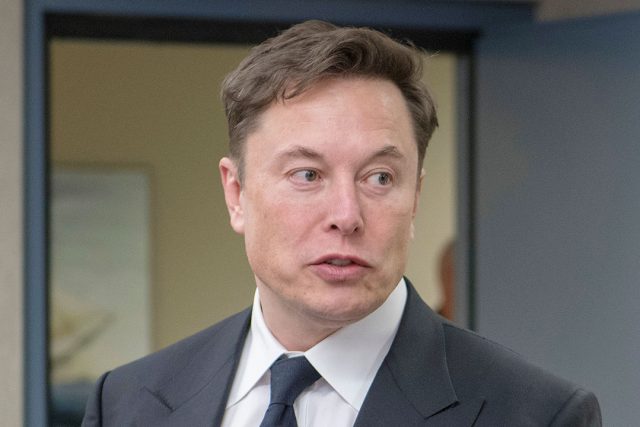
Elon Musk — EN.WIKIPEDIA.ORG

Tesla Inc. CEO Elon Musk should sell about 10% of his Tesla stock, according to 57.9% of people who voted on his Twitter poll asking users of the social media network whether he should offload the stake.  

“I was prepared to accept either outcome,” Mr. Musk said, after the voting ended.  

The world’s richest person tweeted on Saturday that he would offload 10% of his stock if users approved the proposal. Mr. Musk has previously said he would have to exercise a large number of stock options in the next three months, which would create a big tax bill. Selling some of his stock could free up funds to pay the taxes.  

As of June 30, Mr. Musk’s shareholding in Tesla came to about 170.5 million shares and selling 10% would amount to close to $21 billion based on Friday’s closing, according to Reuters calculations.  

The poll garnered more than 3.5 million votes.  

“Much is made lately of unrealized gains being a means of tax avoidance, so I propose selling 10% of my Tesla stock,” Mr. Musk said on Saturday, adding that he does not take cash salary or bonus “from anywhere,” and only has stock.  

US Senate Democrats have unveiled a proposal to tax billionaires’ stocks and other tradeable assets to help finance President Joseph R. Biden, Jr.’s social spending agenda and fill a loophole that has allowed them to defer capital gains taxes indefinitely.  

Mr. Musk has criticized the proposal saying, “Eventually, they run out of other people’s money and then they come for you.”  

Senate Finance Committee Chairman Ron Wyden, who floated the tax proposal, said on Saturday: “Whether or not the world’s wealthiest man pays any taxes at all shouldn’t depend on the results of a Twitter poll.”  

“It’s time for the Billionaires Income Tax.”  

Including stock options, Mr. Musk owns a 23% stake in Tesla, the world’s most valuable car company whose market value recently exceeded $1 trillion. He also owns other valuable companies including SpaceX.  

His brother Kimbal Musk on Friday sold 88,500 Tesla shares, becoming the latest board member to offload a large number of Tesla stocks which hit record highs.  

A week ago, Mr. Musk said on Twitter that he would sell $6 billion in Tesla stock and donate it to the United Nations’ World Food Program (WFP), provided the organization disclosed more information about how it spent its money.  

Tesla bull Gary Black, portfolio manager at The Future Fund, said that Mr. Musk’s potential stock sale would lead to “1–2 days of modest selling pressure,” but said there would be solid institutional demand to snap up the shares at a discount.  

TAXES ON STOCK OPTION EXERCISE 
Mr. Musk has said he does not want to borrow against stock to pay taxes because stock value could go down.  

He has an option to buy 22.86 million shares at $6.24 each, which expires on Aug. 13 next year, according to a Tesla filing. The option exercise could lead to gains of roughly $28 billion based on Tesla’s Friday closing price of $1,222.09.  

In September, Mr. Musk said he is likely to pay taxes of over half the gains he would make from exercising options. Last year, he said he has been relocated from California to Texas which should lead to a cut to the total tax bill because Texas has no income tax, experts say.  

“[It] seems crazy to borrow that much to pay taxes, so I have to assume he’d need to liquidate a substantial amount of the shares purchased from the option exercise to pay taxes,” said Bryan Springmeyer, an attorney at San Francisco-based law firm Springmeyer Law. — Aishwarya Nair and Hyunjoo Jin/Reuters 

What you need to know about the new US international air travel rules 

UNSPLASH

The Biden administration’s new rules requiring most foreign nationals to be vaccinated before flying to the United States take effect at 12:01 a.m. EST (0501 GMT) Nov. 8.  

Here’s what you need to know:  

  • Starting Nov. 8, foreign air travelers to the United States will be required to be fully vaccinated against coronavirus disease 2019 (COVID-19) and provide proof of vaccination status prior to boarding an airplane to fly to the United States, with limited exceptions.  
  • Passengers will need to show an “official source” showing vaccination status, and airlines will need to match the name and date of birth to confirm the passenger is the same person reflected on the proof of vaccination.  
  • The US Centers for Disease Control and Prevention (CDC) has said it will accept US Food and Drug Administration (FDA) approved or authorized and World Health Organization (WHO) emergency use listed vaccines.  
  • All travelers must produce a negative viral test result within three days prior to travel to the United States. Unvaccinated US citizens and others getting exemptions must provide a negative test taken within one day before traveling.  
  • Children under 18 are excepted from the vaccination requirement but children between the ages of 2 and 17 are required to take a pre-departure test. Unvaccinated foreign nationals under 18 will not have to self-quarantine upon arrival. 
  • If traveling with a fully vaccinated adult, an unvaccinated child can test three days prior to departure, but if an unvaccinated child is traveling alone or with unvaccinated adults, they will have to test within one day before departure.  
  • Exemptions include certain COVID-19 vaccine clinical trial participants, those with valid medical reasons for not getting vaccinated and those who need to travel for emergency or humanitarian reasons, but they will need a US government-issued letter affirming the urgent need to travel.  
  • The CDC said there are no exceptions for the vaccine requirements “for religious reasons or other moral convictions.”  
  • Non-tourist travelers from nearly 50 countries with nationwide vaccination rates of less than 10% will be exempt from the requirements but must agree within 60 days to get vaccinated under most conditions.  
  • Travelers must sign an attestation that they have been vaccinated and are warned that “willfully providing false or misleading information may lead to criminal fines and imprisonment.”  
  • The Transportation Security Administration (TSA) plans to issue a security directive that provides the legal basis for airlines to check vaccine records.  
  • The CDC also issued a Contact Tracing Order that requires all airlines flying into the United States to collect and keep on hand for 30 days and disclose to the CDC if needed contact information including phone numbers, email and US addresses that will allow health officials to track infections. The collection requirements take effect Nov. 8.  
  • The CDC released a travel assessment tool on Monday for people planning international trips, including an extensive question and answer for travelers. — Reuters 

Multi-platform presence and reliable delivery are key to online success

In photo are (from left to right) Chief Finance Officer Mark L. Tan, Chief Executive Officer Ryan L. Tan and Chief Operations Officer Neil L. Tan.

GoCommerce brings brands into the digital space with a speed-to-scale approach

In sales, whether your business model is brick-and-mortar or online, it is important to be where your customers are. With physical stores, the onus was to build as many branches in as many locations as possible. However, as pandemic restrictions still hamper regular operations in malls, it helps to build an online presence that makes your brand accessible to your customers on multiple channels.

Brothers Ryan, Mark, and Neil Tan who co-founded GoCommerce refer to this as Omnichannel e-commerce approach. Their own business model made a successful digital migration even before the pandemic and it has ensured that their products remained accessible to their buyers even as their physical stores were affected by protocols involving mall operations. Not only that, their digital sales and marketing strategies enabled them to become top sellers in online shopping sites.

With this experience, they have decided to set-up GoCommerce to help enable other businesses grow their online presence. Through GoCommerce, it is their mission to help brands thrive during the pandemic and help them get ahead when things settle into the “new normal”.

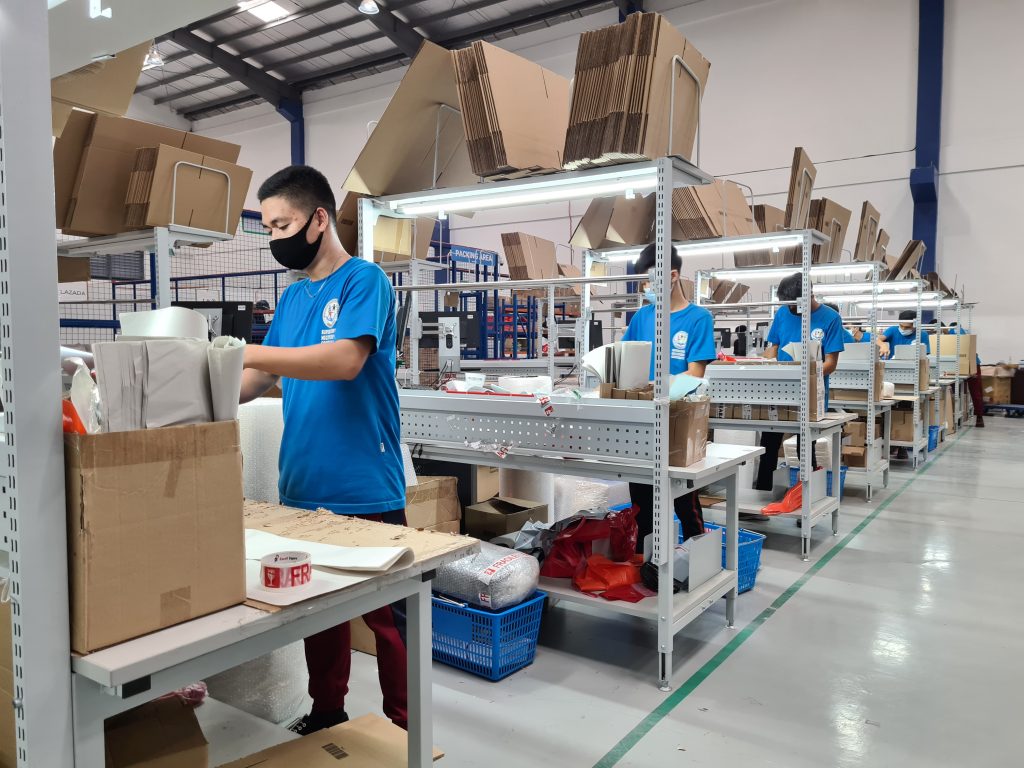
GoCommerce Fulfilling center

Speed to scale

Conceptualized in May 2020, GoCommerce is an eCommerce enabler that uses technology to help brands maximize their sales potential on the numerous selling platforms including Lazada, Shopee, Grab and Zalora; plus in the brands’ own webstores. “For brands, our goal is to give them “speed-to-scale” with their online business so that they can translate their offline success to the online marketplace before they get disrupted,” says Ryan Tan, GoCommerce CEO.

To truly help brands reach their customers, GoCommerce launched ShipGo in June 2021. It is an order fulfillment automation service to help businesses overcome the challenges of door-to-door logistics by taking care of warehousing, packing, and pick-up for deliveries. “A lot of SMEs were born during the pandemic which has the potential to be disruptors of the market. With ShipGo, they don’t have to worry about their deliveries. They can send us their items, and we will take care of getting to safely to their customers. This will free their time to focus on growing their business. We are creating tech-enabled solutions to help our SMEs scale faster.” says Mark Tan, GoCommerce CFO.

Their growing network of modern fulfillment centers enables brands to do Same-Day Delivery or 2-Day Delivery of their orders. Same day delivery is initially available in Mega Manila but is quickly going to be expanded to Metro Cebu and Metro Davao. “We are building the most strategic network of GoHub Fulfillment Centers to enable brands to have 2-day shipping in all major cities in the Philippines by 2023.” says Ryan.

E-commerce ecosystem

GoCommerce introduces its ecosystem of technology and services that makes omnichannel management, performance marketing, and order fulfillment easy for brands. “With our technology, we help brand partners reduce cost of doing business by lowering the amount of inventory they maintain to fulfill orders across all online channels.” says Mark.

The also go beyond helping with sales content by heping brands anaylze data, so they know which works, and which doesn’t. “Beyond tech, we understand the psychology of why and how people buy online. Doing a lot of research and being data driven helps us create the right buying experience for specific target customers,” Ryan adds.

Partner for success

Today, GoCommerce brand partners, which include global and local brands Unilever, Anker, Klean Kanteen, Garmin, Kyowa, Omega Houseware, and Nutriasia are market leaders on popular selling platforms. For this, GoCommerce was recently recognized by Lazada as an elite 3-Star Lazada Partner, the highest certification given to Lazada Partners in Southeast Asia for meeting the highest standards of eCommerce management, operational excellence, and order fulfillment metrics. Shopee likewise appointed GoCommerce as a Shopee Premium Enabler which is the highest distinction they give to their partners in the region.

“We are humbled to receive this back-to-back recognition by the two biggest platforms today. This inspires us to do better work for our existing partners and to deliver success to more brands in the next months,” says Neil Tan, COO of GoCommerce.

For more information about how GoCommerce can help you grow your business, visit www.gocommerce.asia. — Maan D’Asis Pamaran


Spotlight is BusinessWorld’s sponsored section that allows advertisers to amplify their brand and connect with BusinessWorld’s audience by enabling them to publish their stories directly on the BusinessWorld Web site. For more information, send an email to online@bworldonline.com.

Join us on Viber to get more updates from BusinessWorld: https://bit.ly/3hv6bLA.