How PSEi member stocks performed — February 3, 2022
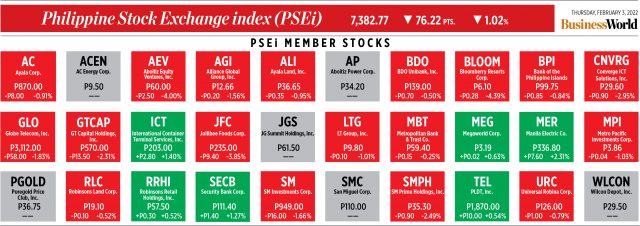
Here’s a quick glance at how PSEi stocks fared on Thursday, February 3, 2022.
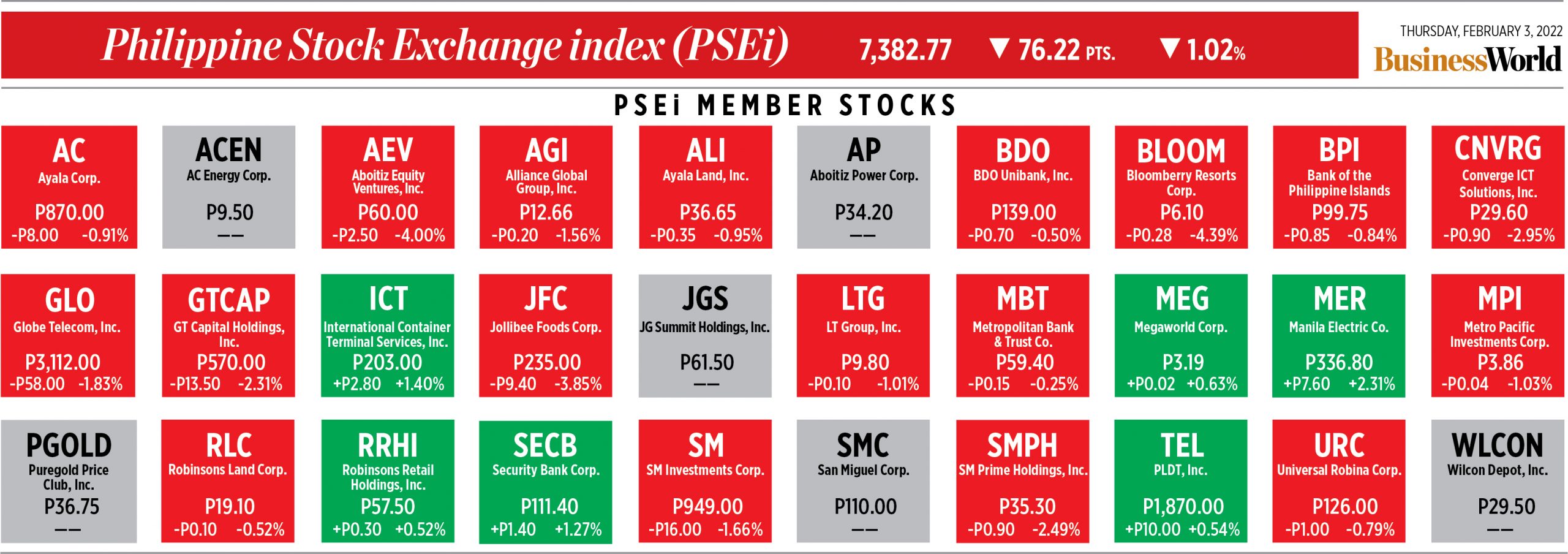

Here’s a quick glance at how PSEi stocks fared on Thursday, February 3, 2022.
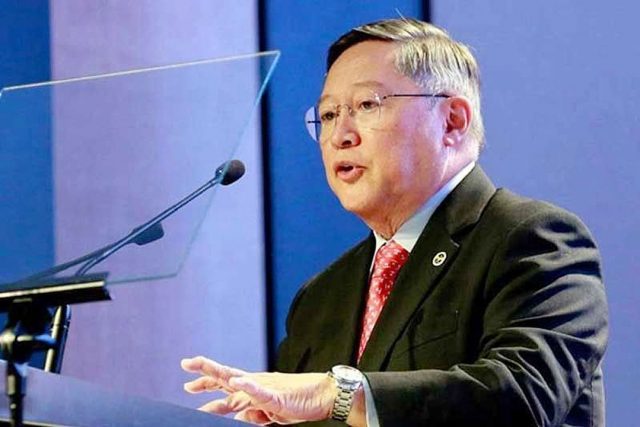
THE effective tax rate for value-added tax (VAT) in 2021 was significantly lower than the posted rate of 12%, reflecting the tax avoidance strategies provided by tax advisers, Finance Secretary Carlos G. Dominguez III said.
He said in a statement on Thursday that the reduced tax collections caused the government to borrow more to fund its pandemic response.
He was addressing his remarks to the Tax Management Association of the Philippines, and called on them to behave in a more “patriotic” manner, according to the statement.
He said the effective rate for VAT last year was 5%.
Tax avoidance is legal, while tax evasion is not. Avoidance makes use of various techniques to reduce tax bills, such as investing in tax-free instruments or structuring deals to make use of tax havens.
Before the Corporate Recovery and Tax Incentives for Enterprises (CREATE) law took effect last year, the effective corporate income tax rate was 9%, against the posted rate of 30%.
The discrepancies between the rates were a result of advice given by tax professionals to their clients, he said.
“Had the government been able to collect all taxes due, we would have had more funds to cover our economic investments, debt service, and COVID-19 response expenditures,” he said.
“We would have borrowed less. The government would have been better able to invest in building the prosperous future our people deserve.”
Government revenue collections in 2021 rose 9%, he said. In 2020, government revenue declined due to the economic downturn caused by the coronavirus disease 2019 (COVID-19) pandemic.
The government has ramped up borrowing to finance its pandemic response, which included the purchase of vaccines.
At the end of 2021, the government had P11.73 trillion in outstanding debt, up 19.7%.
The Finance department as of Jan. 14 raised about $25.8 billion from borrowing and grants for the government’s COVID-19 response from multilateral lenders, development partners, and following the issue of foreign currency-denominated global bonds.
Mr. Dominguez said that tax advice “is probably the more lucrative side of your profession. But it is not the most patriotic.”
“Our experts in tax management should encourage our businesses to pay the right taxes and keep with the intent of our tax laws, instead of spending so much intellectual energy in finding every loophole there is.”
He added that the government needs revenue to strengthen its public health system after the pandemic.
“We need to invest more in infrastructure and human capital development projects. The rehabilitation of communities devastated by extreme weather events will impose added costs to the government. We have to spend more to make our communities more resilient to climate change.” — Jenina P. Ibañez

THE Philippine Task Force for Indigenous Peoples’ Rights (TFIP) said the National Commission on Indigenous Peoples (NCIP) needs to revisit the consent agreement for the Kaliwa Dam project.
“Muling ibalik sa community ’yung memorandum of agreement (MoA) negotiation para maintindihan ng community ’yung MoA. Lahat ng ginagawa ng NCIP, hindi pabor sa aming katutubo. Pinapaganda nila ang report, kahit alam nila na maraming kontra sa Kaliwa Dam project. Hindi kami titigil. Lalaban po kami (We urge the NCIP to bring the MoA negotiations back to the community to so we get terms that are clear to the community. Everything the NCIP has done so far has was not agreed upon by the IPs. They make the reports sound favorable to the Kaliwa Dam project, even though they know we are against it. We won’t stop and we will keep fighting back.),” Marcelino S. Tena, president of the Samahan ng mga Katutubong Agta-Dumagat-Remontado sa Pagtatanggol at Binabaka and Lupang Ninuno (SAGUIBIN-LN), said during a virtual press conference.
Started in 2019, the Kaliwa Dam is a bulk water supply project which is a component of the New Centennial Water Source program of the Metropolitan Waterworks and Sewerage System (MWSS).
It will be ready for commercial use by 2023 and is expected to provide 600 million liters of water per day to Metro Manila.
The IP groups urged the government to revisit the “flawed” Free, Prior and Informed Consent (FPIC) processes of the project.
The FPIC is a prerequisite for projects in IP land.
Mr. Tena said that the NCIP “handpicked” the representative for the negotiations and used the police to shut out opposing views during the hearings on the project.
“The processes done in (our) communities were filled with deception, manipulation, and misinformation. Reports from indigenous communities include incidents of bribery, false promises, creation of fake leaders, and suppression of known opposition among the Dumagat people,” the TFIP said.
“The building of dams in indigenous communities has caused great destruction of ancestral land, resources, and livelihoods. This outweighed the supposed benefits promised by their proponents and builders,” it added.
The organizations also claimed that the NCIP disregarded the safety of indigenous communities during the COVID-19 pandemic, after it barred unvaccinated IPs from joining the negotiations.
“Ang sinasabi namin, bakit ngayong nasa Alert Level 3 kami ay patuloy ang NCIP? Alin ba ang mahalaga? Ang MoA o ang kaligtasan naming mga katutubo? (Why is the NCIP going ahead with proceedings while we were at Alert Level 3 prioritizing signing this MoA during an Alert Level 3? What is more important, the MoA or the safety of us IPs?),” Mr. Tena said.
The negotiations and signing of the MoA between the Dumagat indigenous people and the MWSS was held between Jan. 24 and 29 in General Nakar, Quezon.
According to Mr. Tena, more than 20 IP representatives were barred from entering the venue because they were unvaccinated. Mr. Tena said that the Dumagat people should have the right to decide on whether or not they wish to be vaccinated and unvaccinated status should not be used against them when exercising their right to participate in negotiations. — Luisa Maria Jacinta C. Jocson
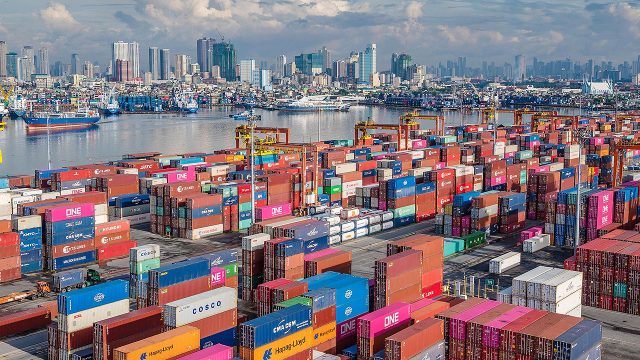
ECONOMIC GROWTH is expected to “normalize” in 2022 on the back of strong domestic demand, IHS Markit economist said.
IHS Markit Asia Pacific Chief Economist Rajiv Biswas said during a recent briefing organized by the Board of Investments (BoI) that the main drivers will be private consumption and government infrastructure investment.
“For the Philippines, we are expecting rapid growth in 2022 due to further progress towards normalization of the economy,” Mr. Biswas said.
“2022 will be another year of global recovery, with around 7% gross domestic product (GDP) growth forecast for the Philippines helped by buoyant domestic demand. In the fourth quarter of 2021, the Philippine economy grew at a pace of 7.7% year on year, following a 6.9% growth year on year in the third quarter of the same year,” Mr. Biswas said.
According to Mr. Biswas, the Philippine economy is considered attractive over the next decade because of the growing domestic consumer market, which he said will increase foreign direct investment, with new investment seen in manufacturing and infrastructure.
“The Philippines is projected to become one of Asia’s $1 trillion economies by 2033. Foreign investors will increasingly focus on the opportunities created by the fast-growing domestic consumer market in the Philippines, in addition to its attractions as a hub for producing manufacturing exports such as electronics,” Mr. Biswas said.
Mr. Biswas said the Philippines has a potential advantage as demand grows for electric vehicles (EVs), because it has nickel, a key material for components like batteries.
“The Philippines could also seek to develop greater value-added by attracting investment in manufacturing EV batteries as well as into EV-related auto manufacturing. Fundamentals are favorable for nickel due to strong long-term growth in global production of EVs and this is an exciting area for the Philippines,” Mr. Biswas said.
Trade Undersecretary and BoI Managing Head Ceferino S. Rodolfo said at the briefing that the Philippines has notified New Zealand and Japan about its interest in the Comprehensive and Progressive Agreement for Trans-Pacific Partnership (CPTPP).
“We have conveyed our interest with the parties to the CPTPP through our bilateral engagements and so far, we have been receiving supportive messages from them,” Mr. Rodolfo said.
Recently, the Philippine Statistics Authority reported that GDP grew 5.6% in 2021, against the 9.6% contraction posted in 2020. — Revin Mikhael D. Ochave

THE Philippine Competition Commission (PCC) pressed companies undertaking large merger and acquisition (M&A) deals to submit to a competition review voluntarily.
PCC Commissioner Emerson B. Aquende said during a virtual briefing on Thursday that deals are not exempt from review regardless of size, if competition concerns arise.
“Even if there is a P50 billion threshold in effect until September, it doesn’t really exempt them from being reviewed by the commission eventually, if the transaction is noted to have adverse impact on competition,” Mr. Aquende said.
According to Republic Act No. 11494 or the Bayanihan to Recover as One Act (Bayanihan II), all mergers and acquisitions with a transaction value of less than P50 billion that were undertaken within two years from the law’s effectivity are exempt from compulsory PCC notification.
However, once the law expires in September, companies whose parent company assets exceed P6 billion and whose M&A transactions exceed P2.4 billion will once again be required to notify the PCC.
Mr. Aquende said an application for voluntary review was recently received by the PCC. He did not provide further details.
“That is a good development that shows the interest of firms to submit to the process of review to ensure that their intended merger transaction will not result in a substantial lessening of competition,” Mr. Aquende said.
PCC Commissioner Johannes Benjamin R. Bernabe said there are at least two transactions which may be subjected to motu propio review, in which the commission acts on its own initiative, judging from the assessments of its monitoring division, a unit of the commission’s (M&A) office.
Mr. Bernabe said only that the two deals are in the distribution and industrial sectors.
“Those transactions… sought to take advantage of the moratorium so as to get away with possible substantial lessening of competition in the market. I think the message that we wish to put forth is that even if they were undertaken when the threshold was at P50 billion, they are still not immune from the conduct of a motu propio review,” Mr. Bernabe said.
“That is a disincentive for firms to try and work around the merger review system of the Philippines because it would be more painful for these firms to unravel their transaction one or two years down the line if a motu propio review (finds) that they caused a substantial lessening of competition in the market,” he added.
PCC Chairman Arsenio M. Balisacan said the commission is monitoring developments in various markets for potential anti-competitive mergers.
Mr. Balisacan added that there is no move so far to extend the moratorium and threshold set out in Bayanihan II.
“We hope that we have learned the lessons from many other countries. We should (give) the competition authority the opportunity to review what might be potentially anti-competitive mergers and acquisitions,” Mr. Balisacan said. — Revin Mikhael D. Ochave

INSUFFICIENT KNOWLEDGE of the urban poor market and low levels of capital allocated by institutions to such borrowers are hampering the growth of the microfinance market for housing, the Asian Development Bank (ADB) said in a report.
Joji Reyes, president of GlobalWorks International Consulting, Inc., prepared a report on inclusive and resilient urban development for the poor at the request of the Department of Human Settlements and Urban Development, with ADB assistance.
Housing is traditionally a big-ticket item financed via mortgages. A microfinance approach to housing would consider market factors such as low ability to pay, smaller loans, and an incremental release strategy.
Ms. Reyes in the report said that rapid urbanization in the Philippines led to the growth of informal settlers with little access to affordable housing, capital, and health and safety.
The poorest, she said, are not able to access traditional housing financing because they cannot afford it.
“While remarkable progress has been achieved to grow housing microfinance in the Philippines and demonstrate the viability of housing microfinance products, policy and market barriers to further scaling-up exist.”
According to the report, many banks in the Philippines do not have enough knowledge to operate housing microfinance businesses.
She said there is also mismatch between the equity capital terms of microfinancing institutions and the financing terms needed by clients to keep housing affordable.
“Average lending per household is still relatively small compared to the lowest house and lot price within the Philippines’ socialized housing ceiling,” she said.
The stock of affordable housing is also limited.
Recommendations from the report include creating a wholesale financing facility for microfinancing institutions and developing public private partnerships (PPP) for microfinance products.
“Develop and implement a PPP program for green and inclusive housing microfinance properly targeted to the informal settlers,” according to the report. — Jenina P. Ibañez
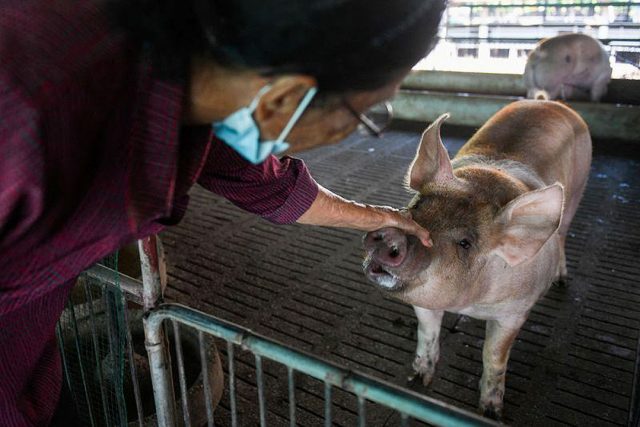
THE Department of Agriculture (DA) issued a memorandum order banning imports of swine and pork products from Thailand, following reports of an African Swine Fever outbreak there.
Signed by Agriculture Secretary William D. Dar, the order suspends the issuance of sanitary and phytosanitary import clearances for domestic and wild pigs and their products, including pork, pig skin, and processed animal proteins.
“Several news media platforms have reported the occurrence of African Swine Fever (ASF) virus detected in a pet pig and surface swabs (at a) slaughterhouse in Nakhon Pathom, Thailand,” the DA said.
“Thailand is not an accredited country to export any swine related commodities to the Philippines but there is a need to prevent the entry of any ASF-susceptible products originating from Thailand that might enter the country through hand carried products from international vessels or any other possible routes,” it added.
The order authorizes the confiscation of all such shipments by the DA’s Veterinary Quarantine Officers and Inspectors at all major ports.
On Wednesday, the DA issued a ban on the imports of poultry and poultry products from Spain and Croatia.
The ban was issued to prevent the entry of highly pathogenic avian influenza virus. — Luisa Maria Jacinta C. Jocson
By Kyle Aristophere T. Atienza, Reporter
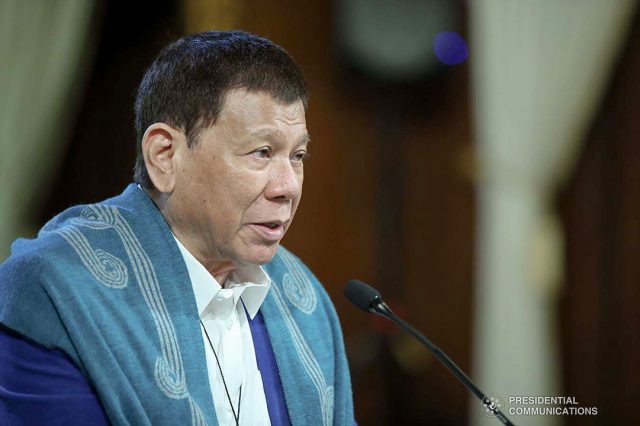
PHILIPPINE President Rodrigo R. Duterte, 76, is under quarantine after he was exposed to household staff who tested positive for the coronavirus, his spokesman said on Thursday.
“The President has since been tested for COVID-19, and while the results of the test came back negative, he is currently observing mandatory quarantine protocols,” presidential spokesman Karlo Alexei B. Nograles said in a statement.
Mr. Duterte was exposed to someone with the virus on Jan. 30 and his negative RT-PCR test result came out on Monday, he said. The President took another RT-PCR test and tested negative on Feb. 1.
Meanwhile, Mr. Nograles said Mr. Duterte visited Cardinal Santos Medical Center in San Juan “for his routine medical check-up only.”
He said the president continues to work while in quarantine and was communicating with Cabinet members “to ensure that urgent matters are addressed and to monitor the implementation of his directives, particularly with regard to the government’s pandemic response.”
Mr. Duterte has been fully vaccinated against the coronavirus. He also got a booster shot early this month, Mr. Nograles said.
Seniors and seriously ill people are at risk of having severe coronavirus disease 2019 (COVID-19).
Mr. Duterte said in 2020 that his Barrett’s esophagus — a condition where the gullet is damaged by acid reflux — was nearing stage one cancer.
In 2019, Mr. Duterte said he was suffering from myasthenia gravis, an autoimmune disease that could cause serious complications.
Meanwhile, pandemic officials on Thursday moved the vaccination of children aged 5 to 11 years against the coronavirus to Feb. 7 due to logistical issues.
In a joint statement, the Health department and National Task Force Against COVID-19 said delivery of the first batch of vaccines from Pfizer, Inc. got delayed by a day to Feb. 4, when the inoculation was supposed to start.
The agencies said they were “committed to ensure that all Filipinos, including the children, get vaccinated.”
The Finance department said loans for coronavirus vaccines were enough to buy 30 million doses for children under 12 years.
The Philippines in December borrowed $800 million from three multilateral lenders to fund COVID-19 booster shots and shots for minors.
“This additional loan amount would augment the current funding for pediatric vaccines and would enable the delivery of 30 million doses of Pfizer doses for the 5-11 age group,” the agency said in a statement.
The Philippines had fully vaccinated 59.34 million people as of Feb. 2, while 60.52 million have received their first dose, data from the Health department showed. Almost 7.7 million booster shots have been given out.
The Southeast Asian nation is scrambling to vaccinate more people as it reopens the economy after a fresh surge in infections spurred by the highly mutated Omicron variant.
The Department of Health (DoH) posted 8,702 coronavirus infections on Thursday, bringing the total to 3.59 million.
The death toll hit 54,168 after 71 more patients died, while recoveries rose by 15,290 to 3.38 million, it said in a bulletin.
The agency said 25.5% of 42,446 samples on Feb. 1 tested positive for COVID-19, still above the 5% threshold set by the World Health Organization (WHO).
Of the 153,335 active cases, 4,923 did not show symptoms, 143,493 were mild, 3,067 were moderate, 1,528 were severe and 324 were critical.
DoH said 97% of the latest cases occurred from Jan. 21 to Feb. 3. The top regions with new cases in the past two weeks were Western Visayas with 1,039, Central Visayas with 799 and the Davao region with 785. It added that 93% of new deaths occurred in January.
It said 539 duplicates had been removed from the tally, 207 of which were recoveries, while 29 recoveries were relisted as deaths. Five laboratories failed to submit data on Feb. 1.
The agency said 44% of intensive care unit beds in the country had been used, while the rate for Metro Manila was 37%.
Coronavirus infections in seven urban cities outside Metro Manila were decreasing, according to the OCTA Research Group from the University of the Philippines.
OCTA fellow Fredegusto P. David tweeted that infections in the cities of Angeles, Baguio, Dagupan, Lucena, Naga, Olongapo and Santiago have gone down.
Various countries have started easing lockdowns amid hopes that the Omicron variant, which was first detected in South Africa, might have peaked.
The World Health Organization has said some countries that have high immunity rates, strong health care systems and favorable epidemiological trends could now consider carefully easing restrictions, according to a report by the Los Angeles Times.
Denmark was among the first European Union members that took the lead in scrapping most pandemic restrictions.
The Scandinavian country recently scrapped mask mandates and health passes, according to the Economic Times.
Vivencio B. Dizon, deputy chief implementer of the Philippine’s pandemic plan, on Wednesday said the government was crafting a plan to exit from the pandemic and move to an endemic phase.
The presidential palace has said it was not yet time to scrap the virus alert system in the country, citing low vaccination rates in some areas.
Palace spokesman Karlo Alexei B. Nograles said people should focus on the shift to Alert Level 1. — with Jenina P. Ibañez

PRESIDENTIAL aspirant Ferdinand “Bongbong” R. Marcos, Jr. has declined an invitation to a major presidential forum organized by a local broadcasting group.
The former senator declined the Kapisanan ng mga Brodkaster ng Pilipinas’s (KBP) invitation to a Feb. 4 forum due to a conflict in his schedule, KBP President Herman Z. Basbaño told ABS-CBN TeleRadyo on Thursday.
Vice-President Maria Leonor “Leni” G. Robredo, labor leader Leodegario “Ka-Leody” de Guzman, Senator Panfilo M. Lacson, Manila Mayor Francisco “Isko” M. Domagoso and Senator Emmanuel “Manny” D. Pacquiao were expected to attend the forum that will be aired live, he said.
“This is bad for Mr. Marcos given all the controversies he is facing, particularly the cases against him in the Commission on Elections (Comelec),” said Maria Ela L. Atienza, a political science professor from the University of the Philippines (UP).
She said his lead in presidential opinion polls would not assure him victory, with many voters still undecided.
“We still have months in the campaign and there are also undecided voters,” Ms. Atienza said in a Viber message. “Visibility and the ability to answer questions through various media, because we are still in a pandemic, is crucial.”
Mr. Marcos last month snubbed a presidential interview organized by GMA Network, accusing its host of being biased against his family.
Mr. Marcos’s rating had declined, nonprofit policy research group International Development and Security Cooperation said in a recent report, citing a poll by WR Numero Research on Jan. 23 to 27.
His rating declined by 9 percentage points to 50%, which the think tank traced to his pending disqualification cases at Comelec. “In addition, his refusal to attend interviews reduces his chance to convey his platform.”
“His campaign team might have miscalculated his decision to decline these fora and interviews,” Ms. Atienza said “This does not speak well of him as a candidate and a person.”
“It seems that he is selective to friendly media and has low tolerance for scrutiny,” Jean Encinas-Franco, who also teaches political science at UP, said in a Facebook Messenger chat. “He is also demonstrating that talking to the media is a low priority for him.”
Mr. Marcos filed his candidacy papers in October, angering activists and victims of his late father’s 14 year-long martial rule.
His family was forced to flee the country in 1986 after a popular uprising supported by military generals toppled his father’s regime. He was among the first members of the family to return to the Philippines from exile in the United States in 1991. — Kyle Aristophere T. Atienza
THE COUNTRY’S Energy chief on Wednesday night said he would answer in due time a senator’s allegation that he and other key officials had railroaded the approval of the sale of shares in the Malampaya gas field to a local company.
“I have taken note of what the senator said today,” Energy Secretary Alfredo G. Cusi said in a statement. “I shall issue my response once I get a hold of the Senate resolution.”
Senator Sherwin T. Gatchalian, who heads the energy committee, on Wednesday said the Energy chief should resign and face charges for approving the deal, which he said was illegal.
The lawmaker, who bared the findings of his committee in a privilege speech, accused Mr. Cusi and his subordinates of gross negligence and grave misconduct for approving the sale of a Chevron unit with a 45% stake in the Malampaya gas field to UC Malampaya Pte. Ltd.
Udenna Corp., the parent of UC Malampaya, has said the transaction does not need regulatory approval.
Taxpayers last year also filed a graft complaint at the Ombudsman against the energy officials over the deal.
Mr. Cusi in October said the complaint was harassment. “But it comes with the territory, so we will just address it at the proper forum where it was filed.”
“I have no doubt the truth will vindicate me and the innocent people dragged into this purported action obviously filed for the singular purpose of political propaganda,” he said at that time.
Malampaya is the Philippines’ lone natural gas field that provides as much as 20% of the country’s energy requirements. — Marielle C. Lucenio
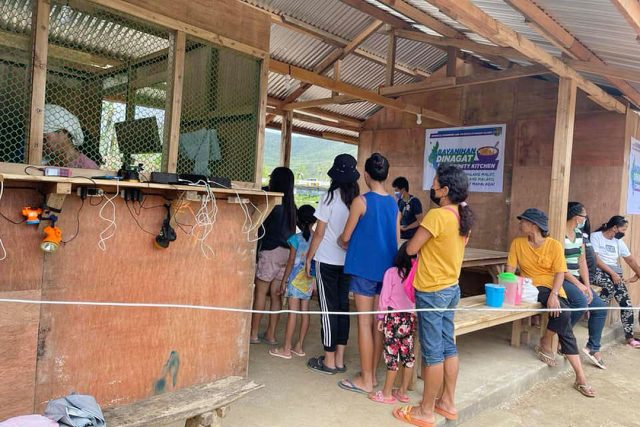
THE UNITED Nations (UN) has increased its target assistance fund for survivors of Typhoon Rai, known locally as Odette, to $169 million or P8.6 billion, from $107 million as an updated impact evaluation show wider scale of damage and more people affected.
“The revised HNP (Humanitarian Needs and Priorities Plan) reflects our new understanding based on over 70 field assessments, that despite the massive rapid response by the Government and civil society organizations, humanitarian needs remain very high,” UN Resident Coordinator Gustavo Gonzalez said in a statement on Wednesday.
Mr. Gonzalez, also the humanitarian coordinator in the Philippines, said the target beneficiaries of the HNP has been increased to 840,000 people from 530,000.
The HNP is a six-month program being implemented by the UN Office for the Coordination of Humanitarian Affairs (OCHA) with over 50 partner countries and organizations. Its priority response measures include shelter, food security and agriculture, water sanitation and hygiene, and support for continued education.
“I call on the international community to join and support our collective Humanitarian Needs and Priorities Plan,” Mr. Gonzalez said.
World Food Program Representative in the Philippines Breda Barton, speaking via video teleconference at a UN headquarters media briefing, said $51 million has been received so far.
“So, you can see we still have a long way to go,” she said.
Typhoon Odette, which struck central and southern parts of the Philippines in mid-Dec. 2021, affected over 10 million people with about 144,000 still displaced, according to UN.
Damage to infrastructure has reached P17.38 billion while agricultural toll stood at P16.89 billion, based on the Feb. 3 update from the national disaster management council.
Almost 350,000 houses were totally destroyed while over 1.15 million were partially damaged across 11 of the 17 regions in the country.
“Typhoon Rai aggravated a situation that was already fragile due to the pandemic, but it also hit some of the poorest areas of the country,” the UN official said.
“The challenges are enormous and exceed the capacity of any one organization. Only by working hand in hand with the Government and mobilizing the necessary resources can we ensure that these (affected) regions are not left behind,” he said.
USAID
Meanwhile, the United States government is providing an additional $1-million fund for communities affected by Typhoon Odette, bringing its total humanitarian support so far to $21.2 million, its embassy in Manila announced on Thursday.
With the fresh fund, the US Agency for International Development (USAID) will strengthen its partnership with the World Food Programme for additional logistics support to affected communities.
“As friends, partners, and allies, we will continue to support the Philippines in its post-typhoon recovery,” said US Embassy in the Philippines Chargé d’Affaires ad interim Heather Variava in a statement.
The embassy said since 2010, USAID has provided more than $342 million in disaster relief and recovery aid to the Philippines, and strengthened the disaster risk reduction capacity of over 100 cities and municipalities. — Marifi S. Jara