Home Blog Page 6770

Ex-Duterte aide says he’s not ready, quits presidential contest

PCOO.GOV.PH

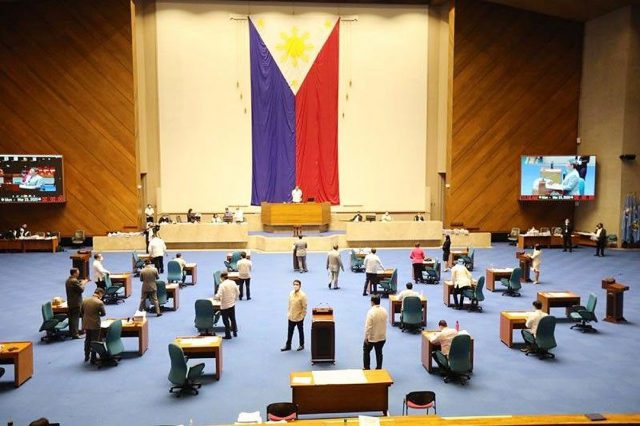
PHILIPPINE President Rodrigo R. Duterte’s preferred successor on Tuesday quit the presidential race, in another twist to an electoral contest that is dominated by influential clans.

Senator Christopher Lawrence T. Go, the president’s former aide, said he did not want to add to the problems of Mr. Duterte, whose daughter has teamed up with the only son and namesake of the late dictator Ferdinand E. Marcos.

“I do not want President Duterte to be caught in the middle,” Mr. Go told reporters in Filipino, based on a video posted by the state-run television’s Facebook page. “My love for him is more than that of a father.”

He also said he was not ready to run for president.

Candidates have been shifting parties and alliances in the runup to the 2022 elections, which appear to be still dominated by political dynasties and celebrities.

Mr. Go initially registered to run for vice-president. He changed his decision at the last minute after Davao City Mayor and presidential daughter Sara Duterte-Carpio decided to run for vice-president.

She is running under Lakas-CMD, the political party of ex-President Gloria Macapagal-Arroyo, a known powerbroker in Philippine politics. Lakas-CMD has adopted her running mate, Ferdinand “Bongbong” R. Marcos, Jr., as its presidential bet.

Earlier this month, Mr. Marcos’s Partido Federal ng Pilipinas and Ms. Caprio’s Lakas-CMD partnered with the political party founded by ex-President Joseph E. Estrada, who was toppled by a popular uprising in 2001. He spent years in prison before he was convicted for corruption and later pardoned by Ms. Arroyo.

The withdrawal of Mr. Go from the presidential race is just an attempt to “salvage the crumbling Duterte-Marcos alliance,” former Party-list Rep. and senatorial candidate Neri J. Colmenares said in a statement.

He said the President had “groomed” his former aide to be his shield from potential lawsuits after his six-year term ends next year. Mr. Duterte is barred by law from running for reelection.

Mr. Colmenares said it was clear from the start that Mr. Go had very little chance of winning and that the President was just using him as leverage to get as many concessions as possible from Mr. Marcos. “He is there to protect and benefit from the Duterte dynasty.”

Critics have said Mr. Duterte, who is running for senator, might be doing everything to protect himself from potential lawsuits.

The International Criminal Court’s (ICC) Office of the Prosecutor has said it would ask the Philippine government to provide proof that it is investigating its war on drugs that has killed thousands, after the tribunal suspended an initial probe.

The Philippines must submit concrete proof that it is taking steps to hold human rights violators accountable in Mr. Duterte’s anti-drug campaign, it said.

Also on Tuesday, a group representing drug war victims at the Hague-based tribunal asked ICC Prosecutor Karim Khan to continue its initial probe of the anti-drug campaign.

“Contrary to the claim of the Philippine government, there is no genuine domestic investigation, much less prosecution, being conducted into crimes against humanity in the context of the war on drugs campaign,” Rise Up for Life and Rights said in a letter to Mr. Khan.

The group cited an “unjustified delay and even aversion” on the part of the government in investigating and prosecuting crimes linked to the drug war.

The government’s Nov. 10 letter to the ICC’s Office of the Prosecutor explaining that it had been conducting investigations into the drug war is “incorrect and misleading.”

“The proceedings described in the letter do not involve investigations into crimes committed as part of a widespread or systematic attack against a civilian population pursuant to a state or organizational policy,” it said.

The group said the Department of Justice’s review of 52 cases out of the tens of thousands killed and probes supposedly carried out by police “deliberately treat the crimes individually and separately, ignoring any evident connection between the various acts.”

“The domestic investigations mischaracterize these crimes as isolated incidents involving a few errant police personnel, described by the Duterte administration as just a few bad apples,” Rise Up for Life said.

The government has taken an increasingly large role in targeting civilians, “no longer trying to create distance by outsourcing the majority of violence to vigilantes,” US-based Armed Conflict Location and Event Data Project said in a report on Nov. 18.

After analyzing data and information from at least 40 sources, the group said the Philippine government had been “undercounting” civilian deaths in the drug war.

At least 1,100 deaths in the drug campaign have not been counted by the government. “We now estimate at least 7,742 civilians have been killed in the drug war since 2016.” — Kyle Aristophere T. Atienza

Number coding scheme, light truck ban in effect Dec. 1 

PHILIPPINE STAR/ MICHAEL VARCAS

THE MODIFIED vehicle reduction scheme and ban on light trucks in Metro Manila take effect again on Dec. 1, the Metropolitan Manila Development Authority (MMDA) announced on Tuesday.   

MMDA said the resumption of these programs intended to ease road congestion in the capital region is based on a recent survey showing that “the current traffic situation is approaching the pre-pandemic levels.”  

“Data shows that the travel speed along the northbound portion of EDSA is 9.66 kilometers per hour. Hence, we have to reinstate the number coding scheme during the afternoon rush hours to address the problem. We are trying to exhaust all options here,” MMDA Chairman Benhur C. Abalos said in a press conference.    

The number coding scheme will reduce the number of vehicles plying EDSA by about 2,700 vehicles per hour, according to Neomie T. Recio, MMDA Traffic Discipline Office director.  

The scheme — wherein vehicles with plates ending in 1 and 2 are prohibited from roads on Mondays, 3 and 4 on Tuesdays, 5 and 6 on Wednesdays, 7 and 8 on Thursdays, 9 and 0 on Fridays — applies only to private vehicles from 5-8 p.m. on weekdays, except holidays.   

For light trucks, whether for private or commercial use, the ban from EDSA between Magallanes and North Avenue is from 5:00 a.m. to 9:00 p.m. weekdays, both northbound and southbound. 

BARMM records 93,874 jabs on day 1 of 3-day mass vaccination drive 

BARMM MINISTRY OF HEALTH

THE BANGSAMORO Ministry of Health reported 93,874 doses of coronavirus vaccines administered on Monday, the first of the three-day nationwide mass vaccination campaign from Nov. 29 to Dec. 1. 

In a statement posted on the Bangsamoro Autonomous Region in Muslim Mindanao (BARMM) government’s official Facebook page, the health ministry said they have set up 340 vaccination hubs across the region’s five provinces, with the highest at 237 in Maguindanao, which has the biggest population at over 1.34 million.   

Lanao del Sur, including Marawi City, recorded the highest number of vaccinated at 54,639, followed by Sulu with 15,027. Maguindanao reported 10,812; Tawi-Tawi, 8,203; and Basilan, including Lamitan City, 5,193.   

BARMM, with a total population of over 4.4 million and the lowest vaccination rate among all Philippine regions, has an ongoing information campaign supported by the United Kingdom government and the United Nations Children’s Fund (UNICEF) to address hesitancy and refusal to get coronavirus vaccines.    

The Ministry of Health said 314,877 of the eligible population were fully vaccinated as of Nov. 21.  

Health Minister Bashary Latiph said last week that the region has sufficient vaccine supply for its target population. 

Social Services Minister Raissa Jajurie, meanwhile, said her department is supporting the vaccination campaign by distributing relief aid to indigents who will get their jabs during the three-day campaign.  

The region has one of the lowest total coronavirus disease 2019 (COVID-19) cases in the country with 15,431 as of Nov. 29. Of the total since the start of the pandemic, 205 were active, 14,603 recovered and 623 died. — MSJ 

Protests held as PHL commemorates revolutionary hero’s birth 

PHILIPPINE STAR/EDD GUMBAN

PRESIDENT Rodrigo R. Duterte on Tuesday urged Filipinos to emulate Andres Bonifacio’s “strong sense” of civic duty and courage as the country commemorated the revolutionary hero’s 158th birth anniversary, which was also marked by protests. 

In his speech at a historical shrine in San Juan City, Mr. Duterte encouraged the public to actively participate in nation-building efforts, such as activities that address the country’s coronavirus situation.  

“The bravery and patriotism of Gat Andres Bonifacio and many of our forebears who fought against foreign dominators must serve as our guiding post in beating the odds that hinder our progress as a people and as a nation,” said Mr. Duterte, who led a foreign policy pivot to China when he took office in 2016.  

The tough-talking leader has been accused of gambling Philippine territories to appease China, from which he got about P1.2 trillion in investment and loan pledges to boost big-ticket infrastructure projects. But critics said few have materialized.  

Progressive groups, meanwhile, commemorated Bonifacio Day with protests in the capital, recognizing him as a member of the working class who took up arms against foreign colonizers and local traitors.   

The tandem of presidential aspirant and labor leader Leodegario “Ka Leody” De Guzman and vice-presidential candidate Walden Bello joined protesters as they tried to march to the national hero’s famous shrine in the Philippine capital, which is just a few steps away from the office of Manila City Mayor Francisco Isko” M. Domagoso, another contender for the presidency.  

“What happened here is clear: Isko took advantage of his power as mayor to push out his rivals from the scene,” said Herbie Docena, a sociology professor who is campaigning for Mr. De Guzman.  

Mr. Bonifacio worked as a messenger and warehouse keeper before he founded a revolutionary movement called the Katipunan composed of workers, peasants, and members of the middle class.  

In April 1897, a faction of the revolutionary movement arrested him for treason and was executed by firing squad. — Kyle Aristophere T. Atienza 

Overseas workers decry higher passport renewal cost with 3rd party service provider 

PHILSTAR

FILIPINO workers based overseas denounced the government’s use of a third party service provider for the renewal of passports, which has bumped up costs.  

“The third party may resolve the convenience concerns, but it is at the expense of our OFWs (overseas Filipino workers) and migrants,” Joanna Concepcion, chairperson of Migrante International, said in a Viber call with BusinessWorld  

Philippine embassies in the Middle East, Europe, Asia, and the United States (US) have tapped e-Passport Renewal Centers (PaRC) to provide a faster, more convenient option for Filipinos to renew passports.  

The price, however, is more than double through the PaRC service, according to Ms. Concepcion.   

She cited that in Italy, passport renewals now cost €135 or about P7,688 from €54 or P3,064. 

These fees are excessive and a burden especially at a time when migrant workers’ job security and wages are still affected by the coronavirus pandemic, she added. “It’s unjust.”  

The Department of Foreign Affairs (DFA) has yet to respond to BusinessWorld’s request for comment.  

Ms. Concepcion said, the government should do away with the third-party contracting service and instead reassess the factors that slow down the process of its appointment and passport renewal system.  

“It is still the main responsibility of the DFA to provide renewal passport services as a service to Filipino nationals — this should not be outsourced to a private company,” she said. — Alyssa Nicole O. Tan 

House bill seeks to provide free dialysis to senior citizens 

PHILSTAR

A BILL was filed at the House of Representatives seeking to make dialysis procedures free to senior citizens with kidney conditions.  

House Bill 10545, filed by Magdalo Party-list Rep. Manuel D.G. Cabochan III, proposes that the Philippine Health Insurance Corp. (Philhealth) cover costs needed for dialysis such as laboratory fees and supplies in accredited medical facilities.  

It will cover only the latest edition of the Philippine National Drug Formulary.  

Mr. Cabochan said the bill is needed as the treatment of kidney diseases remains costly for senior citizens, especially those who rely on their monthly pension to meet their daily needs.  

He also said that PhilHealth’s dialysis coverage of 90 free sessions per year for those with kidney diseases is not enough as patients usually need to have sessions three times a week.  

“Patients still need to cover the remaining 54 out of the 144-session as out-of-pocket expenses amount to an average of P243,000,” he said in the bill’s explanatory note. — Russell Louis C. Ku 

NGO supports replacement of coronavirus task force with science-based council 

PHILIPPINE STAR/ MICHAEL VARCAS

THE TASK force handling the coronavirus response should be replaced with a science-based council for better measures and programs, a non-government organization (NGO) said in support of a proposal made by a senatorial candidate.   

The Advocates of Science and Technology for the People (AGHAM), in a news release on Monday, said the “unscientific and militarist approach to address the pandemic has cost the country tens of thousands of lives, which could have been saved had the Duterte government listened to science.” 

Human rights lawyer and Senatorial candidate Jose Manuel Tadeo “Chel” I. Diokno said last week that the task force should be a team composed of people who “know about health, issues in science, and issues in information technology.” 

“Our enemy during the pandemic is not armed soldiers. We are fighting a virus,” Mr. Diokno said.  

AGHAM said there is still a window for reforms that could use the country’s science and technology sector to improve the response measures and mitigate the adverse impact of the pandemic. — Bianca Angelica D. Añago  

Human-centered approach to work

KATEMANGOSTAR-FREEPIK

(Part 3)

In an article on the internet by Alistair Cox, CEO of Hays (the world’s leading recruitment specialist) in the US, entitled “The Great Resignation: Why are so many thinking about quitting?,” it is reported that according to Microsoft’s 2021 Work Trend, 41% of people are likely to consider leaving their jobs within 2021. Although the Philippines is not the US, it is worthwhile for Filipino employers to ponder the reasons for this phenomenon. They may get some insights into how their own workers have been affected by the extraordinary circumstances surrounding them during these last two years of the COVID-19 pandemic. The uncertainties, the fears, the frustrations of actually being laid off could have led to what we can call “The Great Awakening” about how insensitive a market economy could be to the multi-dimensional nature of human aspirations. Human beings work not only to earn a living. As we noted in the previous parts of this article, at the highest level of aspirations, some human beings who practice the Christian faith find in their work the means of sanctifying themselves and going to heaven.

Before going into the reasons why there is this unprecedented movement of talent, Mr. Cox noted that certain demographics of society appear to be more open to the idea of quitting than others. This insight may be useful to understand whatever parallel movement we may observe in the Philippine labor scene sooner or later. Sandra Sucher, Harvard Business School professor, found out through research that low-wage workers are particularly motivated to change jobs with even marginally better offers. Many retail and service workers are departing in favor of entry-level positions elsewhere — in warehouses or offices, for instance — that actually pay less, but offer more benefits, upward mobility, and compassion. With employers across the board looking for new hires, many found it’s easy to find another job and make a transition into more human fulfilling jobs.

The so-called Generation Z (workers in their twenties), according to Microsoft research, could be considering leaving their jobs because they reported difficulties feeling engaged and excited about work, getting a word in during meetings, and bringing new ideas to the table. These young workers may most likely join the so-called gig economy of freelancers who value flexibility in their schedule and diversity of work. Research from people analytics firm, Visier, found that the cohort of employees between 30 to 40 years old saw large increases in resignations between August 2019 and August 2020, indicating that those who are more settled in their careers are more likely to consider switching jobs. As of December 2020, resignations among managers were 12% higher than the previous year.

During the pandemic, workers have been given time and space to reflect on both their personal and professional lives. Even if most workers were not considering looking for a new job or occupation before the pandemic hit, chances are that they are now. According to a recent LinkedIn poll of over 25,000 people, 74% said that the pandemic has made them reconsider their job or career choices.  The reasons are various: feeling of not being supported on a number of levels by their employers; being forced to confront one’s own mortality in a way they never had before — something that many have never had the luxury of doing before; the realization that life is too short to do a job they don’t love, for a company they don’t think cares about them. Some just don’t want to go back to the office. This awakening, coupled with the fact that many have already relocated or are planning to so in order to be closer to family or to achieve the lifestyle they always dreamt of (like those here who started working from their second homes in Nasugbu or Matabunkay, Batangas). According to Microsoft research, some 46% of people say that they are more likely to move because they can work remotely now.

The more leisurely work schedule that those who work remotely discovered during the pandemic made them realize how burned out they had been before the pandemic. The Microsoft survey came out with the following findings:

• 37% of the global workforce say their companies are asking too much of them at a time like this.

• One in five think their employer doesn’t care about their work-life balance.

• 54% feel overworked and 39% feel exhausted.

• The Average Microsoft Teams user is sending 42% more chats after office hours, with 50% of people responding to Teams chats within five minutes.

Microsoft argues that these frightening stats “prove the intensify of the workday, and that what is expected of workers during this time has increased significantly. It is no wonder that many people are reconsidering their job options. Technology might have facilitated the transition to the work from home mode. But it also blurred the lines between work and private life and the level of burnout and exhaustion is unsustainable.”

The new circumstances in which they have to work during the pandemic have made people re-examine their need for personal development. They have postponed for too long their acquiring higher or new skills. High performing workers are the most concerned about their career development in their current job, with 75% of people saying the pandemic has made them question their skillsets. Many feel that to reach the next level and achieve their goals, they have no choice but to change jobs.

Working at home during the pandemic has had a counterproductive impact on the attitude of some employees to the current work they are doing. Without the welcome distractions and colleague camaraderie that come with working in an office, they have realized that they don’t actually enjoy the work they have been performing in their present job. As a result, there has been a huge rise in people deciding to go it alone and set up their own solo ventures. According to the National Bureau of Economic Statistics, the pace of new business applications since mid-2020 has been the highest on record, and across the course of the pandemic there has been a rise in side hustles (work done at home as a sideline). This is echoed by Microsoft’s research which found that 46% of people are planning to make a major career pivot or transition.

How can employers turn this threat of mass resignation into an opportunity? Alistair Cox gave the answer in a sequel to the article on the “Great Resignation.” He suggests two strategic moves which are ultimately based on understanding what a human-centered approach to work requires:

1. Firstly, the opportunity to redefine our employee value proposition to stop our best people from leaving in the first place, and retain them for the long-term.

2. And, secondly, the opportunity to attract those currently working for other employers who fully intend to be part of the “Great Resignation” and are about to be, or already are on the market for a new job.

(To be continued.)


Bernardo M. Villegas has a Ph.D. in Economics from Harvard, is professor emeritus at the University of Asia and the Pacific, and a visiting professor at the IESE Business School in Barcelona, Spain. He was a member of the 1986 Constitutional Commission.

bernardo.villegas@uap.asia

We need worthy leaders that put nation first and have an all of society approach

FREEPIK

The Stratbase Albert Del Rosario Institute would like to thank our many expert speakers and participants — practitioners in public and private management, international partners, the academe and studentry, civil society, and media — for joining us in this year’s five-day Pilipinas Conference. The past week was filled with enriching discussions and insights on the economy, trade and investment, the environment, defense and security, and good governance.

More than ever, given the election season, we need to pay attention to these issues and respond with the utmost urgency. Our next leaders should give high priority to addressing the mounting socio-economic and health issues brought by the COVID-19 pandemic, as well as continuing political issues such as corruption and the renewed tensions in the West Philippine Sea. As I closed the conference, I reiterated what I believe our country’s leaders and key stakeholders must do, moving forward.

First, we believe that the Philippines needs to shift to a more investment-driven growth and to establish a favorable environment for businesses. The private sector plays a key role in fighting poverty by creating new jobs, livelihood opportunities, and other stakeholder-driven initiatives. It has also proven itself as a reliable and capable partner of government in building back from this economic and health crisis.

The private sector, among other things, can provide the right investments, expertise, and innovativeness to uplift the lives of millions of Filipinos from the socio-economic challenges wrought by the pandemic. With the heightened cooperation of other stakeholders, efforts from the private sector would even be more robust.

Second, we can accelerate this shift to an investment-led economy by instituting reforms and policy changes that are conducive to business. We hope that we are able to contribute to national discussions, effectively shape Philippine foreign policy, and promote cooperation for economic recovery from the impacts of the COVID-19 pandemic.

With a stable government and sound economic policies in place, an enabling business environment can be established. This, in turn, will pave the way for commerce and trade to prosper and investments to come in.

Third, we believe that with stakeholders’ initiatives in making sustainability and environmental concerns mainstream, the government and the Filipino people can be more aware of the immediate and long-term consequences of environment and climate risks. We also hope that Filipinos will see the need to integrate sustainability as well as green and circular measures to policies, frameworks, and operations.

Fourth, with the current regional security architecture, strategic partnerships and alliances are crucial. Pursuing multilateral and inclusive cooperation are also vital in efficiently and effectively addressing the emergence of various security threats. These efforts will facilitate the promotion of the international rules-based order. At the same time, this will advance the vision of a Free and Open Indo-Pacific to bring about a peaceful, prosperous, and stable region.

Finally, we Filipinos must hold our leaders accountable at all times. Reclaiming democracy is no simple task, and, as we have seen in previous years, could often be frustrating and disheartening. Still, it is one worth engaging in. We stand against corruption and advocate for transparent and responsive governance.

In the coming elections and beyond, demanding accountable, transparent, and responsive governance is not simply the view of the Stratbase ADR Institute. This political stand is borne out of and actually triggered by national surveys that the think tank runs across the country and across demographics. The results affirm that as our society continues to struggle with economic consequences of this pandemic, eradicating graft and corruption in government has become a key issue that should be addressed by national leaders decisively and consistently. Lip service just won’t do.

All in all, the agenda that has been forged by the Pilipinas Conference 2021 caters to a whole gamut of political, economic, social, environmental, and security concerns that have been overlooked, downplayed, and even botched by the current administration for the past five and a half years. What we need is a president who is competent, has integrity, and is not corrupt.

We have to learn from our harrowing experience under the Duterte administration. We should seize the opportunity to revitalize our nation from the deep scars of the pandemic and governance crisis. Specifically, we can refer to the prevalence of the crisis of information integrity in this election period, which is caused by pandemic disinformation. Since 2016, we have been talking about how fake news paralyzes people’s critical ability to choose leaders. In response to this information crisis, we need to collectively expose and denounce trolls and disinformation machinery.

The elections are drawing near. We must ensure that societal change would be a collective, multi-stakeholder effort. Only with such convergence toward a shared common goal can we address the multi-faceted pandemic challenges and achieve a resilient and inclusive recovery post-pandemic.

We should all do our part and work together to improve our country and ensure a better future for the generations to come. Let us choose the right, worthy leaders — not those who would champion their self-interest, or foreign interests, but the interests of our nation and our long-suffering people.


Victor Andres “Dindo” C. Manhit is the president of the Stratbase ADR Institute.

The shift to PEZA visas

XB100-FREEPIK

By virtue of Republic Act No. 7916, the Philippine Economic Zone Authority (PEZA) was created to establish various economic zones and attract legitimate foreign investments into the country. The PEZA administers certain incentives to local enterprises that operate within these economic zones and helps facilitate their respective business operations. In line with these policies, the PEZA exercises the authority to issue work visas to their foreign personnel, particularly those who hold executive positions (i.e., Presidents, Vice-Presidents, Treasurers, General Managers, or their equivalents), or whose employment is supervisory, technical, or advisory in nature.

On Nov. 11, the PEZA and the Bureau of Immigration (BI) entered into a Memorandum of Agreement (MoA) to provide efficient and harmonized rules on the issuance of work visas to qualified foreign nationals and their dependents. Previously, these foreign nationals were qualified to secure 47(a)(2)(PEZA) visas under the authority of the Department of Justice (DoJ). Under the new rules, however, these foreign nationals shall now secure PEZA Visas (PV) from the PEZA and BI.

Among the notable changes introduced in the MoA is the longer validity of the PV. The PV is valid for a maximum period of two years, and is coterminous with the period stated in the foreign national’s employment contract. The application shall also come with a notarized certification which confirms that the company’s total number of foreign personnel does not exceed 5% of its total workforce.

Marriage and birth certificates of the PV applicant’s dependents are now required to be authenticated/apostilled, if issued abroad. Notably, English-translated certificates were previously accepted by PEZA even if they were unauthenticated.

Further, the PEZA and BI now require the visa holder to train Filipino understudies. While the MoA and its corresponding Implementing Rules and Regulations (IRR) did not discuss the specific guidelines for this requirement, the PEZA and BI have announced that they will issue another Memorandum Circular to clarify and address the same.

As regards the procedure, the PEZA shall issue an Order within five working days from receipt of the PV application, and shall endorse the same to the BI for further evaluation. Once the BI is satisfied that the foreign national possesses all of the qualifications for the issuance of a PV, it shall thereafter issue an Order which approves the PV application.

The PV holder continues to be exempt from securing an Alien Certificate of Registration Identification Card (ACR I-Card), but will instead be issued with a PV Card that must be updated yearly.

Under the new IRR, the company, through a visa downgrading application, shall also notify the PEZA of the PV holder’s termination or cessation of employment within five working days therefrom. The failure to do so shall be a valid ground for denial of the Company’s future PV applications. Once the visa downgrading application is approved, the foreign national shall be given a 9(a)/temporary visitor visa and will be allowed to stay in the Philippines as a tourist for a period of 59 days, commencing on the expiration date of his PV, or from the cessation of his employment with his previous employer. The foreign national with a downgraded PV shall nonetheless be required to leave the country within the period prescribed in the visa downgrading order.

In a joint briefing on Nov. 22, the PEZA and BI clarified that PV holders whose employment was terminated or whose visas have expired while they were abroad shall be required to undergo the visa downgrading process upon returning to the Philippines. Their PVs would have to be downgraded to 9(a)/temporary visitor visas before they may apply for another visa category.

All valid and existing 47(a)(2)(PEZA) visas at this time shall remain valid. However, if the PEZA-registered enterprise intends to renew their foreign personnel’s 47(a)(2)(PEZA) visas, they must accordingly convert them to PVs before they expire. Otherwise, the 47(a)(2)(PEZA) visas of these foreign nationals shall be downgraded to 9(a)/temporary visitor visas and will come with Orders to Leave (OTL).

An expired 47(a)(2)(PEZA) visa shall be downgraded to a 9(a)/temporary visitor visa, without a corresponding OTL, if the 47(a)(2)(PEZA) visa holder will continue to be employed by the same PEZA-registered entity. Once the visa is downgraded, the company should cause the conversion of the foreign national’s 9(a)/temporary visitor visa to a PV so that his employment in the Philippines will continue to be authorized.

Unlike 47(a)(2)(PEZA) visa applications, it appears that PV applications will no longer go through the evaluation and endorsement of the DoJ. This seems to be contrary to the mandate of Section 47(a)(2) of the Philippine Immigration Act which authorizes the President, through the Secretary of Justice, to admit foreign personnel of PEZA-registered entities as special non-immigrants in the Philippines.

While the representatives of PEZA and BI may conduct periodic inspections to ensure proper compliance with the MoA and its IRR, the effective implementation of these guidelines is crucial in regulating the employment of foreign nationals who are working for PEZA-registered enterprises.

This article is only for general informational and educational purposes and is not offered as and does not constitute legal advice or opinion.


Napoleon L. Gonzales III is a senior associate of the Immigration Department of the Angara Abello Concepcion Regala & Cruz Law Offices (ACCRALAW).

nlgonzales@accralaw.com

(632) 8830-8000

Only winning over skeptics can avoid shocks like Omicron

WIRESTOCK-FREEPIK

HOW DO WE ensure that the world has access to the COVID-19 vaccines needed to prevent more variants like the latest Omicron strain from emerging?

One disturbingly common response to calls from the World Health Organization (WHO) and others to increase the availability of doses in emerging economies is to suggest supply isn’t really the problem, but demand. South Africa, where Omicron was first identified, provides one data point in favor of this hypothesis. Despite the fact that barely 24% of the population has been fully vaccinated, the Department of Health last week asked Johnson & Johnson and Pfizer, Inc. to suspend delivery of vaccines because its existing stockpile was more than enough at current lackluster rates of uptake.

To be clear, outside of the rich world demand is clearly not the main constraining factor on inoculations. All but 14 of the 51 nations with supply agreements sufficient to cover their entire populations are high-income countries, according to data collected by Unicef.

Vaccine manufacturing capacity, which a database kept by Duke University puts at 11.435 billion doses this year, is simply insufficient to double-dose everyone on the planet. The rich nations where most shots have been developed have managed to hog the lion’s share of both first, second, and third boosters so far.

Next year, though, that’s likely to change. Unicef’s figures suggest that we’ll have capacity to produce about 23.53 billion doses, more than enough to put a needle in every person on the planet three times over. At that point, hesitancy in the unvaccinated world may become a real problem — and everything we’re doing now is likely to make it worse.

Tackling the reluctance of people to take action against epidemic disease isn’t a new problem. Indeed, from the heyday of smallpox eradication after World War II to the current campaign to snuff out the last vestiges of polio and guinea worm, it’s at the heart of what groups like the WHO do year after year.

The lessons of that experience for lower-income nations are fairly straightforward. People need outside public-health experts to show a genuine interest in the problems they face, from a lack of drinking water, sanitation, and clean cooking facilities to more neglected and endemic diseases such as HIV, tuberculosis, malaria, and diarrhea. Ideally, vaccines should form part of a package of measures to improve health, rather than be a one-time campaign parachuted into remote communities. If the motivations of those driving the push and the direct impacts on those receiving doses are unclear, that can lead to suspicion and conspiracy theories, especially among vulnerable populations.

Looked at that way, it’s clear why our current strategy is setting itself up for failure. By not ensuring sufficient doses for the world and hoarding those we do have, rich nations are sending a strong signal that vaccinations don’t really matter.

Sub-Saharan Africa in particular has reason to take outside advice with a pinch of salt. For reasons that are still unclear but probably relate to the youth of the population (around one in 20 Africans are over the age of 60, compared to about a quarter of Europeans and North Americans), mortality and severe sickness from COVID-19 has been far lower than other parts of the world. The comparatively affluent and old South Africa is a notable exception.

Unlike polio, which frequently causes prominent leg and spine deformities, the effects of COVID aren’t particularly visible, making vaccination a harder sell to skeptics. In asking Africans to take doses once they become available, we’re appealing to them to pull together for the sake of our own elder populations, while showing little evidence of solidarity in the other direction.

There are some advantages in this fight. Africa is already more urbanized than much of Asia, meaning there’s a smaller rural population disconnected from routine health information. Its public health systems, while starved of funding, are well set up to tackle COVID because communicable diseases have always been the main threat to local populations. That contrasts with richer countries, which direct resources more toward conditions of aging, such as cancer and heart disease. The long, bitter struggle to roll out polio vaccines, HIV antiretrovirals, and tuberculosis antibiotics also means we have a head start in knowing what problems to address.

We have to heed those lessons and work fast. While the small size of Africa’s over-60 population might be protecting it from major outbreaks, the legacy of HIV and the prevalence of undernourishment mean there is an unusually large population with the weakened immune systems that are so conducive to cooking up new and concerning variants of COVID.

Richer countries may feel safe behind their walls of boosters and travel restrictions. Until the whole world is protected, though, those defenses will be under constant assault.

BLOOMBERG OPINION

Messi claims record-extending seventh Ballon d’Or

LEO MESSI FB PAGE

ARGENTINA’S Lionel Messi won the Ballon d’Or award for the best player in the world for a record-stretching seventh time on Monday, beating Robert Lewandowski and Jorginho to lift soccer’s most prestigious trophy yet again.

The forward added to his 2009, 2010, 2011, 2012, 2015 and 2019 trophies after winning the Copa America for the first time with his country last July.

“It’s incredible to be here again. Two years ago, I thought it was the last time. Winning the Copa America was key,” Messi said at Paris’s Theatre du Chatelet.

“It is a special year for me with this Copa America title. It meant a lot to win at the Maracana stadium and I was so happy to celebrate with the people from Argentina.

“I don’t know if it’s the best year of my life, I’ve had a long career, but it was a special one with the title with Argentina after the tough times and the criticism.”

Messi, who joined Paris Saint-Germain on a free transfer from Barcelona during the close season after finishing as La Liga’s top scorer with the Spanish club, collected 613 points, with Bayern Munich’s Lewandowski, named best striker on Monday, getting 580.

Jorginho, who won the Champions League with Chelsea and the European championship with Italy, ended up third on 460, ahead of France’s Karim Benzema and Ngolo Kante in fourth and fifth places respectively.

Chelsea, named club of the year, also had keeper Edouard Mendy finishing second in the Yashin trophy behind Italy’s Gianluigi Donnarumma.

The women’s Ballon d’Or went to Alexia Putellas after the Spain midfielder guided Barcelona to Champions League glory.

“The key moment was the Champions League final against Olympique Lyonnais,” she said.

Putellas is the third winner of the Ballon d’Or Feminin after Ada Hegerberg in 2018 and Megan Rapinoe in 2019. There was no ceremony last year due to the coronavirus pandemic.

On a good night for Barcelona, the 19-year-old Pedri was awarded the Kopa trophy for the best Under-21 player.

“The best way to celebrate turning 19 is receiving this award. I’d like to thank everyone at Barcelona for helping me here,” he said. — Reuters