Home Blog Page 6769

PAF advances to Champions League volley semis

PNVF

GAMES TODAY
(Aquamarine Recreational Center Gym, Lipa, Batangas)
10 a.m. – Sabong International Spikers vs. Team Dasma Monarchs
1:30 p.m. – VNS Manileño Spikers vs. Basilan Steel Spikers
4 p.m. – MRT-Negros vs. Global Remit

LIPA CITY — Go For Gold-Air Force (PAF) punched a ticket to the semifinals with a sweep of pool play following a 25-15, 28-26, 25-20 win over Basilan Steel Spikers in the Philippine National Volleyball Federation (PNVF) Champions League men’s tournament at the Aquamarine Recreational Center Gym here.

Living up to expectations as the tournament’s heavy favorites, the national team-heavy Aguilas rose to the occasion and clinched the top seeding in Pool A after also trouncing VNS Manileño Spikers in the opener the other day.

John Vic de Guzman and Mark Alfafara fired 17 and 13 markers, respectively, to anchor the Aguilas, who will face the No. 2 team in Pool B in the crossover semis knockout on Friday.

“We still need to work on our defense, service and reception entering the Final Four. That will set the pace for us moving forward,” said coach Dante Alinsunurin, banking on a core composed of the country’s Southeast Asian Games team in 2019.

Earlier, Team Dasma Monarchs claimed the solo lead in Pool B after smothering MRT-Negros 25-16, 22-25, 25-20, 25-23 behind the troika of Mark Frederick Calado, Madzlan Gampong and Ronniel Rosales.

Calado and Gampong chipped in 13 points each while Rosales added 10 with three blocks as the Monarchs zoomed to a 2-0 card in Pool B entering their last match against Sabong International today.

“We’re happy to be 2-0, but we still have a lot to learn. We can’t relax yet,” said mentor Norman Miguel as his squad aims for the top-seed finish in Pool B after also besting Global Remit the other day.

Negros slid to 1-1 in Pool B heading into a must-win match against Global Remit today while Basilan (0-1) and VNS Manileño (0-1) dispute the last semifinal spot from Pool A.

The PNVF Champions League is backed by Rebisco, Pitmaster Foundation, Inc., Top Speed, 1Pacman Partylist, Philippine Sports Commission and Philippine Olympic Committee as platinum sponsors; F2 Logistics, Asics, PLDT, MVP Sports Foundation and Mikasa as gold sponsors; and BCDA, Philippine Red Cross, Lipa City, Davis Paint and Emerald PVC Pipes, Fittings and Doors as silver sponsors with PNVF godfather, Taguig Rep. Alan Peter S. Cayetano, chairman of the Champions League, giving his full support. John Bryan Ulanday

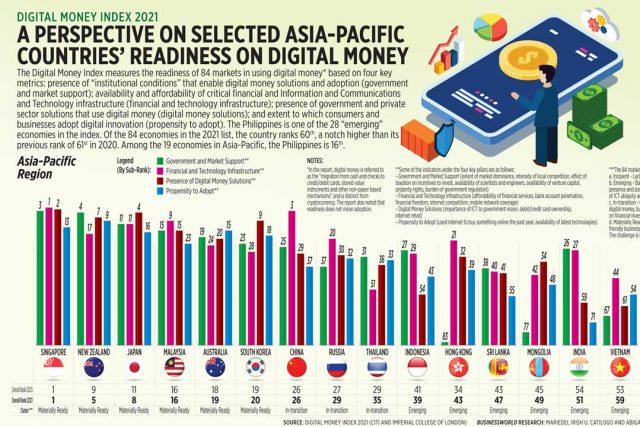
A perspective on selected Asia-Pacific countries’ readiness on digital money

A perspective on selected Asia-Pacific countries’ readiness on digital money

PEZA actively pitching Korean investors as economy reopens

THE PHILIPPINE Economic Zone Authority (PEZA) said it is pinning its hopes on expanding the pool of South Korean investors to add momentum to the reopening of the economy.

PEZA Director General Charito B. Plaza said at a recent virtual forum that the agency is continuing its efforts to attract investors throughout the coronavirus disease 2019 (COVID-19) pandemic.

“We continue our efforts to attract and invite investors. We establish new partnerships as well with various government agencies so that we may be able to urge more local and foreign investors to do business in the Philippines by improving the efficiency factors for investments,” Ms. Plaza said.

According to PEZA, there were 320 registered South Korean locators in the Philippines as of September, representing P53.98 billion worth of investment and generating $1.095 billion in exports. It added that South Korean locators employ 42,675 workers.

Maria Theresa B. Dizon-De Vega, Philippine ambassador to South Korea, urged South Korean companies to take advantage of investment opportunities in advanced industries that may emerge with the finalization of the Philippine-Korea Free Trade Agreement (FTA).

Ms. De Vega said that in 2020, South Korea was the fifth-largest trading partner of the Philippines, seventh-largest export market, and fourth-largest source of imports, with bilateral trade valued at $13.92 billion.

“Korea’s status as a high-technology, innovation-focused economy makes it an attractive development partner for the Philippines in various sectors… the Philippines’ development in these sectors is critical in helping the country fulfill its stated long-term commitments towards inclusive green growth and sustainable development,” Ms. De Vega said.

“We hope that businesses will take advantage of the FTA once it becomes effective by next year so we can increase trade between our two countries. With an FTA in place, the Philippines remains as an ideal investment destination and partner for companies in Korea,” she added. — Revin Mikhael D. Ochave

DPWH receives road master plan from Japan covering 9,000 km of ‘high-standard highways’

THE Department of Public Works and Highways (DPWH) said Tuesday that it recently received from the Japan International Cooperation Agency (JICA) an updated road master plan that involves the development of 9,000 kilometers (km) of “high-standard highways” in the Philippines.

The new master plan updates the Phase 1 road master plan for 2010, which focused on areas within a 200-km radius of Metro Manila, Metro Cebu, and Metro Davao.

JICA officially turned over the “High Standard Highways (HSH) Network Development Master Plan – Phase 2” to the DPWH on Nov. 29, according to the department. The new master plan expands the coverage outside highly urbanized areas.

The new road master plan is “crucial not just in decongesting highly urbanized areas but also in achieving the 2040 National Development Plan of making the Philippines a prosperous country by investing in high quality infrastructure,” Acting Public Works Secretary Roger G. Mercado said in a statement.

On its website, JICA said it signed a partnership deal with the DPWH on the second phase of the road master plan in September 2017. The goal is to “ease traffic congestion along national roads, and boost investment and jobs creation in the regions.”

“The project, a follow-up to the previous master plan conducted in 2010, will cover the entire Philippines and identify infrastructure projects that can be implemented until 2040,” it added.

JICA defines high-standard highways as “highways that provide high level of traffic services assuring high-speed mobility and safe travel to support economic activities in strategic regions and the country as a whole.”

According to the department, the master plan proposes the construction of 4,400 km of HSH Class 1 roads, including upgrades to 406 km of existing roads, 265 km of roads under construction, and 3,279 km of new roads along major transport corridors.

“About 4,600 km of HSH Class-2 (regional high-standard highway) will branch off from the HSH Class-1 to provide connection to sub-regional centers, important ports and airports not covered by HSH Class-1,” the DPWH said.

JICA’s development assistance also covers the pre-feasibility study of four projects: the Agusan Del Norte – Butuan City Logistical Highway in Region XIII; the Cebu Circumferential Road in Region VII; the Central Mindanao Highway, Cagayan de Oro-Malaybalay Section in Region X; and the second San Juanico Bridge in Region VIII.

The Ninoy Aquino International Airport Expressway, Central Luzon Link Expressway, and Cavite-Laguna Expressway were among the projects implemented under the master plan’s first phase, according to JICA, through public-private partnerships and official development assistance. — Arjay L. Balinbin

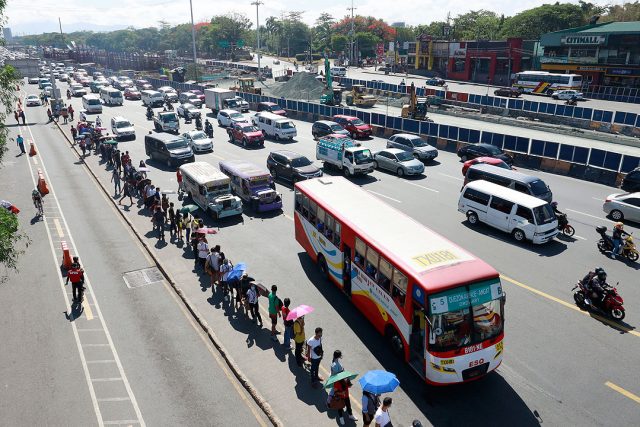
Public transport plans not friendly enough to commuters, NGO says

PHILIPPINE STAR/ MICHAEL VARCAS

By Russell Louis C. Ku

THE SENATE’S realignment of P10.83 billion from the Department of Transportation (DoTr) budget to support service contracting and the EDSA Busway will not be enough to address the problems currently faced by commuters, according to the Move as One Coalition, a transport advocacy.

The coalition’s John P. Sevilla, a former finance undersecretary who headed the Bureau of Customs (BoC), said that various government agencies should “reorient themselves and their goals properly” to be able to provide better road transport solutions.

“While public transportation has since been gradually restored (from when the pandemic started), there is still not enough of it.  Most transport sector workers have endured long periods of no income or low income, even as commuters have faced difficulties getting rides at rush hour,” he said in a Viber message.

He added that President Rodrigo R. Duterte’s Build, Build, Build program has long ignored commuters and active transport users.

The Senate agreed to realign P10.83 billion in its version of the 2022 national budget which included increased funding for service contracting — paying transport workers to ply the roads and compensating them for low ridership — from P6 billion to P10 billion, the EDSA busway project, and active transport projects.

The coalition is lobbying for P150.48 billion in next year’s budget for investment in road transportation, with a focus on service contracting, active transport, and infrastructure such as terminals and bus stops.

It also expressed its support for cycling groups which called on Congress on Nov. 28 to increase the budget for bicycle lanes from P2 billion to P14 billion.

Mr. Sevilla said that while the government started to invest in bike lanes in response to the pandemic, more work needs to be done to ensure that bikers are protected on the road.

“Only a small fraction of the bike lanes, even on the busiest roads such as C-5 and EDSA, are physically segregated from motor vehicles. The quality of the bike lanes has also deteriorated significantly even just in the last six years. Lots of potholes, some (of which are) very large, and all definitely posing risks to cyclists,” Mr. Sevilla said.

Realignments in the funding for the Department of Public Works and Highways (DPWH), which has a proposed budget of P686.1 billion, are also needed to improve active transportation such as high-quality sidewalks on all roads, at-grade road crossings, and escalators or elevators for persons with disabilities and senior citizens.

“The newly opened bridges in Estrella-Mandaluyong and Pasig-Bonifacio Global City are perfect examples of how DPWH ignores the needs of pedestrians and that is unacceptable,” Mr. Sevilla added.

He added that transportation authorities should strengthen their capacity and refine their systems to ensure smoother implementation of their programs.

“I don’t think (the) Land Transportation Franchising and Regulatory Board and DoTr staff even know what the actual waiting time for rides is in different parts of Metro Manila, at different times of the day. They need to (understand these) and bring those down to reasonable levels,” Mr. Sevilla said.

He also said that transportation should also take priority as an issue to be tackled in the 2022 elections to see which candidates “displays a better understanding (on) the problems of ordinary commuters.”

Vice-President Maria Leonor G. Robredo said in a forum on Nov. 18 that she plans to move away from “car-centric” projects in favor of building active transport infrastructure, starting with traffic-congested areas.

Meanwhile, Senator Emmanuel D. Pacquiao said that he would push for “more Skyways” in Metro Manila.

Urban green hydrogen, fuel cell projects being explored with possible German assistance

THE Department of Energy (DoE) is exploring the potential of green hydrogen production in urban areas along with fuel cell projects, which could be carried out with potential partners from Germany, the German-Philippine Chamber of Commerce and Industry (GPCCI) said.

The DoE was in discussions with the chamber with the aim of “forging partnerships between Philippine and German stakeholders on the integration of green hydrogen and fuel cell technology into the Philippines’ renewable energy roadmap,” the GPCCI said in a statement.

The discussions were carried out virtually on Nov. 24.

Green hydrogen is produced with zero-carbon renewable energy instead of fossil fuels and has the potential to provide clean power for manufacturing and transportation, with only water as its byproduct.

“Reliably storing clean energy, mainly from solar and wind in the Philippines, is an ongoing challenge and limits its use as a backup power,” GPCCI’s Deputy Executive Director Charlotte Bandelow added.

The GPCCI said that the green hydrogen initiative comes as Philippine energy usage increases in line with economic and population growth.

“While coal still makes up most of the Philippines’ energy mix, there is a continued expansion of renewable energy sources which is the basis for green hydrogen production,” it said.

The German Embassy in Manila’s Commercial Counsellor Georg Maue told the DoE that although the transition from fossil fuels to climate-friendly renewable energy sources is challenging, Germany can provide support for the transition via technical expertise and partnerships.

The Philippines has committed to bring the share of renewables in its energy mix to 35% by 2030, three times the 2010 level, facilitated by reform measures such as the Electric Power Industry Reform Act of 2001 (EPIRA), the Biofuels Act of 2006, the Renewable Energy Act of 2008, the Climate Change Act of 2009, and the Energy Efficiency and Conservation Act.

The GPCCI, on behalf of the German Federal Ministry for Environment, Nature Conservation, and Nuclear Safety (BMU), is assessing the market potential for green hydrogen applications in Philippine urban areas.  — Marielle C. Lucenio

ARTA launches drive to promote red tape-reduction; kickoff in La Union

THE Anti-Red Tape Authority (ARTA) said it is carrying out a nationwide information campaign to increase public awareness of its ease of doing business and anti-red tape initiatives.

ARTA Director General Jeremiah B. Belgica said the initiative, known as the “cARTAravan,” will be conducted in partnership with local government units (LGUs). The campaign was launched Monday in San Fernando, La Union.

“The cARTAravan sends a message that the train of reform is now making rounds all over the Philippines,” Mr. Belgica said in a statement.

Mr. Belgica said members of the LGU committee against red tape should be the responders in the event of reports of red tape in their jurisdictions.

The campaign kickoff involves compliance checks in Rosales, Lingayen, and Dagupan, Pangasinan.

Mr. Belgica also encouraged the public to report any instances of red tape to ARTA.

Kung kayo po ay nahihirapan sa proseso na hinihingan kayo at kayo po ay nagtatagal dahil inuupuan ang mga papel ninyo, gusto po naming ipaalam sa inyo na hindi na normal ’yan sa panahon ngayon. Kung hindi niyo alam na mayroong batas, narito po kami para sabihin sa inyo na magsumbong po kayo sa amin” (If you encounter any difficulties, including any demands made on you, or any delays because your papers are not being acted on, those are no longer considered acceptable. If you’re not aware of the (ease of doing business) law, we are here to ask you to report such incidents to us), Mr. Belgica said.

ARTA Deputy Director General Ernesto V. Perez said the full implementation of Republic Act No. 11032 or the Ease of Doing Business and Efficient Government Service Delivery Act will ultimately benefit everyone.

“It will improve, not only our competitiveness ranking, but it will also provide opportunities to our fellow Filipinos to have employment and businesses,” Mr. Perez said.

According to ARTA, the caravan will visit in the Cordillera Administrative Region, Ilocos Region, and Cagayan Valley in the following days, and will inspect other LGUs in the Visayas next week. Other regions will be visited next year. — Revin Mikhael D. Ochave

Bill extending validity of 2021 budget funds introduced in Senate

A BILL extending the availability of the 2021 budget appropriations until the end of next year was filed in the Senate after the House approved a counterpart measure on third reading Monday.

Senator Maria Imelda Josefa R. Marcos filed Senate Bill 2452, which amends Section 62 of the general provisions of Republic Act 11518 or the General Appropriations Act (GAA) of Fiscal Year 2021.

The extension was intended to provide more time to implement projects and programs as the coronavirus pandemic has “drastically affected businesses and employment,” delaying planned expenditures.

“I support extending (the) validity of (the) ‘21 budget,” Senate President Pro Tempore Ralph G. Recto said earlier in a message to reporters.

Senate Minority Leader Franklin Drilon also expressed his support, noting the poor disbursement rate of 31.5% for budget funds in 2021 due to the pandemic. “Underspending is like a disease that impedes our growth,” he added.

“We should use the budget in order to generate economic activities, feed Filipinos and create jobs amid the pandemic,” he said in a statement.

If enacted, all appropriations authorized in the 2021 GAA, including budgetary support to government-owned and -controlled corporations, will be available for disbursement under the same general and special provisions until Dec. 31, 2022.

Appropriations for the National Disaster Risk Reduction and Management Fund for calamities, epidemics, armed conflicts, terrorism, and other catastrophes occurring in 2021, as well as financial aid to local government units (LGUs), will be available for release until the end of 2023, while appropriations for the LGU share of National Government income will be available for obligation and disbursement until fully expended.

After the end of the validity period, all remaining appropriations will revert to the unappropriated surplus of the general fund.

Sen. Juan Edgardo M. Angara, who chairs the Senate Finance committee, also backed the proposed bill. “We personally support the extension, and hopefully our colleagues in the Senate will too. Because of the extended lockdowns and occurrences, budget and project implementation has been less efficient and smooth.”

“Rather than the funds reverting to the national treasury, it would be better for the country’s recovery if we were to extend the effectivity of the 2021 budget in order to implement projects and fund programs which might have been delayed during the year for one reason or another,” he said in a statement.

According to the bill, appropriations for infrastructure, operating expenses, and capital outlay will only be valid until the end of 2022, but the completion of construction, inspection, and payment process may extend until the end of June 2023.

The Budget department is authorized to issue the guidelines for the effective implementation of the cash budgeting system.

President Rodrigo R. Duterte has approved similar legislation that extended the validity of the 2019 and 2020 national budgets. — Alyssa Nicole O. Tan

Philippines posts lowest daily tally in 17 months

DEPARTMENT OF HEALTH FB PAGE

By Kyle Aristophere T. Atienza, Reporter

THE PHILIPPINES logged 425 coronavirus infections on Tuesday — the lowest daily tally since June 2020 — bringing the total to 2.83 million.

Tuesday’s tally was the lowest since July 2, 2020, when 294 infections were recorded, according to the Worldometer website, citing various sources including data from the Department of Health (DoH) and World Health Organization (WHO).

The death toll hit 48,545 after 44 more patients died, while recoveries increased by 909 to 2.77 million, DoH said in a bulletin.

There were 15,800 active cases,47.5% of which were mild, 5.3% did not show symptoms, 16% were severe, 24.42% were moderate and 6.8% were critical.

The agency said three duplicates had been removed from the tally, two of which were reclassified as recoveries, while 40 recoveries were relisted as deaths.

It added that 63 cases were found to have tested negative and have been removed from the tally. Two laboratories did not operate on Nov. 28, while four laboratories failed to submit data.

DoH said 26% of intensive care units in the Philippines were occupied, while the rate for Metro Manila was 25%.

The Philippines gave out about 2.55 million doses of coronavirus vaccines on the first day of its three-day immunization drive, Health Undersecretary Myrna C. Cabotaje told a televised news briefing.

This was 2.5 times higher than the weekly average of a million vaccinations, she said. It puts the country in fifth spot worldwide in terms of jabs given out in a single day, she added.

Ms. Cabotaje said the Calabarzon region had the highest inoculation rate, followed by Central Luzon, Western Visayas, Central Visayas and Bicol.

“The President has an order to vaccinate everyone,” Ms. Cabotaje said in Filipino, referring to President Rodrigo R. Duterte’s proclamation declaring the three-day National Vaccination Days. She cited reports that some walk-in citizens had not been vaccinated.

“Our directive is to allow walk-ins,” she said. “No one should go home without receiving a shot.”

The Philippines aims to fully vaccinate 54 million people by the end of the year. Pandemic authorities originally aimed to inject 15 million shots during the vaccination campaign that runs from Nov. 29 to Dec. 1.

Still, the target could be a record in a country that had struggled to inoculate its people due to vaccine hesitancy, supply issues and various logistical hurdles.

On Monday night, the presidential palace said an inter-agency task force had approved a plan to keep Manila, the capital and nearby cities under Alert Level 2.

All provinces in the country have been placed under Alert Level 2 except Apayao, which is now under Alert Level 3.

The government announced the quarantine levels, which take effect on Dec. 1 to 15, after it tightened border controls to prevent an outbreak of the Omicron variant, which authorities said has had several mutations.

The Philippines has suspended inbound flights from South Africa, Botswana, Namibia, Zimbabwe, Lesotho, Eswatini and Mozambique, Austria, the Czech Republic, Hungary, the Netherlands, Switzerland, Belgium and Italy.

It also suspended a plan to allow the entry of fully vaccinated foreign travelers from Dec. 1-15.

The Omicron variant has yet to be detected in the Philippines, but health experts have said its entry is only a matter of time.

The latest coronavirus variant could pose a greater threat than the Delta variant, which has been causing surges worldwide, according to the World Health Organization. “This variant has a large number of mutations, some of which are concerning,” it said on its website.

Meanwhile, the palace said the Philippines could still hit its target of 4-5% economic growth target this year despite the Omicron threat.

“We are confident of hitting our economic growth targets,” Cabinet Secretary Karlo Alexei B. Nograles told a televised news briefing in mixed English and Filipino.

“Barring any unforeseen circumstances, so long as our cases, average daily attack rate and positivity rate continue to decline and a safe reopening of the economy is implemented, then we are confident that we will reach our growth targets,” he added.

Economic managers in August slashed their growth target for the year to 4-5% from 6-7% after fresh lockdowns were imposed to contain a Delta-fueled spike in coronavirus infections.

Ex-Duterte aide says he’s not ready, quits presidential contest

PCOO.GOV.PH

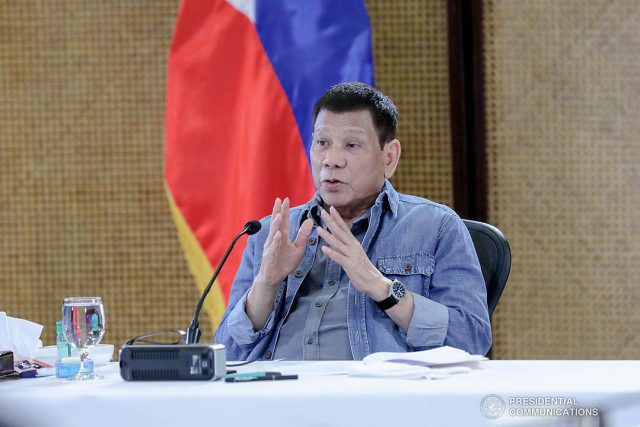
PHILIPPINE President Rodrigo R. Duterte’s preferred successor on Tuesday quit the presidential race, in another twist to an electoral contest that is dominated by influential clans.

Senator Christopher Lawrence T. Go, the president’s former aide, said he did not want to add to the problems of Mr. Duterte, whose daughter has teamed up with the only son and namesake of the late dictator Ferdinand E. Marcos.

“I do not want President Duterte to be caught in the middle,” Mr. Go told reporters in Filipino, based on a video posted by the state-run television’s Facebook page. “My love for him is more than that of a father.”

He also said he was not ready to run for president.

Candidates have been shifting parties and alliances in the runup to the 2022 elections, which appear to be still dominated by political dynasties and celebrities.

Mr. Go initially registered to run for vice-president. He changed his decision at the last minute after Davao City Mayor and presidential daughter Sara Duterte-Carpio decided to run for vice-president.

She is running under Lakas-CMD, the political party of ex-President Gloria Macapagal-Arroyo, a known powerbroker in Philippine politics. Lakas-CMD has adopted her running mate, Ferdinand “Bongbong” R. Marcos, Jr., as its presidential bet.

Earlier this month, Mr. Marcos’s Partido Federal ng Pilipinas and Ms. Caprio’s Lakas-CMD partnered with the political party founded by ex-President Joseph E. Estrada, who was toppled by a popular uprising in 2001. He spent years in prison before he was convicted for corruption and later pardoned by Ms. Arroyo.

The withdrawal of Mr. Go from the presidential race is just an attempt to “salvage the crumbling Duterte-Marcos alliance,” former Party-list Rep. and senatorial candidate Neri J. Colmenares said in a statement.

He said the President had “groomed” his former aide to be his shield from potential lawsuits after his six-year term ends next year. Mr. Duterte is barred by law from running for reelection.

Mr. Colmenares said it was clear from the start that Mr. Go had very little chance of winning and that the President was just using him as leverage to get as many concessions as possible from Mr. Marcos. “He is there to protect and benefit from the Duterte dynasty.”

Critics have said Mr. Duterte, who is running for senator, might be doing everything to protect himself from potential lawsuits.

The International Criminal Court’s (ICC) Office of the Prosecutor has said it would ask the Philippine government to provide proof that it is investigating its war on drugs that has killed thousands, after the tribunal suspended an initial probe.

The Philippines must submit concrete proof that it is taking steps to hold human rights violators accountable in Mr. Duterte’s anti-drug campaign, it said.

Also on Tuesday, a group representing drug war victims at the Hague-based tribunal asked ICC Prosecutor Karim Khan to continue its initial probe of the anti-drug campaign.

“Contrary to the claim of the Philippine government, there is no genuine domestic investigation, much less prosecution, being conducted into crimes against humanity in the context of the war on drugs campaign,” Rise Up for Life and Rights said in a letter to Mr. Khan.

The group cited an “unjustified delay and even aversion” on the part of the government in investigating and prosecuting crimes linked to the drug war.

The government’s Nov. 10 letter to the ICC’s Office of the Prosecutor explaining that it had been conducting investigations into the drug war is “incorrect and misleading.”

“The proceedings described in the letter do not involve investigations into crimes committed as part of a widespread or systematic attack against a civilian population pursuant to a state or organizational policy,” it said.

The group said the Department of Justice’s review of 52 cases out of the tens of thousands killed and probes supposedly carried out by police “deliberately treat the crimes individually and separately, ignoring any evident connection between the various acts.”

“The domestic investigations mischaracterize these crimes as isolated incidents involving a few errant police personnel, described by the Duterte administration as just a few bad apples,” Rise Up for Life said.

The government has taken an increasingly large role in targeting civilians, “no longer trying to create distance by outsourcing the majority of violence to vigilantes,” US-based Armed Conflict Location and Event Data Project said in a report on Nov. 18.

After analyzing data and information from at least 40 sources, the group said the Philippine government had been “undercounting” civilian deaths in the drug war.

At least 1,100 deaths in the drug campaign have not been counted by the government. “We now estimate at least 7,742 civilians have been killed in the drug war since 2016.” — Kyle Aristophere T. Atienza

Number coding scheme, light truck ban in effect Dec. 1 

PHILIPPINE STAR/ MICHAEL VARCAS

THE MODIFIED vehicle reduction scheme and ban on light trucks in Metro Manila take effect again on Dec. 1, the Metropolitan Manila Development Authority (MMDA) announced on Tuesday.   

MMDA said the resumption of these programs intended to ease road congestion in the capital region is based on a recent survey showing that “the current traffic situation is approaching the pre-pandemic levels.”  

“Data shows that the travel speed along the northbound portion of EDSA is 9.66 kilometers per hour. Hence, we have to reinstate the number coding scheme during the afternoon rush hours to address the problem. We are trying to exhaust all options here,” MMDA Chairman Benhur C. Abalos said in a press conference.    

The number coding scheme will reduce the number of vehicles plying EDSA by about 2,700 vehicles per hour, according to Neomie T. Recio, MMDA Traffic Discipline Office director.  

The scheme — wherein vehicles with plates ending in 1 and 2 are prohibited from roads on Mondays, 3 and 4 on Tuesdays, 5 and 6 on Wednesdays, 7 and 8 on Thursdays, 9 and 0 on Fridays — applies only to private vehicles from 5-8 p.m. on weekdays, except holidays.   

For light trucks, whether for private or commercial use, the ban from EDSA between Magallanes and North Avenue is from 5:00 a.m. to 9:00 p.m. weekdays, both northbound and southbound. 

BARMM records 93,874 jabs on day 1 of 3-day mass vaccination drive 

BARMM MINISTRY OF HEALTH

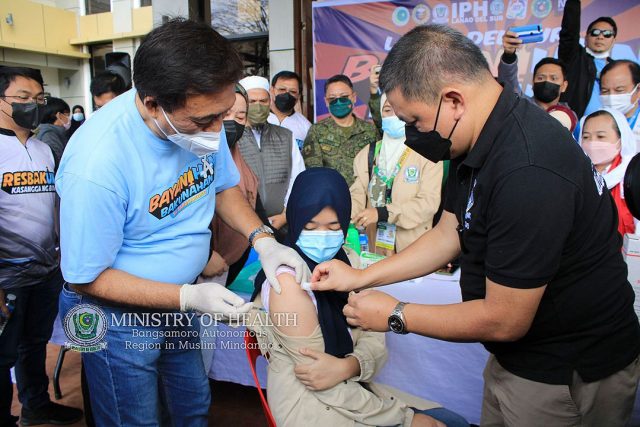
THE BANGSAMORO Ministry of Health reported 93,874 doses of coronavirus vaccines administered on Monday, the first of the three-day nationwide mass vaccination campaign from Nov. 29 to Dec. 1. 

In a statement posted on the Bangsamoro Autonomous Region in Muslim Mindanao (BARMM) government’s official Facebook page, the health ministry said they have set up 340 vaccination hubs across the region’s five provinces, with the highest at 237 in Maguindanao, which has the biggest population at over 1.34 million.   

Lanao del Sur, including Marawi City, recorded the highest number of vaccinated at 54,639, followed by Sulu with 15,027. Maguindanao reported 10,812; Tawi-Tawi, 8,203; and Basilan, including Lamitan City, 5,193.   

BARMM, with a total population of over 4.4 million and the lowest vaccination rate among all Philippine regions, has an ongoing information campaign supported by the United Kingdom government and the United Nations Children’s Fund (UNICEF) to address hesitancy and refusal to get coronavirus vaccines.    

The Ministry of Health said 314,877 of the eligible population were fully vaccinated as of Nov. 21.  

Health Minister Bashary Latiph said last week that the region has sufficient vaccine supply for its target population. 

Social Services Minister Raissa Jajurie, meanwhile, said her department is supporting the vaccination campaign by distributing relief aid to indigents who will get their jabs during the three-day campaign.  

The region has one of the lowest total coronavirus disease 2019 (COVID-19) cases in the country with 15,431 as of Nov. 29. Of the total since the start of the pandemic, 205 were active, 14,603 recovered and 623 died. — MSJ