Home Blog Page 6762

LA Lakers in dominant win; KD ejected in rout of Pistons

CARMELO Anthony led the Los Angeles Lakers in their rout of the Houston Rockets, 95-85, on Sunday. — LA LAKERS TWITTER

CARMELO Anthony scored 23 points and Russell Westbrook added 20 points, nine assists and eight rebounds as the Los Angeles Lakers routed the visiting Houston Rockets, 95-85, on Sunday.

LeBron James added 15 points, eight assists and seven rebounds for the Lakers, who led by as many as 28. The teams meet again at the Staples Center on Tuesday.

Anthony made 5-of-8 attempts from three-point range in 25 minutes and is averaging 25 points over his last three home games. Anthony Davis recorded 16 points and 13 rebounds.

Eric Gordon scored 17 points for Houston and Christian Wood chipped in 16 points and 13 rebounds. The Rockets committed a season-high 25 turnovers while shooting 21.4% (6-of-28) from beyond the arc.

Anthony made 3-of-4 three-point attempts in the first quarter to help the Lakers take a 27-15 lead.

Los Angeles set the tone by forcing eight turnovers in the first 12 minutes and limiting Houston to 27.8% (5-of-18) shooting.

The second quarter brought more of the same from the Lakers, whose highlight reel included a reverse dunk by James that extended the lead to 40-24 with 7:05 remaining in the half.

The Lakers were 8-of-15 shooting from three-point range in the first half and took a 54-35 lead into the break.

Los Angeles has won two straight since blowing a 26-point lead in a 123-115 loss to Oklahoma City last Wednesday.

The Lakers avoided a similar collapse against the Rockets and moved ahead 61-44 on James’ dunk with 7:31 to play in the third quarter.

Dwight Howard sat out with neck stiffness for Los Angeles, which led 75-54 after three quarters.

Kevin Porter, Jr. had 13 points and nine rebounds for Houston while Kenyon Martin, Jr. scored 12 points in 16 minutes off the bench.

Houston pulled within 11 points with 3:58 remaining after Martin capped a 21-4 run with an alley-oop dunk.

Los Angeles quickly responded with five straight points to help seal the Rockets’ fourth straight loss.

KD EJECTED
Meanwhile, Kevin Durant scored 23 points before being ejected for a flagrant foul late in the third quarter as hosts Brooklyn Nets beat the Detroit Pistons, 117-91, on Sunday night.

Durant was ejected with 3:23 remaining in the third quarter and the Nets leading 85-68. He was thrown out when his right forearm and elbow hit Kelly Olynyk’s face just outside the paint.

Olynyk made the two free throws after the flagrant 2 foul, and Cory Joseph hit a basket, but the Nets ended the third period on an 11-2 run and led 96-74 heading into the fourth.

Durant shot 10-of -3 from the field before getting ejected.

James Harden produced his 59th career regular-season triple-double with 18 points, 12 assists and 10 rebounds as the Nets led by as many as 30. It was Harden’s 13th triple-double with the Nets.

The Nets shot a franchise-record 65.3% from the field, making 47-of-72 attempts. Their previous high was 65.2% on April 17, 1982, at Detroit.

Brooklyn’s LaMarcus Aldridge added 16 points on 7-of-8 shooting from the field after getting his 20,000th career point on Friday. DeAndre Bembry added 15 points and Joe Harris 12.

The Nets won consecutive games for the first time this season thanks to their torrid shooting display.

The Pistons rested rookie Cade Cunningham. The top overall pick made his debut by playing 19 minutes on Saturday in his return from a sprained right ankle.

Joseph led the Pistons with 13 points and Josh Jackson added 12 as Detroit shot 40.5% from the field. Jerami Grant was held to 11 points on 5-of-15 from the floor. — Reuters

Houston Astros force Atlanta Braves to World Series Game Six

LOS ANGELES — The Astros overcame an early four-run deficit to beat the Atlanta Braves, 9-5, and force a World Series Game Six in Houston on Tuesday.

The Braves loaded the bases in the first inning on Sunday and Adam Duvall hit a grand slam off Framber Valdez for a 4-0 lead that electrified the Atlanta crowd.

The Astros got on the board in the top of the second on an RBI (run batted in) double by Alex Bregman and cut the lead in half on a sacrifice fly by Martin Maldonado.

The Astros scored twice in the third on an RBI double by Carlos Correa and a groundout by Yuli Gurriel that plated Michael Brantley to level the contest at 4-4.

Freddie Freeman put the Braves in front in the bottom half of the third with a 460-foot solo shot over the center field fence.

But the Astros hitters displayed more patience at the plate than they did in the previous two games and tied the scores when Braves reliever AJ Minter walked Maldonado with the bases loaded.

On the next pitch, pinch-hitter Marwin Gonzalez floated a single into left field that scored two runs to give the Astros their first lead of the game at 7-5.

The Astros tacked on runs in the seventh and eighth innings to hand the Braves their first home loss of the postseason.

Game Six is on Tuesday in Houston with the Braves holding a 3-2 advantage in the best-of-seven Fall Classic. — Reuters

TnT Tropang Giga looking towards more PBA success

FOLLOWING their conquest of the PBA Philippine Cup title and return to the top of the local professional league, the TnT Tropang Giga are looking towards more success moving forward. — PBA IMAGES

FOLLOWING their conquest of the PBA Philippine Cup title and return to the top of the local professional league, the TnT Tropang Giga are looking towards more success moving forward.

Immediate on their sights is the next tournament in the Philippine Basketball Association (PBA) calendar which is targeted to start late this month possibly back in Metro Manila.

TnT is aiming to make it back-to-back titles after waiting for six years to be crowned champions anew.

“As much as we want to savor this (Philippine Cup title), we’re now looking forward to the next. On to the next, and I hope we can compete well again,” TnT coach Chot Reyes following their 94-79 Game Five victory on Friday that completed for them a 4-1 finals series win over the Magnolia Pambansang Manok Hotshots.

The win ended for the Tropang Giga a six-year title drought and gave them their sixth All-Filipino title in franchise history and eighth championship overall in the PBA.

TnT dominated Magnolia in the series on solid collective effort and desire to continuously better itself.

It is the same track it wants to establish in the next conference, which is being eyed as an import-laced tournament.

The Tropang Giga are looking at their options for possible reinforcement, including bringing back former import Terrence Jones, who helped the team reach the finals of the Commissioner’s Cup in 2019.

Apart from finding the right import, TnT is also banking on having its core playing on top of their game and staying resilient and hungry.

The PBA is looking to kick off the second conference this month in line with its push two have at least two tournaments this season as opposed to the lone conference held in 2020 because of the pandemic.

It is angling to have the action back in the National Capital Region after finishing the Philippine Cup in a semi-bubble in Bacolor, Pampanga.

The league is currently in talks with pertinent government agencies regarding the staging of the second conference while the teams are also girding for the possible start. — Michael Angelo S. Murillo

Jonas Sultan proving his worth as a fighter

“[JONAS] Sultan was intended to be another pedestrian opponent for an up-and-coming boxer like [Carlos] Caraballo. But in the fight, Sultan insisted that he’s nobody’s footstool and flipped the script,” a local boxing analyst said. — ALVIN S. GO

JONAS Sultan may not have the rep so far of some of the top boxers in the country, but he is a capable fighter and he showed it in his fight against Puerto Rican up-and-comer Carlos Caraballo, Sunday (Manila time), in New York.

Mr. Sultan, 29, claimed the vacant World Boxing Organization (WBO) Intercontinental bantamweight title with a unanimous decision victory over Mr. Caraballo in their 10-round showdown at the Hulu Theater in Madison Square Garden on Sunday (Manila time).

The Filipino bet, who was installed as an underdog entering the fight, knocked down his opponent four times throughout the course of the contest and wound up a 94-93 winner in all three judges’ scorecards.

It was Mr. Sultan’s third straight victory and second for the year after his knockdown win over American Sharone Carter in August.

For local boxing analyst Nissi Icasiano, more than keeping his winning streak going, the Caraballo win showed Mr. Sultan’s abilities as a solid fighter and potential to go places if provided the opportunities needed.

“Sultan was intended to be another pedestrian opponent for an up-and-coming boxer like Caraballo. But in the fight, Sultan insisted that he’s nobody’s footstool and flipped the script,” said Mr. Icasiano when asked by BusinessWorld for his thoughts post-fight.

The analyst highlighted how Mr. Sultan showed perseverance, stayed the course and remained go-getting even when Mr. Caraballo put up a tough resistance.

“The Filipino just wanted it so bad and worked hard to get the win,” Mr. Icasiano said.

The analyst, however, noted it remains to be seen if the win would open bigger opportunities for Mr. Sultan immediately just as he said the boxer’s handlers at MP Promotions should build on the gains its fighter achieved in his latest triumph.

“I just hope that MP Promotions can sustain the momentum and ride on it at the same time. It’s too early to say if he will get a title shot. He’s ranked No. 9 in the WBA (World Boxing Association), but the Intercontinental title that’s now in his possession came from WBO. He’s nowhere to be found yet in the WBO bantamweight rankings, but that win may break him in the WBO’s rankings,” Mr. Icasiano said.

Adding, “I would like to see Sultan in a 12-round fight first against an opponent who’s outside the Top 10 or Top 15 before taking on ranked fighters that will help him secure a world title shot.”

Mr. Sultan now sports an 18-5 record, 11 wins coming by way of knockout. — Michael Angelo S. Murillo

Djokovic targets year-end number one record on return to action in Paris

SERBIAN Novak Djokovic is targeting the year-end men’s tennis number one spot. — NOVAK DJOKOVIC FB PAGE

MUMBAI — Novak Djokovic said his targets for the rest of 2021 include clinching the year-end number one spot and helping Serbia in its Davis Cup campaign, as he returns to competition at the Paris Masters for the first time since losing the US Open final.

Djokovic, who is tied with Roger Federer and Rafa Nadal on 20 major titles, has not played since coming up short in his bid for a calendar Grand Slam in September, losing in straight sets to Russian Daniil Medvedev at Flushing Meadows.

Djokovic and Medvedev are both in Paris for the Masters 1000 event in Bercy before they head to Turin for the Nov. 14-21 ATP Finals. The year-end number one spot is based on results during the calendar season and Djokovic can seal it in Bercy where he is the top seed and a five-time champion.

“The year-end number one is on the line between Medvedev and myself, and I’m in a pretty good position in terms of the ranking points and the race, so that’s obviously the goal for the end of the season other than trying to do well in the Davis Cup with the national team,” Djokovic said in Paris on Sunday.

“So hopefully, I can have a strong finish of the season and clinch that year-end No. 1.”

Djokovic, 34, and American great Pete Sampras have each held the year-end number one spot a record six times.

Both Djokovic and Medvedev will represent their countries at the Davis Cup, which starts on Nov. 25, and the Serb said the season has been “very draining.”

“But I have had similar situations before where I was just super tired, but somehow managed to find the strength and finish the year and finish the season strong,” he added.

“Hopefully, that will be the case again.” — Reuters 

Rough AFC Asian Cup Qualifiers campaign for U23 Azkals ends

THE Philippine U23 Azkals lost to Timor-Leste, 0-1 on Sunday in the AFC Asian Cup Qualifiers Group H match to end their campaign without a win. — ASIAN FOOTBALL CONFEDERATION

THE country’s Under-23 (U23) men’s football team ended what turned out to be a rough campaign in the Asian Football Confederation (AFC) Asian Cup Qualifiers in Singapore on Sunday without a victory to show for.

Looking to finish their bid on a high note with a victory after dropping their first two matches in Group H of the qualifiers, the U23 Azkals instead absorbed another defeat, 0-1, at the hands of Timor-Leste at the Jalan Besar Stadium.

The Philippine side held its opponent to a nil-nil count for much of the contest until forward Zenivio Mota broke through for Timor-Leste in the 89th minute.

Mr. Mota found himself open inside the box and did not waste the opportunity to score and give his team the win.

The Azkals scrambled to get back the point after, including inside the added three minutes, but could not catch the break it was angling for.

The defeat was the third straight for the Philippine U23 team, following defeats to Korea, 0-3, and Singapore, 0-1, previously.

Korea advanced to the U23 Asian Cup in Group H with an unblemished 3-0 record and nine points, with Singapore and Timor-Leste tied for second with a record 1-1-1 and four points.

The AFC U23 Asian Cup is set for June next year in Uzbekistan. — Michael Angelo S. Murillo

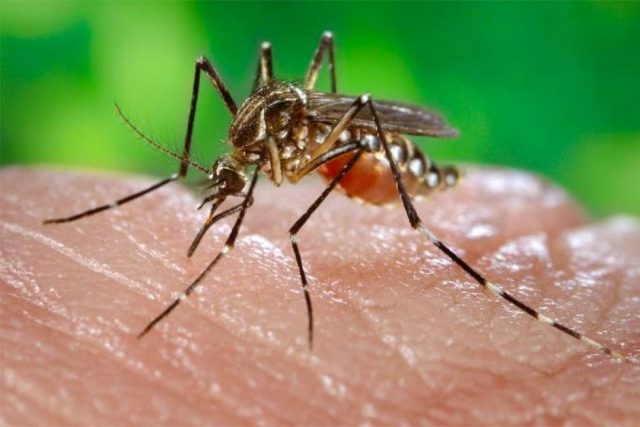
Indonesian researchers breed ‘good’ mosquitoes to combat dengue 

Public Health Image Library/US Centers Disease for Control and Prevention 

YOGYAKARTA, Indonesia — Researchers in Indonesia have found a way to fight disease-bearing mosquitoes by breeding a species of the insect which carries a kind of bacteria that prevents viruses like dengue from growing inside them.  

Wolbachia is a common bacteria that occurs naturally in 60% of insect species, including some mosquitoes, fruit flies, moths, dragonflies and butterflies. It is not, however, found in dengue-carrying Aedes aegypti mosquitoes, according to non-profit World Mosquito Program (WMP), which initiated the research.  

“In principle we are breeding the ‘good’ mosquitoes,” said Purwanti, a WMP community cadre. “The mosquitoes carrying dengue will mate with mosquitoes carrying Wolbachia, which will produce Wolbachia mosquitoes — the ‘good’ mosquitoes. So even if they bite people, it won’t affect them.”  

Since 2017, a joint study conducted by WMP at Australia’s Monash University and Indonesia’s Gadjah Mada University has been releasing lab-bred Wolbachia mosquitoes across a few dengue fever “red zones” in the Indonesian city of Yogyakarta.  

The trial results, published by the New England Journal of Medicine in June, showed that deploying mosquitoes with Wolbachia reduced dengue cases by as much as 77% and hospitalizations by up to 86%.  

“We’re confident in this technology, particularly for areas where the Aedes aegypti mosquito is the most responsible [infection] factor,” WMP lead researcher Adi Utarini, who has been working on Indonesia’s Eliminate Dengue Program since 2011, told Reuters.  

According to the World Health Organization (WHO), global dengue infections have risen rapidly in recent decades, with about half of the world’s population now at risk. An estimated 100–400 million infections are reported every year.  

“All three of my children have been infected with dengue and hospitalized … It’s always on my mind, thinking about how to keep my village healthy and clean,” said 62-year-old Sri Purwaningsih, whose family volunteered for the WMP. — Budi Satriawan/Reuters  

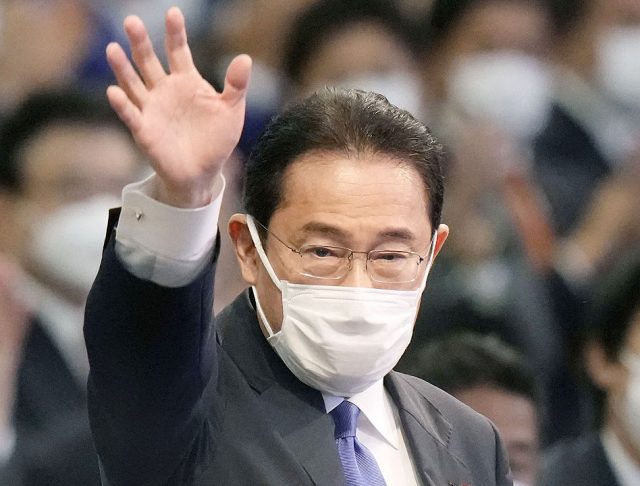
Japan PM Kishida, strengthened by election win, lays out broad policy plans

Japanese Prime Minister Fumio Kishida — KYODO/VIA REUTERS

TOKYO — Japanese Prime Minister Fumio Kishida, invigorated by a surprisingly strong election victory, signaled on Monday he would pursue defense policies aimed at deterring China, address climate change and accelerate recovery from the pandemic.  

Mr. Kishida’s conservative Liberal Democratic Party (LDP) defied predictions and held onto its single party majority in a Sunday election, solidifying his position as head of the fractious party and giving him a freer hand in parliament, with recovery from the coronavirus pandemic — including an extra budget — taking priority.  

Some had feared that Mr. Kishida, only in power for a month, could become another one of Japan’s short-term prime ministers, but the election results — which set stocks surging in relief — will allow him to put his own stamp on policies ahead of an upper house election next summer.  

The LDP’s solid victory in Japan’s parliamentary election also eased bond market fears of massive bond issuance because it will likely take pressure off Mr. Kishida to inflate the size of a pandemic-relief stimulus package.  

“We will speedily implement policies to respond to the voices of the people we have received nationwide that strongly desire political stability and policy implementation,” the prime minister said at a news conference on Monday.  

Key among those will be recovery from the pandemic, with Mr. Kishida pledging to work for an extra budget by the end of the year, look into restarting a travel subsidy program to revive domestic tourism and compile a “large-scale” stimulus package around mid-November.  

But he also placed emphasis on defense in a nod to the more hawkish views of backers in the LDP who supported him in his run for leader, the pursuit of which could become trickier given the electoral gains made by the dovish junior coalition partner Komeito.  

The LDP included the unprecedented pledge to double defense spending to 2% of GDP in its party platform, a nod to its haste to acquire weapons to deter China’s military in the disputed East China Sea.  

“When we think about protecting people’s lives and livelihood, a budget should not come first,” Mr. Kishida said.  

“We need to think about what is really needed for that end. I’d like to proceed with this debate carefully so that I can gain Komeito’s understanding.”  

DIPLOMACY, CLEAN ENERGY 
Mr. Kishida added that Japan needed to consider the capability to strike enemy bases as an option to counter growing defense technology in other nations.  

“What’s important is making checks constantly if a system is in place to protect people’s lives and livelihood amid a changing international situation and advancing technologies,” he said.  

The prime minister, who spoke of “personal diplomacy” during the campaign, wasted no time kicking that off by announcing he would leave for Glasgow and the COP26 climate summit on Tuesday for his face-to-face debut at an international conference.  

Saying his stimulus package would include investment on clean energy and funding aid to Asia, he also said he hoped Japan would take a leadership role on zero emissions in Asia.  

Japan has set a target of 2050 for becoming carbon-neutral, and Mr. Kishida believes — in the face of considerable public opposition — that nuclear energy should remain an option.  

While initial exit polls on Sunday suggested the LDP would have to rely on its junior coalition partner, Komeito, to keep a majority, the conservative party — in power for all but a few years since its founding in 1955 — instead won a solid majority of 261 seats on its own.  

The party did take some notable hits, including the loss by LDP secretary-general Akira Amari, in his single-seat district. Though media reports said Amari would resign, Kishida said he would decide his future after the two had “thorough discussions.”  

Voters took the results in their stride.  

“This is pretty much as I expected, though I thought there might be a bit more of an impact from their handling of the coronavirus pandemic,” said Satoshi Tsujimoto, 53 and an office  

worker. He did not vote for the LDP. — Ju-min Park, Antoni Slodkowski and Kiyoshi Takenaka/Reuters 

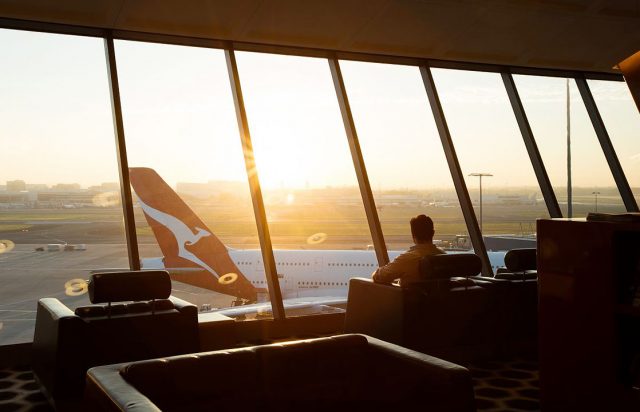
Australia eases international border restrictions for first time in pandemic

Image via Qantas

SYDNEY — Australia eased its international border restrictions on Monday for the first time during the coronavirus pandemic, allowing some of its vaccinated public to travel freely and many families to reunite, sparking emotional embraces at airports.  

After more than 18 months of some of the world’s strictest coronavirus border policies, millions of Australians are now free to travel without a permit or the need to quarantine on arrival in the country.  

While travel is initially limited to Australian citizens, permanent residents and their immediate families, it sets in motion a plan to reopen the country to international tourists and workers, both much needed to reinvigorate a fatigued nation.  

Passengers on the first flights from Singapore and Los Angeles arrived in Sydney early in the morning, many greeted by tearful friends and relatives they had not seen for several months. Travelers were also welcomed by airline staff holding banners and were gifted Australian wildflowers and chocolate biscuits.  

“Little bit scary and exciting, I’ve come home to see my mum ’cause she’s not well,” said Ethan Carter after landing on a Qantas Airways flight from Los Angeles.  

“So it’s all anxious and excitement and I love her heaps and I can’t wait to see her,” he said, adding he had been out of the country for two years.  

In Melbourne, a water cannon sprayed a Singapore Airlines plane in celebration as it taxied down the tarmac after landing.  

In one of the world’s toughest responses to the coronavirus pandemic, Australia slammed its international border shut 18 months ago, barring foreign tourists and banning citizens from either exiting or arriving unless granted an exemption.  

The strict travel rules effectively prohibited many Australians from attending significant events, including weddings and funerals, as well as preventing people from seeing family and friends.  

The relaxation of travel rules in Victoria and New South Wales states and the Australian Capital Territory comes as much of Australia switches from a COVID-zero pandemic management strategy towards living with the virus through extensive vaccinations.  

While the Delta outbreak kept Sydney and Melbourne in lockdowns for months until recently, Australia’s coronavirus disease 2019 (COVID-19) cases remain far lower than many comparable countries, with around 170,500 infections and 1,743 deaths, as at Oct. 31.  

Around 1,500 people were scheduled to fly in to Sydney and Melbourne on Monday, according to airline industry group BARA.  

NO TOURISTS YET 
The change in travel rules, however, is not uniform across the country, with states and territories having differing vaccination rates and health policies.  

Western Australia, which takes in one of the world’s biggest iron ore precincts, remains largely cut off from the rest of the country —  and the world — as the state tries to protect its virus-free status.  

And while Thailand and Israel were due to welcome vaccinated tourists from Monday, foreign travelers were not yet welcome in Australia, with the exception of those from neighboring New Zealand.  

“We still have a long way to go in terms of the recovery of our sector, but allowing fully vaccinated Australians to travel without quarantine will provide the template for bringing back students, business travelers, and tourists from all over the world,” Sydney Airport CEO Geoff Culbert said.  

Citizens of Singapore are the next group to be allowed entry, from Nov. 21.  

Australian officials on Monday added India’s Covaxin vaccine and China’s BBIBP-CorV vaccine, made by Sinopharm, to a growing list of accepted vaccines, expanding the number of people who will be allowed to travel to Australia without quarantine.  

Unvaccinated travelers will still face quarantine restrictions and all travelers need proof of a negative COVID-19 test prior to boarding.  

Australia previously let only a limited number of citizens and permanent residents return from abroad, with a mandatory 14-day quarantine period in a hotel at their own expense. There were also some exemptions for foreign travelers on economic grounds, including, controversially, some Hollywood stars. — Reuters 

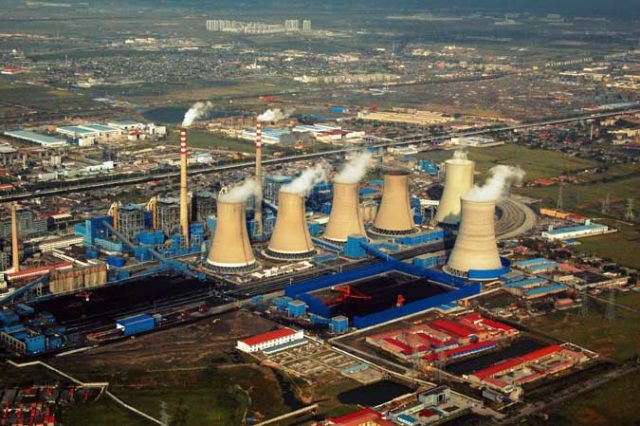
COP26 aims to banish coal. Asia is building hundreds of power plants to burn it

WIKIMEDIA COMMONS

UDANGUDI, India/TOKYO — On the coastline near India’s southern tip, workers toil on a pier carrying a conveyor belt that cuts a mile into the Indian Ocean where the azure waters are deep enough for ships to berth and unload huge cargoes of coal.  

The belt will carry millions of tonnes of coal each year to a giant power plant several kilometers inland that will burn the fuel for at least 30 years to generate power for the more than 70 million people that live in India’s Tamil Nadu state.   

The Udangudi plant is one of nearly 200 coal-fired power stations under construction in Asia, including 95 in China, 28 in India and 23 in Indonesia, according to data from US nonprofit Global Energy Monitor (GEM).   

This new fleet will produce planet-warming emissions for decades and is a measure of the challenge world leaders face when they meet for climate talks in Glasgow, where they hope to sound the death knell for coal as a source of power.   

Coal use is one of the many issues dividing industrialized and developing countries as they seek to tackle climate change.   

Many industrialized countries have been shutting down coal plants for years to reduce emissions. The United States alone has retired 301 plants since 2000.   

But in Asia, home to 60% of the world’s population and about half of global manufacturing, coal’s use is growing rather than shrinking as rapidly developing countries seek to meet booming demand for power.   

More than 90% of the 195 coal plants being built around the world are in Asia, according to data from GEM.   

Tamil Nadu is India’s second-most industrialized state and is one of the country’s top renewable energy producers. But it is also building the most coal-fired plants in the country.   

“We cannot depend on just solar and wind,” a senior official at Tamil Nadu Generation and Distribution Corp told Reuters.  “You can have the cake of coal and an icing of solar,” he said, declining to be named as he was not authorized to speak to media.   

HOOKED ON COAL  
Despite dramatic jumps in renewable energy output, the global economy remains hooked on coal for electricity. In Asia, coal’s share of the generation mix is twice the global average — especially in surging economies such as India.   

In 2020, more than 35% of the world’s power came from coal, according to the BP Statistical Review of World Energy. Roughly 25% came from natural gas, 16% from hydro dams, 10% from nuclear and 12% from renewables like solar and wind.   

This year, coal demand is set for a new record, driving prices to all-time highs and contributing to a worldwide scramble for fuel.   

Record coal demand is contributing to a rapid rise in emissions in 2021 after a fall last year, when restrictions on movement for billions of people to slow the pandemic caused fuel use to plummet.   

While some of the new coal plants under construction will replace older, more polluting stations, together they will add to total emissions.   

“The completion of the capacity that is already under construction in these countries will drive up coal demand and emissions,” said Lauri Myllyvirta, lead analyst with the Centre for Research on Energy and Clear Air.   

The carbon dioxide (CO2) emissions from the new plants alone will be close to 28 billion tonnes over their 30-year lifespans, according to GEM.   

That’s not far off the 32 billion tonnes of total worldwide CO2 emissions from all sources in 2020, according to BP, highlighting how tough it will be for leaders gathering in Glasgow — including Indian Prime Minister Narendra Modi — to make meaningful progress on climate change.   

India’s Environment Secretary Rameshwar Prasad Gupta told Reuters in a recent interview that India was on track to reach its target of cutting back the country’s carbon footprint, and with that coal, too, would fall — but it cannot be abolished.   

“Look, every country has its strengths. We have coal, we have to depend on it,” Mr. Gupta said.   

“Our position is once you take up targets of reducing carbon intensity, that will have impact … Leave it to us whether we do it in coal, or somewhere else.”   

Anil Swarup, a former Coal Secretary, took the same line in an interview. “Renewable energy expansion is critical, but coal will remain India’s main energy source for the next 15 years at least, and production needs to be ramped up to address our energy needs,” he said.   

CHINA CRUNCH  
Across India, 281 coal plants are operating and beyond the 28 being built another 23 are in pre-construction phases, GEM data show.   

These numbers are dwarfed by China, the top global coal miner, consumer and emitter, whose leader, President Xi Jinping, is not expected to attend COP26. More than 1,000 coal plants are in operation, almost 240 planned or already under construction.   

Together, coal plants in the world’s second-largest economy will emit 170 billion tonnes of carbon in their lifetime — more than all global CO2 emissions between 2016 and 2020, BP data show.   

Despite also boasting the world’s largest renewables capacity, China is now suffering a major energy crunch and has urged coal miners to raise output.   

That’s likely to boost coal consumption in the near term, even though China plans to reduce coal use from 2026.   

Even so, total global coal consumption looks set to rise, driven by accelerating use in South and Southeast Asia, where projects under construction will raise coal-burning capacity by 17% and 26% respectively.   

AFTERLIFE  
Even in economies committed to slashing emissions, coal’s grip remains strong.   

Japan, with its nuclear power industry in crisis since the Fukushima disaster, has turned to coal to fill the gap and is building seven large new coal-fired power stations.   

Leading generator JERA plans to add clean-burning ammonia to be used with coal to help meet its target to be carbon neutral by 2050, and potentially keep old units operating longer.   

On a bay near Nagoya, JERA’s 30-year-old, 4,100 megawatt Hekinan station — once Asia’s largest — supplies electricity to the likes of auto giant Toyota Motor Corp.   

Like many power plants, Hekinan’s boilers rely on fuel from top exporters such as Australia, where coal is both a vital source of revenue — $18 billion in the current financial year – and a bone of contention with allies urging ambitious emissions cuts.  

Australian Prime Minister Scott Morrison is set to attend the Glasgow talks. But resources minister Keith Pitt has said there would be demand for coal for decades and made it clear the country would not be swayed by pressure from banks, regulators and investors to hobble the industry.   

“While the market exists, Australia will look to fill it,” Mr. Pitt said. — Sudarshan Varadhan and Aaron Sheldrick/Reuters 

G20 offers little new on climate, leaving uphill task for COP26

Shubert Ciencia/CC BY 2.0/Wikimedia Commons

ROME — Leaders of the Group of 20 (G20) major economies agreed on a final statement on Sunday that urged “meaningful and effective” action to limit global warming, but angering climate activists by offering few concrete commitments.  

The result of days of tough negotiation among diplomats leaves huge work to be done at the broader United Nations COP26 climate summit in Scotland, which starts this week.  

US President Joseph R. Biden, Jr., said he was disappointed that more could not have been done and blamed China and Russia for not bringing proposals to the table.  

“The disappointment relates to the fact that Russia and … China basically didn’t show up in terms of any commitments to deal with climate change,” Mr. Biden told reporters.  

Although the G20 pledged to stop financing coal power overseas, they set no timetable for phasing it out at home, and watered down the wording on a promise to reduce emissions of methane — another potent greenhouse gas.  

However, Italian Prime Minister Mario Draghi, who chaired the Rome gathering, hailed the final accord, saying that for the first time all G20 states had agreed on the importance of capping global warming at the 1.5 degrees Celsius level that scientists say is vital to avoid disaster.  

“We made sure that our dreams are not only alive but they are progressing,” Mr. Draghi told a closing news conference, brushing off criticism from environmentalists that the G20 had not gone nearly far enough to resolve the crisis.  

The G20, which includes Brazil, China, India, Germany and the United States, accounts for 60% of the world’s population and an estimated 80% of global greenhouse gas emissions.  

The 1.5°C threshold is what UN experts say must be met to avoid a dramatic acceleration of extreme climate events like droughts, storms and floods, and to reach it they recommend net zero emissions should be achieved by 2050.  

The stakes are huge — among them the very survival of low-lying countries, the impact on economic livelihoods the world over and the stability of the global financial system.  

“This was a moment for the G20 to act with the responsibility they have as the biggest emitters, yet we only see half-measures rather than concrete urgent action,” said Friederike Roder, vice president of sustainable development advocacy group Global Citizen.  

The final summit document said current national plans on how to curb emissions will have to be strengthened “if necessary” and makes no specific reference to 2050 as a date to achieve net zero carbon emissions.  

“We recognize that the impacts of climate change at 1.5°C are much lower than at 2°C. Keeping 1.5°C within reach will require meaningful and effective actions and commitment by all countries,” the communique said.  

CONSEQUENCES OF INACTION  

The leaders only recognized “the key relevance” of halting net emissions “by or around mid-century.” This removed the 2050 date seen in previous versions of the final statement so as to make the target less specific.  

China, the world’s biggest CO2 emitter, has set a target date of 2060, and other large polluters such as India and Russia have also not committed to the 2050 target date.  

German Chancellor Angela Merkel said the agreement was a good signal for COP26, but Canadian Prime Minister Justin Trudeau signaled he would have liked to see more ambition.  

“There’s no question that Canada, along with a number of other countries, would have liked stronger language and stronger commitments on the fight against climate change than others,” he told reporters.  

UN experts say that even if current national plans are fully implemented, the world is headed for global warming of 2.7°C, with catastrophic consequences.  

Mr. Draghi predicted that nations would keep on improving their plans to lower carbon emissions in the years ahead, adding that he was surprised by how far countries like China and Russia had shifted their stance in recent days.  

“It is easy to suggest difficult things. It is very, very difficult to actually execute them,” he said.  

The final G20 statement includes a pledge to halt financing of overseas coal-fired power generation by the end of this year, but set no date for phasing out coal power, promising only to do so “as soon as possible.”  

This replaced a goal set in a previous draft of the final statement to achieve this by the end of the 2030s, showing the strong resistance from some coal-dependent countries  

The G20 also set no date for phasing out fossil fuel subsidies, saying they will aim to do so “over the medium term.”  

METHANE REDUCTION  

On methane, which has a more potent but less lasting impact than carbon dioxide on global warming, they diluted their wording from a previous draft that pledged to “strive to reduce our collective methane emissions significantly.”  

The final statement just recognizes that reducing methane emissions is “one of the quickest, most feasible and most cost-effective ways to limit climate change.”  

G20 sources said negotiations were tough over so-called “climate financing,” which refers to a 2009 pledge by rich nations to provide $100 billion per year by 2020 to help developing countries tackle climate change.  

They have failed to meet the pledge, generating mistrust and a reluctance among some developing nations to accelerate their emissions reductions.  

However, Mr. Draghi said the funding gap had narrowed to less than $20 billion and predicted it could be closed further, with wealthy nations considering using financing from the International Monetary Fund to make up the shortfall.  

World leaders will kick start COP26 on Monday with two days of speeches that could include some new emissions-cutting pledges, before technical negotiators lock horns over the rules of the 2015 Paris climate accord.  

The United Nations said last week greenhouse gas concentrations hit a record in 2020 and the world was “way off track” in capping rising temperatures. — Gavin Jones, Crispian Balmer, and Jeff Mason/Reuters

World leaders seek ways to strengthen global supply chains

REUTERS

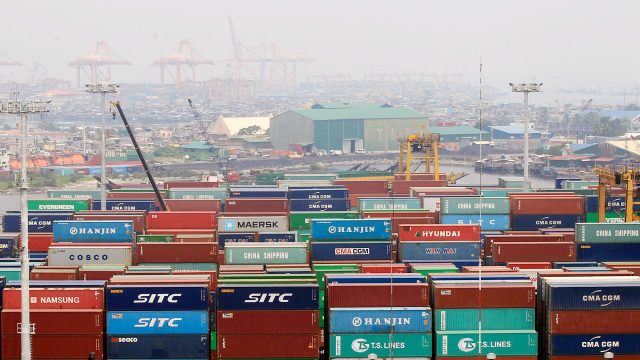
ROME —  US President Joseph R. Biden, Jr., and 16 other world leaders on Sunday discussed action to make supply chains more resilient in the face of any future health crises, as well as climate change and even planned attacks.  

Supply chain problems have emerged as the global economy has pulled out of a pandemic-induced recession and threaten to slow recovery. They have already stoked inflation.  

“We have to take action now, together with our partners in the private sector, to reduce the backlogs that we’re facing. And then, we have to prevent this from happening again in the future,” Mr. Biden told world leaders at a meeting to address supply chain bottlenecks on the sidelines of the G20 in Rome.  

“Now that we have seen how vulnerable these lines of global commerce can be, we cannot go back to business as usual. This pandemic won’t be the last global health crisis we face. We also need to increase our resilience in the face of climate change, natural disasters, and even planned attacks,” he said.  

Apart from the United States, leaders and representatives from the European Union, Australia, Britain, Canada, Democratic Republic of Congo, Germany, Indonesia, India, Italy, Japan, Mexico, the Netherlands, Republic of Korea, Singapore and Spain took part in the meeting.  

A written White House summary of the talks said countries expressed willingness to work together to make supply chains more resilient. It said they had agreed to work for more transparency and information-sharing between countries and on the need to have multiple reliable suppliers of raw materials, intermediate and finished goods.  

“Openness and communication can promote a swift response to disruptions to supply chains — like those that the globe is facing right now — and allow other players within a supply chain to take mitigating steps,” the White House summary said.  

“We should avoid any unnecessary trade restrictions and maintain free flow of goods and services,” it said.  

The leaders emphasized also the need for security, especially in technology supply chains, and for fair and sustainable labour conditions and said they would work with the private sector to reach these goals. — Jeff Mason and Jan Strupczewski/Reuters