Home Blog Page 6761

Rejoinder to the letter by Dr. Ulysses Dorotheo

1. “Clearly, there are less people smoking… contributed to the flattening of NCD mortality figures”

Yes, less smoking of legal tobacco as many smokers shift to illegal tobacco. Cong. Joey Salceda has the number — P30 billion per year of tobacco tax revenues gone due to illicit tobacco in the Philippines. See “PH losing P30B annually due to cigarette smuggling — Salceda” (Philippine Daily Inquirer, March 1, 2021).

Since taxes comprise about half of retail prices, that means some P60 billion in street value of illicit tobacco goes to the smugglers, criminals, terrorists and their protectors in governments. Are the more tobacco taxes groups (MTTGs) happy with this?

2. “failed to cite the World Bank publication on tobacco taxation and illicit trade… states that tobacco taxes play only a minor role in illicit trade.”

Tobacco taxes kept rising and government estimates of revenue losses from tobacco smuggling by the NCIPR-IPO (National Committee on Intellectual Property Rights-Intellectual Property Office): P19.9 billion in 2014, P17.9 billion in 2015, P20.25 billion in 2018. See “Special Report: Government cracks down on cigarette smuggling, counterfeiting” by Mary Grace Padin, Philippine Star, March 4, 2019.

3. “Singapore had legislated but not yet implemented its plain packaging law.”

Illicit trade in Singapore started even before plain packaging was implemented. Both legal and illegal tobacco would look the same, so the illegal can sell at very low prices, attract more smokers, not less.

4. “the economic costs of smoking for just four diseases are at least P210 billion per year.”

If MTTGs succeed in zero smoking of legal tobacco, meaning these tobacco excise tax revenues of P77 billion in 2019, P77.9 billion in 2020, P82.2 billion projected in 2021, and P94.8 billion projected in 2022 — become zero, zero contribution to UHC (universal healthcare), will they be happy? I doubt it.

5. “mouthpieces of the tobacco industry to misinform about tobacco taxation, plain packaging.”

Wrong. We are mouthpieces of limited government, low taxes, free trade, rule of law, and personal responsibility.

Is it possible that the Southeast Asia Tobacco Control Alliance and MTTGs are the mouthpieces of the Bloomberg Philantrophies lobby? Mouthpieces of more government, more taxes, health is not personal responsibility, only state responsibility.

World makes new bid to avert climate disaster

REUTERS

GLASGOW —- World leaders will start descending on the Scottish city of Glasgow on Sunday for the United Nations COP26 summit, billed as a make-or-break chance to save the planet from the most calamitous effects of climate change.

Delayed by a year because of the COVID-19 pandemic, COP26 aims to keep alive a target of capping global warming at 1.5C above pre-industrial levels — the limit scientists say would avoid its most destructive consequences.

Meeting that goal, agreed in Paris to much fanfare in 2015, will require a surge in political momentum and diplomatic heavy-lifting to make up for the insufficient action and empty pledges that have characterized much of global climate politics.

The conference needs to secure more ambitious pledges to further cut emissions, lock in billions in climate finance, and finish the rules to implement the Paris Agreement with the unanimous consent of the nearly 200 countries that signed it.

“Let’s be clear — there is a serious risk that Glasgow will not deliver,” UN Secretary General Antonio Guterres told leaders of the Group of 20 (G20) rich nations last week.

“Even if recent pledges were clear and credible — and there are serious questions about some of them — we are still careening towards climate catastrophe. “

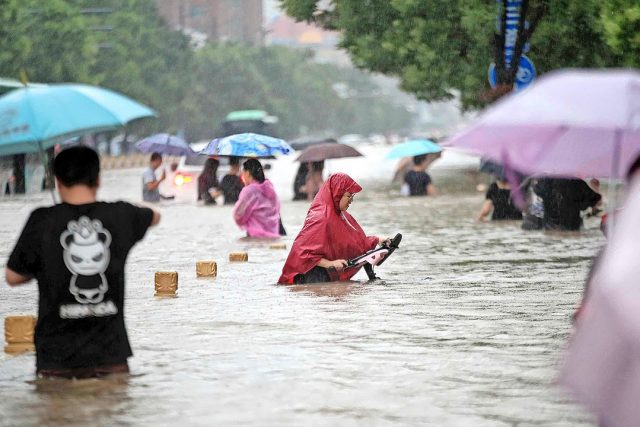
Countries’ existing pledges to cut emissions would see the planet’s average temperature rise 2.7C this century, which the UN says would supercharge the destruction that climate change is already causing by intensifying storms, exposing more people to deadly heat and floods, killing coral reefs and destroying natural habitats.

The signals ahead of COP26 have been mixed. A new pledge last week from China, the world’s biggest polluter, was labeled a missed opportunity that will cast a shadow over the two-week summit. Announcements from Russia and Saudi Arabia were also lackluster.

The return of the United States, the world’s biggest economy, to U.N. climate talks will be a boon to the conference, after a four-year absence under President Donald Trump.

But like many world leaders, President Joseph R. Biden will arrive at COP26 without firm legislation in place to deliver his own climate pledge as Congress wrangles over how to finance it and new uncertainty about whether US agencies can even regulate greenhouse gas emissions.

Leaders of the G20 meeting in Rome this weekend will say they aim to cap global warming at 1.5C, but will largely avoid firm commitments, according to a draft statement seen by Reuters.

The joint statement reflects tough negotiations, but details few concrete actions to limit carbon emissions.

The G20, which includes Brazil, China, India, Germany and the United States, accounts for about 80% of global greenhouse gas emissions, but hopes the Rome meeting might pave the way to success in Scotland have dimmed considerably.

SHADOW OF COVID-19
Adding to the challenging geopolitical backdrop, a global energy crunch has prompted China to turn to highly polluting coal to avert power shortages, and left Europe seeking more gas, another fossil fuel.

Ultimately, negotiations will boil down to questions of fairness and trust between rich countries whose greenhouse gas emissions caused climate change, and poor countries being asked to de-carbonize their economies with insufficient financial support.

COVID-19 has exacerbated the divide between rich and poor. A lack of vaccines and travel curbs mean some representatives from the poorest countries cannot attend the meeting.

Other obstacles — not least, sky-high hotel rates in Glasgow — have stoked concerns that civil society groups from the poorest nations which are also most at risk from global warming will be under-represented.

COVID-19 will make this U.N. climate conference different from any other, as 25,000 delegates from governments, companies, civil society, indigenous peoples, and the media will fill Glasgow’s cavernous Scottish Event Campus.

All must wear masks, socially distance and produce a negative COVID-19 test to enter each day — meaning the final-hour “huddles” of negotiators that clinched deals at past climate talks are off the table.

Attendees who test positive must quarantine for 10 days — potentially missing most of the conference.

World leaders will kick start COP26 on Monday with two days of speeches that could include some new emissions-cutting pledges, before technical negotiators lock horns over the Paris accord rules. Any deal is likely to be struck hours or even days after the event’s Nov. 12 finish date.

Outside, tens of thousands of protesters are expected to take to the streets to demand urgent climate action.

Assessing progress will be complex. Unlike past climate summits, the event won’t deliver a new treaty or a big “win” but seeks to secure smaller but vital victories on emission-cutting pledges, climate finance and investment.

Ultimately success will be judged on whether those deals add up to enough progress to keep the 1.5C goal alive – still a long way off.

Since the Paris accord in 2015, scientists have issued increasingly urgent warnings that the 1.5C goal is slipping out of reach. To meet it, global emissions must plummet 45% by 2030 from 2010 levels, and reach net zero by 2050 – requiring huge changes to countries’ systems of transport, energy production, manufacturing and farming. Countries’ current pledges would see global emissions soar by 16% by 2030.

“The way I think about this is, there is a meteor coming at our planet and it has the very real potential of wiping out humanity,” said Christiana Figueres, the former U.N. climate diplomat who led the talks that yielded the Paris Agreement. — Reuters


Thailand’s reopening is a major test for pandemic-era tourism

REUTERS

THAILAND is ending quarantine for vaccinated visitors from more than 60 countries, the biggest reopening gamble in Asia and one that could mark a turning point for the revival of mass tourism during the pandemic.

Starting Monday, fully-vaccinated travelers flying in from the US, China, Singapore, Japan, India and most of Europe will be able to freely tour Thailand’s sandy beaches, temples and tropical islands after testing negative for COVID on arrival. Inoculated visitors from countries not on the list can travel to Bangkok and 16 other regions, but they will be confined to their initial destination for the first seven days before being allowed to travel elsewhere.

It’s the biggest step Thailand has taken to welcome back a slice of the nearly 40 million visitors it hosted the year before the pandemic, and is billed as a “fight to win foreign tourists” as countries from Australia to the UK also loosen Covid curbs. A successful Thai experiment could help salvage its battered economy and serve as a model for countries wary of a virus resurgence from reopenings.

“We’re not expecting the rooms to be full overnight, but it’s a great first step,” said John Blanco, general manager at luxury hotel Capella Bangkok. “All countries are taking the same posture — that is, we need to learn to live with Covid. It’s a general theme around the world.”

Hotels in places such as the US, Mexico and Turkey have reported higher occupancy after easing travel restrictions, but the rush may not be as strong for Thailand given how low it sits on the Covid resilience ranking, especially for tourists who still have to quarantine on returning home.   

While Thailand fumbled in its previous reopening attempts due to a virus flareup and tardy progress in its vaccinations, it has had some success with the so-called Phuket Sandbox experiment that allowed vaccinated visitors to travel to other parts of the country after a limited stay on the resort island. Almost 60,000 tourists have visited the country since the plan started in July.

To boost the confidence of tourists and the public, Thailand is linking the reopening to a higher vaccination rate, which “is a measured approach that has a lot of logic to it,” according to Amar Lalvani, chairman of US boutique hotel operator Standard International.

“You have examples in places like Mexico and Turkey, which have been quite wide-opened and very low on restrictions, and their business is actually booming,” Mr. Lalvani said. “Countries in Asia, Thailand included, have prioritized public health. Now that you have that under control, you’re going to feel more comfortable opening up.”

The travel industry is already preparing for the Thai reopening. International carriers have scheduled more flights to the Southeast Asian nation, while hotels and beach resorts are offering bargains and the island of Phuket is hosting a New Year’s Eve party featuring Italian opera tenor Andrea Bocelli.

Academy award winner Russell Crowe, who was in Phuket and Bangkok for a film shoot, lauded Thailand’s tourism experiments and tweeted about the country’s plan to welcome back tourists.

While Chinese tourists, who made up almost a third of the total arrivals before the pandemic, will be deterred by 21-day quarantine on return home, the reopening may still draw hundreds of thousands of visitors and stave off another year of economic contraction. Thailand’s economy shrunk 6.1% last year, the worst performance since the Asian financial crisis in 1998.

There are also fears the wider reopening could worsen the COVID outbreak, with Thailand already reporting about 8,000 new infections a day. More than 90% of the participants in a recent survey had some concerns about the Nov. 1 move.

Still, for Thailand’s pandemic-hit economy and millions of people who depend on tourism for a living, it’s never too early for the return of tourists.

“The economic sector, which is the heart and affects the people of the whole country, is important,” said Sanan Angubolkul, Chairman of the Thai Chamber of Commerce. “Opening up the country is necessary. Because that is the way to ensure the survival of the people and the country.” — Bloomberg

US, EU strike trade deal to remove steel, aluminum tariffs

REUTERS

THE US and the European Union (EU) have reached a trade truce on steel and aluminum that will allow the allies to remove tariffs on more than $10 billion of their exports each year.

Negotiators reached an agreement Saturday as they worked to balance market demands and climate change, US officials said, speaking on the sidelines of a Group of 20 summit in Rome. Bloomberg News reported earlier that the two sides were on the brink of an agreement.

The two sides were working hard to reach a deal before Dec. 1, when the European retaliatory tariffs were set to double. The 25% tariffs will apply to EU exports beyond 3.3 million tons, according to two people familiar with the talks, who asked not to be identified before a formal announcement.

“We’ve reached an agreement with the EU which maintains the 232 tariffs, but allows limited volumes of EU steel and aluminum to enter the US tariff-free,” said US Commerce Secretary Gina Raimondo told reporters on Saturday. “It was a very successful negotiation and we agreed on a way forward for how to face our shared challenge which is global excess capacity mainly by China.”

The deal marks a significant moment in repairing the US trade relationship with Europe, a historic ally, after Donald Trump’s disruptive presidency. The EU from the start of the tariffs in 2018 rejected the premise that production from the bloc presents a national security threat to the US.

US officials said that the deal involves so-called tariff-rate quotas, which allows countries to export specified quantities of a product to other nations at lower duty rates, but subjects the shipments above a pre-determined threshold to higher tariffs.

A US official told reporters on Saturday that the specific levels at which tariffs would apply would be announced later, and that they are in line with historic levels. The US imported 2.5 million tons of steel from the EU last year and 3.9 million tons in 2019, down from 5 million tons each in 2018 and 2017.

“The agreement, ultimately, to negotiate a carbon-based arrangement on steel and aluminum trade addresses both Chinese over production and carbon intensity in the steel and aluminum sector,” National Security Adviser Jake Sullivan said.

“We are also experiencing unprecedented supply-chain disruption and we fully expect this agreement will provide relief in the supply chain and drive down cost increases as we lift the 25% tariffs and increase volume,” she said.

The deal contains agreed rules to prevent steel from China from being re-exported tariff-free to the US via the EU, the US officials said. The US and EU also agreed to negotiate a carbon-based arrangement on steel and aluminum trade and create greater incentives for reducing carbon intensity in production of the metals, they said.

The United Steelworkers union applauded the deal, saying it will help keep US industry competitive.

“It will also provide a much-needed opportunity to address the non-market predatory practices of China and other countries that have distorted global markets, while also spurring a dialogue over climate concerns stemming from countries whose industries are far more carbon intensive than those in the United States and the EU,” the group said in a statement.

The dispute started in 2018, when Mr. Trump imposed duties on steel and aluminum from Europe, Asia and elsewhere, citing risks to national security. The EU subsequently retaliated, targeting products including Harley-Davidson, Inc. motorcycles, Levi Strauss & Co. jeans and bourbon whiskey. With Saturday’s deal, the EU agreed to drop those retaliatory tariffs.

“Lifting this tariff burden on American whiskeys not only boosts US distillers and farmers, it also supports the recovery of EU restaurants, bars and distilleries hit hard by the pandemic,” Chris Swonger, head of the Distilled Spirits Council of the US, an industry group, said in a statement.

Jake Colvin, president of the National Foreign Trade Council, a business-lobbying group that had advocated for removal of the steel duties, said that while the agreement is a step in the right direction, the use of tariff rate quotas will still cause uncertainty for workers and businesses.

The deal “should serve to ratchet down trade tensions between the US and Europe and clear the decks for more productive and forward-looking transatlantic conversations,” Mr. Colvin said. Still, managed trade mechanisms like tariff rate quotas “undermine competitiveness, create winners and losers, add significant supply chain costs and disproportionately affect small and medium sized companies,” he said. — Bloomberg

China’s Xi calls for COVID-19 vaccine mutual recognition

BEIJING — Chinese President Xi Jinping on Saturday called for mutual recognition of COVID-19 vaccines based on the World Health Organization’s (WHO) emergency use list, according to a transcript of his remarks published by the official Xinhua news agency.

Speaking to the Group of 20 (G20) Leaders’ Summit in Rome via video link, Mr. Xi said China had provided more than 1.6 billion COVID shots to the world, and was working with 16 nations to cooperate on manufacturing doses.

“China is willing to work with all parties to improve the accessibility and affordability of COVID-19 vaccines in developing countries,” Mr. Xi said.

Mr. Xi reiterated China’s support of the World Trade Organization (WTO) making an early decision on waiving intellectual property rights for COVID-19 vaccines, and he called for vaccine companies to be encouraged to transfer technology to developing countries.

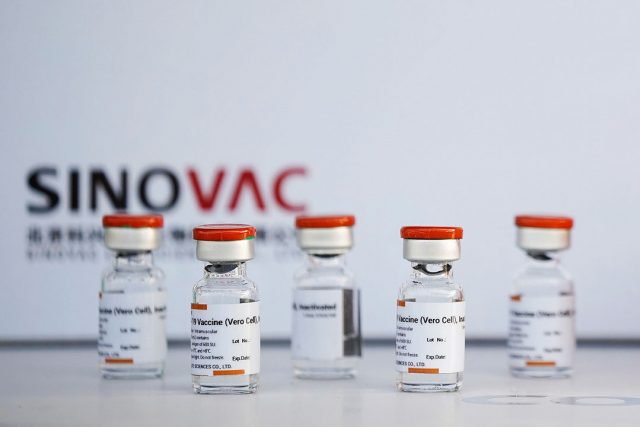
Two Chinese vaccines, one from Sinovac Biotech and one from Sinopharm, have been included in the WHO’s emergency use list.

Mr. Xi also called for policies to maintain global economic and financial stability, saying China will strengthen macroeconomic policy coordination and maintain policy continuity, stability and sustainability.

“Major economies should adopt responsible macroeconomic policies to avoid negative spillover effects to developing countries and maintain the steady operation of the international economic and financial system,” he said.

Mr. Xi reiterated that China would work to hit a carbon emissions peak by 2030, with the goal of reaching carbon neutrality by 2060. — Reuters

Philippines’ richest man set to see his supermarket IPO sizzle

AllDay Marts Inc., a supermarket chain founded by the richest person in the Philippines, is poised to jump in its trading debut thanks to heavy retail investor interest.

AllDay’s offer was about four times oversubscribed, with the company and billionaire Manuel Villar raising a combined P4.52 billion ($89 million) by selling 7.52 billion shares at 60 centavos each. Trading is scheduled to begin Wednesday in Manila.

“The interest from retail investors is quite strong,” said Andrei Soriano, an analyst at AP Securities Inc. “We got a lot of inquiries and many of our clients subscribed to the IPO. They expect this will be another MerryMart.”

Its peer MerryMart Consumer Corp. surged by the 50% daily limit from its IPO price in each of its first three trading days in June 2020. Shares have tripled since they listed, though off their January peak.

AllDay is debuting at a time when the Philippine IPO market is booming. Six deals have raised a record $2.33 billion this year, Bloomberg-compiled data show.

Villar, whose fortune is $7.3 billion according to the Bloomberg Billionaires Index, is a draw for investors, say analysts, as is AllDay’s low nominal IPO price. The firm should be able to meet its target of tripling its stores in five years, they say, as Villar can provide locations through his Vista Land & Lifescapes Inc., a builder of residential, office and retail developments in 147 cities and towns nationwide.

AllDay’s IPO price of 60 centavos is “reasonable” relative to MerryMart, which priced its float at 200 times forward earnings and had just seven outlets when it went public, said AP Securities’ Soriano. AllDay, which already has 33 stores, has a multiple of 31.1 times its 2022 earnings at the offer price.

The supermarket group targets the “affluent mid-premium segment,” where its market share has widened to 9.5% in 2020 from 6.9% in 2019, according to a COL Financial Group Inc. report. It plans to use 20% of the net proceeds from the sale of new shares to expand.

AllDay will use the remaining proceeds from the new shares to pay down debt, helping save P206 million in annual financing costs, according to its prospectus.

The reopening of the Philippines’ pandemic-hit economy and increased campaign spending ahead of the May 2022 presidential and national elections are also favorable for AllDay.

“Reopening means more employment and consumer spending while the elections will help boost spending capacity of households,” said Manny Cruz, a strategist at Papa Securities. – Bloomberg

Globe shows support for global and national mental health celebrations

COVID-19 has had a significant impact on the mental health of Filipinos across different groups all over the archipelago. From frontline workers, parents balancing work and family, children trying to cope with online learning, people living alone, those with pre-existing mental health conditions—the pandemic has adversely affected the lives of many.

Thus, as the Philippines and the world celebrate mental health this month, Globe shows its support through various initiatives that help raise awareness on mental health and well-being. This is the company’s way of showing Filipinos that they are not alone in this fight.

“Today there are many people who are experiencing mental health issues due to the pandemic. And just like how we need to take care of our body, we also need to take care of our emotional and psychological well-being. We are trying to reach out to as many people as we can to remind them that there are existing support platforms they can reach out to,” said Yoly Crisanto, Globe Chief Sustainability Officer and SVP for Corporate Communications.

Through its #PlantHappinessPH mental health campaign, which went live last September 27, Globe encouraged everyone to find joy in simple pleasures. The campaign has, so far, received more than 1,400 video entries from people from all walks of life and has already amassed a whopping 264.9 million views on TikTok.

With a musical score of “Better Days 2.0,” performed by renowned Filipino artist Quest, #PlantHappinessPH put the spotlight on dancing and planting as a way to relieve people of both stress and anxiety during these difficult times. It sought to spread joy and happiness to show hope, no matter how challenging these days may be.

Globe also took part in the National Mental Health Week and the Philippine Mental Health Association’s (PMHA) “Light Up Blue for Mental Health!” By lighting its corporate headquarters lobby chandelier, Globe was able to provide support for the initiative. The activity reminded people that they are never alone in their mental health journey and that stories of hope and courage come from all corners of the world.

Meanwhile, KonsultaMD, a joint venture of Globe’s 917Ventures and Salud Interactiva, brought together some of the country’s most popular artists for a concert entitled “Be Kind to Your Mind” last October 9.

The artist lineup included actress and singer Nadine Lustre, indie rapper, singer-songwriter Curtismith, folk-pop band Ben&Ben, and two of the nation’s hottest DJs—Nix Damn P and Marvelous. The event was the culmination of KonsultaMD’s month-long “Be Kind To Your Mind” campaign, which sought to spread awareness about the importance of mental health among Filipinos.

As part of the campaign, customers can get a free one-month health plan with 24/7 unlimited access to KonsultaMD’s licensed mental health professionals until Oct 31. To avail of the promo, download the KonsultaMD app and use the voucher code BEKINDTOYOURMIND.

Earlier, Globe also collaborated with the DepEd Disaster Risk Reduction Management Services (DepEd-DRRMS) and the Bureau of Human Resource and Organizational Development-Employee Welfare Division (BHROD-EWD) to back the well-being of teachers through the TAYO Naman! (Tulong, Alaga, Yakap at Oras para sa mga Tagapagtaguyod ng Edukasyon) program. TAYO Naman! is an online Mental Health and Psychosocial Support (MHPSS) initiative for all education advocates, including teachers, non-teaching personnel, and parents, under Globe’s Global Filipino Teachers Program.

Globe is also working with numerous organizations to encourage people suffering from mental health issues to reach out and get help through free emotional crisis hotlines. This includes lifelines like the HOPELINE, which offers free mental health support, 24 hours a day, seven days a week. People in mental distress can contact the hotline through 2919 (toll-free for all Globe and TM subscribers), (02) 804-HOPE (4673), or 0917 558 HOPE (4673).

HOPELINE is also included in the telehealth service integrator HealthNow app. Globe and TM subscribers may quickly call HOPELINE for FREE anytime they want to talk to someone.

World Mental Health Day is a project of the World Health Organization. It is celebrated every October 10 to raise awareness of mental health issues worldwide and mobilize efforts in support of mental health. The day also provides an opportunity for all stakeholders working on mental health issues to talk about their work and what needs to be done to make mental health care a reality for people worldwide.

Globe strongly supports the United Nations Sustainable Development Goals, particularly UN SDG No. 3, on providing good health and well-being, and SDG No. 9, which highlights the roles of infrastructure and innovation as crucial drivers of economic growth and development. Globe is committed to upholding the United Nations Global Compact principles and contributing to 10 UN SDGs.

Learn more by visiting www.globe.com.ph/about-us/sustainability.html.


Spotlight is BusinessWorld’s sponsored section that allows advertisers to amplify their brand and connect with BusinessWorld’s audience by enabling them to publish their stories directly on the BusinessWorld Web site. For more information, send an email to online@bworldonline.com.

Join us on Viber to get more updates from BusinessWorld: https://bit.ly/3hv6bLA.

Beauty is always enlightened with the new vivo Y15 Series selfie phone

The newest entrant to the Y series keeps your beauty in focus

Young and young-at-hearts can fill the humdrum of every day with picture-perfect moments as vivo, a leading global smartphone brand, continues to bank on its consumers’ demand to provide quality and stylish phones at an affordable price.

The vivo Y series, the brand’s best-selling product segment in the country, comes with the latest update with the upcoming release of the new vivo Y15 Series.

This hip and stylish smartphone gives a bang for the buck with its vibrant colorways and compelling features. At a budget-friendly price range of P5,000 to P7,500, users can have a reliable device to attend to their day-to-day tasks — from social media activities, gaming, online video calls, and other creative pursuits.

Beauty enlightened

Dimly-lit selfies? We don’t know her. The vivo Y15 Series integrates an 8MP Night Selfie camera. This feature ensures that all images taken are focused on the subject to capture an enlightened beauty against a bokeh or haloing backdrop. Additionally, it also comes with a Selfie Soft Light Band that supports photos taken in dark environments. This one provides a real-time preview of fill light effects and automatic adaptation, so users can be assured that they get the best lighting every time.

Beauty in power

Aside from its fashionable hardware design and modern camera features, the vivo Y15 Series also supports a user’s daily journey with its built-in powerful technology.

A single full charge of the Y15 Series can provide up to 18 hours of HD movie streaming or 7 hours of intensive game playing. With this, people can pursue their gaming or film-buff hobbies anytime, anywhere. It also has the groundbreaking 5V1A Reverse Charging technology. This feature means that the smartphone can also be used to charge other devices — doubling as a device of its own as well as a backup power bank.

With all these technologies fused in the new vivo Y15 Series, lovers of fun and creative pursuits can take advantage of a smartphone that enlightens beauty at a value-for-money price. Watch out for its upcoming release on vivo Philippines’ official Facebook, Twitter, and Instagram, and www.vivoglobal.ph.


Spotlight is BusinessWorld’s sponsored section that allows advertisers to amplify their brand and connect with BusinessWorld’s audience by enabling them to publish their stories directly on the BusinessWorld Web site. For more information, send an email to online@bworldonline.com.

Join us on Viber to get more updates from BusinessWorld: https://bit.ly/3hv6bLA.

TnT back as PBA champion

The TnT Tropang Giga are the 2021 PBA Philippine Cup champions. -- PBA Images

By Michael Angelo S. Murillo

The TnT Tropang Giga are back as Philippine Basketball Association champions after closing out the Magnolia Pambansang Manok Hotshots, 94-79, in Game Five of their best-of-seven Philippine Cup finals series on Friday at the Don Honorio Ventura State University Gym in Bacolor, Pampanga.

TnT won the series, 4-1, and marked its return to the PBA summit for the first time since 2015.

Rookie Mikey Williams led the way for the Tropang Giga, which controlled the game from late in the opening quarter all the way to the end. He finished with 24 points.

Magnolia tried to fashion out a comeback but just could not generate the needed wave to do so.

Roger Pogoy had 19 points for TnT, whose coach Chot Reyes is a champion anew in his first season back as coach in the PBA.

Jayson Castro had 10 points.

For Magnolia it was Ian Sangalang who showed the way with 18 markers.

TnT was last champion in 2015 with the Commissioner’s Cup.

The latest title was the sixth All-Filipino championship by the Tropang Giga in franchise history and eighth overall in the PBA.

Oil prices kept inflation above target in October — BSP

Oil prices have soared as the economic recovery from the pandemic has pushed energy usage higher. -- Photo by Michael Varcas, The Philippine Star

By Jenina P. Ibañez, Reporter 

Inflation in October likely exceeded the central bank’s annual target largely due to domestic oil price pressures, Bangko Sentral ng Pilipinas (BSP) Governor Benjamin E. Diokno said on Friday. 

Inflation will likely settle within the 4.5%-5.3% range, breaching the 2-4% BSP target for the year, he said in a Viber message to reporters. Inflation went up 2.5% in October last year. 

Headline inflation was at 4.8% in September 2021, slowing from the year-on-year rate of 4.9% in August. 

Mr. Diokno said higher Meralco electricity rates, increased prices of fish and fruits, and the depreciation of the peso added to the upward inflationary pressure. 

“These could be partially offset by the continued decline in rice and meat prices, reflecting continued arrival of pork imports,” he said. 

Earlier this week, pump prices of gasoline rose by P1.15, diesel by P0.45, and kerosene by P0.55 per liter, reflecting the continued surge in global oil prices.  

As of Thursday’s market close, Brent crude was steady at $82.36 a barrel. Reuters reported that crude oil was on track for its “first weekly fall in eight weeks after US oil stocks rose more than expected and Iran flagged it was resuming talks with Western powers which could lead to an end to sanctions.” 

Meralco power rates went up by P0.0283 to P9.1374 per kilowatt-hour (kWh) in October. 

The Department of Agriculture on Tuesday said imported pork will be distributed to areas where prices are high, expanding beyond the capital region and its neighboring provinces. 

The minimum access volume quota for pork imports has been expanded while tariff rates were temporarily lowered to address low pork supplies and rising prices due to the African Swine Fever outbreak. 

Mr. Diokno earlier this month said that recent elevated inflation is still “transitory,” and that tightening monetary policy too early may cause more harm to the economy’s recovery. 

“Moving forward, the BSP will continue to closely monitor emerging price developments to help ensure that its primary mandate of price stability conducive to balanced and sustainable economic growth is achieved,” Mr. Diokno said on Friday. 

The central bank in its September policy review kept rates steady, citing the need to support recovery even as it raised its inflation forecast for the year to 4.4%. 

NG debt hits P11.9 trillion as of end-September

REUTERS

By Jenina P. Ibañez, Reporter  

The national government’s outstanding debt rose to P11.9 trillion as of the end of September as the peso depreciated against the US dollar, preliminary data from the Bureau of the Treasury (BTr) showed. 

The end-September debt level was 27.2% higher than last year’s figure, and was 2.41% higher than a month earlier. 

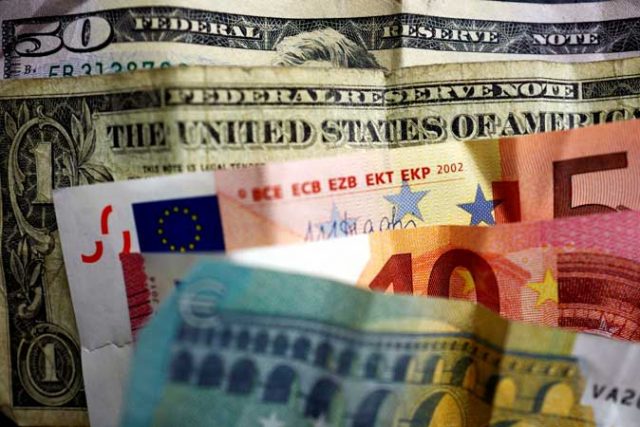
This was “due to net issuance of both domestic and external debt and peso depreciation against the US Dollar,” BTr said in its report on Friday. 

Government debt rose by 21.7% since the start of the year, or P2.12 trillion over nine months. 

Broken down, 70.4% of the debt came from domestic borrowing, while the rest were sourced overseas. 

Domestic debt at the end of September increased by 2% to P8.39 trillion from August. Domestic debt stock grew 30.3% year on year. 

Outstanding government securities was up 2.2% to P7.85 trillion. The government also has P540 billion from the Bangko Sentral ng Pilipinas (BSP) borrowed last year to continue funding the country’s pandemic response. 

External debt rose 3.10% to P3.529 trillion at the end of September from the end of August. 

“For September, the increment in external debt was due to the net availment of foreign loans amounting to P43.99 billion and the effect of local currency depreciation against the US Dollar amounting to P76.82 billion,” BTr said. 

“This more than offset the impact of third-currency fluctuations against the US Dollar amounting to P13.73 billion.” 

Foreign debt at the end of September went up 20.4% from a year earlier, and increased 13.8% since the start of the year. 

Foreign debt consisted of P1.54 trillion in loans and P2.0 trillion in government securities. 

Government securities included P1.6 trillion in dollar notes, P239 billion in euro bonds, P89 billion in yen paper, P20 billion in yuan notes and P86 billion in peso global bonds. 

The government’s total guaranteed debt went up 0.10% to P432.9 billion in September from a month earlier. 

“Net repayments on both domestic and external guarantees amounted to P2.56 billion for the month,” BTr said. 

“However, local-currency depreciation against the US dollar increased the value of external guarantees by P4.47 billion, offsetting repayments and third-currency depreciation which trimmed P1.27 billion.” 

Rizal Commercial Banking Corp. Chief Economist Michael L. Ricafort in an email said increased government spending, especially on infrastructure, also led to wider budget deficits and some corresponding pick up in outstanding government debt. 

Increased government spending on infrastructure and in preparation for the elections could help stimulate the economy and “would lead to wider budget deficits and, in turn, would require more government borrowings/debt to finance the said budget deficits,” he said. 

Bank lending growth fastest in 11 months

BW FILE PHOTO

By Jenina P. Ibañez, Reporter  

Bank lending rose 2.7% in September to mark the second straight month of growth, preliminary data from the Bangko Sentral ng Pilipinas (BSP) showed. 

Outstanding loans issued by big banks increased 2.7% to P9.25 trillion in September, after growing 1.3% year on year in August. It had previously declined for eight straight months. 

The growth in September is the fastest in 11 months, or since the 1.8% expansion in October 2020. 

Including reverse repurchase agreements, outstanding loans went up 2.7% to P9.54 billion year on year in September.   

Outstanding loans went up 0.6% month on month on a seasonally adjusted basis. 

“The observed increase in outstanding loans of U/KBs reflects the modest recovery in banks’ overall lending attitudes along with improved economic prospects owing to the gradual lifting of pandemic containment measures,” BSP Governor Benjamin E. Diokno said in the report released Friday. 

The government gradually loosened mobility curbs in Metro Manila in September, although the number of coronavirus disease 2019 (COVID-19 infections remained elevated.  

Loans for production activities rose by 4.4% in September from the 3.1% a month before. 

This was supported by expansions in credit disbursed for professional, scientific and technical services (92.7%), information and communications (26.6%), transportation and storage (9.5%), and human health and social work activities (9.2%). 

But loans for production activities was tempered by the decline other sectors, including those for administrative and support services (-23.1%), mining and quarrying (-19.8%), education (-17%), and agriculture, forestry and fishing (-11.9%). 

Consumer loans declined by 7.8% year on year in September compared to the 8.4% contraction in July. Credit to all retail segments fell, led by motor vehicle loans (-15.6%). 

Rizal Commercial Banking Corp. Chief Economist Michael L. Ricafort said the quicker pace of COVID-19 vaccinations somewhat improved business sentiment, which led to some uptick in loan or credit demand. 

“For the coming months, bank loans growth could continue to pick up as the country shifts towards smaller scale/granular lockdowns,” he said in an email, referring to the government’s move to implement targeted lockdowns in areas showing a spike in COVID-19 cases.  

Meanwhile, domestic liquidity continued to go up, according to BSP data released on Friday. M3, or the broadest measure of cash in an economy, expanded by 8.2% in September after a 6.9% increase in August. 

On a seasonally adjusted basis, M3 went up 1.1% month on month. 

Domestic claims increased 7.6% in September, faster than the 6.7% seen the previous month. 

Net claims on the central government expanded by 35.4% in September from the 23.5% in August. 

Claims on the private sector, driven by lending to nonfinancial private firms, went up 3.1% from 2.3% in the previous month. 

Net foreign assets (NFA) in peso terms grew 11.3% in September from 9.7% in August. 

“The expansion in the BSP’s NFA position reflected the increase in the country’s gross international reserves relative to the same period a year ago. Meanwhile, the NFA of banks grew as banks’ foreign assets rose on account of higher loans and deposits with nonresident banks,” Mr. Diokno said. 

According to Mr. Ricafort, M3 growth could improve further in the coming months due to increased investment banking transactions in the pipeline in November. 

“All of which could entail some foreign investment inflows and some local banks to invest/deploy some of their excess peso funds/liquidity from the central bank’s deposit facilities as they mature,” he said.