Home Blog Page 6750

Japan PM Kishida, strengthened by election win, lays out broad policy plans
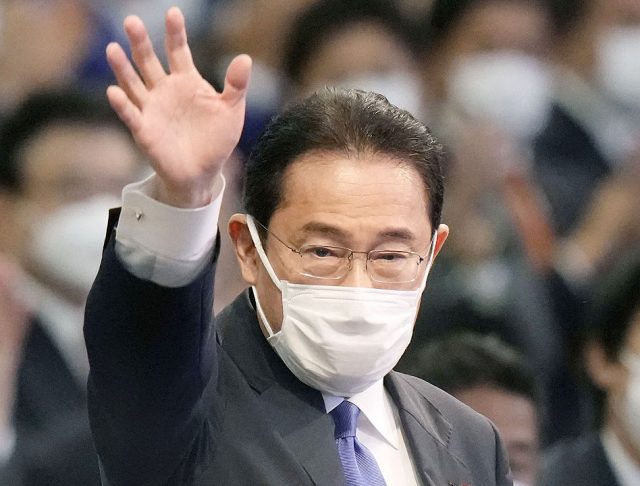
Japanese Prime Minister Fumio Kishida — KYODO/VIA REUTERS

TOKYO — Japanese Prime Minister Fumio Kishida, invigorated by a surprisingly strong election victory, signaled on Monday he would pursue defense policies aimed at deterring China, address climate change and accelerate recovery from the pandemic.  

Mr. Kishida’s conservative Liberal Democratic Party (LDP) defied predictions and held onto its single party majority in a Sunday election, solidifying his position as head of the fractious party and giving him a freer hand in parliament, with recovery from the coronavirus pandemic — including an extra budget — taking priority.  

Some had feared that Mr. Kishida, only in power for a month, could become another one of Japan’s short-term prime ministers, but the election results — which set stocks surging in relief — will allow him to put his own stamp on policies ahead of an upper house election next summer.  

The LDP’s solid victory in Japan’s parliamentary election also eased bond market fears of massive bond issuance because it will likely take pressure off Mr. Kishida to inflate the size of a pandemic-relief stimulus package.  

“We will speedily implement policies to respond to the voices of the people we have received nationwide that strongly desire political stability and policy implementation,” the prime minister said at a news conference on Monday.  

Key among those will be recovery from the pandemic, with Mr. Kishida pledging to work for an extra budget by the end of the year, look into restarting a travel subsidy program to revive domestic tourism and compile a “large-scale” stimulus package around mid-November.  

But he also placed emphasis on defense in a nod to the more hawkish views of backers in the LDP who supported him in his run for leader, the pursuit of which could become trickier given the electoral gains made by the dovish junior coalition partner Komeito.  

The LDP included the unprecedented pledge to double defense spending to 2% of GDP in its party platform, a nod to its haste to acquire weapons to deter China’s military in the disputed East China Sea.  

“When we think about protecting people’s lives and livelihood, a budget should not come first,” Mr. Kishida said.  

“We need to think about what is really needed for that end. I’d like to proceed with this debate carefully so that I can gain Komeito’s understanding.”  

DIPLOMACY, CLEAN ENERGY 
Mr. Kishida added that Japan needed to consider the capability to strike enemy bases as an option to counter growing defense technology in other nations.  

“What’s important is making checks constantly if a system is in place to protect people’s lives and livelihood amid a changing international situation and advancing technologies,” he said.  

The prime minister, who spoke of “personal diplomacy” during the campaign, wasted no time kicking that off by announcing he would leave for Glasgow and the COP26 climate summit on Tuesday for his face-to-face debut at an international conference.  

Saying his stimulus package would include investment on clean energy and funding aid to Asia, he also said he hoped Japan would take a leadership role on zero emissions in Asia.  

Japan has set a target of 2050 for becoming carbon-neutral, and Mr. Kishida believes — in the face of considerable public opposition — that nuclear energy should remain an option.  

While initial exit polls on Sunday suggested the LDP would have to rely on its junior coalition partner, Komeito, to keep a majority, the conservative party — in power for all but a few years since its founding in 1955 — instead won a solid majority of 261 seats on its own.  

The party did take some notable hits, including the loss by LDP secretary-general Akira Amari, in his single-seat district. Though media reports said Amari would resign, Kishida said he would decide his future after the two had “thorough discussions.”  

Voters took the results in their stride.  

“This is pretty much as I expected, though I thought there might be a bit more of an impact from their handling of the coronavirus pandemic,” said Satoshi Tsujimoto, 53 and an office  

worker. He did not vote for the LDP. — Ju-min Park, Antoni Slodkowski and Kiyoshi Takenaka/Reuters 
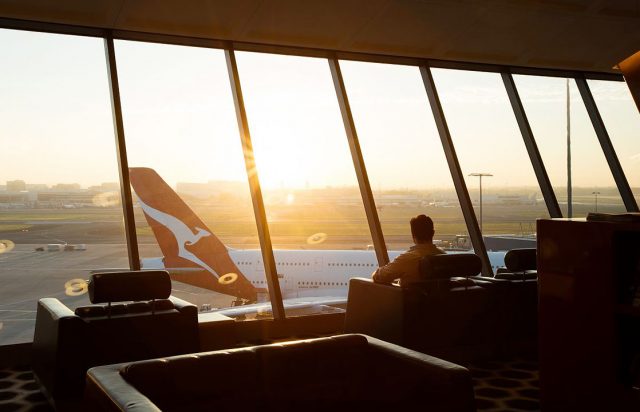
Australia eases international border restrictions for first time in pandemic

Image via Qantas

SYDNEY — Australia eased its international border restrictions on Monday for the first time during the coronavirus pandemic, allowing some of its vaccinated public to travel freely and many families to reunite, sparking emotional embraces at airports.  

After more than 18 months of some of the world’s strictest coronavirus border policies, millions of Australians are now free to travel without a permit or the need to quarantine on arrival in the country.  

While travel is initially limited to Australian citizens, permanent residents and their immediate families, it sets in motion a plan to reopen the country to international tourists and workers, both much needed to reinvigorate a fatigued nation.  

Passengers on the first flights from Singapore and Los Angeles arrived in Sydney early in the morning, many greeted by tearful friends and relatives they had not seen for several months. Travelers were also welcomed by airline staff holding banners and were gifted Australian wildflowers and chocolate biscuits.  

“Little bit scary and exciting, I’ve come home to see my mum ’cause she’s not well,” said Ethan Carter after landing on a Qantas Airways flight from Los Angeles.  

“So it’s all anxious and excitement and I love her heaps and I can’t wait to see her,” he said, adding he had been out of the country for two years.  

In Melbourne, a water cannon sprayed a Singapore Airlines plane in celebration as it taxied down the tarmac after landing.  

In one of the world’s toughest responses to the coronavirus pandemic, Australia slammed its international border shut 18 months ago, barring foreign tourists and banning citizens from either exiting or arriving unless granted an exemption.  

The strict travel rules effectively prohibited many Australians from attending significant events, including weddings and funerals, as well as preventing people from seeing family and friends.  

The relaxation of travel rules in Victoria and New South Wales states and the Australian Capital Territory comes as much of Australia switches from a COVID-zero pandemic management strategy towards living with the virus through extensive vaccinations.  

While the Delta outbreak kept Sydney and Melbourne in lockdowns for months until recently, Australia’s coronavirus disease 2019 (COVID-19) cases remain far lower than many comparable countries, with around 170,500 infections and 1,743 deaths, as at Oct. 31.  

Around 1,500 people were scheduled to fly in to Sydney and Melbourne on Monday, according to airline industry group BARA.  

NO TOURISTS YET 
The change in travel rules, however, is not uniform across the country, with states and territories having differing vaccination rates and health policies.  

Western Australia, which takes in one of the world’s biggest iron ore precincts, remains largely cut off from the rest of the country —  and the world — as the state tries to protect its virus-free status.  

And while Thailand and Israel were due to welcome vaccinated tourists from Monday, foreign travelers were not yet welcome in Australia, with the exception of those from neighboring New Zealand.  

“We still have a long way to go in terms of the recovery of our sector, but allowing fully vaccinated Australians to travel without quarantine will provide the template for bringing back students, business travelers, and tourists from all over the world,” Sydney Airport CEO Geoff Culbert said.  

Citizens of Singapore are the next group to be allowed entry, from Nov. 21.  

Australian officials on Monday added India’s Covaxin vaccine and China’s BBIBP-CorV vaccine, made by Sinopharm, to a growing list of accepted vaccines, expanding the number of people who will be allowed to travel to Australia without quarantine.  

Unvaccinated travelers will still face quarantine restrictions and all travelers need proof of a negative COVID-19 test prior to boarding.  

Australia previously let only a limited number of citizens and permanent residents return from abroad, with a mandatory 14-day quarantine period in a hotel at their own expense. There were also some exemptions for foreign travelers on economic grounds, including, controversially, some Hollywood stars. — Reuters 

COP26 aims to banish coal. Asia is building hundreds of power plants to burn it

WIKIMEDIA COMMONS

UDANGUDI, India/TOKYO — On the coastline near India’s southern tip, workers toil on a pier carrying a conveyor belt that cuts a mile into the Indian Ocean where the azure waters are deep enough for ships to berth and unload huge cargoes of coal.  

The belt will carry millions of tonnes of coal each year to a giant power plant several kilometers inland that will burn the fuel for at least 30 years to generate power for the more than 70 million people that live in India’s Tamil Nadu state.   

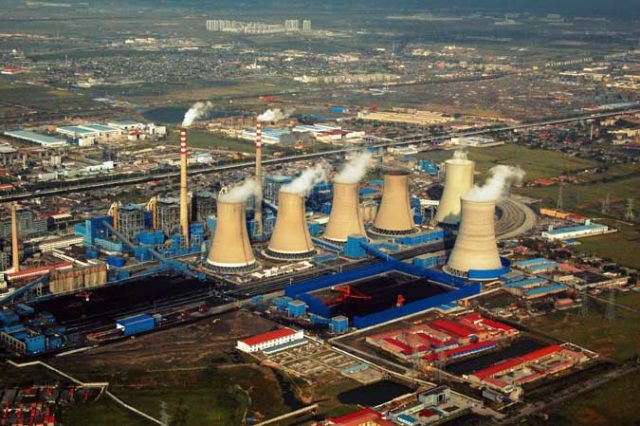
The Udangudi plant is one of nearly 200 coal-fired power stations under construction in Asia, including 95 in China, 28 in India and 23 in Indonesia, according to data from US nonprofit Global Energy Monitor (GEM).   

This new fleet will produce planet-warming emissions for decades and is a measure of the challenge world leaders face when they meet for climate talks in Glasgow, where they hope to sound the death knell for coal as a source of power.   

Coal use is one of the many issues dividing industrialized and developing countries as they seek to tackle climate change.   

Many industrialized countries have been shutting down coal plants for years to reduce emissions. The United States alone has retired 301 plants since 2000.   

But in Asia, home to 60% of the world’s population and about half of global manufacturing, coal’s use is growing rather than shrinking as rapidly developing countries seek to meet booming demand for power.   

More than 90% of the 195 coal plants being built around the world are in Asia, according to data from GEM.   

Tamil Nadu is India’s second-most industrialized state and is one of the country’s top renewable energy producers. But it is also building the most coal-fired plants in the country.   

“We cannot depend on just solar and wind,” a senior official at Tamil Nadu Generation and Distribution Corp told Reuters.  “You can have the cake of coal and an icing of solar,” he said, declining to be named as he was not authorized to speak to media.   

HOOKED ON COAL  
Despite dramatic jumps in renewable energy output, the global economy remains hooked on coal for electricity. In Asia, coal’s share of the generation mix is twice the global average — especially in surging economies such as India.   

In 2020, more than 35% of the world’s power came from coal, according to the BP Statistical Review of World Energy. Roughly 25% came from natural gas, 16% from hydro dams, 10% from nuclear and 12% from renewables like solar and wind.   

This year, coal demand is set for a new record, driving prices to all-time highs and contributing to a worldwide scramble for fuel.   

Record coal demand is contributing to a rapid rise in emissions in 2021 after a fall last year, when restrictions on movement for billions of people to slow the pandemic caused fuel use to plummet.   

While some of the new coal plants under construction will replace older, more polluting stations, together they will add to total emissions.   

“The completion of the capacity that is already under construction in these countries will drive up coal demand and emissions,” said Lauri Myllyvirta, lead analyst with the Centre for Research on Energy and Clear Air.   

The carbon dioxide (CO2) emissions from the new plants alone will be close to 28 billion tonnes over their 30-year lifespans, according to GEM.   

That’s not far off the 32 billion tonnes of total worldwide CO2 emissions from all sources in 2020, according to BP, highlighting how tough it will be for leaders gathering in Glasgow — including Indian Prime Minister Narendra Modi — to make meaningful progress on climate change.   

India’s Environment Secretary Rameshwar Prasad Gupta told Reuters in a recent interview that India was on track to reach its target of cutting back the country’s carbon footprint, and with that coal, too, would fall — but it cannot be abolished.   

“Look, every country has its strengths. We have coal, we have to depend on it,” Mr. Gupta said.   

“Our position is once you take up targets of reducing carbon intensity, that will have impact … Leave it to us whether we do it in coal, or somewhere else.”   

Anil Swarup, a former Coal Secretary, took the same line in an interview. “Renewable energy expansion is critical, but coal will remain India’s main energy source for the next 15 years at least, and production needs to be ramped up to address our energy needs,” he said.   

CHINA CRUNCH  
Across India, 281 coal plants are operating and beyond the 28 being built another 23 are in pre-construction phases, GEM data show.   

These numbers are dwarfed by China, the top global coal miner, consumer and emitter, whose leader, President Xi Jinping, is not expected to attend COP26. More than 1,000 coal plants are in operation, almost 240 planned or already under construction.   

Together, coal plants in the world’s second-largest economy will emit 170 billion tonnes of carbon in their lifetime — more than all global CO2 emissions between 2016 and 2020, BP data show.   

Despite also boasting the world’s largest renewables capacity, China is now suffering a major energy crunch and has urged coal miners to raise output.   

That’s likely to boost coal consumption in the near term, even though China plans to reduce coal use from 2026.   

Even so, total global coal consumption looks set to rise, driven by accelerating use in South and Southeast Asia, where projects under construction will raise coal-burning capacity by 17% and 26% respectively.   

AFTERLIFE  
Even in economies committed to slashing emissions, coal’s grip remains strong.   

Japan, with its nuclear power industry in crisis since the Fukushima disaster, has turned to coal to fill the gap and is building seven large new coal-fired power stations.   

Leading generator JERA plans to add clean-burning ammonia to be used with coal to help meet its target to be carbon neutral by 2050, and potentially keep old units operating longer.   

On a bay near Nagoya, JERA’s 30-year-old, 4,100 megawatt Hekinan station — once Asia’s largest — supplies electricity to the likes of auto giant Toyota Motor Corp.   

Like many power plants, Hekinan’s boilers rely on fuel from top exporters such as Australia, where coal is both a vital source of revenue — $18 billion in the current financial year – and a bone of contention with allies urging ambitious emissions cuts.  

Australian Prime Minister Scott Morrison is set to attend the Glasgow talks. But resources minister Keith Pitt has said there would be demand for coal for decades and made it clear the country would not be swayed by pressure from banks, regulators and investors to hobble the industry.   

“While the market exists, Australia will look to fill it,” Mr. Pitt said. — Sudarshan Varadhan and Aaron Sheldrick/Reuters 

G20 offers little new on climate, leaving uphill task for COP26

Shubert Ciencia/CC BY 2.0/Wikimedia Commons

ROME — Leaders of the Group of 20 (G20) major economies agreed on a final statement on Sunday that urged “meaningful and effective” action to limit global warming, but angering climate activists by offering few concrete commitments.  

The result of days of tough negotiation among diplomats leaves huge work to be done at the broader United Nations COP26 climate summit in Scotland, which starts this week.  

US President Joseph R. Biden, Jr., said he was disappointed that more could not have been done and blamed China and Russia for not bringing proposals to the table.  

“The disappointment relates to the fact that Russia and … China basically didn’t show up in terms of any commitments to deal with climate change,” Mr. Biden told reporters.  

Although the G20 pledged to stop financing coal power overseas, they set no timetable for phasing it out at home, and watered down the wording on a promise to reduce emissions of methane — another potent greenhouse gas.  

However, Italian Prime Minister Mario Draghi, who chaired the Rome gathering, hailed the final accord, saying that for the first time all G20 states had agreed on the importance of capping global warming at the 1.5 degrees Celsius level that scientists say is vital to avoid disaster.  

“We made sure that our dreams are not only alive but they are progressing,” Mr. Draghi told a closing news conference, brushing off criticism from environmentalists that the G20 had not gone nearly far enough to resolve the crisis.  

The G20, which includes Brazil, China, India, Germany and the United States, accounts for 60% of the world’s population and an estimated 80% of global greenhouse gas emissions.  

The 1.5°C threshold is what UN experts say must be met to avoid a dramatic acceleration of extreme climate events like droughts, storms and floods, and to reach it they recommend net zero emissions should be achieved by 2050.  

The stakes are huge — among them the very survival of low-lying countries, the impact on economic livelihoods the world over and the stability of the global financial system.  

“This was a moment for the G20 to act with the responsibility they have as the biggest emitters, yet we only see half-measures rather than concrete urgent action,” said Friederike Roder, vice president of sustainable development advocacy group Global Citizen.  

The final summit document said current national plans on how to curb emissions will have to be strengthened “if necessary” and makes no specific reference to 2050 as a date to achieve net zero carbon emissions.  

“We recognize that the impacts of climate change at 1.5°C are much lower than at 2°C. Keeping 1.5°C within reach will require meaningful and effective actions and commitment by all countries,” the communique said.  

CONSEQUENCES OF INACTION  

The leaders only recognized “the key relevance” of halting net emissions “by or around mid-century.” This removed the 2050 date seen in previous versions of the final statement so as to make the target less specific.  

China, the world’s biggest CO2 emitter, has set a target date of 2060, and other large polluters such as India and Russia have also not committed to the 2050 target date.  

German Chancellor Angela Merkel said the agreement was a good signal for COP26, but Canadian Prime Minister Justin Trudeau signaled he would have liked to see more ambition.  

“There’s no question that Canada, along with a number of other countries, would have liked stronger language and stronger commitments on the fight against climate change than others,” he told reporters.  

UN experts say that even if current national plans are fully implemented, the world is headed for global warming of 2.7°C, with catastrophic consequences.  

Mr. Draghi predicted that nations would keep on improving their plans to lower carbon emissions in the years ahead, adding that he was surprised by how far countries like China and Russia had shifted their stance in recent days.  

“It is easy to suggest difficult things. It is very, very difficult to actually execute them,” he said.  

The final G20 statement includes a pledge to halt financing of overseas coal-fired power generation by the end of this year, but set no date for phasing out coal power, promising only to do so “as soon as possible.”  

This replaced a goal set in a previous draft of the final statement to achieve this by the end of the 2030s, showing the strong resistance from some coal-dependent countries  

The G20 also set no date for phasing out fossil fuel subsidies, saying they will aim to do so “over the medium term.”  

METHANE REDUCTION  

On methane, which has a more potent but less lasting impact than carbon dioxide on global warming, they diluted their wording from a previous draft that pledged to “strive to reduce our collective methane emissions significantly.”  

The final statement just recognizes that reducing methane emissions is “one of the quickest, most feasible and most cost-effective ways to limit climate change.”  

G20 sources said negotiations were tough over so-called “climate financing,” which refers to a 2009 pledge by rich nations to provide $100 billion per year by 2020 to help developing countries tackle climate change.  

They have failed to meet the pledge, generating mistrust and a reluctance among some developing nations to accelerate their emissions reductions.  

However, Mr. Draghi said the funding gap had narrowed to less than $20 billion and predicted it could be closed further, with wealthy nations considering using financing from the International Monetary Fund to make up the shortfall.  

World leaders will kick start COP26 on Monday with two days of speeches that could include some new emissions-cutting pledges, before technical negotiators lock horns over the rules of the 2015 Paris climate accord.  

The United Nations said last week greenhouse gas concentrations hit a record in 2020 and the world was “way off track” in capping rising temperatures. — Gavin Jones, Crispian Balmer, and Jeff Mason/Reuters

World leaders seek ways to strengthen global supply chains

REUTERS

ROME —  US President Joseph R. Biden, Jr., and 16 other world leaders on Sunday discussed action to make supply chains more resilient in the face of any future health crises, as well as climate change and even planned attacks.  

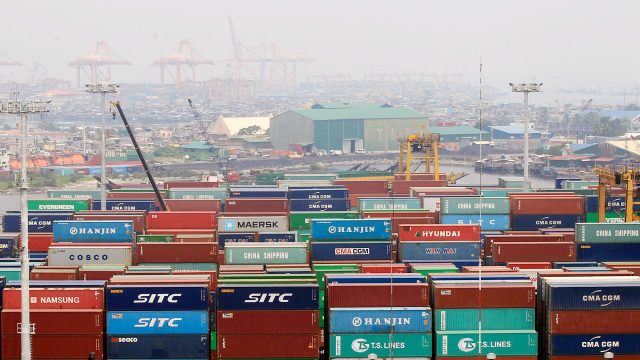
Supply chain problems have emerged as the global economy has pulled out of a pandemic-induced recession and threaten to slow recovery. They have already stoked inflation.  

“We have to take action now, together with our partners in the private sector, to reduce the backlogs that we’re facing. And then, we have to prevent this from happening again in the future,” Mr. Biden told world leaders at a meeting to address supply chain bottlenecks on the sidelines of the G20 in Rome.  

“Now that we have seen how vulnerable these lines of global commerce can be, we cannot go back to business as usual. This pandemic won’t be the last global health crisis we face. We also need to increase our resilience in the face of climate change, natural disasters, and even planned attacks,” he said.  

Apart from the United States, leaders and representatives from the European Union, Australia, Britain, Canada, Democratic Republic of Congo, Germany, Indonesia, India, Italy, Japan, Mexico, the Netherlands, Republic of Korea, Singapore and Spain took part in the meeting.  

A written White House summary of the talks said countries expressed willingness to work together to make supply chains more resilient. It said they had agreed to work for more transparency and information-sharing between countries and on the need to have multiple reliable suppliers of raw materials, intermediate and finished goods.  

“Openness and communication can promote a swift response to disruptions to supply chains — like those that the globe is facing right now — and allow other players within a supply chain to take mitigating steps,” the White House summary said.  

“We should avoid any unnecessary trade restrictions and maintain free flow of goods and services,” it said.  

The leaders emphasized also the need for security, especially in technology supply chains, and for fair and sustainable labour conditions and said they would work with the private sector to reach these goals. — Jeff Mason and Jan Strupczewski/Reuters 

Inflation likely quickened in October

PHILIPPINE STAR/ MICHAEL VARCAS

By Luz Wendy T. Noble, Reporter

INFLATION likely quickened in October amid a continued rise in pump prices and a spike in food costs due to a severe tropical storm, analysts said.

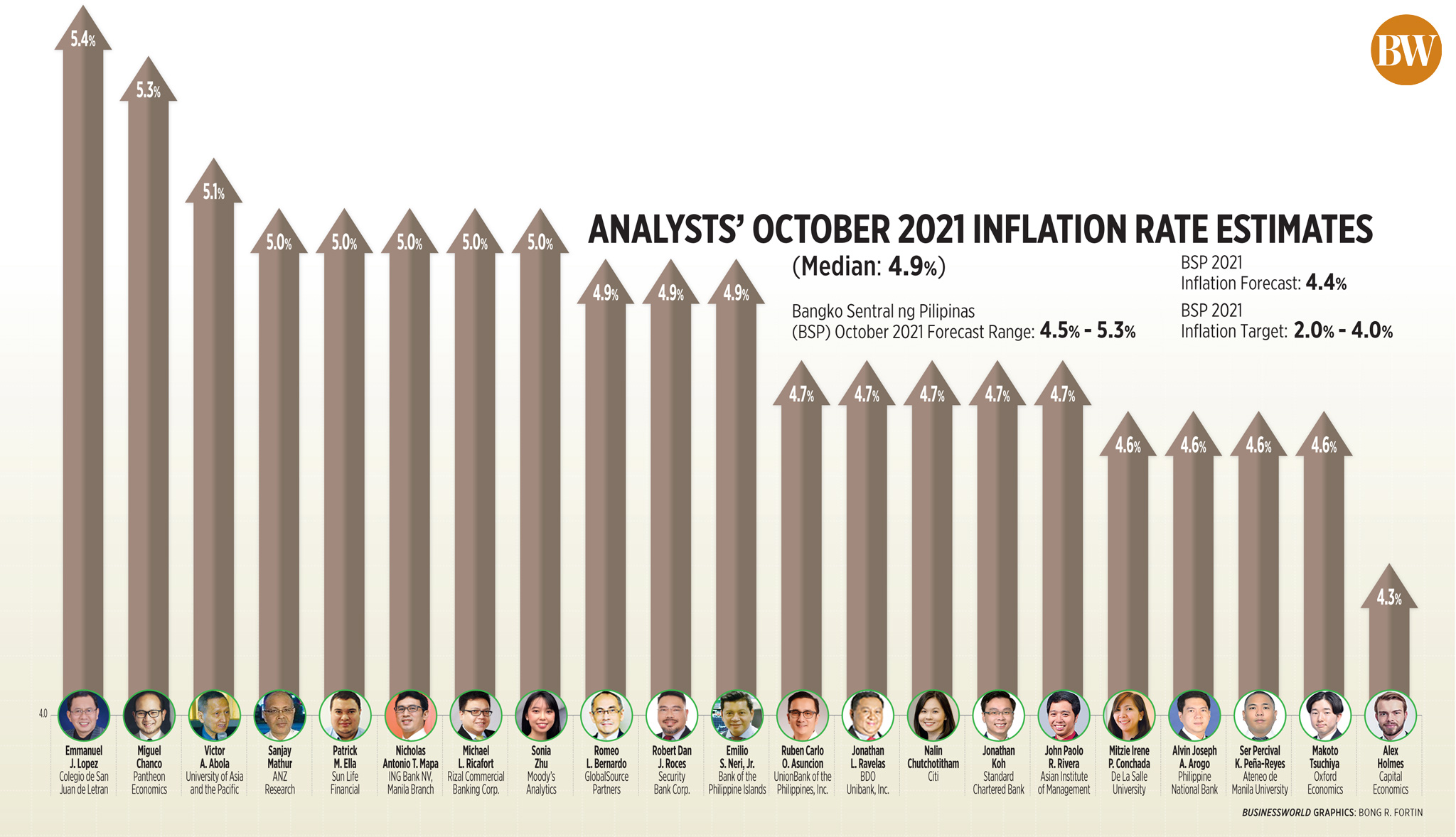
A BusinessWorld poll of 21 analysts yielded a median estimate of 4.9% for the October consumer price index (CPI), which matches the midpoint of the 4.5-5.3% forecast given by the Bangko Sentral ng Pilipinas (BSP).

If realized, headline inflation will exceed the 2-4% BSP annual target range for the third straight month. This will also be faster than the 4.8% seen in September and the 2.5% a year earlier.

Analysts’ October 2021 inflation rate estimates

The Philippine Statistics Authority will release October inflation data on Nov. 5.

Analysts pointed out that supply issues following last month’s severe tropical storm Maring may have caused food prices to increase at a faster pace.

“Inflation could pick up for the month of October 2021 largely due to the storm damage by Maring that could lead to some temporary increase in food/other commodity prices,” Rizal Commercial Banking Corp. Chief Economist Michael L. Ricafort said.

“Inclement weather caused substantial crop damage in the month, upending the highland harvest season and damaging fish pens. We note higher prices for beef and fish in the meat basket and a sharp acceleration in the cost for highland vegetables and fruits,” ING Bank N.V. Manila Senior Economist Nicholas Antonio T. Mapa said.

Maring caused agricultural damage and losses worth P1.74 billion as of Oct. 16, according to the Department of Agriculture.

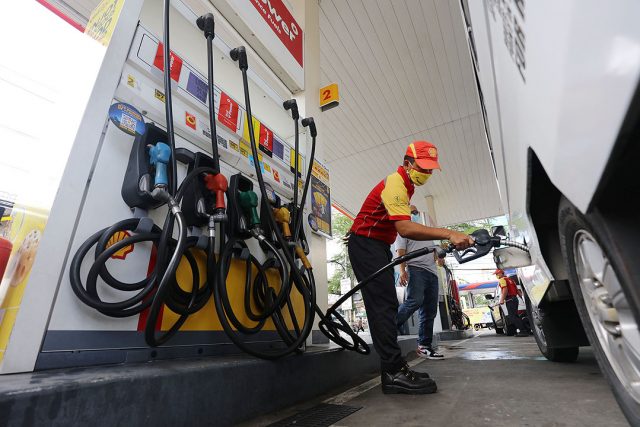
The surge in oil prices also contributed to the faster inflation in October, analysts said.

Global oil prices have surged in recent weeks amid low supply from major oil exporting countries and strong demand. On Friday, Brent crude closed at $84.38 a barrel, “supported by expectations that the Organization of the Petroleum Exporting Countries, Russia and their allies, known as OPEC+, would maintain production cuts,” Reuters reported.

“As a net importer of oil, higher energy and commodity prices will push the Philippines’ headline inflation up in the near term,” Sonia Zhu, associate economist at Moody’s Analytics said.

Data from the Department of Energy showed gasoline, diesel, and kerosene prices have increased by P20.80, P18.45, and P16.04 per liter as of Oct. 26 year to date.

“We believe the recent pickup in world commodity prices, notably energy, supply disruptions and the weak peso will keep inflation elevated in the short term,” Makoto Tsuchiya, economist at Oxford Economics said.

“However, we do not expect this to lead to any substantial second-round effects, such as higher wages, given the ongoing slack in the labor market and the large negative output gap,” he added.

The government is set to distribute P1 billion in cash grants to public utility vehicle drivers in response to soaring pump prices.

However, there are still calls to suspend excise taxes on fuel products, although the Finance department said this may cause up to P131.4 billion in revenue losses in 2022.

Inflation has breached the BSP target since January, except in July when it was at 4%.

In September, the BSP kept its policy rates unchanged even as it raised its inflation forecast for the year to 4.4%. Analysts believe the BSP will keep the current accommodative stance in the next few months to focus on supporting the economy’s recovery.

“The BSP will continue to remain comfortable in allowing the real overnight reverse repurchase rate (nominal minus inflation rate) to remain negative in the coming months,” Alvin Joseph A. Arogo, vice-president and head of equity research division at Philippine National Bank said.

“The central bank continues to recognize that the high inflation is mainly supply-side driven and that the country’s economic recovery is uncertain,” he added.

The BSP will have its next policy-setting review on Nov. 18. Third-quarter gross domestic product data is scheduled to be released on Nov. 9.

The economy rose by 11.8% year on year in the second quarter, although it declined by 1.3% on a quarterly basis.

BSP Governor Benjamin E. Diokno said last week that there are already “concrete signs of economic rebound,” but stressed the need to support the economy to boost recovery. He has also earlier said it appears that there will be no more rate adjustments until the end of 2021.

Meanwhile, Mr. Mapa said the central bank may start to raise interest rates by the first half next year.

“A potential and likely tightening by global central banks may also mean that the BSP will eventually need to adjust policy settings to reflect the ‘new central bank normal,’ regardless of the state of the domestic economy,” he said.

Mr. Diokno has earlier said he sees “more harm” in tightening monetary policy “too soon” than in doing it “too late.”

In the region, central banks in Singapore, New Zealand, and South Korea have started to tighten monetary policy. Meanwhile, the Bank Indonesia and Bank of Japan kept their policy settings unchanged.

Gross borrowings reach P2.6 trillion as of end-Sept.

BW FILE PHOTO

GROSS BORROWINGS by the National Government reached P2.6 trillion as of end-September as it continued to raise funds to respond to the coronavirus crisis, preliminary data from the Bureau of the Treasury (BTr) showed.

Gross borrowings in the first nine months went up by 15.143% versus the same period last year.

In September alone, the Treasury raised P215.106 billion.

Local borrowings, which accounted for the bulk of the total, stood at P166.95 billion that month, 65.32% higher compared with the P100.97 billion in August.

In the same month, Treasury bills (T-bills) resulted in net redemption worth P21 billion, while P187.95 billion in Treasury bonds (T-bonds) were sold.

No amortization payments were recorded in September.

Meanwhile, gross external borrowings hit P48.156 billion in September, or 18.68% higher than the P40.58 billion last year. It almost tripled from the P16.77 billion in August.

The September total consisted of P7.86 billion in foreign project loans and P40.29 billion in foreign program loans.

With P6.59 billion in amortization payments, net external borrowings reached P41.56 billion.

For the nine-month period, gross domestic borrowings reached P2.096 trillion, up by 22.56% from the same period last year.

This was made up of P1.09 trillion in T-bonds, P463.32 billion in retail treasury bonds, and P540 billion in short-term borrowings from the central bank. The government also recorded the P6.93-billion redemption in T-bills.

Net local borrowings hit P2.043 trillion after the BTr paid P405.4 billion in maturing obligations.

Gross external borrowings in the nine months to September reached P506.67 billion, declining by 7.92% from a year ago.

Broken down, the BTr raised P146.17 billion from global bonds, P121.97 billion from euro-denominated notes, and P24.19 billion in Japanese yen-denominated securities. It also incurred P139.98 billion in program loans along with P74.36 billion in project loans.

The government repaid P219.11 billion of its outstanding foreign debt so far, resulting in P287.56 billion in net external borrowings for the nine-month period.

The government plans to borrow P3 trillion from local and foreign sources this year to plug a budget deficit seen to reach 9.3% of gross domestic product (GDP). — Jenina P. Ibañez

Household spending seen to continue uptick

CRAG

By Jenina P. Ibañez, Reporter

PHILIPPINE HOUSEHOLD CONSUMPTION could see sustained improvement in the near term amid slowing daily coronavirus disease 2019 (COVID-19) infection rates, Moody’s Analytics said.

The economic research firm noted the effects of mobility restrictions declared to curb the spread of COVID-19 in the country, with extended Metro Manila restrictions in the third quarter hurting household spending and broader domestic demand.

“In the near term, we expect to see a more sustained improvement in household consumption as daily infection rates have slowed,” Moody’s Analytics Senior Asia-Pacific Economist Katrina Ell said in an e-mail last week.

The Health department reported 3,410 new COVID-19 cases, bringing the active caseload to 45,233 as of Sunday.

“That being said, vaccination coverage of the population needs to increase further to reduce the likelihood of further aggressive movement controls needing to be introduced,” she added.

According to the Johns Hopkins University Coronavirus Resource Center, the Philippines has fully vaccinated 26.8 million out of its 110 million population as vaccine supply constraints eased.

Household spending in the Philippines grew 7.2% year on year in the second quarter of 2021, after declining by 15.3% in the same period last year. In 2020, household consumption fell by 8.3% amid prolonged lockdowns. Household spending accounts for 70% of the country’s economy.

The country’s GDP grew by 11.8% in the second quarter this year, a reversal from the record 17% contraction seen in the same three-month period last year.

Moody’s Analytics earlier said consumer sentiment in the Asia-Pacific has followed the success of their countries’ policy makers in managing the virus.

“Our expectation is that COVID-19 will continue to influence economic behavior, but each successive new infection wave or variant will make a smaller dent (in) economies,” it said.

Meanwhile, Fitch Solutions Country Risk and Industry Research in a report on Friday said household spending could grow by 5.1% or a total of P11.1 trillion in 2022, accelerating from the estimated 3.5% growth this year, as the employment rate and consumer sentiment improve.

“Over 2022, consumer spending growth will begin to moderate, as the Filipino consumer continues its recovery from the contraction in 2020,” Fitch Solutions said.

The Philippine Retailers Association earlier said eased lockdown restrictions in Metro Manila will start to bring more consumption, noting that more transportation availability will improve consumer traffic.

But consumption could still be tempered. ANZ Research in an Oct. 14 note said the scale of pent-up demand in the Philippines, Indonesia, and Thailand “could disappoint” as it points to a decline in household savings rates and incomes.

“For the Philippines, the proportion of households with savings has dropped remarkably. The situation is likely to have been aggravated by the slowdown in remittances from overseas workers. Encouragingly, this headwind has started to abate recently,” ANZ Research said.

“The Philippines stands out with more than a quarter of its labor force un/underemployed for six straight quarters.”

AbaCore unit inks P5.1-B deal for Batangas condotel

OMNICOR Industrial Estate & Realty Center, Inc. recently signed a $100-million (P5.05 billion) memorandum of understanding with Starfleet Innotech, Inc. (SFIO), a New Zealand-based conglomerate, to develop a 500-unit condotel project in Batangas City.

Omnicor is a wholly owned subsidiary of listed AbaCore Capital Holdings, Inc.’s (ABA) 100% owned unit, Philippine Regional Investment Development Corp. (PRIDE).

“This joint venture between SFIO and ABA will be the first of many, according to a 10-year development plan where SFIO and ABA have agreed to be the preferred developer of future projects,” AbaCore Capital said in a disclosure to the stock exchange on Friday.

The 500-unit condotel will be built on a two-hectare property owned by AbaCore Capital and PRIDE in Batangas City’s Montemaria.

AbaCore Capital holds more than 200 hectares of land around the area.

The project, which will be built with a “resort condotel” concept, will target tourists, pilgrims, and returning “global Filipinos.”

SFIO will develop a smart-building technology for the project, which will address the wellness, safety, and security of the guests.

The project’s site had been issued an environmental compliance certificate, which is the go signal for the company to start the preliminary survey and design of the property.

“Preselling of the units will commence once the permit to presell is approved by a government agency of the Philippines,” AbaCore Capital said.

The project is aimed for completion within 36 months.

The resort condotel will feature a 316-feet tall Virgin Mary statue called the “Mother of All Asia-Tower of Peace,” and it will also be near the Verde Island Passage.

Shares of AbaCore Capital at the stock market declined by 0.87% or one centavo to close at P1.14 each on Friday. — Keren Concepcion G. Valmonte

An elegant solution

LUXURY watch brand Jaeger-LeCoultre once had a very expensive problem on its hands in 1931: rough games were breaking the expensive watches of polo players. The brand —  founded in 1833 —  then released one of its most popular watches, the Reverso, and arguably, one of the most elegant (in every sense of the word) solutions ever made to a problem. They designed the Reversos to be able to flip, protecting the dial during a polo game.

The elegantly practical solution now becomes a repository of skill, an evolution since the 90 years of its first inception. During a press conference last week, the brand showed the many more elegant applications that can be hidden and protected by the watch: it also serves as a very minute hiding place. King Edward VIII had one, still bearing his regal name and crest even after abdicating the throne the same year he took it. Aviator Amelia Earhart had her own, and hers was engraved with the flight route of her record-setting flight from Mexico City to New York.

THE MOON’S COMPLICATIONS
A Reverso with only 10 pieces in the world, called the Reverso Hybris Mechanica Calibre 185, is the most complicated timepiece ever in the collection. It is the world’s first wristwatch with four functioning display faces. “The Hybris Mechanica Quadriptyque can predict the next global incidence of astronomical events such as supermoons and eclipses — the world’s first wristwatch to provide such a deep reading of the cosmos,” ran a company statement. The watch has a total of 11 complications, including a perpetual calendar, minute repeater, indications of the synodic, draconic, and anomalistic lunar cycles (never before presented together in a wristwatch), requiring 12 patents.

A laser-engraved moon is progressively covered and revealed by a mobile blue lacquer disc with gold glitter décor, corresponding to the age of the moon in the synodic cycle. While conventional displays of the moon phase accumulate one day of error after 32.5 months, the moon phase display of the Quadriptyque requires only one adjustment after 1,111 years.

Just below the moon phase display, on the left, is a counter with a three-dimensional micro-sculpted pink-gold sun orbited by a tiny hemispherical moon. This counter shows the draconic cycle, showing when the path of the Moon intersects with the orbit of the Earth around the Sun (known as the ecliptic). Such an intersection takes place twice in each cycle, indicated by the horizontal alignment on the counter of the moon and the sun. To the right of the draconic cycle counter is a domed representation of the Earth, micro-painted in enamel, with a hemispherical moon in eccentric orbit around it. This counter represents the anomalistic cycle, showing the varying distance between the Earth and Moon.

90TH ANNIVERSARY WATCH
Meanwhile, Jaeger-LeCoultre presents the Reverso Tribute Nonantième, a watch celebrating its 90th anniversary. The pink gold case with its signature gadroons frames a silvered, sunray-brushed dial with applied golden indexes and Dauphine hands. In the lower half of the dial, a moonphase display is set within the circle formed by the small seconds counter. Beneath 12 o’clock is a large date display, framed by an applied filet of pink gold that echoes the rectangular shape of the dial and case.

The solid pink-gold caseback is dominated by two round apertures of different sizes, arranged like a figure-eight and encircled by gadroons that echo the rectilinear gadroons on the upper and lower edges of the case. The small upper aperture displays a semi-jumping digital hour indication. Seen for the first time in a Reverso, this complication recalls digital displays developed by the Manufacture for wristwatches in the 1930s.

In the large aperture below the hour, minutes are displayed on a rotating disc that is partially concealed by a three-quarter plate lacquered in vivid blue and sprinkled with tiny golden stars to depict the night sky. Within a small circle at the center, an applied golden sun and moon pass above a horizon, to indicate night and day. In the semi-circle below the horizon, a JL logo is set on a sunray-pattern background.

As is the case for all complicated Reverso models, Jaeger-LeCoultre’s engineers developed an entirely new, manually wound movement for the Nonantième, Calibre 826. Comprising 230 components and showing the same time on both faces of the watch, it offers a power reserve of 42 hours. The Reverso Tribute Nonantième is offered in a limited edition of 190 pieces, only available at the brand’s boutiques.

PERSONALIZING
Still, in many ways, it is the small moments celebrated by the Reverso that often gives it significance. Iñigo Ohlsson, Managing Director, South-East Asia & Oceania discussed the engravings he has encountered behind the Reverso’s dials. “Anybody can personalize a Reverso the way they want. What is quite unique is that because the case swivels, you can hide the message.”

“Every time I’ve spoken with someone who has their Reverso engraved, they have engraved something that is very close to their heart,” he said.

In the Philippines, Jaeger-LeCoultre is distributed by Lucerne. —  Joseph L. Garcia

FedEx Express doubles capacity for PHL shipments

EXPRESS transportation company FedEx Express said it recently launched two additional flights connecting businesses in Asia-Pacific countries, including the Philippines, to Europe and America, and made its fleet in Asia 100% wide-body.

“These new flights double the current capacity for Philippine shipments. This is particularly beneficial for Filipino small and medium-sized enterprises that aim to export during the coming peak season,” FedEx Express told BusinessWorld on Friday.

“Overall, this means enhanced connectivity, expanded capacity, more flexibility and greater reach for Asia-Pacific businesses, including businesses and exporters in the Philippines across trans-Pacific, intra-Asia, Europe and North America markets,” it said in an e-mail.

FedEx Express, a subsidiary of FedEx Corp., has a new 17,000-square-meter facility in Clark, Pampanga, which is seen to boost support for businesses and e-commerce in the country.

The two new flights are the latest in the company’s network expansion as economies in the region continue to recover.

“Combined with the four new intercontinental flights launched in July, FedEx has added 62 flights in and out of Asia-Pacific per week with additional capacity to carry almost 2,700 tons (2,690,000 kilograms),” FedEx Express said.

These additions bring its weekly flights from Asia-Pacific to the US and Europe to over 225.

The company also replaced its Boeing 757 narrow body freighters with Boeing 767 wide-body freighters.

“This has almost doubled the cargo capacity to Indonesia, Vietnam, Thailand, and the Philippines,” FedEx Express said.

The wider freighters offer a maximum gross payload capacity of nearly 60,000 kilograms.

As for the newly opened Clark Gateway facility, FedEx Express said: “Customers in Northern Luzon and Cebu will enjoy an extended cutoff time.”

“An extended cutoff time allows SMEs (small and medium-sized enterprises) more flexibility and ensures that their shipment departs on time. Meanwhile, deliveries in Northern Luzon will be earlier by two hours on average,” it noted.

The company also said the facility has sufficient space and capacity to process bulk shipments and is large enough to meet its customers’ retail freight needs, noting that its upgraded sorting system can handle 9,000 documents and parcels per hour. — Arjay L. Balinbin

Being beautiful inside and out

Makeup brand launches mental health campaign

A MAKEUP brand is aiming to make you beautiful inside and out with a new website containing a directory of mental health professionals to help you achieve your best self. After all, doesn’t beauty start from the inside?

To celebrate its ninth anniversary in the Philippines, BYS launched a new campaign called “Break Your Stigma” (playing on the brand’s initials), anchored on a website, www.breakyourstigma.com. The website contains resources for people to connect with over 100 mental health professionals and organizations to seek help. The brand itself was founded in 2004 in Melbourne as a brand of GFA Australia.

Angie Goyena, President of iFace, Inc., the local distributor for BYS, said during a press conference on Oct. 21, “This is not the grand party you were expecting. It is the kind of anniversary we feel is relevant and necessary right now.”

While the campaign is currently only operating in the Philippines right now, the principals from Australia are certainly supportive of it. “The Philippines is such an important market for us. It’s always been at the forefront in terms of innovation and trends. It’s no surprise that they’re tacking this important issue today of mental health,” said Amanda Aitken, Managing Director of GFA Australia. “The need to support everyone’s mental health is such a pressing concern. It doesn’t matter where you come from. It’s all over the globe.”

Ms. Goyena made it clear that the brand’s initials actually stand for the phrase “Be yourself.” However, “It’s really hard to ‘Be Yourself’ if you don’t love yourself, of if your current self is going through something extremely painful or difficult.”

“It is only when we break our stigma that you can truly be yourself,” she said. “Our goal is to give everyone a safe and secure platform where you can get help on your own terms and help others find help too.”

It’s an important cause to take up today, seeing as how the world rages against multiple global crises, the pandemic and its accompanying hardships taking up the top spot for our concerns. But what exactly does makeup have to do with mental health? Ms. Goyena says, “We believe that beauty should be total. It should be overall, not just on the surface,” she said. “Being beautiful on the inside has to do with having good mental health.”

Dr. Honey Carandang, Clinical Psychologist and founder of Mindfulness, Love, and Compassion Institute for Psychosocial Services, Inc., said that taking care of your skin and your looks is part of self-care: a facet of mental health usually skipped over due to our culture. “When you take care of yourself, you are labeled as being selfish: especially with women who were conditioned to raise or take care of others. I think we should reverse that,” she said. “I don’t think we can take care of others if we don’t care of ourselves in all ways.”

Ms. Goyena said, “If we can talk about our skin or our makeup not being perfect, we can normalize talking about our mental health not being perfect as well.”

Visit www.breakyourstigma.com or check out updates about BYS on BYS Cosmetics Philippines on Facebook. — Joseph L. Garcia