Home Blog Page 6710

BIR collects P44.6 billion from online retail sales, content creators in 2021

THE Bureau of Internal Revenue (BIR) said it collected P44.6 billion worth of tax from online content creators and retail sales by the end of 2021, BIR Assistant Commissioner Larry M. Barcelo said in a presentation at the House Ways and Means Committee hearing. 

“As early as 2013, the BIR issued a Revenue Memorandum Circular reiterating the taxpayer’s obligations for online business transactions,” Mr. Barcelo, who heads the bureau’s legal service, said.

The obligations include “registration, keeping the books of account, invoices, receipts, filing of tax returns and payment of taxes,” he added.

Other memorandum circulars outlined the rules for the registration of online businesses and the filing and paying of taxes, he added.

Mr. Barcelo said 43 tax treaties currently govern the tax treatment of the Philippine operations of non-resident foreign corporations.

During the hearing, House Ways and Means Chairman and Albay Rep. Jose Ma. Clemente S. Salceda pushed the BIR to offer an online portal to allow overseas Filipino workers (OFWs) to more easily apply for Taxpayer Identification Number (TIN).

“The committee would like to seek the expedition or the action of the BIR on the online portal for the OFW TIN application and issuance,” Mr. Salceda said. “Even the PSA can issue a birth certificate online. That’s even more critical (than the TIN).”

“We will consider the digital portal for the OFWs. It will be part of our digital transformation program,” Mr. Barcelo said. — Jaspearl Emerald G. Tan

Complaints against online sellers decline in 2021

COMPLAINTS against online businesses have declined after the easing of quarantine restrictions, which allowed sellers to normalize their operations, the Department of Trade and Industry (DTI) said.

Trade Undersecretary Ruth B. Castelo said in a virtual briefing on Monday that the DTI received around 12,000 complaints involving online transactions in 2021, lower than the 16,000 complaints logged in 2020.

In the first two months of 2022, the DTI received 2,059 complaints involving online transactions, she said.

Ms. Castelo said the top three online platforms were Lazada, Shopee, and Zalora.

“In 2020, the online platforms couldn’t deliver because of the lockdowns. They didn’t have personnel going to work. The consumer complaints really rose in 2020. For 2021, the complaints declined. The online platforms were able to normalize operations especially because we also considered, in DTI, that online platforms are also selling essential goods. They also sell food, clothing, and grocery items,” Ms. Castelo said.  

Ms. Castelo said more employees of online platforms returned to work, which allowed for the faster resolution of complaints. She added that consumers have also grown more knowledgeable about e-commerce since the start of the pandemic.

“We hope the number of complaints goes down in 2022 from 12,000 last year. We will continue to provide consumer education,” Ms. Castelo said.

The DTI also warned online businesses against selling prohibited and unlicensed products over digital platforms.

Ms. Castelo said Joint Administrative Order (JAO) No. 22-01 was signed on March 4, directing online platforms to verify whether products sold by their merchants are licensed and regulated.

Under the JAO, all digital platforms are provided a three-day “safe harbor” period, during which they may take down an online post that has been flagged for violating the law.

“In case of a prima facie violation of any pertinent laws or regulations committed in an online post by the online seller or merchant, e-retailer, e-commerce platform, e-marketplace, and the like, the concerned authorized agency shall issue a notice giving the violator a maximum period of three calendar days from receipt thereof, within which to take down such post, without prejudice to the filing of appropriate administrative actions all violators,” the JAO said.

“Failure to enact, or strictly enforce, such internal mechanisms or rules shall be construed as an intentional and overt act that shall aggravate the offense charged,” it added.

Ms. Castelo said laws applicable to brick-and-mortar stores also cover online businesses.

“A price tag required to be pasted on items you buy in stores are also required to be pasted on the products that you buy online or through published price list. Buyers no longer have to ask for the price from the seller, who will almost always say that a private message is sent. This is a clear violation of the Price Tag law,” Ms. Castelo said.

Signatories to the JAO include the DTI, the Departments of Health (DoH), Agriculture (DA), Environment and Natural Resources (DENR), the Intellectual Property Office of the Philippines (IPOPHL), and the National Privacy Commission (NPC). — Revin Mikhael D. Ochave

Shaking up the cross-border doctrine

Nothing lasts forever. Things can change for better or for worse. Right now various entities enjoying tax incentives might be left wondering about the state of Philippine tax law. Among the questions taxpayers may be asking is — Can we still enjoy what we are enjoying now?

One such change was heralded by Bureau of Internal Revenue (BIR) Revenue Memorandum Circular (RMC) No. 024-2022, particularly regarding the application of the cross-border doctrine for value-added tax (VAT) purposes.

CROSS-BORDER DOCTRINE
The Supreme Court has recognized that the sale and consumption of goods or services within a given freeport or ecozone shall be deemed constructive exportation and technical importation. This is because freeports and ecozones, as provided under the law, are to be managed as separate customs territories from the rest of the Philippines and, thus, for tax purposes, are effectively considered foreign territory.

The cross-border doctrine is rooted in the Omnibus Investments Code of 1987, which recognizes the existence of “constructive exportation,” wherein sales to export processing zones are also considered constructive importation. The cross-border doctrine mandates that no VAT be imposed to form part of the cost of the goods destined for consumption outside the territorial border of the taxing authority, which includes the constructive exportation pertaining to sales to export processing zones.

BASED ON RMC 024-2022
In RMC 24-2022, the cross-border doctrine was rendered ineffectual as applied to freeports and ecozones for VAT purposes. Only those goods and services that are directly and exclusively used in the registered project or activity of Registered Business Enterprises (RBEs) qualify as VAT zero-rated on local purchases.

Under the RMC, direct and exclusive use in the registered project or activity refers to those expenditures directly attributable to the registered project or activity without which the registered project or activity cannot be carried out. This excludes purchases used for administrative purposes. Activities for administrative purposes, including legal, accounting, and other similar services, are not considered expenses directly attributable to, and exclusively used in the registered project or activity. If goods and services used in both the registered activity and for administrative purposes cannot be determined, then the purchase of goods and services is subject to 12% VAT.

An example provided under RMC 24-2022 is the telecommunication expenses of registered enterprises in IT/BPO services, which may be treated as expenses covered by VAT zero-rating since they are directly and exclusively incurred due to the nature of the industry. However, if the telecommunication expense is for administration purposes, it will be subject to 12% VAT.

Since only goods and services that are directly and exclusively used in the registered project or activity are allowed for zero-rating, not all goods coming into, or services rendered within freeports and ecozones may be accorded VAT zero-rating. In addition, the sale of goods or services to a registered domestic market enterprise is subject to 12% VAT.

Mere registration as an RBE will not automatically make its local purchases of goods and services qualify for VAT zero-rating following the cross-border doctrine. Thus, ecozone entities, such as RBEs, should classify their purchases from local suppliers, or determine whether the transaction is directly and exclusively used in the registered project or activity.

WHAT CAN TAXPAYERS DO?
In the meantime, it is highly recommended that taxpayers, especially RBEs, read RMC 024-2022 in its entirety. By understanding the RMC, the taxpayers can anticipate how the BIR would react and proceed. More importantly, taxpayers must take special note of the transitory provisions under the RMC.

In the discussion of the transitory provisions, for example, RMC 024-2022 took note of the retroactivity of Revenue Regulations (RR) 21-2021. Under RR 21-2021, taxpayers will be able to reclassify their sales to registered export enterprises, from being subject to 12% VAT to being considered zero-rated by virtue of the retroactive application of the issuance. The BIR considered the retroactivity to be justified as it is beneficial to the taxpayers affected.

Another clarification discussed by RMC 024-2022 is the treatment of VAT which had already been billed and/or collected that transpired during the effectivity of RR 09-2021, which is affected by the retroactivity of RR 21-2021. RMC 024-2022 holds that the seller can still opt to declare the sales to registered export enterprises as subject to 12% VAT. In this case, the VAT-registered buyer may utilize the passed-on VAT as input tax which may be credited against the output tax, or if the buyer is engaged in VAT zero-rated sales, the same can be recovered through VAT refund. If the buyer is not VAT-registered, then the VAT paid may be claimed as part of the cost of sales or expenses.

The seller can also revert the transaction from being subject to 12% VAT to VAT zero-rated by amending the filed VAT return after reimbursing/returning the VAT paid by the registered export enterprise buyer. If there is a resulting overpayment due to unutilized input tax credits, it may be recovered through VAT refund inasmuch as the corresponding sale is reverted to VAT zero-rated.

The above are just some of the rules to be observed in the application of RMC 024-2022.

While time-tested rules and procedures, such as the cross-border doctrine, are affected by RMC 024-2022, it is worth noting again that nothing is permanent. Given the tumultuous situation everyone is facing due to the two-year pandemic, the increase in gas prices, or even the threat of a nuclear war between global superpowers, a change in tax rules and principles may seem minor by comparison, but make no mistake, such a change is undoubtedly significant for many businesses.

Let’s Talk Tax is a weekly newspaper column of P&A Grant Thornton that aims to keep the public informed of various developments in taxation. This article is not intended to be a substitute for competent professional advice.


John Patrick L. Paumig is a senior associate from the Tax Advisory & Compliance division of P&A Grant Thornton, the Philippine member firm of Grant Thornton International Ltd.

pagrantthornton@ph.gt.com

Brady ends retirement, says he will play for Tampa next season

TOM BRADY — REUTERS

SEVEN-TIME Super Bowl winning quarterback Tom Brady abruptly said he would end his brief retirement on Sunday, announcing his return to the Tampa Bay Buccaneers for a 23rd National Football League (NFL) season just six weeks after hanging up his cleats.

Brady, who had established himself as one of the greatest players in league history, stunned the sporting world with the unexpected about face.

“These past two months, I’ve realized my place is still on the field and not in the stands,” said Brady on his official Twitter account. “That time will come. But it’s not now. I love my teammates, and I love my supportive family.

“They make it all possible. I’m coming back for my 23rd season in Tampa. Unfinished business LFG.”

Shortly after Brady made his announcement the Buccaneers reacted with their own message on Twitter: “He’s baaackkkk,” the team said with a video of the quarterback taking the field.

The NFL echoed that sentiment, tweeting a photo of a smiling Brady with the caption “He’s back.”

Tampa head coach Bruce Arians said he was “ecstatic” about the development.

“As Tom said, his place right now is on the football field,” Arians said. “He is still playing at a championship level and was as productive as anyone in the league last season.”

Perhaps Brady was inspired to make a comeback after watching another sporting great, Cristiano Ronaldo, score a hat trick in Manchester United’s 3-2 Premier League win on Saturday over Tottenham Hotspur at Old Trafford.

Brady walked onto the pitch to greet 37-year-old Ronaldo after the match, and a day later announced his return to the gridiron.

The 44-year-old Brady spent 20 seasons with the New England Patriots, winning six Super Bowls before moving to Tampa Bay and leading the Bucs to a championship in his first season with the team. — Reuters

Anirban Lahiri leads as The Players halted mid-third round

INDIA’S Anirban Lahibi held a one-shot lead at The Players Championship when play was halted due to darkness in the middle of the third round at TPC Sawgrass in Ponte Vedra Beach, FL. on Sunday.

Lahiri is 9-under-par for the tournament through 11 holes in his third round. He leads by one over Americans Tom Hoge and Harold Varner, who both completed nine holes before the horn sounded on Sunday evening.

Hoge was tied for the lead at 7 under when the second round was finally completed mid-day on Sunday. Co-leader Sam Burns finished the day still at 7 under and tied for fourth with England’s Paul Casey and Columbia’s Sebastian Munoz.

The third round will resume at 8 a.m. ET on Monday, with the final round scheduled to begin at 1 p.m. Tournament organizers hope to complete the final around 6:30 p.m.

Lahiri will sleep on the lead on Sunday night as he attempts to capture the biggest victory of his career.

The 34-year-old has 18 worldwide victories to date, but his biggest result in a marquee event was a tie for fifth at the 2015 Professional Golfers’ Association (PGA) Championship. Lahiri has yet to win the PGA Tour, and he entered this week ranked 322nd in the world.

“I think the nature of what we do, it could be — it’s unpredictable,” he said. “You grind away, you keep chipping away, you keep working on your game, and when it clicks, it clicks. It could be this week, it could be next week. As long as it happens, and that’s the belief you’ve got to have, and that’s the commitment you’ve got to have.

“I’m just happy. When you are in that state of mind, you usually play well, and that’s what’s happening.”

Lahiri first reached 9 under with a birdie on the ninth hole of his third round, making the turn in 4-under 31. He bogeyed the 10th hole but rebounded to birdie the par-5 11th before play was suspended.

When play resumes on Monday morning, there will be 17 players within four shots of the lead. That includes former Open champion Shane Lowry, who sits at 5 under thanks in part to a hole-in-one on the iconic 17th hole during his second round.

Defending champion Justin Thomas is 4 under through 11 holes and has 25 remaining to make a charge as he attempts to become the first player to successfully defend at the Players.

World No. 1 Jon Rahm is also through 11 holes in his third round but is seven shots off the pace at 2-under along with third-ranked Viktor Hovland. No. 2 Collin Morikawa missed the cut.

Scottie Scheffler and Rory McIlroy were among those who had to wait until Sunday afternoon to find out if they would make the 36-hole cut. Both squeeked in after Scott Piercy quadruple bogeyed the 17th hole after putting two balls in the water and then bogeyed No. 18 to fall to 3 over.

“I had to ask (caddie Travis Perkins) what day it was today,” Burns said after the second round was complete. “I really wasn’t even sure. It’s strange going from Thursday and not playing again until Sunday.”

Hoge is trying to win for the second time this year after claiming his maiden PGA Tour victory at the AT&T Pebble Beach Pro-Am last month.

“You know what, I think we definitely got the good end of the draw. That’s golf, I guess,” Hoge said about those who avoided playing on Saturday. “It was certainly difficult out there still this morning. I felt there were a lot of challenging golf shots out there.” — Reuters

Strong first quarter helps Suns rout Lakers

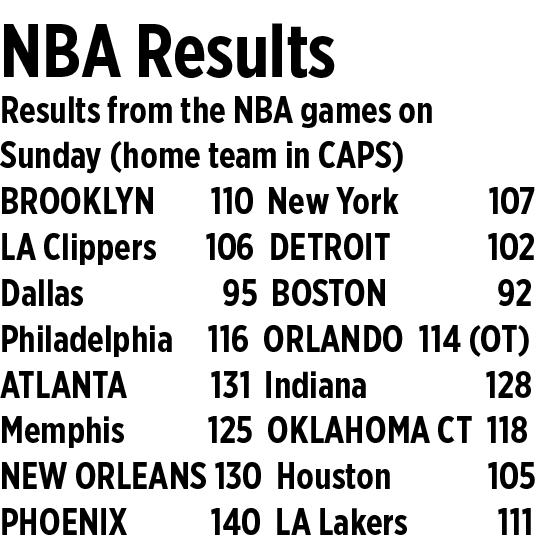
DEVIN Booker poured 12 of his team-high 30 points into a 48-point, first-quarter explosion on Sunday night that sent the host Phoenix Suns to a 140-111 victory over the Los Angeles Lakers in a matchup of possible first-round playoff opponents.

Deandre Ayton also contributed 10 points to the first-quarter flurry that put the Lakers in a 26-point hole and paved the way to a seventh loss in their last nine games despite a game-high 31 points from LeBron James.

Ayton finished with 23 points for the Suns, who successfully rebounded from a 117-112 home loss to the Toronto Raptors on Friday.

In beating the Lakers for the third straight time this season by a total of 57 points, the Suns went from a 6-2 deficit to a 16-6 lead behind a pair of Booker 3-pointers.

He added a third three later in the period, turning it into a four-point play when fouled on a 30-footer by Stanley Johnson.

On a night when they shot 56% from the field, the Suns went on to lead by as many as 28 points in the second quarter and 35 in the fourth minute of the final period before both teams emptied the bench.

Booker’s 30-point game was his 21st of the season. He shot 4-for-10 on 3-pointers and also found time for 10 assists, completing his fourth double-double of the year.

Ayton made 11 of his 14 shots and also led all rebounders with 16 for his 22nd double-double.

Mikal Bridges (18 points), Aaron Holiday (12), Jae Crowder (11), Torrey Craig (11) and JaVale McGee (10) also scored in double figures for Phoenix, which rolled up its largest point total of the season.

Cameron Payne aided the cause with a game-high 11 assists to complement nine points.

James went for 31 points and team-highs in rebounds with seven and assists with six. The 30-point game was his 28th of the season.

Carmelo Anthony had 18 points, Russell Westbrook and Malik Monk 13 apiece, and Austin Reaves 10 for the Lakers, who lost despite outscoring the Suns 48-36 on 3-pointers.

James (five) and Anthony (four) combined for nine of the Lakers’ 16 3-pointers.

The 140 points allowed were one fewer than the Lakers’ season-high of 141 in a three-overtime loss to the Sacramento Kings in November. — Reuters

God help us

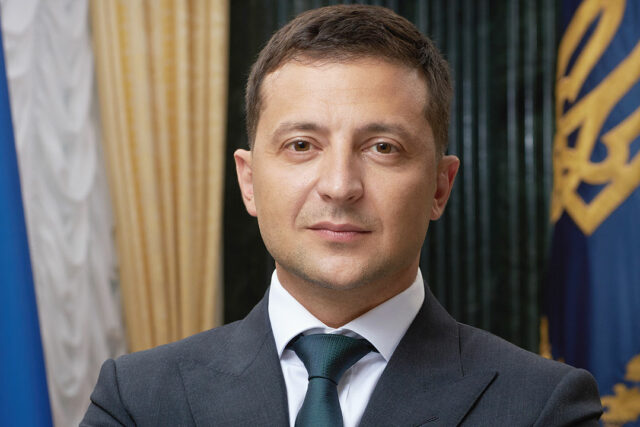
UKRAINE PRESIDENT VOLODYMYR ZELENSKY — EN.WIKIPEDIA.ORG/PRESIDENT.GOV.UA

Unless Vladimir Putin’s madness is taken out of the equation, the world is hurtling towards a world war which humanity can’t afford and doesn’t want for all the obvious reasons.

Since communism’s demise in 1991, the West’s and Putin’s struggle for power has placed all the countries under their influence, and those countries caught in between them, at grave risk.

In the past 30 years, many of the former Soviet republics joined the EU and NATO (North Atlantic Treaty Organization) and that increasingly alarmed Russia. Putin views this “encirclement” and “containment” by US-led NATO as a grave threat to its national security and interests. It’s also throwing a monkey wrench in his widely viewed attempt to cobble back together the old Soviet empire and Warsaw Pact to serve as Russia’s buffer zone and security belt.

Ukraine was Russia’s ultimate “red line.”

Ukraine is Europe’s second largest country next to Russia. It is mineral-resource rich and strategically positioned. Mr. Putin repeatedly sought security guarantees from the West that Ukraine would stay neutral, like Finland, to serve as a buffer between the West and Russia. Ukraine has been lobbying for membership in EU and NATO since 2008. Ironically, Ukraine has not been accepted to this day, unable to hurdle certain requirements to merit approval and acceptance.

I suppose Putin decided to step in before the EU and NATO did accept, which would have estopped him from attacking a NATO member country. The flurry of visits to Moscow to keep the dialogue going amounted to nothing when Putin concluded that the West was not interested in providing him with security guarantees. He closed the door on diplomacy, paving the way for Ukraine’s invasion. It’s pretty clear from years of geopolitical observation that when core interests clash, hot conflicts are inevitable.

His rush to war produced instant consequences. It united the people of Ukraine and united a divided Europe. It spurred the US to action — it had been waffling about Ukraine’s application and hesitant in stopping Putin based on its lame statements, until the invasion. Biting sanctions were swiftly applied. Sovereign nations and global businesses stopped dealing with Russia. Financial assets and properties were frozen and embargoed. Oil and gas prices have spiked. Cost of goods and supply chain dislocations are shaking the global economy.

Putin’s invasion hasn’t gone well, forcing him to engage in nuclear terrorism. His forces have attacked three nuclear stations already and occupied two. If they blow up, Europe will be a wasteland. He has become the world’s No. 1 villain. His own people are openly protesting his invasion. Ukraine’s heroic leader, Volodymyr Zelensky, on the other hand, has become the world’s hero. Ukrainian patriotism and heroism have caught the world’s attention.

Tens of thousands are volunteering to join his International Legion. Sympathetic countries are sending arms, munitions, and supplies. Combat aerial vehicles have been destroying major Russian military assets. Mig-29 jet fighters may soon reduce the military imbalance with Russia. Almost 20,000 anti-tank and anti-aircraft missiles and rockets have been delivered, with more on the way. One thing is clear: the peace dividend that flowed from the end of communism in 1991 has ended. War, death, and destruction are back on the table.

Despite available modern technologies to reduce collateral damage through smart and precision weapons, Russian and its surrogate forces are now targeting civilian populations indiscriminately. His scorched earth tactics are meant to bludgeon Ukraine to its knees. If the Russian people themselves don’t stop him, who knows where all this will lead to? Moldova? Georgia? Europe’s overall situation is fast eroding. It’s hurtling toward a larger conflict with more countries being sucked into it. Mankind is facing a potential global economic depression and world war.

Yet, here at home, I see no effort to inform the public of the worsening situation abroad and how it could impact the country in many ways. Government’s vacuity assures us of long-term suffering. We should be hearing from government — national and local — about what we need to focus on and do as one united nation to survive, and how to go about it. So far, it’s been the sound of silence. We’re on our own as government is hung up, as always, on self-serving politics that’s getting in the way of the exceptional governance required for perilous times like we’re in now.

There are valuable lessons from Ukraine that the government can capitalize on to educate and energize the nation. For example, Zelensky’s courageous leadership that is galvanizing his nation and inspiring the world; the Ukrainian’s selfless patriotism, placing national defense and security above personal safety and family considerations; their military’s guts and skill to engage a better-equipped and much stronger foe in combat; total warfare — economic, geopolitical, financial, cyber, information, kinetic; the imperatives for preparedness and self-reliance.

Government is perceived to be divided on Ukraine. Despite one public institution condemning Russia’s invasion of Ukraine by voting for the UN General Assembly resolution, other institutions are calling for neutrality or prefer to remain silent. Yet, they report to the same ultimate power that determines foreign policy, which drives our international relations. The disconnect is obvious and distressing. China is taking note for sure. As Russian Garry Kasparov, former world chess champion, echoes: “Neutrality between good and evil, sides with evil, always.”

My antennas are pointing towards preparations for my family’s survival, safety, and security, including all our kasambahays (house help) and their families. Emergency and crisis plans top the list. It starts with austerity measures to conserve cash for diversion to fundamental needs -— shelter options, transport options, food security, medical security, documents security, financial security. It includes networking with like-minded individuals and groups whom we could learn from and reciprocate with our own knowledge. The more the better.

Underlying all that is a personal commitment to pro-actively work for peace in whatever venue I may be in, and a deep abiding faith that God helps those who fight for a higher cause and the common good.

This article reflects the personal opinion of the author and does not reflect the official stand of the Management Association of the Philippines or MAP.


Rafael “Raffy” M. Alunan III is a member and former governor of the MAP, chair of the Philippine Council for Foreign Relations, vice-chair of Pepsi-Cola Products Philippines, Inc., and sits on the boards of other companies as independent director.

map@map.org.ph

rmalunan@gmail.com

The quest for truth saddens Marcos camp

“While presidential candidate Bongbong Marcos is calling for unity, we are saddened by the men and women of the Catholic [Church] who are doing the exact opposite and have abused the pulpit, allowing it to become a platform for hateful and negative campaigning. As men and women of the cloth, they should be more circumspect, refrain from openly meddling with politics and stop making reckless imputation or statement that only serves as a spiritual, moral, social and cultural poison.”

That was the reaction of lawyer Vic Rodriguez, spokesperson of presidential candidate Bongbong Marcos, to the pastoral letter of the Catholic Bishops’ Conference of the Philippines (CBCP). The letter warned the electorate against the “virus of lies” being sown in social media by troll farms.

In response to Mr. Rodriguez’ remark, Kalookan Bishop Pablo Virgilio David, who signed the pastoral letter in his capacity as president of the CBCP, said, “No, we don’t foment hatred. That’s unchristian. The only enemy we are taught to renounce is Satan — who is the prince of lies and who alone is happy when the social media are used to spread lies and disinformation.” CBCP executive secretary Fr. Jerome Secillano also said that “this candidate might not tolerate factual information and dissenting opinions after all.”

The letter calls on the faithful, especially the youth, to examine carefully what is happening in the quest for a true and just society, to engage in dialogue and discernment, to listen to the dictates of their conscience, not to the falsehood or distortion of the truth propagated by troll farms. The letter was sent out on February 25, anniversary of the triumph of People Power over the Marcos Dictatorship. Here are excerpts from the letter:

“The present state of division among us due to politics, is unfortunate. Yet, we hope all of us consider the common good as foremost concern. Let us respect one another — not giving in to hatred and rash judgments. Let us diligently seek the truth that we may do what is right and avoid evil.

“We are here to provide moral and spiritual guidance, in accord with our mission of proclaiming the truth from our faith.

“The elections are fast approaching …but we are appalled by the blatant and subtle distortion, manipulation, cover-up, repression and abuse of the truth, like: historical revisionism — the distortion of history or its denial; the proliferation of fake news and false stories; disinformation – the seeding of false information and narratives in order to influence the opinion of the people, to hide the truth, to malign and blackmail people. There are troll farms which sow the virus of lies.

“In this letter, we favor none but the truth. We wish to warn you of the radical distortions in the history of Martial Law and the EDSA People Power Revolution.

“Many of us, Bishops, were witnesses of the injustice and cruelty of Martial Law. And up until now, the human rights abuses, the victims, the corruption, the grave debt and economic downturn of the country due to dictatorship are all well-documented. Again, we did not make these up. These are all written in our history.

“In view of the coming elections, we call on you, Brothers and Sisters — especially the Youth, to examine carefully what is happening in our quest for a true and just society. Engage in dialogue and discernment. Listen to your conscience. Be the ones to decide.”

I find it hard to understand why Mr. Rodriguez was saddened by such a plea. Strange that he should frown on people of the Catholic Church “meddling” in matters of the state when he found nothing wrong about the endorsement of Bongbong Marcos’ presidential bid by Apollo Quiboloy, Executive director of the Kingdom of God, and by Mike Velarde, leader of the Catholic charismatic group El Shaddai.

Mr. Rodriguez’ statement that men and women of the cloth should refrain from openly meddling with politics must come from the common but erroneous understanding of the concept of separation of church and state — that the church should confine itself to matters of faith and morals only and should not stray into matters of the state.

But separation of church and state simply means the state or government should not officially recognize or favor any one religion or church and should remain neutral toward all religions. The 1987 Constitution of the Philippines declares, “No law shall be made respecting an establishment of religion, or prohibiting the free exercise thereof. The free exercise and enjoyment of religious profession and worship, without discrimination or preference, shall forever be allowed. No religious test shall be required for the exercise of civil or political rights.”

In other words, the government cannot establish a national religion. It also means that the government cannot force citizens to practice a specific religion nor prevent them from practicing what their religion obligates or allows them to do. Bigamy is illegal in the Philippines but Filipino Muslims may take more than one wife if they can deal with them and treat them equally.

Conversely, the church or a religion cannot force the government to observe the canons of the church. The government is free to pass any law it wants, even if the law conflicts with the church teachings. Example is the Reproductive Health Law which guarantees free access to any modern contraceptive, the use of which the Catholic Church considers immoral.

There is no Philippine law that prohibits a priest, pastor, imam, rabbi, or any leader of a religious group from having an active interest and participation in politics or affairs of the state. In fact, it is his duty as citizen to be active in political matters and to exercise his right to choose who should govern the citizenry.

The idea of the separation of church and state came about during the period of the Protestant Reformation. Monarchical absolutism, which is the King having absolute authority over state and religious matters, became widespread in Western Europe in the 15th and 16th centuries. Monarchs ruled by the idea of divine right, that the King ruled both his own kingdom and the church within his territory.

On the other hand, there was the Catholic belief that the Pope, as the Vicar of Christ on earth, should have authority over the Church and to a large extent over the state. In fact, throughout the Middle Ages the Pope claimed the right to dethrone the Catholic kings of Western Europe.

Most famous among the monarchs who had both temporal and spiritual powers was King Louis XIV of France who declared “L’etat, c’est moi” (“I am the state”). Another was King Henry VIII of England who established the Church of England after his request to divorce his wife, Catherine of Aragon, was rejected by Pope Clement VII.

Queen Isabella I and King Ferdinand II, known as the Catholic Monarchs of Spain, who jointly ruled the kingdom in the latter part of the 15th Century, formulated both domestic and religious policies. In fact, their reign was marked by the religious unification of the Iberian Peninsula through militant Catholicism.

The conquistadores from Spain brought to the Philippines in the 16th Century the concept of a government that has authority over secular and ecclesiastical matters. Catholicism and the Spanish government were inseparable in the Philippines during the Spanish colonial era. The religious orders played a dominant role in the administration of the Philippines. By the late 19th Century, the Catholic religious orders were the most politically powerful groups in the Philippines.

The fusion of the Catholic Church and the Spanish colonial government presented a problem to the new American colonial government. The Founding Fathers of the United States of America espoused the absolute separation between church and state. Their forebears were those who fled the religious persecution in Europe or those who sought religious freedom. The First Amendment to the Constitution of the United States provided that Congress make no law respecting an establishment of a religion or prohibiting its free exercise.

It took the American colonial government about 30 years to convert the Filipino leadership to the concept of separation of church and state. Thus, the 1935 Constitution of the Philippines, crafted under the guidance of the American colonial administrators, adopted the same provision expressed in the First Amendment to the US Constitution. So did the 1973 constitution drafted by Ferdinand Marcos himself and the 1987 constitution written by a commission formed by President Cory Aquino.

Therefore, no Filipino citizen, whatever his religion may be, exalted his position in his religion may be, should inhibit himself from active involvement in politics or even from endorsing a presidential candidate.


Oscar P. Lagman, Jr. is a retired corporate executive, business consultant, and management professor. He has been a politicized citizen since his college days in the late 1950s.


Should we fear stagflation?

SINCE THE FIGHTING BEGAN in Ukraine, bond yields in the US have moved lower and equities have trailed off by about 2% globally.* Meanwhile, the Federal Reserve Bank of Atlanta’s “GDP Now” forecast has plunged to predict zero growth in the first quarter of 2022. Simultaneously, inflation rages and is likely to be pushed higher by surging global energy and commodity prices owing to war, sanctions, and the threat of supply disruptions. It is little surprise that the word “stagflation” is trending as the world grapples with the possibility of both slower economic growth and higher inflation.

SUPPLY IS USUALLY THE CULPRIT, NOT DEMAND
The combination of higher prices and lower output generally arises from an adverse supply shock. That’s what happened in the 1970s when twin oil embargoes in 1973 and again in 1979 stalled growth and pushed up prices. Something like that could happen again if sanctions or acts of war disrupt the flow of Russian or Ukrainian oil, gas, wheat, corn, and other commodities worldwide.

Higher prices would reinforce a demand-driven surge in prices and wages already underway before the invasion. Accelerating inflation followed an unprecedented peacetime fiscal expansion in 2020–2021 that coincided with sluggish production, distribution, and labor supply responses owing to pandemic disruptions. Inflation has also been exacerbated by a shift in consumer spending from services to goods that caught producers off guard.

US INFLATION IS RISING, BUT UNLIKELY TO LEAD TO STAGFLATION
There are two reasons why stagflation in the United States is unlikely. The first is that adverse supply shocks are only a part of why inflation is now high. Excess demand is a bigger part of the story, and demand is already slowing. As it does, price and wage pressures are apt to abate.

The second reason is that an adverse supply shock cannot create sustainably higher inflation by itself. Either it must unleash a wage-price spiral, or it must prompt central banks to ease and over-stimulate demand.

Readers may be puzzled — aren’t prices and wages going up already? Yes, they are. But the key is understanding the difference between a one-time “shock” of demand exceeding supply — which is what the United States and much of the world economy has recently experienced — and an ongoing spiral of prices, which can only result from persistent ongoing increases in demand greater than supply. The latter leads to ongoing inflation. The former to a temporary period of price increases that, on its own, will plateau.

So why is demand unlikely to outstrip supply? One key reason is a collapse in purchasing power. Wage growth adjusted for inflation is falling rapidly, the worst period of real wage decline in a quarter century. The US February employment report provided further evidence — average hourly earnings are not keeping pace with rising prices.

Some observers might counter that workers will step up their demands for higher wages. That might happen, but a return to 1970s-style wage-price spirals seems unlikely. Unionization rates have plunged in the past half century, eroding collective bargaining power of workers. Automatic cost-of-living adjustments are a distant memory. Also, surveys and market indicators show that long-term inflation expectations are not consistent with a broad-based anticipation of durable higher inflation. If households and investors believed that a wage-price spiral was likely, long-term inflation expectations would surely be rising.

Another reason why inflation expectations have not moved much is that the 2021 spending boom has peaked. Household savings have fallen back to pre-pandemic levels, suggesting that “pent up” demand is receding. Meanwhile, last year’s COVID-19-relief checks, child tax credits, and healthcare spending surges are over. Last year’s government spending is not being repeated this year. Fiscal stimulus is rapidly becoming fiscal drag. In the United States, fiscal policy could lop off at least percentage point from gross domestic product growth this year.

In short, neither precondition for the inflation side of stagflation is probable. Demand appears unlikely to outpace supply on a recurring basis. And a wage-price spiral appears unlikely.

EUROPE FACES MORE UNCERTAINTY
In Europe, the situation is different. Unlike the United States, Europe is a major energy importer, both for crude oil and natural gas. Gas storage was already at low levels going into this crisis, creating conditions where higher prices will unambiguously dent European household purchasing power and hence overall demand. Europe’s reliance on Russia and Ukraine for key agricultural commodities and metals could also impact input costs for businesses across multiple industries, further impacting inflationary pressures. For all those reasons, the downside risks to growth in Europe are significantly higher than those in the United States. And, like the United States, measured inflation is being boosted by one-time supply shocks, above all coming from commodity prices.

SLOWING GROWTH IS THE RISK CHINA IS FOCUSED ON
China has experienced slowing growth in recent years, accelerated by zero-COVID policies and rising input costs, especially commodity costs, that have not been passed to the consumer over the past two years. Domestically, China remains hamstrung by property market excesses, many of which resulted from past lax borrowing standards and poor investment decisions. At the same time, the Chinese leadership has expressed its displeasure with growth that risks falling below 5%. If US growth cools this year and Europe’s recovery stalls, China’s export engine will not likely be sufficient to meet Beijing’s overall growth objectives.

FOCUS ON CENTRAL BANK RESPONSES
What does all this mean for monetary policy and interest rates?

Despite slowing growth and rising uncertainty, the Federal Reserve (Fed) remains committed to tightening US monetary policy. To be sure, Russia’s invasion of Ukraine has changed the calculus about how fast the Fed will move. Fed Chairman Jerome Powell openly stated his preference for a quarter point hike at this month’s Federal Open Market Committee meeting, quashing any expectations for a larger move. Russia was the reason.

Yet the Fed remains confident that fallout from the war will be modest. Partly that is because the US is energy self-sufficient. While higher oil prices will probably weaken US growth via falling real wages in 2022, the impact will likely be smaller than during the 1970s oil embargoes when the United States was a major energy importer and energy was a larger part of the economy.

The European Central Bank (ECB) faces a bigger challenge about what to do. Its mandate is singular — keep inflation low. But it cannot realistically ignore that war and surging commodity prices imperil any economic recovery. European countries may boost defense spending, but that impact won’t be felt for quarters or perhaps years. Accordingly, the ECB will be hesitant to follow the Fed’s rate hiking cycle, even if reported inflation remains above the ECB’s target.

But perhaps the most interesting central bank to watch this year will be the People’s Bank of China (PBOC). The reverberations of Russia’s invasion, coupled with the end of Western fiscal stimulus is pushing the PBOC to buck a global tightening trend and ease monetary policy in 2022. Global growth, which in the past two years was held up by western fiscal stimulus, may be shifting again eastward, as China moves to prop up its economy.

The bottom line is that investors should avoid being swept up in discussions about stagflation. It is a term more prevalent in the media than economics, and for good reason. Instead, astute investors will focus on how central banks respond to the shifting fortunes of the world economy and the jolt delivered by war. Their actions will drive developments in global bond markets and, hence, across all portfolios.

*Source: MSCI. From Feb. 24, 2022 through March 4, 2022.


Stephen Dover is the chief market strategist and head of Franklin Templeton Investment Institute.

After two years of lockdown, what have we achieved?

This coming Wednesday, the Philippines will mark the second anniversary of the lockdown imposed by the government on March 16, 2020. It was supposed to be a temporary “two weeks only to flatten the curve” enhanced community quarantine (ECQ). The two weeks became two months of modified ECQ (MECQ), which became two years of ECQ, MECQ, general CQ (GCQ), modified GCQ (MGCQ), and Alert levels 1 to 5.

So, have we “flattened the curve” of COVID-19 cases and deaths in the Philippines and other countries? Or has the law of unintended consequences kicked in again?

Here are 10 observations and facts from the two years of lockdown.

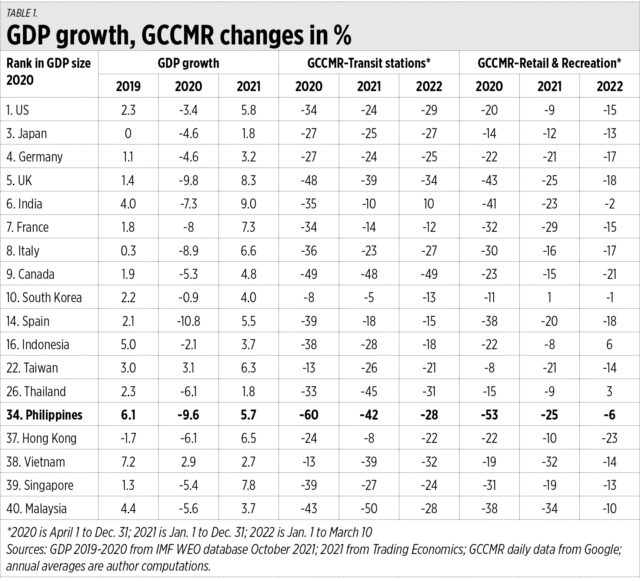
One, the Philippine economy was flattened. It suffered the worst, deepest economic performance since post-WW2 with a 9.6% GDP contraction in 2020. Of the top 50 largest economies in the world by GDP size, the five worst performing economies in 2020 were Spain with -10.8%, followed by Argentina -9.9%, the UK -9.8%, the Philippines -9.6%, and Italy -8.9%.

A few economies managed to grow in 2020 because they did not impose heavy lockdowns on their people and businesses.

Two, in 2021 almost all countries managed to grow due to “base effect.” Their 2020 GDP levels were so low that any marginal increase above that low base would translate to growth. The Philippines grew 5.7% in 2021 but that would be equivalent only to the GDP level of 2018. It will reach the 2019 level around the second or third quarter of this year.

Three, the Philippines has had the worst, strictest lockdown policies in Asia and among the worst in the whole world in 2020. One measurement is the Google COVID-19 Community Mobility Reports (GCCMR), percent changes in mobility from the baseline period of Jan. 3 to Feb. 6, 2020 (pre-lockdowns worldwide). Two of six areas in the GCCMR are chosen: Retail and Recreation (restaurants, cafes, malls, museums, cinemas) and Transit stations (subway/MRT stations, seaport, taxi stand, highway rest stops, car rentals).

Economies that escaped contraction in 2020 like Taiwan and Vietnam had less strict lockdowns, like their mobility restrictions and change in transit stations were only -13% compared to the Philippines’ -60% (See Table 1).

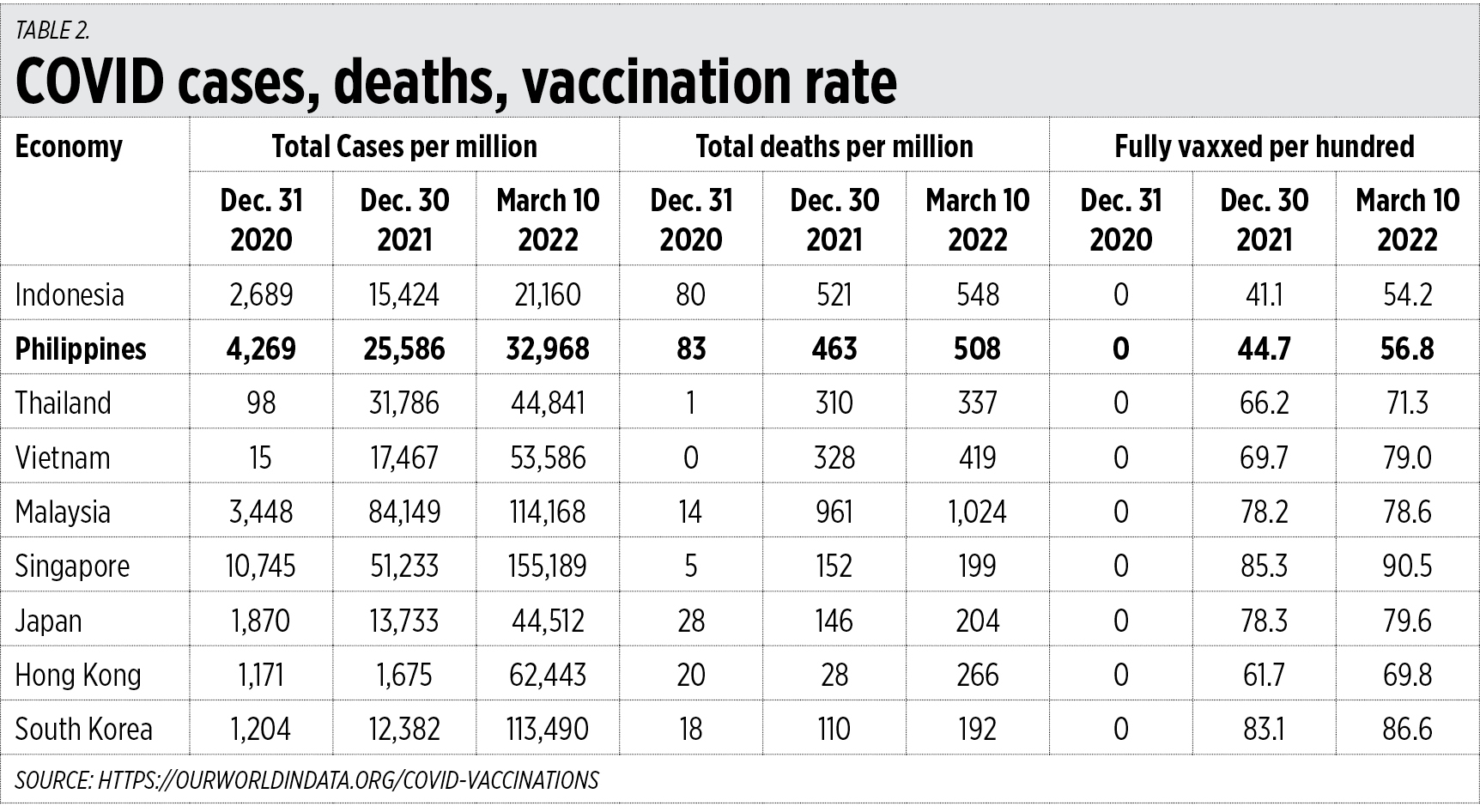
Four, lockdowns or mandatory stay-at-home-unless-going-to-work-or-buy-necessities orders were proven to be ineffective in controlling the spread of the virus. This is shown by the prolonged, indefinite lockdowns, mild or strict in form, while COVID cases and deaths continued. In the Philippines, the total cases per million population at end-2020 of 4,269 increased five times by end-2021. Total deaths per million population end-2020 of 83 increased also five times by end-2021.

Five, the Philippines’ COVID cases per million of 33,000 as of March 10 this year are actually low compared to our neighbors in the ASEAN like Thailand, Vietnam, Malaysia, and Singapore. Also, lower than those that are richer and have better healthcare systems like Japan, South Korea, and Hong Kong.

Six, those Asian countries mentioned have higher vaccination rates than the Philippines. As of end-2021, the Philippines’ 45 fully-vaxxed people per hundred was nearly one-half (1/2) that of Singapore’s 85 and South Korea’s 83, yet these two countries have COVID cases per million that are three to four times larger than the Philippines (See Table 2).

Seven, vax discrimination worsened the lockdown policies in the Philippines — like no vax-card-or-negative-PCR-tests, no entry to offices, malls, or public transportation like buses, boats and planes. See again Table 1 — the Philippines’ -42% mobility change in transit stations in 2021, -25% in retail and recreation, was among the highest in the world.

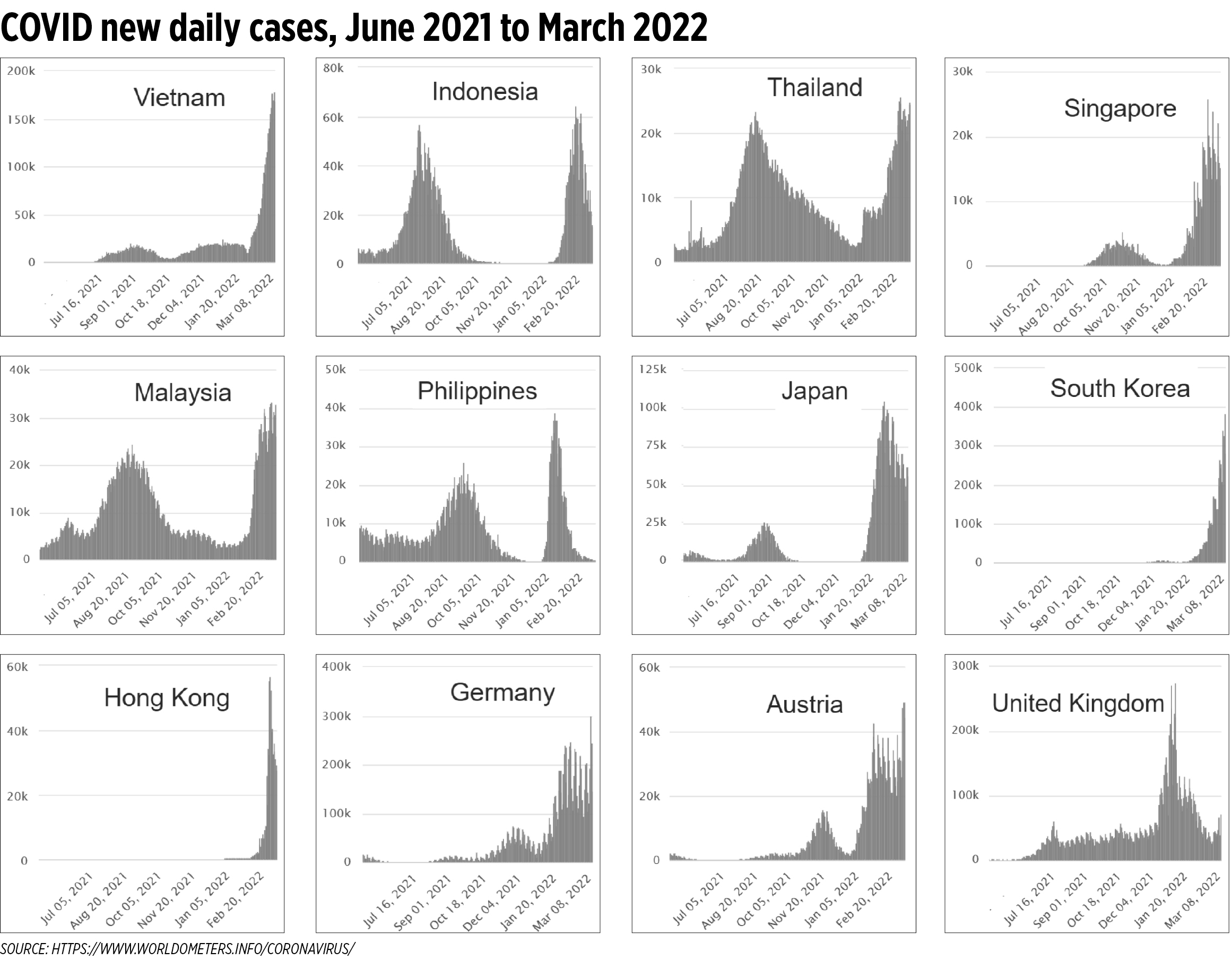
Eight, the omicron variant seems to be the “natural vaccine” that affected millions of Filipinos within weeks but mostly with no or mild symptoms and allowed the body to develop natural immunity. The result was a rapid rise then rapid decline in the number of cases.

Nine, more vaccination, more COVID cases. Until last week, the Philippines had the lowest rate of fully-vaxxed people in Asia and yet the Philippines has had consistently declining COVID cases, and somehow attained natural herd immunity. In contrast, high vax rate countries Vietnam, Thailand, Malaysia, South Korea, etc. have high or rising number of cases as do some industrialized countries in Europe — Germany, the UK, and Austria. (See Covid new daily cases chart).

Ten, lockdown and implicit mandatory vaccination should stop. Vaccination should be voluntary, not mandatory. People own their body, not the government or the World Health Organization, or the media and medical NGOs. The economic damage of the lockdown has been severe over the past two years. This plus the high energy and consumer prices because of the economic sanctions against Russia and the continuing war in Ukraine mean people need to work more, produce more food and other physical commodities, and transport them across provinces, cities and islands.

The number of vax injuries and vax-related deaths is rising too. According to the Open VAERS (vaccine adverse events reporting system, https://openvaers.com/) as of March 4 there were more than two million reported cases, including more than 25,000 COVID vaccine reported deaths around the world, and these are just the voluntarily reported incidents, estimated to constitute just 1% of actual adverse events.

In the coming Presidential elections, voters should remember the “flatten the economy” impact of the two years of lockdown by the Duterte administration. The BBM-Sara Duterte tandem is the embodiment of continued economic hardships. They should not win.


Bienvenido S. Oplas, Jr. is the president of Minimal Government Thinkers.

minimalgovernment@gmail.com

China locks down Shenzhen as virus outbreak spreads

REUTERS

CHINA placed the 17.5 million residents of the southern city of Shenzhen into lockdown for at least a week, spurring a key Apple, Inc. supplier to halt production as authorities sought to gain control of a spreading COVID-19 outbreak in the vital technology hub.

The lockdown, which came after virus cases doubled nationwide to nearly 3,400, will be accompanied by three rounds of city-wide, mass testing. Called with little notice on Sunday, the order followed earlier restrictions placed on Shenzhen’s central business district, and will last until March 20.

All bus and subway systems were shut, and businesses, except those providing essential services, have been closed. Employees were told to work from home if they can. Residents will be barred from leaving Shenzhen — home to the headquarters of tech giants Huawei Technologies Co. and Tencent Holdings Ltd., as well as one of China’s busiest ports — except in limited situations. Shenzhen Yantian Port remains operational, though with tighter Covid controls.

Apple supplier Hon Hai Precision Industry Co., known as Foxconn, said it was halting operations at its Shenzhen sites, one of which makes iPhones. The company, which has its China HQ in Shenzhen, didn’t specify the length of the shutdown, though said it would reallocate production to other plants in the country. Chipmaker Umicron Technology Corp. also suspended output.

The surge in infections in Shenzhen is thought to be linked to an unbridled outbreak in neighboring Hong Kong, which went from a handful of cases to more than 30,000 in about a month. A COVID flareup in Shanghai has also seen most schools returned to online learning and travel into the city restricted. Bus services from other provinces were halted at the weekend, and China’s aviation regulator is in discussions with airlines about diverting all international flights into the financial center, Bloomberg News reported Friday.

Growing clusters spawned by the highly infectious omicron variant in China’s most developed large cities and economic powerhouses have turned into an unprecedented challenge for the country’s COVID Zero strategy.

The policy, which gave China long periods virus free and one of the lowest death rates among major economies, is leaving the country increasingly isolated as other parts of the world open up and live with the virus. Until now, officials had largely resisted more hardcore measures such as lockdowns in China’s biggest cities and relied more on targeted responses, only to see omicron continue to spread.

Shenzhen’s lockdown is the largest since China effectively shut in around 40 million people in Wuhan and its surrounding province at the start of the pandemic. The significant number of infections in the community is thought to be behind the tough move, with just 38 of the 86 infections reported Monday close contacts of existing cases who are already in isolation. China quarantines all Covid cases, regardless of severity, as a way of halting spread.

Investors reacted to the news, selling shares related to tourism and China’s reopening, while buying rapid-antigen test kit makers after China started allowing them for general use on Friday. An index of Macau casinos slumped as much as 10% to a record low, with the lockdown and outbreaks likely to limit gamblers from the mainland, especially neighboring Guangdong.

Cases are popping up throughout China, with Omicron also in Beijing and in Tianjin, a coastal city nearby. A number of cities in Jiangsu province, next to Shanghai, and in the country’s manufacturing powerhouse, Guangdong province, have also reported infections.

WORST SINCE WUHAN
The worst outbreak is in Jilin province, in China’s northeast, which reported more than 1,000 cases in the community for Sunday. Jilin’s capital Changchun, a city of some 9 million people, was locked down on Friday, with residents there also to be mass tested.

Reminiscent of the early days of the pandemic in Wuhan, authorities are moving quickly to build makeshift hospitals there and in the eastern port city of Qingdao. A Toyota Motor Corp. joint venture plant that makes RAV4 SUVs in Changchun suspended operations on Monday given the lockdown, the Nikkei reported, citing the company.

COVID Zero tactics have led to disruption in other cities, with multiple rounds of mass testing in Tianjin in January halting production at another Toyota plant there for more than a week. The approach will make it harder for Beijing to hit its economic growth target in 2022, as the costs of the measures rise, Nomura Holdings Inc. says. Still, China reiterated its commitment to Covid Zero on Friday, with top health official Ma Xiaowei saying strict controls needed to be kept in place and that officials should avoid “war-weariness” in their work.

As of March 9, 14 of China’s provinces had been declared high or medium-risk for the virus, accounting for 54.4% of gross domestic product, according to Bloomberg Economics.

The COVID surge in Hong Kong has provided an unprecedented challenge to Beijing, with the city’s tight border controls and weeks-long quarantines no match for Omicron once it entered the city. Thousands of people left the Asian financial hub to return to the mainland, with Shenzhen and Shanghai some of the busiest entry ports.

RAPID TESTS
While China is publicly still committed to eliminating COVID, there are signs the country’s health officials and experts are at least considering how they may exit the approach and live with the virus as endemic.

China approved the antiviral pill Paxlovid developed by Pfizer, Inc. last month, a move seen by many as evidence of that planning. The introduction of rapid antigen tests on Friday may also be a sign, with other countries shifting toward use of at-home tests when their lab testing systems were overwhelmed by broader circulation of the virus.

That said, any shift will be slow and unlikely to occur before 2023, given the need for stability in a politically important year for President Xi Jinping, people familiar with China’s thinking have told Bloomberg.

Zhang Wenhong, one of China’s top infectious disease experts who advises the Shanghai government, said in a social media post Monday that despite omicron being less virulent than other variants, China needs to stick to Covid Zero for now as opening up would cause a run on hospitals and lead to excessive deaths.

He pointed out the “fairly high” number of elderly people and those with underlying diseases still not yet vaccinated because of concerns about side-effects from the shots. There would be “inconceivable consequences” should infections spread widely among them, Mr. Zhang said.

China has in the past voiced concern about elderly vaccination rates in some areas. Though nearly 90% of the country’s 1.4 billion people have been fully inoculated, they’ve not provided details on the figures for specific age groups. — Bloomberg

War, pandemic, and inflation deal Fed a complex trifecta

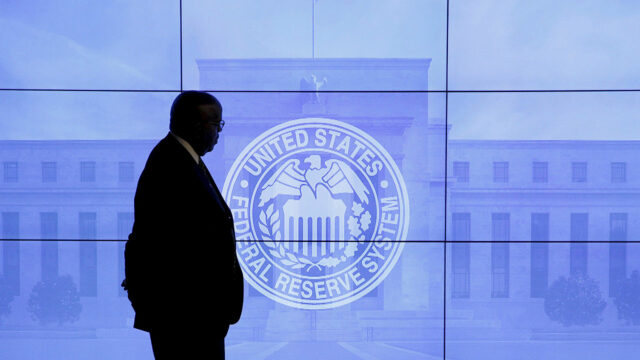
REUTERS/KEVIN LAMARQUE/FILE PHOTO

WASHINGTON — In what now seem the simpler days of December, when there was only a pandemic to worry about, Federal Reserve officials rallied around the view they could tame inflation with modest interest rate hikes while the economy and labor market thrived.

A war in Europe has now been layered on top of the health crisis, and when US central bank policymakers meet this week they will have to decide just how much damage has been done to that rosy outlook, and whether their hopes for an economic “soft landing” have been diminished or dashed altogether.

The Fed is almost certain to raise its benchmark overnight interest rate by a quarter of a percentage point at the end of its two-day policy meeting on Wednesday. More important will be projections showing just how far policymakers think rates will need to rise this year and in 2023 and 2024 to tame inflation that has blasted past their expectations.

If their outlook for the federal funds rate breaches what is regarded as a neutral level of around 2.50%, it means the mood within the policy-setting Federal Open Market Committee (FOMC) has shifted, and that its members see a need to eventually curb the economy — and run a higher risk of recession — to bring rising prices into line. As of December, most Fed policymakers projected that rate would only need to rise to 2.10% by the end of 2024.

“There is no doubt that the FOMC will start raising rates … What everyone wants to know is what the Fed will do next?” Roberto Perli and other analysts at Piper Sandler wrote. If new projections show the target federal funds rate exceeding 2.50% in coming years, it would “signal that the majority of the FOMC is so worried about inflation that it doesn’t care risking a recession in order to bring it down quickly. Needless to say, that would be a very hawkish development.”

THROWING POLICY INTO REVERSE
The Fed is scheduled to release its new policy statement and updated quarterly economic projections at 2 p.m. EDT (1800 GMT) on Wednesday. Fed Chair Jerome Powell is due to hold a news conference half an hour later.

As of Friday afternoon, investors expected Fed rate hikes would top out just below the neutral level, so a shift higher could trigger a shock of sorts — perhaps even leading to an “inversion” of bond yields with short-term rates exceeding longer-dated ones.

It will arguably be the central bank’s most consequential moment since the spring of 2020 when officials pledged open-ended support for a pandemic-stricken economy by cutting the federal funds rate to the near-zero level and beginning massive bond purchases. Soaring unemployment was then the chief concern, and the Fed pledged to do whatever was needed to keep households and businesses financially stable through the crisis.

Unemployment has now plummeted to 3.8%, low by historic standards, and households are flush with cash from pandemic-related government aid programs.

Inflation, running at three times the Fed’s 2% target and a hot-button political issue, has become the main threat, not only challenging the Fed’s policymaking prowess but raising the specter of a 1970s-style predicament in which the central bank had to impose a punishing recession to get prices under control.

The Fed this week will not only throw its pandemic emergency measures into reverse, it will have to guide the public through the maze of competing economic and geopolitical considerations it is juggling as it does so, and make the case for why it can avoid killing the current economic expansion.

Fed rate-hike cycles often come with their own particular guidance, with words like “measured” or “gradual” sprinkled into policy statements to convey the intended pace of rate increases. Mr. Powell recently has been using less-concrete terms like “nimble” for a policy expected to include steady rate increases this year, but which may have to either be sped up or slowed in response to fast-changing events and conditions.

“Neither the data nor fortune has favored the Fed” in recent weeks, wrote Tim Duy, chief US economist at SGH Macro Advisors.

‘GAME CHANGER’
The list of problems facing policymakers deliberating this week has indeed become lengthy.

Since the last policy meeting in late January, inflation has shown no clear sign of slowing, putting the current Fed stance further out of step with a growing economy. Longer-term inflation expectations, a particular concern for the central bank as a sign of whether it is losing public trust in its ability to contain prices, have begun to rise as well.

The war in Ukraine has no clear resolution and could stoke even more inflation through increased energy costs, further disruption to supply chains, or even a reordering of global trade and governance that could mean persistently higher prices.

On the flip side are signs of an easing in the pandemic that could add momentum to a strong recovery. Data released earlier this month showed a sharp rise in job growth in February that beat expectations and upward revisions for January and December. A pause in wage increases last month reduced fears that workers’ pay and prices may start to ratchet each other higher.

Household savings remained high through 2021, recent Fed data showed, providing a savings buffer to help Americans absorb the costs of more expensive gas and food without reducing other areas of spending.

Mr. Powell, testifying to Congress early this month, made clear his focus is on inflation and that he was ready to move interest rates higher and in larger half-percentage-point increments should the price increases not slow down.

But he also acknowledged the world had gotten more complicated, in ways it may take time to understand.

The war in Ukraine “is a game changer and will be with us for a very long time,” Mr. Powell told the House of Representatives Financial Services Committee on March 2. “There are events yet to come … and we don’t know what the real effect on the US economy will be. We don’t know whether those effects will be quite lasting or not.” — Reuters