Home Blog Page 6677

Transport workers allocated P10 billion for service contracts

PHILSTAR

FUNDING for the program to support transport workers via a service contracting program was raised to P10 billion from P6 billion in the Senate’s version of the 2022 Budget, though doubts were expressed on whether the Transportation department would be able to disburse the full amount.

Under the service contracting program, drivers and operators of public utility vehicles (PUVs) are paid by the government to ply their routes on a per kilometer basis. The program is meant to offset the effects of the capacity restrictions caused by the pandemic.

During the Monday plenary debates on the P120-billion budget of the Department of Transportation (DoTr), Senate President Pro Tempore Ralph G. Recto expressed his support for the program, but proposed that other agencies might be better able to implement it, citing the DoTr’s low utilization rate for the program’s funding in 2021.

“I agree that we need to help the PUV sector, but I just don’t know if the DoTr is the best agency to do it,” he said.

The 2021 budget for the program includes a P5.5-billion allocation under the second stimulus package, known as Bayanihan II, and P3 billion from the General Appropriations Act (GAA). The department’s disbursement estimates as of Nov. 16 show a utilization rate of only 34.2% from the Bayanihan II funds and 55% for the cash from the GAA.

“Maybe it would even be better if it will be handled by the Department of DSWD (Social Welfare and Development) or the DoLE (Department of Labor and Employment),” Mr. Recto said, noting that DoTr is “very slow in obligating, disbursing all their appropriations.”

Senator Mary Grace Natividad S. Poe-Llamanzares called Mr. Recto’s concerns valid, but said the low utilization was caused by the delays in the Department of Budget and Management (DBM).

The funds were “actually released later, likely FLRs (for late release) of DBM.”

Senators said the DBM may not have treated the program as a priority.

Senator Francis Pancratius N. Pangilinan asked about the number of expected beneficiaries, to which Ms. Poe replied 50,000.

“We hope they are able to identify those who are most in need,” said Mr. Pangilinan during the plenary, noting that smaller operators receive no support because bus operators are given priority.

Ms. Poe said bus operators are higher on the priority list because they can potentially transport more people, and that jeepney drivers are difficult to reach.

“We will make sure to remind the DoTr to include, especially, the most marginalized sectors among the public utility vehicle drivers,” she said. — Alyssa Nicole O. Tan

Bill extending validity of 2021 budget passed on 2nd reading

PHILSTAR

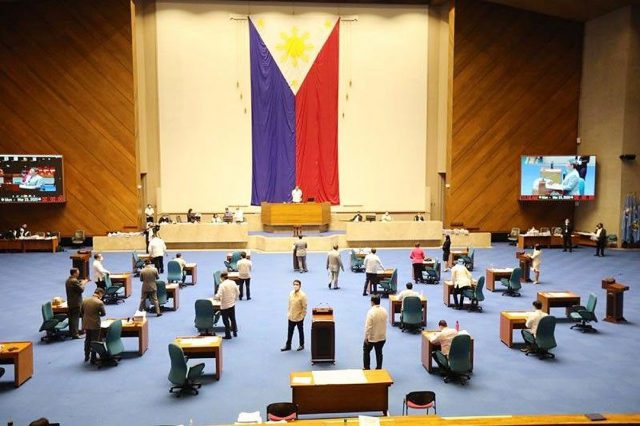
HOUSE LEGISLATORS approved a bill on second reading Monday that would extend the validity of this year’s budget.

House Bill 10373 will extend all appropriations under the 2021 General Appropriations Act until Dec. 31, 2022.

Completion, inspection, and payment of infrastructure projects and maintenance and operating expenses should also beat that deadline.

No individual amendments were made to the bill.

ACT-CIS Party-list Rep. Eric G. Yap, the author of the bill, said programs and projects funded by this year’s budget remain necessary to protect the most vulnerable.

“The pandemic curbed opportunities for socioeconomic growth and development. It also disrupted the operations of government, which then caused delay in the release and issuance of budget allocations,” he said in the bill’s explanatory note.

The House approved the proposed P5.024-trillion budget for next year on third and final reading on Sept. 30.

President Rodrigo R. Duterte earlier approved legislation that extended the validity of the 2019 and 2020 national budgets.

The economy grew 7.1% year on year in the third quarter, lower than the revised 12% growth rate posted in the second quarter, after fresh lockdowns were imposed in Metro Manila and surrounding provinces to contain the Delta variant of the coronavirus. — Russell Louis C. Ku

ERC revokes freeze on issuing licenses to retail energy suppliers

PHILSTAR FILE PHOTO

THE ENERGY Regulatory Commission (ERC) has formally withdrawn a moratorium on issuing licenses to retail energy suppliers (RES), paving the way for more eligible power users with monthly consumption of 750 kilowatts (kW), known as contestable consumers, to sign up with the power providers of their choice.

In a memorandum dated Nov. 17, the ERC revoked the moratorium and announced a consultation process involving the RES industry and other stakeholders to improve the design of the competitive retail electricity market.

The moratorium dates to 2014. The Supreme Court then issued a temporary restraining order against the Retail Competition and Open Access (RCOA) program in 2017 because it was mandatory for power users beyond a certain threshold.

The Department of Energy (DoE) later made consumer participation voluntary.

In March 2021, the Supreme Court ruled with finality that the license moratorium had no legal basis.

Asked to comment, consumer advocacy group Laban Konsyumer, Inc. (LKI) said having more retail energy suppliers improves competition and can help businesses signing up for RCOA save on energy costs.

“We call on the (ERC) to strictly follow the letter and spirit of the Anti-Red Tape Act and process RES license applications expeditiously and efficiently,” LKI President Victorio Mario A. Dimagiba told BusinessWorld in a Viber message.

The Retail Electricity Suppliers Association (RESA) said in an e-mail that it “applauds the ERC in its (responsiveness to) the needs of the industry.”

RESA counts among its 34 members major companies such as Aboitiz Energy Solutions, Inc. and AC Energy Corp. — Marielle C. Lucenio

House approves ODA reform bill on 3rd reading

BW FILE PHOTO

THE HOUSE of Representatives approved a bill on third reading Monday that would reform the process of receiving official development assistance (ODA), improving transparency in implementing ODA-backed projects.

In a vote of 166-0 with no abstentions, legislators approved House Bill 10322 or the proposed ODA Effectiveness Act, which seeks to amend Republic Act 8182 or the Official Development Assistance Act of 1996.

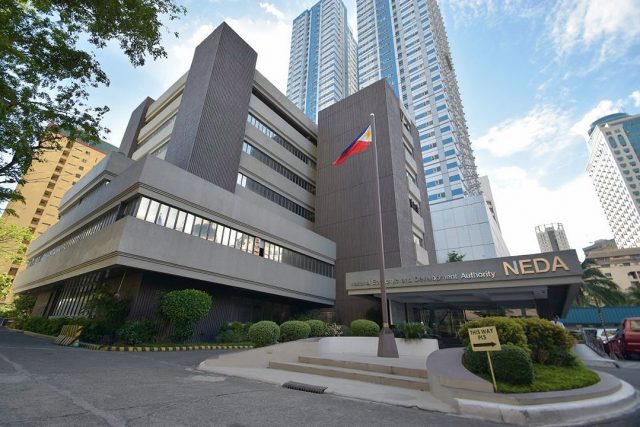
The bill allows the yield on recently-issued government bonds to serve as the discount rate benchmark when estimating the present value of debt service on grants, if such yields are lower than the 10% fixed rate set by the National Economic and Development Authority (NEDA).

The bill will continue to require that the grant portion of the ODA consist of at least 25% of the aid package.

It will also require that the ODA be administered with the specific objective of achieving sustained reduction of poverty and inequality.

The measure will also require studies on the project’s social and economic impact and the consultation of targeted groups.

A Congressional Oversight Committee will also be created to monitor and ensure proper implementation of the proposed law and review ODA grants and loan agreements entered into by the National Government. It will have the authority to initiate independent impact studies on ODA-funded projects.

ODAs are concessional financing provided by multilateral banks or foreign governments to poorer countries to promote economic development.

NEDA reported that the active ODA portfolio rose 42% to $30.39 billion in 2020 as the government ramped up foreign borrowing to finance its pandemic response.

Meanwhile, the government’s utilization of ODA — or actual spending relative to target — was 66.69% in 2020, up from 64.28% in 2019. — Russell Louis C. Ku

AC Energy Vietnam wind farm starts commercial operations

AYALA-CONTROLLED AC Energy Corp. said its Vietnam wind farm venture in partnership with Singapore’s The Blue Circle has opened for commercial operations.

The project is the 40-megawatt (MW) Phase 2 Mui Ne wind farm in Binh Thuan, Vietnam.

The project has eight turbines with a capacity of 5 MW each, AC Energy said in a disclosure to the Philippine Stock Exchange Monday.

AC Energy added that the turbines, which have rotor diameters of 158 meters, are the largest used in any Asian onshore wind project.

“This two-piece blade technology is a game-changer for onshore sites as it will allow larger capacity machines, lowering our cost of energy and enhancing competitiveness of wind energy,” The Blue Circle Chief Operating Officer Hervé Grillot said. 

The Mui Ne wind farm has the potential to be expanded to 170 MW and is expected to reduce carbon dioxide emissions in Vietnam by about 130,000 metric tons per year.

The wind farm qualifies for a feed-in tariff of $0.085 per kilowatt hour.

“We are thankful to our long-standing partners at The Blue Circle for seeing this project through amidst the pandemic, and we are encouraged that ACEN’s other partnerships across Vietnam will likewise bring to fruition more renewable energy projects in the country,” AC Energy Head of International Group Patrice R. Clausse said.

ACEN is the company’s stock exchange ticker.

The project was completed in eight months, with around 450 construction staff involved and an estimated cost of about $70 million.

AC Energy currently has a total of 2,900 MW in attributable capacity in the Philippines, Vietnam, Indonesia, India, and Australia, and renewables make up an 80% share of its capacity. 

The Blue Circle is the wind farm’s operator. — Bianca Angelica D. Añago

Requests for Confirmation and the consequences of noncompliance

Christmas is fast approaching and the whole world is slowly emerging from the ravages of the pandemic. While most people are getting busy preparing their gifts and menus for Noche Buena, taxpayers are reminded of year-end tax compliance and other reporting requirements. To name a few: taxpayers need to comply with filing and submission of annual information returns and their attachments, books of account, and withholding tax certificates, as well as the filing of Requests for Confirmation (RFC) for income payments to nonresidents which were subjected to tax treaty rates or preferential rates.

Among the tax compliance and reporting requirements mentioned, it is important to take a hard look at the consequences in case of noncompliance with the filing of RFC.

During the first half of this year, the Bureau of Internal Revenue (BIR) issued Revenue Memorandum Order (RMO) No. 14-2021 and Revenue Memorandum Circular (RMC) No. 77-2021. RMO No. 14-2021 streamlined the procedures and documents for the availment of treaty benefits while RMC No. 77-2021 clarified certain provisions of RMO No. 14-2021.

These issuances were necessary to settle all issues surrounding the availment of treaty benefits and to deliver efficient service to taxpayers in compliance with the Ease of Doing Business Act. Some of the subject matter discussed under these issuances include the filing of RFC for all income payments to nonresidents, in lieu of the Certificate of Residence for Tax Treaty (CORTT) for dividends, interest and royalties, and imposition of penalties for the late filing of RFC.

According to these issuances, a withholding agent or an income payor must file an RFC when the treaty rates have been applied on its income payments to a nonresident foreign corporation (NRFC) or a nonresident alien not engaged in trade or business (NRAETB). It must also be noted that the deadlines for filing differ based on the type of income payments made. For income payments related to capital gains, the RFC with complete documentary requirements must be filed by the withholding agent at any time after the transaction transpired, but not later than the last day of the fourth month following the close of the taxable year when the income is paid or when the transaction is consummated. On the other hand, for all other types of income, the request must be filed after the close of the taxable year but not later than the last day of the fourth month following the close of such taxable year when income is paid or becomes payable, or when the expense/asset has accrued or is recorded in the books, whichever comes first. 

It must be emphasized that in cases where income payments were subjected to treaty rates in 2020 or prior years but no tax treaty relief application (TTRA) or CORTT has been filed, the withholding agent has until the last working day of 2021 or until Dec. 31 to file an RFC with complete documentary requirements. Regardless, failure to file the RFC within the prescribed deadlines means being subject to the provisions of Section 250 and 255 of the Tax Code, as amended. In addition, a penalty of P1,000 for each CORTT not filed for 2020 and prior years’ transactions will be imposed.

For instances when a taxpayer fails to file an RFC, the taxpayer will be liable for administrative penalties amounting to P1,000 for each failure. However, the aggregate penalty to be imposed may not exceed P25,000 for all failures to file within a calendar year. Aside from the administrative penalties, taxpayers may likewise be charged with the crime of perjury under Article 183 of the Revised Penal Code for failure to supply correct and accurate information in the application form and other documents submitted in support of such application. As specifically stated in these new issuances, there is no automatic denial of the application for failure to file within the prescribed period. The application, however, may still be denied in case of failure to establish the entitlement of the nonresident to treaty benefits or submission of incomplete requirements. Accordingly, it is important that taxpayers obtain documents to prove that the nonresident income recipient is a tax resident of the treaty country and/or the same has no permanent establishment in the Philippines.

The common issue being encountered by taxpayers during audit is that some BIR examiners deny outright the use of the preferential rates and subject the income payments to regular rates for noncompliance with the administrative requirement (i.e., non-submission or late filing of TTRA/CORTT). However, in the case of Deutsche Bank AG Manila Branch vs. Commissioner of Internal Revenue, the Supreme Court ruled that outright denial of a tax treaty relief for failure to strictly comply with the prescribed period is not in harmony with the objectives of the contracting state to ensure that the benefits granted under tax treaties are enjoyed by duly entitled persons or corporations. It can be gleaned from the decision of the court that the TTRA should merely operate to confirm the entitlement of the taxpayer to the relief. Furthermore, a tax treaty between the Philippines and the home country of a foreign taxpayer takes priority over the default rule.

The BIR has recognized the Court’s decision that there should be no outright denial of the preferential rates for failure by the taxpayers to strictly comply within the prescribed period. In RMO 14-2021 and RMC 77-2021, it was clarified that the requirement of filing of RFC is to confirm the entitlement of the taxpayers and not to unduly divest them of the opportunity to avail of the intended treaty benefits. Hence, in case taxpayers fail to file TTRA/CORTT in prior years or fail to file an RFC within the prescribed period, taxpayers should only be denied the use of preferential rate if the BIR has determined that the withholding tax rate applied is lower than the rate that should have been applied, or that the nonresident is not entitled to treaty benefits, and not because of noncompliance with the administrative requirement.

As much as we want to focus mainly on gift wrapping or food planning and preparation, as taxpayers, we are still bound to comply and follow the regulations set by the BIR. As a bonus, the BIR has exerted efforts to make the process easier. In return, taxpayers should also do their best to adhere to these requirements. After all, Christmas is best celebrated (virtually) with our family and friends without worrying about the consequences of noncompliance.

Let’s Talk Tax is a weekly newspaper column of P&A Grant Thornton that aims to keep the public informed of various developments in taxation. This article is not intended to be a substitute for competent professional advice.


Lorenzo Miguel A. Soriano is a senior in charge of Tax Advisory & Compliance division of P&A Grant Thornton, the Philippine member firm of Grant Thornton International Ltd.

pagrantthornton@ph.gt.com

Duterte slams China’s aggression vs PHL vessels

PCOO

PRESIDENT Rodrigo R. Duterte denounced last week’s aggression by Chinese Coast Guard vessels against two Philippine-flagged boats during a leaders’ summit on Monday of China and members of the Association of Southeast Asian Nations (ASEAN).

“We abhor the recent event in the Ayungin Shoal and view with grave concern other similar developments,” Mr. Duterte said.

“This does not speak well of the relations between our nations and our partnership.”

Mr. Duterte made the statement during the virtual ASEAN-China special summit, which was held a week after Chinese Coast Guard ships illegally blocked and discharged water cannons on boats that were carrying supplies to a military post on a Philippine-claimed reef in the South China Sea.

The Philippine leader said the South China Sea dispute is a strategic challenge that cannot be solved by force.

He called on stakeholders to exercise self-restraint, avoid the escalation of tensions, and work to resolve the dispute peacefully in accordance with international laws.

The presidential palace said Mr. Duterte affirmed a United Nations-backed arbitral award that invalidated China’s claim to more than 80% of the sea based on a 1940s map and told Beijing to remain committed to the conclusion of an effective and substantive code of conduct in the disputed waterway.

“There is simply no other way out of this colossal problem but the rule of law,” he said, less than a year before his six-year term ends.

The presidential palace, meanwhile, said Mr. Duterte praised China for its efforts to help countries affected by the pandemic.

The Philippines, China, Vietnam, Malaysia, Brunei and Taiwan claim parts of the South China Sea.

The US, which is not a claimant, has accused China of flexing its military muscle and restricting freedom of navigation there. It has pledged to provide security support to its Asian allies, including the Philippines.

Last week, the US called the Chinese attacks “dangerous, provocative, and unjustified,” warning that it would invoke its defense pact with the Philippines in case of an armed attack on Filipino-manned vessels.

Foreign Affairs Secretary Teodoro “Teddy Boy” L. Locsin, Jr., who also participated in the summit, said in October that the Philippines was backing a defense pact that allows Australia to build nuclear-powered submarines using technology that the United States had only previously shared with Britain, saying it could keep the balance of power in the Indo-Pacific region.

BBC News reported last month that a US nuclear submarine had hit a mystery object in the sea.

Tan Kefei, a spokesman for China’s defense ministry, has demanded a clear explanation of the incident, the South China Morning Post reported.

The South China Sea, which is important for the regional ambitions of China, is a source of tension in the Indo-Pacific as the US and other Western countries continue to assert freedom of navigation.

‘GOOD NEIGHBOR’
During Monday’s summit, Chinese President Xi Jinping told leaders of the 10-member ASEAN that Beijing would not “bully” its smaller regional neighbors amid rising tension over the South China Sea.

“China was, is, and will always be a good neighbor, good friend, and good partner of ASEAN,” state media quoted Mr. Xi as saying.

China would never seek hegemony nor take advantage of its size to coerce smaller countries, and would work with ASEAN to eliminate “interference,” Mr. Xi said.

Mr. Duterte led a foreign policy pivot to China away from the US when he took office in 2016. Less than a year before he steps down, Mr. Duterte has changed his tone toward the US.

He has thanked US President Joseph R. Biden for donating coronavirus vaccines to the Philippines. He also restored a visiting forces agreement after suspending it for months. The two nations are set to hold more than 300 joint defense activities next year. — Kyle Aristophere T. Atienza with Reuters

PHL starts COVID booster jabs for elderly, seriously ill

PHILIPPINE STAR/ MICHAEL VARCAS

SENIOR citizens and those with serious illnesses in the Philippines started getting booster shots against coronavirus disease 2019 (COVID-19) on Monday after the country has fully vaccinated nearly half of its target adult population.

Secretary Carlito G. Galvez, Jr., the country’s vaccine czar, told a ceremonial injection of booster shots that the country’s supply of vaccines is enough to give additional doses to those who are considered at high-risk of coronavirus.

The government has allocated six to eight million doses for the third shot of senior citizens and seriously ill people, he said at the televised event held in a government-owned hospital in Quezon City.

About 1.6 million doses were also allocated for the booster shots of health workers, he added. “We have enough doses of vaccine brands.”

Health workers, who have been prioritized in the government’s coronavirus immunization program, started receiving booster shots last week.

The rollout of additional doses for seniors and people with health complications would be conducted in phases, Health Undersecretary Maria Rosario S. Vergeire told a virtual news briefing. It is not yet available for the general population.

Transplant and dialysis patients, patients under immunosuppressive treatments, and people with immunodeficiency conditions such as those with HIV or active cancer will be prioritized, she said.

Philippine food and drug regulators have already cleared the vaccines made by Sinovac Biotech Ltd., AstraZeneca Plc, Pfizer Inc., and Moderna Inc., as booster and third doses.

Booster shots are given to people whose immunity to the coronavirus wane after several months since receiving a single-dose or two-dose vaccine while additional doses or the third doses are given to individuals who cannot have appropriate immunity against the virus, Ms. Vergeire clarified.

The Philippines has already administered 75.6 million doses of coronavirus vaccines as of Nov. 21. Nearly 33.6 million adult Filipinos have been fully vaccinated.

The country is aiming to vaccinate at least 15 million people across 16 regions outside Metro Manila from Nov. 29 to Dec. 1.  The country is struggling to vaccinate at least 50% of its adult population this year, after it contained a spike in coronavirus cases triggered by a highly contagious virus variant.

Health authorities reported 984 coronavirus cases on Monday, bringing the total to 2.83 million.

The death toll rose to 47,288 after 218 more patients died, while recoveries increased by 2,229 to 2,76 million, the Department of Health (DoH) said in a bulletin.

The agency said there were 19,798 active cases, 56.6% of which were mild, 4.6% were asymptomatic, 13.3% were severe, 20.02% were moderate, and 5.6% were critical.

It said 32% of intensive care units in the Philippines were occupied, while the rate for Metro Manila was 31%.

The Health department said 447 duplicates were removed from the tally, 434 of which were tagged as recoveries and four were reclassified as deaths.

The agency said 169 cases “were found to have tested negative and have been removed from the total case count.” Of these, 94 were tagged as recoveries. Two laboratories failed to submit data on Nov. 20.

The high number of coronavirus-related deaths recorded recently is a result of late reporting, Ms. Vergeire said, noting that there are delays in validations at the local levels.

“These deaths did not only happen in November,” she said in Filipino.

The reporting is quite late since it needs to be validated by local governments units, she added. “These are being validated by local governments then submitted to the national government.”

Meanwhile, Ms. Vergeire said the Philippines remains at low-risk from the coronavirus.

The country’s average daily attack rate was moderate at 1.55 cases for every 100,000 people. “The national health systems capacity is at low risk,” she said.

A number of regions in the country were also at low-risk from the coronavirus, the Health official said.  “All regions are now at minimal to low risk case classification with negative two-week growth rates and average daily attack rates less than seven per 100,000 population.”

Still, Cagayan Valley in the northern part of mainland Luzon showed a positive two-week growth rate in the recent week, she said. — Kyle Aristophere T. Atienza

Lawyers ask ICC to lift suspension of  drug war probe 

WWW.ICC-CPI.INT

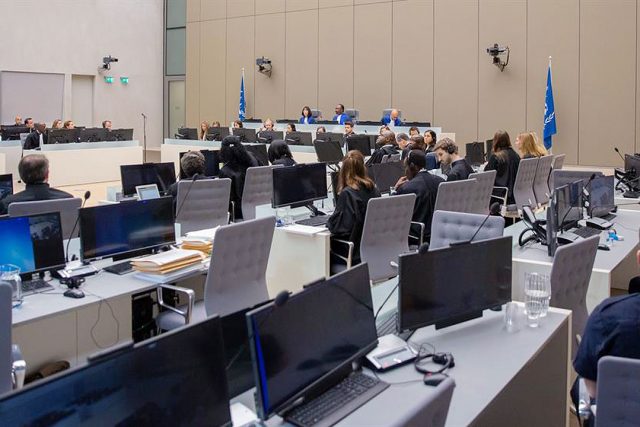
A LAWYER’S group asked the International Criminal Court (ICC) to reconsider its suspension of a probe on alleged human rights violations in the Duterte administration’s drug war, citing the questionable validity of investigations made by the Philippines’ Justice department.  

The Free Legal Assistance Group (FLAG), in a Nov. 21 letter to ICC Prosecutor  Karim Ahmad Khan, said the Department of Justice’s (DoJ) probe was “merely” a review of investigations made by the police internal affairs unit.   

“It is misleading to label the DoJ actions as an ‘investigation’ since it appears that the DoJ merely conducted a review of the documents provided by the Internal Affairs Service of the Philippine National Police,” the group said in the letter.  

The chief ICC prosecutor suspended its investigation after the Philippine government filed a deferral request on Nov. 10, citing that the DoJ made “thorough investigations” into 52 drug-related killings that occurred between 2016 and 2020.  

FLAG said the DoJ probe covered only a fraction of the killings or attempted killings.  

“This figure is but 0.12% to 0.3% of the 12,000 to 30,000 persons killed during the period,” it said.  

Another lawyers’ group that also represent some of the victims’ families, the National Union of People’s Lawyers, released a statement earlier appealing to the Hague-based tribunal to pursue its probe. — Alyssa Nicole O. Tan 

Business leader sees Metro Manila under most relaxed alert level soon 

PHILIPPINE STAR/ MICHAEL VARCAS

PRESIDENTIAL Adviser for Entrepreneurship Jose Maria “Joey” A. Concepcion III is confident that Metro Manila is ready for the implementation of more relaxed restrictions soon.  

Mr. Concepcion said the capital region may soon be placed under Alert Level 1 from the current level 2, echoing a recent estimate by the OCTA Research Group, which has been tracking coronavirus data.   

“I feel that it (Alert Level 1) would be coming towards December. You got the start of Alert Level 1 hopefully in December, which would propel more of the vaccinated to have greater mobility,” Mr. Concepcion said in a television interview on Monday.   

Under Alert Level 1, all businesses are allowed to operate at full-site capacity while following minimum public health standards.   

The Alert Level 2 in Metro Manila will be in effect until Nov. 30, based on the area classifications imposed by an inter-agency task force managing the pandemic response.   

Meanwhile, Mr. Concepcion said the private sector should be given the green light to use its procured vaccines as booster shots for employees and inoculation of minors.    

Mr. Concepcion said he already reached out to Health Secretary Francisco T. Duque III and vaccine czar Carlito G. Galvez, Jr., who both said they are open to the proposal.   

“These vaccines are sitting down. Since we purchased it, the vaccines are meant for employees and the families and we want to implement it as soon as possible,” Mr. Concepcion said.    

“We should allow the general public to also get inoculated and just have fast lanes for the A1 to A3 priority so we get the entire population moving. We should not wait for the sequencing anymore. Let’s just allow everybody and grant fast lanes,” he added.    

The A1 to A3 groups cover healthcare workers, elderly citizens, and persons with comorbidity. — Revin Mikhael D. Ochave  

Lacson says time is ‘right’ to review defense pact with US 

PRESIDENTIAL aspirant and Senator Panfilo M. Lacson, Sr. said he will prioritize matters relating to the South China Sea dispute if elected next year, including a review of the Philippine’s defense pact with the United States.  

“The timing is now right to revisit the PH-US Mutual Defense Treaty, after the US expressed willingness to enhance efforts toward an international law-based maritime order, including freedom of navigation,” Mr. Lacson said in a statement on Monday.  

The senator flew to Philippine-occupied Pag-asa Island last Saturday, during which the Chinese Coast Guard sent warnings as their plane passed over the West Philippine Sea part of the South China Sea.   

“Being radio challenged by a Chinese Coast Guard vessel stationed more than three nautical miles off the coast of Pag-asa, I never considered backing out,” Mr. Lacson said on Twitter Sunday evening.  

“We treat China as a friend, but does China treat us that way? Friendship should be on equal footing, not one-way,” said Mr. Lacson in a mix of English and Filipino during an interview with Radyo 5 Monday.   

He cited that China once challenged a US warship passing in the area. When the US vessel’s captain invoked the right of innocent passage, the Chinese vessel did not block or attack the American-flagged vessel with water cannons like it did against two Philippine vessels last week.  

“There we can see that if there is balance of power in the West Philippine Sea, there would be no war and we will be able to protect our sovereign rights and territorial integrity,” he said.    

Under the Philippine-US treaty, both sides must help each other in case of any external aggression.  

At the same time, Mr. Lacson said tapping American help does not mean he will particularly favor the country, or any other country for that matter.   

The Philippines’ foreign policy should always be anchored on national interest, he added.   

Balance of power, through enhanced alliances with other militarily strong countries including the US, will be emphasized under a Lacson presidency, he said.   

“We have sovereign rights on our exclusive economic zone, we can assure all nations that we will observe and uphold that freedom of navigation, something China does not do.” — Alyssa Nicole O. Tan 

House probe sought to standardize regulations for tricycles 

ZAMBOANGA CIO

A RESOLUTION was filed at the House of Representatives that seeks to probe regulatory policies on tricycle operations to help ensure adequate income for drivers and operators while maintaining health safety protocols.  

Ang Probinsyano Party-list Rep. Ronnie L. Ong, in House Resolution 2322, urges the House Committee on Transportation to conduct an investigation as there are “no clear, uniform, and delineated guidelines” for tricycles following the implementation of the alert level system.  

“Certain areas placed under Alert Level 3 or lower continue to practice guidelines initially imposed during ECQ (enhanced community quarantine) on their tricycle operations,” according to a copy of the resolution.  

The Department of Interior and Local Government implemented a one-passenger policy for tricycles in areas under ECQ in August when the country was dealing with a Delta-driven surge in coronavirus cases. 

Mr. Ong also said that local government units are also “left hanging” as they look for clarificatory guidelines and recommendations from the national inter-agency task force managing the coronavirus response.   

A tricycle, which is a motorbike with a roofed sidecar, can normally carry up to four passengers. It is a common form of public transportation in both cities and rural areas.  

“The lack of clear policy ultimately creates inefficient use of public transport, higher cost of commuters, and inadequate income for tricycle drivers and operators who are unable to put food on the table and cover other essential family needs,” Mr. Ong said. — Russell Louis C. Ku