Home Blog Page 6620

Sustainable solutions for Southeast Asia’s recovery

ADB’s Southeast Asia Development Symposium (SEADS) 2022

As countries begin to transition to a post-pandemic world, the Asian Development Bank (ADB) is holding its third Southeast Asian Development Symposium (SEADS) on 16-17 March to discuss innovations and solutions that can reinvigorate economies and lay the foundation for an equitable and enduring recovery.

The coronavirus disease (COVID-19) pandemic has reversed many of Southeast Asia’s hard-won gains in reducing poverty, creating jobs, and enhancing health and wellbeing, with the poor and vulnerable particularly hard-hit. #SEADS2022, “Sustainable Solutions for Southeast Asia’s Recovery,” builds on the momentum that ADB and its partners have achieved over the past two years in sharing insight and expertise to address the pandemic’s unprecedented challenges.

SEADS 2022 will be headlined by experts in government, development, and the private sector to discuss novel approaches that can help countries build back better from the pandemic. Through cooperation, collaboration, and creativity, Southeast Asia can overcome COVID-19, unleash the region’s potential, and usher in a new period of prosperity and renewal.

SEADS 2022 Priority Areas 

#SEADS2022 will focus on actionable solutions supporting three lynchpins of the region’s recovery: addressing debilitating supply chain bottlenecks; rejuvenating the region’s once-flourishing tourism industry; and advancing digital transformation.

SEADS will also explore new opportunities that can take the region beyond business as usual, measures that can better ensure that the region’s post-COVID-19 recovery: is green and environmentally sustainable; expands inclusivity for the poor and other vulnerable groups; ensures equality and greater opportunities for women; and is adequately financed through domestic resource mobilization measures.

The first day of SEADS will open with keynote addresses from ADB’s President and other esteemed government and industry leaders, and will feature a special high-level panel discussion on “Building Back Better through Inclusive Solutions.” The second day of SEADS 2022 will focus on “Revitalizing Tourism and Ensuring Cities’ Sustainable Future,” featuring thought-provoking keynote speakers and two special plenary sessions on (i) Driving an Inclusive Tourism Recovery in Southeast Asia; and (ii) the Future of Sustainable Cites. The SEADS agenda highlights the imperative to build back better at this critical juncture, with afternoon deep-dive workshops to facilitate substantive discussions.

Study Launch: Southeast Asia: Rising from the Pandemic

A new in-depth ADB study, Southeast Asia: Rising from the Pandemic, presents economic prospects for the region, and provides critical policy actions that can address pandemic impacts and help countries reboot their economies. The study will be launched on 16 March at SEADS, and sheds light on the extent of disruptions triggered by the COVID-19 crisis, as well as emerging growth opportunities.

The study will serve as a basis for the invitation-only Southeast Asia Policy Roundtable at SEADS 2022, which will provide government officials and ADB management with a unique opportunity to discuss policy responses for a post-COVID-19 world. The outcomes of this discussion will be used to inform ADB’s COVID-19 planning and response for the region.

Registration

To participate in SEADS 2022, please register at https://seads.adb.org/symposium/2022. Registration is free.


Spotlight is BusinessWorld’s sponsored section that allows advertisers to amplify their brand and connect with BusinessWorld’s audience by enabling them to publish their stories directly on the BusinessWorld Web site. For more information, send an email to online@bworldonline.com.

Join us on Viber to get more updates from BusinessWorld: https://bit.ly/3hv6bLA.

High inflation puts GDP target at risk

PHILIPPINE STAR/ MICHAEL VARCAS
Motorists fill up their tanks at a gas station in Novaliches, Quezon City, March 12. Fuel retailers are expected to implement another big-time hike in pump prices on Tuesday. — PHILIPPINE STAR/ MICHAEL VARCAS

By Luz Wendy T. Noble, Reporter

THE PHILIPPINES may find it more challenging to reach the government’s 7-9% economic growth target this year, as household consumption will likely take a hit from higher inflation caused by a prolonged Russia-Ukraine war, an analyst said.     

The Philippine economy will probably only grow within the 5% range due to geopolitical developments that have dented recovery prospects, ING Bank N.V. Manila Senior Economist Nicholas Antonio T. Mapa said.

“Although we don’t expect growth to slow to a pace more akin to stagflation, we do know that the 7-9% growth aspiration will be a tall order,” Mr. Mapa said in an e-mail.

Finance Secretary Carlos G. Dominguez III last week said he does not expect the Russia-Ukraine crisis to “last very long,” adding the Philippine economy will only be affected because oil and food prices will continue to rise.

Prior to Russia’s invasion of Ukraine, the International Monetary Fund, World Bank and the Asian Development Bank estimated Philippine gross domestic product (GDP) will grow by 6.3%, 5.3%, and 6%, respectively, this year.

Credit raters Fitch Ratings, Moody’s Investors Service, and S&P Global Ratings projected Philippine GDP to expand by 6.9%, 7%, and 7.4%, respectively, which are near or at the low end of the government target.

Mr. Mapa said higher inflation is “all but a given which will cap consumption even during an election year.”

Household spending, which accounts for about 70% of the economy, usually gets a boost during an election year. It grew by 4.2% in 2021 following the 7.9% decline in 2020.

Crude oil prices have soared since Russia’s invasion of Ukraine.

Latest data from the Department of Energy showed the prices of gasoline, diesel, and kerosene have increased by P13.25, P17.50, and P11.40 per liter since the year started. This week, gas prices are expected to surge by P11.80-P12 per liter, diesel by P6.90-P7.20 per liter, and kerosene by P9.70-P9.80 per liter.

At the same time, the gradual relaxation of pandemic restrictions could help to boost growth but could also cause faster price increases, Asian Institute of Management economist John Paolo R. Rivera said in a Viber message.

“Our inflation figures are not yet reflecting the oil price surge but can manifest shortly when other industries and sectors feel the change in prices and when the wage spiral kicks in,” Mr. Rivera said.

Metro Manila and most parts of the country are under the most relaxed Alert Level 1. As the number of coronavirus disease 2019 (COVID-19) cases decline, there are calls to downgrade this to Alert Level 0.

Inflation stood at 3% for the second straight month in February, which is within the 2-4% target of the Bangko Sentral ng Pilipinas (BSP). However, the central bank warned that inflation could breach the target in the second quarter due to the rising oil prices, before slowing in the second half of the year.

“The worst-case scenario for inflation will not be limited to oil prices. We earlier [warned] about other transmission channels, including food and feeds, other fuel inputs for electricity, a weaker currency and other second-round impacts,” GlobalSource analyst Romeo L. Bernardo said in a note sent to BusinessWorld.

“Price pressures will likely force BSP to hike rates sooner than anticipated, and possibly even more aggressively should they delay the reversal any longer,” Mr. Mapa said.

The BSP last week said it will continue to prioritize supporting economic growth, but vowed that it will be ready in case there is need to respond to potential second-round effects from elevated inflation.

The Monetary Board’s next policy review is scheduled on March 24. It kept rates at record lows during its previous meeting on Feb. 17.

Meanwhile, the government has committed to release fuel subsidies for the transport and agriculture sector amid the surging prices. It is also reviewing petitions seeking to raise the minimum fare for public utility vehicles.

Aside from household spending, analysts also warned that government spending may drop due to the fiscal burden that increased during the pandemic.

“Public finances, already strained by pandemic assistance and stimulus programs, are coming under increasing pressure, both on the revenue and expenditure sides,” Mr. Bernardo said. He noted that policy proposals to reduce tariff and other trade barriers to mitigate inflation concerns have also hurt the government through foregone revenues. 

Last year, government spending grew at a faster pace of 7.4%, from 5.1% growth in 2020.

“Government spending, a key pillar of the recovery, will possibly turn negative as the new administration faces a fiscal handicap,” ING’s Mr. Mapa said.

Outstanding debt hit a record P12.03 trillion in January as the government’s borrowings piled up due to its pandemic response. The country’s debt-to-GDP ratio was at 60.5%, the highest since the 65.7% in 2005. This is also slightly above the 60% threshold considered as manageable by multilateral lenders for developing economies.

The government has set a budget deficit ceiling of P1.65 trillion for 2022, which is equivalent to 7.7% of GDP.

Debt service bill hits P1.2 trillion in 2021

BW FILE PHOTO

THE NATIONAL Government’s debt service bill jumped by a fourth to P1.2 trillion in 2021 as amortization payments climbed, data from the Bureau of the Treasury (BTr) showed.

The BTr said the government’s debt payments rose by 25% from P962.5 billion the previous year. Last year’s total was just under the P1.28-trillion debt service budget for 2021.

In December alone, the debt service bill stood at P69.9 billion, down by 5% from the same month in 2020.

Amortization payments accounted for 60.9% of the total debt service bill in December, after slipping by 11.9% to P42.66 billion.

Principal payments to foreign creditors that month amounted to P6.3 billion, while those to domestic lenders totaled P36.36 billion.

Meanwhile, interest payments in December grew by 7.9% to P27.33 billion.

Broken down, interest paid on domestic debt reached a total of P24.18 billion, up by 2.4% year on year.

These payments consisted of P12.79 billion in retail Treasury bonds, P9.2 billion in fixed-rate Treasury bonds, and P1.07 billion in Treasury bills.

On the other hand, interest paid on external debt surged by 82.6% year on year to P3.14 billion.

The government borrows from foreign and local sources to plug its budget deficit as it spends more than it makes to support programs that will stimulate economic growth.

As for the full-year 2021, amortization payments made up 64.3% of the total debt service bill, while the rest went to settle interests.

Amortization payments in the period jumped by 33.1% to P774.73 billion.

Broken down, principal payments made to external sources reached P237.19 billion, up by 67.4% year on year. Those made to domestic lenders rose by 22% to P537.54 billion.

On the other hand, interest payments as of the end of last year increased by 12.9% to P429.43 billion.

Interest paid to domestic debt in 2021 hit P333.34 billion, jumping by 19.5% year on year. In contrast, interest payments on external debt slipped by 5.2% to P96.1 billion.

The government’s borrowings reached P2.58 trillion in 2021, declining by 5.9% year on year. — J.P.Ibañez

State clinics barely fill healthcare void in the Philippines

REUTERS
MOTHERS and their children wait for free vitamins and medicines at a local health center in Manila, Philippines, Jan. 26, 2021. — REUTERS

By Patricia B. Mirasol, Reporter

MARIAN T. RIVAS, 59, went to a nearby state health center in the village of Talon Singko in Las Piñas City near the Philippine capital to get free amlodipine for her hypertension. She went home after being told that the generic drug was out of stock.

“Usually, medicines are out of stock,” she said in a Facebook Messenger chat in Filipino. “And most of the time, there’s no doctor. It’s usually the health worker that you have to deal with.”

It has been particularly difficult for poor people on maintenance drugs during a coronavirus pandemic, when visits to the local health center are limited.

Primary care, which focuses on prevention rather than cure, is supposed to provide wider coverage and prevent social disparities in healthcare, apart from reducing the financial burden on the public health system.

But health advocates complain that people are unaware of its benefits and government health centers are few and far between, not to mention the lack of funds to run them properly.

“There are no oxygen tanks at the local health center,” Becky S. Barrios, who heads a civic group that helps the Manobo tribe of Agusan del Sur in southern Philippines, said in an e-mailed reply to questions. “Medicines are incomplete. Losartan and other hypertensive drugs are usually out of stock.”

Primary healthcare, which should address 80% of a person’s health needs, is unlikely to succeed in a country that struggles to allot sufficient budget for its citizens’ health, she said. “Local villages lack the facilities to treat people,” she added, noting that there’s only one midwife for every barrio.

Indigenous people have also been hesitant to visit health centers for fear of being declared coronavirus positive in an antigen test, Ms. Barrios said.

Half of Filipinos don’t have access to a nearby primary care facility — one that patients can reach in 30 minutes, according to the Department of Health (DoH). The Philippines had 216,841 community health workers, based on government data from 2010.

Many of these workers are concentrated in poblacions, said Ellen Dictaan-Bang-oa, a coordinator for the indigenous women program of Tebtebba, a local resource center in Baguio City in the country’s north. “This is a challenge in cost, time and access especially for those in remote villages.”

In 2019, Tebtebba started a dialogue among indigenous youth and government agencies, where they discussed the need to build more health centers, hire more health workers and make them more culturally sensitive.

There was also an initiative to integrate indigenous birth attendants into the local healthcare system in Mindanao and Mindoro, Ms. Dictaan-Bang-oa said.

SPECIALISTS
Protecting medicinal knowledge is also an enduring concern, she said in an e-mail. Some local governments have issued ordinances to criminalize the practice of indigenous healers.

“Indigenous peoples visit baylans or traditional healers if they believe their illness is caused by spirits,” Ms. Barrios said. A baylan’s rituals include offering eggs and candles, using herbal medicines such as turmeric and moringa to treat stomach aches, urinary tract infection and other illnesses.

Filipinos usually consult specialists when they’re sick, betraying the country’s bias for a curative-, hospital- and doctor-centered service, said Magdalena A. Barcelon, president of the Community Medicine Practitioners and Advocates Association.

This healthcare model, patterned after that of the US, has led to expensive medical care in the Philippines, she said via Zoom. Specialists end up treating illnesses that primary care doctors could have easily managed.

“Prioritizing the role of the barangay in the healthcare system is a welcome development for us,” Ms. Barcelon said. “This is because the primary stakeholders are the people in the basic unit of the social infrastructure — the grassroots community, which consists of the barangay.”

Their group envisions primary care in which people can decide about their own nutrition, sanitation and other health concerns.

Health centers in the countryside should keep vital services in the peripheries because of their limited capacity, Raul S. Ting, a doctor and community health advocate from Tuguegarao City, told an online forum in September.

He had helped rural health units get coronavirus disease 2019 (COVID-19) supplies through his volunteer contacts. Among the beneficiaries were ward nurses who used to buy their own face masks and birthing units that were given disinfecting UV sterilizers.

“Last year’s work evolved into helping out rural health units because either the local government unit couldn’t afford to budget more for health services, or it was not among its priorities,” he said in a Messenger chat, noting that some cities only act if there’s income to be earned.

Letting the National Government enforce healthcare services would improve these facilities, Ms. Barcelon said. The poorer the local government, the sadder the state of healthcare in the area, she pointed out.

Republic Act No. 11223 or the Universal Health Care Law mandates a healthcare system that focuses on prevention.

But for primary care to really work, people have to be health literate, according to Christian Edward L. Nuevo, DoH’s chief health program officer for disease prevention and control. Primary care facilities also have to be expanded, he added.

Ms. Barcelon said primary care at the community level could boost rapport between health workers and patients. “A rural health doctor can monitor a patient from infancy onwards,” she said.

Ms. Rivas, mentioned at the outset, said free medicines from the health center are a big help to cash-strapped Filipinos like her. “But I feel like I have to beg for them. It doesn’t feel right.”

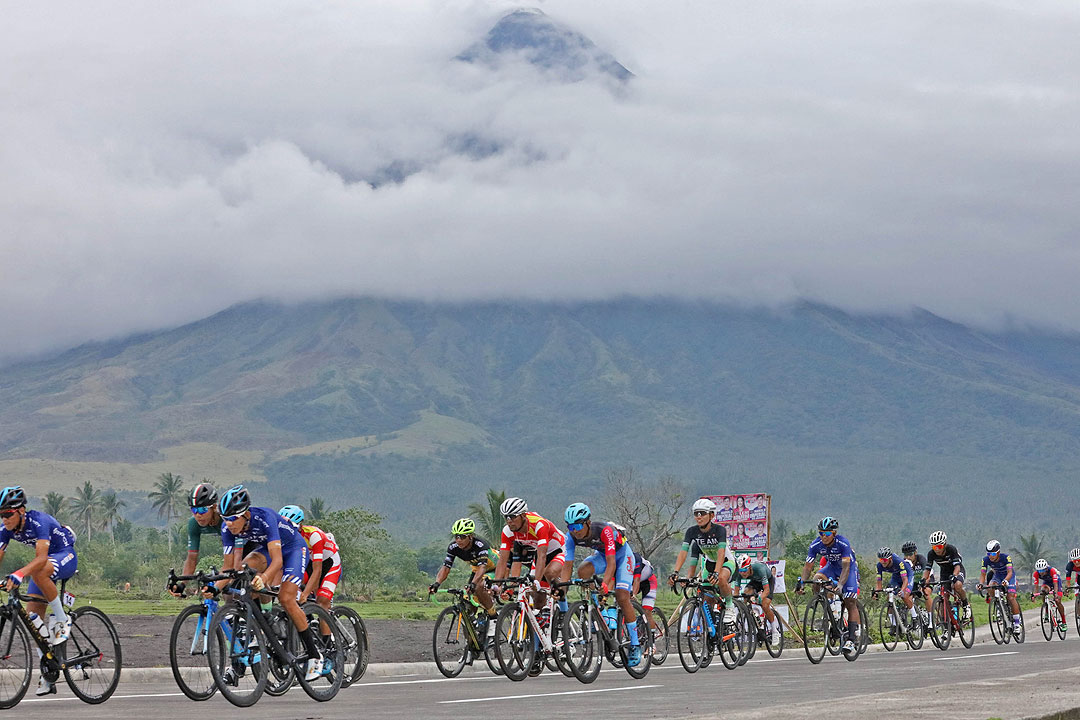
Oconer rules 179.8-km Stage Four

GEORGE OCONER — ERNIE PENARODONDO

By Joey Villar

DAET, Camarines Norte — Outshone and outfoxed in the early stages by Excellent Noodles, Navy Standard Insurance made sure it will not cower from a heated showdown on this one.

George Oconer and Ronald Oranza bared their true fangs and came through with worthy performances on a rainy, slippery 179.8-kilometer Stage Four to spring back to life in the 11th LBC Ronda Pilipinas that started in Legazpi and ended in front of the Provincial Capitol here on Sunday.

The 30-year-old Mr. Oconer, the last Ronda winner two years ago, edged Mervin Corpuz of Excellent Noodles and Arjay Peralta of Drey in a wet and wild ending to rule the stage in four hours, 10 minutes and 12 seconds.

Mr. Corpuz had the same clocking and wound up second while Mr. Peralta timed in 4:10:14 to take third.

Mr. Oconer was so ecstatic that he raised his right hand at the finish after sealing the deal.

He later said he has more to offer. “I’m still starting to heat up,” said Mr. Oconer.

The effort sent Mr. Oconer zooming No. 9 in the overall individual general classification race from No. 13 and joined Mr. Oranza, the 2018 titlist who leapt from No. 7 to No. 4 after the latter towed a nine-man packed that checked in at fifth in the stage in 4:10:38, in the top 10.

Jan Paul Morales of Excellent Noodles was with Oranza’s group to cling to the overall lead and the red LBC jersey with an aggregate clocking of 9:42:37.

He is being chased by teammates Mr. Corpuz, who posted a second straight runner-up stage finish to ascend from No. 4 to No. 2 with a 9:42:57, and Ryan Tugawin, who fell to No. 4 from No. 4 with a 9:43:15.

And then Mr. Oranza, who remained optimistic he can still catch up and overtake his rivals despite being 2.05 minutes behind, was there at No. 4 with a 9:44:42.

“We still have six stages to go and I’m familiar with who I’m racing against. I’m confident of my conditioning,” said Mr. Oranza.

Their efforts eased the pain of losing the team’s best climber, Junrey Navarra, who will no longer return to the race after bowing out of Stage Three due to breathing problems.

Two-time Ronda champion Santy Barnachea skidded to No. 5 from in 9:44:52 and remained ahead of three Go for Gold riders in Jonel Carcueva (9:45:03), Jericho Jay Lucero (9:45:10) and Aidan Mendoza (9:45:15).

Mr. Oconer was at No. 9 with a 9:45:18 while Excellent Noodles’ Mar Francis Sudario rounded out the top 10 with a 9:45:39.

Excellent Noodles kept its iron grip of the overall team lead with a 26:37:41, followed by Go for Gold’s 26:40:03 and Navy Standard Insurance’s 26:40:47.

The race gets tougher from here as it resumes today with the longest lap of this 10-stage race packed into 10 days (including a one-day break) — the 212.5km Daet-Lucena Stage Five.

This annual event stakes a P3.5-million cash pot including P1 million to the champion courtesy of LBC Express, Inc., MVP Sports Foundation, Quad X, Smart, Twin Cycle Gear, Standard Insurance, Print2Go, Elves Bicycles, Elitewheels, Orome, Maynilad, PhilHydro, Garmin, Petron, Boy Kanin, Green Planet Bikeshop, Prolite, Fujiwara, Black Mamba Energy Drink, Lightwater, LBC Foundation, PhilCycling and the Games and Amusements Board.

Gov’t to foreign firms: Promote Filipino products

IRR of amended retail trade law sets up to P5-M fine for violators

THE Philippine government has called on foreign retailers to promote Filipino-made products in their shops under the implementing rules and regulations (IRR) of the amended Retail Trade Liberalization Act (RTLA).

The IRR of the amended law was signed on March 9 by Trade Secretary Ramon M. Lopez, Socioeconomic Planning Secretary Karl Kendrick T. Chua, and Securities and Exchange Commission (SEC) Commissioner Emilio B. Aquino. 

On Dec. 10 last year, President Rodrigo R. Duterte signed Republic Act No. 11595 that amended Republic Act No. 8762 or the RTLA.

Based on the amended law, the minimum paid-up capital of foreign retailers is reduced to P25 million from $2.5 million, while the minimum investment requirement per store was lowered to P10 million in a bid to entice more foreign investors into the Philippines.

Under Rule 5, Section 6 of the IRR, foreign retailers are encouraged to provide a stock inventory of products manufactured in the Philippines by implementing any of the initiatives such as the designation of a store space as Filipino section; use of locally made packaging materials such as bags, boxes, and containers; use of locally sourced raw materials in production; and other arrangements that will promote Filipino-made products.

Rule 9, Section 2 of the IRR also provided that the Department of Trade and Industry (DTI), National Economic and Development Authority (NEDA), and SEC will review the required minimum paid-up capital every three years from the effectivity of the amended law.

“The DTI, SEC, and NEDA shall each report its recommendation to Congress,” the IRR said.

The IRR also provides that the SEC or the DTI will be responsible for monitoring the registered foreign retailers, while both agencies maintain a record of registered entities that are engaged in retail trade.

Meanwhile, Rule 8, Section 1 of the IRR also said that the new minimum investment per store as required by the amended law will not be applicable to “foreign investors and foreign retailers who are legitimately engaged in retail trade and were not required to comply with this requirement at the time of the effectivity of the act.”

However, registered foreign retailers still need to maintain the minimum paid-up capital as provided under RA 8762.

The IRR provided that violators of the law will face imprisonment of four years to six years and a fine ranging from P1 million to P5 million.

Further, Rule 5, Section 3 of the IRR also requires that every registered foreign retail enterprise will submit to the DTI or SEC the following reports on the maintenance and actual use of the paid-up capital requirement: number and location of stores, investment per store, and status of each store; stock inventory of locally manufactured products; and other reports that may be required.

“It shall be the duty of the foreign retailers to keep their records, inventory, and books of accounts available at all times for inspection by the SEC or DTI, as applicable,” the IRR said.

The amended RTLA is one of the economic liberalization measures of the government seen to help in the country’s economic recovery from the coronavirus disease 2019 (COVID-19) pandemic. The other measures include the signed amendments to the Foreign Investments Act and the pending amendments to the Public Service Act. — Revin Mikhael D. Ochave

Eljay Pamisa reaches ASBC Junior/Youth finals

ELJAY PAMISA (CENTER) — MVP SPORTS FOUNDATION

FILIPINO Eljay Pamisa overpowered Iranian Nima Beygi on Sunday to barge into the gold medal round in the bantamweight division of the Asian Boxing Confederation (ASBC) Junior and Youth Championships at the Al Hossein Sports City in Amman, Jordan.

The 17-year-old Cagayan de Oro native dazzled Mr. Beygi with his punishing counters and deft footwork in securing him a spot in the finals against Uzbek Abduvali Buriboev, who lost to Indian Anand Yadav in their semis duel but won his protest to take the finals berth instead.

Mr. Pamisa, a silver medal winner in the 2019 Asian Junior Championships in Al Fujaira, United Arab Emirates when he was still competing in the lighter divisions, is one of the country’s top junior boxers and a gold here would be a testament to his oozing potential.

Other members of the team are junior boxers (15-16 years old) Robert Malunoc, Jr. (46kg), Justine Valero (48kg) and Van Hendrich Abing (50kg) while the youth team is composed of (16-17 years old) Reymond Lofranco (48kg) and John Wayne Vicera (51kg).

Meanwhile, the ASBC held its Congress and Elections Saturday at the Marriott Bonvoy Hotel in the same city.

Representing the Philippines were Association of Boxing Alliances in the Philippines president Ed Picson and secretary-general Marcus Manalo.

Thailand’s Pichai Chunhavajira was elected as the new ASBC president besting his opponent Saken Polatov of Uzbekistan, 18 votes to 11.

ABAP president Mr. Picson is one of the close advisers of the prominent Thai businessman-sportsman. — Joey Villar

Retailers optimistic, but wary of rising fuel cost

LOCAL retails are optimistic about their recovery prospects as mobility restrictions ease, but the effects of the Russia-Ukraine conflict have brought uncertainty as rising fuel prices weigh down businesses.

“So far, [there is] greater mobility now in retail. Most of the members are optimistic now, though the conflict in Eastern Europe is another (thing) to watch out,” said Rosemarie B. Ong, president of the Philippine Retailers Association via a mobile phone message.

Ms. Ong said there is still uncertainty since the country is still recovering from the the effects of the coronavirus disease 2019 (COVID-19) pandemic and is now facing new issues such as high fuel prices.

Meanwhile, retailers are keeping tabs on the Russia-Ukraine conflict.

“Everything is still uncertain, we are just recovering from COVID-19 and now, here comes the oil price hike and the conflict in Eastern Europe. But there are many people in malls already,” she said. 

In a mobile phone message, Philippine Amalgamated Supermarkets Association President Steven T. Cua said that foot traffic has not significantly increased in groceries despite the implementation of Alert Level 1 in Metro Manila since March 1.

“Foot traffic has not significantly increased in supermarkets based on my personal visits to them this week. (They have the) same number of minimum check-out counters open. Membership shopping stores (are) not getting the desired numbers either,” Mr. Cua said.

Meanwhile, Trade Secretary Ramon M. Lopez said in a mobile phone message that the relaxed mobility restrictions had helped in enticing more crowds during weekends.

“Generally, Alert Level 1 has helped bring back the crowds, especially weekends. But [it is] not yet at pre-pandemic levels. Possibly, people [are] used to the convenience of staying at home and the deliveries. And some offices are not yet fully back or still on hybrid/work-from-home [arrangement] on weekdays,” he said.

Mr. Lopez said it is still hard to predict the impact of the high fuel prices in terms of consumer traffic on retail shops.

“Hard to say yet about the impact of fuel increase. Let’s observe the crowd and the traffic situation in the coming weeks,” Mr. Lopez said.

Since the beginning of the year, the prices of gasoline, diesel, and kerosene have climbed by P13.25, P17.50, and P14.40 per liter, respectively. — Revin Mikhael D. Ochave

Paris Fashion Week: Chanel doubles down on tweeds; McCartney, Balenciaga nod to Ukraine crisis

STELLA MCCARTNEY

PARIS — Chanel took to a tweed-lined stage on Tuesday last week for its fall collection, sending models filing through a dark, carpeted runway clad in the French fashion house’s trademark skirt and jacket ensembles, shimmery dresses and belted overcoats.

The catwalk presentation took place on the last day of Paris Fashion Week, wrapping up a string of industry shows held also in New York, London, and Milan. (See the show here: https://www.chanel.com/us/fashion/collection/fall-winter-2022-23/ )

Chanel creative director Virginie Viard wove patches of bright colors — pink, turquoise and purple — into the autumn-toned lineup, accessorizing looks with thick thigh-high stockings, striking wader boots and the label’s famous chain strap handbags, some in mini sizes.

Reflecting the somber mood caused by the war in Ukraine, the Beatles song “A Day in the Life” was played as models in school-girl hair styles sashayed past the celebrity-stacked front row, parading looks ranging from smart to slouchy, a few with bare shoulders.

Chanel had said earlier that it would suspend business in Russia, along with rivals LVMH, Hermes, and Gucci-owner Kering.

STELLA MCCARTNEY NODS TO UKRAINE CRISIS
In a nod to the war in Ukraine, Stella McCartney closed her namesake label’s winter catwalk show to the music of John Lennon’s anti-war ballad “Give Peace a Chance.” (See the show here: https://www.stellamccartney.com/us/en/ )

Models wound around glass-encased corridors atop the Pompidou Center, parading sleek, bohemian-flavored dresses with pockets and slit balloon sleeves while the rhythmic music played, with sweeping views of Paris as a backdrop.

“I believe very firmly in peace and love and obviously to use John’s song, who was my dad’s best friend… it just shows for me, it’s a personal song that reflects the whole world’s thoughts, I hope, right now,” Ms. McCartney told reporters after the show, referring to her father, Paul McCartney.

Some fashion designers have spoken publicly about their struggle to find the right tone for their shows and make the decision to carry on with Paris Fashion Week events while the world is focused on the Ukraine crisis.

BALENCIAGA’S GVASALIA THROWS SPOTLIGHT ON UKRAINE
Balenciaga creative director Demna Gvasalia threw the spotlight on the war in Ukraine, recalling his personal trauma as a refugee from Georgia at his winter show in Paris. (See the show here: https://www.balenciaga.com/en-en/winter-22)

Guests were greeted with Ukrainian flag T-shirts and a note explaining that the war had triggered the pain of trauma the designer had carried since 1993, when “the same thing happened in my home country and I became a forever refugee.”

“We, as a brand, have to do something … we cannot take weapons and go fight there, but we can use our voices,” Mr. Gvasalia told Reuters in an interview after the Paris Fashion Week presentation.

His show featured models marching through a blustery, glass-encased runway with swirling snow.

It kicked off with a woman in a black cape-like dress, swinging a sac resembling a stuffed plastic garbage bag. Others followed, walking against the wind in wide-leg trousers, oversize hoodies and floral-printed outfits.

An influential designer, Mr. Gvasalia played a central role in the rise of streetwear styles and is known for powerful runway presentations.

The designer said he had spent two years in Ukraine after the war in Georgia, where he still has family, before settling in Germany. Georgia, a former republic in the Soviet Union, was plunged into civil war after the break up of the bloc in 1991.

“When you go through war, you never forget that,” said the designer, whose native language is Russian.

Earlier, the Kering-owned label erased all images from its Instagram feed, which counts 12.8 million followers, leaving only an image of the Ukrainian flag, explaining that the platform would be used solely for relaying information about the situation in Ukraine. — Reuters

Rates of T-bills, bonds may rise

BW FILE PHOTO

RATES of government securities are expected to increase this week on continued inflation concerns as the war in Ukraine pushed up global oil prices.

The Bureau of the Treasury (BTr) will offer P15 billion in Treasury bills (T-bills) on Monday or P5 billion each in 91-, 182- and 364-day securities.

On Tuesday, it will auction off P35 billion in reissued five-year Treasury bonds (T-bonds) with a remaining life of four years and 23 days.

“After two consecutive T-bill auction rejections, yields for this T-bill auction will be much higher to realign with yields in the secondary market,” a trader said via Viber.

Meanwhile, the trader said the average yield on the five-year paper would likely range between 4.35% and 4.6%.

“Bids are expected to be defensive given the anxiety brought by the ongoing war in Ukraine that resulted to oil prices skyrocketing and this is expected to exert some pressure to our inflation,” the trader added.

Global oil prices increased on Friday as talks to restore the Iran nuclear deal, which would lift US sanctions on Iran’s oil sector, were paused over last-minute Russian demands, Reuters reported.

Brent crude futures increased by 3.1% to $112.67 a barrel on Friday.  US West Texas Intermediate crude futures rose by 3.1% to $109.33 a barrel.

Meanwhile, Rizal Commercial Banking Corp. Chief Economist Michael L. Ricafort said in a Viber message that government securities yields would still be higher, in line with the secondary market, after a weaker peso exchange rate.

Higher inflation in the United States has also increased the likelihood of a rate hike from the US Federal Reserve, he said.

The peso closed at P52.29 versus the dollar on Friday, depreciating from P52.155 the day before  US inflation hit a 40-year high.

The US consumer price index rose to a four-decade high of 7.9% year on year in February as gasoline and food prices increased.

US Federal Reserve Chairman Jerome H. Powell previously said he is inclined to support a 0.25% rate hike at the upcoming March 15-16 meeting of the Federal Open Market Committee.

At the secondary market on Friday, the 91- 182- and 364-day T-bills were quoted at 1.1362%, 1.2738%, and 1.6577%, respectively, based on the PHP Bloomberg Valuation Reference Rates published on the Philippine Dealing System’s website.

Meanwhile, the five-year bond fetched a yield of 4.8103%.

As rates continued to rise, the government rejected all T-bill and T-bond bids in the previous two weeks.

Last week, the BTr did not award any T-bills even as tenders reached P21.23 billion, higher than the P15 billion on offer.

Broken down, bids for the 91-day securities reached P7.61 billion, higher than the P5-billion plan. Had the Treasury made a full award, the three-month debt papers would have fetched an average rate of 1.577%, surging by 67.8 basis points (bps) from the 0.899% seen the last time the BTr borrowed the full amount.

The BTr also rejected the P6.46 billion in tenders for the 182-day securities even as this was higher than the programmed P5 billion. The average rate of the six-month T-bill would have gone up by 81 bps to 1.967% from 1.157% previously had the government made a full award.

Lastly, the government turned down P7.17 billion in bids for the 364-day debt papers from an initial offer of P5 billion. If the tenor was fully awarded, the average yield on the one-year instrument would have stood at 1.943%, jumping by 37.5 bps from the 1.568% fetched previously.

Meanwhile, the last time the government offered the five-year T-bonds to be auctioned off on Tuesday was on Feb. 3, where it raised P35 billion as planned as total tenders reached P60.66 billion. The debt papers were awarded at an average rate of 4.089%.

The BTr wants to raise P250 billion from the domestic market this month, or P75 billion via T-bills and P175 billion from T-bonds.

The government borrows from local and external sources to help fund a budget deficit capped at 7.7% of gross domestic product this year. — Jenina P. Ibañez with Reuters

Alkhaldi, Gebbie lead PHL campaign in Hanoi Southeast Asian Games

Jasmine Alkhaldi — JD LASICA/CRUISABLE

OLYMPIAN tankers Jasmine Alkhaldi and Luke Gebbie will spearhead the Philippines’ campaign in the Hanoi Southeast Asian (SEA) Games set on May 12 to 23.

The 28-year-old Ms. Alkhaldi, who snared a couple of silver medals and six bronzes in the 2019 SEA Games at the New Clark City in Capas, Tarlac, and Mr. Gebbie, who saw action in the 2021 Tokyo Games, were in the 16-member squad that will plunge into action in diving and swimming in the biennial event.

Also in the list were 2019 SEA Games medalists Xiandi Chua, Chloe Isleta and Jean-Pierre Khouzam.

Others bound for Hanoi were Kirsten Daos, Thanya dela Cruz, Jessica Joy Geriane, Desirae Aubrey Mangaoang, Miranda Cristina Renner, Jonathan Cook, Adrian Philipp Eichler, Jerard Dominic Jacinto, Donovan Lahmann and Jaden Christian Olson with Ariana Hannah Drake as the country’s lone bet in diving.

Swimming is set May 14 to 19 while diving is slated for May 8 to 11.

“After receiving the nominations and carefully deliberating on them, we are happy to share to you the roster we submitted to the POC for the coming 31st SEA Games,” said PSI president Lani Velasco.

Absent in the squad was James Deiparine, who delivered the lone gold for the Filipinos in the last SEA Games, and Remedy Rule, a Tokyo Olympian who retired to focus on her studies.

The team is seeking to match, if not improve, on its 1-6-9 (gold-silver-bronze) haul in Capas. — Joey Villar

SEC warns about AlgoSCALP’s ‘enticing’ investment scheme

THE Securities and Exchange Commission (SEC) has warned the public about AlgoSCALP, an automated trading system, which has been soliciting investments without license or approval from the regulator.

“AlgoSCALP, AlgoSCALP Trading, or AlgoSCALP Auto Trading claims that it is a fully automated trading system, and that the provider will place buy and sell orders for the investor, allowing the investor to trade the financial markets without needing to lift a finger,” the SEC said in an advisory.

“Further, it claims that it is a crypto-currency of the Algorand Blockchain that aims to be simultaneously scalable, secure and decentralized,” it added.

AlgoSCALP uses “scalping” or a trading style that specializes in profiting off of small price changes and making fast profit from reselling, the SEC said.

The corporate regulator said that the trading firm is enticing the public to invest with a minimum amount of P200, with an assurance of a daily profit range of 1% to 13% for 22 days. An investor can also earn through direct referral of “active trade.” In every active trade, an investor earns a 12% commission.

The commission declared the claims were “too good to be true,” with indications of a possible Ponzi scheme where returns to early investors are likely to be paid out from the investments of new investors and not out of the company’s profits similar to those already flagged as scams.

Based on the records of the SEC, AlgoSCALP is not registered and is not authorized to solicit, accept or take investments and placements from the public, nor to issue investment contracts and other forms of securities.

“Our database also shows that AlgoSCALP has no brokers, account managers, agents, and/or representatives that have appropriate registration and/or license to offer or sell such securities to the public,” the SEC said.

The trading firm is also not registered as a virtual asset service provider with the Bangko Sentral ng Pilipinas and does not have a corresponding certification of authority as a money service business.

The SEC reminded the public that unregistered or unauthorized platforms such as AlgoSCALP are risky and should be avoided.

“Therefore, the public is advised to not invest or stop investing in AlgoSCALP or in any other scheme being offered by it no matter how enticing, trendy, or catchy its slogans, proposition, or scheme is,” the SEC said. — Luisa Maria Jacinta C. Jocson